Streamlining Sustainability: End-to-End Waste Management Automation for Optimized Solutions
Opublikowano: Zaktualizowano: 04/16/2026
Spis treści
- The Complexity of Waste Management: Why Automation is Crucial
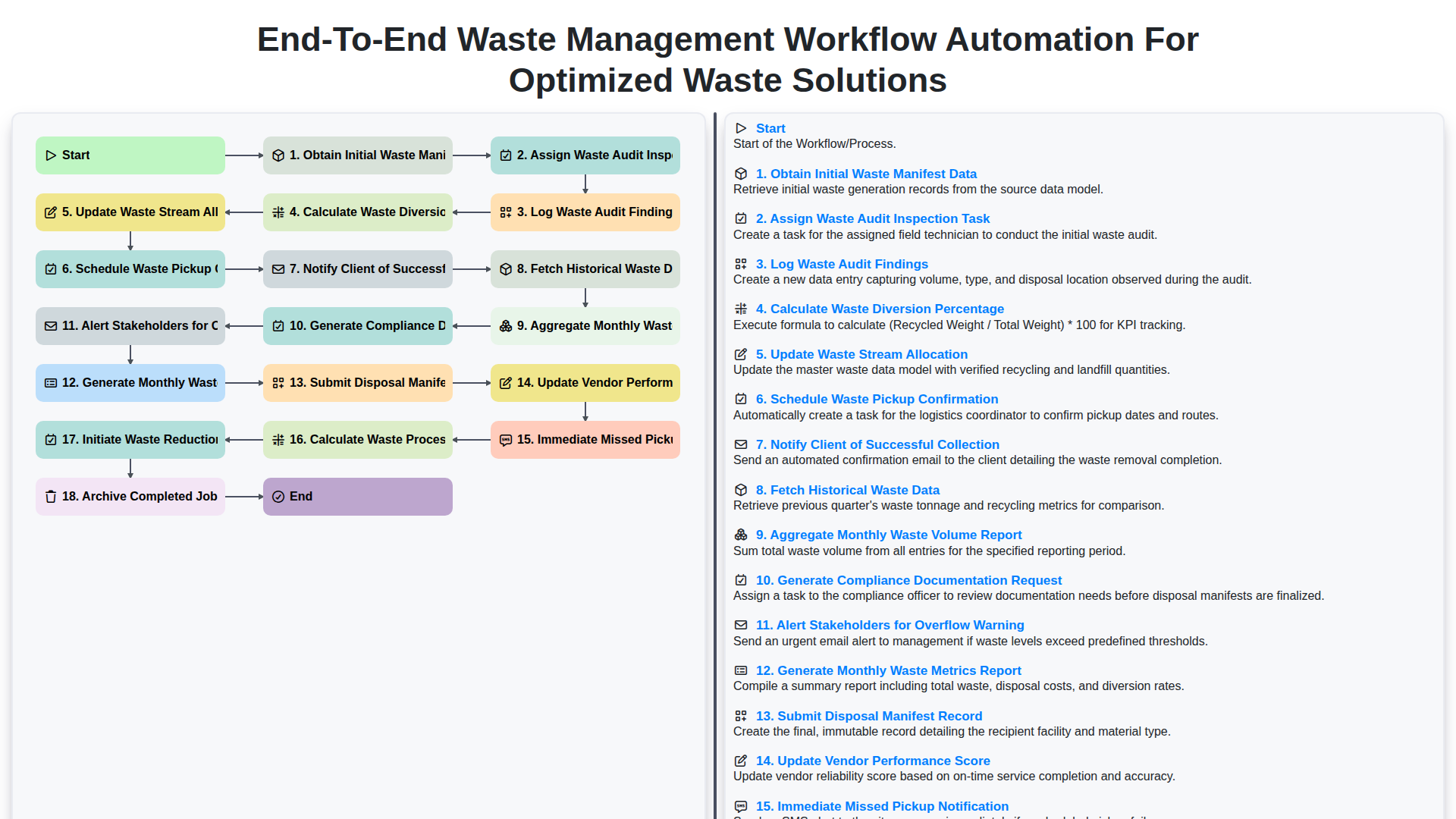
- Phase 1: Data Ingestion and Initial Assessment (Obtaining Waste Manifest Data)
- The Audit Deep Dive: Assigning and Logging Waste Inspections
- Quantifying Impact: Calculating Waste Diversion and Stream Allocation
- Operational Excellence: Scheduling and Confirming Waste Pickups
- Client Communication and Transparency: Confirmation and Notifications
- Building Intelligence: Fetching and Aggregating Historical Data
- Reporting & Compliance: Generating Metrics and Documentation
- Proactive Management: Alerts, Warnings, and Performance Scoring
- Financial Optimization: Cost Calculation and Waste Reduction Suggestions
- Handling Exceptions: Instant Notifications for Missed Pickups
- Closing the Loop: Archiving Records and Ensuring Traceability
- The Value Proposition: Achieving True End-to-End Automation
- Resources & Links
TLDR: This automated workflow guides you through every step of waste management-from collecting initial data and inspecting waste to reporting and optimizing-ensuring compliance, tracking performance, and minimizing waste efficiently.
The Complexity of Waste Management: Why Automation is Crucial
Managing waste is inherently complex, involving numerous moving parts: fluctuating waste streams, diverse disposal regulations, meticulous tracking, and the necessity of real-time communication. Manually coordinating these tasks creates massive potential for human error, delays, and inefficiencies. Consider the sheer volume of data involved-from initial waste manifest intake to final compliance documentation. A single missed step in tracking, calculating, or reporting can lead to non-compliance fines or suboptimal resource management. Automation steps in to act as the centralized nervous system for the entire process. Instead of relying on disparate spreadsheets, paper forms, and individual memory, an automated workflow ensures that data flows seamlessly from point A (receiving the initial manifest) to point Z (archiving the completed job). This digital orchestration transforms a collection of disconnected, manual tasks into one predictable, auditable, and optimized system.
Phase 1: Data Ingestion and Initial Assessment (Obtaining Waste Manifest Data)
The journey to optimized waste management begins with accurate data. The first critical step in our automated workflow is the Obtaining Initial Waste Manifest Data. This phase is the digital gateway into understanding the scope and nature of the waste being managed. Manually collecting and processing paper manifests is not only time-consuming but is also prone to human error, leading to incomplete or inaccurate records right from the start. Our automated solution tackles this head-on. By integrating with various data sources-whether through digital uploads, API connections with waste generators, or even smart scanning technologies-the system instantly captures all necessary details: waste types, volume estimates, associated locations, and responsible parties. This immediate, centralized ingestion process ensures that every subsequent calculation, audit, and report is built upon a foundation of reliable, real-time data, setting the stage for predictable and compliant operations.
The Audit Deep Dive: Assigning and Logging Waste Inspections
The journey begins with a meticulous examination of the waste streams. Our system seamlessly automates the Assign Waste Audit Inspection Task, ensuring the right personnel are dispatched at the optimal time. Once on-site, the process is streamlined through the digital recording of all findings; this is where we Log Waste Audit Findings. By digitizing this crucial step, we move beyond paper trails, ensuring that every detail-from waste type composition to volume estimates-is captured immediately, accurately, and is ready for the next stage of optimization.
Quantifying Impact: Calculating Waste Diversion and Stream Allocation
Accurately quantifying the impact of waste management efforts is crucial for demonstrating success and driving continuous improvement. The core of this measurement lies in calculating the Waste Diversion Percentage and maintaining an up-to-date Waste Stream Allocation.
The Waste Diversion Percentage is the industry standard metric for measuring how much waste is being diverted from landfills. By systematically comparing the total volume of waste received against the volume that was successfully recycled, composted, or reused (the diverted portion), we can calculate a precise figure. This percentage immediately provides a clear, actionable KPI for sustainability goals.
Complementing this is the Update Waste Stream Allocation. This step moves beyond a simple percentage by providing granular detail. It allows the system to track exactly where the waste material is going-is it allocated to recycling streams, specialized composting, or material reuse programs? This detailed allocation capability helps pinpoint bottlenecks or areas where waste streams are contaminated, allowing operations teams to target specific points in the collection process for intervention. By automating these calculations and updates, organizations gain real-time transparency into their material flow, turning raw data into compelling evidence of environmental stewardship and operational efficiency.
Operational Excellence: Scheduling and Confirming Waste Pickups
Streamlining the scheduling and confirmation of waste pickups is crucial for maintaining operational efficiency and client satisfaction. Our automated workflow takes this manual, often error-prone process and makes it seamless. Upon generating the initial waste audit findings and completing the waste stream allocation, the system automatically triggers the Schedule Waste Pickup Confirmation step. This ensures that pickups are booked promptly and with minimal delay. Furthermore, once the collection is successfully executed, the workflow moves to Notify Client of Successful Collection. This automated notification serves as instant proof of service, significantly reducing administrative follow-up and providing immediate reassurance to the client regarding their waste removal.
Client Communication and Transparency: Confirmation and Notifications
A critical component of any successful waste management process is keeping the client fully informed. This is where our automated workflow excels in providing crystal-clear communication and transparency at every touchpoint. From the moment the waste audit is complete to the final disposal manifest is submitted, our system ensures the client knows exactly what is happening. We automate the Notify Client of Successful Collection step, sending instant, verifiable confirmations right to their dashboard or preferred communication channel. Furthermore, we proactively manage expectations by immediately issuing an Immediate Missed Pickup Notification if any disruption occurs, turning potential points of frustration into moments of reliable service. This proactive communication builds trust and reinforces our commitment to a seamless waste lifecycle experience.
Building Intelligence: Fetching and Aggregating Historical Data
This step is crucial for transforming raw data into actionable insights. By integrating the capability to Fetch Historical Waste Data, our automated system allows facility managers and sustainability officers to look beyond the day-to-day operations. We can compare current waste streams against past performance to identify trends, track seasonal variations, and measure the long-term impact of implemented waste reduction strategies. This historical context is then fed into the Aggregate Monthly Waste Volume Report. This aggregation process doesn't just sum up numbers; it builds a comprehensive narrative of resource flow over time. Analyzing these trends-such as a consistent increase in cardboard waste quarter-over-quarter, for example-allows organizations to move from reactive waste management to proactive, data-driven waste optimization.
Reporting & Compliance: Generating Metrics and Documentation
The final crucial phase of an optimized waste management workflow centers on robust reporting and meticulous compliance. This isn't just about record-keeping; it's about transforming raw operational data into actionable insights and legally sound documentation. Our automated system streamlines this process significantly. After successfully collecting and processing waste, the system automatically compiles necessary data to Aggregate Monthly Waste Volume Reports and generate comprehensive Monthly Waste Metrics Reports. Beyond sheer volume, we can precisely Calculate Waste Diversion Percentage and even Calculate Waste Processing Cost Per Ton, giving clients true visibility into their sustainability performance and cost structure. For regulatory peace of mind, the workflow handles the Generate Compliance Documentation Request automatically, ensuring all necessary paperwork is in order. Furthermore, when the job is complete, the process culminates in the accurate Submit Disposal Manifest Record and the thorough Archive Completed Job Records, providing a fully auditable trail. This comprehensive reporting capability ensures that continuous improvement is not a manual chore, but a continuous, automated outcome.
Proactive Management: Alerts, Warnings, and Performance Scoring
A key component of optimizing waste management isn't just processing what you have, but actively predicting and preventing issues. Our automated workflow embeds several proactive mechanisms designed to keep your operations running smoothly and efficiently. The Alert Stakeholders for Overflow Warning feature acts as an early warning system, notifying relevant personnel immediately when a designated container approaches capacity, preventing costly service interruptions and overflowing bins. Beyond alerts, we incorporate robust performance tracking through the Update Vendor Performance Score. By continuously logging and analyzing service metrics, we provide transparent scoring for every vendor, ensuring accountability and driving continuous improvement in service reliability. Furthermore, the workflow facilitates preemptive action by initiating a Waste Reduction Suggestion Meeting directly from gathered data, moving you from reactive disposal to proactive resource management. Finally, the integration of an Immediate Missed Pickup Notification ensures that service lapses are caught and addressed in real-time, maintaining the integrity of your waste management schedule and keeping you compliant.
Financial Optimization: Cost Calculation and Waste Reduction Suggestions
Accurate cost tracking is paramount for financial optimization in waste management. Our automated workflow meticulously handles the calculation of Waste Processing Cost Per Ton, ensuring that every ton collected is accounted for accurately. This real-time costing capability allows businesses to track expenditures precisely and make data-driven financial decisions. Furthermore, the system goes beyond mere accounting by proactively initiating the Waste Reduction Suggestion Meeting. By analyzing usage patterns and high-cost waste streams, the workflow prompts expert review sessions. These meetings are designed not just to report on costs but to actively identify and implement sustainable process improvements, helping clients move towards true waste minimization and significant long-term savings.
Handling Exceptions: Instant Notifications for Missed Pickups
The system's intelligence shines brightest when handling the unexpected. Missed pickups are a critical point of failure that requires immediate attention to maintain client trust and operational continuity. By integrating a dedicated Immediate Missed Pickup Notification step, we ensure that delays are never overlooked. This process triggers instant, multi-channel alerts-via SMS, email, and direct dashboard warnings-the moment GPS data or scheduled confirmation fails. This proactive alerting mechanism allows our operations team to dispatch corrective action within minutes, minimizing service disruptions and providing the client with real-time updates on revised collection schedules.
Closing the Loop: Archiving Records and Ensuring Traceability
The final, yet critically important, step in optimizing waste management is ensuring that all data is systematically archived and fully traceable. This involves the thorough archiving of all completed job records. By maintaining a robust, easily searchable archive, organizations can build historical knowledge that informs future decision-making, proving compliance and maximizing resource recovery. This step isn't just about storage; it's about creating an undeniable audit trail. Furthermore, the system must facilitate the seamless submission of the disposal manifest record and the updating of vendor performance scores within this final repository, solidifying a complete, verifiable record of responsible waste stewardship.
The Value Proposition: Achieving True End-to-End Automation
This comprehensive workflow isn't just a collection of digital steps; it represents a fundamental shift in how waste management operations function. The value proposition lies in creating a seamless, uninterrupted flow from the moment waste is generated to the final disposal record. By automating each touchpoint-from the initial data intake ($\text{Obtain Initial Waste Manifest Data}$) through the final $\text{Archive Completed Job Records}$-businesses gain radical efficiency.
Consider the implications of combining tasks like $\text{Assign Waste Audit Inspection Task}$ with $\text{Log Waste Audit Findings}$. Instead of manual data entry and potential human error, the system guides inspectors immediately, structuring findings for instant $\text{Calculate Waste Diversion Percentage}$. This continuous, data-driven loop ensures that every operational decision, such as $\text{Update Waste Stream Allocation}$, is based on the most current, verified information.
Furthermore, the automation embeds proactive intelligence. Instead of waiting for discrepancies, the system can $\text{Alert Stakeholders for Overflow Warning}$ preemptively. When reporting, aggregating $\text{Monthly Waste Volume Report}$ from $\text{Fetch Historical Waste Data}$ becomes instant, allowing clients to not only view compliance ($\text{Generate Compliance Documentation Request}$) but also receive actionable insights through automated $\text{Generate Monthly Waste Metrics Report}$ and $\text{Initiate Waste Reduction Suggestion Meeting}$ triggers.
Ultimately, true end-to-end automation translates directly to cost savings, minimized risk, and superior sustainability reporting. It transforms waste management from a series of disconnected, reactive tasks into a predictable, optimized, and auditable continuous process.
Resources & Links
- Environmental Protection Agency (EPA) : Official US government resource for comprehensive guidelines, regulations, and best practices in waste management and pollution control.
- EPA Waste Management Regulations : Specific governmental documentation on the rules and requirements governing various waste streams, crucial for compliance sections.
- Industry Waste Analytics Platform (Fictional) : A sample resource showcasing advanced data visualization tools for waste stream analysis and historical data aggregation.
- WasteTech Solutions Blog (Fictional) : Articles detailing the integration of IoT sensors and workflow automation into waste collection logistics.
- Sustainable Waste Industry Reports (Fictional) : Reports providing benchmarks on waste diversion rates and circular economy metrics.
- Smart Logistics & Field Service Management (Fictional) : Resources on optimizing scheduling, dispatching, and confirmation processes for mobile service workers.
- Compliance & Manifest Documentation Guide (Fictional) : Checklists and guides for generating accurate, auditable disposal manifests and compliance reports.
- Circular Economy Models & Best Practices (Fictional) : Information detailing how waste data can feed into suggestions for waste reduction and material recovery.
- Workflow Automation Platform Overview (General Tech Resource) : An overview of BPM (Business Process Management) tools relevant for connecting disparate waste management tasks.
Najczęściej zadawane pytania
What is end-to-end waste management automation?
End-to-end waste management automation refers to the integration of digital technologies and IoT sensors throughout the entire waste lifecycle—from collection and sorting to processing and final disposal—to reduce manual intervention and increase operational efficiency.
How does automation contribute to sustainability?
Automation enhances sustainability by optimizing collection routes to reduce carbon emissions, improving the accuracy of material sorting to increase recycling rates, and providing real-time data to minimize resource wastage.
What are the key benefits of implementing automated waste management solutions?
Key benefits include significant cost savings through optimized logistics, improved public health and safety by reducing manual handling, higher purity in recycled materials, and enhanced data-driven decision-making for urban planning.
What technologies are used in waste management automation?
Common technologies include IoT-enabled smart bins with fill-level sensors, AI-powered robotic arms for automated sorting, GPS tracking for fleet management, and big data analytics for predictive maintenance and route optimization.
What are the main challenges in transitioning to automated waste systems?
Primary challenges include the high initial capital investment required for hardware and software, the need for specialized technical expertise to maintain systems, and the integration of new digital tools with existing legacy infrastructure.
Czy ten artykuł był pomocny?
Demonstracja rozwiązania do gospodarki odpadami
Optymalizuj gospodarkę odpadami i zmniejsz wpływ na środowisko! ChecklistGuro usprawnia zbiórkę, śledzenie i raportowanie. Zminimalizuj ilość odpadów, obniż koszty i promuj zrównoważony rozwój. Zarządzaj wszystkim za pomocą naszej platformy Work OS.
Powiązane artykuły

Your Ultimate Guide to a Waste Management Facility Project Checklist Template

Your Complete Vegetation Removal Compliance Checklist Template
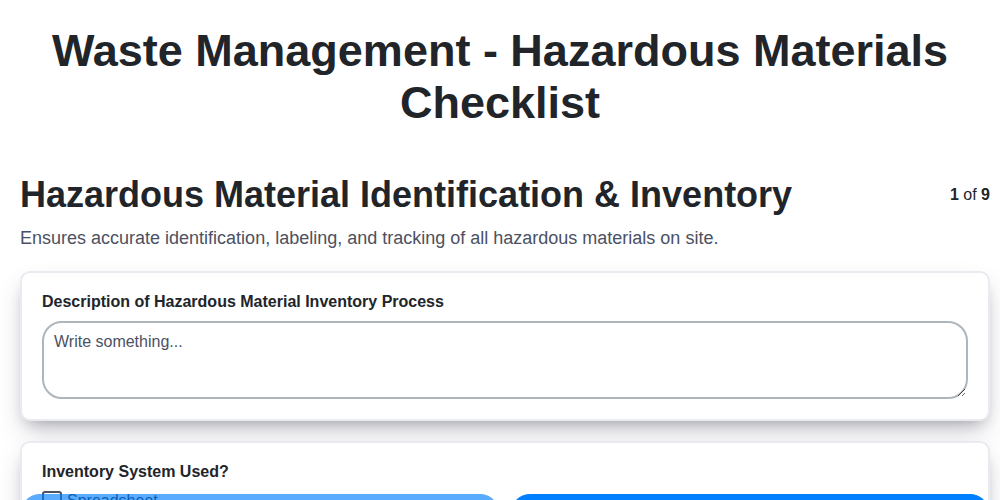
Your Ultimate Hazardous Materials Waste Management Checklist Template
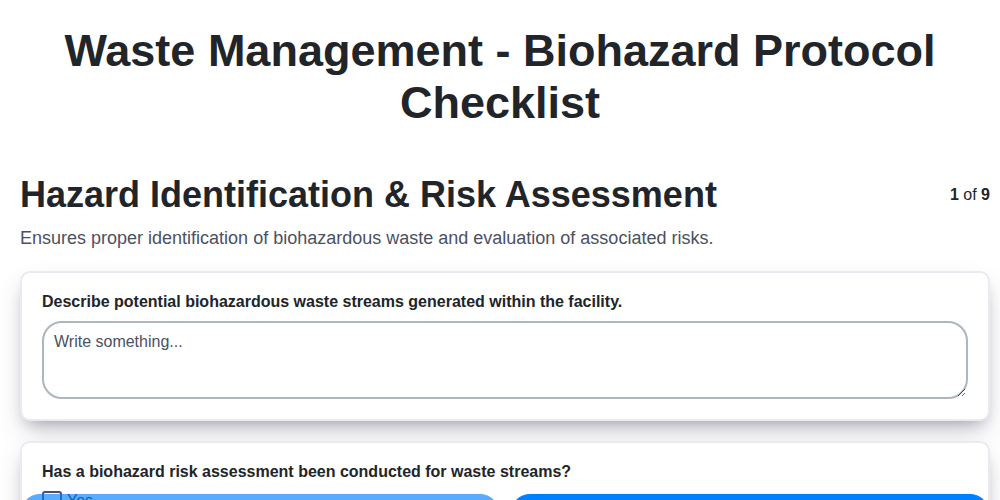
Streamline Biohazard Waste: Your Essential Checklist Template
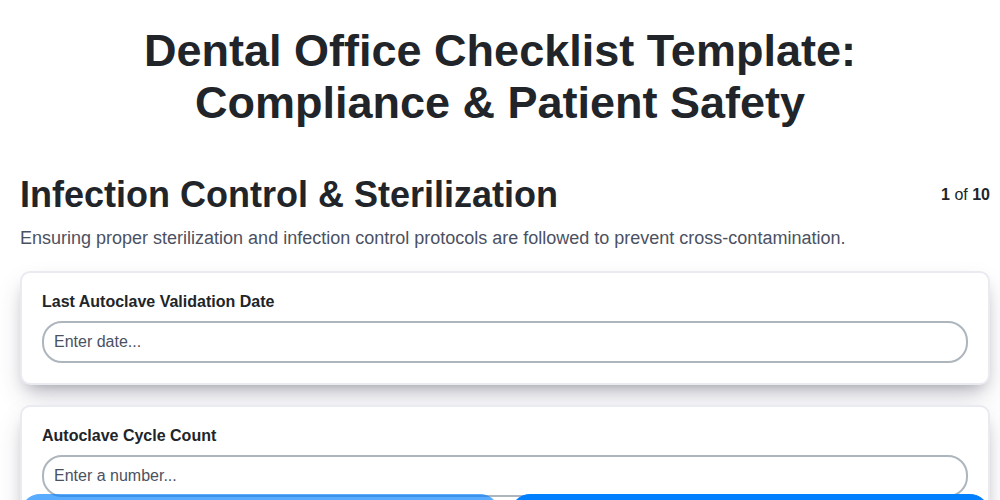
Your Dental Office Safety Net: The Compliance & Patient Safety Checklist Template

Szablon listy kontrolnej dotyczącej gospodarki odpadami i recyklingu (tygodniowy)
Your Environmental Compliance Checklist Template: A Step-by-Step Guide
Szablon listy kontrolnej warsztatu samochodowego: Działania i zgodność z przepisami
Możemy to zrobić razem
Potrzebujesz pomocy z listami kontrolnymi?
Masz pytanie? Jesteśmy tu, aby pomóc. Prześlij zapytanie, a my szybko na nie odpowiemy.