Precision Agriculture Workflow: Streamline Farm Operations Management
Publicado: Actualizado: 04/16/2026
Índice
- Introduction to Precision Agriculture Workflows
- Step 1: Integrating Soil Test Results for Baseline Data
- Step 2: Understanding Crop Growth Stages for Targeted Care
- Step 3: Leveraging Weather Forecast Data for Proactive Management
- Step 4: Calculating Deficiency Metrics: Identifying Nutrient Gaps
- Step 5: Determining Optimal Fertilizer Recommendations
- Step 6: Scheduling Soil Sampling for Continuous Improvement
- Step 7: Automated Alerts for Irrigation Needs
- Step 8: Generating Comprehensive Nutrient Management Reports
- Step 9: Maintaining Accurate Nutrient Application Records
- Step 10: Distributing Actionable Recommendation Reports to Stakeholders
- Step 11: Implementing Urgent Action SMS Alerts for Critical Situations
- Conclusion: The Power of Streamlined Farm Operations
- Resources & Links
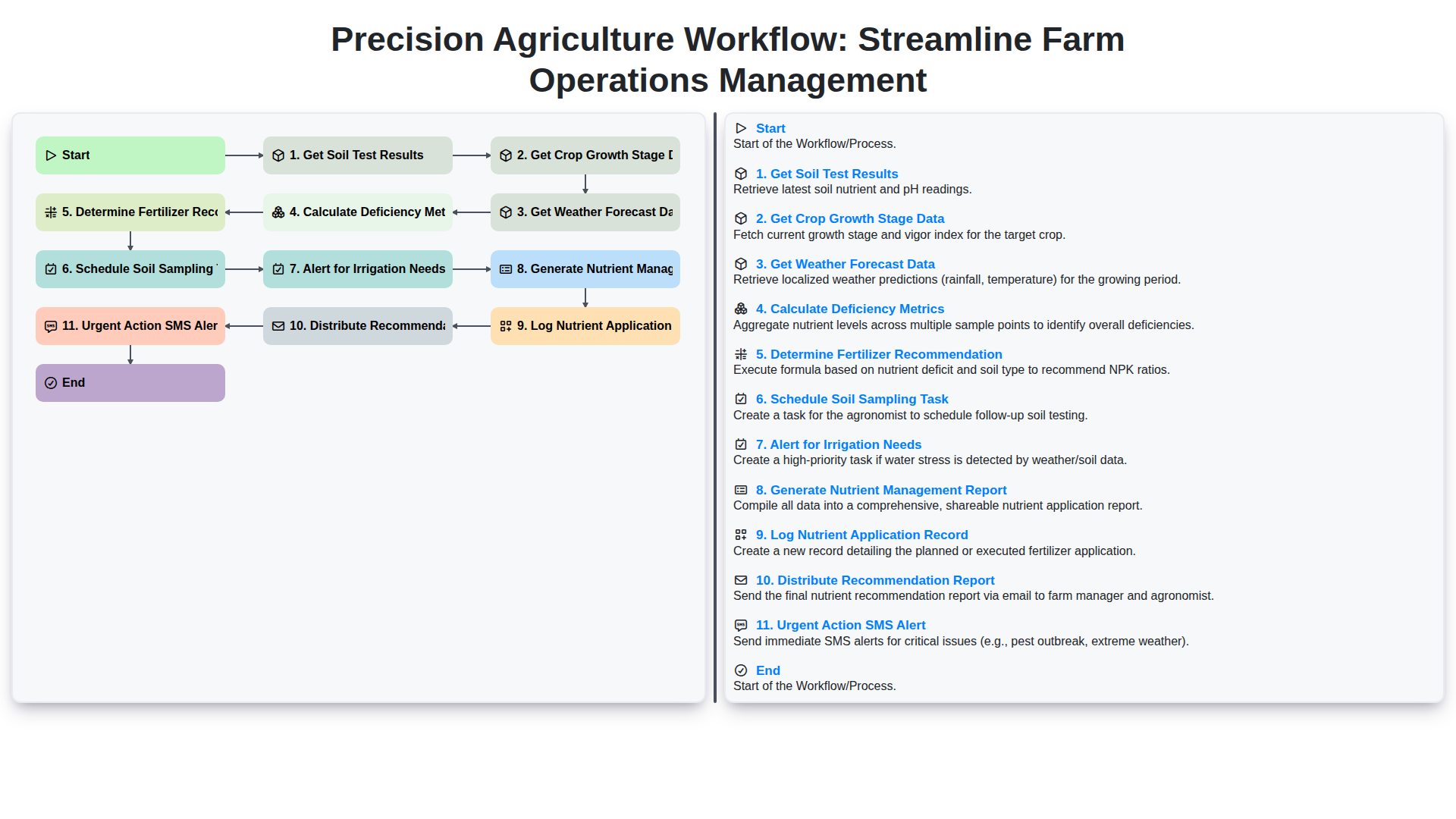
TLDR: This guide explains a step-by-step operational workflow that automates farm management. By integrating soil test results, crop growth data, and weather forecasts, the system calculates nutrient deficiencies and provides actionable recommendations for fertilization, irrigation, and soil sampling. It centralizes reporting, logs all nutrient applications, and sends immediate alerts (like SMS) to ensure timely, data-driven resource management, optimizing yields and efficiency.
Introduction to Precision Agriculture Workflows
Precision agriculture is no longer a futuristic concept; it's the operational backbone of modern, sustainable farming. At its core, successful modern farming relies on the ability to process vast amounts of complex, multi-source data into actionable, timely insights. Instead of applying uniform inputs across an entire field-a costly and inefficient practice-precision agriculture directs resources exactly where and when they are needed. This efficiency is realized through meticulously designed workflows. A workflow, in this context, is the systematic, automated sequence of tasks that ingests data from various sources (like soil sensors, satellite imagery, and weather stations), processes it through analytical models, and culminates in a clear, recommended action for the farmer. Think of it as the digital brain coordinating every step from initial data collection to final treatment application, ensuring optimal yield while minimizing waste and environmental impact.
Step 1: Integrating Soil Test Results for Baseline Data
Beginning the journey to optimized yields starts with a deep understanding of your land. This crucial first step involves systematically integrating the results from your soil tests. These reports provide the foundational baseline data, detailing the existing levels of essential macro- and micronutrients (like Nitrogen, Phosphorus, Potassium, pH, etc.) within your specific soil profile. By uploading and processing these test results, our workflow establishes a 'nutritional snapshot' of your farm. This data isn't just stored; it's immediately cross-referenced against established optimal ranges for your target crops, allowing the system to proactively identify any current deficiencies or excesses before any intervention is even considered.
Step 2: Understanding Crop Growth Stages for Targeted Care
Knowing exactly where your crop is in its life cycle is crucial for optimizing care and maximizing yields. Different growth stages-from germination to flowering, fruiting, and senescence-require vastly different nutritional inputs and management practices. By integrating real-time data on the current crop growth stage, your farm management system can shift from a generalized care routine to a highly targeted intervention strategy. For instance, a seedling requires immediate structural nutrients, while a fruiting plant demands peak levels of potassium and phosphorus. This stage-specific insight prevents over-fertilization (which wastes resources and harms the plant) or under-fertilization (leading to yield loss).
Step 3: Leveraging Weather Forecast Data for Proactive Management
Integrating real-time and forecasted weather data is perhaps the most critical step in moving from reactive to truly proactive farm management. A simple rainfall prediction or an unexpected heatwave alert can translate into massive cost savings or, more importantly, prevent significant crop loss. By systematically incorporating weather forecast data, your workflow can anticipate stress points long before the visible symptoms appear. For instance, the system can cross-reference expected rainfall amounts with the current soil moisture content (derived from previous readings). If the forecast indicates a dry spell following a period of high transpiration, the system doesn't just wait for the soil moisture sensors to drop critically low; it issues an early alert, advising on potential water rationing or adjusting irrigation schedules immediately. Furthermore, integrating historical local weather patterns allows the model to adjust its expectations. Knowing that the region typically experiences a predictable temperature spike in late May, the nutrient uptake calculations can be slightly adjusted proactively, ensuring fertilizer recommendations account for temporarily increased transpiration rates, maximizing nutrient efficiency throughout the entire growing cycle.
Step 4: Calculating Deficiency Metrics: Identifying Nutrient Gaps
This crucial step moves beyond simply collecting data; it involves sophisticated analysis to pinpoint exactly where and what nutrients are lacking. By cross-referencing the soil test results (which show baseline nutrient levels) against the specific requirements of the targeted crop at its current growth stage, the system can calculate precise deficiency metrics. For instance, if the soil test shows low levels of nitrogen (N), but the crop stage requires a higher uptake rate of potassium (K) for root development, the metric will quantify that specific gap. This calculation is vital because it prevents blanket recommendations, ensuring that resources are targeted only where the plant genuinely needs them to achieve optimal health and yield.
Step 5: Determining Optimal Fertilizer Recommendations
This critical juncture is where raw data is transformed into actionable intelligence. By synthesizing the soil test results, current crop growth stage, and predicted nutrient uptake rates, the system calculates precise deficiency metrics. This calculation moves beyond general guidelines; it models the specific nutrient needs of your crops right now. The output is a highly granular fertilizer recommendation, specifying not only what nutrients are needed but also the optimal concentration and the most effective combination to maximize plant health while minimizing waste and environmental runoff.
Step 6: Scheduling Soil Sampling for Continuous Improvement
This step is crucial for maintaining a proactive approach to soil health, moving beyond reactive fertilization. By scheduling regular soil sampling, your operation shifts from simply treating immediate deficiencies to systematically improving the underlying soil structure and nutrient profile over time. Our system automates the scheduling process based on predefined parameters-whether it's a set interval (e.g., every 6 months) or triggered by significant changes in weather patterns or previous test results. This ensures that you are always gathering actionable data, allowing you to fine-tune your nutrient strategy year after year and build a truly resilient, high-yielding farm ecosystem.
Step 7: Automated Alerts for Irrigation Needs
This crucial step integrates real-time data to prevent under or over-watering, maximizing plant health and minimizing waste. By connecting weather predictions (like expected rainfall) with soil moisture sensor readings, the system calculates the exact water deficit for specific zones. If the calculated deficit crosses a pre-set threshold, an automated alert is immediately triggered, notifying farm managers precisely when and where irrigation is required, allowing for proactive rather than reactive farm management.
Step 8: Generating Comprehensive Nutrient Management Reports
This crucial step involves synthesizing all the gathered data-soil test results, growth stage assessments, weather patterns, deficiency calculations, and fertilizer recommendations-into one coherent, actionable document. The Nutrient Management Report is more than just data compilation; it's the strategic blueprint for the coming growing cycle. It clearly maps out which nutrients are needed, where they are most deficient, the optimal application rates, and the recommended timing. By formalizing this information, farmers move away from reactive, blanket applications and towards targeted, efficiency-boosting nutrient strategies. This report serves as the primary reference guide for the farm manager and the input for the subsequent distribution phase.
Step 9: Maintaining Accurate Nutrient Application Records
This crucial step ensures complete traceability and accountability for all amendments made to your soil. By meticulously logging every nutrient application-including the date, the specific nutrients applied, the precise amount, the method of application, and the area covered-you build a comprehensive historical database. This record-keeping isn't just for compliance; it's predictive. When future nutrient management plans are developed, these logged records allow you to track the cumulative nutrient load, understand the efficacy of past treatments, and adjust future recommendations with a higher degree of scientific certainty, preventing both under- and over-fertilization.
Step 10: Distributing Actionable Recommendation Reports to Stakeholders
The final, crucial step in the precision agriculture workflow is ensuring that the generated intelligence actually reaches the people who need to act on it. This is where the Distribute Recommendation Report function comes into play. A detailed, comprehensive nutrient management report, no matter how accurate, is useless if it sits in an isolated cloud dashboard. Therefore, this step involves formatting and transmitting the actionable insights-such as recommended fertilizer types, precise application rates, and optimal timing-to every relevant stakeholder in the farm ecosystem. This distribution can take multiple forms: emailing detailed PDF reports to the farm manager, uploading structured data feeds directly into existing farm management software (FMS), or creating a simplified visual summary accessible via a mobile dashboard. The goal here is seamless integration into the daily decision-making loop, ensuring that the data leads directly to the field.
Step 11: Implementing Urgent Action SMS Alerts for Critical Situations
When proactive management isn't enough, immediate communication is vital. The final, and arguably most critical, step in optimizing your precision agriculture workflow is the implementation of Urgent Action SMS Alerts. This feature acts as a rapid response system, bypassing email delays and ensuring that the right personnel receive critical information instantly. Whether your nutrient recommendation calculates a deficiency so severe it requires immediate intervention, or the weather forecast predicts a sudden, damaging frost that requires preemptive protective measures, the system automatically triggers an SMS. This direct line of communication ensures that actionable insights don't become suggestions; they become immediate operational tasks, keeping your crops protected and your yield secure when seconds count.
Conclusion: The Power of Streamlined Farm Operations
Ultimately, implementing a comprehensive precision agriculture workflow transforms farming from reactive guesswork into proactive science. By systematically integrating soil test results, growth data, weather patterns, and real-time monitoring, farmers gain an unprecedented level of control and foresight over their operations. This streamlined process doesn't just automate tasks; it optimizes resource allocation-reducing waste, minimizing environmental impact, and crucially, boosting profitability. The continuous cycle of assessment, recommendation, action, and logging ensures that every decision made on the farm is data-driven, leading directly to healthier yields and a more sustainable agricultural future.
Resources & Links
- Academic Journals & Research Papers : For in-depth scientific backing and the latest research on precision agriculture technologies (especially relevant for Sections 1, 2, and 4).
- Environmental Protection Agency (EPA) Resources : Official guidelines and best practices regarding nutrient management, fertilizer use, and soil health (Relevant for Sections 4, 5, and 8).
- USDA Agricultural Extension Services : Reliable, state-specific guidance on crop cycles, soil testing, and local farming techniques (Useful for Sections 1, 2, and 6).
- Agricultural Technology Industry News : Articles discussing the integration of IoT, weather data platforms, and farm management software (Good for general workflow context and Sections 3, 7, and 11).
- Soil Health & Testing Labs : Resources detailing the process and interpretation of various soil test results (Directly supports Section 1).
- National Weather Services Data Portals : Examples of accessible, high-quality weather data APIs or reports that underpin predictive farming models (Supports Section 3).
Preguntas frecuentes
What is precision agriculture workflow?
Precision agriculture workflow is a systematic approach to farming that uses technology, data analytics, and real-time monitoring to manage field variability. It involves a continuous cycle of data collection, analysis, and targeted application of resources like water, fertilizer, and pesticides.
How does this workflow help in streamlining farm operations?
The workflow streamlines operations by replacing uniform field treatments with site-specific management. This reduces manual labor, optimizes resource usage, minimizes waste, and allows farmers to make data-driven decisions, leading to increased efficiency and higher crop yields.
What are the key components of a precision agriculture workflow?
The key components include data acquisition (via sensors, drones, or satellites), data processing (analyzing soil and crop health), decision support (prescriptive mapping), and variable rate application (automated execution of tasks using smart machinery).
What technologies are essential for implementing this workflow?
Essential technologies include GPS/GNSS for precise positioning, IoT sensors for soil and weather monitoring, drones (UAVs) for aerial imaging, GIS (Geographic Information Systems) for spatial mapping, and automated machinery for variable rate technology (VRT).
What are the main benefits of adopting a precision agriculture workflow?
The primary benefits are increased operational efficiency, significant cost savings through reduced input use, improved environmental sustainability by preventing chemical runoff, and enhanced predictability in crop yields and quality.
What are the challenges in implementing a precision agriculture workflow?
Common challenges include high initial investment costs for technology, the need for specialized technical skills to analyze data, issues with internet connectivity in remote areas, and the complexity of integrating different hardware and software platforms.
¿Te resultó útil este artículo?
Demostración de la Solución de Gestión Agrícola
Gestionar una granja o un negocio agrícola es complejo. La plataforma Work OS de ChecklistGuro simplifica sus operaciones, desde la planificación de cultivos y la gestión del riego hasta el seguimiento del ganado y la programación de la cosecha. ¡Aumente la eficiencia, reduzca el desperdicio y aumente los rendimientos! Descubra cómo ChecklistGuro puede revolucionar su negocio agrícola.
Artículos relacionados
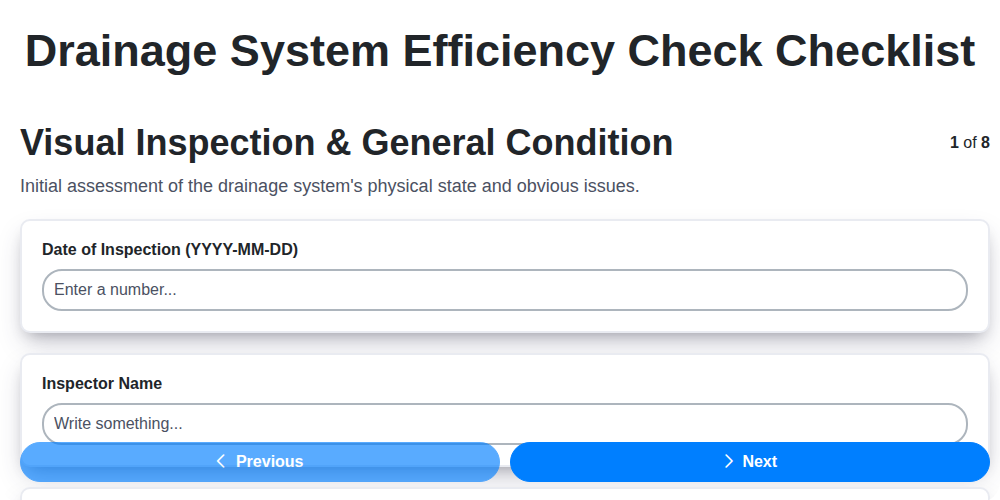
10 Pasos Sencillos para un Sistema de Drenaje Saludable: Tu Plantilla de Lista de Verificación

Dominar el Informe Diario de Inspección de Cultivos: Tu Plantilla de Lista de Verificación para [Cultivo Específico]
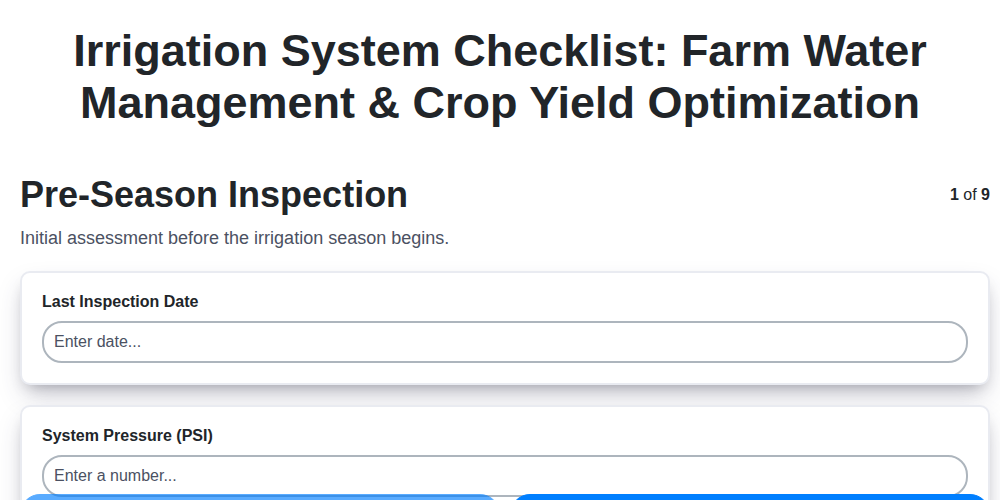
Lista de verificación del sistema de riego: Gestión del agua en la finca y optimización del rendimiento de los cultivos.
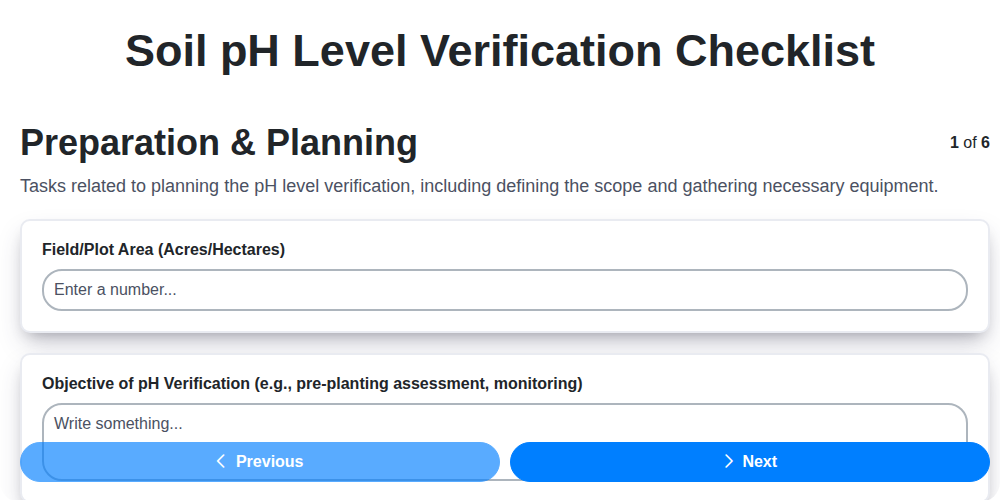
Desbloquee el Potencial de su Jardín: Una Lista de Verificación de pH del Suelo
Lista de verificación para el uso de EPP: Su guía para la seguridad
Lista de verificación de cumplimiento del permiso de vertido de aguas
La plantilla definitiva de verificación y calibración de GPS y agricultura de precisión
Lista de verificación para análisis de escorrentía de agua
Podemos hacerlo juntos
¿Necesita ayuda con las listas de verificación?
¿Tienes alguna pregunta? Estamos aquí para ayudarte. Envía tu consulta y te responderemos a la brevedad.