Streamlining Sustainability: Implementing a Digital Workflow for Smart Waste Management
Publicado: Actualizado: 04/16/2026
Índice
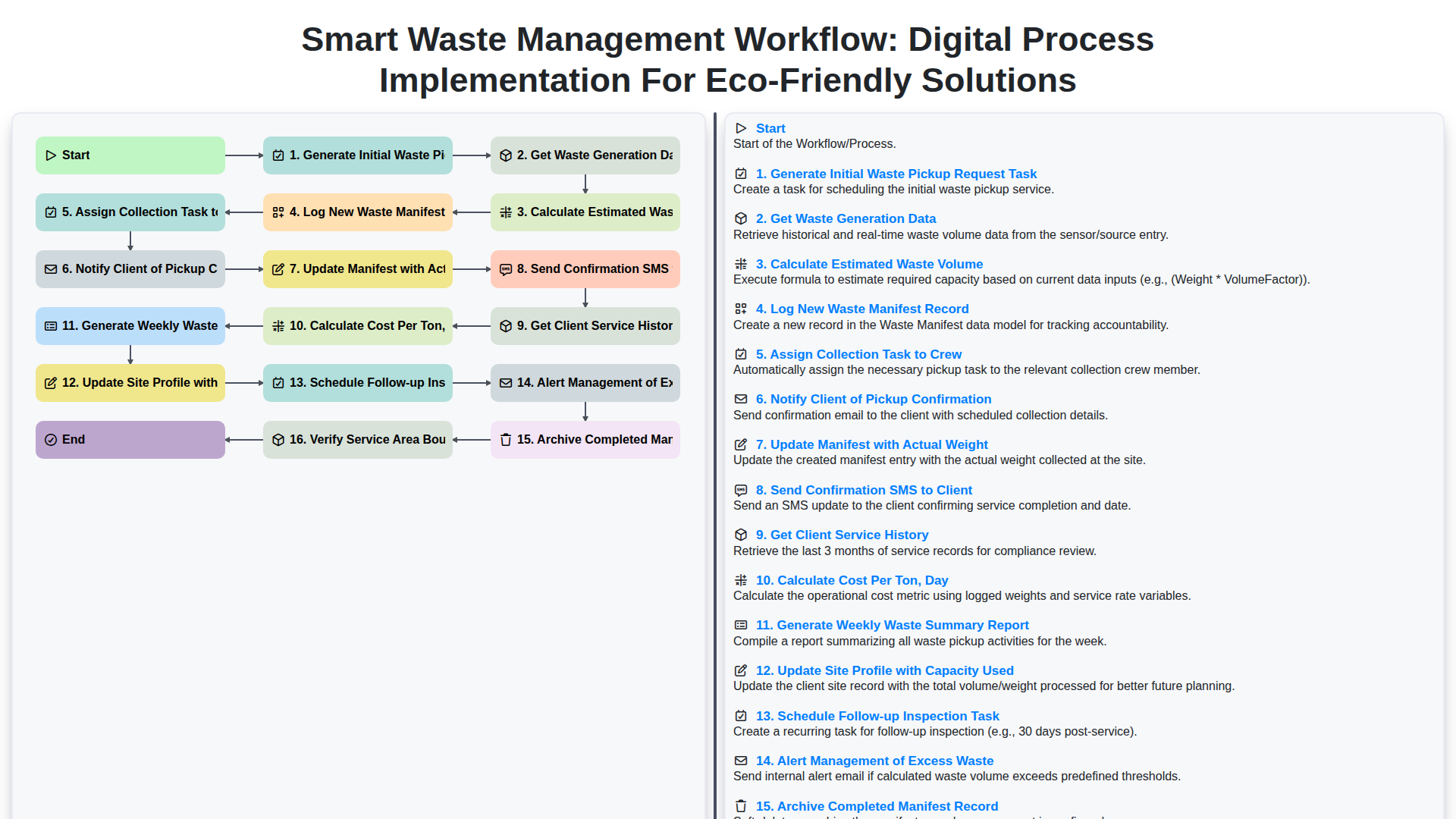
TLDR: This digital workflow automates and optimizes the entire waste management cycle-from initial pickup requests and data gathering to scheduling, client notifications, billing, and compliance reporting. By digitizing steps like waste logging, weight updates, and reporting, organizations can significantly boost efficiency, ensure accurate billing, maintain detailed records, and achieve a measurable step toward true eco-friendly sustainability.
Resources & Links
- Waste Management Technology Providers : Resources offering comprehensive waste management software and IoT solutions.
- Environmental Protection Agency (EPA) Guidelines : Official guidelines and best practices for sustainable waste management.
- Smart City Initiatives in Waste Management : Case studies and reports on how cities are digitizing their waste collection processes.
- Workflow Automation Best Practices : General guides on implementing digital workflows in industrial processes.
- IoT Sensors for Waste Monitoring : Information on smart sensors, fill-level detection, and real-time data collection for bins and trucks.
- Sustainable Waste Industry Reports : Industry publications focusing on circular economy models and waste reduction strategies.
Preguntas frecuentes
What is a digital workflow in the context of smart waste management?
A digital workflow refers to the use of interconnected technologies—such as IoT sensors, real-time data analytics, and automated software—to replace manual processes in waste collection, monitoring, and disposal, ensuring more efficient and data-driven operations.
How does implementing a digital workflow contribute to sustainability?
It promotes sustainability by optimizing collection routes to reduce fuel consumption and carbon emissions, preventing bin overflows through real-time monitoring, and increasing recycling accuracy through better data tracking.
What are the key components of a smart waste management system?
Key components include IoT-enabled sensors in waste containers, GPS tracking for collection vehicles, a centralized cloud-based management platform, and data analytics tools for predictive maintenance and route optimization.
What are the primary benefits for municipalities using digital waste management?
Municipalities can achieve significant cost savings through reduced operational hours, improved urban cleanliness, more efficient resource allocation, and the ability to make informed policy decisions based on real-time waste generation data.
What are the main challenges in transitioning from manual to digital waste workflows?
Common challenges include high initial setup costs for hardware, the need for specialized training for staff, ensuring robust cybersecurity for IoT networks, and integrating new digital tools with existing legacy infrastructure.
¿Te resultó útil este artículo?
Demostración de la Solución de Gestión de Residuos
¡Optimice su gestión de residuos y reduzca el impacto ambiental! ChecklistGuro optimiza la recolección, el seguimiento y la elaboración de informes. Minimice los residuos, reduzca los costos y promueva la sostenibilidad. Administre todo con nuestro Work OS.
Artículos relacionados

Your Ultimate Guide to a Waste Management Facility Project Checklist Template

Your Complete Vegetation Removal Compliance Checklist Template
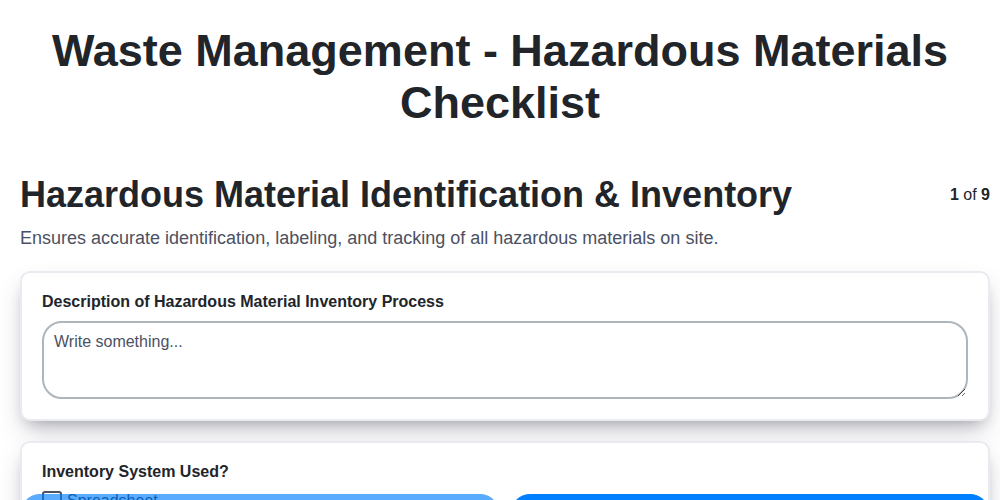
Your Ultimate Hazardous Materials Waste Management Checklist Template
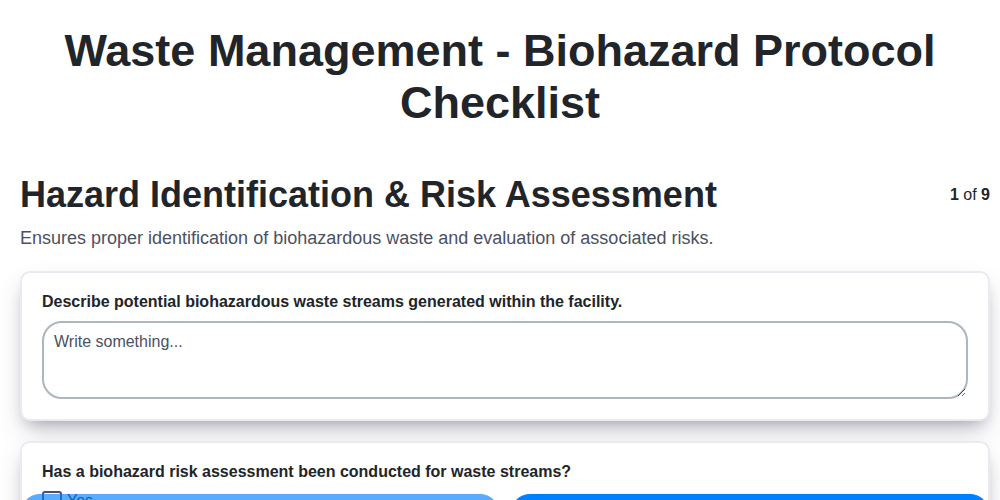
Streamline Biohazard Waste: Your Essential Checklist Template
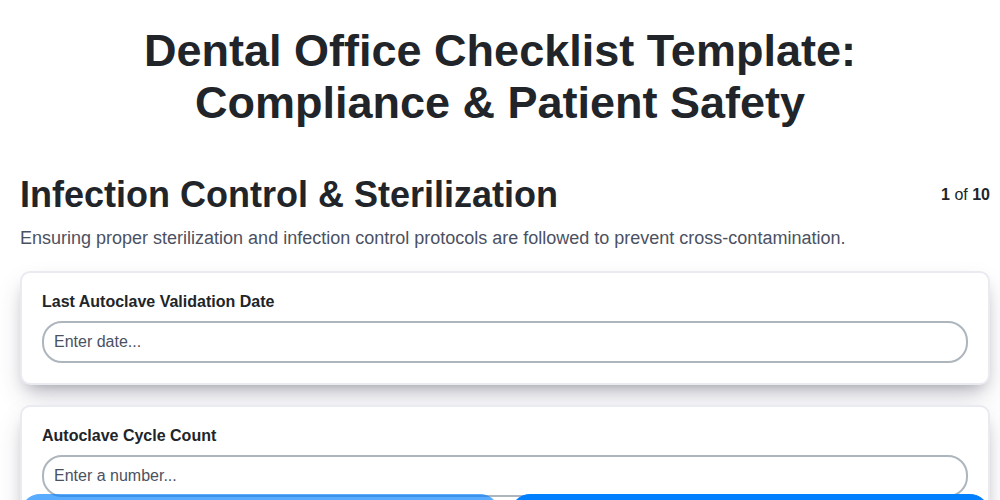
Your Dental Office Safety Net: The Compliance & Patient Safety Checklist Template

Plantilla de verificación semanal de gestión y reciclaje de residuos.
Your Environmental Compliance Checklist Template: A Step-by-Step Guide
Plantilla de Lista de Verificación para Taller de Reparación de Automóviles: Operaciones y Cumplimiento
Podemos hacerlo juntos
¿Necesita ayuda con las listas de verificación?
¿Tienes alguna pregunta? Estamos aquí para ayudarte. Envía tu consulta y te responderemos a la brevedad.