End-to-End Dental Practice Workflow Management for Modern Dentists
Publicado: 18.06.2026 Actualizado: 19.06.2026
Índice
- Introduction: The Evolution of Dental Practice Management
- Phase 1: Seamless Patient Intake and Pre-Appointment Preparation
- Streamlining Communication: Automated Reminders and Notifications
- Phase 2: Efficient Check-In and Clinical Documentation
- Phase 3: Comprehensive Patient Assessment and Treatment Planning
- Phase 4: Financial Transparency and Insurance Verification
- Phase 5: Post-Visit Care and Patient Retention Strategies
- Phase 6: Billing Accuracy and Revenue Cycle Management
- Phase 7: Operational Oversight and Daily Reporting
- Conclusion: Achieving Peak Efficiency in Modern Dentistry
- Resources & Links
TLDR: Discover how to streamline your dental practice operations using a comprehensive, automated end-to-end workflow. This guide explores a step-by-step management system-from patient check-in and insurance verification to treatment planning and post-visit follow-ups-designed to reduce manual errors, optimize scheduling, and enhance patient care through seamless digital automation.
Introduction: The Evolution of Dental Practice Management
In the rapidly evolving landscape of modern dentistry, the difference between a struggling clinic and a thriving practice often lies in the efficiency of its underlying operations. Gone are the days when a dental office could rely solely on manual paper charts, physical appointment books, and memory-based follow-ups. Today, the modern dentist faces a complex web of responsibilities that extends far beyond clinical excellence-ranging from intricate insurance verifications and real-time financial tracking to proactive patient engagement and meticulous post-treatment care.
As patient expectations rise, the demand for a seamless, frictionless experience has never been higher. Patients no longer just want high-quality dental care; they expect timely reminders, transparent billing, and a highly organized clinical journey. To meet these demands, dental professionals must transition from fragmented, reactive tasks to a unified, proactive workflow. Managing a practice is no longer about simply reacting to the next person in the chair; it is about orchestrating an end-to-end ecosystem where every data point-from initial demographic retrieval to the final end-of-day revenue report-is integrated, automated, and optimized for both clinical precision and operational growth.
Phase 1: Seamless Patient Intake and Pre-Appointment Preparation
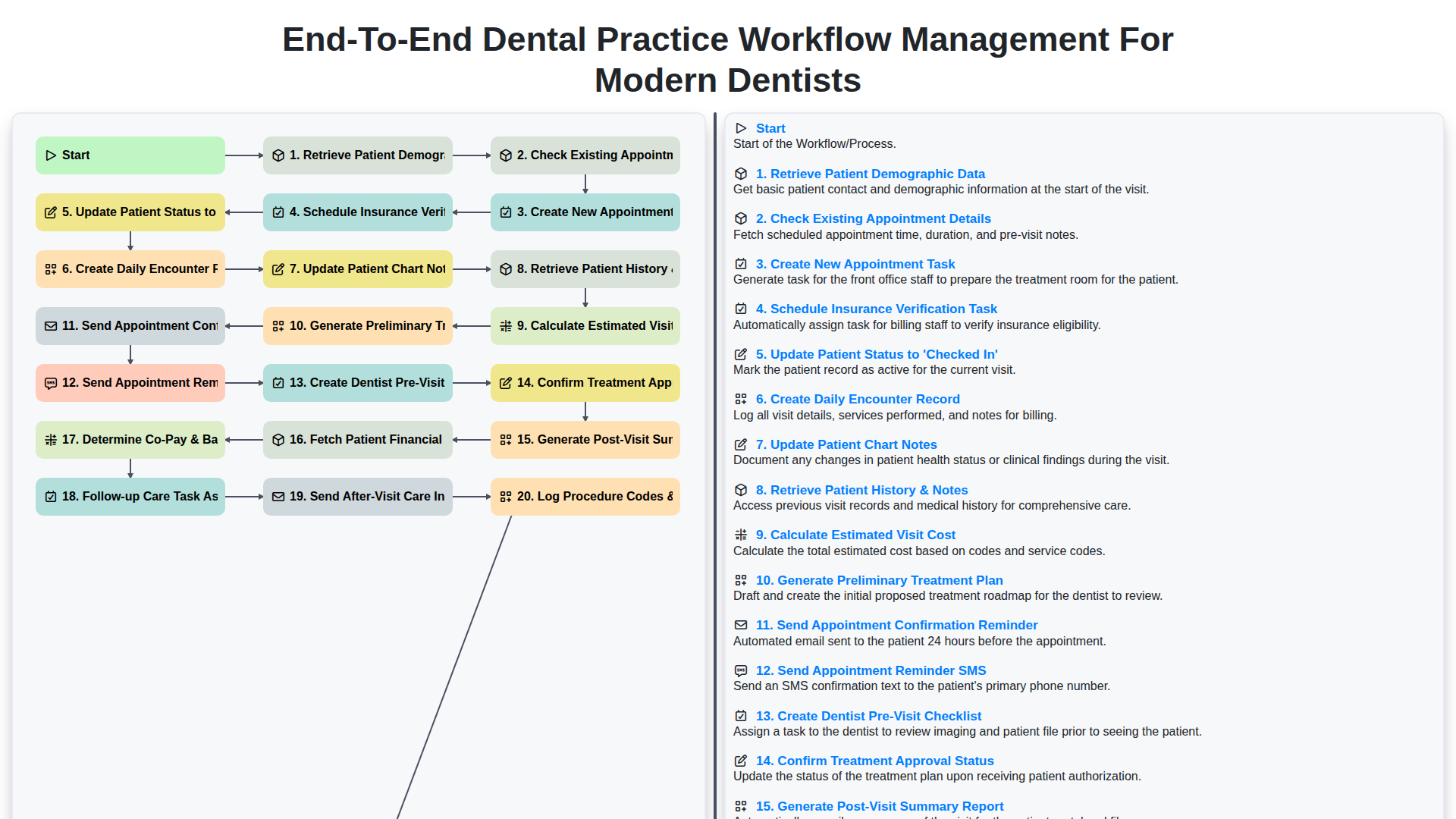
The foundation of a high-performing dental practice lies in the precision of the pre-visit phase. Efficiency begins long before the patient sits in the dental chair. A streamlined workflow starts with the automated retrieval of patient demographic data, ensuring that all contact information is current and accurate. By systematically checking existing appointment details, the front office can identify potential scheduling conflicts or necessary preparations early.
To prevent administrative bottlenecks, the system should automatically create new appointment tasks and schedule insurance verification tasks. This proactive approach ensures that you verify patient insurance eligibility well in advance, preventing the common headache of unexpected coverage denials. To keep the patient engaged and reduce no-shows, the workflow integrates automated communication loops, such as sending appointment confirmation reminders and sending appointment reminder SMS notifications.
As the appointment approaches, the clinical team is empowered by a dentist pre-visit checklist, allowing them to prepare for the specific needs of the incoming patient. If any data gaps are identified during this stage, the system can automatically nudge for missing information via email, ensuring that the clinical team has everything they need to provide seamless care from the moment the patient arrives.
Streamlining Communication: Automated Reminders and Notifications
In a fast-paced dental practice, manual communication is one of the biggest contributors to administrative burnout and missed appointments. To maintain a seamless patient experience, modern dental workflows must leverage automation to bridge the gap between the clinic and the patient.
Effective workflow management goes beyond just sending a simple alert; it involves a multi-layered automated ecosystem. This begins with sending an appointment confirmation reminder immediately after a booking is finalized, ensuring the time slot is locked in. As the appointment date approaches, the system should automatically trigger a reminder SMS, providing a convenient, high-visibility nudge that significantly reduces no-show rates.
However, communication doesn't end when the patient arrives. Automation plays a critical role in post-visit care and administrative follow-ups. For instance, if a patient's documentation is incomplete, the system can automatically trigger a nudge for missing information email, ensuring the front desk isn't stuck chasing paperwork. Once the appointment is concluded, the workflow should transition into the recovery phase by automatically triggering the assignment of follow-up care tasks and the delivery of personalized after-visit care instructions. By automating these touchpoints, you ensure that no patient feels forgotten and no critical follow-up falls through the cracks, allowing your team to focus on clinical excellence rather than manual outreach.
Phase 2: Efficient Check-In and Clinical Documentation
Once the patient arrives at your clinic, the workflow transitions from administrative preparation to active clinical engagement. This phase is critical, as it sets the tone for the entire visit and ensures that the clinical team has the most accurate, real-time information available.
The process begins by seamlessly retrieving patient demographic data and checking existing appointment details to ensure the front desk has a clear picture of the day's schedule. To maintain momentum, the system should automatically update the patient status to 'Checked In', signaling to the clinical staff that the patient is ready. Simultaneously, the workflow triggers the creation of a daily encounter record, serving as the foundation for all clinical documentation that follows.
As the patient moves to the operatory, the focus shifts to personalized care. The clinician must retrieve patient history and notes to review any changes in medical status or previous dental concerns. With this context, the practitioner can then update patient chart notes in real-time, ensuring a digital paper trail that is both precise and compliant.
To streamline the transition from diagnosis to treatment, the workflow facilitates the generation of a preliminary treatment plan and assists in calculating the estimated visit cost. By having these details readily available, you can confirm treatment approval status with the patient on the spot, reducing the friction of unexpected costs. This integrated approach ensures that documentation is not just a record of what happened, but a roadmap for the patient's ongoing oral health.
Phase 3: Comprehensive Patient Assessment and Treatment Planning
Once the patient has been checked in and the initial clinical encounter has begun, the workflow shifts from administrative preparation to clinical precision. This phase is the core of the dental visit, where data-driven insights meet personalized patient care. The process begins by retrieving patient history and notes to ensure the clinician is fully briefed on any underlying health conditions or previous dental concerns. Simultaneously, the system allows the dentist to create a dentist pre-visit checklist, ensuring all necessary diagnostic steps are addressed before the examination even begins.
As the examination progresses, the workflow moves into active diagnostics and financial transparency. The practitioner will update patient chart notes in real-time, ensuring an accurate digital footprint of the current oral health status. To bridge the gap between clinical needs and patient commitment, the system facilitates the generation of a preliminary treatment plan based on the findings. This is paired with a critical financial breakdown: the system will fetch patient financial details, determine co-pays and balances due, and calculate the estimated visit cost. By providing this clarity upfront, the practice reduces sticker shock and fosters trust.
To ensure no detail is overlooked, the workflow integrates automated safeguards, such as confirming treatment approval status and triggering a nudge for missing information email if certain diagnostic data or consent forms are incomplete. This phase is not merely about diagnosing issues; it is about creating a seamless, transparent, and highly organized roadmap for the patient's long-term oral health.
Phase 4: Financial Transparency and Insurance Verification
In a modern dental practice, financial clarity is just as critical to patient satisfaction as the quality of clinical care. A seamless workflow must bridge the gap between clinical necessity and administrative accuracy. This phase begins with the vital step of verifying patient insurance eligibility and scheduling insurance verification tasks well before the patient sits in the chair. By proactively fetching patient financial details and determining co-pays and balances due, your team can eliminate the sticker shock that often leads to appointment cancellations or disputes.
To ensure total transparency, the workflow integrates a system to calculate estimated visit costs and generate preliminary treatment plans upfront. This allows patients to make informed decisions regarding their oral health investments. Furthermore, the system assists the administrative staff by providing a nudge for missing information via email, ensuring that all necessary documentation is present before the service is rendered. By automating the movement from confirming treatment approval status to sending billing submission tasks, you minimize manual errors and ensure that the practice's revenue cycle remains robust, predictable, and transparent for both the provider and the patient.
Phase 5: Post-Visit Care and Patient Retention Strategies
The conclusion of a dental appointment is just as critical as the clinical procedure itself. A seamless transition from the operatory to the checkout desk is where long-term patient loyalty is solidified. To ensure clinical excellence translates into patient retention, your workflow must automate the transition from treatment to follow-up.
The process begins immediately after the procedure with the critical task of logging procedure codes and notes into the patient's permanent record, ensuring accuracy for both clinical and billing purposes. As the patient prepares to leave, the system should automatically calculate the next recall interval, ensuring that their next cleaning or check-up is already strategically planned within their treatment roadmap.
However, the care doesn't end when the patient exits the clinic. A modern, automated workflow incorporates a robust post-visit communication loop. This includes the automated delivery of after-visit care instructions, providing patients with the necessary guidance to manage their recovery at home, which reduces anxiety and improves clinical outcomes.
Furthermore, the final stage of the workflow involves administrative closure: archiving completed visit data to maintain a clean, efficient database, while simultaneously analyzing the day's performance by aggregating total service revenue and generating a daily end-of-day report. By automating these final steps, you ensure that your practice isn't just treating patients, but is actively nurturing a cycle of continuous, high-quality care that brings them back to your chair.
Phase 6: Billing Accuracy and Revenue Cycle Management
Precision in the final stages of a patient visit is what separates a growing practice from one struggling with revenue leakage. Once the clinical work is complete, the workflow shifts focus toward financial integrity and administrative closure. This phase is centered around several critical touchpoints: fetching patient financial details and performing a real-time audit to determine co-pay and balance due. By reconciling these figures immediately, you eliminate the awkwardness of post-visit billing disputes.
To ensure seamless reimbursement, the workflow triggers a billing submission task while simultaneously monitoring for any documentation gaps via a nudge for missing information email to the clinical staff. The ultimate goal of this phase is to aggregate total service revenue and generate a daily end-of-day report, providing practice owners with an instant, transparent view of the day's profitability. By automating these financial checkpoints, modern dentists can ensure that every procedure performed is accurately captured, billed, and collected.
Phase 7: Operational Oversight and Daily Reporting
The final phase of a streamlined dental workflow focuses on closing the loop for the day, ensuring that every clinical action is accounted for and every financial transaction is recorded. Efficient practice management relies on the ability to transition from patient care to administrative closure without manual errors or overlooked details.
This stage begins with the critical task of aggregating total service revenue to ensure the day's earnings align with the procedures performed. To maintain a complete clinical and financial audit trail, the system must generate a daily end-of-day report, providing practitioners with an immediate snapshot of productivity and cash flow.
Beyond simple bookkeeping, this phase is about proactive maintenance and long-term patient retention. The workflow automatically triggers the calculation of the next recall interval, ensuring that the patient's next preventive visit is already on the horizon. Finally, to maintain a lean and organized digital database, the system will archive completed visit data, preserving patient records securely while keeping the active workspace uncluttered and optimized for the next business day.
Conclusion: Achieving Peak Efficiency in Modern Dentistry
Mastering an end-to-end dental workflow is no longer just about clinical excellence; it is about operational precision. By transitioning from fragmented, manual processes to a unified, automated management system, modern dentists can eliminate the administrative bottlenecks that lead to staff burnout and patient dissatisfaction. When every step-from the initial retrieval of patient demographics and insurance verification to the final generation of end-of-day reports-is seamlessly interconnected, your practice operates as a single, cohesive unit.
Implementing this level of structured automation does more than just save time; it creates a frictionless patient experience. When your team can focus on delivering high-quality care instead of chasing missing information or manual data entry, the entire practice scales more effectively. Ultimately, a well-optimized workflow allows you to reclaim your focus, ensuring that your clinic remains profitable, your patient records remain impeccable, and your primary focus stays exactly where it belongs: on the health and smiles of your patients.
Resources & Links
- American Dental Association (ADA): A primary resource for dental practice management standards, clinical guidelines, and industry best practices for modern dentistry.
- Dentistry Today: In-depth articles and news regarding the latest technologies, workflow innovations, and practice management trends in the dental industry.
- Dental Office Magazine: A comprehensive resource for dental practice owners focusing on operational efficiency, staff management, and clinical excellence.
- DentistryIQ: Expert insights and educational resources focused on practice growth, patient experience, and implementing modern digital workflows.
- Academy of General Dentistry: Resources for continuing education and staying updated on clinical documentation and patient care standards.
- Dental Tribune: Global insights into dental technology, practice management software, and the evolution of digital dentistry workflows.
¿Te resultó útil este artículo?
Comentarios
Aún no hay comentarios. ¡Sé el primero en añadir uno!
Demostración de la solución para la gestión de consultorios dentales
¡Simplifique su consultorio dental y mejore la atención al paciente! ChecklistGuro optimiza la programación de citas, los registros de pacientes y la facturación. Mejore la eficiencia, reduzca los errores y aumente la satisfacción del paciente. Administre todo con nuestro sistema operativo de trabajo.
Artículos relacionados
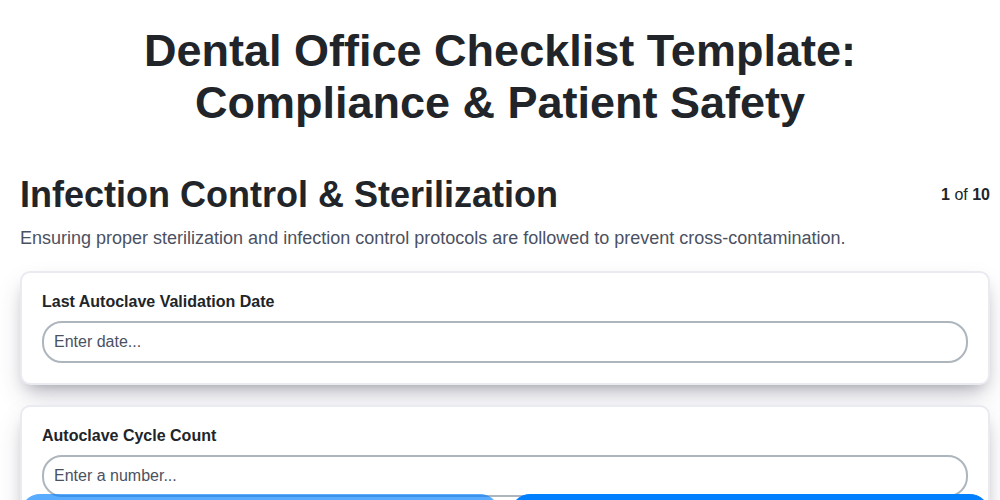
Your Dental Office Safety Net: The Compliance & Patient Safety Checklist Template
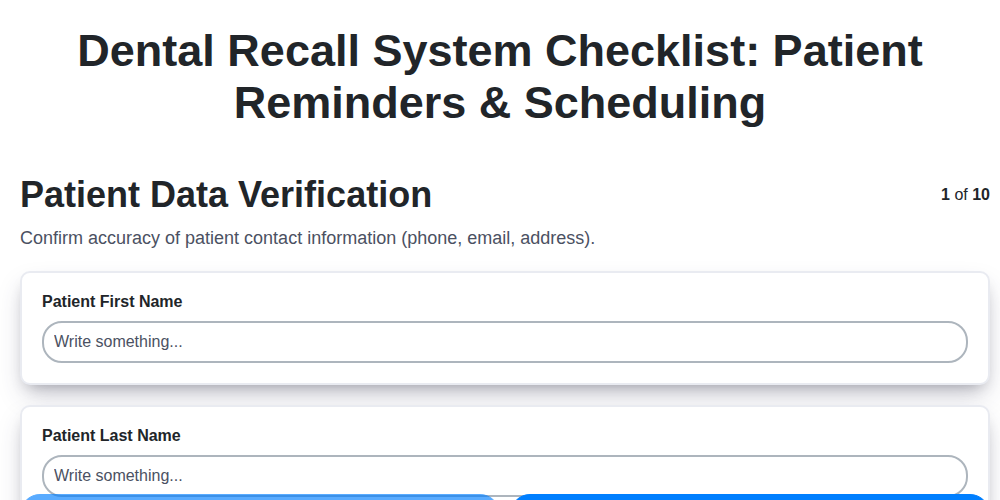
Dominando los Recordatorios Odontológicos: Tu Plantilla Definitiva de Lista de Verificación

Mastering Dental Case Presentations: Your Checklist Template for Success

Your Dental Compliance Checklist: A State & Federal Guide
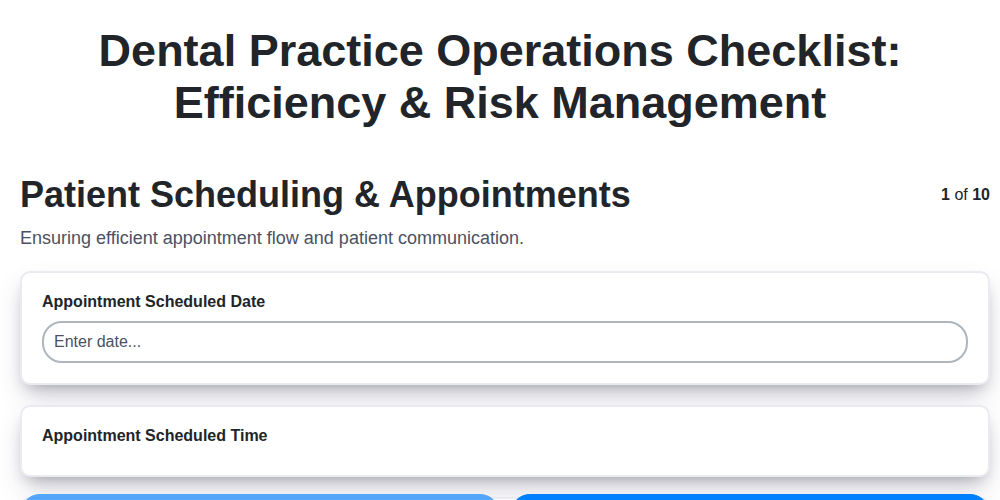
Dental Operations Checklist: Boost Efficiency & Manage Risk

La Lista de Verificación Definitiva para Laboratorio Dental: Fabricación y Aseguramiento de la Calidad

Your Complete Dental Infection Control Checklist: PPE & Surface Disinfection
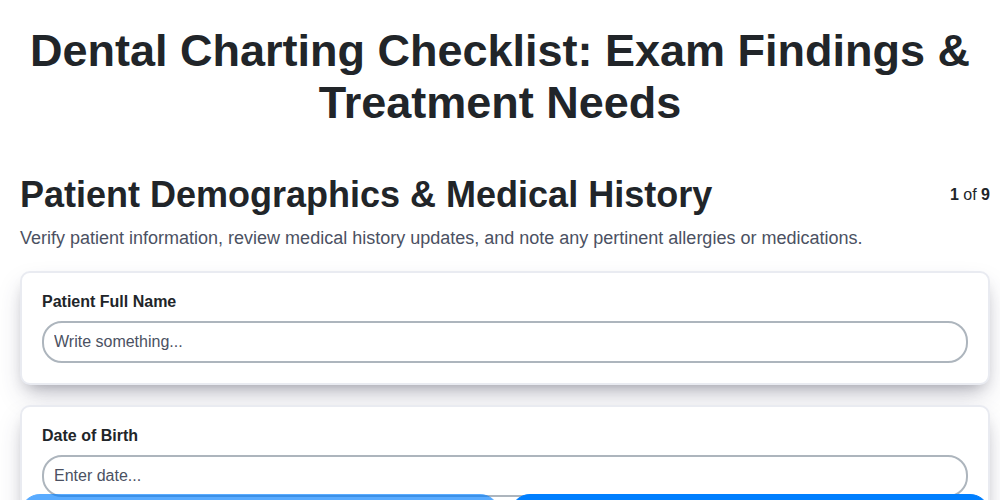
Dominando los Exámenes Odontológicos: Tu Plantilla Completa de Lista de Verificación para la Toma de Notas
Podemos hacerlo juntos
¿Necesita ayuda con las listas de verificación?
¿Tienes alguna pregunta? Estamos aquí para ayudarte. Envía tu consulta y te responderemos a la brevedad.