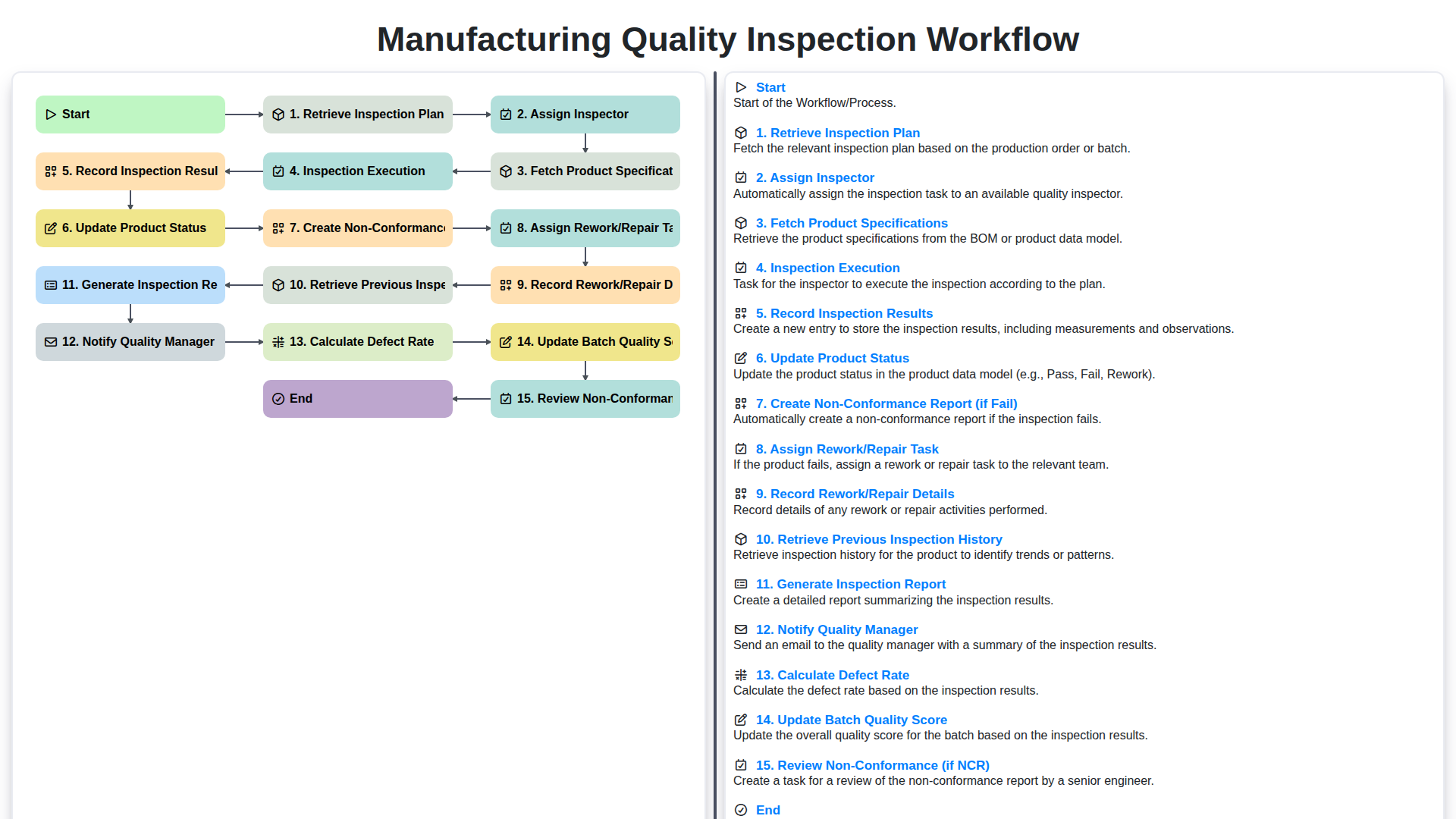
Flujo de trabajo para la inspección de calidad en la fabricación: una guía paso a paso.
Publicado: 30/03/2026 Actualizado: 17/09/2026
Índice
- Introducción: ¿Por qué es importante contar con un proceso sólido de control de calidad?
- 1. Recuperar el plan de inspección.
- 2. Asignar al inspector adecuado.
- 3. Obtención de las especificaciones del producto: garantía de precisión.
- 4. Ejecución de la inspección: siguiendo el plan.
- 5. Registro de los resultados de la inspección: documentación detallada.
- 6. Actualización del estado del producto: visibilidad en tiempo real.
- 7. Creación de un informe de no conformidad (NCR): gestión de fallos.
- 8. Asignación de tareas de retrabajo/reparación: corrección de deficiencias.
- 9. Registro de los detalles de las tareas de reelaboración o reparación: seguimiento de las mejoras.
- 10. Acceder al historial de inspecciones anteriores: aprender de las experiencias pasadas.
- 11. Generación del informe de inspección: una visión general completa.
- 12. Informar al responsable de Calidad: mantener a las partes interesadas al tanto de la situación.
- 13. Cálculo de la tasa de defectos y actualización de la puntuación de calidad del lote.
- 14. Revisión de los informes de no conformidad (INC) y mejora continua.
- Recursos y enlaces
En resumen:Este flujo de trabajo optimiza sus inspecciones de calidad en el proceso de fabricación, desde la recepción del plan hasta la generación de informes y la gestión de las no conformidades. Garantiza procesos de inspección coherentes, un registro preciso y proporciona información basada en datos para mejorar la calidad del producto e identificar áreas de optimización del proceso, al tiempo que mantiene a todos informados y responsables.
Introducción: ¿Por qué es importante contar con un proceso sólido de control de calidad?
En el competitivo entorno de la fabricación actual, mantener una calidad constante del producto no es solo deseable, sino esencial. Un fallo en la calidad puede provocar costosos retiros de productos, dañar la reputación, generar insatisfacción en los clientes y, en última instancia, provocar pérdidas económicas. Si bien las rigurosas inspecciones de calidad son vitales, simplemente realizarlas no es suficiente. Un flujo de trabajo de inspección de calidad estructurado y bien definido proporciona la base para garantizar que estas inspecciones se realicen de forma constante, se documenten exhaustivamente y se tomen medidas eficaces en consecuencia.
Sin un flujo de trabajo sólido, se corre el riesgo de que haya incoherencias en los procesos de inspección, dificultades para rastrear los defectos y falta de datos útiles para impulsar la mejora continua. Esto puede generar ineficiencias, aumentar la tasa de productos defectuosos y fomentar un enfoque reactivo en la gestión de la calidad. Por otro lado, un flujo de trabajo proactivo y documentado proporciona una clara rendición de cuentas, agiliza los procesos, permite tomar decisiones basadas en datos y, en última instancia, genera confianza en sus productos y en su marca. En este artículo, analizaremos en detalle un flujo de trabajo completo para la inspección de la calidad en la fabricación, describiendo cada paso y destacando su importancia para lograr una calidad óptima del producto.
1. Recuperar el plan de inspección.
Antes de que pueda comenzar cualquier inspección física, el proceso comienza con la recuperación del plan de inspección correspondiente. Este plan sirve como guía para toda la verificación de calidad, y establece qué aspectos del producto se van a evaluar, los límites de calidad aceptables y los métodos de medición. Normalmente, esto implica acceder a un sistema centralizado, a menudo un sistema de ejecución de la fabricación (MES) o un sistema de gestión de la calidad (QMS), utilizando un identificador único del producto (como un número de serie o un código de lote). El sistema recuperará entonces el plan de inspección correspondiente, garantizando que el inspector trabaje con los parámetros y criterios correctos para el lote de producto específico. Este paso inicial garantiza la coherencia y evita errores derivados del uso de estándares incorrectos. El plan suele incluir listas de verificación detalladas, referencias de planos y procedimientos de prueba específicos, proporcionando una guía clara y concisa para el inspector.
2. Asignar al inspector adecuado.
La eficacia de su proceso de inspección de calidad depende de contar con los siguientes elementos:correctola persona que la realiza. Simplemente asignar un inspector en función de su disponibilidad no es suficiente; se trata de alinear las habilidades y la experiencia con la complejidad del producto y los requisitos del plan de inspección.
Aquí te explicamos cómo asegurarte de asignar a los inspectores de forma estratégica:
- Correspondencia de habilidades:¿Cuenta el inspector con la experiencia necesaria? Por ejemplo, un montaje electrónico complejo requiere un conjunto de habilidades diferente al que se necesita para una inspección visual de piezas de plástico moldeado. Tenga en cuenta factores como la experiencia con herramientas de medición específicas (CMM, calibradores, sistemas de visión) y el conocimiento de las normas relevantes del sector.
- Nivel de conocimiento del producto:Los inspectores que ya hayan trabajado con una línea de productos específica tendrán una ventaja, ya que podrán identificar posibles problemas y comprender las especificaciones más detalladas.
- Calibración y capacitación:Asegúrese de que los inspectores estén debidamente capacitados en los procedimientos de inspección y de que dispongan de certificados de calibración válidos para todas las herramientas que utilicen. También es fundamental realizar cursos de actualización periódicos.
- Distribución de la carga de trabajo:Evite sobrecargar a los inspectores individuales. Implemente un sistema para distribuir las tareas de inspección de manera equitativa y prevenir el agotamiento, lo que podría llevar a que se pasen por alto detalles importantes.
- Gestión de registros:Mantenga un registro claro de las habilidades, la capacitación y las certificaciones de los inspectores para facilitar la toma de decisiones informadas sobre las asignaciones. Una matriz de habilidades puede ser una herramienta valiosa en este caso.
Al asignar estratégicamente a los inspectores, no solo completas una tarea, sino que también garantizas la calidad del producto y minimizas los posibles riesgos.
3. Obtención de las especificaciones del producto: garantía de precisión.
Antes de que un inspector examine un producto, necesita tener a su disposición la fuente de información definitiva: las especificaciones del producto. Esto no es solo un mero trámite, sino un paso fundamental que afecta directamente a la validez y la coherencia de la inspección. Dicho de forma sencilla, ¿cómo puede un inspector determinar si un producto cumple con los requisitos si no tiene acceso a...?saber¿cuáles son esos requisitos?
El proceso de obtención de las especificaciones del producto debe estar automatizado y vinculado directamente al plan de inspección. Idealmente, el sistema debería recuperar la última versión aprobada de las especificaciones, evitando confusiones causadas por documentos obsoletos. Esto podría implicar la extracción de datos de un sistema de gestión del ciclo de vida del producto (PLM), un módulo ERP o una base de datos de ingeniería centralizada. La información clave que se debe recuperar debe incluir tolerancias dimensionales, especificaciones de materiales, criterios de rendimiento, directrices sobre la apariencia visual y cualquier norma reglamentaria relevante.
Es fundamental garantizar que se estén utilizando las especificaciones correctas. El sistema debe incorporar control de versiones, marcas de tiempo y verificación de usuarios para confirmar la integridad de los datos. Además, proporcionar al inspector una visualización clara y accesible de las especificaciones (quizás en una lista de verificación digital o en un formato interactivo) agiliza el proceso de inspección y minimiza los errores. Un error humano aquí puede desencadenar una serie de resultados de inspección inexactos, lo que afectaría a la calidad del producto y podría dar lugar a costosas retiradas del mercado.
4. Ejecución de la inspección: siguiendo el plan.
Aquí es donde se lleva a cabo el trabajo práctico. Guiado por el plan de inspección recuperado (que detalla pruebas, mediciones y criterios de aceptación específicos), el inspector asignado examina minuciosamente el producto. No se trata simplemente de una inspección visual; es un proceso sistemático.
El plan establece el orden de las inspecciones, las herramientas que se utilizarán (por ejemplo, calibradores, medidores, microscopios) y la frecuencia con la que se evaluarán determinadas características. Los inspectores deben seguir estrictamente estas directrices para garantizar la coherencia y la precisión. Deben buscar desviaciones de las especificaciones del producto, identificar cualquier imperfección y documentar sus hallazgos.
Una observación clara y concisa es fundamental. Los inspectores no deben simplemente señalar la existencia de un defecto, sino que deben detallarlo.quéel defecto es (por ejemplo, rayadura, abolladura, decoloración),dóndesu ubicación, yqué tan graveAsí es. Esta documentación detallada es fundamental para el análisis posterior y la aplicación de medidas correctivas. Se presta especial atención a las funciones críticas, que a menudo se destacan en el plan de inspección, para garantizar que cumplen con las tolerancias requeridas.
5. Registro de los resultados de la inspección: documentación detallada.
Un registro preciso y detallado es la base de cualquier flujo de trabajo de inspección de calidad exitoso. Durante la fase de
El paso de
- Defectos específicos detectados:Describa con claridad cada defecto detectado, utilizando una terminología estandarizada siempre que sea posible. Evite términos vagos; sea preciso al indicar la ubicación, la gravedad y las características del problema. Las fotos o los vídeos son muy útiles en este caso, ya que proporcionan pruebas visuales para su posterior revisión.
- Medidas y dimensiones:Registre todas las mediciones realizadas durante la inspección y compárelas con las especificaciones definidas. Incluya las unidades de medida y la herramienta utilizada para realizar la medición.
- Firma/identificación del inspector:Cada registro de inspección debe estar claramente vinculado al inspector correspondiente, lo que garantiza la responsabilidad y la trazabilidad.
- Fecha y hora:Registre la fecha y hora del evento para realizar un seguimiento cronológico preciso.
- Número de lote:Vincule directamente los resultados con el lote específico del producto que se está inspeccionando.
- Registros digitales frente a registros en papel:Aunque todavía existen registros en papel, los sistemas digitales son cada vez más populares. Los registros digitales ofrecen una mayor facilidad de búsqueda, reducen los errores y facilitan su integración con otros sistemas de gestión de la calidad.
Un registro adecuado garantiza que todas las partes interesadas tengan acceso a la información necesaria para el análisis, la implementación de medidas correctivas y la mejora continua.
6. Actualización del estado del producto: visibilidad en tiempo real.
Un paso fundamental para mantener la calidad y la eficiencia es la actualización inmediata del estado del producto a lo largo de todo el proceso de inspección. Una vez que se completa la inspección y se registran los resultados, el estado del producto cambia: de
En primer lugar, permite que otros departamentos -como producción, logística y ventas- comprendan con precisión en qué etapa del proceso se encuentra cada producto. Saber si un producto ha superado la inspección o está en proceso de revisión evita cuellos de botella y facilita la planificación proactiva. En segundo lugar, permite una respuesta rápida a los problemas. Si un lote de productos no supera la inspección, se alerta inmediatamente a las partes interesadas, lo que permite una investigación y una acción correctiva rápidas.
Nuestro sistema actualiza automáticamente el estado del producto, lo que elimina la necesidad de realizar tareas manuales y reduce el riesgo de errores. Esto garantiza que todas las personas involucradas tengan acceso a la información más actualizada, lo que fomenta la colaboración y promueve la mejora continua de los procesos de fabricación. Además, se mejora significativamente la capacidad de rastreo, ya que conocer el historial completo y los cambios de estado de cada producto proporciona datos valiosos para el análisis y las futuras iniciativas de calidad.
7. Creación de un informe de no conformidad (NCR): gestión de fallos.
Cuando una inspección no cumple con los criterios de aceptación definidos, el proceso pasa inmediatamente a la creación de un informe de no conformidad (INR). Esto no se limita simplemente a documentar el fallo; es el primer paso crucial para tomar medidas correctivas.
El informe de no conformidad (NCR) debe detallar minuciosamente la falla. Esto incluye el identificador del producto (número de serie, número de lote), el punto de inspección específico donde se produjo la falla, el defecto observado (sea lo más descriptivo posible; incluya fotos o videos si es posible), la evaluación del inspector y la fecha y hora de la falla. Una documentación clara e inequívoca es fundamental para la trazabilidad y la resolución eficaz de problemas.
El informe de no conformidad debe documentarse formalmente dentro del sistema de gestión de calidad y asignársele un identificador único para su seguimiento. Es importante identificar la causa raíz del defecto, incluso en esta etapa inicial. Si bien un análisis exhaustivo de la causa raíz puede realizarse más adelante, una evaluación preliminar ayuda a priorizar el problema y, potencialmente, a evitar que vuelva a ocurrir de inmediato.
El informe de no conformidad (NCR) sirve como un disparador formal para iniciar una investigación y tomar medidas correctivas. Garantiza que la falla no se ignore y que se tomen las medidas necesarias para evitar que se produzcan incidentes similares en el futuro. El sistema debe enrutar automáticamente el NCR al personal correspondiente para su revisión y acción, generalmente un ingeniero o un especialista en calidad.
8. Asignación de tareas de retrabajo/reparación: corrección de deficiencias.
Una vez que se identifica una no conformidad y se crea un informe de no conformidad (INR), la atención se centra en las acciones correctivas. En este punto, la asignación de tareas de retrabajo o reparación se vuelve fundamental. El proceso no consiste simplemente en entregar el producto defectuoso; es un paso cuidadosamente planificado dentro del flujo de trabajo de inspección de calidad.
La tarea de retrabajo/reparación asignada define claramente el problema, haciendo referencia al informe de no conformidad (NCR) y a los resultados específicos de la inspección. Esto garantiza que el técnico comprenda...exactamentequé debe corregirse. La tarea debe incluir:
- Descripción detallada del problema:Además de indicar que se encontró un defecto, describa el fallo específico, su ubicación y el posible impacto que puede tener.
- Acción requerida:Indique claramente los pasos necesarios para corregir el defecto. Esto podría incluir volver a mecanizar, volver a soldar, reemplazar un componente u otras acciones específicas.
- Técnico/Equipo asignado:Una persona o un equipo específico responsable de realizar las modificaciones o reparaciones necesarias.
- Tiempo estimado de finalización:Un plazo realista para la finalización del trabajo, teniendo en cuenta la complejidad y la disponibilidad de recursos.
- Herramientas y materiales necesarios:Enumerar los recursos necesarios ayuda a evitar retrasos.
La tarea asignada debe registrarse dentro del sistema, lo que garantiza la rendición de cuentas y el seguimiento del progreso. Es fundamental que el sistema permita documentar cualquier dificultad que surja durante el proceso de revisión o reparación, y que el técnico pueda solicitar aclaraciones o recursos adicionales. Este ciclo de retroalimentación es esencial para la mejora continua dentro del proceso de fabricación.
9. Registro de los detalles de las tareas de reelaboración o reparación: seguimiento de las mejoras.
Una vez que se ha asignado una tarea de retrabajo o reparación, es fundamental mantener registros detallados. En esta sección se explica cómo documentar las acciones correctivas que se llevaron a cabo. La información que se debe registrar incluye: la fecha y la hora del retrabajo/reparación, las acciones específicas realizadas (por ejemplo, volver a soldar, volver a mecanizar, reemplazar componentes), las herramientas y los materiales utilizados, y el nombre del técnico que realizó el trabajo. Son esenciales descripciones detalladas del proceso de reparación en sí; las entradas vagas, como
10. Acceder al historial de inspecciones anteriores: aprender de las experiencias pasadas.
Cada lote de productos, e incluso cada producto individual, tiene una historia. Comprender esa historia, y en particular, los resultados de las inspecciones anteriores, es fundamental para la mejora continua y la gestión proactiva de la calidad. Recuperar y revisar los datos de inspecciones anteriores no solo consiste en saber qué ocurrió antes, sino también en identificar tendencias, las causas raíz de los defectos recurrentes y verificar la eficacia de las acciones correctivas anteriores.
Durante el proceso de inspección, el sistema debe recuperar automáticamente el historial de inspecciones del producto o del lote. Este historial debe incluir detalles como:
- Fechas y resultados de las inspecciones anteriores:Un registro cronológico de las inspecciones realizadas en el pasado, que incluye el resultado (aprobado/reprobado) y cualquier comentario de los inspectores anteriores.
- Tendencias de los defectos:Identificación de errores específicos que han aparecido de forma recurrente en el pasado. ¿Existen funciones que suelen generar problemas de forma constante?
- Acciones correctivas:Registros de cualquier informe previo de no conformidad (NCR) y de las acciones tomadas para resolverlos. ¿Fueron estas acciones eficaces para solucionar el problema subyacente?
- Notas del inspector:Información valiosa proporcionada por inspectores anteriores sobre posibles problemas o anomalías detectadas.
Al analizar este historial, los inspectores pueden obtener una comprensión más profunda del perfil de calidad del producto y de los posibles riesgos. Esto les permite adaptar su enfoque de inspección, prestar mayor atención a las áreas problemáticas y contribuir a un proceso general de control de calidad más eficaz. Además, estos datos históricos son de gran valor para los ingenieros de calidad cuando investigan problemas de calidad persistentes e implementan mejoras a largo plazo.
11. Generación del informe de inspección: una visión general completa.
El último paso del flujo de trabajo de inspección de calidad en la fabricación culmina con la generación de un informe de inspección completo. Este informe no es solo un mero trámite; es un documento fundamental que proporciona información valiosa sobre la calidad del producto, la eficacia del proceso y las posibles áreas de mejora.
La generación del informe extrae datos de cada paso anterior en el flujo de trabajo. Esto incluye el plan de inspección recuperado, las tareas asignadas al inspector, las especificaciones del producto obtenidas, los resultados de la inspección registrados y cualquier detalle relacionado con las no conformidades. Integra información de las tareas de retrabajo/reparación, el historial de inspecciones anteriores y la tasa de defectos calculada, y finalmente alimenta la puntuación de calidad del lote.
Un informe de inspección bien estructurado debe presentar de forma clara y concisa lo siguiente:
- Información básica:Nombre del producto, número de lote, fecha y hora de la inspección, nombre del inspector.
- Detalles de la inspección:Se incluye una referencia al plan de inspección utilizado, a las especificaciones del producto que se verificaron y un resumen del proceso de inspección.
- Resumen de los resultados:Una visión general clara de los resultados de la inspección: aprobada, reprobada o aprobada condicionalmente, con un desglose detallado de cada verificación individual y sus resultados.
- Detalles de la no conformidad:Si se creó un informe de no conformidad (NCR), este deberá incluir el número del NCR y una breve descripción del problema.
- Detalles de la revisión/reparación:Si fue necesario realizar trabajos de retrabajo o reparación, el informe deberá detallar las tareas realizadas y los resultados obtenidos.
- Tasa de defectos y puntuación de calidad:Muestra la tasa de defectos calculada y la puntuación de calidad del lote actualizada.
- Historial anterior:Un breve extracto del historial de inspecciones anterior recuperado, que destaca las tendencias y el rendimiento pasado.
- Aprobación final:Espacios para que el inspector y el responsable de calidad firmen el informe, confirmando su exactitud y exhaustividad.
El informe generado se distribuye a las partes interesadas pertinentes, incluidos el responsable de calidad, el equipo de producción e incluso, posiblemente, los clientes, lo que proporciona transparencia y facilita la toma de decisiones basada en datos. Además, el informe sirve como un registro histórico fundamental, que permite analizar tendencias y llevar a cabo esfuerzos continuos para mejorar la calidad.
12. Informar al responsable de Calidad: mantener a las partes interesadas al tanto de la situación.
Un paso fundamental, pero que a menudo se pasa por alto, en un flujo de trabajo sólido para la inspección de calidad en la fabricación es la notificación oportuna al responsable de calidad. No se trata simplemente de enviar un correo electrónico; se trata de garantizar que las personas adecuadas estén informadas en el momento adecuado, lo que permite resolver los problemas de forma proactiva y evitar que estos se agraven.
La notificación debe realizarse inmediatamente después de registrar los resultados de la inspección.especialmenteSi se detecta alguna no conformidad. Esta notificación debe incluir un resumen de los resultados de la inspección, destacando el(los) producto(s) afectado(s), los defectos específicos detectados y el nivel de gravedad (si corresponde). Las notificaciones automatizadas, activadas por eventos del sistema, son ideales para garantizar la rapidez y la coherencia.
El objetivo no es sobrecargar al responsable de Calidad con detalles minuciosos de cada inspección. En cambio, se trata de señalar posibles problemas que requieran su atención, ya sea una tendencia en los defectos, un grupo de fallos dentro de un lote o un incumplimiento particularmente crítico. Esto permite al responsable de Calidad investigar más a fondo, determinar si es necesaria alguna medida adicional (como una interrupción temporal de la producción o un ajuste del proceso) y mantener el control de calidad general.
En última instancia, una comunicación proactiva fomenta la confianza y la transparencia entre los equipos de inspección y la dirección, lo que fortalece el sistema de calidad en su conjunto.
13. Cálculo de la tasa de defectos y actualización de la puntuación de calidad del lote.
Una vez que se completan las inspecciones y se registran los resultados, es fundamental cuantificar la calidad general del lote. No se trata solo de saber si los productos individuales fallaron, sino de comprender la calidad sistémica de toda la producción.
Cálculo de la tasa de defectos:
La tasa de defectos es un indicador sencillo pero eficaz. Se calcula dividiendo el número de productos defectuosos identificados durante la inspección entre el número total de productos inspeccionados en el lote.
Fórmula: Tasa de defectos = (Número de productos defectuosos / Número total de productos inspeccionados) * 100
Por ejemplo, si inspeccionas 500 productos y encuentras 20 con defectos, tu tasa de defectos sería (20/500) * 100 = 4 %.
Actualización de la puntuación de calidad del lote:
La tasa de defectos se utiliza para actualizar la puntuación de calidad del lote. Esta puntuación sirve como un indicador clave de rendimiento (KPI) para el proceso de producción. El sistema de puntuación se puede personalizar para que se ajuste a los estándares de su empresa, pero generalmente sigue un enfoque por niveles.
Aquí tiene un ejemplo de un sistema de niveles:
- Excelente:Tasa de defectos inferior al 1 %
- Bien:Tasa de defectos: 1 % - 3 %
- Aceptable:Tasa de defectos: 3 % - 5 %
- Marginal:Tasa de defectos: 5 % - 7 %
- Inaceptable:Tasa de defectos superior al 7 %
Este sistema de puntuación permite realizar una evaluación visual rápida de las tendencias de calidad y facilita la toma de decisiones basada en datos para identificar las áreas que se pueden mejorar en el proceso de fabricación. Una puntuación de calidad de lote consistentemente baja podría desencadenar una investigación más exhaustiva de las causas raíz de los defectos.
14. Revisión de los informes de no conformidad (INC) y mejora continua.
La creación de un informe de no conformidad (INR) es un paso fundamental, pero solo es el comienzo del proceso de calidad. El análisis de estos informes es donde se produce el aprendizaje y la mejora reales. Esta etapa no se limita a marcar una casilla; se trata de identificar problemas sistémicos y prevenir futuras incidencias.
La revisión del NCR debe involucrar a un equipo interfuncional, que incluya representantes de los departamentos de calidad, producción, ingeniería y, posiblemente, incluso del proveedor correspondiente. Este equipo debe analizar minuciosamente la causa raíz documentada en el NCR. ¿Se trató de un defecto en el material? ¿Una desviación en el proceso? ¿Formación insuficiente? ¿Un fallo del equipo? No se limite a solucionar el síntoma inmediato; profundice para comprender mejor.por quéel problema surgió.
Elementos clave de una revisión eficaz de un informe de no conformidad (NCR):
- Verificación:Confirme que los datos detallados en el informe de no conformidad son precisos y completos.
- Análisis de la causa raíz:Realice una investigación exhaustiva utilizando herramientas como los <5 porqués> o los diagramas de Ishikawa (diagrama de espina de pescado).
- Planificación de las acciones correctivas:Defina acciones correctivas específicas, medibles, alcanzables, relevantes y con plazos definidos (SMART) para evitar que vuelva a ocurrir el problema. Esto podría implicar ajustes en los procesos, mejoras en los equipos, actualizaciones de la capacitación o colaboración con los proveedores.
- Responsabilidades y plazos:Asigne responsabilidades claras para cada acción correctiva y establezca plazos realistas para su finalización.
- Verificación de la eficacia:Una vez implementadas, supervise activamente la eficacia de las medidas correctivas. Realice un seguimiento de las métricas relevantes (como las tasas de defectos) para asegurarse de que el problema se ha resuelto y de que no vuelve a surgir.
Este proceso no se limita a solucionar problemas; se trata de fomentar una cultura de mejora continua. Las lecciones aprendidas de las revisiones de NCR deben compartirse en toda la organización para prevenir de forma proactiva problemas similares en otras áreas y perfeccionar todo el flujo de trabajo de inspección de calidad de la fabricación. El análisis periódico de las tendencias de NCR puede destacar las áreas que requieren optimización de procesos y fortalecer la calidad general del producto.
Recursos y enlaces
- ISO (International Organization for Standardization): The leading international organization for the development and publication of standards. Provides frameworks for quality management systems (like ISO 9001) that directly inform robust inspection workflows.
- NIST (National Institute of Standards and Technology): Provides standards, measurements, and research to advance innovation and competitiveness. Relevant for understanding measurement accuracy and statistical process control used in quality inspection.
- ASQ (American Society for Quality): A global community dedicated to quality. Offers resources, training, and certifications related to quality management, including inspection processes.
- Quality America: Provides various quality management solutions and resources, including articles and whitepapers related to inspection workflows and quality control.
- APQC (American Productivity & Quality Center): A research organization focused on process improvement. They often publish case studies and benchmarks related to manufacturing processes, including quality inspection.
- SAE International: Develops standards for the automotive, aerospace, and commercial vehicle industries. Relevant for industries requiring stringent inspection processes.
- FDA (U.S. Food and Drug Administration): Regulates and provides guidance on quality control for industries like food, drugs, and cosmetics. Provides valuable insight for heavily regulated manufacturing environments.
- Quality Digest: An online publication focused on quality management, process improvement, and related topics. Features articles and resources relevant to quality inspection workflows.
- IQPC (International Quality & Productivity Conferences): Organizes conferences and provides resources related to quality management and manufacturing processes. Can offer insights into current trends and best practices.
- Make UK (formerly EEF - Employers' Federation): Represents UK manufacturers and provides resources on quality management, including best practices for inspection and process control. Offers valuable data and insights relevant to manufacturing operations.
Preguntas frecuentes
¿Qué es un flujo de trabajo para la inspección de calidad en el proceso de fabricación?
Un flujo de trabajo de inspección de calidad en la fabricación es un proceso estructurado y secuencial que se utiliza para verificar que los productos cumplen con las especificaciones, los estándares de seguridad y los requisitos de calidad predefinidos a lo largo de todo el ciclo de vida de la producción.
¿Cuáles son las etapas clave de un proceso estándar de inspección de calidad?
Un flujo de trabajo estándar suele incluir el control de calidad de las materias primas a la entrada (IQC), el control de calidad durante el proceso de producción (IPQC), el control de calidad final después de la fabricación (FQC) y la garantía de calidad de los productos antes del envío (OQA).
¿Por qué es importante el control de calidad en curso (IPQC)?
La inspección de calidad del proceso (IPQC) es fundamental, ya que permite a los fabricantes detectar los defectos al inicio del ciclo de producción. Al identificar los errores durante el ensamblaje, las empresas pueden evitar grandes pérdidas, reducir los costos de retrabajo y garantizar que el producto final se mantenga dentro de los límites de tolerancia.
¿Cuál es la diferencia entre el control de calidad (CC) y el aseguramiento de la calidad (AC)?
El control de calidad (CC) se centra en identificar defectos en los productos reales mediante la inspección y las pruebas, mientras que el aseguramiento de la calidad (AC) se centra en los procesos utilizados para crear los productos con el fin de evitar que se produzcan defectos en primer lugar.
¿Cómo puede una empresa mejorar su proceso de control de calidad?
Las empresas pueden optimizar sus flujos de trabajo mediante la implementación de tecnologías de inspección automatizadas (como la visión artificial), la utilización del control estadístico de procesos (CEP), la capacitación regular del personal y el uso de análisis de datos para identificar patrones recurrentes de fallos.
¿Qué se debe hacer cuando un producto no supera la inspección?
Cuando se detecta un fallo, el flujo de trabajo debe generar un informe de no conformidad (NCR), seguido de un análisis de la causa raíz (RCA) para determinar por qué se produjo el defecto y, finalmente, un plan de acción correctiva para evitar que vuelva a ocurrir.
¿Te resultó útil este artículo?
Comentarios
Aún no hay comentarios. ¡Sé el primero en añadir uno!
Demostración de la solución de gestión de la fabricación
¡Deje de lidiar con papeleo y sistemas desconectados! Nuestra solución aporta claridad y control a su proceso de producción. Desde procedimientos operativos estándar (SOP) y mantenimiento de equipos hasta control de calidad y seguimiento de inventario, simplificamos cada paso.
Artículos relacionados
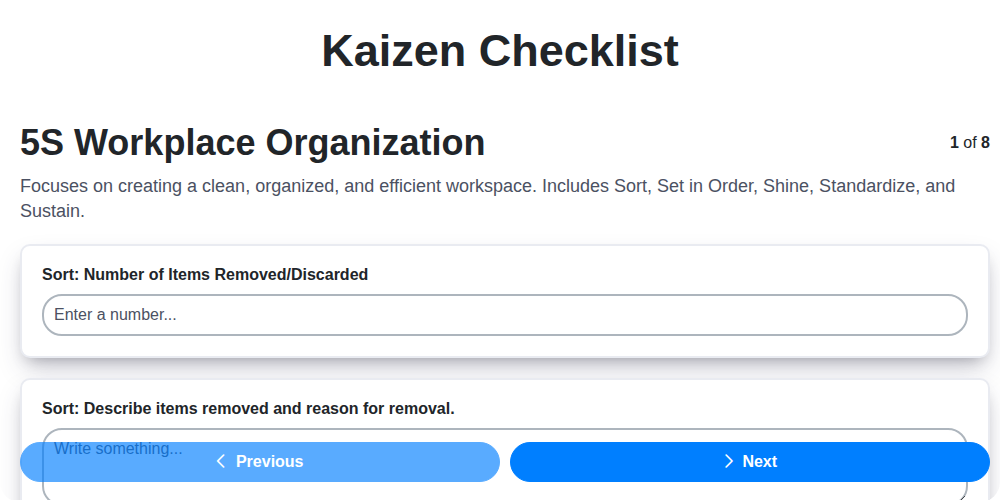
Plantilla de lista de verificación Kaizen: Su camino hacia la mejora continua

Lista de verificación para la auditoría de seguridad de máquinas: su guía para un entorno de fabricación más seguro.
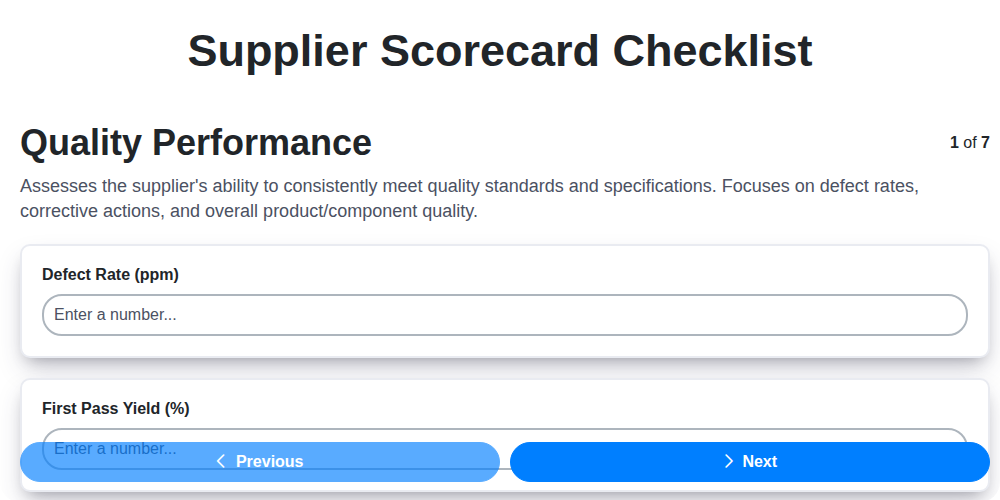
Mastering Supplier Performance: Your Free Supplier Scorecard Checklist Template
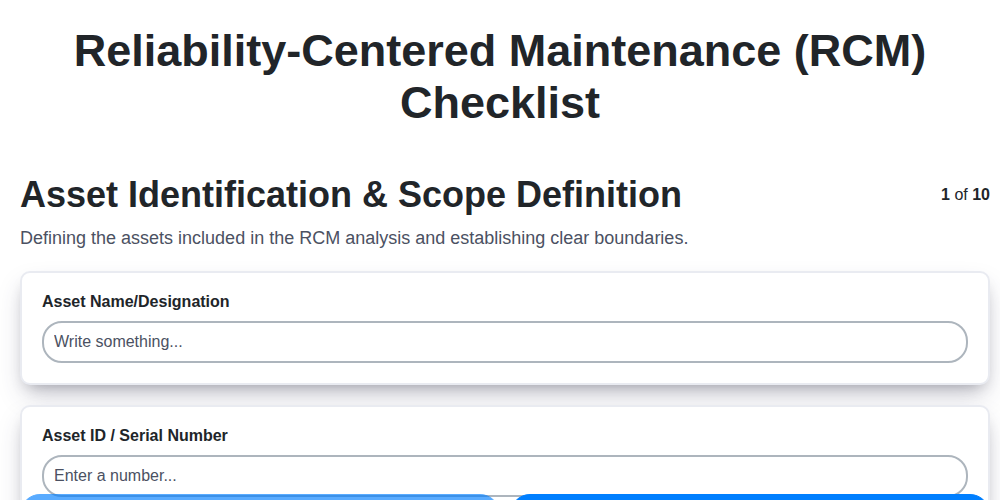
Tu plantilla definitiva de lista de verificación de RCM: Una guía paso a paso

Plantilla de verificación LPA: Su guía para auditorías de procesos por capas

Tu plantilla definitiva de control de aislamiento energético (LOTO)

Your Ultimate FSC 22000 Checklist Template
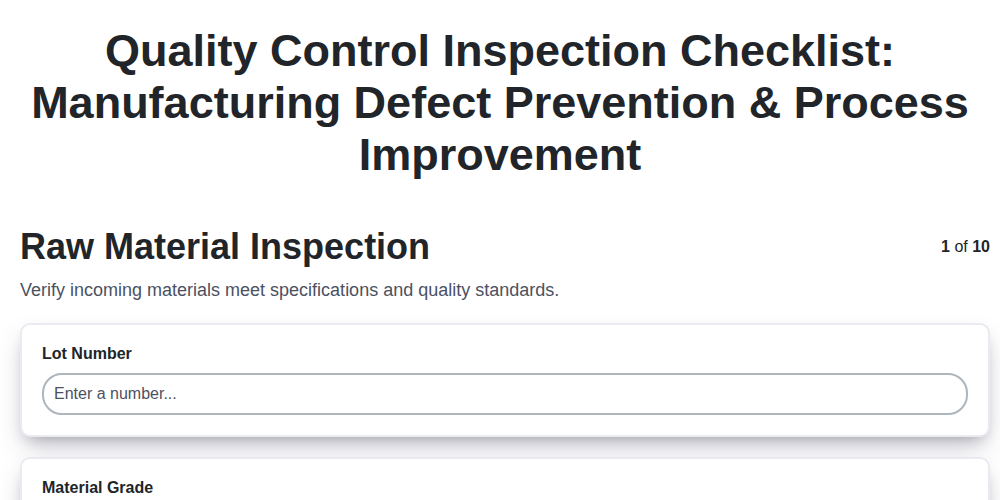
Plantilla de Lista de Verificación para Inspección de Control de Calidad: Prevenir Defectos y Mejorar los Procesos de Fabricación
Podemos hacerlo juntos
¿Necesita ayuda con las listas de verificación?
¿Tienes alguna pregunta? Estamos aquí para ayudarte. Envía tu consulta y te responderemos a la brevedad.