 ChecklistGuro
 Mineral Processing Plant Optimization
Maximize throughput and reduce operational costs with our Mineral Processing Plant Optimization workflow. Streamline ore recovery, automate reagent dosing, and enhance downstream efficiency through data-driven process control and continuous improvement strategies designed for modern mining management.
Diese Vorlage wurde 4 Mal installiert.
Start
Start des Workflows/Prozesses.
1. Fetch Sensor Telemetry
Retrieve real-time throughput, ore grade, and reagent concentration data from the Plant Sensor Data Model.
2. Retrieve Maintenance Logs
Fetch recent maintenance history and equipment health status for the grinding circuit and flotation cells.
3. Calculate Average Throughput
Calculate the average mass flow rate (t/h) from the retrieved sensor telemetry over the last 24-hour period.
4. Calculate Reagent Consumption Variance
Calculate the variance between actual reagent usage and the theoretical setpoint for the flotation process.
5. Efficiency Deviation Analysis
Execute formula: (Actual Recovery % - Target Recovery %) / Target Recovery % to determine performance gap.
6. Cost per Ton Calculation
Calculate current operational cost per ton using (Total Energy Cost + Reagent Cost + Labor Cost) / Total Throughput.
7. Issue Process Deviation Alert
Create a high-priority task for the Metallurgist to investigate identified deviations in recovery rates.
8. Schedule Equipment Inspection
Create a maintenance task for the mechanical team if vibration sensors exceed the safety threshold.
9. Log Optimization Incident
Create a new entry in the 'Incident Log' data model detailing the parameters and time of the detected anomaly.
10. Update Setpoint Recommendations
Update the 'Active Process Setpoints' data model with new optimized values for reagent dosing and mill speed.
11. Notify Plant Manager
Send an email summary of the daily optimization performance and any critical deviations to the Plant Manager.
12. Emergency Shutdown Alert
Send an SMS alert to the On-Call Supervisor if critical sensor thresholds (e.g., pressure or temperature) are breached.
13. Generate Daily Metallurgical Report
Generate a comprehensive performance report summarizing throughput, recovery, and cost metrics for the shift.
14. Clear Resolved Alerts
Delete old, resolved alert entries from the 'Active Alerts' data model to maintain dashboard clarity.
Ende
Ende des Arbeitsablaufs/Prozesses.
Start des Workflows/Prozesses.
Retrieve real-time throughput, ore grade, and reagent concentration data from the Plant Sensor Data Model.
Fetch recent maintenance history and equipment health status for the grinding circuit and flotation cells.
Calculate the average mass flow rate (t/h) from the retrieved sensor telemetry over the last 24-hour period.
Calculate the variance between actual reagent usage and the theoretical setpoint for the flotation process.
Execute formula: (Actual Recovery % - Target Recovery %) / Target Recovery % to determine performance gap.
Calculate current operational cost per ton using (Total Energy Cost + Reagent Cost + Labor Cost) / Total Throughput.
Create a high-priority task for the Metallurgist to investigate identified deviations in recovery rates.
Create a maintenance task for the mechanical team if vibration sensors exceed the safety threshold.
Create a new entry in the 'Incident Log' data model detailing the parameters and time of the detected anomaly.
Update the 'Active Process Setpoints' data model with new optimized values for reagent dosing and mill speed.
Send an email summary of the daily optimization performance and any critical deviations to the Plant Manager.
Send an SMS alert to the On-Call Supervisor if critical sensor thresholds (e.g., pressure or temperature) are breached.
Generate a comprehensive performance report summarizing throughput, recovery, and cost metrics for the shift.
Delete old, resolved alert entries from the 'Active Alerts' data model to maintain dashboard clarity.
Ende des Arbeitsablaufs/Prozesses.
Kommentare
Bisher gibt es keine Kommentare. Seien Sie der Erste, der einen hinzufügt!
Demonstration der Lösung für das Bergbau-Management
Maximieren Sie die Effizienz und Sicherheit im Bergbau! ChecklistGuro optimiert die Aufgabenverwaltung, die Geräteverfolgung und die Compliance-Berichterstattung. Optimieren Sie Arbeitsabläufe, reduzieren Sie Risiken und steigern Sie die Produktivität. Verwalten Sie alles mit unserer Work OS.
Verwandte Workflow-Vorlagen
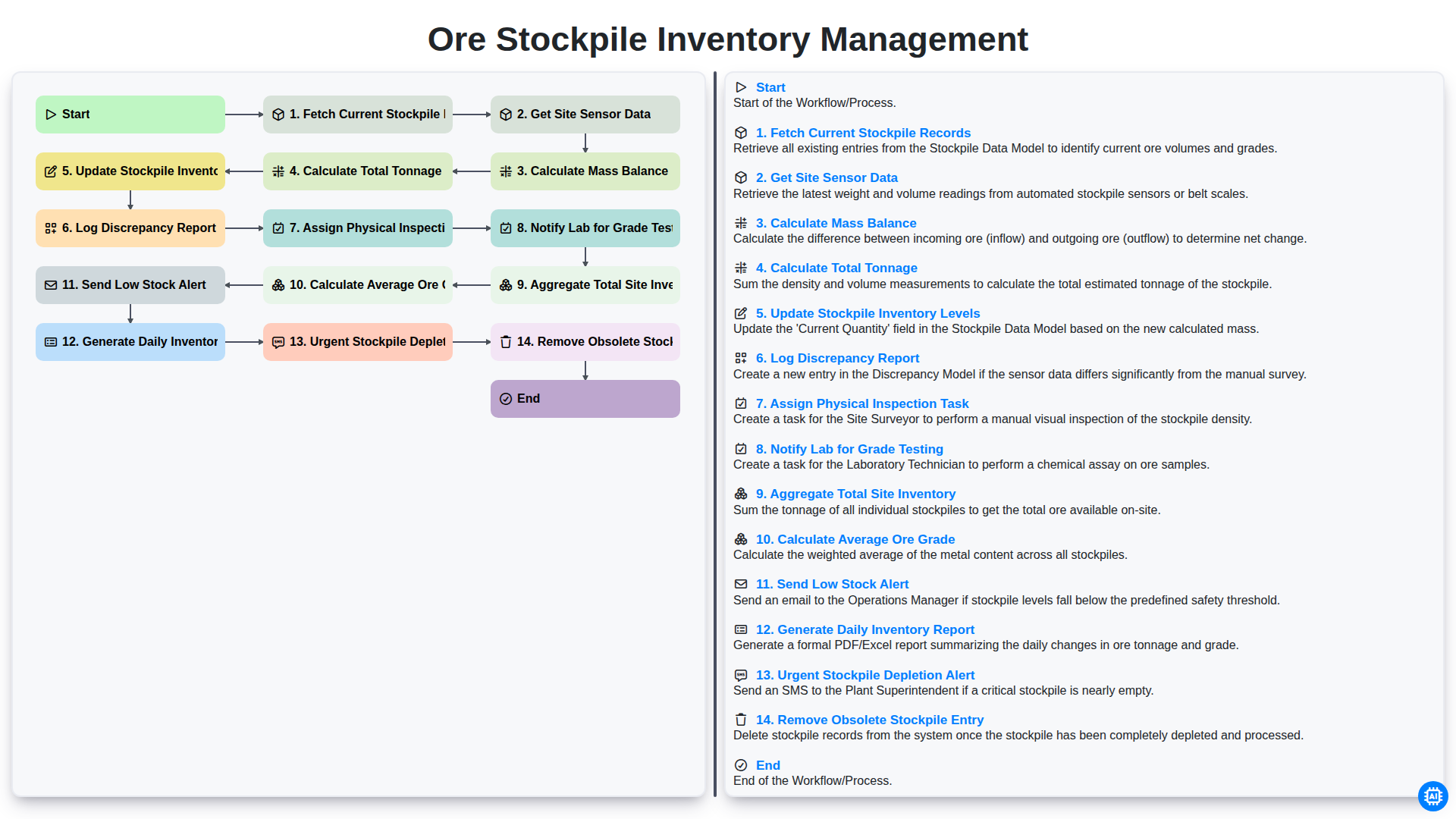
Ore Stockpile Inventory Management
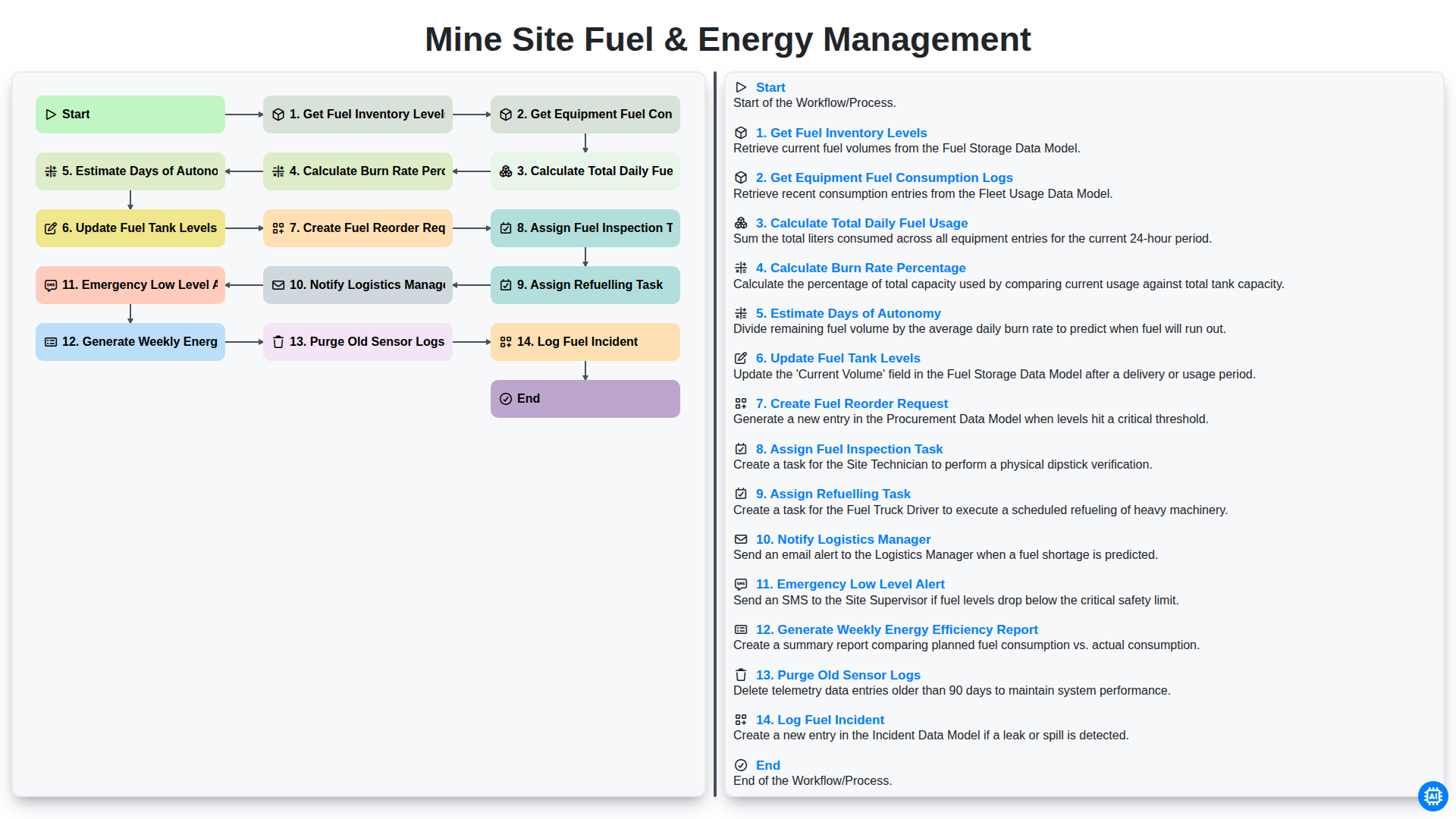
Mine Site Fuel & Energy Management
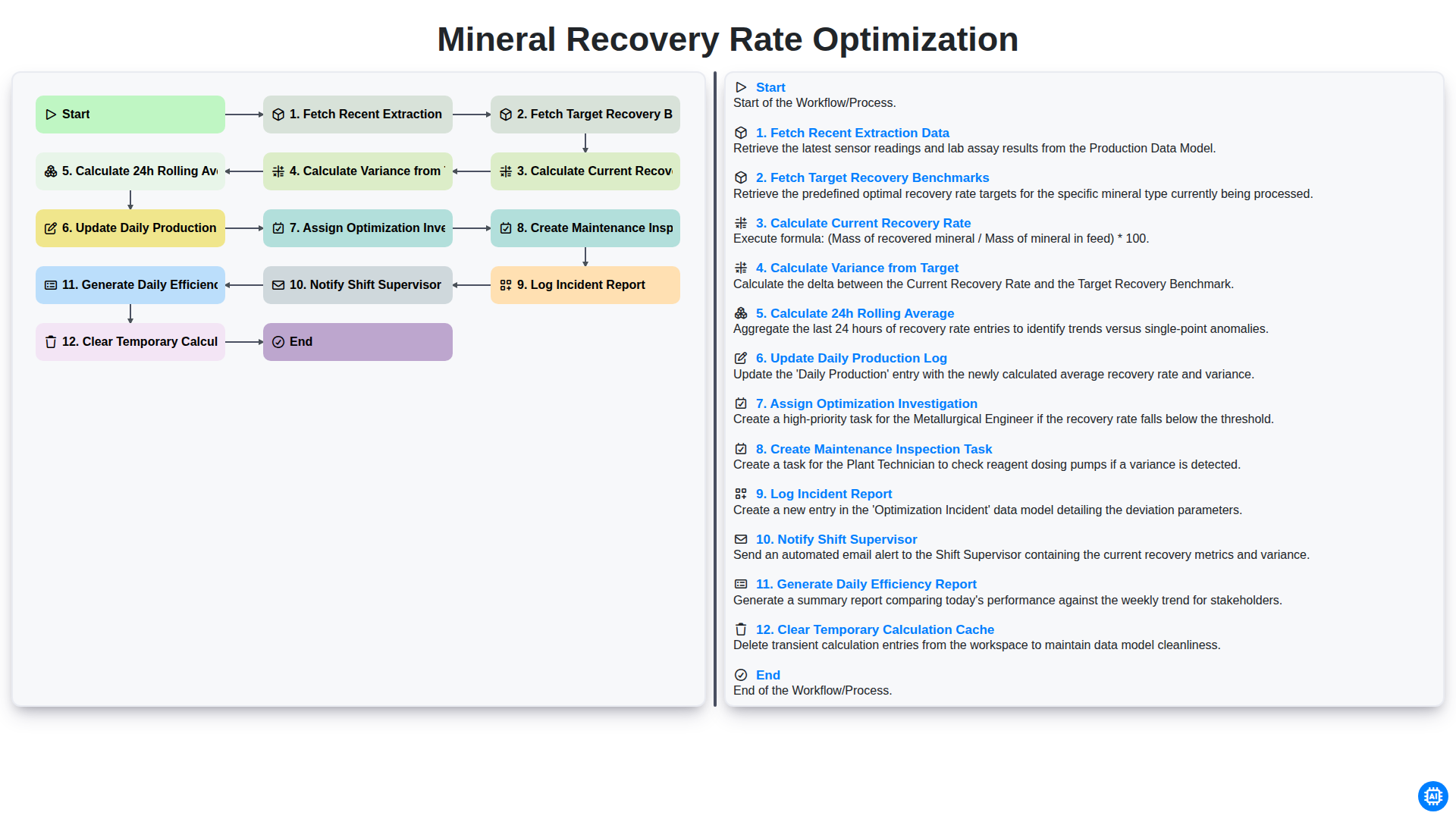
Mineral Recovery Rate Optimization
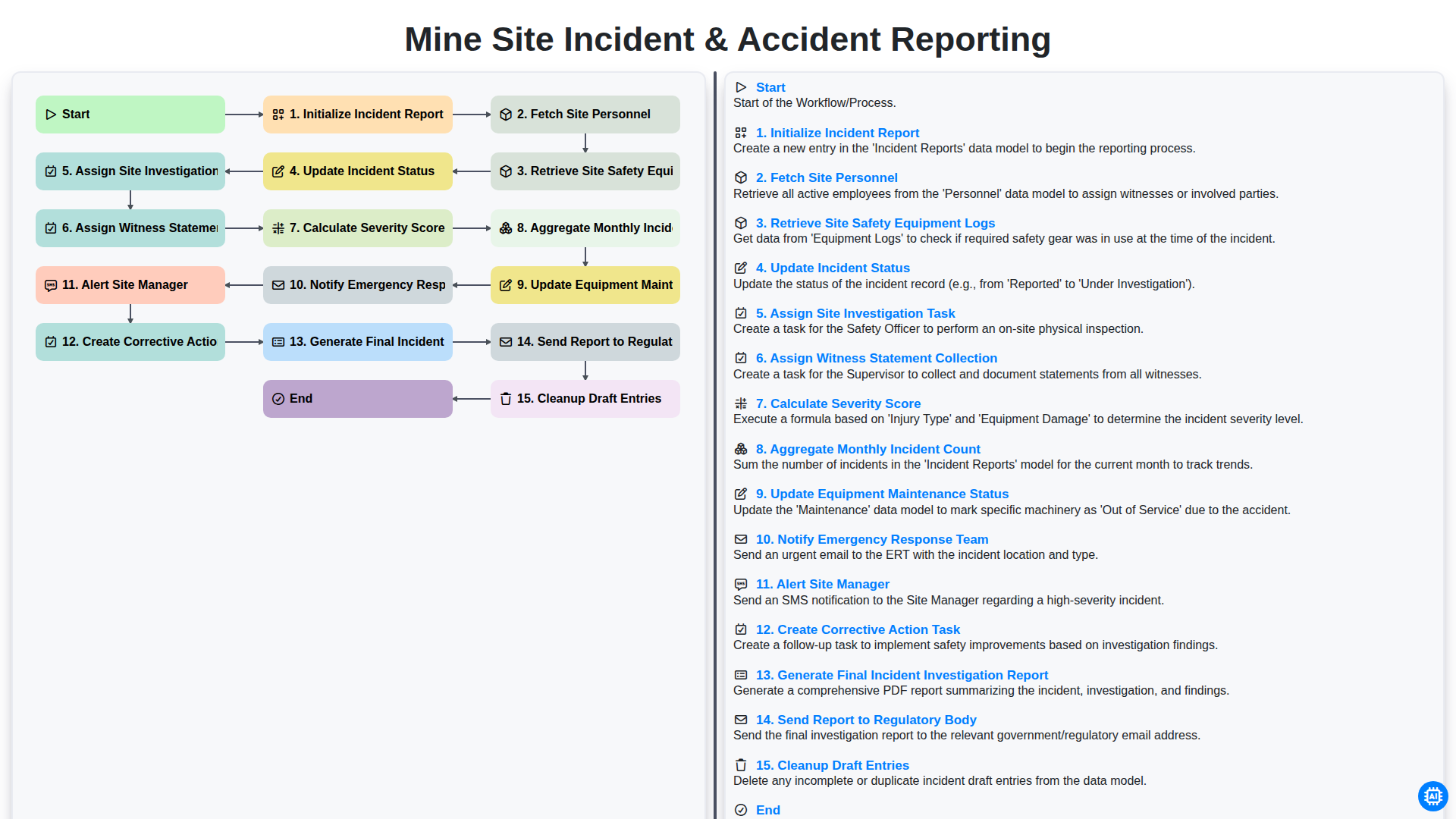
Mine Site Incident & Accident Reporting
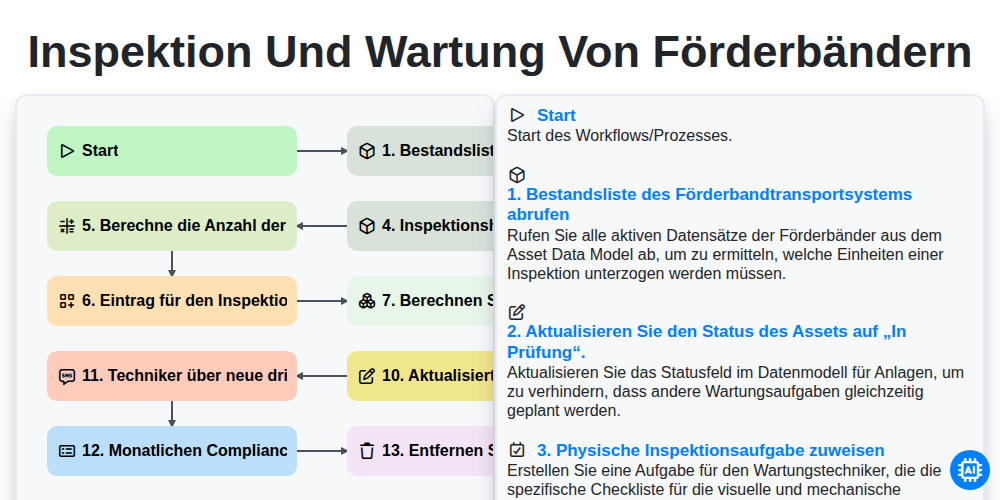
Inspektion und Wartung von Förderbändern
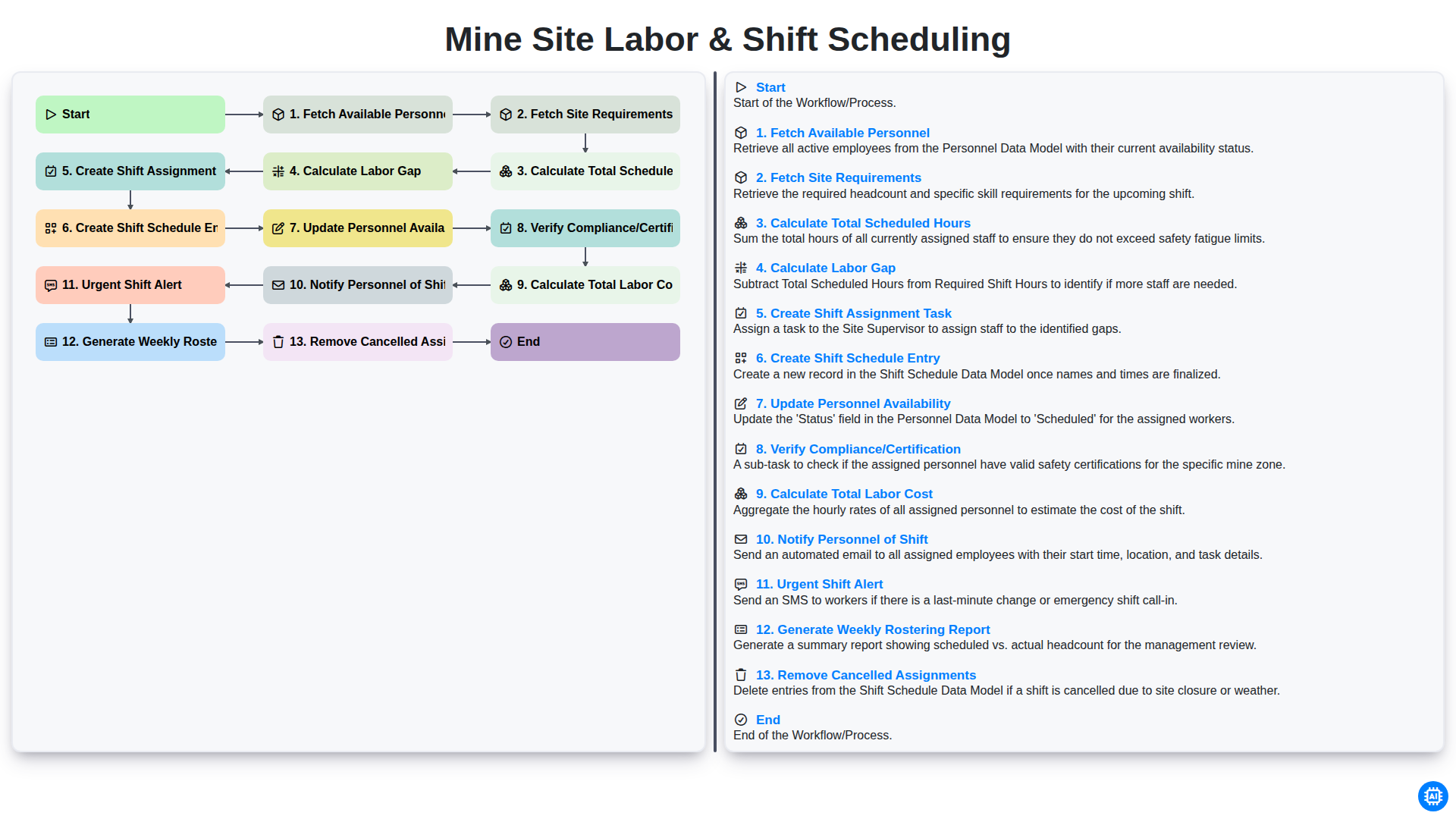
Mine Site Labor & Shift Scheduling
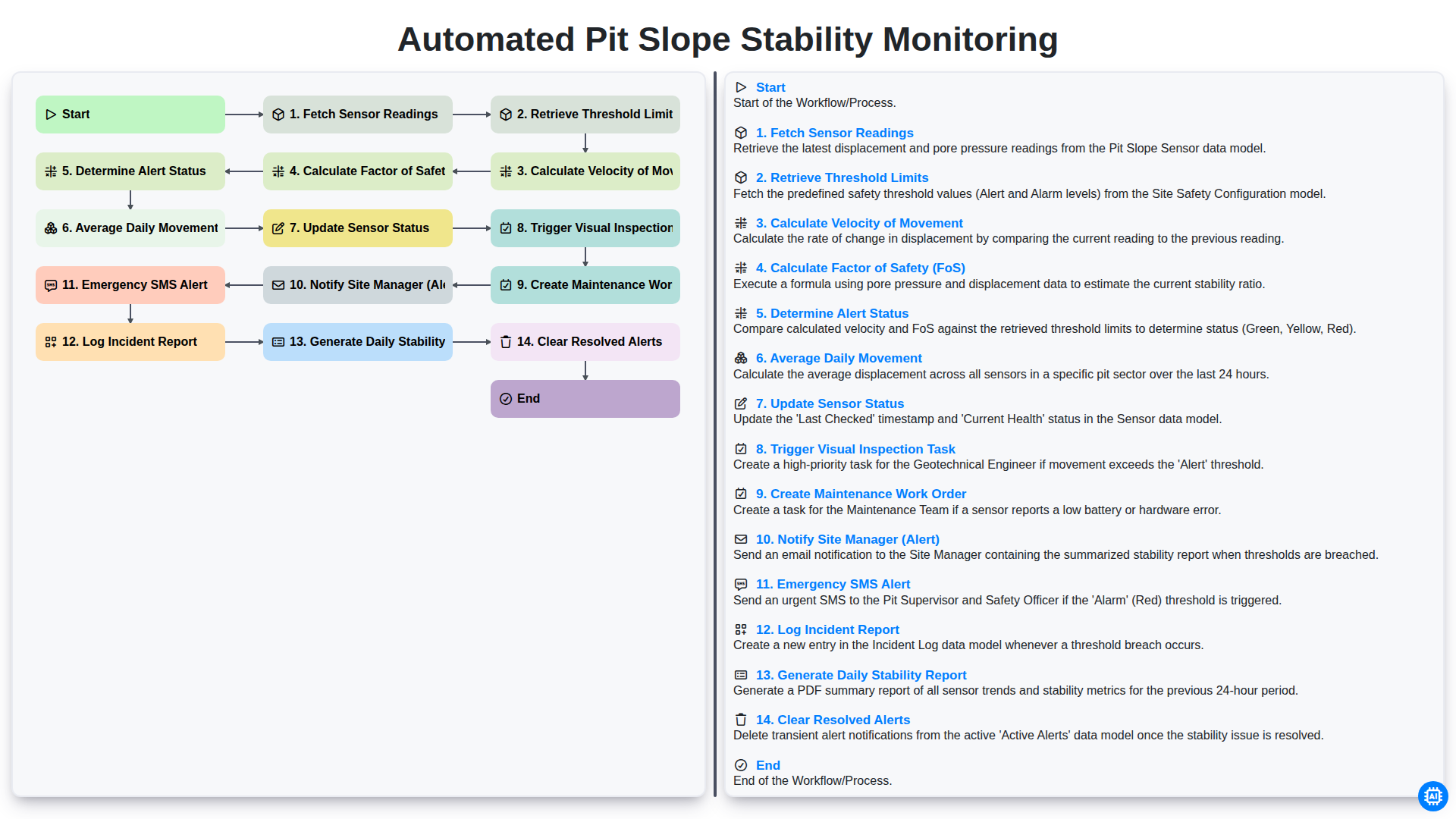
Automated Pit Slope Stability Monitoring
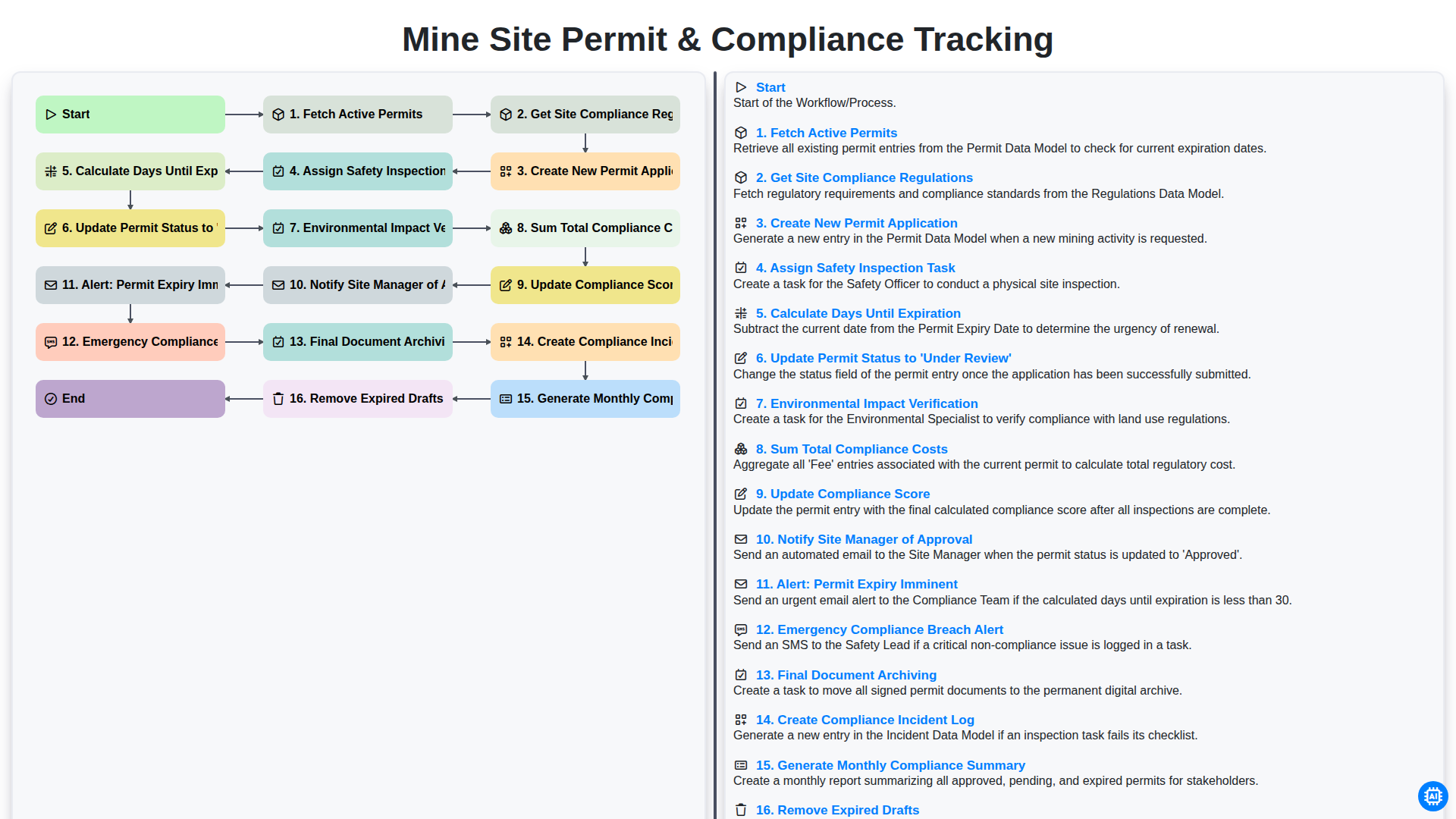
Mine Site Permit & Compliance Tracking
Gemeinsam schaffen wir das
Benötigen Sie Hilfe bei Checklisten?
Haben Sie eine Frage? Wir helfen Ihnen gerne. Bitte senden Sie uns Ihre Anfrage, und wir werden Ihnen umgehend antworten.