 ChecklistGuro
 Underground Mine Ventilation Monitoring
Optimize underground safety and operational efficiency with our advanced Underground Mine Ventilation Monitoring workflow. Streamline real-time air quality tracking, automate gas level alerts, and ensure regulatory compliance through continuous sensor integration and predictive airflow analysis. Drive smarter decision-making and minimize downtime with precision-driven ventilation management designed for modern mining operations.
Diese Vorlage wurde 1 Mal installiert.
Start
Start des Workflows/Prozesses.
1. Fetch Sensor Readings
Retrieve the latest CO, NO2, and CH4 gas level entries from the Ventilation Sensor Data Model.
2. Calculate Average Airflow
Calculate the average airflow velocity across all active ventilation fans in the current sector.
3. Determine Gas Concentration Ratio
Calculate the ratio of current gas levels against the safety threshold limits.
4. Calculate Ventilation Efficiency
Calculate the efficiency score based on airflow volume vs. power consumption of the fans.
5. Update Sector Status
Update the status of the Mine Sector entry to 'Hazardous' or 'Safe' based on gas readings.
6. Dispatch Technician
Create a high-priority task for the Ventilation Engineer to inspect the localized sensor nodes.
7. Verify Checklist Completion
Assign a maintenance checklist to the technician to ensure all physical fan blades are inspected.
8. Alert Safety Officers
Send an urgent email notification to the Mine Safety Department regarding threshold breaches.
9. Emergency SMS Alert
Send an automated SMS to the underground pit boss and emergency response team.
10. Log Incident Report
Create a new entry in the Incident Management Data Model for every detected gas spike.
11. Generate Daily Ventilation Summary
Generate a daily PDF report summarizing all airflow fluctuations and sensor anomalies.
12. Clear Resolved Alerts
Delete expired or resolved alert entries from the active notification queue to maintain system performance.
Ende
Ende des Arbeitsablaufs/Prozesses.
Start des Workflows/Prozesses.
Retrieve the latest CO, NO2, and CH4 gas level entries from the Ventilation Sensor Data Model.
Calculate the average airflow velocity across all active ventilation fans in the current sector.
Calculate the ratio of current gas levels against the safety threshold limits.
Calculate the efficiency score based on airflow volume vs. power consumption of the fans.
Update the status of the Mine Sector entry to 'Hazardous' or 'Safe' based on gas readings.
Create a high-priority task for the Ventilation Engineer to inspect the localized sensor nodes.
Assign a maintenance checklist to the technician to ensure all physical fan blades are inspected.
Send an urgent email notification to the Mine Safety Department regarding threshold breaches.
Send an automated SMS to the underground pit boss and emergency response team.
Create a new entry in the Incident Management Data Model for every detected gas spike.
Generate a daily PDF report summarizing all airflow fluctuations and sensor anomalies.
Delete expired or resolved alert entries from the active notification queue to maintain system performance.
Ende des Arbeitsablaufs/Prozesses.
Kommentare
Bisher gibt es keine Kommentare. Seien Sie der Erste, der einen hinzufügt!
Demonstration der Lösung für das Bergbau-Management
Maximieren Sie die Effizienz und Sicherheit im Bergbau! ChecklistGuro optimiert die Aufgabenverwaltung, die Geräteverfolgung und die Compliance-Berichterstattung. Optimieren Sie Arbeitsabläufe, reduzieren Sie Risiken und steigern Sie die Produktivität. Verwalten Sie alles mit unserer Work OS.
Verwandte Workflow-Vorlagen
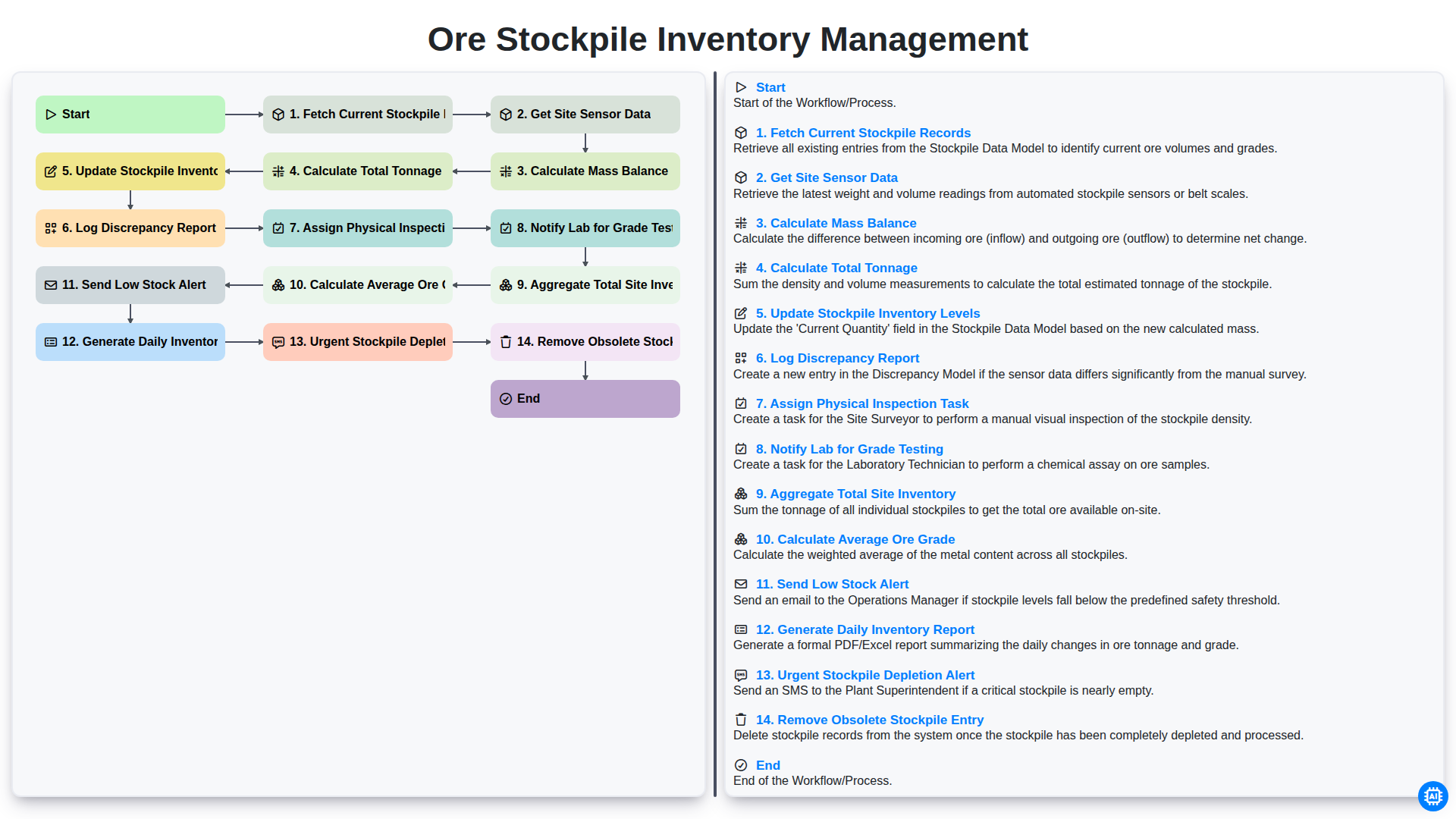
Ore Stockpile Inventory Management
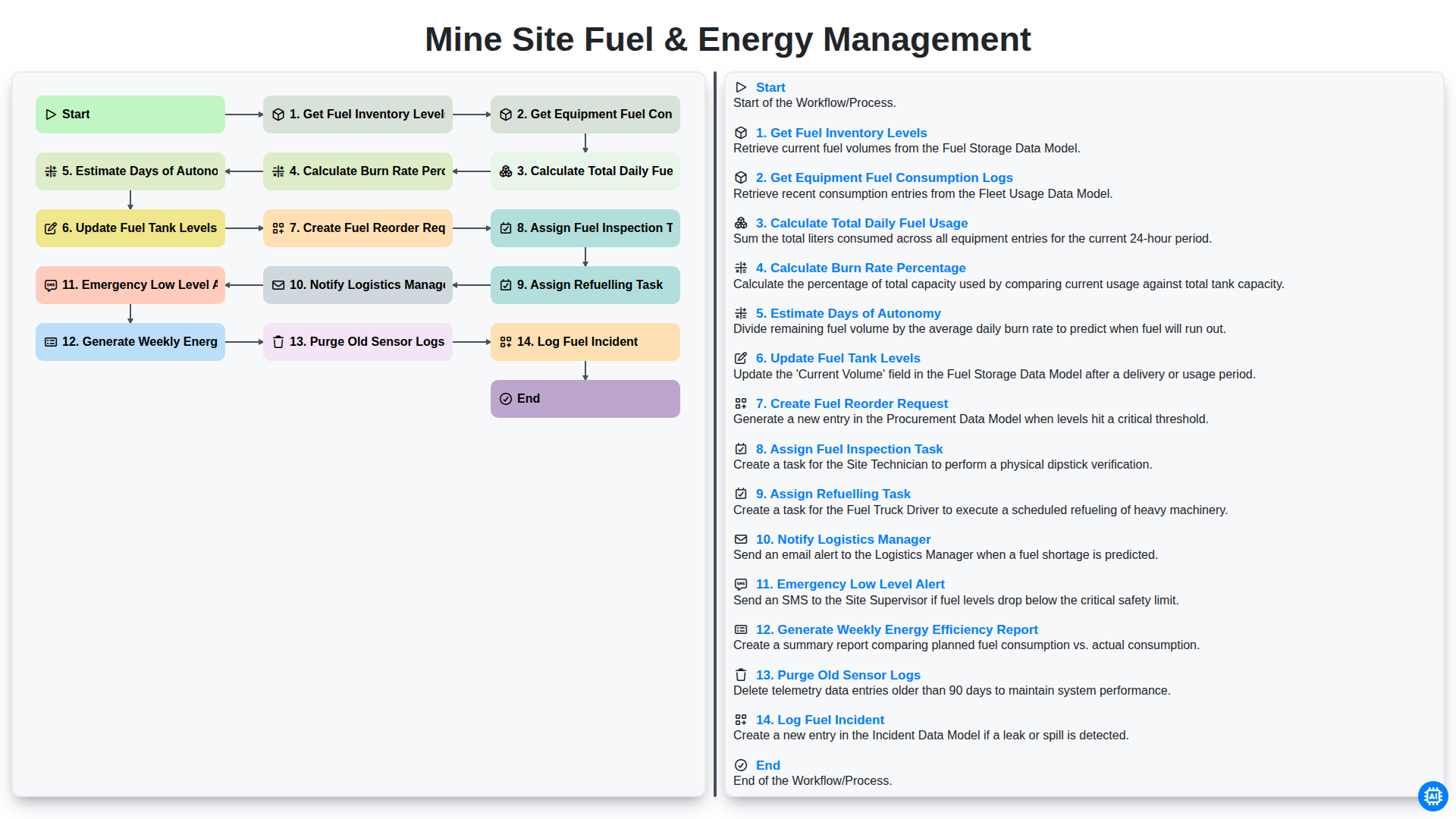
Mine Site Fuel & Energy Management
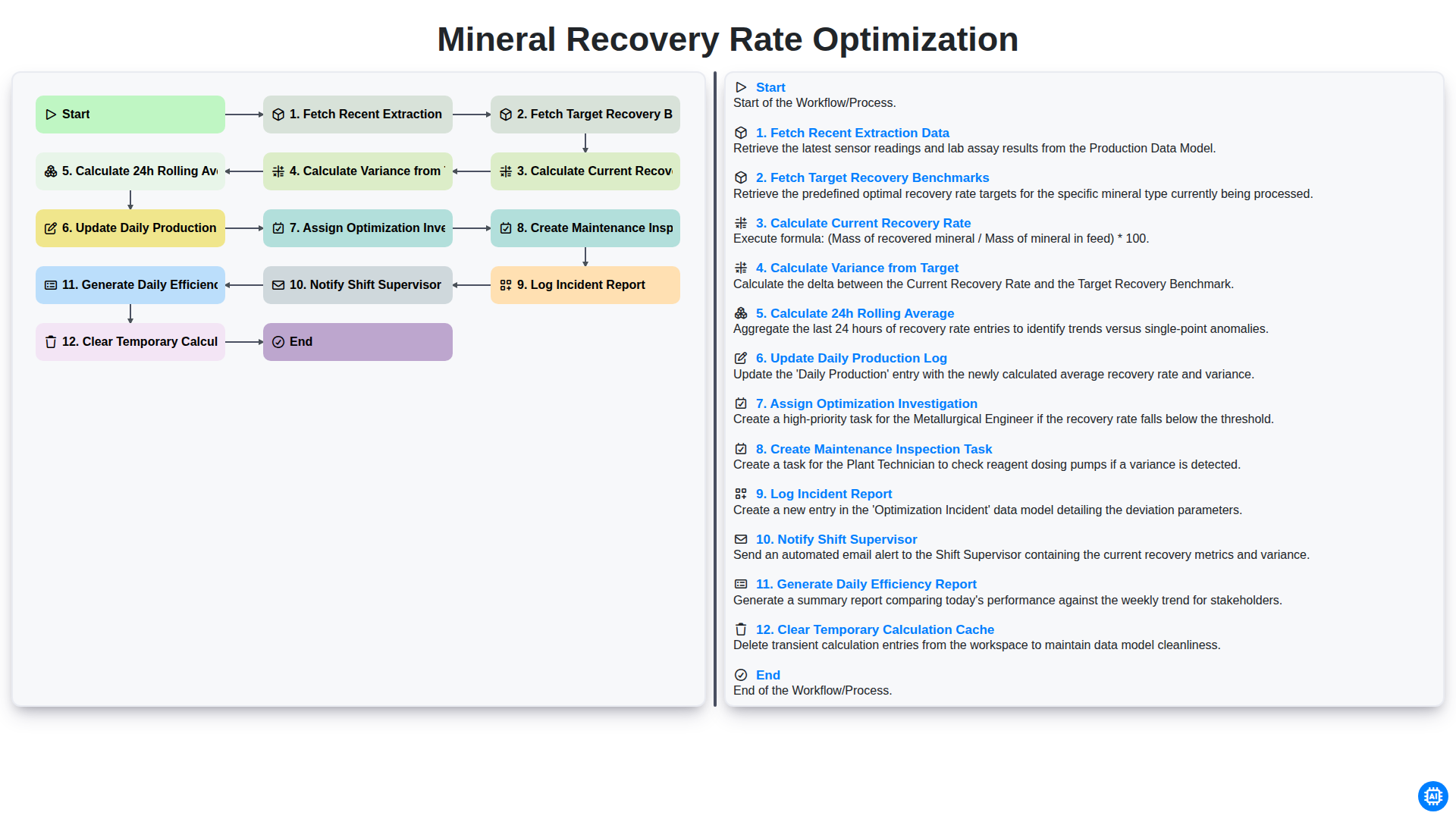
Mineral Recovery Rate Optimization
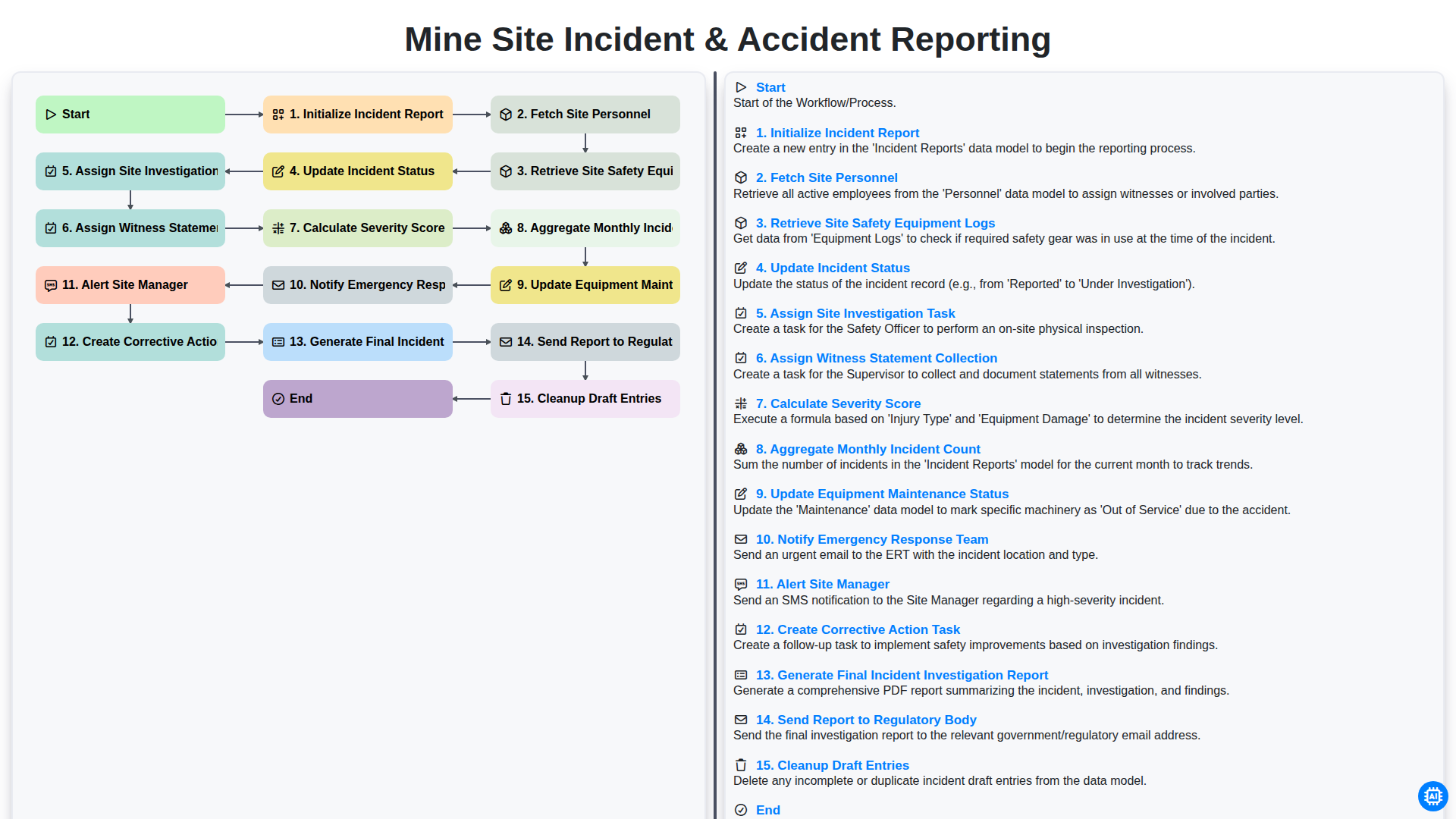
Mine Site Incident & Accident Reporting
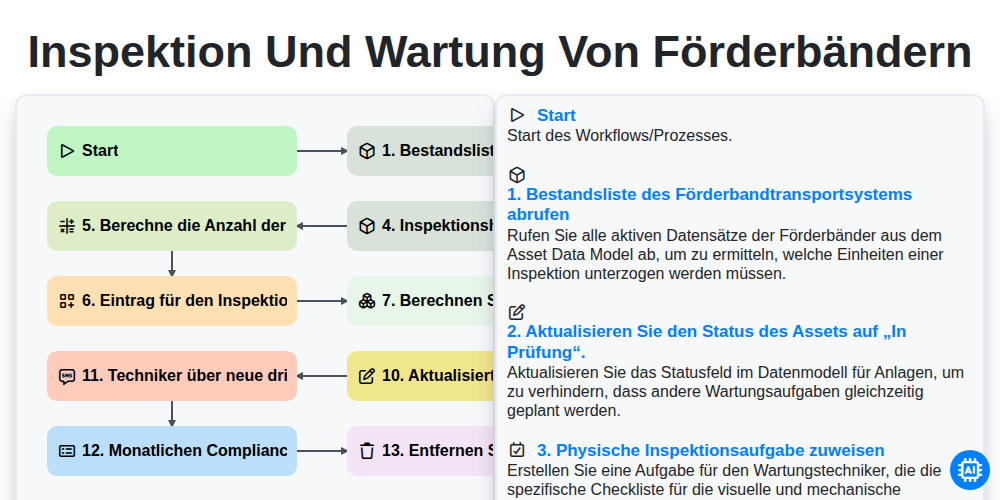
Inspektion und Wartung von Förderbändern
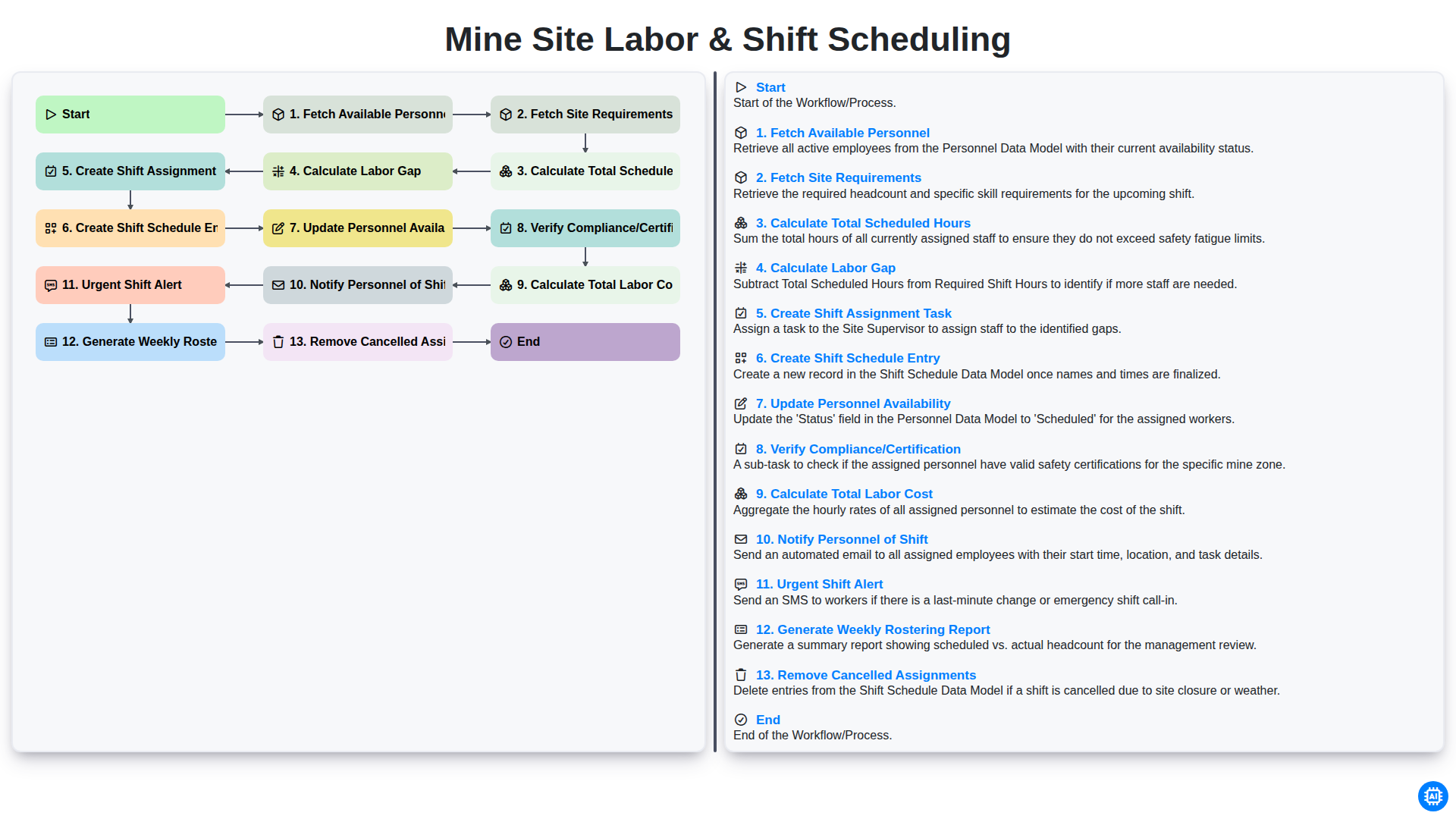
Mine Site Labor & Shift Scheduling
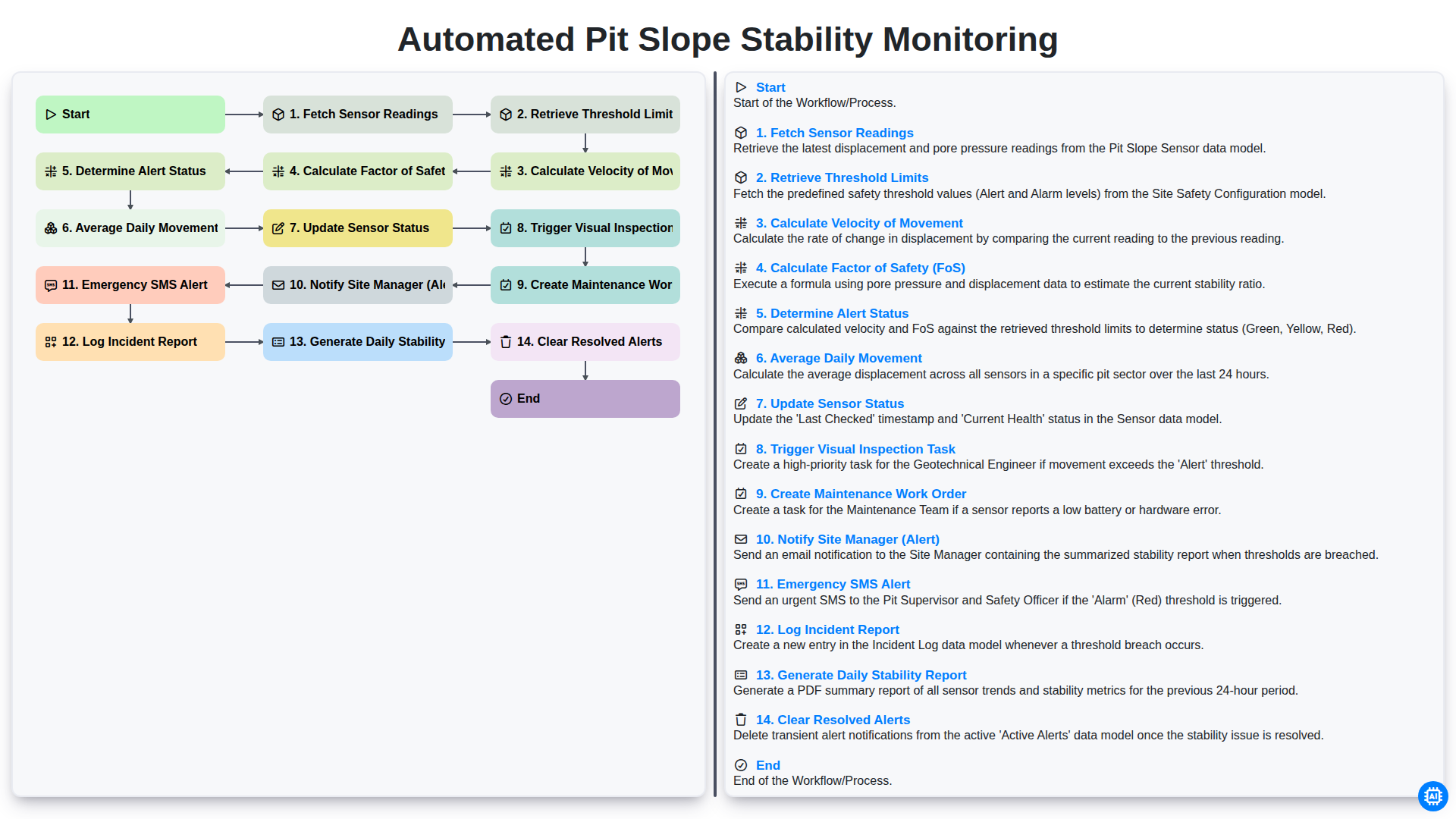
Automated Pit Slope Stability Monitoring
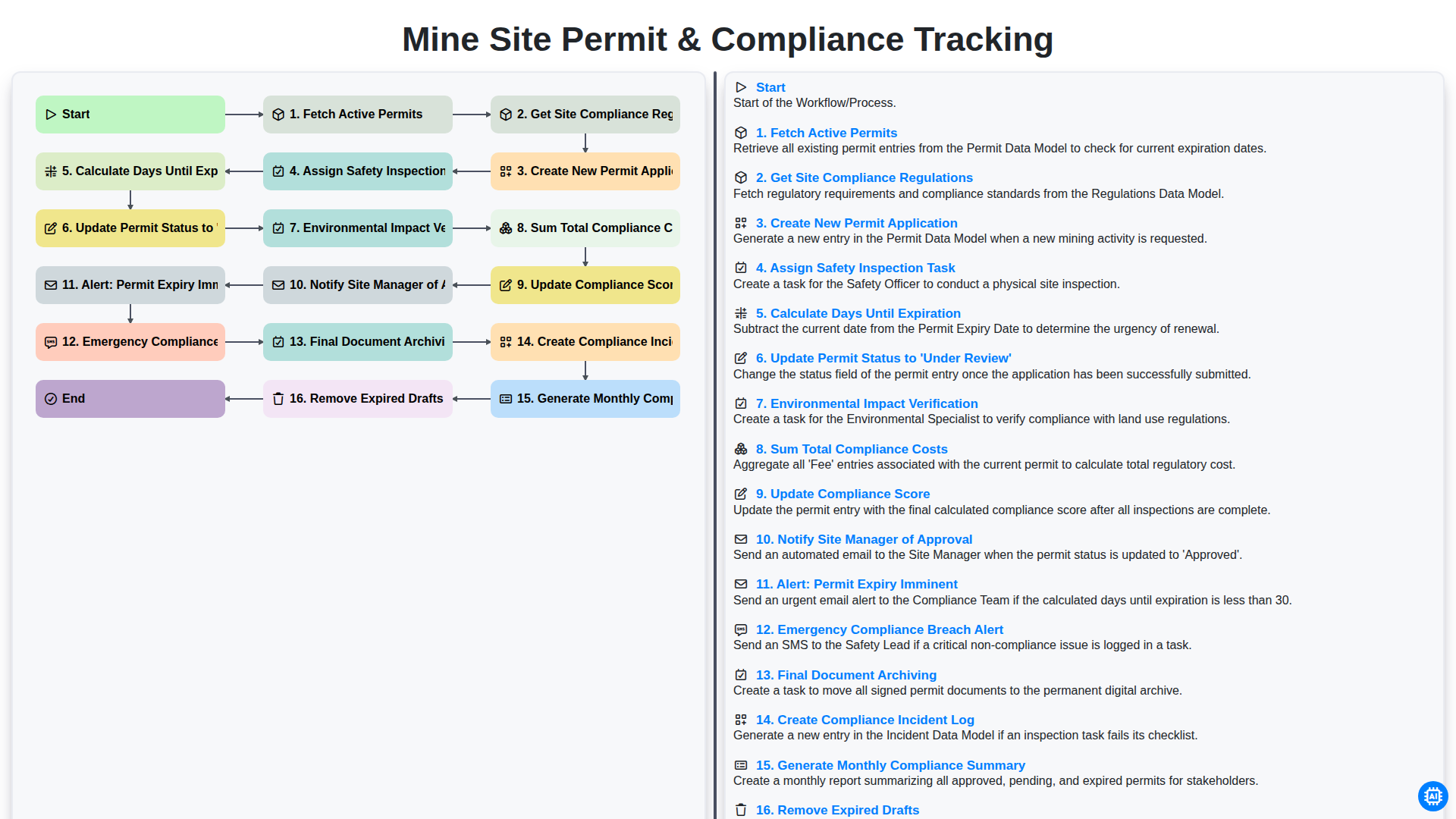
Mine Site Permit & Compliance Tracking
Gemeinsam schaffen wir das
Benötigen Sie Hilfe bei Checklisten?
Haben Sie eine Frage? Wir helfen Ihnen gerne. Bitte senden Sie uns Ihre Anfrage, und wir werden Ihnen umgehend antworten.