 ChecklistGuro
 Smart Bus Stop Information Update Process
Streamline your transit network with our Smart Bus Stop Information Update Process. Learn how automated real-time data synchronization and intelligent sensor integration ensure commuters always receive accurate, up-to-the-minute arrival predictions and service alerts, enhancing passenger trust and optimizing public transport efficiency.
Esta plantilla se instaló 4 veces.
Inicio
Inicio del flujo de trabajo/proceso.
1. Fetch Bus Stop Master List
Retrieve all active bus stop records from the Bus Stop Data Model to identify which stops require updates.
2. Retrieve Scheduled Maintenance Data
Get recent maintenance logs to identify stops that have undergone hardware or signage changes.
3. Update Bus Stop Status
Update the status of specific bus stops to 'Under Review' once the update process has been triggered.
4. Assign Field Inspection Task
Create a task for the Field Technician to physically verify the information displayed at the bus stop.
5. Get Inspection Results
Fetch the data entered by the technician via the inspection form (e.g., screen brightness, physical damage, connectivity).
6. Calculate Hardware Health Score
Apply a formula to the inspection metrics (e.g., connectivity % * 0.6 + screen_integrity * 0.4) to determine urgency.
7. Calculate Maintenance Cost Estimate
Calculate the estimated cost of repairs based on the detected hardware damage and labor rates.
8. Update Stop Maintenance Record
Update the specific Bus Stop entry with the new inspection findings and health score.
9. Create Maintenance Work Order
If the health score is below a certain threshold, create a new entry in the Maintenance Work Order data model.
10. Aggregate Total System Health
Sum and average the health scores of all bus stops to provide a high-level overview of the network status.
11. Notify Maintenance Manager
Send an email to the manager containing the summary of stops that failed inspection and require immediate repair.
12. Alert Technician of New Task
Send an SMS to the assigned technician to notify them that a new inspection task is pending in their queue.
13. Generate Weekly Infrastructure Health Report
Generate a formal report aggregating all completed updates and maintenance needs for the week for stakeholders.
14. Archive Outdated Info
Delete or move obsolete temporary maintenance notes from the data model once the update is finalized.
Fin
Fin del flujo de trabajo/proceso.
Inicio del flujo de trabajo/proceso.
Retrieve all active bus stop records from the Bus Stop Data Model to identify which stops require updates.
Get recent maintenance logs to identify stops that have undergone hardware or signage changes.
Update the status of specific bus stops to 'Under Review' once the update process has been triggered.
Create a task for the Field Technician to physically verify the information displayed at the bus stop.
Fetch the data entered by the technician via the inspection form (e.g., screen brightness, physical damage, connectivity).
Apply a formula to the inspection metrics (e.g., connectivity % * 0.6 + screen_integrity * 0.4) to determine urgency.
Calculate the estimated cost of repairs based on the detected hardware damage and labor rates.
Update the specific Bus Stop entry with the new inspection findings and health score.
If the health score is below a certain threshold, create a new entry in the Maintenance Work Order data model.
Sum and average the health scores of all bus stops to provide a high-level overview of the network status.
Send an email to the manager containing the summary of stops that failed inspection and require immediate repair.
Send an SMS to the assigned technician to notify them that a new inspection task is pending in their queue.
Generate a formal report aggregating all completed updates and maintenance needs for the week for stakeholders.
Delete or move obsolete temporary maintenance notes from the data model once the update is finalized.
Fin del flujo de trabajo/proceso.
¿Le resultó útil esta plantilla de flujo de trabajo?
Comentarios
Aún no hay comentarios. ¡Sé el primero en añadir uno!
Demostración de la Solución de Gestión del Transporte Público
¡Optimice las operaciones del transporte público y mejore la experiencia de los pasajeros! ChecklistGuro optimiza la planificación de rutas, el mantenimiento de vehículos y la elaboración de informes de incidentes. Mejore la eficiencia, la seguridad y la fiabilidad. Administre todo con nuestro Work OS.
Plantillas de flujo de trabajo relacionadas
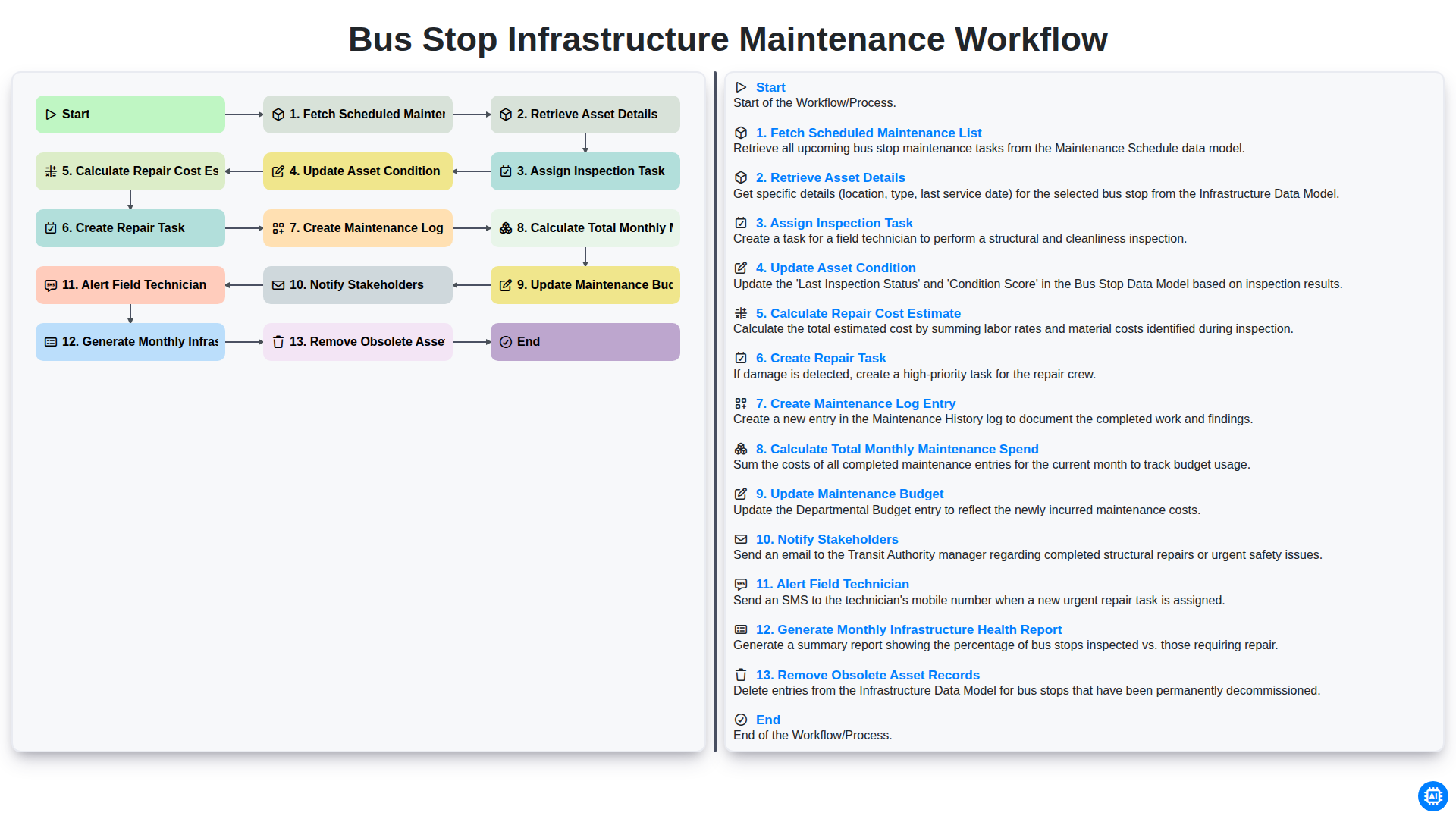
Bus Stop Infrastructure Maintenance Workflow
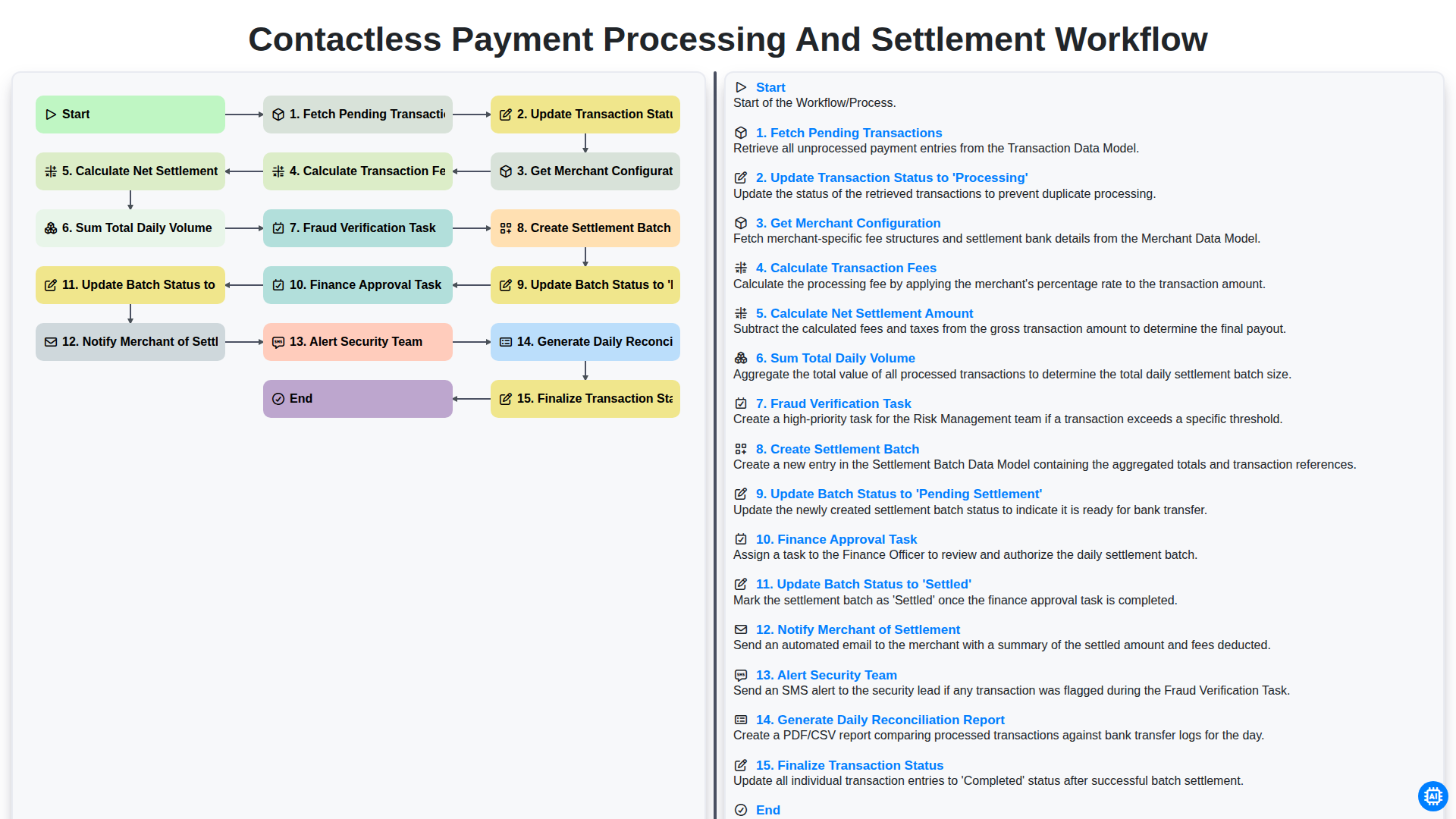
Contactless Payment Processing and Settlement Workflow
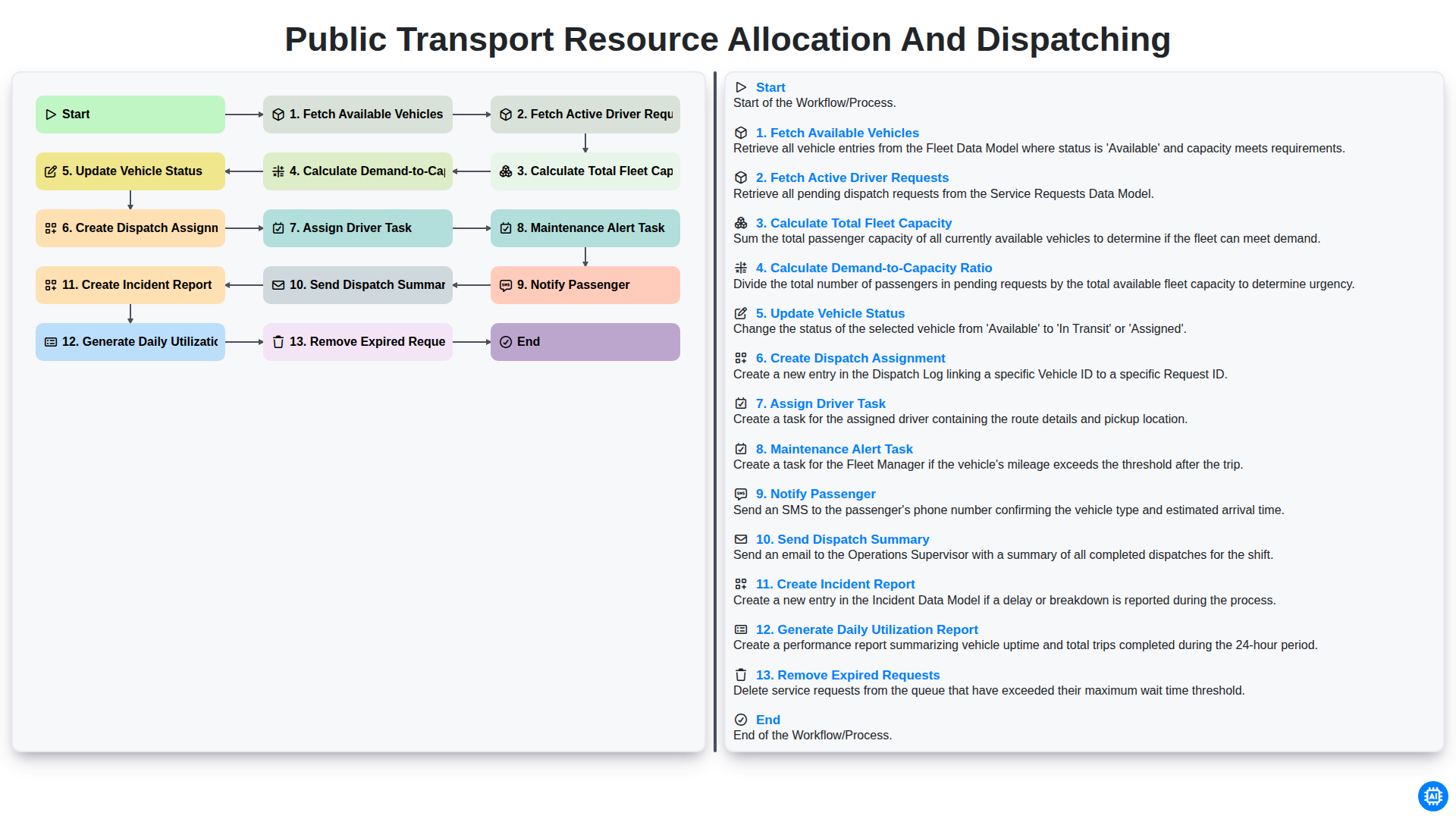
Public Transport Resource Allocation and Dispatching
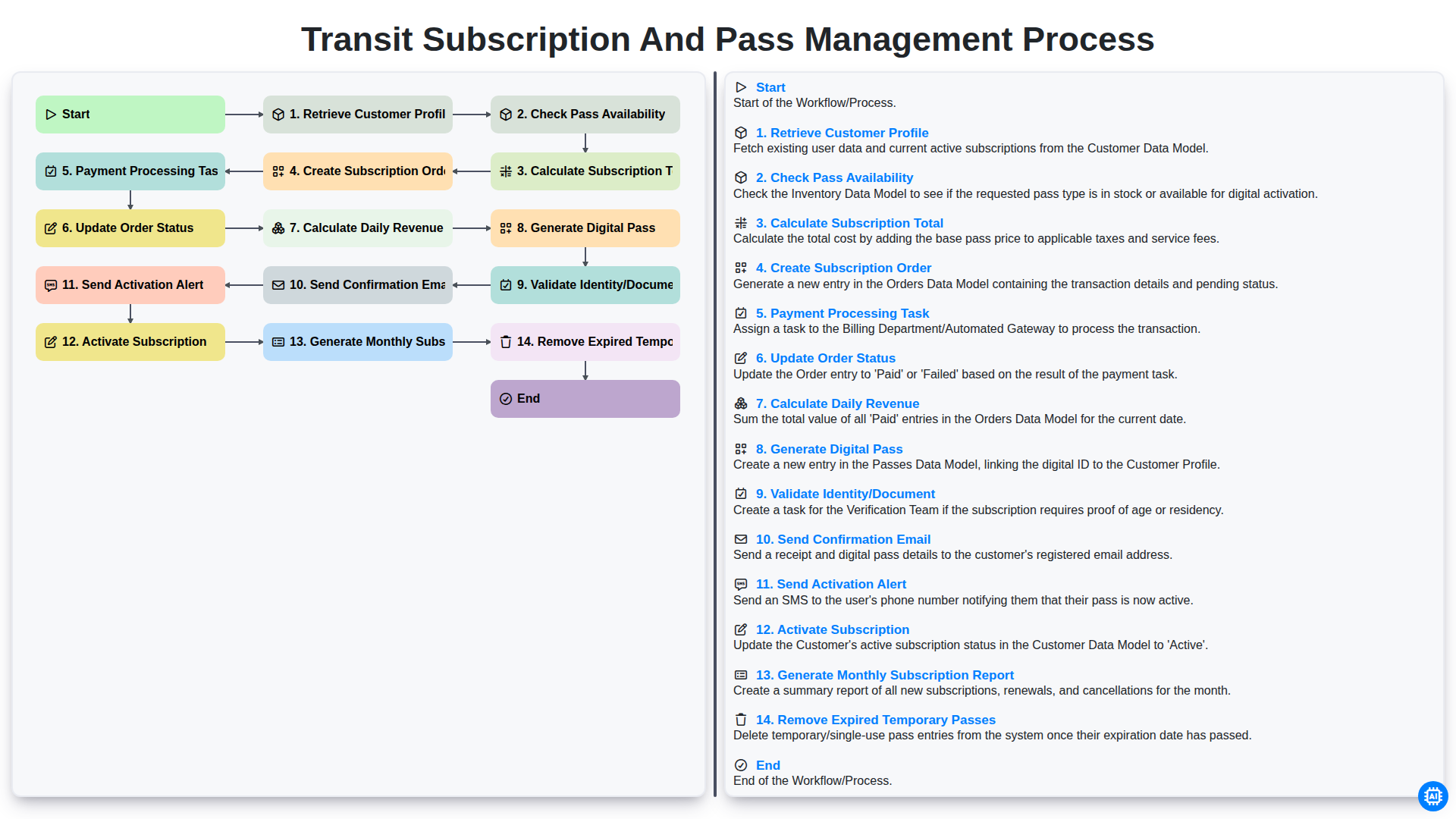
Transit Subscription and Pass Management Process
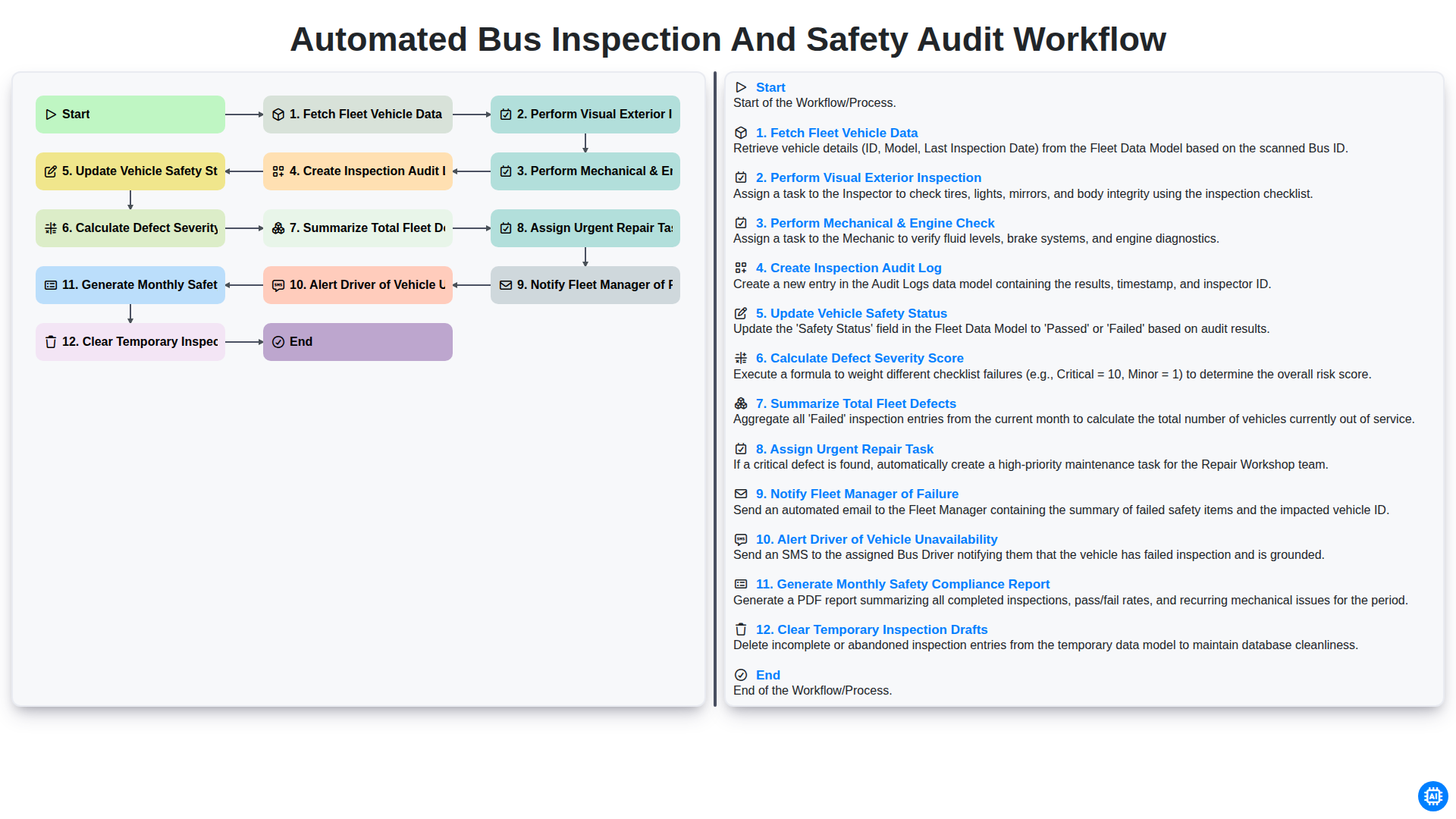
Automated Bus Inspection and Safety Audit Workflow
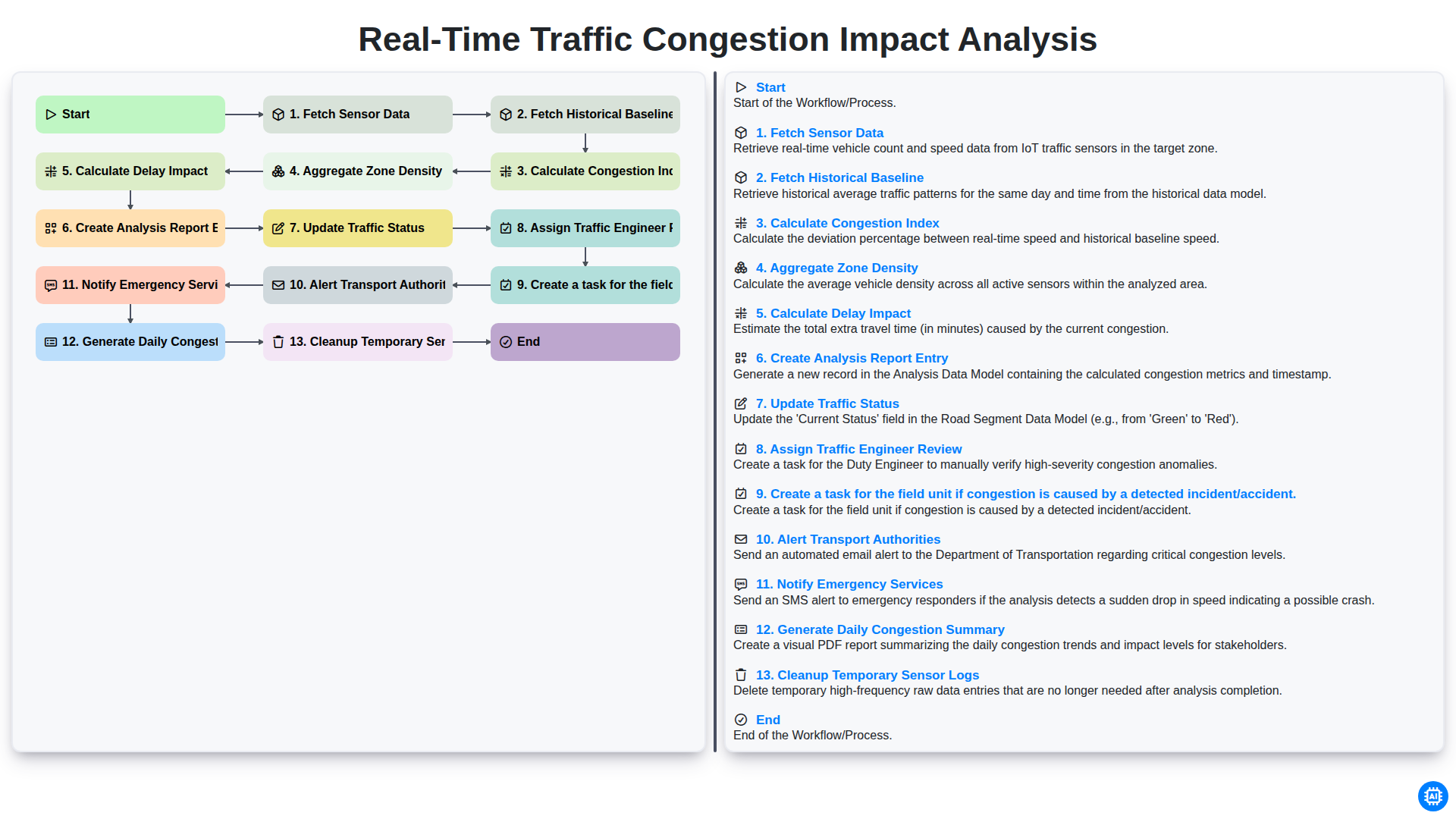
Real-Time Traffic Congestion Impact Analysis
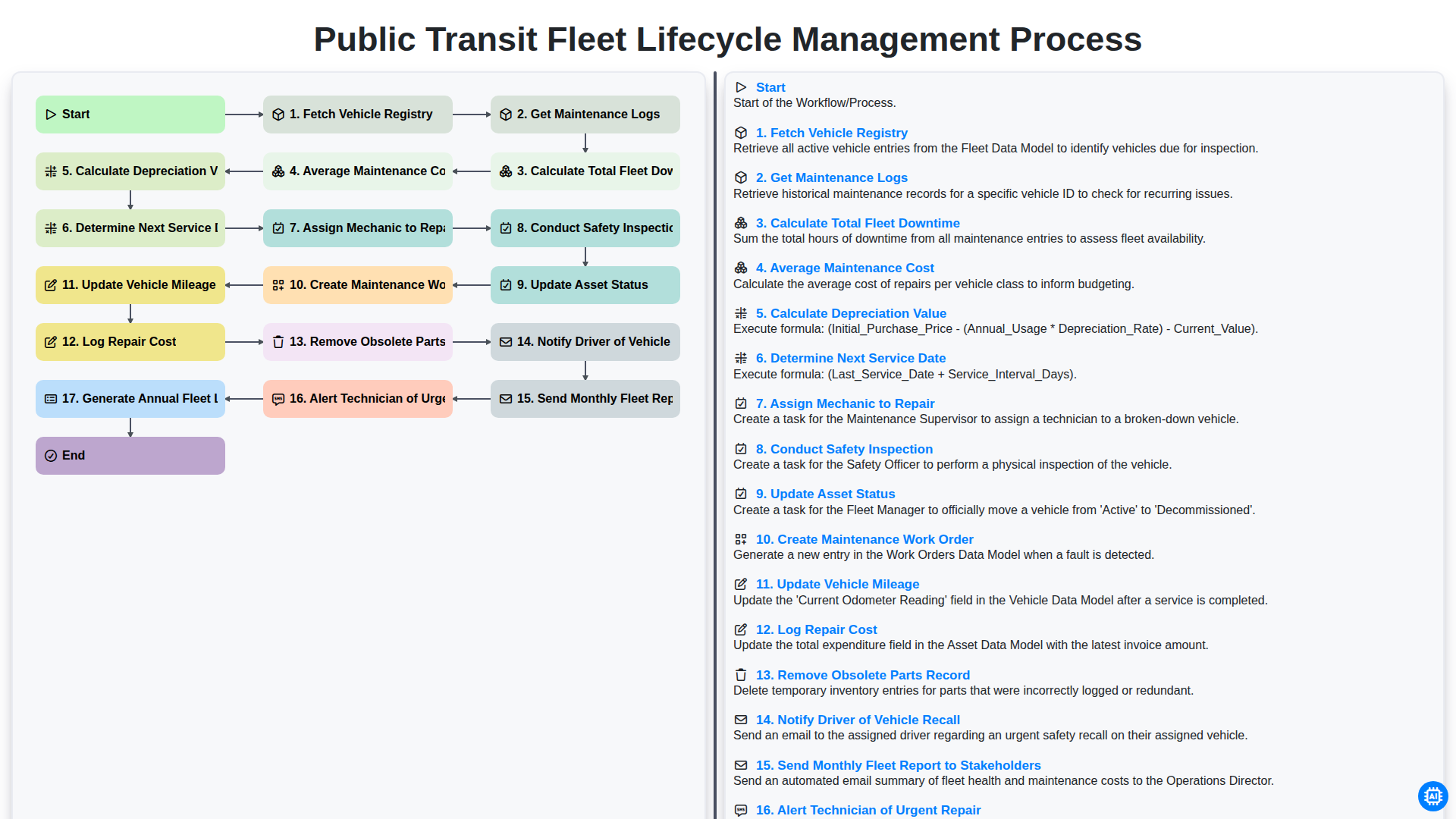
Public Transit Fleet Lifecycle Management Process
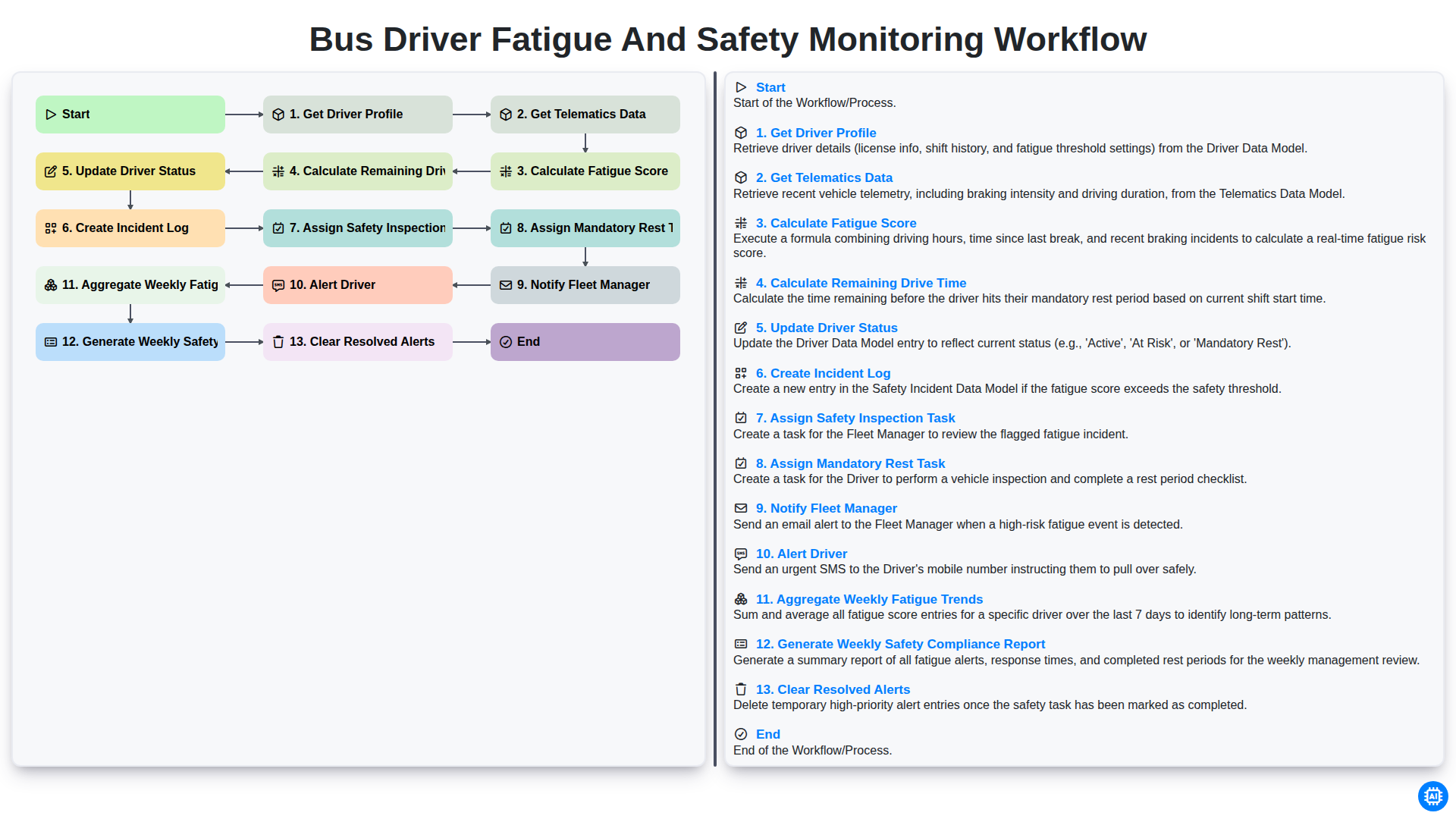
Bus Driver Fatigue and Safety Monitoring Workflow
Podemos hacerlo juntos
¿Necesita ayuda con las listas de verificación?
¿Tienes alguna pregunta? Estamos aquí para ayudarte. Envía tu consulta y te responderemos a la brevedad.