Mastering Your Harvest: The Ultimate Agri-Business Planning Workflow for Peak Yields
Publié: Mis à jour: 04/16/2026
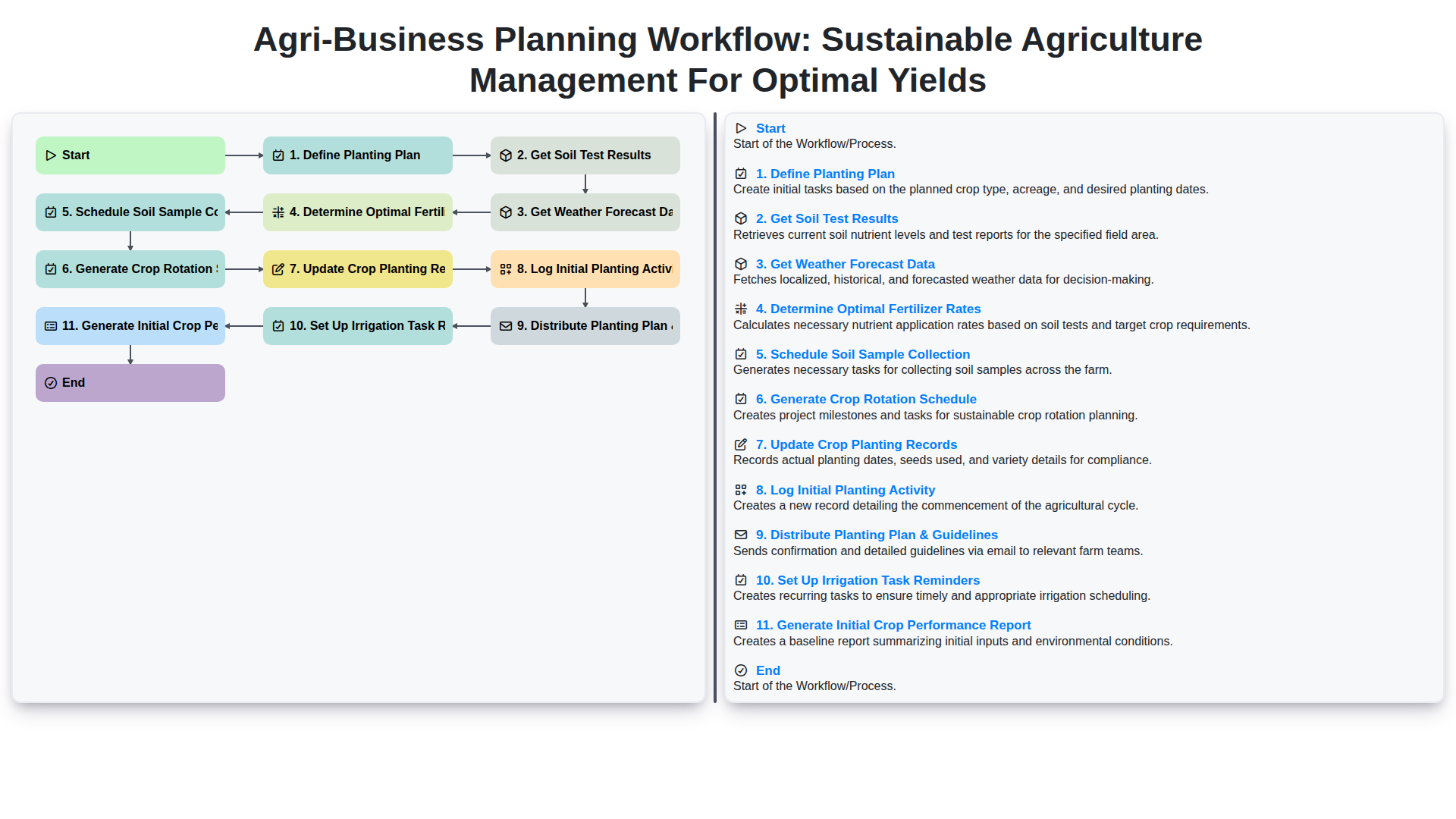
Table des matières
- Introduction: The Pillars of High-Yield Farming
- Step 1: Defining the Strategic Planting Plan
- Step 2: Deep Dive Analysis with Soil Testing
- Step 3: Integrating Climate Intelligence with Weather Forecasting
- Step 4: Precision Nutrition: Determining Optimal Fertilizer Rates
- Step 5: Proactive Monitoring: Scheduling Soil Sample Collection
- Step 6: Ensuring Long-Term Health with Crop Rotation Scheduling
- Step 7: Groundwork Documentation: Updating Crop Planting Records
- Step 8: Execution Phase: Logging Initial Planting Activity
- Step 9: Communication is Key: Distributing Planting Plans and Guidelines
- Step 10: Resource Management: Setting Up Irrigation Task Reminders
- Step 11: Early Performance Benchmarking: Generating Initial Crop Reports
- Conclusion: Continuous Improvement for Sustainable Success
- Resources & Links
TLDR: This guide walks you through a comprehensive, step-by-step workflow template designed to streamline every aspect of your agricultural planning, from initial soil testing and planting schedules to ongoing irrigation management and performance reporting, ensuring you manage resources efficiently and maximize your crop yields.
Introduction: The Pillars of High-Yield Farming
Achieving consistently high and sustainable crop yields is not merely a matter of planting good seeds; it's a complex, orchestrated process rooted in meticulous planning and continuous monitoring. In the dynamic field of modern agriculture, guesswork is no longer an acceptable strategy. Successful farming today requires a robust, repeatable framework-a structured workflow-that integrates scientific data, environmental predictions, and logistical execution. This isn't just about knowing what to plant, but knowing when, where, how much, and why. A systematic workflow transforms farming from an intuitive art into a predictable, data-driven science, ensuring that every decision, from soil preparation to harvest timing, is optimized for maximum resource efficiency and minimal waste.
Step 1: Defining the Strategic Planting Plan
The entire cycle of a successful harvest begins long before the first seed hits the earth. This foundational stage, the Defining the Strategic Planting Plan, is where we lay out the blueprint for maximizing productivity while minimizing environmental impact. It's not enough to just plant; we need a thoughtful, data-driven approach. This involves deep market analysis to determine what crops will yield the best return in the current season, considering local demand and pricing trends. Simultaneously, the plan must account for biodiversity and soil health. This step requires looking at historical yield data, understanding what thrives in your specific microclimate, and establishing initial goals for resource efficiency-from water usage to nutrient uptake. A robust planting plan acts as the North Star, guiding every subsequent decision and ensuring that every action taken throughout the growing season is intentional and strategic.
Step 2: Deep Dive Analysis with Soil Testing
Soil health is the bedrock of any successful agricultural venture. Before sowing a single seed, a thorough understanding of your land's composition is non-negotiable. This is where the soil testing step becomes critically important. By submitting soil samples to a certified lab, you gain vital data points regarding your soil's $\text{pH}$ level, nutrient deficiencies (like nitrogen, phosphorus, and potassium), and the presence of any limiting elements. Analyzing these results allows us to move beyond guesswork and enter the realm of precision agriculture. These reports don't just tell you what your soil is; they tell you what it needs to support peak crop potential.
Step 3: Integrating Climate Intelligence with Weather Forecasting
Integrating up-to-date weather data is critical for making informed, real-time decisions throughout the agricultural cycle. By incorporating advanced weather forecasting, your planning shifts from reactive to predictive. This step involves pulling in localized, hyper-accurate weather models-including projected rainfall patterns, temperature fluctuations, humidity levels, and anticipated extreme weather events. This intelligence feeds directly into optimizing your planting windows, anticipating potential stress points for your chosen crops, and adjusting resource allocation before issues arise. Consistent monitoring ensures that your input application rates and irrigation schedules remain accurate, even when faced with unforeseen climatic shifts.
Step 4: Precision Nutrition: Determining Optimal Fertilizer Rates
This crucial step moves beyond guesswork and into data-driven feeding. Instead of applying fertilizer based on standard recommendations, determining optimal rates involves integrating the data gathered from your soil tests with the specific nutrient uptake requirements of the planned crops. Using sophisticated agricultural models, the system calculates exactly what nutrients (Nitrogen, Phosphorus, Potassium, etc.) and how much of each is needed at this specific stage of the growth cycle to maximize nutrient efficiency and minimize waste. This precision application not only prevents over-fertilization-which can lead to pollution or nutrient burn-but ensures that every plant receives the precise fuel required for robust establishment and high yields.
Step 5: Proactive Monitoring: Scheduling Soil Sample Collection
This step moves beyond initial planning and into active, predictive management. Scheduling soil sample collection is a critical checkpoint that prevents nutrient deficiencies before they impact growth. By systematically determining when and where samples need to be taken, you ensure that subsequent fertility recommendations are based on real-time, on-field data rather than historical assumptions. This disciplined approach minimizes guesswork and maximizes the return on your soil health investment.
Step 6: Ensuring Long-Term Health with Crop Rotation Scheduling
This critical step moves beyond immediate yield maximization and focuses on the foundational health of your land. Generating a crop rotation schedule is not just about convenience; it's a proactive measure against soil depletion and pest buildup. By strategically sequencing different types of crops-such as alternating a heavy feeder like corn with a nitrogen fixer like clover-you naturally balance the nutrients required by your plants. This planning ensures that the soil's microbiome remains vibrant, reducing the need for synthetic inputs over successive seasons. A well-structured rotation schedule minimizes the build-up of specific pests and diseases, naturally diversifying your farm's biological defenses and leading to more resilient, sustainable harvests year after year.
Step 7: Groundwork Documentation: Updating Crop Planting Records
Accurate and up-to-date record-keeping is the backbone of successful agri-business management. At this stage, you are moving from theoretical planning to tangible action. Updating the Crop Planting Records is crucial because it serves as the single source of truth for every field activity. This documentation must capture precise details: which specific plot (using GPS coordinates if possible), which crop variety, the exact date of planting, and the initial seeding density. Beyond just recording that you planted, note the seed batch numbers and the source of the planting materials. These records are not just for compliance; they are vital for future yield analysis, tracking the performance of specific seed varieties, and diagnosing potential issues like nutrient deficiencies or pest outbreaks by correlating records with subsequent performance data. A well-maintained log ensures that when the harvesting season arrives, you can pinpoint exactly what was planted, when, and under what conditions, giving you unparalleled insights into return on investment.
Step 8: Execution Phase: Logging Initial Planting Activity
This is a critical hands-on step where the theoretical planning comes to life. The Logging Initial Planting Activity stage requires diligent record-keeping right from the start. Upon planting, dedicated field staff must meticulously record several pieces of data: the exact date and time of planting, the specific plot coordinates (to tie back to your planting map), the variety of seeds/seedlings planted, the quantity planted per plot, and any immediate observations regarding the soil resistance or initial growth. This logged data serves as your baseline reality check. It allows you to immediately compare the planned input against the actual deployed input, flagging any discrepancies early in the cycle-for example, if a specific area was planted with a different density than originally scheduled. Accurate logging at this juncture is foundational; it forms the ground truth against which all future performance measurements will be validated.
Step 9: Communication is Key: Distributing Planting Plans and Guidelines
Once the entire plan is meticulously crafted-from the initial soil analysis to the calculated nutrient requirements-the next critical step is ensuring everyone involved is on the same page. This is where communication shines. The finalized Planting Plan and comprehensive operational guidelines must be formally distributed. This distribution is not just about sending an email; it requires a structured handover. It means providing field staff with physical, laminated copies if necessary, while simultaneously populating digital dashboards accessible to management and technicians. These guidelines must be crystal clear, detailing not only what to plant and when, but how to execute each task-including specific protocols for handling machinery, safety measures, and immediate escalation contacts. By formalizing the distribution, you ensure that the theoretical best plan translates flawlessly into ground-level action, minimizing confusion and maximizing adherence to best practices.
Step 10: Resource Management: Setting Up Irrigation Task Reminders
This crucial step ensures that your crops receive the exact amount of water they need, precisely when they need it. By setting up automated irrigation task reminders, you move from reactive watering to proactive, data-driven water management. This prevents both underwatering (which stunts growth) and overwatering (which can lead to root rot and nutrient leaching). The reminder system should be linked to your localized weather forecast data and the specific water requirements of the planted crops. For example, if the forecast predicts a period of high heat combined with an established growth stage requiring peak hydration, the reminder system will prompt the necessary action, ensuring water stress is avoided and maximizing plant health throughout the growth cycle.
Step 11: Early Performance Benchmarking: Generating Initial Crop Reports
This crucial step involves synthesizing the initial data gathered throughout the planning and planting phases to create a foundational understanding of what to expect. By generating an Initial Crop Performance Report, you move from pure planning to actionable monitoring. This report compares your planned inputs (like budgeted fertilizer application or expected yield models) against the actual conditions encountered during planting-such as the actual date planted or the immediate soil nutrient readings. It highlights potential variances right from the start, allowing farm managers to proactively identify any bottlenecks, such as nutrient deficiencies that weren't fully captured by the initial soil test, or deviations in planting density. This benchmarking capability saves time and resources later in the season by flagging areas needing immediate attention, thereby setting the stage for continuous, data-driven adjustments to maximize yield potential.
Conclusion: Continuous Improvement for Sustainable Success
Mastering an agri-business planning workflow isn't a one-time setup; it's a continuous cycle of refinement. The initial implementation of these steps-from soil testing to performance reporting-provides a strong foundation. However, true sustainable success is achieved by viewing this process as adaptive. Regularly review the data generated at each stage. Did the initial fertilizer recommendations perform as expected? Was the crop rotation adjusted effectively based on last season's yield? By incorporating farmer feedback, monitoring market shifts, and integrating new agricultural science, you can continually refine your plan. Treat your workflow as a living document, making small, evidence-based adjustments year after year. This commitment to continuous improvement is what transforms good harvests into resilient, profitable, and truly sustainable agricultural enterprises.
Resources & Links
- Oregon State University Extension Services : A comprehensive resource for local agricultural best practices, soil science, and regional farming guidelines.
- Environmental Protection Agency (EPA) Soil Testing Resources : Guidance on understanding soil health, testing parameters, and environmental best practices for agriculture.
- National Weather Service (NOAA) : Reliable, up-to-date, and localized weather data and forecasting models crucial for planning.
- Leading Crop Science Journals/Databases : Peer-reviewed research and articles detailing optimal nutrient management and fertilizer application rates by crop type.
- International Soil Science Organizations : Expert articles and methodologies for determining optimal timing and frequency for soil sample collection.
- University Agricultural Extension Guides on Crop Rotation : Visual and technical guides demonstrating scientifically proven and effective crop rotation patterns for soil nutrient management.
- Agricultural Record Keeping Software/Guides : Tools and best practices for maintaining accurate, digital, and regulatory-compliant crop planting records.
- Water Conservation & Irrigation Technology Guides : Information on efficient irrigation systems, scheduling best practices, and water-use efficiency metrics.
- Agribusiness Market Analysis Reports : Industry reports providing benchmarks and best practices for measuring initial operational performance and yield projection.
- Sustainable Farming Certification Bodies : Resources defining best practices and frameworks for measuring and achieving long-term sustainable agricultural goals.
Questions fréquemment posées
What is an agri-business planning workflow?
An agri-business planning workflow is a structured, step-by-step process designed to manage agricultural operations, from initial soil preparation and seed selection to harvesting and market distribution, ensuring maximum efficiency and productivity.
How does strategic planning contribute to peak yields?
Strategic planning allows farmers to optimize resource allocation, anticipate seasonal risks, and implement precise crop management techniques, which collectively minimize waste and maximize the biological potential of every acre.
What are the key components of a successful harvest plan?
Key components include soil health assessment, precise input management (water, fertilizer, pesticides),-risk mitigation strategies, optimized planting schedules, and a robust post-harvest logistics plan.
How can technology be integrated into the planning workflow?
Technology can be integrated through the use of precision agriculture tools such as IoT sensors for moisture monitoring, drone imagery for crop health analysis, and data-driven software for managing supply chains and predictive analytics.
What role does risk management play in agri-business planning?
Risk management is critical for protecting yields against unpredictable factors like extreme weather, pest outbreaks, and market volatility. A strong workflow includes contingency plans and insurance strategies to maintain business continuity.
Cet article vous a-t-il été utile ?
Démonstration de la solution de gestion de l'agriculture
Gérer une ferme ou une entreprise agricole est une tâche complexe. La plateforme Work OS de ChecklistGuro simplifie vos opérations, de la planification des cultures et de la gestion de l'irrigation au suivi du bétail et à la planification des récoltes. Augmentez l'efficacité, réduisez le gaspillage et améliorez les rendements ! Découvrez comment ChecklistGuro peut révolutionner votre entreprise agricole.
Articles connexes
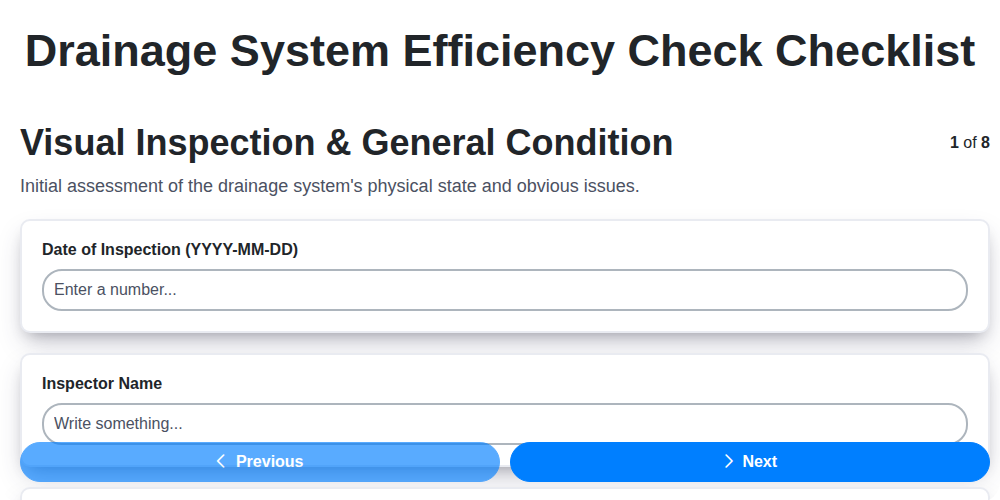
10 étapes simples pour un système de drainage sain : Votre modèle de liste de contrôle

Maîtriser le rapport quotidien d'observation des cultures : Votre modèle de liste de contrôle pour [Culture spécifique]
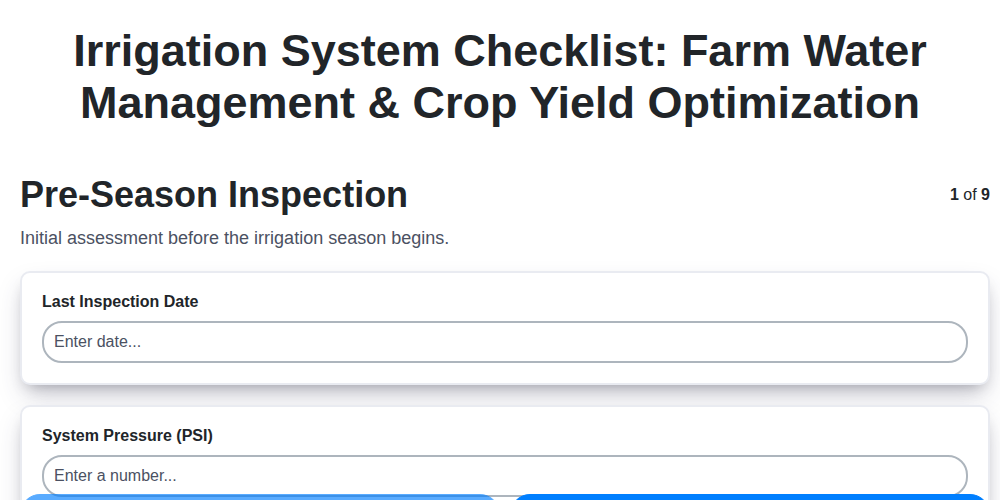
Liste de contrôle du système d'irrigation : Gestion de l'eau agricole et optimisation des rendements des cultures
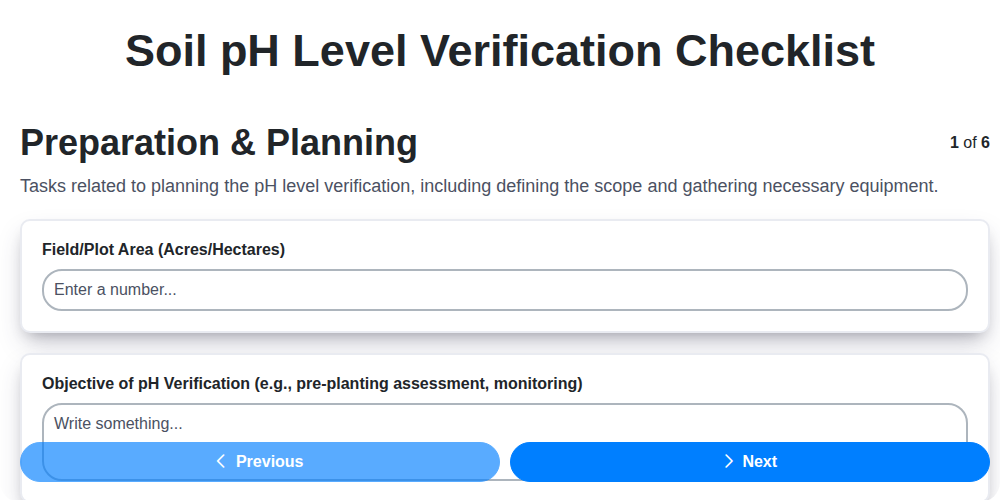
Libérez le potentiel de votre jardin : une liste de contrôle pour la vérification du pH du sol
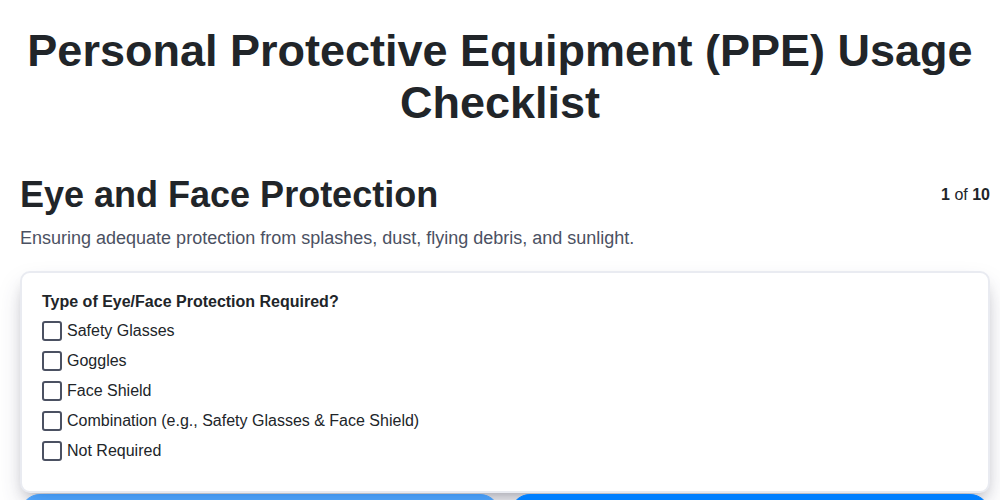
Modèle de liste de contrôle pour l’utilisation des EPI : Votre guide pour la sécurité
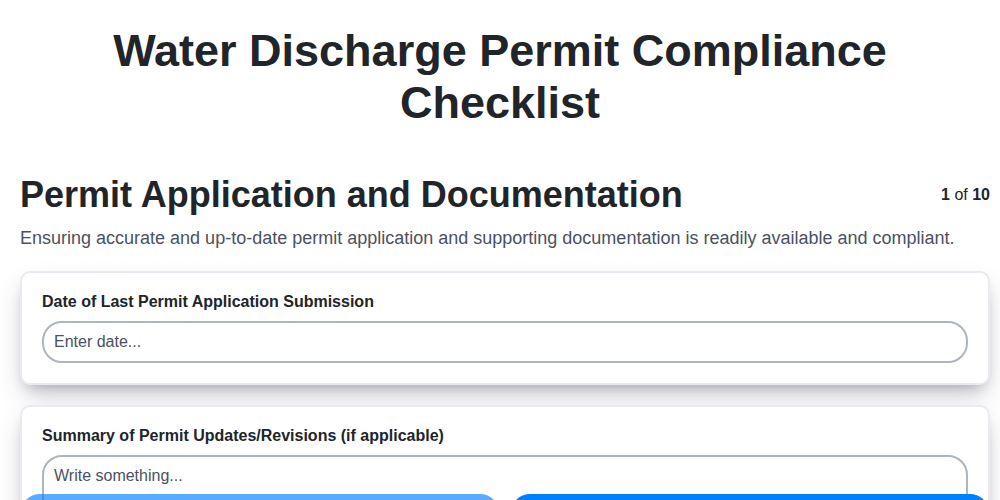
Modèle de liste de contrôle pour la conformité aux permis de rejet d'eau
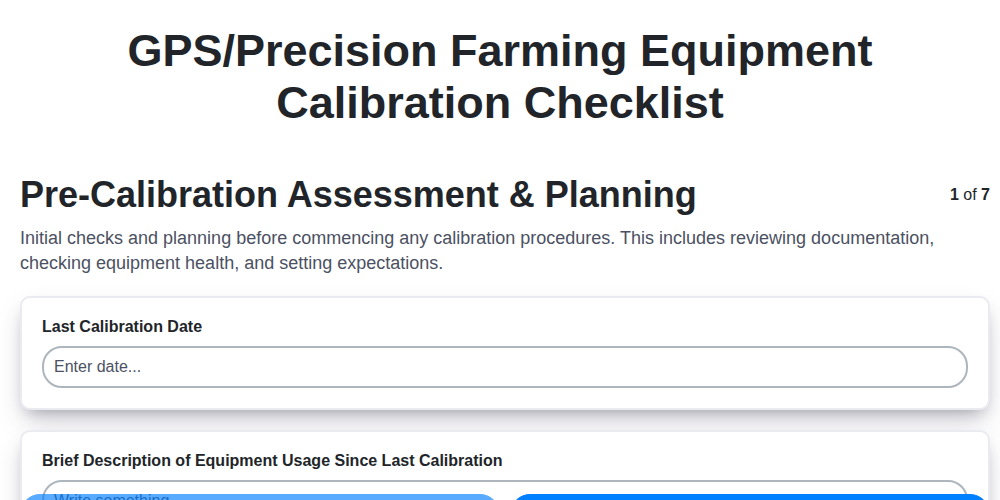
Le Guide Ultime de Vérification et d'Étalonnage pour GPS et Agriculture de Précision
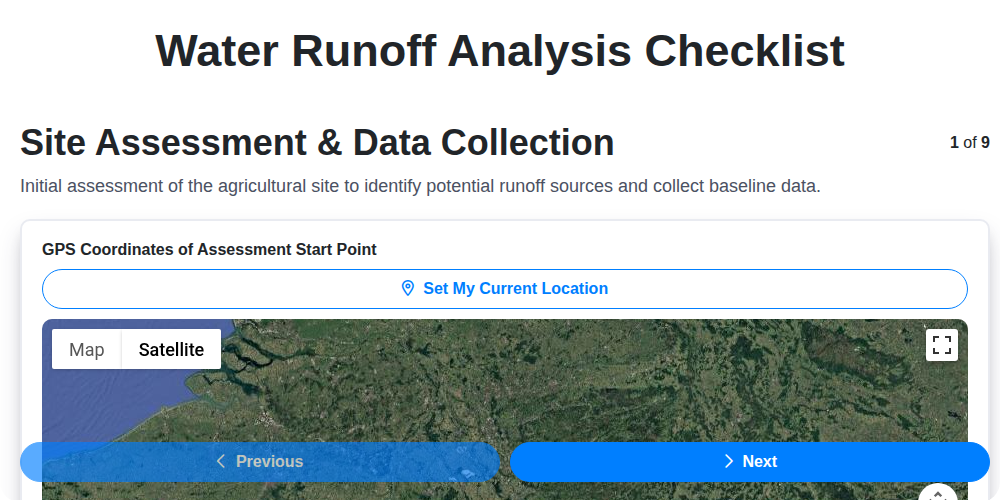
Modèle de liste de contrôle pour l'analyse du ruissellement des eaux
Nous pouvons le faire ensemble
Besoin d'aide avec les listes de contrôle?
Vous avez une question ? Nous sommes là pour vous aider. Veuillez soumettre votre demande et nous vous répondrons rapidement.