
Best Practices Workflow for Waste Management: Optimize Your Waste Solutions
Publié: Mis à jour: 04/16/2026
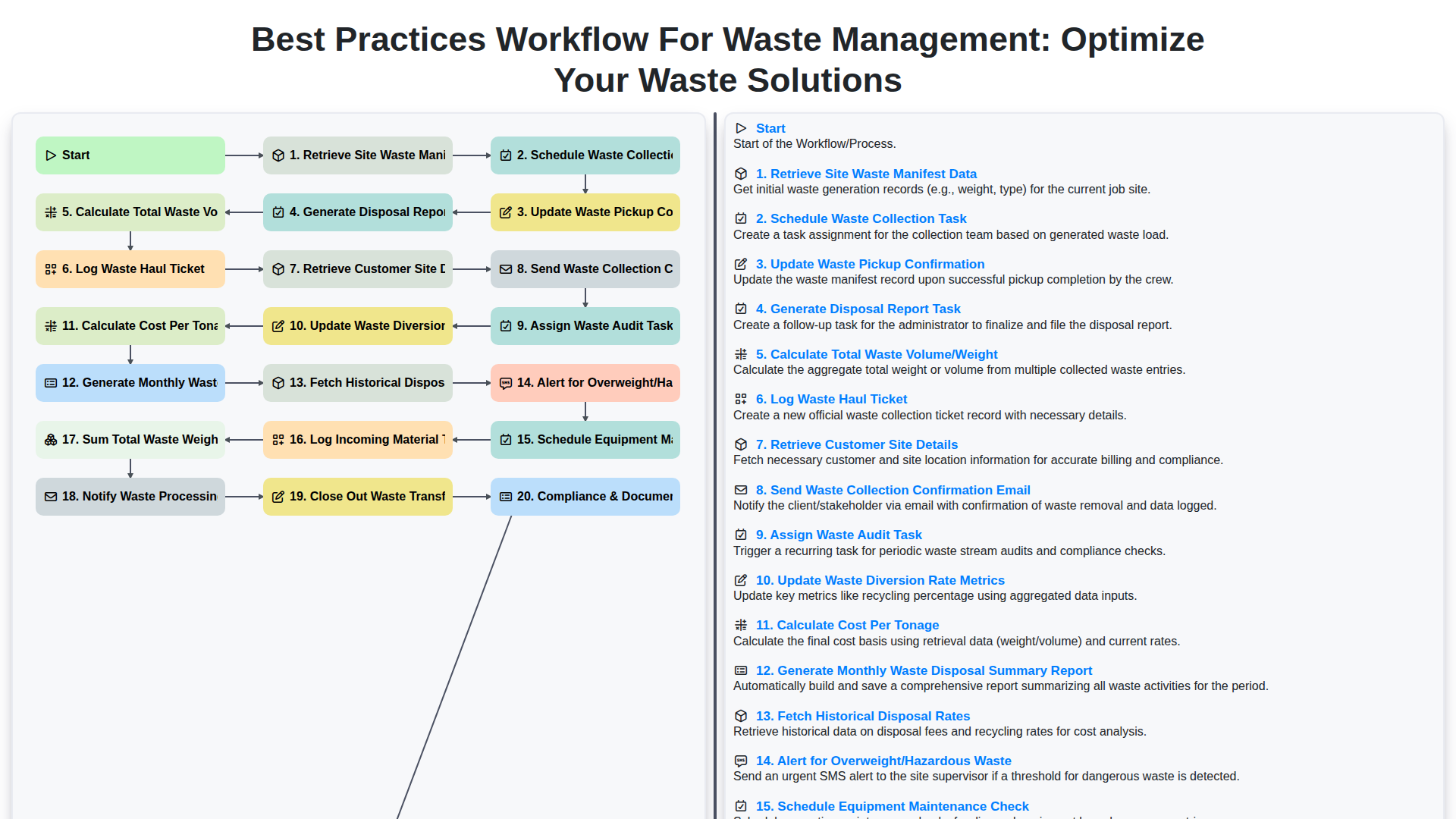
Table des matières
- The Foundation: Data Ingestion and Site Assessment
- From Request to Reality: Scheduling and Collection
- Real-Time Tracking: Logging and Confirmation
- Critical Quality Checks: Safety and Compliance Alerts
- The Core Calculation: Volume, Weight, and Costing
- Beyond Collection: Auditing and Operational Optimization
- The Communication Loop: Keeping Stakeholders Informed
- Documentation Excellence: Manifests and Reporting
- Analyzing Performance: Metrics and Trend Reporting
- Proactive Maintenance and Inventory Management
- Comprehensive Reporting: Compliance and Summary Generation
- Optimizing Material Handling: Logging and Categorization
- Resources & Links
TLDR: Implementing a structured workflow-from retrieving site data and scheduling collections to generating reports and monitoring compliance-streamlines every aspect of waste management. This process optimizes efficiency, ensures accurate record-keeping, improves cost tracking (like cost per ton), enhances safety through alerts (overweight/hazardous), and provides comprehensive reporting for regulatory compliance and continuous improvement in waste diversion rates.
The Foundation: Data Ingestion and Site Assessment
Our streamlined workflow begins with the critical steps of Retrieving Site Waste Manifest Data and Retrieving Customer Site Details. These initial data points form the backbone of any accurate waste management plan. By consolidating manifest data and understanding the specifics of the source site, we gain immediate visibility into what waste is present and where it needs to go. Complementing this is the Log Incoming Material Type step, which allows us to precisely categorize waste streams right from the start. This foundational data ingestion process ensures that every subsequent action-from scheduling to reporting-is built upon a solid, verified understanding of the materials involved.
From Request to Reality: Scheduling and Collection
The process of moving from realizing a waste disposal need to the physical collection is heavily reliant on seamless scheduling. This stage begins with the crucial step of Retrieving Site Waste Manifest Data. By having the initial documentation on hand, the system can then accurately Schedule Waste Collection Task. This ensures that the right resources are allocated to the right location at the right time. As the collection proceeds, the workflow must immediately Update Waste Pickup Confirmation upon completion, providing real-time status updates. Furthermore, to maintain operational efficiency and keep stakeholders informed, the system should be configured to Send Waste Collection Confirmation Email automatically after the service is rendered.
Real-Time Tracking: Logging and Confirmation
This stage is crucial for maintaining a complete and accurate record of all waste handling activities. Logging the waste haul ticket immediately upon collection ensures a precise chain of custody, linking the physical removal of waste at the site to the digital record. Similarly, updating the waste pickup confirmation right after the collection team verifies the load solidifies the proof of service. This real-time data capture prevents discrepancies and builds a reliable audit trail, which is essential for regulatory compliance and accurate billing.
Critical Quality Checks: Safety and Compliance Alerts
This stage is crucial for ensuring that all waste management activities adhere to strict regulatory standards and internal safety protocols. It's where proactive risk management takes center stage. Key checks include rigorously verifying the information collected at the initial site manifestation against permitted waste streams, ensuring that the logged waste material type matches the facility's acceptance criteria. Furthermore, the system must have automated alerts triggered immediately if the collected weight or volume exceeds predefined thresholds-such as flagging an overweight load or detecting the presence of hazardous materials without proper documentation. This immediate flagging capability prevents costly downtime, ensures legal compliance, and protects both personnel and the environment throughout the entire process.
The Core Calculation: Volume, Weight, and Costing
Accurately quantifying the waste stream is the cornerstone of efficient waste management. This involves a multi-faceted approach to capture both the physical volume and the measurable weight of materials being processed. The workflow must ensure that we can reliably Calculate Total Waste Volume/Weight right from the point of pickup. Beyond simple measurement, we need to Log Waste Haul Ticket details, which captures the initial, granular data. This data feeds directly into determining the total scope of work, allowing us to Sum Total Waste Weight Per Day across multiple sites.
Cost analysis must be intrinsically linked to this physical data. By having verified weights and volumes, we can then accurately Calculate Cost Per Tonage. Furthermore, comprehensive reporting relies on capturing the source details, facilitated by the Retrieve Customer Site Details, ensuring that the associated costs are correctly attributed. This rigorous calculation phase provides the essential data points needed for generating transparent financial reports and auditing sustainability efforts.
Beyond Collection: Auditing and Operational Optimization
This phase moves beyond simply collecting waste and focuses on transforming the data into actionable intelligence. Effective waste management isn't just about removing trash; it's about optimizing the entire lifecycle. A crucial part of this optimization involves comprehensive auditing. By initiating an Assign Waste Audit Task, we move from reactive collection to proactive resource management. Audits allow us to pinpoint inefficiencies, identify areas where better sorting could drastically reduce landfill dependency, and pinpoint opportunities for advanced recycling streams. Furthermore, the systematic process of Update Waste Diversion Rate Metrics quantifies our environmental impact, providing verifiable metrics of success. This, combined with Fetch Historical Disposal Rates and Sum Total Waste Weight Per Day, creates a powerful analytical loop. Instead of just knowing how much was picked up, we know how much was successfully diverted and how we can improve next month's performance.
The Communication Loop: Keeping Stakeholders Informed
Effective waste management isn't just about hauling bins; it's a continuous cycle of communication. The moment a waste event is initiated, information needs to flow seamlessly between multiple parties-the generator, the hauler, the processor, and the client. This is where robust workflow automation shines. For instance, after the Retrieve Site Waste Manifest Data is complete, the system shouldn't just schedule the collection; it must automatically trigger the Send Waste Collection Confirmation Email to the site contact, confirming the date and expected service window. Similarly, once the physical pickup is done, updating the Update Waste Pickup Confirmation must immediately trigger the Log Waste Haul Ticket and alert the client via email, closing the loop on that specific service instance. This proactive, automated communication minimizes follow-up calls, reduces disputes, and builds a high level of trust with the client regarding their compliance and service reliability.
Documentation Excellence: Manifests and Reporting
Maintaining meticulous records is the backbone of compliant and efficient waste management. A core element of achieving documentation excellence lies in rigorously managing waste manifests and generating comprehensive reports. The process starts with the Retrieve Site Waste Manifest Data to ensure all inputs are accounted for. This data feeds directly into critical reporting functions, such as the Compliance & Documentation Report Generation, which summarizes the entire lifecycle. Following collection, the Close Out Waste Transfer Manifest solidifies the chain of custody. From a data perspective, accurate tracking allows us to Generate Disposal Report Task details and maintain the Log Waste Haul Ticket for every outgoing shipment. Furthermore, to measure success and adherence to regulations, we must Update Waste Diversion Rate Metrics and Generate Monthly Waste Disposal Summary Report. Having access to Fetch Historical Disposal Rates allows for benchmarking, while generating a Compliance & Documentation Report Generation at the end provides an irrefutable audit trail, proving due diligence at every stage.
Analyzing Performance: Metrics and Trend Reporting
A key component of optimizing any waste management workflow is rigorous performance analysis. This involves moving beyond simple task completion to understanding the efficiency and cost-effectiveness of the entire process. By systematically collecting and analyzing data points-such as the Waste Diversion Rate Metrics, Calculate Cost Per Tonage, and Generate Monthly Waste Disposal Summary Report-you transform raw operational data into actionable intelligence. Analyzing these metrics allows managers to benchmark performance against industry standards and historical data. For instance, comparing the current Update Waste Diversion Rate Metrics against Fetch Historical Disposal Rates can pinpoint process improvements, such as identifying workflows where contamination leads to unnecessary landfill costs. Furthermore, integrating performance checks into alerts, such as the Alert for Overweight/Hazardous Waste, ensures that deviations from optimal performance trigger immediate corrective action, keeping the entire system running smoothly and compliantly.
Proactive Maintenance and Inventory Management
Implementing a rigorous scheduling process for equipment maintenance checks is critical for maintaining operational efficiency and compliance within waste management. By integrating this step into the workflow, you ensure that vehicles and specialized machinery are serviced proactively, rather than reactively. This involves tracking usage hours and mileage against manufacturer recommendations. Furthermore, integrating inventory management at this stage-logging the incoming material type alongside the scheduled maintenance-allows for better resource allocation. Knowing exactly what materials are being processed helps anticipate potential issues with specific waste streams, thereby optimizing maintenance schedules to address material-specific equipment wear and tear.
Comprehensive Reporting: Compliance and Summary Generation
Generating accurate and actionable reports is the cornerstone of efficient waste management. Our workflow seamlessly handles the complexities of compliance and summary generation, ensuring you have a complete picture of your waste journey. From the granular details of individual pickups to high-level operational summaries, we cover every necessary report. This includes the crucial Compliance & Documentation Report Generation, which compiles all necessary paperwork to meet regulatory standards, safeguarding you against penalties. Furthermore, we automate the creation of the Generate Monthly Waste Disposal Summary Report, giving stakeholders a clear, easily digestible view of overall performance. By integrating functions like Update Waste Diversion Rate Metrics and Calculate Cost Per Tonage, the reporting process moves beyond simple logging; it becomes a powerful tool for continuous process improvement and financial accountability.
Optimizing Material Handling: Logging and Categorization
Accurate logging and meticulous categorization are the bedrock of an efficient waste management workflow. Before any material can be processed or accounted for, it must be properly logged upon arrival. This involves the initial step of Logging Incoming Material Type, which requires detailed data capture-understanding what the waste is. This categorization is vital because different material types (e.g., cardboard, mixed recyclables, e-waste, general trash) require distinct handling procedures, separate disposal streams, and adherence to different regulatory guidelines. By accurately logging the type, we ensure that the subsequent steps, such as determining appropriate hauling methods or flagging hazardous materials, are based on solid data. Furthermore, linking this initial log to specific site details (Retrieve Customer Site Details) and immediately proceeding to the Sum Total Waste Weight Per Day provides real-time accountability. Proper categorization not only supports accurate reporting but also forms the foundation for calculating crucial metrics like the Waste Diversion Rate Metrics, ensuring you know exactly what you are managing and where it needs to go.
Resources & Links
- EPA Waste Reduction Guidelines : Official guidelines and best practices from the EPA on waste management and reduction strategies.
- Institute of Waste Management (IWM) : Industry resources and best practices for modern waste management systems.
- OSHA Safety Guidelines for Waste Handling : Essential safety protocols and compliance standards for waste collection and handling personnel.
- Waste Technology Industry Insights : Articles and case studies on innovative waste processing and disposal technologies.
- Local Municipal Waste Ordinances : Templates and links to local municipal regulations affecting waste collection and disposal.
- Waste System Process Visualization (Educational) : Educational videos or deep dives into complex waste flows for conceptual understanding.
- Environmental Health Department Resources : Information on the environmental impact and legal handling of various waste streams.
- Workflow Automation Tools Guide : General technical resources on implementing robust workflow automation systems in logistics.
Cet article vous a-t-il été utile ?
Démonstration de la solution de gestion des déchets
Optimisez votre gestion des déchets et réduisez votre impact environnemental ! ChecklistGuro rationalise la collecte, le suivi et la production de rapports. Minimisez les déchets, réduisez les coûts et favorisez la durabilité. Gérez tout cela grâce à notre plateforme Work OS.
Articles connexes

Your Ultimate Guide to a Waste Management Facility Project Checklist Template

Your Complete Vegetation Removal Compliance Checklist Template
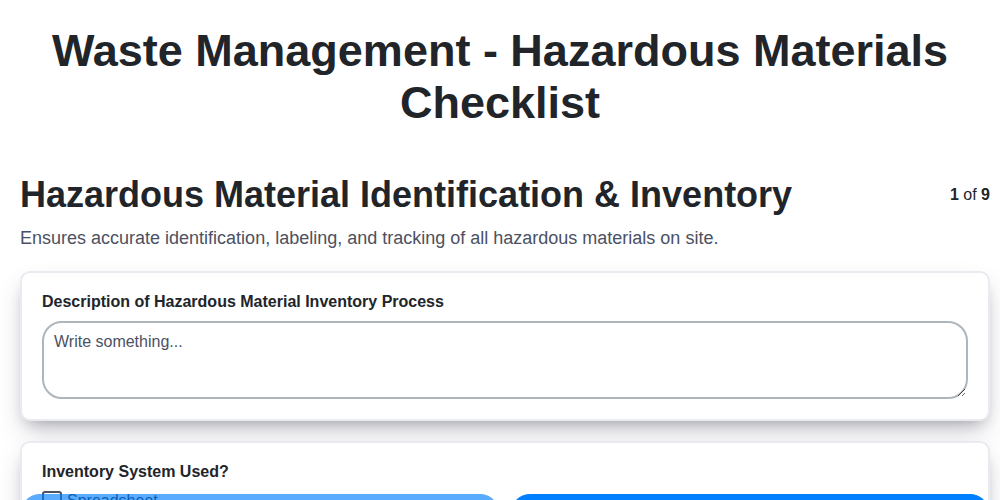
Your Ultimate Hazardous Materials Waste Management Checklist Template
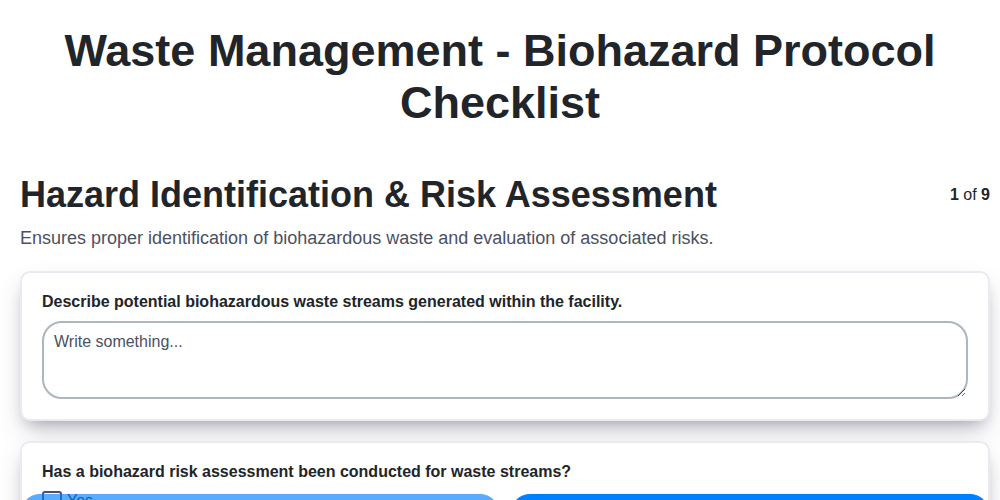
Streamline Biohazard Waste: Your Essential Checklist Template
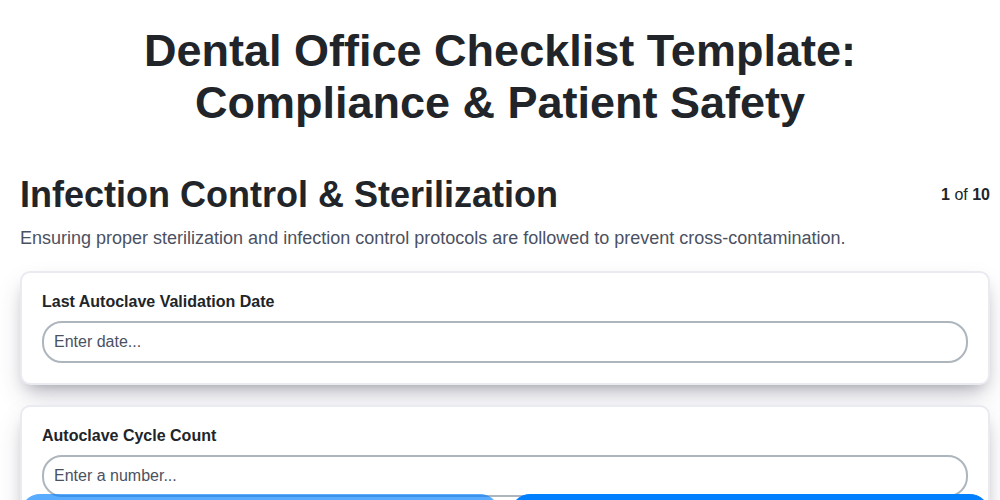
Your Dental Office Safety Net: The Compliance & Patient Safety Checklist Template

Modèle de liste de contrôle hebdomadaire pour la gestion des déchets et le recyclage
Your Environmental Compliance Checklist Template: A Step-by-Step Guide
Modèle de liste de contrôle pour atelier de réparation automobile : Opérations et conformité
Nous pouvons le faire ensemble
Besoin d'aide avec les listes de contrôle?
Vous avez une question ? Nous sommes là pour vous aider. Veuillez soumettre votre demande et nous vous répondrons rapidement.