
Automating the Waste Stream: Your End-to-End Lifecycle Workflow for Industry Excellence
Publié: Mis à jour: 04/16/2026
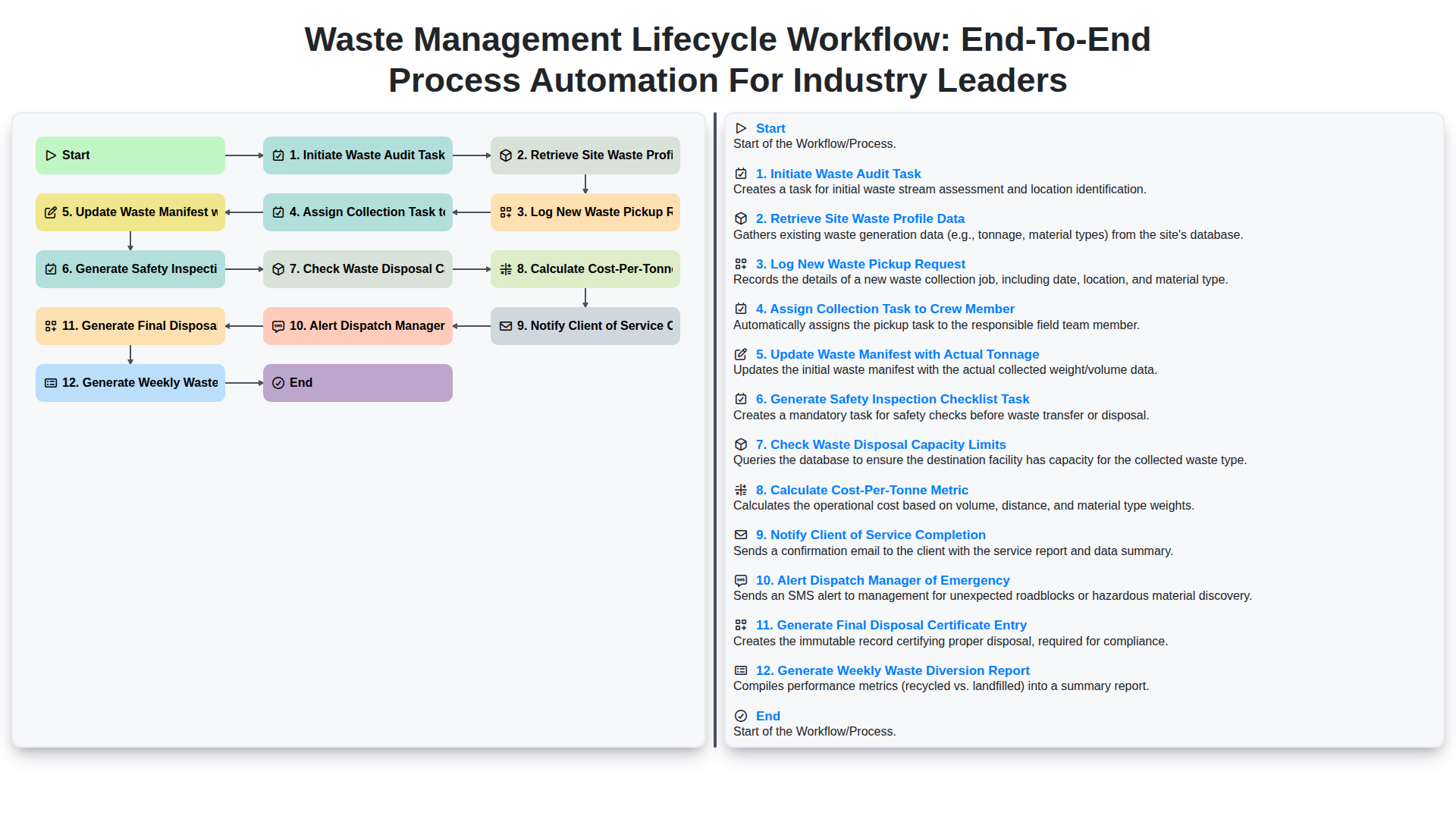
Table des matières
- Introduction: The Critical Need for Waste Stream Automation
- Phase 1: Initiating the Cycle - From Audit to Request
- Leveraging Site Data: The Power of Waste Profile Integration
- Seamless Pickup Management: Logging and Dispatching Waste Collection
- Operationalizing Compliance: Safety Checks and Manifest Updates
- Capacity Control: Proactively Managing Disposal Limits
- Financial Intelligence: Calculating Cost-Per-Tonne for Optimization
- Stakeholder Communication: Notifying Clients of Service Completion
- Risk Mitigation: Alerting Managers for Emergency Response
- Documentation Excellence: Generating Final Disposal Certificates
- Reporting and Insight: The Value of Weekly Diversion Reports
- The Benefits of End-to-End Automation in Waste Management
- Implementation Roadmap: Adopting an Automated Workflow
- Conclusion: Driving Industry Excellence Through Digital Workflow
- Resources & Links
TLDR: This guide demonstrates how to use our comprehensive Workflow template to automate every step of your waste management process-from initial audits and pickup requests to final reporting and compliance. By connecting these tasks into one seamless system, you can boost efficiency, ensure regulatory compliance, and gain actionable data insights, allowing your industry to operate at peak excellence.
Introduction: The Critical Need for Waste Stream Automation
In today's industrial landscape, waste management is far more than just a logistical afterthought-it is a core component of operational efficiency, regulatory compliance, and corporate sustainability. Traditional, paper-based, or manual waste tracking processes are inherently prone to human error, leading to delays, inaccurate billing, and significant compliance gaps. The sheer volume and complexity of waste streams generated across large industrial sites demand a system that is not only robust but deeply automated. A failure in waste tracking can result in hefty fines, reputational damage, and inefficient resource utilization. Modern industry leaders recognize that managing waste from point of generation to final disposal requires a seamless, digitally orchestrated workflow. This means moving beyond simple scheduling and implementing an end-to-end process that automates everything from the initial waste assessment to the final certificate generation, ensuring accountability at every touchpoint.
Phase 1: Initiating the Cycle - From Audit to Request
The waste management lifecycle begins with a critical understanding of what needs to be managed. This initial phase is all about data gathering and establishing the need for service. It kicks off with the Initiate Waste Audit Task, which sets the formal groundwork for the entire process. Following this, the system immediately leverages the Retrieve Site Waste Profile Data function. This isn't just pulling basic contact info; it's accessing comprehensive, historical data about the site's specific waste streams, volume patterns, and regulatory history, giving us immediate context. Armed with this profile, the next logical step is to Log New Waste Pickup Request. This standardized digital logging ensures that every service need is captured uniformly, creating a traceable record for everything that follows.
Leveraging Site Data: The Power of Waste Profile Integration
Integrating real-time site data is where the automation truly elevates the waste management lifecycle. By initiating the process with a comprehensive Waste Audit Task, we move beyond guesswork. This step requires the system to automatically Retrieve Site Waste Profile Data. This initial profile acts as the foundation for all subsequent actions, ensuring that the predicted waste stream aligns with historical performance and current site specifics. This data-driven starting point allows the subsequent Log New Waste Pickup Request to be highly accurate, reducing back-and-forth communication and saving valuable operational time.
Seamless Pickup Management: Logging and Dispatching Waste Collection
The journey of waste removal starts with a precise and streamlined logging process. When waste needs to be collected, our system allows users to Log New Waste Pickup Request effortlessly, creating a digital record of the requirement. This initiates the next critical step: Assign Collection Task to Crew Member. The system intelligently routes this task to the appropriate crew member, ensuring that the right resources are dispatched exactly when and where they are needed. This integration eliminates manual paperwork, drastically reducing delay times and improving accountability across the board.
Operationalizing Compliance: Safety Checks and Manifest Updates
Integrating rigorous safety protocols and meticulous documentation into the workflow is non-negotiable for responsible waste management. The process mandates the automatic generation of a Safety Inspection Checklist Task at key points, ensuring no service move proceeds without a thorough safety review. Furthermore, maintaining an accurate chain of custody is crucial; this is achieved through the Update Waste Manifest with Actual Tonnage. By logging the confirmed weight and details directly into the manifest system, we ensure that every pickup is auditable, keeping compliance officers fully informed from the moment the waste leaves the site until it's processed at the facility.
Capacity Control: Proactively Managing Disposal Limits
A critical component of any robust waste management workflow is rigorous capacity control. This ensures that operations remain compliant, avoid costly overages, and maintain reliable service levels. Before any collection task is confirmed, the system must check the current waste disposal capacity limits for the designated landfill or processing facility. By integrating this check upfront, we prevent scheduling failures and service disruptions. If the stored capacity approaches predefined warning thresholds, the workflow automatically flags this, allowing managers to proactively seek alternative disposal routes or initiate capacity reservation requests, keeping the entire cycle running smoothly and responsibly.
Financial Intelligence: Calculating Cost-Per-Tonne for Optimization
The journey of a waste stream, while often viewed as a necessary expense, is ripe for sophisticated financial analysis. At the heart of sustainable waste management efficiency lies the meticulous tracking and calculation of the Cost-Per-Tonne (CPT). This metric moves the process beyond simple billing into genuine operational intelligence. By integrating the Calculate Cost-Per-Tonne Metric step directly into our automated workflow, organizations gain real-time financial visibility. This calculation aggregates all associated costs-including labor (assigned collection tasks), transportation fuel, tipping fees (captured in the waste manifest), and any associated regulatory overhead-and divides it by the actual tonnage collected. This immediate, accurate figure allows industry leaders to pinpoint which waste streams are most profitable to divert, where collection routes are inefficiently expensive, and whether current disposal contracts are meeting cost-optimization goals. Continuous monitoring of CPT acts as a critical feedback loop, driving procurement changes, renegotiating vendor contracts, and ultimately maximizing the diversion rate while minimizing expenditure.
Stakeholder Communication: Notifying Clients of Service Completion
Seamless communication is crucial for building trust and ensuring client satisfaction throughout the waste management process. Our automated workflow ensures that as soon as the service is completed at your site, a clear and professional notification is dispatched directly to you. This automated alert confirms that the scheduled pickup has occurred, providing immediate peace of mind and accurate records for your compliance and operational reporting.
Risk Mitigation: Alerting Managers for Emergency Response
The ability to proactively alert dispatch managers of emergency situations is a critical component of minimizing operational risk. Should an unusual event occur-such as a site hazard discovery during an audit, an unexpected equipment failure at the disposal facility, or a deviation from expected material streams-the system must instantly escalate this information. This automated alert triggers immediate notification channels to the designated dispatch manager, bypassing standard procedural queues. This ensures that expert human intervention is deployed precisely when and where it is needed, allowing the team to pivot from routine waste collection to emergency management rapidly, thereby preventing potential downtime, regulatory fines, or safety incidents.
Documentation Excellence: Generating Final Disposal Certificates
The process doesn't end when the waste leaves your facility. Ensuring impeccable documentation is critical for compliance, transparency, and proving your commitment to sustainability. This is where the generation of the Final Disposal Certificate becomes paramount. Our automated workflow seamlessly manages this step, taking all accumulated data-including the initial audit findings, the executed pickup manifests, and the final weight verification-and compiling it into a legally sound, instantly retrievable Final Disposal Certificate. This digital certificate serves as undeniable proof of proper waste handling, significantly mitigating liability risks for industry leaders and providing peace of mind to regulators and stakeholders alike.
Reporting and Insight: The Value of Weekly Diversion Reports
Beyond the immediate needs of scheduling and compliance, a robust waste management workflow must provide actionable intelligence. This is where the generation of comprehensive reports becomes invaluable. Specifically, the Weekly Waste Diversion Report serves as a critical barometer for your sustainability performance. This single report consolidates data points from multiple stages-from the initial waste audit to the final disposal certificate-allowing leaders to visualize waste streams, track material recovery rates, and measure progress against corporate ESG goals. By analyzing trends in these reports, organizations can proactively identify bottlenecks in their processes, pinpoint underutilized recycling streams, and justify investments in advanced waste-reduction technologies. This shift from merely documenting waste disposal to actively reporting diversion success transforms the service from a necessary operational cost center into a measurable pillar of corporate social responsibility (CSR) success.
The Benefits of End-to-End Automation in Waste Management
Automation transforms waste management from a series of disconnected, manual tasks into a seamless, predictable, and highly efficient workflow. By automating the entire lifecycle-from the initial waste audit request to the final disposal certificate-businesses eliminate bottlenecks and reduce human error significantly. This end-to-end approach ensures that critical steps, such as retrieving the accurate site waste profile or checking disposal capacity limits, happen automatically in the correct sequence. Furthermore, automating compliance and reporting, such as updating manifests or generating diversion reports, drastically cuts down on administrative overhead. For industry leaders, this means not only faster service delivery (like instant client notification) but also superior data integrity, allowing for precise metric calculation like cost-per-tonne, ultimately boosting profitability and ensuring rigorous adherence to environmental regulations.
Implementation Roadmap: Adopting an Automated Workflow
Transitioning from manual, disjointed waste management processes to a fully automated, end-to-end digital workflow requires a strategic, phased approach. Trying to implement every feature at once can lead to bottlenecks, user frustration, and project failure. Instead, we recommend adopting a structured implementation roadmap that builds capability incrementally.
First, focus on foundational data integrity. This means digitizing your initial data inputs, such as the Initiate Waste Audit Task and Retrieve Site Waste Profile Data. By standardizing how site information and waste streams are logged upfront, subsequent automation steps become reliable. Next, tackle the core transactional elements: implementing the Log New Waste Pickup Request and Assign Collection Task to Crew Member. These steps represent the operational heart of your business, and automating them provides the quickest, most visible return on investment (ROI).
Once the core pickups are digitized, expand into compliance and verification. Integrating the Update Waste Manifest with Actual Tonnage and Generate Safety Inspection Checklist Task ensures that data is captured accurately at the point of service, minimizing discrepancies later on. Simultaneously, automating critical checks, such as Check Waste Disposal Capacity Limits, moves you from reactive management to proactive risk mitigation.
The optimization phase involves embedding intelligence and financial controls. This includes automating the Calculate Cost-Per-Tonne Metric and ensuring the Generate Final Disposal Certificate Entry is seamless. Finally, build out communication and reporting capabilities: setting up automated Notify Client of Service Completion, creating the Generate Weekly Waste Diversion Report, and establishing protocols for high-priority events like Alert Dispatch Manager of Emergency.
By following this phased roadmap-from foundational data capture to core operations, then to compliance, and finally to intelligence and reporting-industry leaders can manage change effectively, realize immediate process improvements, and build a resilient, future-proof waste management ecosystem.
Conclusion: Driving Industry Excellence Through Digital Workflow
Implementing an end-to-end, automated workflow for waste management isn't just about digitizing existing tasks; it's about fundamentally reimagining operational excellence. By connecting discrete steps-from the initial waste audit and site profiling to final reporting and compliance-into a seamless digital loop, industry leaders transform a traditionally fragmented and manual process into a predictable, efficient, and data-rich asset. This automation reduces human error, accelerates decision-making (like dispatching crews or flagging capacity overages), and provides an unparalleled level of transparency to clients and regulators. Ultimately, adopting this comprehensive workflow allows organizations to move beyond mere compliance and position themselves as true sustainability partners, maximizing resource recovery and cementing their status as industry leaders.
Resources & Links
- WasteTech Solutions Portal : The main resource hub for understanding advanced waste management technology and workflow automation.
- EPA/Local Environmental Compliance Guides : Official governmental and industry guidelines for waste handling, manifest tracking, and regulatory compliance.
- Fleet & Logistics Management Software Reviews : Resources for best-in-class GPS tracking, route optimization, and dispatch management systems.
- ESG and Circular Economy Reporting Standards : Guides and templates for generating accurate waste diversion rates and sustainability reports.
- ERP Integration for Waste Services : Information on integrating waste management data directly into larger enterprise resource planning systems for financial oversight.
- OSHA and Industrial Safety Protocols : Mandatory reading on site safety procedures, hazardous waste handling, and inspection checklist creation.
Cet article vous a-t-il été utile ?
Démonstration de la solution de gestion des déchets
Optimisez votre gestion des déchets et réduisez votre impact environnemental ! ChecklistGuro rationalise la collecte, le suivi et la production de rapports. Minimisez les déchets, réduisez les coûts et favorisez la durabilité. Gérez tout cela grâce à notre plateforme Work OS.
Articles connexes

Your Ultimate Guide to a Waste Management Facility Project Checklist Template

Your Complete Vegetation Removal Compliance Checklist Template
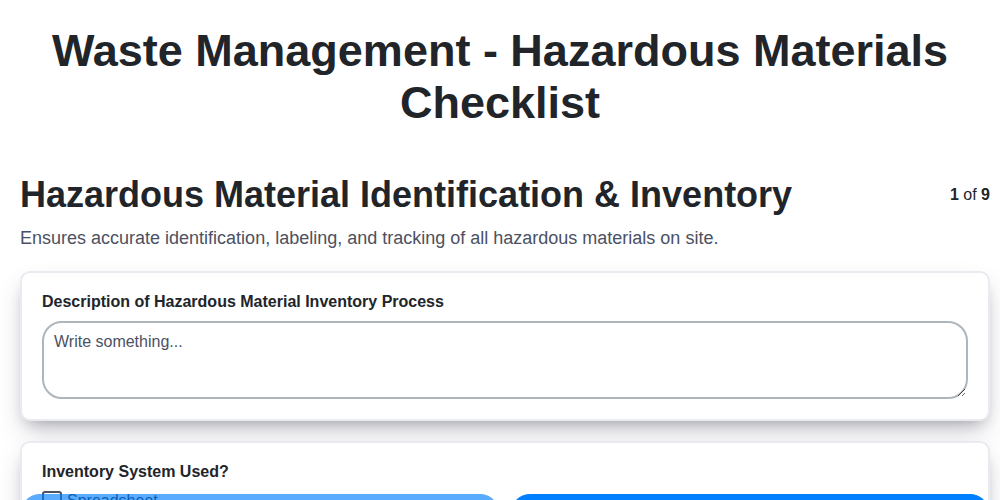
Your Ultimate Hazardous Materials Waste Management Checklist Template
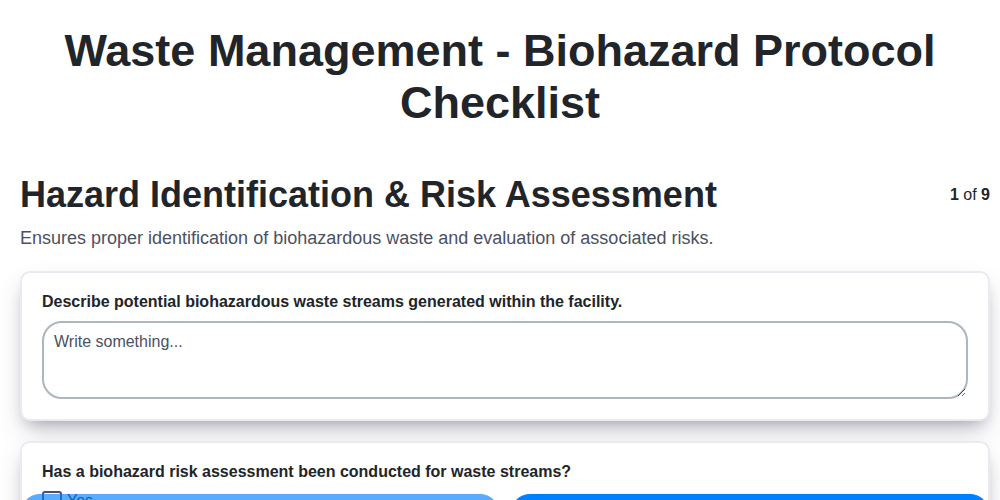
Streamline Biohazard Waste: Your Essential Checklist Template
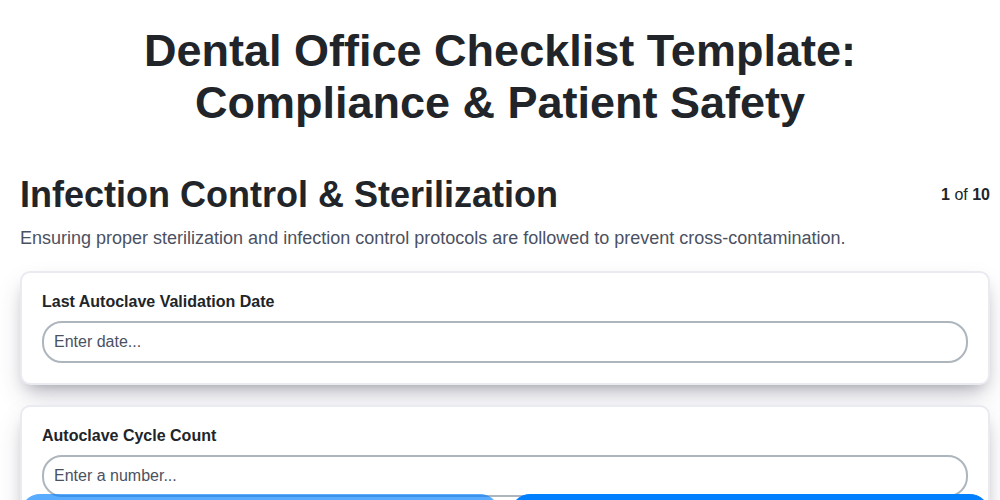
Your Dental Office Safety Net: The Compliance & Patient Safety Checklist Template

Modèle de liste de contrôle hebdomadaire pour la gestion des déchets et le recyclage
Your Environmental Compliance Checklist Template: A Step-by-Step Guide
Modèle de liste de contrôle pour atelier de réparation automobile : Opérations et conformité
Nous pouvons le faire ensemble
Besoin d'aide avec les listes de contrôle?
Vous avez une question ? Nous sommes là pour vous aider. Veuillez soumettre votre demande et nous vous répondrons rapidement.