 ChecklistGuro
 Integrated Pest Management Implementation
Protect your crops & boost yields! Our Integrated Pest Management (IPM) Implementation Checklist guides farmers to sustainable pest control, reducing reliance on pesticides & promoting healthy soil. Download now for a practical roadmap to eco-friendly agriculture!
Ce modèle a été installé 1 fois.
Planning & Assessment
Initial steps to understand pest pressures and potential interventions.
Farm History & Previous Pest Management Practices
Farm Size (in acres/hectares)
Primary Crops Grown
Known Pest Concerns (Initial Assessment)
Date of Initial Assessment
Identify Key Stakeholders (e.g., Farmworkers, Consultants, Advisors)
Soil Type (General)
Field Monitoring & Identification
Regular observation to detect pests, beneficial organisms, and assess damage levels.
Monitoring Date
GPS Location of Monitoring Point
Pests Observed
Estimated Pest Population Density (e.g., per leaf/plant)
Detailed Description of Pest Symptoms & Location on Plant
Beneficial Insects Observed
Percentage of Plants Exhibiting Damage
Any Unusual Observations (e.g., disease presence, weather conditions)
Preventative Measures & Cultural Practices
Strategies to reduce pest problems before they start or minimize their impact.
Crop Rotation Cycle Length (Years)
Select Cultural Practices Implemented (Check all that apply)
Describe Soil Health Improvement Practices
Date of Last Soil Test
Variety Selection Justification (Why was this variety chosen?)
Detailed description of sanitation practices implemented
Biological Control
Utilizing natural enemies (predators, parasitoids, pathogens) to control pests.
Identify Potential Biological Control Agents
Describe local sources of beneficial organisms (if known)
Estimated Release Rate (organisms/acre/hectare)
Scheduled Release Date(s)
Release Method
Notes on Environmental Conditions Affecting Biological Control Effectiveness (e.g., temperature, humidity)
Photos of Released Organisms or Affected Area
Selective Chemical Control (If Necessary)
Using pesticides only when other methods are insufficient and choosing the least harmful options.
Pesticide Selection Rationale
Justification for Chemical Intervention
Application Rate (per hectare/acre)
Application Method
Application Date
Application Time
Personal Protective Equipment (PPE) Used
Weather Conditions at Application
Record Keeping & Evaluation
Documenting all IPM activities and assessing their effectiveness.
Date of Pest Monitoring Observation
Field Location of Observation
Pest Population Count (e.g., aphids per leaf)
Beneficial Insect Count (e.g., ladybugs per plant)
Pests Observed (Select all that apply)
Details on Actions Taken (e.g., Release of biocontrol agents, herbicide application)
Effectiveness of Action (Subjective Assessment)
Notes/Observations/Further Actions Required
Photos/Evidence of Pest/Damage/Intervention
Training & Education
Ensuring staff and stakeholders understand IPM principles and practices.
Which IPM principles are you familiar with?
Describe your current understanding of beneficial insects and their role in pest control.
Date of last IPM training session.
What is your role in IPM implementation?
Upload copies of training certificates or attendance records (if applicable).
Estimated hours spent on IPM training in the last year.
What are your specific questions or areas where you feel you need further training related to IPM?
Regulatory Compliance & Safety
Adhering to relevant regulations and ensuring safe handling of materials.
Pesticide Applicator Certification Status
Last Pesticide Applicator Training Date
Record of Pesticide Labels & SDS (Safety Data Sheets)
Copy of Pesticide Application Licenses/Permits
Minimum Re-entry Interval (REI) observed after pesticide application (days)
Pre-Harvest Interval (PHI) observed after pesticide application (days)
Personal Protective Equipment (PPE) Available and in Good Condition?
Record of Spill Prevention and Response Procedures
Commentaires
Aucun commentaire n'a été publié pour le moment. Soyez le premier à en ajouter un !
Démonstration de la solution de gestion de l'agriculture
Gérer une ferme ou une entreprise agricole est une tâche complexe. La plateforme Work OS de ChecklistGuro simplifie vos opérations, de la planification des cultures et de la gestion de l'irrigation au suivi du bétail et à la planification des récoltes. Augmentez l'efficacité, réduisez le gaspillage et améliorez les rendements ! Découvrez comment ChecklistGuro peut révolutionner votre entreprise agricole.
Modèles de liste de contrôle associés
Inspection des mesures de lutte contre l'érosion des sols
Implement Attachment Secureness
Précision de la profondeur de plantation
GPS/Precision Farming Equipment Calibration
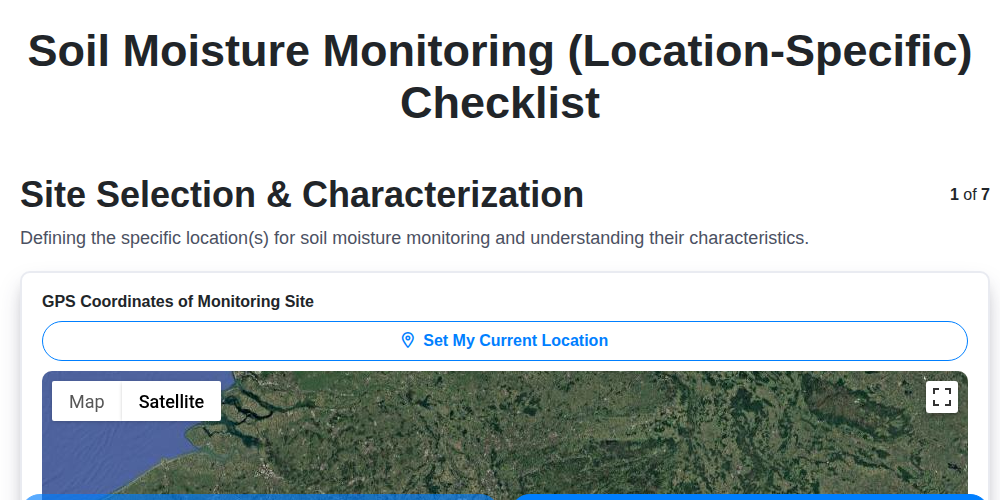
Soil Moisture Monitoring (Location-Specific)
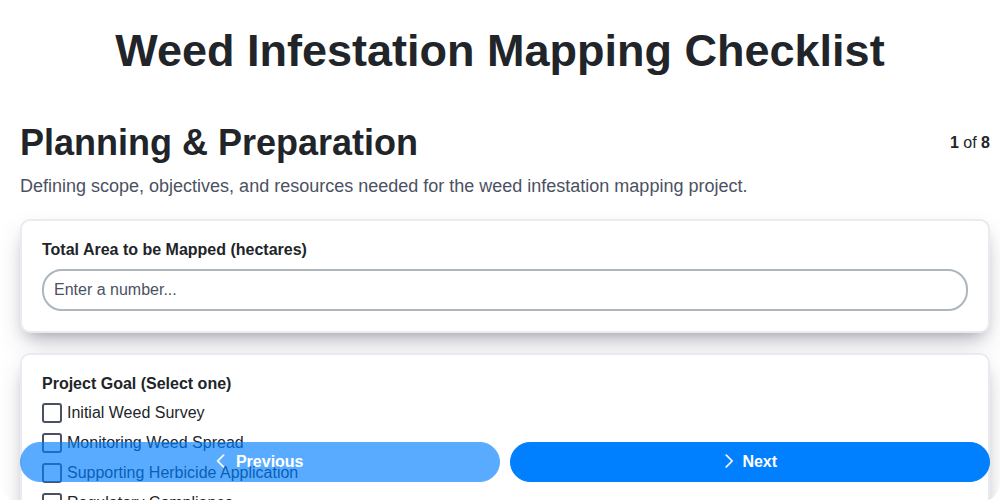
Weed Infestation Mapping
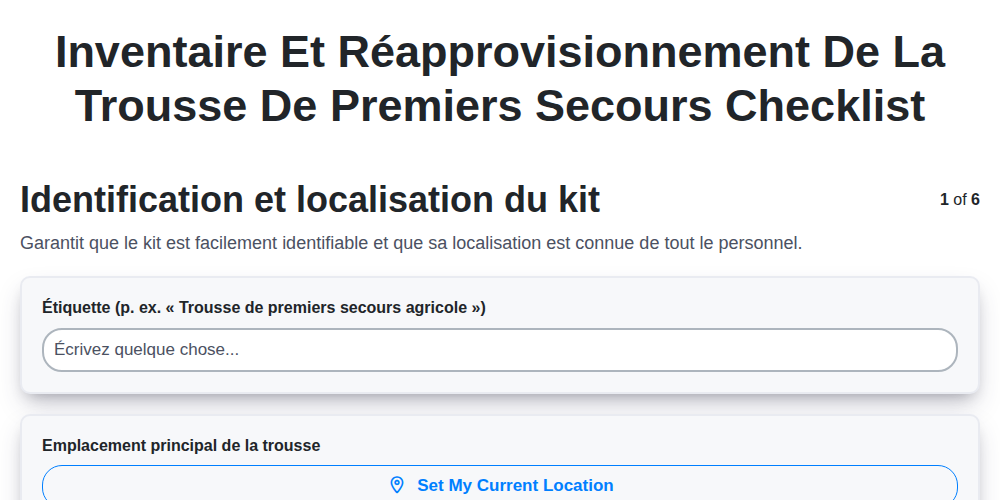
Inventaire et réapprovisionnement de la trousse de premiers secours
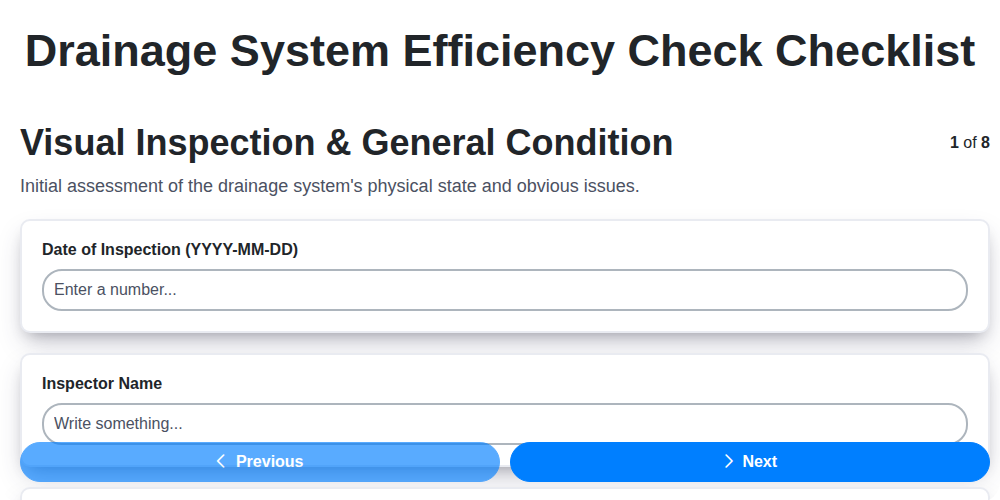
Drainage System Efficiency Check
Nous pouvons le faire ensemble
Besoin d'aide avec les listes de contrôle?
Vous avez une question ? Nous sommes là pour vous aider. Veuillez soumettre votre demande et nous vous répondrons rapidement.