Streamlining Smiles: The Ultimate Dental Appointment Scheduling Workflow for Optimal Clinic Flow and Patient Care
Opublikowano: Zaktualizowano: 04/16/2026
Spis treści
- Introduction: The Importance of a Seamless Scheduling Workflow
- Step 1: Gathering the Foundation - Getting the Patient Profile
- Step 2: Capturing the Details - Getting Appointment Specifics
- Proactive Care: Setting Up Pre-Appointment Reminders and Tasks
- Confirmation and Communication: Ensuring the Patient is Informed
- Deep Data Integration: Updating the Patient Record and Timing Calculations
- Operational Backbone: Checking Practitioner Availability and Resource Allocation
- Pre-Visit Preparation: Clinical Tasks and Insurance Verification
- Formalizing the Booking: Creating the Core Appointment Record and Status Updates
- Efficiency Check: Determining Visit Duration and Necessary Staff Count
- Financial Readiness: Generating Billing Pre-Checks and Retrieving Service Fees
- Optimizing Daily Operations: Generating the Comprehensive Daily Schedule Report
- The Power of Automation: Benefits of Workflow Implementation
- Conclusion: Achieving Operational Excellence in Dental Care
- Resources & Links
TLDR: This guide details an end-to-end, automated workflow that takes the complexity out of dental scheduling. By systematically managing tasks-from gathering patient data and checking practitioner availability to sending automated confirmations, pre-visit reminders, and generating daily reports-this process ensures a seamless patient experience, minimizes administrative errors, optimizes clinical resource utilization, and ultimately keeps your dental practice running smoothly and profitably.
Introduction: The Importance of a Seamless Scheduling Workflow
In today's fast-paced healthcare environment, the first touchpoint a patient has with a dental clinic is often the scheduling process. A clunky, inefficient, or inconsistent scheduling system doesn't just create minor annoyances; it can directly impact patient satisfaction, operational efficiency, and even the clinic's bottom line. A well-defined scheduling workflow acts as the digital backbone of your practice, ensuring that every interaction, from the initial booking to the day of the appointment, is smooth, predictable, and professional. Instead of relying on disparate emails, phone calls, and manual checklists, a robust workflow automates these touchpoints, ensuring nothing critical-like a follow-up task or a necessary confirmation-is ever missed. It moves your scheduling from a reactive chore to a proactive patient experience management system.
Step 1: Gathering the Foundation - Getting the Patient Profile
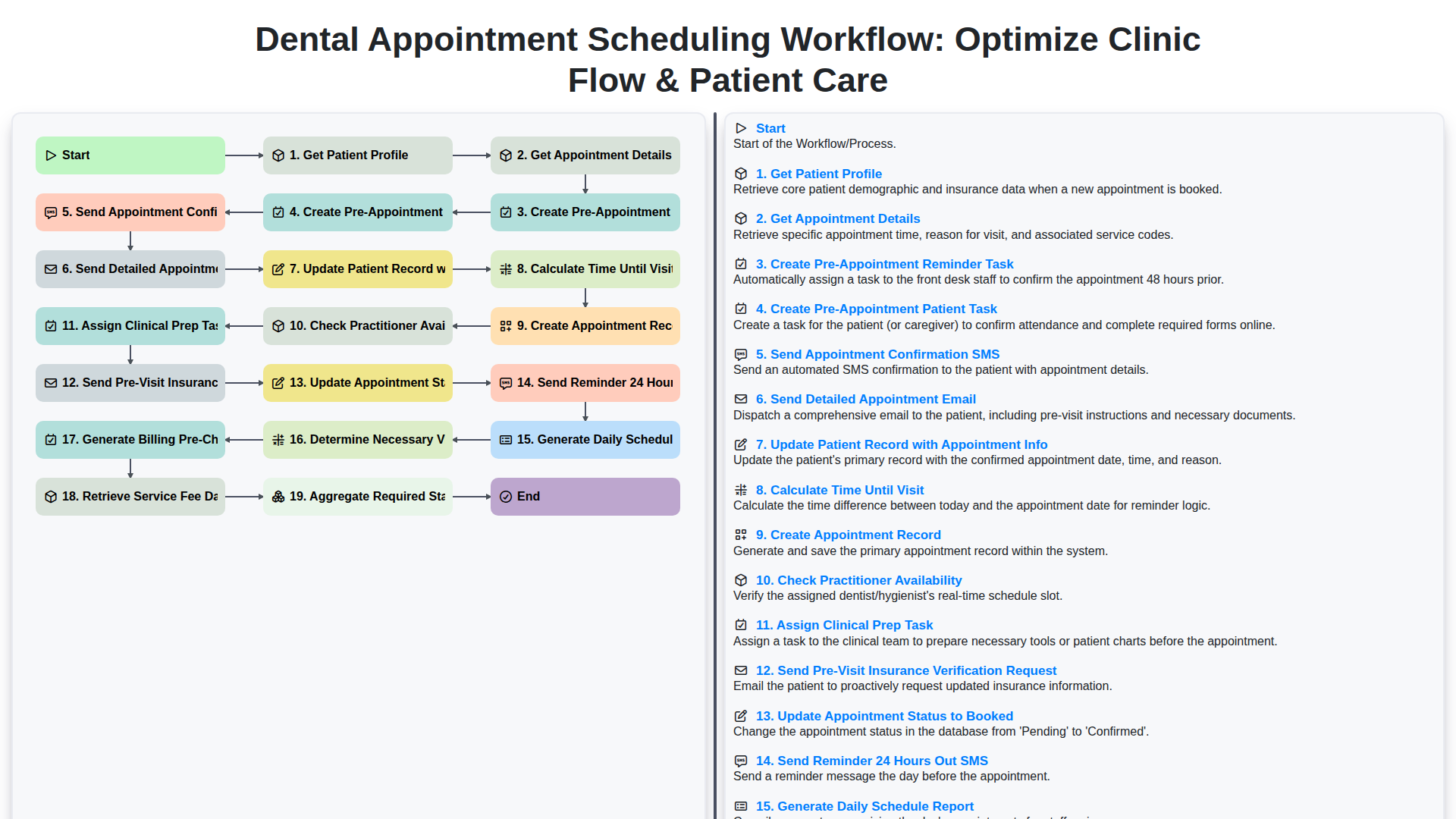
The entire scheduling process hinges on having a complete and accurate patient profile. This initial step acts as the bedrock for everything that follows. Before any appointment can be booked or any communications sent, the system must first Get Patient Profile. This goes beyond just collecting a name and phone number; it involves consolidating comprehensive records including insurance details, medical history flags, preferred communication methods, and any established patient preferences. A robust profile ensures that subsequent actions-like sending an email versus an SMS, or knowing which insurance verification path to take-are immediately relevant and accurate, preventing costly delays and miscommunication right from the start.
Step 2: Capturing the Details - Getting Appointment Specifics
This crucial phase involves gathering all the necessary granular details for the scheduled visit. We begin by securely retrieving the core Appointment Details associated with the booking. This action is the central pivot point, as everything that follows depends on its accuracy. Following this, we immediately trigger the creation of proactive preparatory steps. This includes setting up a Pre-Appointment Reminder Task for the administrative staff to follow up, and simultaneously creating a dedicated Pre-Appointment Patient Task to guide the patient on what to expect and any actions they need to take beforehand. Simultaneously, to ensure the patient is informed and prepared, we initiate the communication sequence by sending the Appointment Confirmation SMS and following up with a comprehensive, Detailed Appointment Email. Finally, all this fresh information isn't just logged in a temporary system; we meticulously Update the Patient Record with the Appointment Info, ensuring the permanent patient file reflects the upcoming commitment.
Proactive Care: Setting Up Pre-Appointment Reminders and Tasks
The first crucial element in streamlining any dental practice's operations is ensuring a seamless pre-visit experience for both the patient and the staff. This is where proactive automation shines. By implementing a multi-layered reminder and task system, you move from reactive crisis management to predictive care delivery. The workflow dictates that immediately upon scheduling an appointment, several crucial steps are triggered. First, the system creates a Pre-Appointment Reminder Task for the administrative staff, ensuring visibility within the daily workload. Simultaneously, a Pre-Appointment Patient Task is generated, giving the patient concrete steps (like gathering necessary insurance cards) to complete before they arrive. Communication is key: automated tools then Send Appointment Confirmation SMS and, critically, dispatch a Detailed Appointment Email. This email shouldn't just confirm the date; it should educate the patient about necessary preparations, required forms, and expected procedures, significantly reducing on-site confusion. This entire sequence of automated outreach builds trust and minimizes no-show rates, setting a positive and organized tone before the patient even walks through the door.
Confirmation and Communication: Ensuring the Patient is Informed
The seamless flow of communication is arguably as critical as the scheduling itself. Once the appointment is booked, the process shifts to ensuring both the patient and the clinic staff are perfectly aligned. This is where targeted, multi-channel communication takes center stage. Immediately after the initial booking, sending an appointment confirmation via SMS provides instant, mobile reassurance to the patient. This is quickly followed by a more detailed appointment email, which serves as a comprehensive guide, reiterating necessary documents, directions, and pre-visit instructions. These proactive steps minimize no-shows and reduce day-of anxiety for the patient. Furthermore, the workflow must incorporate timely follow-ups, such as the 24-hour reminder SMS, which serves as a final, friendly nudge to ensure preparedness, significantly boosting adherence rates.
Deep Data Integration: Updating the Patient Record and Timing Calculations
A critical aspect of a streamlined workflow is how seamlessly data moves and how proactively you manage time. Once the core appointment details are secured, the system must immediately enrich the patient's profile. This involves updating the patient record with all new appointment information-date, time, services booked, etc.-creating a single source of truth. Furthermore, the workflow engine needs robust time management capabilities. Calculating the precise time until the visit is essential for triggering time-sensitive communications. This calculation dictates when to send the 24-hour reminder, for example, ensuring that every subsequent step, from generating the schedule report to assigning prep tasks, is accurately timed relative to the actual appointment slot.
Operational Backbone: Checking Practitioner Availability and Resource Allocation
This stage is critical for ensuring a seamless patient journey and efficient clinic operation. Before any appointment can be finalized, the system must intelligently Check Practitioner Availability. This goes beyond simply knowing if a dentist or hygienist is free; it involves understanding their specific schedules, required equipment availability, and any block-out times for meetings or training. Once availability is confirmed, the workflow moves to Assign Clinical Prep Tasks. These tasks might include updating specific patient charts, ensuring necessary diagnostic tools are calibrated, or prepping required materials based on the booked services. Furthermore, accurate resource allocation is managed through tasks like Aggregate Required Staff Count. By knowing the exact services booked, the system determines if enough assistants, X-ray technicians, or support staff will be available at the scheduled time, preventing last-minute staffing shortages. This proactive resource check ensures that when the patient walks through the door, every required resource-human and material-is in place.
Pre-Visit Preparation: Clinical Tasks and Insurance Verification
A critical component of a seamless patient experience is the robust pre-visit preparation process. This phase ensures that both the clinic's operational readiness and the patient's administrative status are fully addressed before they even walk through the door. Our workflow addresses this through several key automated steps. Immediately after the appointment is confirmed, the system triggers the creation of a Clinical Prep Task for the assigned practitioner. This task reminds the clinical team to gather necessary tools, review the patient's chart history, and ensure all equipment required for the specific visit type is ready. Simultaneously, we initiate the Pre-Visit Insurance Verification Request. This automated communication is sent to the patient, prompting them (or their guardian) to submit up-to-date insurance information, photos of the card, or necessary pre-authorization paperwork. These parallel actions-preparing the clinical space while verifying the financial details-prevent costly delays, minimize on-site paperwork headaches, and significantly reduce the likelihood of appointment interruptions due to billing discrepancies.
Formalizing the Booking: Creating the Core Appointment Record and Status Updates
Once the preliminary checks are complete, the system moves to solidifying the core appointment structure. This begins with Creating the Appointment Record, which locks in the essential details like the date, time, and services booked. Crucially, this step is preceded by Checking Practitioner Availability to ensure the chosen time slot isn't double-booked or conflicting with existing constraints. Immediately following record creation, we Determine Necessary Visit Duration, which is vital for accurate scheduling and resource allocation. The system then assigns necessary preparatory steps by Assigning Clinical Prep Task to the relevant staff members. Furthermore, to ensure financial readiness, we Generate Billing Pre-Check Task and Retrieve Service Fee Data. This process allows us to Calculate Time Until Visit to better gauge the urgency and sequence of subsequent reminders. Finally, the successful booking culminates in Updating the Appointment Status to Booked, marking the patient's journey from inquiry to a confirmed commitment, while simultaneously Updating the Patient Record with Appointment Info for a complete and accurate source of truth.
Efficiency Check: Determining Visit Duration and Necessary Staff Count
Accurately determining the necessary visit duration and staffing levels is a critical checkpoint in any efficient dental workflow. Before we can solidify an appointment slot, the system must dynamically calculate how much time is required for the scheduled procedures. This involves analyzing the services booked to determine the necessary visit duration. Simultaneously, based on the complexity of the services and the required procedures, the workflow must accurately aggregate the required staff count. This predictive calculation prevents overbooking, ensures adequate resources are allocated, and guarantees that both the practitioner and the clinic have the optimal staffing complement for a smooth, uninterrupted patient experience.
Financial Readiness: Generating Billing Pre-Checks and Retrieving Service Fees
Ensuring a smooth financial process before a patient even walks through the door is crucial for a profitable and efficient dental practice. This involves proactively managing billing readiness. Our workflow incorporates a Generate Billing Pre-Check Task to flag any potential billing issues upfront. This task is directly linked to the Retrieve Service Fee Data, ensuring that we have the most current and accurate rates for all anticipated procedures. By having this data readily available, we can proceed to Aggregate Required Staff Count alongside financial checks, ensuring all necessary resources-human and monetary-are accounted for before the appointment day.
Optimizing Daily Operations: Generating the Comprehensive Daily Schedule Report
This critical step moves the workflow from booking to active preparation. The Generate Daily Schedule Report serves as the operational nerve center, compiling all confirmed appointments for the day into one digestible view. This report isn't just a list; it's a strategic blueprint. It consolidates the sequence of appointments, identifies transition times between different procedures, and highlights potential bottlenecks based on service duration estimations. By viewing this report first thing in the morning, staff can proactively manage resource allocation, ensure rooms are staged correctly, and anticipate any scheduling conflicts before the first patient arrives, leading to a smoother, less stressful day for both the staff and the patients.
The Power of Automation: Benefits of Workflow Implementation
Implementing a structured workflow, such as the one outlined for dental appointment scheduling, fundamentally transforms clinic operations from reactive management to proactive orchestration. Automation within these workflows ensures that no critical step is missed, regardless of staff workload or human error. For example, by automating the process from Getting Patient Profile through to Updating Appointment Status to Booked, the system guarantees consistency. Instead of staff manually remembering to check practitioner availability or send out separate reminders, the workflow triggers these actions automatically. This not only saves valuable administrative time but dramatically improves the patient experience-a timely confirmation SMS, a detailed email, and appropriate pre-visit tasks all arrive precisely when needed. Furthermore, automated steps like Calculate Time Until Visit and Generate Daily Schedule Report provide real-time operational intelligence, allowing managers to optimize resource allocation and minimize patient wait times, ultimately boosting both clinic efficiency and patient satisfaction.
Conclusion: Achieving Operational Excellence in Dental Care
By systematically implementing this comprehensive dental appointment scheduling workflow, dental practices can move beyond reactive management to proactive, optimized patient care delivery. This structured approach ensures that every touchpoint-from the initial profile retrieval to the post-visit scheduling report-is accounted for. Automation of reminders, pre-visit checks, and status updates significantly reduces manual overhead, minimizing the risk of no-shows and missed revenue opportunities. Ultimately, the result is a seamless, patient-centric experience that enhances satisfaction, maximizes chair time, and positions the clinic for sustained operational excellence.
Resources & Links
- Dental Practice Management Software Reviews : Resources comparing various dental practice management software systems that offer advanced scheduling and workflow automation features.
- Healthcare Workflow Automation Best Practices : Articles and guides on implementing end-to-end automated workflows within clinical settings to improve efficiency.
- Patient Communication Platforms for Healthcare : Information on SMS, email, and portal systems best practices for patient appointment reminders and pre-visit communication.
- Dental Workflow Optimization Case Studies : Real-world case studies detailing how dental practices improved flow and reduced no-shows using structured workflows.
- Advanced Appointment Scheduling Logic : Technical guides on building complex scheduling logic, including practitioner availability checks and resource dependency mapping.
- Automated Insurance Verification and Billing Workflows : Resources detailing the integration of insurance verification steps directly into the scheduling workflow to prevent billing delays.
- Staffing and Resource Allocation in Dental Clinics : Articles on calculating necessary staffing levels and allocating clinical prep tasks based on scheduled appointments.
Najczęściej zadawane pytania
What is the primary goal of implementing a streamlined dental appointment scheduling workflow?
The primary goal is to optimize clinic flow by reducing downtime between appointments, minimizing patient wait times, and ensuring that the dental team can provide the highest quality of patient care without administrative bottlenecks.
How can a structured scheduling workflow improve clinic productivity?
A structured workflow helps in managing appointment density, preventing overbooking, and ensuring that complex procedures are allocated sufficient time, which prevents delays and maximizes the use of both equipment and staff.
What role does automation play in dental scheduling optimization?
Automation—through online booking, automated appointment reminders, and digital intake forms—reduces manual errors, decreases no-show rates, and allows administrative staff to focus on high-value patient interactions rather than repetitive data entry.
How does effective scheduling impact patient satisfaction?
Effective scheduling leads to shorter wait times, more predictable appointment durations, and a more professional experience, all of which foster trust and improve patient retention and satisfaction.
What are the key components of an optimal dental appointment workflow?
Key components include strategic time-blocking for different procedure types, an integrated patient communication system, real-time availability updates, and a seamless transition from booking to check-in and check-out.
How can clinics manage emergency appointments without disrupting the existing schedule?
Clinics can implement 'buffer slots' or designated emergency windows within the daily schedule, allowing for urgent care without cascading delays for pre-scheduled routine appointments.
Czy ten artykuł był pomocny?
Demo rozwiązania do zarządzania praktyką stomatologiczną
Uprość działanie swojej praktyki stomatologicznej i popraw jakość opieki nad pacjentami! ChecklistGuro optymalizuje planowanie wizyt, prowadzenie dokumentacji pacjentów i rozliczenia. Zwiększ efektywność, zmniejsz liczbę błędów i popraw satysfakcję pacjentów. Zarządzaj wszystkim dzięki naszemu systemowi Work OS.
Powiązane artykuły
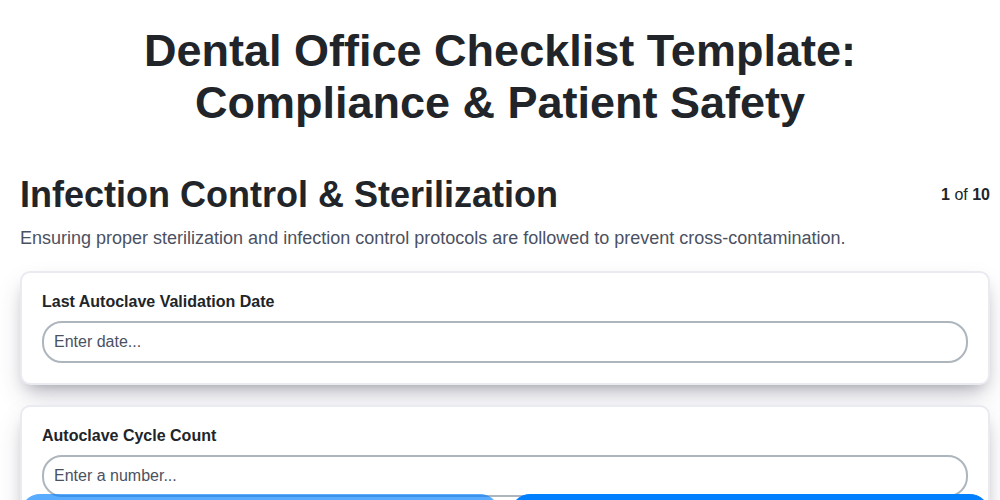
Your Dental Office Safety Net: The Compliance & Patient Safety Checklist Template
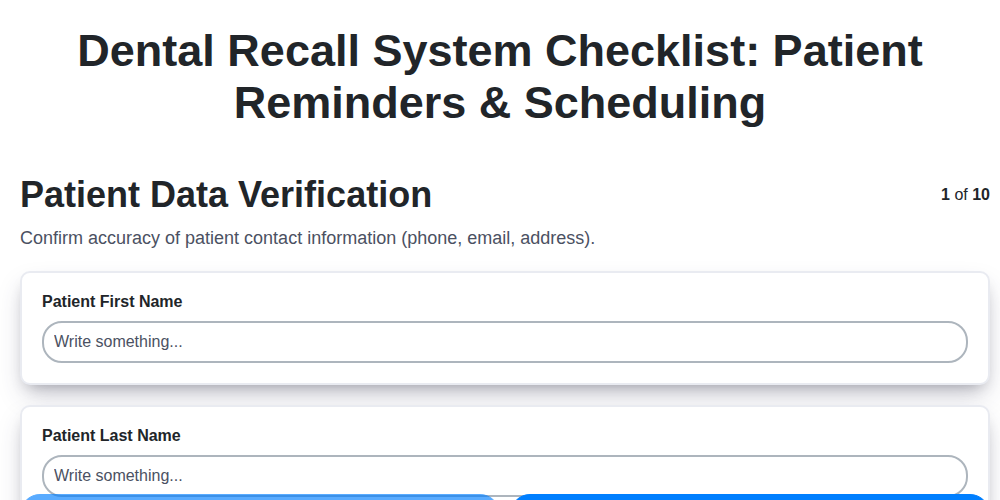
Mastering Dental Recalls: Your Ultimate Checklist Template

Mastering Dental Case Presentations: Your Checklist Template for Success

Your Dental Compliance Checklist: A State & Federal Guide
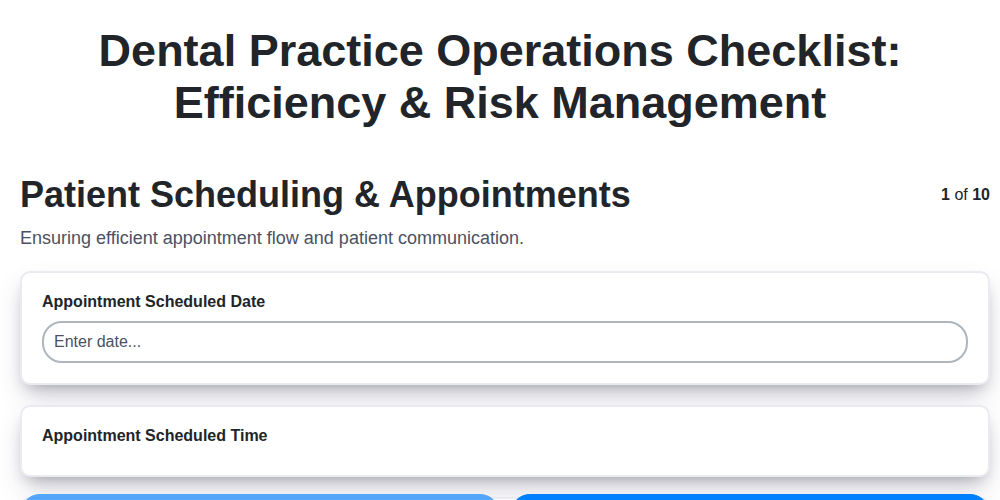
Dental Operations Checklist: Boost Efficiency & Manage Risk

Ostateczna lista kontrolna dla laboratorium protetycznego: wytwarzanie i kontrola jakości

Your Complete Dental Infection Control Checklist: PPE & Surface Disinfection
Opanowanie Badań Stomatologicznych: Kompletny Szablon Listy Kontrolnej
Możemy to zrobić razem
Potrzebujesz pomocy z listami kontrolnymi?
Masz pytanie? Jesteśmy tu, aby pomóc. Prześlij zapytanie, a my szybko na nie odpowiemy.