
Optimized Waste Management Workflow: From Collection to Disposal Platform Guide
Opublikowano: Zaktualizowano: 04/16/2026
Spis treści
- Introduction: The Need for Optimized Waste Management Workflows
- Phase 1: Initiating the Collection Process (Task Initiation & Request Details)
- Understanding Asset Health: Real-Time Bin/Container Status Checks
- The Intelligence Layer: Calculating Optimal Collection Routes
- Execution: Assigning Routes and Scheduling Work Orders
- Stakeholder Communication: Confirming Service with Site Managers
- Data Capture: Logging Collection Event Data Points
- Capacity Management: Updating Bin Status Post-Collection
- Handling Complexity: Integrating Hazardous Material Guidelines
- Measurement & Calculation: Determining Waste Volume Metrics
- Phase 2: Disposal and Processing Workflow Trigger
- Managing End-of-Life: Triggering Disposal Processing Tasks
- Closing the Loop: Client Notification and Service Completion Alerts
- Compliance & Reporting: Documentation and Weekly Summaries
- Resources & Links
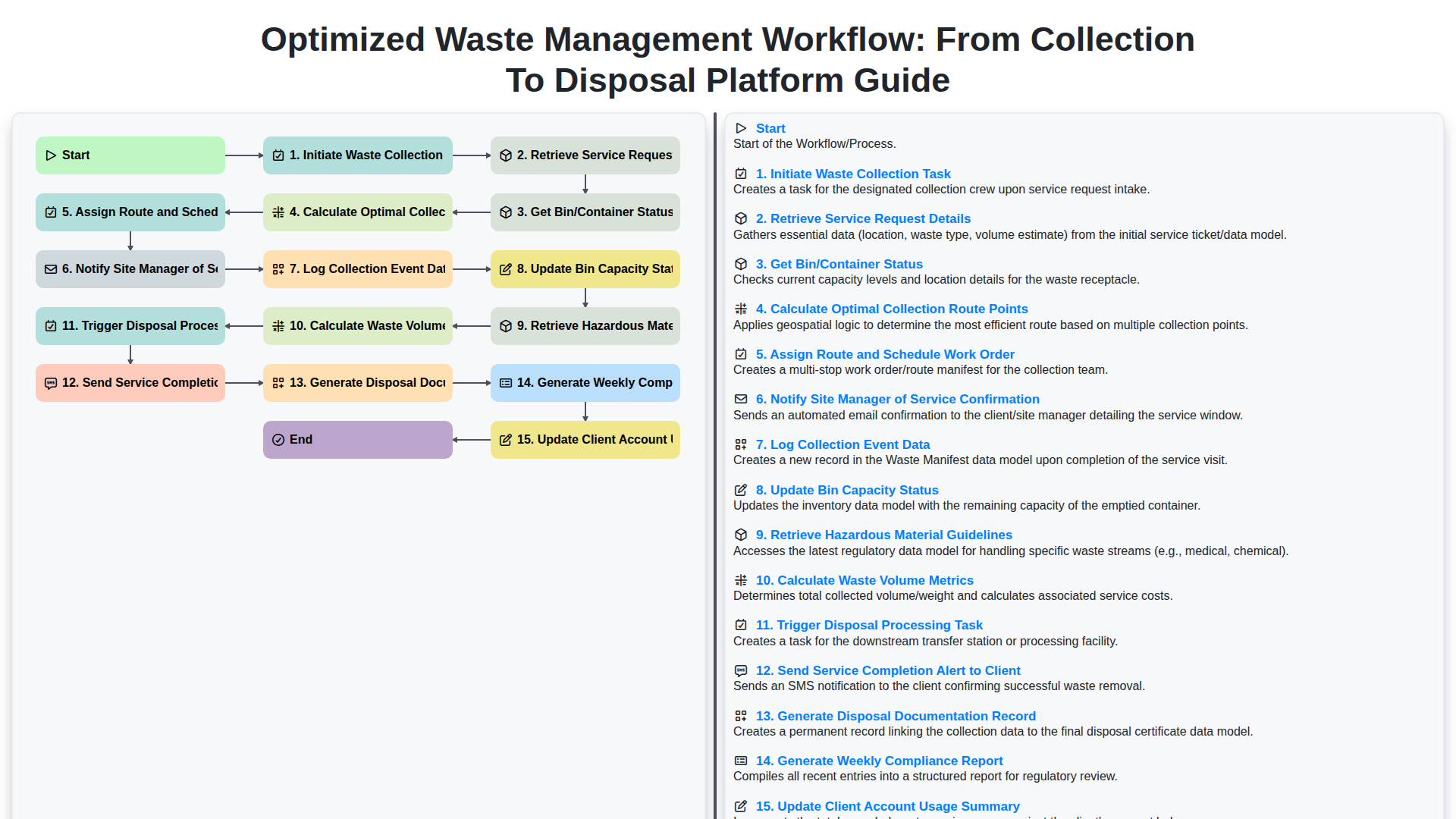
TLDR: This guide outlines an end-to-end automated workflow for waste management, detailing every step from initiating a collection task and optimizing collection routes using bin status and location data, through to executing disposal processing, generating necessary compliance reports, and updating client records-all within a single platform.
Introduction: The Need for Optimized Waste Management Workflows
The modern waste management industry is facing an escalating challenge: how to handle the increasing volume of waste efficiently, sustainably, and compliantly. Traditional, reactive approaches-relying on fixed collection schedules or on-the-spot decision-making-are often costly, inefficient, and environmentally suboptimal. These old methods frequently lead to overflowing bins, unnecessary fuel consumption from poorly planned routes, and gaps in accountability, which results in missed pickups or improper disposal. A truly optimized system must shift from a purely manual process to a proactive, data-driven workflow. Implementing a streamlined, digital workflow is no longer a luxury; it is a core necessity for operators looking to reduce operational expenditure, minimize carbon footprints, improve customer satisfaction, and ensure rigorous adherence to ever-tightening environmental regulations.
Phase 1: Initiating the Collection Process (Task Initiation & Request Details)
The entire waste management lifecycle begins with a clear trigger: the need for service. This is the Initiate Waste Collection Task phase. Whether the service is prompted by a scheduled maintenance check or an urgent client request, the system must first recognize the requirement. Next, the platform seamlessly moves to Retrieve Service Request Details. This step is crucial as it pulls all associated data-the service address, the type of waste expected, and the client's contract specifics-ensuring the operation starts with a comprehensive understanding of the task at hand.
Understanding Asset Health: Real-Time Bin/Container Status Checks
This crucial step involves querying the IoT data feeds or manual reporting systems to get an up-to-the-minute picture of every bin or container in the network. Knowing the current fill level, the last service date, and any reported anomalies is foundational. A container reported at 95% capacity drastically changes the prioritization compared to one at 30%. This real-time status check prevents both unnecessary pickups (saving fuel and labor) and critical overflows (preventing unsanitary conditions and potential fines). This data feeds directly into the routing algorithm, ensuring that pickups are only scheduled when necessary, maximizing operational efficiency and sustainability.
The Intelligence Layer: Calculating Optimal Collection Routes
The intelligence layer is where raw data transforms into actionable efficiency. Instead of relying on static, manually drawn routes, our system actively processes the accumulated data-including current bin locations, capacity readings, and service request urgency-to calculate the absolute most optimal collection paths. This isn't just about the shortest physical distance; it's about minimizing fuel consumption, reducing labor hours, and ensuring we hit every necessary stop while respecting time windows. By analyzing real-time inputs, the platform generates streamlined, efficient collection points, significantly cutting down operational overhead and making waste management faster, leaner, and greener.
Execution: Assigning Routes and Scheduling Work Orders
This crucial stage translates the need for waste collection into an actionable plan. Once the system has determined the necessary collection points and gathered the relevant service details, the next step is to create the optimized logistical structure. The software dynamically takes the calculated optimal route points and feeds them into the dispatch module to Assign Route and Schedule Work Order. This process doesn't just list stops; it builds a comprehensive, time-bound schedule, assigning specific vehicles and teams to ensure efficient movement and adherence to service windows. This proactive scheduling step is what minimizes transit time, reduces fuel consumption, and provides the collection crew with a clear, turn-by-turn operational mandate for the day.
Stakeholder Communication: Confirming Service with Site Managers
Effective communication is crucial at the point of service confirmation. Once the collection tasks are assigned and optimized, the system must immediately notify the designated Site Manager. This proactive notification serves multiple purposes: it confirms to the manager that service has been scheduled, provides them with the finalized details of the job (which might include assigned crew details or required safety protocols), and officially locks in the service window. This step moves the process from planning to active execution, ensuring all onsite personnel are aware of the upcoming workflow and expectations, thereby minimizing delays and discrepancies on the ground.
Data Capture: Logging Collection Event Data Points
Accurately logging every step of the waste collection process is fundamental to optimizing the entire workflow. Our system is designed to capture a comprehensive set of Collection Event Data Points at the point of collection. This granular data moves beyond a simple collected confirmation. It meticulously records timestamps, collection agent ID, GPS coordinates of the pick-up site, and qualitative notes regarding any abnormalities encountered (e.g., overflowing bins, blocked access). This rich dataset is vital for auditing, performance tracking, and immediately identifying process bottlenecks, ensuring the data feeds directly into the subsequent capacity updates and reporting functions.
Capacity Management: Updating Bin Status Post-Collection
Immediately following the physical collection, the system must accurately update the bin's capacity status. This crucial step involves logging the residual volume of waste remaining in the container. By comparing the initial recorded fill level with the final observed level after collection, the system recalculates and updates the bin's real-time capacity status within the central database. This updated metric is vital for predictive maintenance and resource allocation, ensuring that subsequent collection schedules are based on current, accurate data rather than potentially outdated readings.
Handling Complexity: Integrating Hazardous Material Guidelines
When dealing with waste streams that contain hazardous materials, the workflow complexity increases significantly. A critical step in this scenario is the integration of specific hazardous material guidelines. This isn't just a simple data lookup; it requires accessing, interpreting, and applying complex regulatory documentation. Our system is designed to retrieve the necessary hazardous material guidelines based on the waste type reported during the service request. This step ensures that the subsequent processing tasks-from handling to final disposal-adhere strictly to local, state, and federal regulations. The retrieved guidelines inform everything from proper segregation protocols during collection to selecting the correct specialized disposal facility, making compliance an embedded part of the operational logic rather than an afterthought.
Measurement & Calculation: Determining Waste Volume Metrics
Accurate measurement is the cornerstone of an efficient waste management workflow. Within this phase, the system must calculate precise waste volume metrics. This involves aggregating data from the collection event-such as the physical volume collected and the type of material-and applying established industry standards and client-specific density rates. These calculated metrics are crucial because they feed directly into the disposal planning and billing cycles. By accurately determining the total waste volume, the system can forecast resource needs, optimize disposal contractor bookings, and provide the client with transparent, quantifiable data on their waste output.
Phase 2: Disposal and Processing Workflow Trigger
Once the physical collection is complete, the workflow transitions into the crucial disposal and processing phase. This stage ensures that waste is handled responsibly and in compliance with all necessary regulations. The system first triggers the Disposal Processing Task, which initiates the necessary steps for waste treatment. Following this, the process requires the system to Retrieve Hazardous Material Guidelines to ensure that specialized disposal protocols are followed, adjusting the disposal method based on the waste type. Next, the system Calculate Waste Volume Metrics not only for disposal billing but also for future planning. Upon successful disposal at the designated facility, the workflow generates the Disposal Documentation Record, providing a verifiable paper trail for all disposed materials. This comprehensive record-keeping is vital for auditing and regulatory compliance.
Managing End-of-Life: Triggering Disposal Processing Tasks
The process doesn't end when the waste leaves the site. A critical next step in an optimized workflow is managing the end-of-life cycle through the Trigger Disposal Processing Task. Once the waste has been successfully collected and its volume and type confirmed, this task initiates the entire backend process required for responsible disposal. This is where the collected data-including waste metrics, destination requirements, and regulatory guidelines-is compiled to ensure everything is handled legally and efficiently. It acts as the gateway to disposal, ensuring that the collected materials are routed to the appropriate processing facilities, minimizing risk, and setting the stage for compliance documentation.
Closing the Loop: Client Notification and Service Completion Alerts
The final, crucial steps in our optimized waste management workflow focus on transparency and record-keeping. Once the physical collection is complete, the process doesn't end. We immediately trigger the Send Service Completion Alert to Client. This proactive communication reassures the client that the service was rendered as scheduled, providing them with immediate peace of mind. Furthermore, this completion triggers the generation of the Disposal Documentation Record. This comprehensive record acts as undeniable proof of service, detailing what was collected, where it went, and when. For our internal governance, this data feeds into the Generate Weekly Compliance Report, ensuring we maintain full adherence to all environmental regulations. Finally, all successful collections contribute to updating the Client Account Usage Summary, giving our clients a clear, cumulative view of their waste stewardship efforts and usage metrics within our platform.
Compliance & Reporting: Documentation and Weekly Summaries
Ensuring regulatory adherence and maintaining transparency is crucial for any waste management operation. Our platform automates the documentation process, drastically reducing manual paperwork and compliance risks. Once the collection is logged, the system automatically pulls the necessary data to guide the disposal process. This includes retrieving and cross-referencing Hazardous Material Guidelines, ensuring that proper handling procedures are followed every single time. Furthermore, the system doesn't stop at disposal; it proactively Generates Disposal Documentation Records, providing an immediate, auditable trail of what was collected and how it was managed. To keep clients fully informed and compliant with their own internal standards, we also Generate a Weekly Compliance Report. This comprehensive summary aggregates all activity, tracking waste volumes, resource usage, and adherence to local regulations in one place. Finally, this data feeds into the Update Client Account Usage Summary, giving the client a crystal-clear, always-up-to-date picture of their environmental footprint and service consumption.
Resources & Links
- Waste Management Industry Reports & Trends : For industry benchmarks, compliance updates, and emerging technologies in solid waste management.
- Route Optimization Software Providers : Resources on advanced GIS mapping, dynamic routing algorithms, and fleet management systems.
- IoT Smart Bin & Sensor Technology : Articles detailing ultrasonic sensors, telemetry data, and real-time capacity monitoring for waste containers.
- ESG & Sustainability Reporting Guidelines : Guides on generating compliance reports and tracking waste diversion rates for clients.
- Asset Management and Tracking Platforms : Information on managing physical assets (bins, vehicles) and their service lifecycles within a platform.
- BPM (Business Process Management) & Workflow Automation : Technical resources on building interconnected, automated workflows between different service steps.
- Government Environmental Regulations Portal : The official source for guidelines, manifesting requirements, and best practices for handling hazardous waste materials.
- Client Relationship Management for Municipal Services : Best practices for client portals, service alerts, and usage summary dashboards.
Czy ten artykuł był pomocny?
Demonstracja rozwiązania do gospodarki odpadami
Optymalizuj gospodarkę odpadami i zmniejsz wpływ na środowisko! ChecklistGuro usprawnia zbiórkę, śledzenie i raportowanie. Zminimalizuj ilość odpadów, obniż koszty i promuj zrównoważony rozwój. Zarządzaj wszystkim za pomocą naszej platformy Work OS.
Powiązane artykuły

Your Ultimate Guide to a Waste Management Facility Project Checklist Template

Your Complete Vegetation Removal Compliance Checklist Template
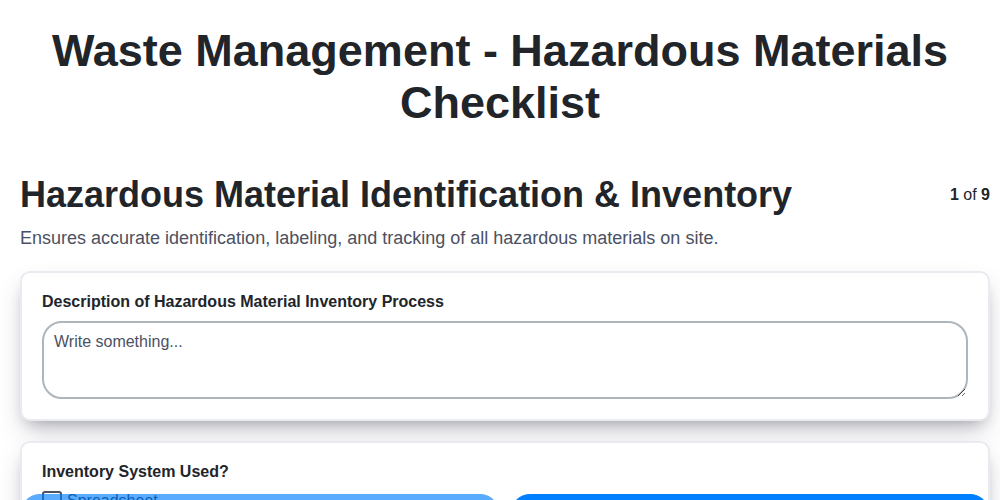
Your Ultimate Hazardous Materials Waste Management Checklist Template
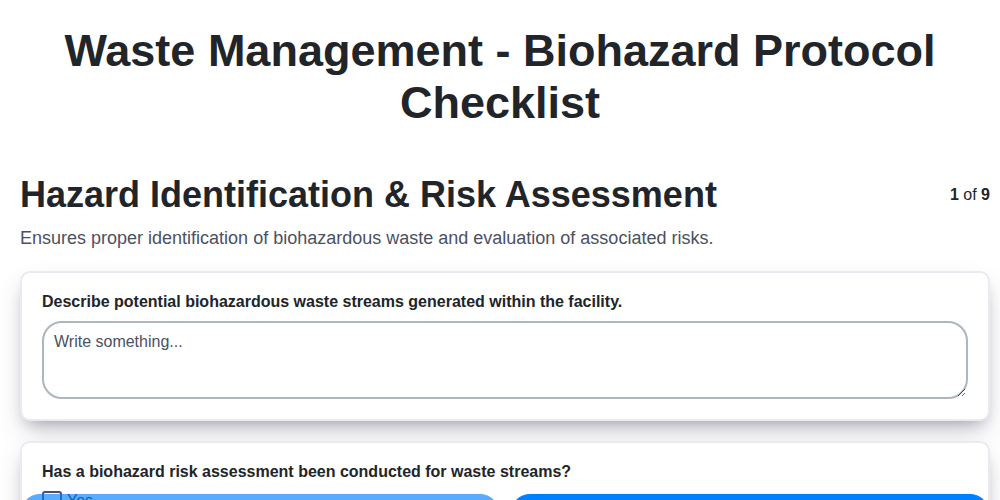
Streamline Biohazard Waste: Your Essential Checklist Template
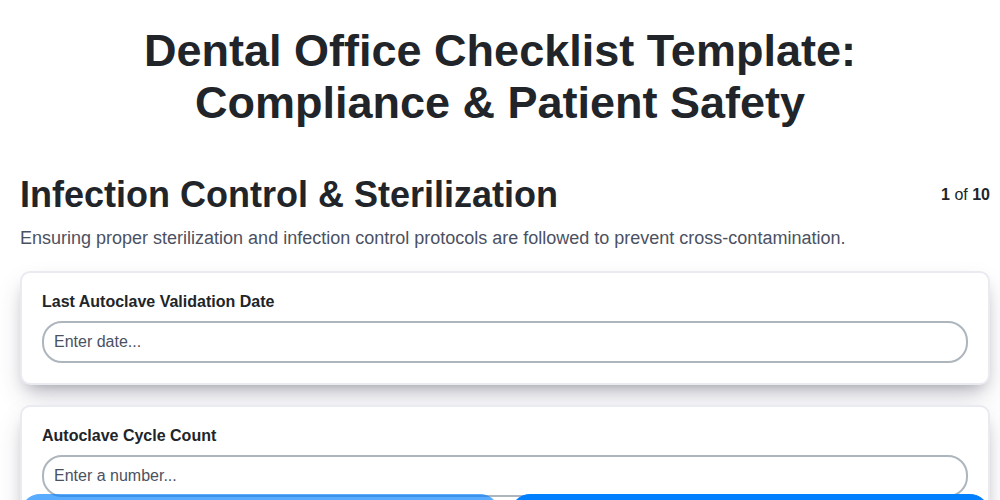
Your Dental Office Safety Net: The Compliance & Patient Safety Checklist Template

Szablon listy kontrolnej dotyczącej gospodarki odpadami i recyklingu (tygodniowy)
Your Environmental Compliance Checklist Template: A Step-by-Step Guide
Szablon listy kontrolnej warsztatu samochodowego: Działania i zgodność z przepisami
Możemy to zrobić razem
Potrzebujesz pomocy z listami kontrolnymi?
Masz pytanie? Jesteśmy tu, aby pomóc. Prześlij zapytanie, a my szybko na nie odpowiemy.