 ChecklistGuro
 Heijunka-Implementierungs-Checkliste
Glatte Produktion und beseitigte Engpässe! 🛠️ Unsere Checkliste für die Heijunka-Implementierung (Produktionsausgleich) im Fertigungsbereich hilft Ihnen, Ihren Arbeitsablauf zu optimieren, Abfall zu reduzieren und die Effizienz zu steigern. Jetzt herunterladen und Ihre Fabrik auf das nächste Level heben! #Heijunka #Fertigung #LeanManufacturing #Produktionsausgleich #Checkliste
Diese Vorlage wurde 1 Mal installiert.
Phase 1: Bewertung & Vorbereitung
Konzentriert sich auf das Verständnis des aktuellen Zustands, die Identifizierung von Schwachstellen und die Einholung der Zustimmung zur Implementierung von Heijunka.
Beschreiben Sie die aktuelle Produktionsumgebung (z. B. nach Lagerbestand produzierend, nach Bestellung produzierend, gemischt).
Schätzen Sie den aktuellen Grad der Produktionsvariabilität ab (z. B. mithilfe einer Skala von 1 bis 10, wobei 1 für sehr stabil und 10 für extrem variabel steht).
Welche Hauptziele der Heijunka-Implementierung gibt es? (Mehrere Antworten möglich)
Identifizieren Sie die wichtigsten Stakeholder für die Einführung von Heijunka und deren Rollen.
Welche aktuellen Herausforderungen tragen zur Produktionsinstabilität bei? (Mehrere Antworten möglich)
Geplantes Enddatum für den Abschluss der ersten Heijunka-Analyse
Dokumentieren Sie potenziellen Widerstand gegen Veränderungen und Strategien zur Bewältigung dieses Widerstands.
Phase 2: Datenerfassung & -analyse
Bezieht sich auf das Sammeln und Analysieren historischer Daten, um Nachfrageverhalten und Produktionsmöglichkeiten zu verstehen.
Historische Datenerhebungsperiode (Monate)
Historische Verkaufsdaten (CSV/Excel) hochladen
Datenquellen beschreiben (z. B. ERP, CRM, Tabellenkalkulationen)
Anzahl der zu analysierenden Produktfamilien/Produktlinien
Welche Nachfragemuster wurden beobachtet? (Mehrfachauswahl möglich)
Durchschnittliche Lieferzeit für Rohmaterialien (Tage)
Aktuelle WIP-Stufen (Einheiten)
Beschreiben Sie alle wesentlichen externen Faktoren, die die Nachfrage beeinflussen (z. B. Werbeaktionen, Maßnahmen der Konkurrenz).
Phase 2a: Bedarfsprognose & Segmentierung (falls zutreffend)
Konzentrieren Sie sich auf die Bedarfsplanung und -klassifizierung, um Variabilität zu verstehen und Produktlinien zu priorisieren.
Historische Datenpunkte der Nachfrage analysiert (Monate/Jahre)
Berücksichtigte/Implementierte Prognosemethoden
Primäre Kriterien zur Kundensegmentierung
Vorhersagegenauigkeit (MAPE – Mittlerer Absoluter Prozentfehler) – Basiswert
Vorhersagegenauigkeit (MAPE – Mittlerer Absoluter Prozentfehler) – Nach Segmentierung/Prognose
Begründung für die ausgewählten Segmentierungskriterien
Grad der Kundenbeteiligung bei der Bedarfsprognose
Phase 3: Heijunka-Design & -Planung
Die Definition des Heijunka-Plans: Festlegung von Taktzeit, Losgrößen, Sequenzierung und Pufferstrategien.
Berechne aktuelle Taktzeit
Bestimmen Sie den anfänglichen Heijunka-Sequenzer-Typ (z. B. Fixierte Sequenz, Dynamische Sequenz)
Festlegung anfänglicher Losgrößen (unter Berücksichtigung von Umstellzeiten und Lagerhaltungskosten)
Begründung für Entscheidungen zur Batch-Größe
Berechne Umstellzeiten für alle Produktvarianten.
Pufferstrategie definieren (z.B. Supermarkt, Kanban)
Berechnung der Mindestpufferstufen (basierend auf Variabilität und Taktzeit)
Beschreiben Sie die Logik des Heijunka-Zeitplans (wie die Produktion sequenziert wird).
Phase 4: Pilotimplementierung & Testphase
Die Einführung von Heijunka in begrenztem Umfang, um den Plan zu testen und Verbesserungsmöglichkeiten zu identifizieren.
Pilotproduktionslinie auswählen
Pilotdauer (in Tagen)
Beschreiben Sie den anfänglichen Umfang der Pilotimplementierung von Heijunka (z. B. Produkte, Prozesse).
Welche Kennzahlen werden während des Pilotprojekts verfolgt?
Pilotbeginn
Pilotenddatum (geplant)
Dokumentieren Sie alle wesentlichen Herausforderungen, die während der Pilotphase aufgetreten sind.
Gesamter Pilotenerfolg (Erste Bewertung)
Laden Sie bei Bedarf relevante Daten/Diagramme aus dem Pilotprojekt hoch (optional).
Phase 5: Vollständige Umsetzung
Die Einführung des Heijunka-Plans in der gesamten Fertigungsorganisation.
Erste Produktlinien-Einführungsreihenfolge
Geplanter Starttermin für die vollständige Umsetzung
Anfängliche Anzahl der Produktionslinien
Beschreiben Sie alle Abweichungen vom ursprünglichen Heijunka-Plan während der vollständigen Implementierung.
Welche Abteilungen sind aktiv an der umfassenden Einführung beteiligt?
Automatisierungsgrad bei der ersten Einführung.
Ansprechpartner für die vollständige Umsetzung
Dokumentieren Sie alle Erstausbildungen, die Mitarbeitern während der vollständigen Markteinführung vermittelt wurden.
Phase 6: Überwachung & Kontinuierliche Verbesserung
Die Verfolgung wichtiger Kennzahlen und Anpassungen des Heijunka-Plans zur Optimierung der Leistung.
Durchschnittliche tägliche Produktionsabweichung (verglichen mit Ziel)
pünktliche Lieferleistung
Laufende Bestände
Gesamtzufriedenheit des Teams mit dem Heijunka-System
Fassen Sie die wichtigsten Beobachtungen und Probleme zusammen, die während des Überwachungszeitraums aufgetreten sind.
Welche Kennzahlen zeigen einen besorgniserregenden Trend?
Datum der letzten Heijunka-Review-Sitzung
Dokumentierte Maßnahmen und die ihnen zugewiesenen Verantwortlichen aus der Überprüfung
Betriebliche Infrastruktur & Schulung
Die Bereitstellung der notwendigen Systeme, Werkzeuge und Mitarbeiterschulungen zur Unterstützung von Heijunka sicherstellen.
Aktueller Stand der Kanban-Systemnutzung (falls zutreffend)
Systeme/Tools zur Integration mit Heijunka (Mehrfachauswahl möglich)
Anzahl der Mitarbeiter, die eine Einführung in Heijunka-Schulung benötigen
Zieltermin für den Abschluss der ersten Heijunka-Schulung
Schulungsprogramm – Überblick (kurze Beschreibung)
Schulungsdurchführungsart (eine auswählen)
Schulungsmaterialien (Präsentationen, Handbücher usw.)
Dokumentierte Standardarbeitsanweisungen (SOPs) für Heijunka-Prozesse (beschreiben)
Verfügbarkeit von Visualisierungs-Tools (z. B. Whiteboards, Anzeigen)
War diese Checklisten-Vorlage hilfreich?
Kommentare
Bisher gibt es keine Kommentare. Seien Sie der Erste, der einen hinzufügt!
Demo der Fertigungsmanagementlösung
Hören Sie auf, sich mit Papierkram herumzuschlagen und mit inkompatiblen Systemen zu kämpfen! Unsere Lösung bringt Klarheit und Kontrolle in Ihren Produktionsprozess. Von Standardarbeitsanweisungen (SOPs) und Geräteinstandhaltung bis hin zur Qualitätskontrolle und Bestandsverfolgung vereinfachen wir jeden Schritt.
Ähnliche Checklisten-Vorlagen
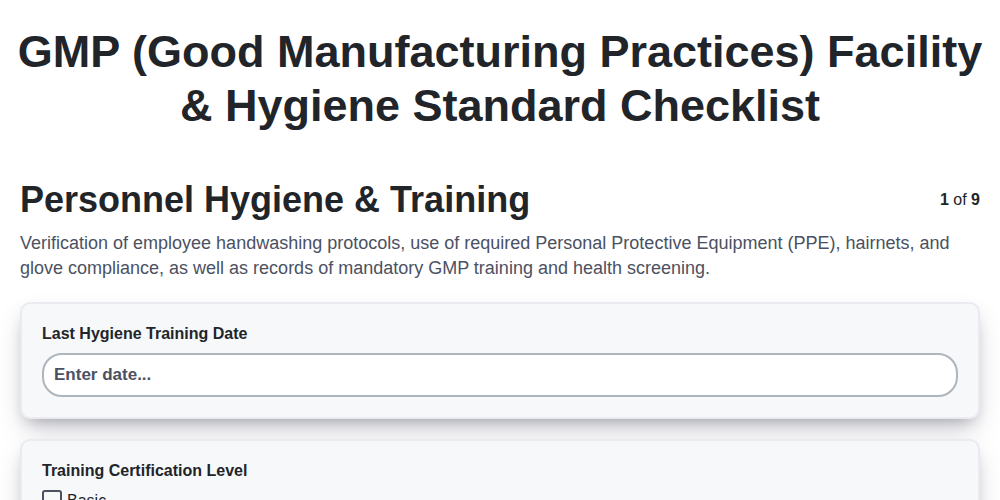
GMP (Good Manufacturing Practices) Facility & Hygiene Standard Checklist
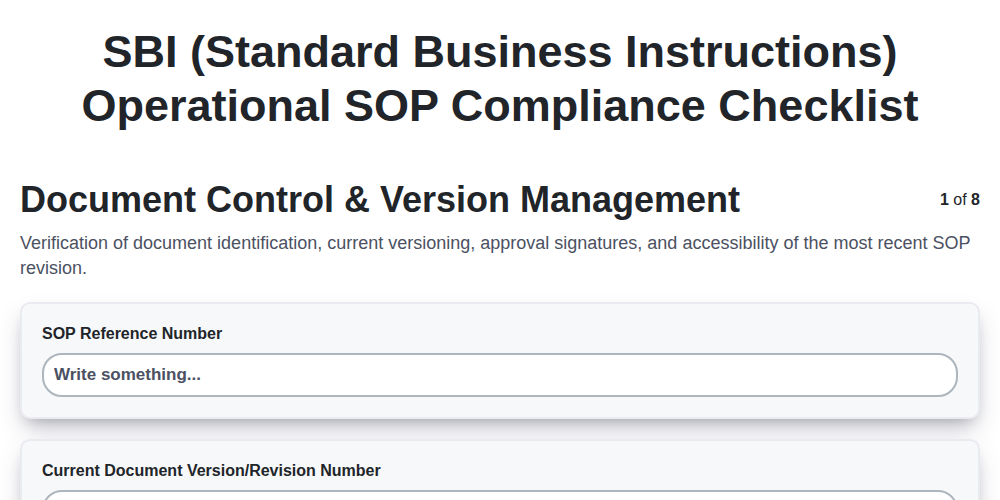
SBI (Standard Business Instructions) Operational SOP Compliance Checklist
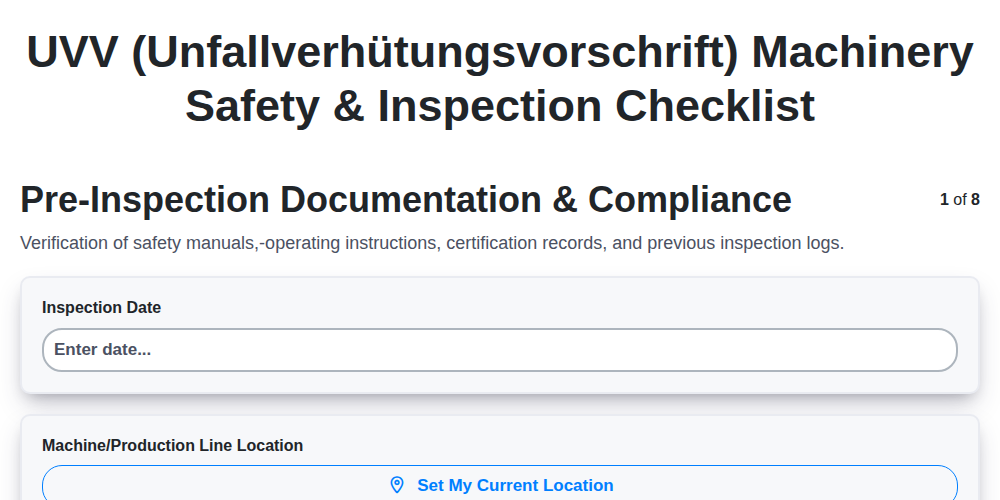
UVV (Unfallverhütungsvorschrift) Machinery Safety & Inspection Checklist
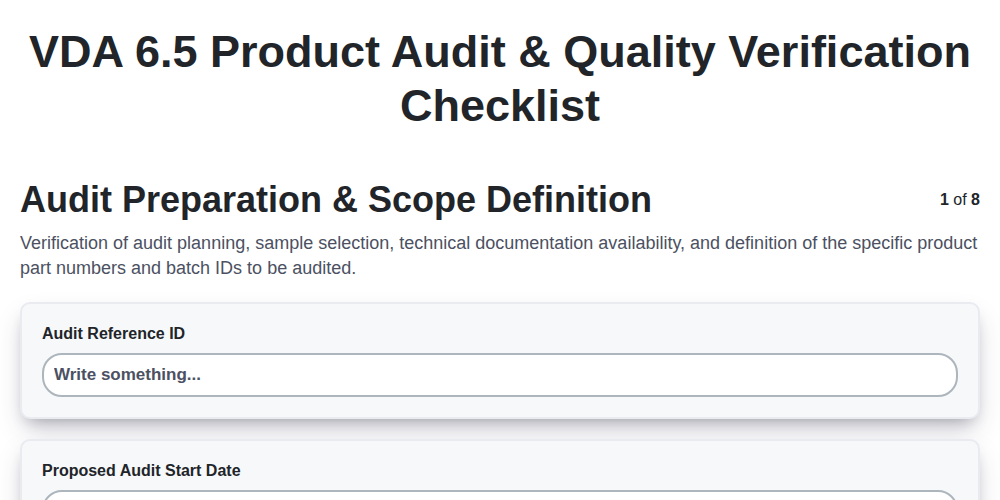
VDA 6.5 Product Audit & Quality Verification Checklist
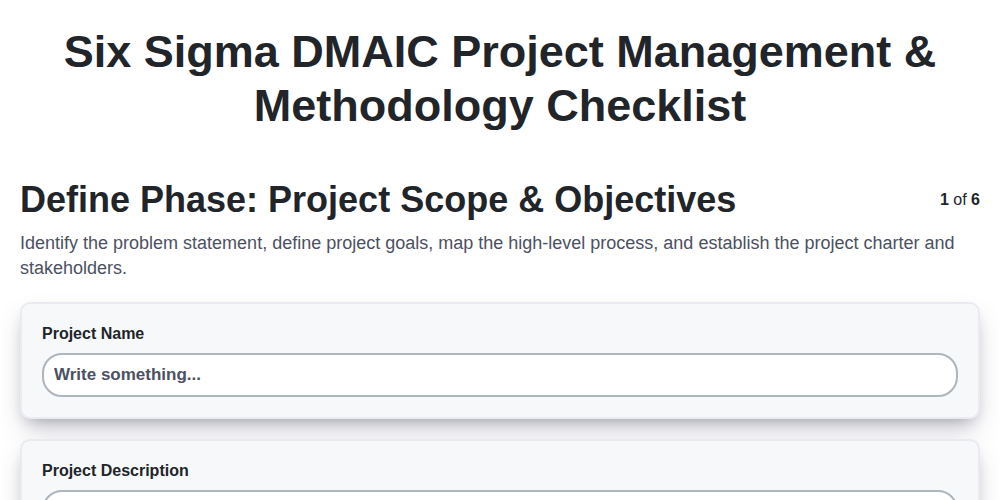
Six Sigma DMAIC Project Management & Methodology Checklist
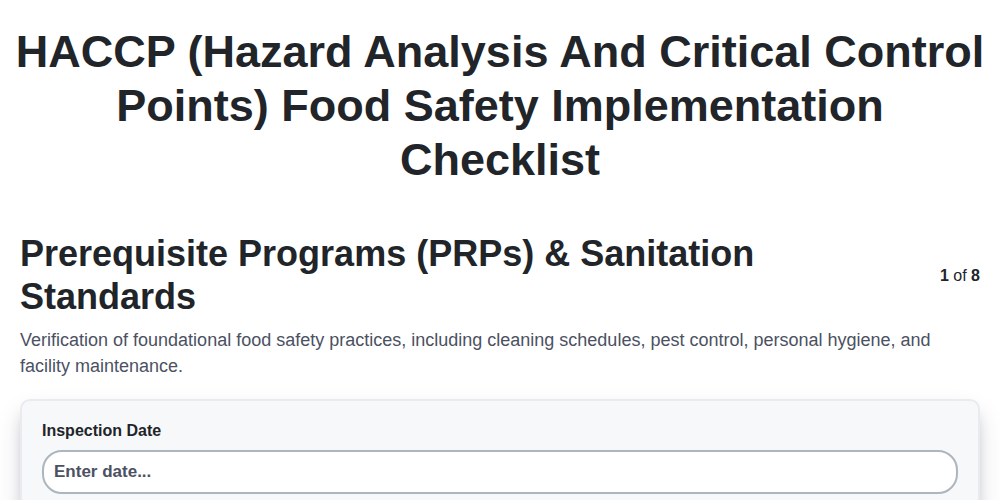
HACCP (Hazard Analysis and Critical Control Points) Food Safety Implementation Checklist
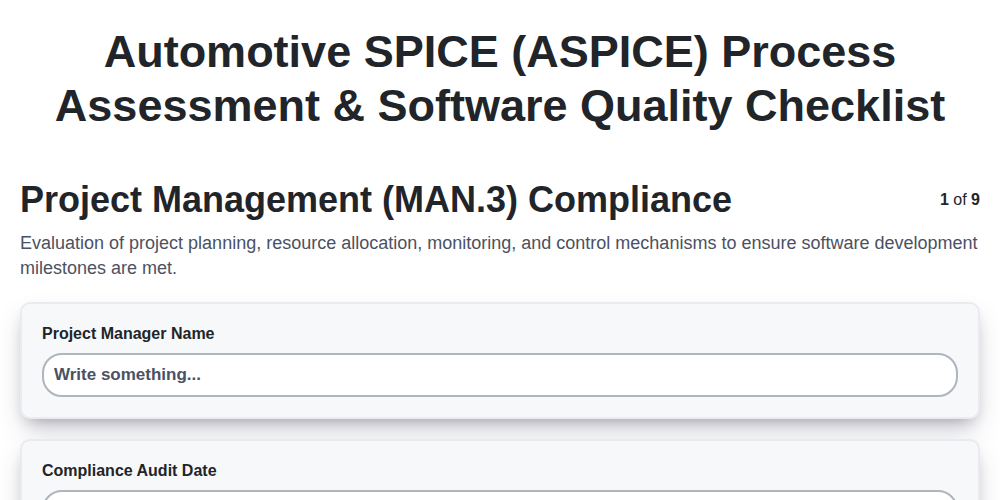
Automotive SPICE (ASPICE) Process Assessment & Software Quality Checklist
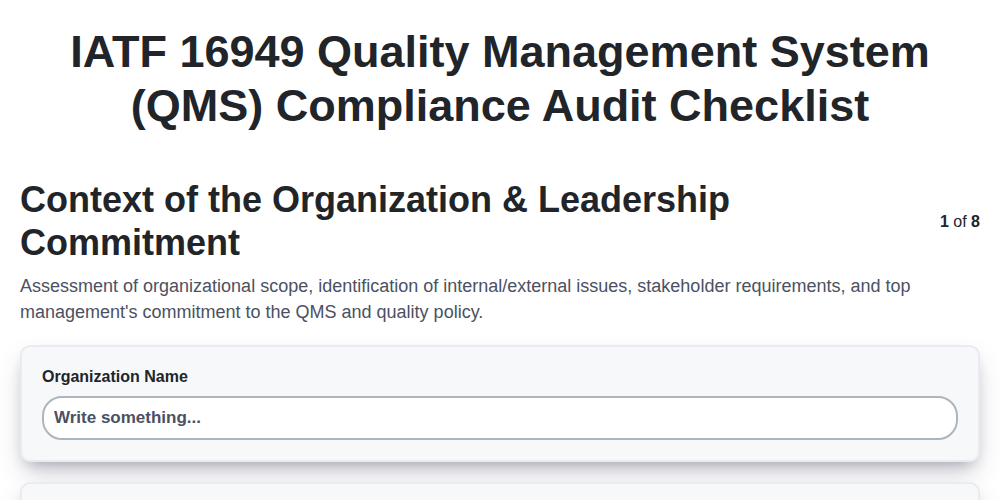
IATF 16949 Quality Management System (QMS) Compliance Audit Checklist
Gemeinsam schaffen wir das
Benötigen Sie Hilfe bei Checklisten?
Haben Sie eine Frage? Wir helfen Ihnen gerne. Bitte senden Sie uns Ihre Anfrage, und wir werden Ihnen umgehend antworten.