The Ultimate 2026 Compliance Checklist: Auditing Agricultural Subcontractors and Seasonal Labor
Publié: 28/10/2026 Mis à jour: 29/10/2026
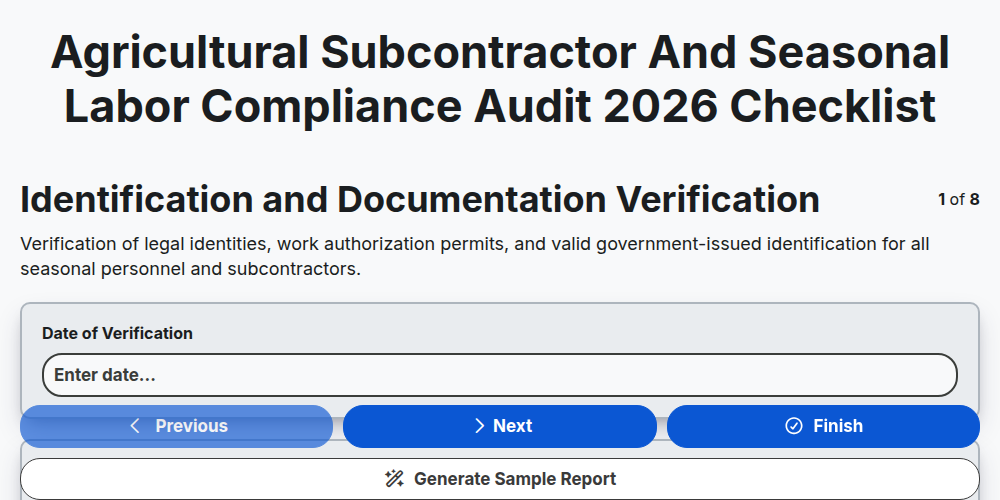
Table des matières
- Introduction: Why 2026 Compliance is Critical for Agricultural Success
- Phase 1: Identification and Documentation Verification
- Phase 2: Employment Contract and Agreement Review
- Phase 3: Regulatory and Labor Law Compliance Audit
- Phase 4: Health and Safety Training Compliance
- Phase 5: Personal Protective Equipment (PPE) Assessment
- Phase 6: On-Site Worksite Safety Protocols
- Phase 7: Insurance and Liability Coverage Audit
- Phase 8: Performance and Operational Standards
- Mitigating Risk: Managing Subcontractor Accountability
- Conclusion: Building a Resilient Seasonal Workforce
- Resources & Links
TLDR: Prepare for the 2026 farming season by mastering your compliance audits. This comprehensive guide breaks down the essential steps for auditing agricultural subcontractors and seasonal labor, covering everything from documentation and contract verification to health and safety, PPE assessments, and regulatory compliance to mitigate risk and ensure operational excellence.
Introduction: Why 2026 Compliance is Critical for Agricultural Success
Navigating a New Era of Agricultural Accountability
As we approach 2026, the landscape of agricultural management is undergoing a profound transformation. The era of managing by intuition is officially over, replaced by an era of rigorous transparency and heightened regulatory scrutiny. For farm owners, processors, and large-scale agricultural enterprises, the complexity of managing third-party subcontractors and seasonal labor forces has reached a critical tipping point.
The Shifting Landscape of Risk
The agricultural industry is no longer just facing the traditional challenges of weather and crop yields; it is facing a sophisticated web of legal, social, and operational risks. In 2026, the margin for error regarding labor compliance has vanished. With increasing integration of digital oversight, stricter labor enforcement, and a heightened focus on ESG (Environmental, Social, and Governance) standards, a single oversight in a subcontractor's paperwork can trigger a domino effect of legal liabilities, heavy fines, and irreparable brand damage.
The High Cost of Non-Compliance
Failure to audit your seasonal labor and subcontracted partners carries consequences far beyond simple administrative hurdles:
- Legal and Financial Vulnerability: New and evolving labor laws mean that ignorance of a subcontractor's practices is no longer a valid legal defense. Audits are your primary shield against litigation and regulatory penalties.
- Operational Disruption: An unverified workforce is an unstable workforce. Compliance gaps often lead to sudden work stoppages, sudden labor shortages, and disrupted harvest timelines.
- Reputational Integrity: In a global marketplace, consumers and retailers demand ethical certainty. An audit failure in your supply chain can lead to being delisted by major buyers and losing market access.
Beyond Checkboxes: Building Resilient Partnerships
This checklist is not merely a bureaucratic exercise; it is a strategic tool designed to build a more resilient, professional, and efficient agricultural operation. By implementing a rigorous audit framework, you are doing more than checking boxes-you are ensuring that every hand working in your fields is documented, protected, trained, and legally integrated into your ecosystem.
As we move through 2026, use this guide to transform your compliance process from a reactive necessity into a proactive competitive advantage.
Phase 1: Identification and Documentation Verification
Establishing the Foundation of Accountability
The integrity of an agricultural operation begins long before a single seed is planted or a harvest begins. The first pillar of a robust 2026 compliance audit lies in the absolute verification of identity and the legitimacy of the entities entering your farmstead. In an era of increasing regulatory scrutiny and heightened digital tracking, good faith is no longer a substitute for verifiable data.
Validating Legal Identity
The objective of this phase is to ensure that every subcontractor and seasonal worker has been properly vetted against both local and federal databases. This is not merely a clerical task; it is your primary defense against fraud and unauthorized labor.
- Entity Verification: For all subcontracted firms, confirm active business registrations, tax identification numbers (TIN), and valid state-issued agricultural licenses.
- Individual Identity Authentication: Implement a rigorous check of government-issued identification to ensure all seasonal laborers are authorized to work.
- The Digital Paper Trail: In 2026, reliance on paper-only files is a liability. Ensure all identity documents are scanned, timestamped, and stored in a secure, encrypted environment that allows for rapid retrieval during unannounced inspections.
Comprehensive Document Auditing
A breakdown in documentation is often the smoking gun in labor disputes and regulatory fines. Your audit must confirm that the following records are not only present but are current and unexpired:
- Work Authorization Records: Verifying I-9 compliance (or the relevant regional equivalent) and ensuring that expiration dates are tracked via an automated alert system.
- Subcontractor Certifications: Confirming that third-party agencies have provided updated proof of their operational legitimacy and adherence to agricultural industry standards.
- Credential Tracking: For specialized tasks-such as pesticide application or heavy machinery operation-verify that specific certifications and training permits are documented and valid for the upcoming season.
By mastering this initial phase, you create a single source of truth that serves as the bedrock for all subsequent safety and operational audits. Failure to verify identity at the gate compromises every other layer of your compliance program.
Phase 2: Employment Contract and Agreement Review
Securing the Legal Foundation: Contractual Integrity
Once you have verified the basic identity and documentation of your subcontractors, the focus must shift to the legal frameworks governing their relationship with your operation. In 2026, the landscape of agricultural labor is more heavily regulated than ever, making the fine print of your agreements your primary line of defense against litigation and operational disruptions.
Scrutinizing the Terms of Engagement
A successful audit requires more than a cursory glance at a signature. You must dive deep into the specific clauses that define the scope of work.
- Scope of Work Clarity: Does the contract explicitly define the tasks, duration, and specific agricultural zones covered? Vague descriptions lead to scope creep, where subcontractors may perform tasks they are not insured or trained for.
- Sub-Subcontracting Clauses: You must verify whether your subcontractors are permitted to delegate labor to third parties. Unauthorized subcontracting is a major compliance leak that creates a blind spot in your oversight.
- Termination and Breach Protocols: Ensure there are clear, enforceable terms regarding how a contract can be terminated due to safety violations or failure to meet labor standards.
Labor Standards and Wage Compliance
The Agreement Review phase is where you catch the most common precursors to labor disputes.
- Wage and Hour Alignment: Cross-reference the subcontractor's payment structures with local and federal minimum wage laws and overtime mandates. The agreement should clearly state that all wages paid to seasonal workers meet or exceed the 2026 statutory requirements.
- Payment Timelines and Records: Audit the agreement for provisions regarding how much documentation the subcontractor must provide (e.g., payroll registers, time logs) to prove they are adhering to legal pay cycles.
Indemnification and Responsibility Allocation
The goal of this audit step is to ensure that the financial and legal burden of error is appropriately distributed.
- Indemnity Clauses: Confirm that the subcontractor is contractually obligated to indemnify your organization against claims arising from their specific negligence or failure to follow labor laws.
- Dispute Resolution Mechanisms: Ensure the agreement outlines a clear path for resolving conflicts-whether through mediation or arbitration-to prevent small labor disputes from escalating into massive, business-halting lawsuits.
Pro-Tip for 2026: Do not assume old templates are still valid. With evolving seasonal labor regulations, ensure your contract review includes a check for updated compliance language regarding digital time-tracking and modern labor rights.
Phase 3: Regulatory and Labor Law Compliance Audit
Navigating the Complexities of Labor Standards
As we approach 2026, the regulatory landscape for agricultural labor is becoming increasingly stringent. An audit of your subcontractors and seasonal labor providers must go beyond simple paperwork; it requires a deep dive into how labor laws are being applied on the ground. Failure to verify compliance in this phase can lead to significant legal liabilities, heavy fines, and irreparable brand damage.
Key Audit Focus Areas
To ensure your operations remain resilient against evolving labor regulations, your audit must focus on the following critical pillars:
1. Wage and Hour Verification
The core of any labor audit is ensuring that every worker is being compensated according to the latest statutory requirements.
- Minimum Wage Adherence: Verify that all seasonal workers are receiving at least the updated 2026 minimum wage as per local and federal mandates.
- Overtime Calculations: Audit timecards to ensure that hours worked beyond the legal limit are being compensated at the correct premium rates.
- Record-Keeping Accuracy: Inspect payroll records for consistency, ensuring that deductions (for housing, meals, or tools) are legal, documented, and do not drop the net pay below the legal threshold.
2. Age Verification and Child Labor Laws
With increased scrutiny on global supply chains, verifying the age of seasonal workers is non-negotiable.
- Identity Documentation: Cross-reference employee files with official government-issued identification to ensure no underage labor is being utilized in prohibited tasks.
- Task-Specific Restrictions: Ensure that any minors legally permitted to work are not assigned to hazardous duties or heavy machinery operations as defined by updated 2026 safety standards.
3. Compliance with Labor Rights and Anti-Discrimination
A robust audit must confirm that subcontractors are maintaining a workplace free from exploitation and bias.
- Freedom of Movement and Documentation: Confirm that no subcontractor is withholding passports, visas, or identification documents-a critical step in preventing modern slavery and human trafficking indicators.
- Fair Treatment Protocols: Review grievance mechanisms to ensure seasonal workers have a clear, anonymous, and functional way to report harassment, discrimination, or unfair treatment without fear of retaliation.
4. Adherence to Seasonal Housing and Transportation Standards
If your subcontractors provide logistics or housing, these elements fall under the umbrella of regulatory compliance.
- Housing Sanitation and Safety: Verify that all seasonal accommodations meet the 2026 updated health and habitability standards.
- Transportation Compliance: Audit vehicle logs and driver certifications to ensure that the transport of labor meets all safety and environmental regulations.
Phase 4: Health and Safety Training Compliance
Ensuring Competency and Safety Readiness
In the agricultural sector, the transition from documentation to physical-site safety begins with verifying that every worker-whether direct hire or subcontractor personnel-possesses the necessary knowledge to navigate high-risk environments. An audit of training compliance is not merely a check-the-box exercise; it is your primary defense against preventable workplace injuries and legal liability.
Verification of Training Records
The core of this audit phase involves cross-referencing training logs with the actual workforce present on-site. Auditors must ensure that:
- Language-Appropriate Instruction: All safety training materials and verbal instructions are provided in a language that the seasonal workers understand fluently.
- Up-to-Date Certifications: Verification that specialized certifications (such as pesticide application licenses or heavy machinery operation permits) are current and have not expired.
- Session Documentation: Every training session must be backed by signed attendance sheets, including dates, topics covered, and instructor credentials.
High-Risk Task Competency
Beyond general orientation, the audit must focus on specific, high-hazard agricultural tasks. We recommend verifying specific training modules for the following:
- Chemical Handling: Training on the reading of Safety Data Sheets (SDS) and protocols for handling, mixing, and disposing of agricultural chemicals.
- Machinery and Equipment Operation: Documented proof that seasonal laborers have been instructed on the specific safety features and emergency shut-off procedures for tractors, harvesters, and irrigation equipment.
- Heat Stress and Hydration Protocols: Evidence that workers have been trained to recognize the early signs of heat exhaustion and hyperthermia, essential for the 2026 climate landscape.
Evaluating Training Efficacy
A common pitfall in audits is assuming that presence equals proficiency. To truly satisfy compliance standards, the audit should include spot-checks or knowledge interviews. If a subcontractor's employees cannot demonstrate basic safety protocols during a random site interview, the subcontractor is in non-compliance, regardless of what their paperwork states.
Phase 5: Personal Protective Equipment (PPE) Assessment
Ensuring Gear Integrity and Standardized Usage
The Personal Protective Equipment (PPE) assessment is a critical component of your audit, as it serves as the final physical line of defense between your seasonal workforce and hazardous agricultural environments. In 2026, compliance isn't just about having gear available; it is about verifying that the gear is task-specific, well-maintained, and strictly enforced.
Verifying PPE Inventory and Suitability
During the audit, you must move beyond a simple headcount and conduct a deep dive into the quality and appropriateness of the equipment provided to subcontractors and seasonal workers.
- Task-Specific Alignment: Ensure that the PPE provided matches the specific hazards of the job. For example, chemical-resistant gloves must be present for pesticide application, while puncture-resistant footwear is mandatory for heavy machinery or brush clearing.
- Condition and Lifecycle Audits: Inspect the physical state of the equipment. Check for cracked respirators, degraded gloves, or compromised eye protection. Equipment that has reached its expiration or shows signs of heavy wear must be flagged for immediate replacement.
- Standard Compliance Check: Verify that all protective gear meets the updated 2026 safety standards and recognized regulatory certifications (such as ANSI or CE ratings).
Monitoring Compliance and Training Integration
Having the right equipment is useless if it is not being used correctly. This stage of the audit focuses on the human element of PPE management.
- Usage Consistency: Conduct unannounced site walkthroughs to observe whether workers are wearing PPE correctly (e.g., properly fitted masks, ear protection during high-decibel operations, and high-visibility vests in vehicle transit zones).
- Fitting and Ergonomics: Assess whether the equipment fits the diverse seasonal workforce. Ill-fitting PPE can lead to improper usage or even secondary injuries, creating a liability gap for the primary contractor.
- Maintenance Protocols: Audit the subcontractor's process for cleaning and storing reusable PPE. Improper storage-such as leaving respirators in dusty environments-can lead to contamination and failed safety inspections.
Phase 6: On-Site Worksite Safety Protocols
Ensuring Field-Level Safety and Compliance
While paperwork and contracts provide the legal foundation, the true test of subcontractor compliance happens in the field. An audit of on-site worksite safety protocols is designed to ensure that the safety standards promised in the office are actually being executed in the rows, orchards, and greenhouses.
Field-Level Safety Inspections
When conducting your 2026 audit, your inspection should focus on the immediate environment where seasonal labor is performing tasks. Key areas of focus include:
- Equipment Maintenance and Guarding: Verify that all machinery, from tractors to irrigation tools, is in good working order and that all safety guards and shields are intact and functional.
- Chemical Handling and Storage: Inspect the storage areas for pesticides and fertilizers. Ensure all containers are properly labeled, secondary containment is used where necessary, and that MSDS (Material Safety Data Sheets) are accessible to all workers.
- Sanitation and Hydration Stations: Confirm the availability of clean, accessible drinking water and adequate restroom facilities. In the heat of the 2026 growing season, verifying that rest and shade protocols are physically present is critical for heat-stress prevention.
- Emergency Response Readiness: Evaluate the visibility and accessibility of first-aid kits and emergency communication tools. Ensure that all on-site supervisors know the specific protocol for reporting an injury or an environmental hazard.
Supervision and Behavioral Auditing
Safety compliance is not just about having the right tools; it is about the behavior of the workforce. During your on-site visit, observe the following:
- Adherence to Safety Training: Observe whether the training documented in your paperwork is actually being applied. Are workers following the specific protocols for heavy machinery operation or chemical application?
- Supervisory Oversight: Assess whether subcontractor foremen are actively monitoring work zones for hazards or if they are merely performing tasks without oversight.
- Incident Reporting Loops: Review the on-site logs to ensure that near-misses or minor injuries are being documented immediately. A lack of reported incidents in a high-risk environment can sometimes be a red flag for inadequate reporting culture.
By verifying these on-site protocols, you bridge the gap between administrative compliance and actual operational safety, significantly reducing the risk of liability and protecting the well-being of your seasonal workforce.
Phase 7: Insurance and Liability Coverage Audit
Protecting Your Enterprise: The Insurance and Liability Audit
As the final pillar of your 2026 compliance strategy, the Insurance and Liability Coverage Audit serves as your last line of defense against catastrophic financial and legal exposure. In the modern agricultural landscape, a subcontractor's oversight is often a direct liability for the primary grower or enterprise. An audit in this phase is not merely about verifying that a policy exists, but ensuring that the coverage is robust, current, and specifically tailored to the high-risk nature of seasonal agricultural work.
Key Verification Benchmarks
To ensure your operations are insulated from third-party negligence, your audit must focus on three critical areas:
1. General Liability and Third-Party Indemnity Verify that all subcontractors maintain active General Liability insurance that specifically covers bodily injury and property damage occurring on your worksite.
- The 2026 Standard: Ensure the policy includes an Additional Insured endorsement, naming your enterprise as a protected party. This ensures that if a seasonal worker is injured due to a subcontractor's error, your company is not left footing the legal bill.
2. Workers' Compensation Integrity The most significant risk in seasonal labor is the management of injury claims. You must audit subcontractor policies to ensure they provide comprehensive coverage for all seasonal personnel under their supervision.
- Certificate of Insurance (COI) Validation: Do not rely on expired documents. Your audit must confirm that the COI is current and that the coverage limits are sufficient to handle large-scale workplace incidents.
- Subcontractor Exemptions: Be wary of exempt status claims. If a subcontractor claims they are not required to carry workers' compensation, your legal team must verify this against local labor laws to avoid being deemed a statutory employer liable for all medical costs.
3. Professional and Auto Liability If subcontractors are utilizing heavy machinery or transporting labor between fields and housing, ensure their Commercial Auto Liability is intact. Furthermore, if they provide specialized services (such as chemical application), verify that Professional Liability (Errors and Omissions) is included to cover potential crop damage or environmental mishaps.
The Gap Analysis Approach
During this audit, look for the coverage gaps-specifically, check for expiration dates that align with the end of the harvest season. A policy that expires mid-season creates a massive liability vacuum. Your goal is to ensure that the period of insurance coverage mirrors the entirety of the seasonal labor duration.
Pro-Tip for 2026: Implement a digital tracking system that sends automated alerts 30 days before a subcontractor's insurance expiration. This prevents the common mistake of allowing unverified labor to operate on your land due to administrative oversight.
Phase 8: Performance and Operational Standards
Ensuring Operational Excellence and Long-Term Reliability
The final phase of a comprehensive audit moves beyond legal paperwork and focuses on the actual execution of work. While compliance ensures you are protected from a legal standpoint, auditing Performance and Operational Standards ensures that your subcontractors are actually delivering the quality and efficiency required to maintain your agricultural output.
In 2026, with the increasing pressure on global food supply chains, a subcontractor's inability to meet operational benchmarks can lead to catastrophic crop loss or missed market windows.
Key Audit Benchmarks for 2026
To maintain a high-performing workforce, your audit should evaluate the following areas:
1. Productivity and Output Consistency Review historical data and real-time field reports to ensure that the subcontractor's labor output aligns with the agreed-upon harvest or planting schedules. Look for patterns of labor shortages that might indicate poor management or undocumented sub-contracting layers.
2. Equipment and Technology Integration In the modern agricultural landscape, manual labor is increasingly supplemented by precision technology. Audit whether the subcontractor is utilizing the necessary tools (such as automated irrigation sensors, GPS-guided harvesters, or digital logging tools) as stipulated in your service agreement.
3. Waste Management and Resource Efficiency Operational standards must include the responsible handling of agricultural inputs. Evaluate how the seasonal labor force manages post-harvest waste, chemical runoff, and organic matter. Efficient resource management is no longer just an environmental goal; it is a core operational metric.
4. Quality Control Protocols Establish clear metrics for rejection rates. If a subcontractor's team is harvesting produce with high rates of bruising, rot, or improper sizing, it indicates a failure in training and oversight. An audit should verify that the subcontractor has their own internal quality check mechanism in place before the product ever reaches your processing facility.
Summary of the Audit Objective
The goal of this final phase is to transition from risk mitigation to value creation. By auditing performance and operational standards, you ensure that your subcontractors are not just compliant on paper, but are active, efficient, and reliable partners in your agricultural success.
Mitigating Risk: Managing Subcontractor Accountability
In the complex landscape of modern agribusiness, managing third-party labor providers and seasonal subcontractors introduces significant legal, operational, and reputational risks. As regulatory scrutiny intensifies heading into 2026, handshake agreements are no longer sufficient. To protect your operations from costly litigation, labor disputes, and supply chain disruptions, you must implement a rigorous auditing framework.
The goal of a compliance audit is not merely to check boxes, but to ensure that every individual working on your land adheres to the same high standards of safety and legality that your primary organization maintains.
The 8-Step Compliance Audit Framework
To effectively manage subcontractor accountability, your 2026 audit strategy should focus on these eight critical pillars:
1. Identification and Documentation Verification
The foundation of any audit is knowing exactly who is on your property. This step involves verifying the legal identity of all subcontracted personnel and ensuring all regulatory documentation-such as work permits, I-9 forms, and proof of age-is accurate, current, and easily accessible for inspection.
2. Employment Contract and Agreement Review
Audit the fine print of your service-level agreements (SLAs). Ensure that contracts clearly define the subcontractor's responsibilities regarding labor laws,-specific job descriptions, and the duration of seasonal engagements. Ambiguity in contracts is a primary driver of legal vulnerability.
3. Health and Safety Training Compliance
It is not enough to assume workers are trained; you must verify it. Your audit should include a review of training logs to ensure that all seasonal staff have received comprehensive instruction on machinery operation, chemical handling, and emergency response procedures.
4. Personal Protective Equipment (PPE) Assessment
A physical inspection is necessary to ensure that subcontractors are providing-and that workers are actually using-the required PPE. Check for the availability and condition of gloves, respiratory protection, high-visibility clothing, and heat-stress prevention gear.
5. Regulatory and Labor Law Compliance
As we move into 2026, staying ahead of evolving labor laws is vital. This step involves auditing subcontractor practices against wage and hour laws, mandatory break periods, and child labor regulations to ensure no violations are being inherited by your farm.
6. On-Site Worksite Safety Protocols
Evaluate the actual implementation of safety protocols in the field. This includes inspecting the maintenance of temporary housing (if applicable), the cleanliness of sanitation facilities, and the clear marking of hazardous zones within the worksite.
7. Insurance and Liability Coverage Audit
Ensure that your subcontractors maintain active, adequate insurance policies that specifically cover the scope of their work on your property. Verify certificates of insurance (COIs) and ensure that your business is named as an additional insured where necessary to prevent liability leakage.
8. Performance and Operational Standards
Finally, audit the quality of work. Compliance is not just about safety; it is about operational continuity. Evaluate whether the subcontractor is meeting the agreed-upon productivity levels and following the specific agricultural practices required for your crop management and harvest timelines.
Conclusion: Building a Resilient Seasonal Workforce
Future-Proofing Your Operations
As we look toward the 2026 growing season, the landscape of agricultural labor is becoming increasingly complex. The integration of stricter labor regulations, evolving safety standards, and heightened scrutiny on supply chain transparency means that compliance can no longer be a reactive task performed only when an inspector arrives at the gate.
Implementing this audit checklist is about more than just avoiding penalties or legal liabilities; it is about building a culture of excellence and operational stability. By rigorously verifying documentation, ensuring PPE compliance, and auditing subcontractor insurance, you are creating a safety net that protects your crops, your brand reputation, and-most importantly-your people.
Moving from Compliance to Competitive Advantage
A robust audit framework offers three distinct advantages for modern agricultural enterprises:
- Risk Mitigation: Proactive identification of gaps in labor law compliance or safety protocols prevents costly litigation and work stoppages during peak harvest windows.
- Operational Continuity: When subcontractors and seasonal crews operate under standardized safety and performance protocols, the entire farm ecosystem functions with greater efficiency and less friction.
- Supply Chain Integrity: As retailers and global buyers demand higher transparency, being able to prove a high standard of seasonal labor compliance becomes a significant competitive edge in the marketplace.
Final Thought for the 2026 Season
The strength of your harvest is inextricably linked to the strength of your workforce. Use this checklist not merely as a bureaucratic hurdle, but as a strategic tool to ensure that every individual on your land is working under the safest, most professional, and most legally sound conditions possible. Start your preparations early, audit frequently, and lead with a commitment to excellence.
Resources & Links
- U.S. Department of Labor (DOL): The primary authority for federal labor standards, wage and hour regulations, and worker protection laws.
- Occupational Safety and Health Administration (OSHA): Essential for Phase 4, 5, and 6 regarding workplace safety standards, agricultural specific regulations, and PPE requirements.
- Environmental Protection Agency (EPA): Crucial for auditing pesticide application safety and environmental compliance for agricultural subcontractors.
- U.S. Citizenship and Immigration Services (USCIS): Key resource for Phase 1 (Identification) to verify legal work authorization and H-2A visa compliance.
- National Institute for Occupational Safety and Health (NIOSH): Provides research-based data on preventing agricultural injuries and managing seasonal labor health risks.
- National Federation of Independent Business (NFIB): Useful for small-to-midsized farm owners to understand the economic impact of regulatory compliance.
- Agricultural Safety Resources: Specialized guidance on farm-specific safety protocols and managing seasonal worker risks.
- Internal Revenue Service (IRS): Critical for Phase 2 and 7 to ensure proper tax documentation for subcontractors and independent contractors.
- National Agricultural Law Center: An authoritative source for staying updated on changing agricultural laws and legal compliance requirements.
- Federal Emergency Management Agency (FEMA): Relevant for Phase 8 regarding operational standards and disaster preparedness/business continuity.
- Nolo - Legal & Business Resources: Provides accessible legal information regarding employment contracts and liability for small businesses.
- Bureau of Labor Statistics (BLS): Provides data on seasonal labor trends and industry-standard wage benchmarks for compliance auditing.
- USDA - U.S. Department of Agriculture: General resources for farm management, food safety, and agricultural operational standards.
- International Organization for Standardization (ISO): Reference for implementing global standards in safety and quality management for large-scale agricultural operations.
- Consumer Product Safety Commission (CPSC): Useful for assessing the safety and compliance of agricultural tools and machinery used by subcontractors.
- U.S. Small Business Administration (SBA): Provides guidance on insurance, liability, and managing the operational risks of seasonal workforce scaling.
Commentaires
Aucun commentaire n'a été publié pour le moment. Soyez le premier à en ajouter un !
Démonstration de la solution de gestion de l'agriculture
Gérer une ferme ou une entreprise agricole est une tâche complexe. La plateforme Work OS de ChecklistGuro simplifie vos opérations, de la planification des cultures et de la gestion de l'irrigation au suivi du bétail et à la planification des récoltes. Augmentez l'efficacité, réduisez le gaspillage et améliorez les rendements ! Découvrez comment ChecklistGuro peut révolutionner votre entreprise agricole.
Articles connexes
10 étapes simples pour un système de drainage sain : Votre modèle de liste de contrôle

Maîtriser le rapport quotidien d'observation des cultures : Votre modèle de liste de contrôle pour [Culture spécifique]
Liste de contrôle du système d'irrigation : Gestion de l'eau agricole et optimisation des rendements des cultures
Libérez le potentiel de votre jardin : une liste de contrôle pour la vérification du pH du sol
Modèle de liste de contrôle pour l’utilisation des EPI : Votre guide pour la sécurité
Modèle de liste de contrôle pour la conformité aux permis de rejet d'eau
Le Guide Ultime de Vérification et d'Étalonnage pour GPS et Agriculture de Précision
Modèle de liste de contrôle pour l'analyse du ruissellement des eaux
Besoin d'aide avec les listes de contrôle?
Vous avez une question ? Nous sommes là pour vous aider. Veuillez soumettre votre demande et nous vous répondrons rapidement.