The Ultimate 2026 Pop-up Shop Launch Checklist: From Inventory Setup to Mastering Foot Traffic Management
Publié: 30/10/2026 Mis à jour: 31/10/2026
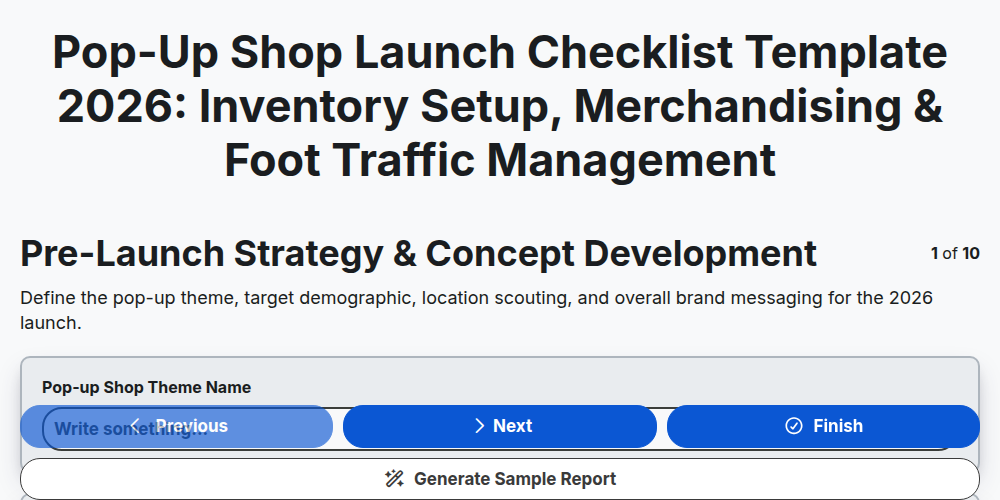
Table des matières
- Defining Your Vision: Pre-Launch Strategy & Concept Development
- Sourcing Excellence: Inventory Procurement & Stock Management
- The Art of the Display: Visual Merchandising & Store Layout
- Seamless Transactions: Setting Up Your POS & Tech Infrastructure
- Building Your Dream Team: Staffing, Training & Uniforms
- Creating the Buzz: Marketing, Promotion & Grand Opening Hype
- Optimizing the Floor: Foot Traffic & Customer Flow Management
- The Logistics Blueprint: Setup & Breakdown Efficiency
- Beyond the Sale: Enhancing Customer Experience & Engagement
- Measuring Success: Post-Launch Analysis & Performance Review
- Resources & Links
TLDR: Master your 2026 pop-up launch with this comprehensive guide. We break down everything you need for a successful short-term retail activation, covering essential phases from pre-launch strategy and inventory procurement to visual merchandising, tech infrastructure, and staff training. Learn how to drive grand opening hype, manage customer foot traffic effectively, and execute seamless logistics for setup and breakdown to ensure a high-impact, profitable event.
Defining Your Vision: Pre-Launch Strategy & Concept Development
Setting the Foundation for Success
Before a single piece of furniture is moved or a single social media teaser is posted, your pop-up shop requires a rock-solid strategic foundation. In the fast-paced retail landscape of 2026, a pop-up is no longer just a temporary storefront; it is a high-stakes brand activation. Success depends on how well your physical space aligns with your long-term brand identity.
Defining Your Why and Your Who
The first step in your checklist is identifying the core objective of this activation. Are you launching a new product line, clearing seasonal inventory, or simply building brand awareness in a new geographic market? Your goal will dictate every subsequent decision, from your budget allocation to your store's aesthetic.
Once your objective is set, define your target demographic for this specific location. A pop-up in a high-end metropolitan district requires a different psychological approach than a seasonal stall at a suburban festival.
The Concept & Brand Narrative
In 2026, consumers crave Instagrammable and TikTok-ready experiences. Your concept should be more than just a store; it should be a narrative.
- Theme Development: What is the sensory experience? Think about the scent, the lighting, and the music.
- Visual Identity: Ensure your pop-up's temporary branding is a seamless extension of your digital presence.
- The Hook: What is the one thing a customer will remember or want to share online?
Market Research & Site Selection
Your strategy is only as good as your location. During this phase, you must analyze:
- Foot Traffic Profiles: Who walks past this location at 10:00 AM versus 6:00 PM?
- Competitor Proximity: Are you positioned near complementary brands or direct competitors?
- Accessibility: Can customers easily find you, and is there adequate space for them to linger?
Budgeting & Timeline Mapping
Finally, create a realistic financial roadmap. Account for the hidden costs of temporary retail: permits, short-term staffing, temporary insurance, and waste management. Map out a backward timeline from your Grand Opening date to ensure every milestone in this checklist is hit with precision.
Sourcing Excellence: Inventory Procurement & Stock Management
Mastering Your Inventory: The Backbone of a Successful Pop-up
In the fast-paced world of 2026 retail, your pop-up's success is determined long before the doors open. While foot traffic and aesthetics draw customers in, your Inventory Procurement & Stock Management strategy determines whether they actually leave with a bag in hand. In a temporary retail environment, you don't have the luxury of restocking next week-your inventory must be precise, timely, and perfectly curated.
Strategic Sourcing & Product Curation
The 2026 retail landscape demands a blend of trend-responsiveness and scarcity. Your procurement strategy should focus on:
- The Hero Product Strategy: Identify 2-3 anchor items that serve as your shop's main attraction. These should be high-demand, high-visibility pieces that drive the wow factor.
- ically Curated Assortment: Avoid the temptation to overstock. A pop-up should feel like a curated collection, not a warehouse clearance. Focus on a mix of entry-level impulse buys and destination premium pieces.
- Lead-Time Management: With global supply chains remaining unpredictable, build a buffer into your procurement timeline. Ensure all physical goods arrive at your staging area at least 14 days before installation begins.
Precision Stock Management & Inventory Control
Because a pop-up operates within a limited physical footprint, every square inch of storage counts. You cannot afford dead stock taking up valuable backroom space.
- Real-Time Inventory Tracking: In 2026, manual spreadsheets are obsolete. Use an integrated Inventory Management System (IMS) that syncs instantly with your POS. Every sale must reflect globally to prevent the dreaded out of stock disappointment at the checkout counter.
- The SKU Audit: Before the launch, conduct a rigorous SKU (Stock Keeping Unit) audit. Categorize your inventory by size, color, and density to ensure your team knows exactly what is in the front-of-house versus the back-stock.
- Loss Prevention & Shrinkage Control: Temporary environments are high-risk zones for shrinkage. Implement a strict check-in/check-out process for all new arrivals and ensure your stockroom layout is organized to allow for rapid, visible auditing.
Demand Forecasting for Short-Term Retail
Unlike a permanent flagship, a pop-up has a finite lifecycle. Your procurement must account for the Pop-up Curve:
- The Opening Surge: High stock availability for the first 48 hours to capitalize on launch hype.
- The Mid-Term Steady State: Consistent replenishment of core essentials.
- The Final Markdown Phase: A strategic plan to deplete remaining stock as the closing date approaches to ensure you aren't transporting leftover inventory back to your warehouse.
The Art of the Display: Visual Merchandising & Store Layout
Transforming Space into Experience
In 2026, a pop-up shop is more than just a temporary retail space; it is a physical manifestation of your brand's digital identity. Visual merchandising is no longer just about placing products on a shelf-it is about storytelling. Your layout must guide the customer through a curated narrative that begins the moment they step through the door.
Strategic Floor Planning & The Golden Path
The foundation of your layout starts with the Golden Path-the natural walking route customers take upon entering.
- The Decompression Zone: Ensure the first few feet inside your shop are open and inviting. Avoid placing bulky displays right at the entrance, as customers need a moment to adjust to the new environment.
- The Right-Hand Rule: Statistically, most shoppers intuitively turn right. Place your hero products or most high-margin items in this primary sightline to capture immediate attention.
- Creating Navigation Nodes: Use furniture, low-profile pedestals, or floor decals to create a flow that prevents congestion while subtly directing movement toward the back of the store.
Sensory & Multi-Dimensional Merchandising
To stand out in a saturated market, your merchandising must engage more than just sight.
- Height & Depth Variation: Avoid the flat look. Use varying heights-incorporating modular shelving, acrylic risers, or hanging elements-to create visual interest and keep the eye moving throughout the space.
- The Rule of Three: When grouping products, use clusters of three (varying in height and texture) to create a sense of organized abundance rather than clutter.
- Tactile Engagement: In an era of digital shopping, the touch factor is your greatest advantage. Arrange items so they are easy to pick up, feel, and interact with.
Integrating Tech-Driven Displays
As we move into 2026, the line between physical and digital merchandising is blurring.
- Digital Integration: Incorporate QR codes seamlessly into your signage to bridge the gap between physical browsing and online deep-dives (reviews, color variants, or ingredient lists).
- Dynamic Lighting: Use smart lighting to highlight specific zones. Transitioning from ambient light to focused spotlights on Product of the Week can instantly shift customer focus without changing your physical inventory.
- Social-Ready Instagrammable Moments: Design at least one corner of your shop specifically as a photo opportunity. Whether it's a neon sign, a floral installation, or an interactive mirror, this merchandise works for you 24/7 on social media.
Seamless Transactions: Setting Up Your POS & Tech Infrastructure
Future-Proofing Your Payments and Operations
In 2026, a cash only or disconnected pop-up is no longer an option. To ensure your temporary retail space doesn't suffer from-latency issues or missed sales, your tech stack must be as mobile, agile, and reliable as your brand. Your Point of Sale (POS) and tech infrastructure are the backbone of your physical presence; if the system fails, the customer experience collapses.
1. Cloud-Based POS & Mobile Integration
Gone are the days of bulky, tethered registers. For a 2026 pop-up, prioritize a cloud-based, mobile-first POS system that can run on tablets or smartphones.
- Omnichannel Sync: Ensure your pop-up POS communicates in real-time with your primary e-commerce store. This prevents ghost inventory issues where an item sells out online but remains available in-store.
- Offline Mode: Choose a provider that offers offline processing. If your pop-up's Wi-Fi flickers, you must still be able to process transactions and sync data once connectivity returns.
2. Payment Versatility: Beyond the Credit Card
The modern consumer expects a frictionless checkout. Your infrastructure must support a diverse ecosystem of payment methods:
- Contactless & NFC: Ensure 100% compatibility with Apple Pay, Google Wallet, and wearable tech.
- QR Code Payments: Integrate options for instant transfers (like Venmo, Zelle, or regional equivalents) to capture the Gen Z and Alpha demographics.
- Buy Now, Pay Later (BNPL): If your price points are higher, integrating services like Klarna or Affirm at the point of sale can significantly increase your Average Order Value (AOV).
3. Robust Connectivity & Network Security
A pop-up is often located in high-traffic, temporary venues where public Wi-Fi is unreliable or insecure.
- Dedicated Hotspots: Never rely on a venue's guest Wi-Fi for your primary transactions. Invest in high-speed 5G mobile hotspots specifically for your POS and inventory management.
- Network Redundancy: Have a Plan B connectivity solution ready. If your primary hotspot fails, your staff should know exactly how to switch to a secondary backup instantly.
4. Digital Inventory & Data Capture
Your tech stack should do more than just take money; it should gather intelligence.
- Real-Time Stock Tracking: Use integrated barcode scanners to make stocktakes instant and error-free.
- Customer Data Capture: Use your POS to capture emails and loyalty information during the checkout flow. In a pop-up, every transaction is an opportunity to turn a one-time visitor into a long-term digital subscriber.
Building Your Dream Team: Staffing, Training & Uniforms
The Human Element: Curating Your Pop-up Dream Team
In the fast-paced, high-energy environment of a pop-up shop, your staff is more than just sales personnel-they are the living embodiment of your brand. Unlike a permanent retail location, a pop-up relies heavily on immediate, impactful impressions. Because you have a limited window of time to convert passersby into loyal customers, your team must be agile, knowledgeable, and incredibly engaging.
Hiring for Brand Alignment and Agility
When recruiting for a short-term activation, look beyond traditional retail experience. You need brand ambassadors who possess high emotional intelligence and the ability to thrive in a high-intensity, changing environment.
- Personality Over Pedigree: Prioritize candidates who naturally embody your brand's voice-whether that is high-energy and trendy or sophisticated and understated.
- The Swiss Army Knife Mentality: In a pop-up, roles are often fluid. Your staff may need to pivot from processing a transaction to restocking a shelf or managing a sudden queue. Look for candidates who are proactive and comfortable with multitasking.
Comprehensive Training: Beyond the Cash Register
A pop-up launch is often too fast-paced for long-term onboarding, which means your training must be concentrated and high-impact. Every team member should be an expert on three core pillars:
- Product Mastery: Every staff member must be able to speak fluently about your inventory, including origin stories, materials, and unique selling points. In 2026, customers expect deep product knowledge to combat the rise of AI-driven shopping; your staff must provide the human insight a screen cannot.
- The Tech Stack: Ensure everyone is proficient with your POS system, mobile payment solutions, and inventory scanning tools. A technical glitch during a peak hour can derail the entire customer experience.
- Crisis Management & Problem Solving: Train your team on how to handle common pop-up hurdles, such as sudden surges in foot traffic, inventory discrepancies, or handling difficult customer inquiries.
Uniforms and Visual Identity
Your team's appearance is the first visual cue of your brand's aesthetic. In a temporary space, the line between staff and decor is blurred.
- Cohesive Aesthetics: Your uniforms should complement your store's visual merchandising. Whether it's branded streetwear, minimalist aprons, or high-fashion accessories, the attire must feel like an intentional extension of the shop's design.
- Functionality Meets Style: Ensure that while the team looks the part, they are dressed for the physical demands of a pop-up. Fabrics should be breathable, and footwear should be comfortable enough for long shifts on hard floors.
- The Walking Billboard Effect: Subtle branding-such as a custom embroidered cap or a branded tote-can turn every staff member into a mobile advertisement for your brand even when they are stepping outside the shop for a break.
Creating the Buzz: Marketing, Promotion & Grand Opening Hype
In the fast-paced digital landscape of 2026, a pop-up shop cannot rely on build it and they will come logic. To succeed, your marketing strategy must bridge the gap between digital hype and physical presence, creating an irresistible sense of urgency and FOMO (fear of missing out) long before your doors even open.
The Multi-Channel Hype Engine
To drive high-intent traffic, your promotion must be synchronized across several touchpoints:
- Short-Form Video Dominance: Utilize TikTok and Instagram Reels to showcase behind-the-scenes snippets of your setup process. In 2026, authenticity is currency; show the raw, unpolished moments of transforming a space to build an emotional connection with your audience.
- Hyper-Local Targeted Ads: Use geo-fencing technology to serve ads to users within a specific radius of your pop-up location. This ensures your budget is spent on the people most likely to actually walk through your doors.
- Influencer First Look Events: Invite local micro-influencers for an exclusive pre-opening walkthrough. Their real-time stories and unboxing of your retail space act as digital word-of-mouth that scales instantly.
The Grand Opening Strategy
The launch day is your most critical window for conversion and brand impression.
Creating Scarcity and Incentives
A grand opening requires a hook. Whether it is a limited-edition product drop, a collaborative giveaway with a local brand, or a first 50 customers receive a gift promotion, you need a reason for customers to arrive at opening hour rather than mid-afternoon.
Integrating Augmented Reality (AR) Teasers
Leverage AR filters on social media that allow followers to place your flagship product in their own environment or virtually walk through a 3D render of your shop layout. This interactive engagement primes the customer for the physical experience.
The Countdown Timeline
- 4 Weeks Out: Announce the location and dates. Start the Coming Soon social media campaign.
- 2 Weeks Out: Reveal product teasers and sneak peeks of the store design.
- 1 Week Out: Launch the influencer campaign and finalize the local PR push.
- Launch Day: Execute high-frequency live streaming and real-time engagement to capture the immediate energy of the crowd.
Optimizing the Floor: Foot Traffic & Customer Flow Management
Mastering the Flow: Strategies for High-Conversion Movement
In the fast-paced environment of a 2026 pop-up, your physical layout is your most powerful silent salesperson. With rising-cost real estate and limited operating windows, you cannot afford to have customers getting stuck in bottlenecks or-worse-missing key product zones entirely. Effective foot traffic management is the difference between a crowded, frustrating experience and a seamless, high-conversion shopping journey.
Designing the Golden Path
The goal of your floor plan should be to guide customers through a curated narrative. Avoid the dead end trap; instead, implement a loop or a serpentine path that naturally leads visitors past your high-margin items and seasonal hero products.
- The Decompression Zone: The first few feet inside your entrance act as a transition space. Don't crowd this area with large displays. Give customers a moment to adjust to the lighting, scent, and vibe of your shop before presenting them with heavy decision-making tasks.
- Strategic Sightlines: Use varying heights in your merchandising. If every display is eye-level, the back of the store becomes invisible. Incorporate pedestals, hanging displays, and low-profile tables to ensure the eye travels deep into the space.
Preventing Bottlenecks and Friction Points
As foot traffic increases during peak hours, congestion can lead to shopping fatigue, where customers leave simply because they can't move comfortably.
- The Checkout Buffer: Ensure the Point of Sale (POS) area is positioned away from the entrance but easily accessible. Create a waiting queue area that is lined with impulse-buy items to keep customers engaged while they wait.
- Aisle Width Compliance: Even in a small footprint, maintain enough clearance for two people to pass each other. A cramped store feels claustrophative, which negatively impacts the perceived value of premium brands.
Leveraging Tech for Real-Time Flow Management
In 2026, managing traffic is no longer just about moving furniture; it's about using data.
- Heat Mapping & Sensor Integration: Use simple IoT motion sensors or AI-driven camera analytics to identify cold zones-areas of your shop that customers are consistently bypassing. This allows you to pivot your merchandising strategy mid-pop-up.
- Digital Queueing Solutions: To prevent physical crowding at the entrance or checkout, consider SMS-based queueing. This allows customers to continue browsing the surrounding area (or nearby partner cafes) and receive a notification when it is their turn to enter or pay.
The Role of Staff in Traffic Direction
Your team acts as the conductors of the shop floor. Training should focus on proactive engagement rather than reactive service.
- Active Circulation: Train staff to move through the store, not just stand behind counters. Staff should intercept customers in low-traffic zones to draw them toward new arrivals.
- Managing the Density Pulse: During sudden surges, staff should be trained to manage the entrance-briefly pausing entry or directing customers to specific sections of the store to maintain a premium, uncrowded atmosphere.
The Logistics Blueprint: Setup & Breakdown Efficiency
Mastering the Logistics: The Setup & Breakdown Blueprint
A successful pop-up is often won or lost in the hours before the doors open and the hours after they close. In 2026, with the rise of hyper-local, short-term retail, efficiency is your greatest competitive advantage. To maximize your ROI, you must treat your setup and breakdown as a high-precision operation rather than an afterthought.
The Pre-Setup Phase: The Load-In Strategy
The Load-In is where the chaos of a pop-up usually begins. To prevent costly delays, your logistics plan must include:
- The Master Inventory Audit: Never arrive on-site without a digital manifest. Every SKU, hanging rail, and display pedestal should be scanned into your system before it hits the floor.
- The First Hour Kit: Prepare a dedicated crate containing essentials for the immediate opening: tape, scissors, signage stands, price guns, cleaning supplies, and extra batteries for handheld scanners.
- Vendor Synchronization: Coordinate arrival windows for third-party contractors (lighting, signage, or floral designers) to ensure your team isn't tripping over installers during the final merchandising push.
Execution: The Setup Workflow
Effective setup is about building from the back to the front.
- Structural Foundation: Install heavy signage, lighting, and any modular shelving units first.
- Tech Integration: Once the physical structure is set, stabilize your POS/Wi-Fi infrastructure. Test your connectivity in the exact spot where your checkout counter will sit.
- Merchandising Layering: Only once the infrastructure is stable should you begin the visual merchandising process. This prevents merchandise fatigue where staff accidentally bump displays while moving heavy equipment.
The Rapid Breakdown: Protecting Your Assets
In a short-term retail model, your Load-Out is just as critical as your Load-In. A disorganized breakdown leads to lost inventory, damaged goods, and astronomical overtime costs.
- The Reverse-Flow Method: Implement a systematic removal process. Start with high-value, fragile items and move toward bulky, non-perishable fixtures.
- Real-Time Inventory Reconciliation: Do not wait until you are back at the warehouse to count your stock. Perform a Zero-Stock scan as items are packed into shipping crates to immediately identify discrepancies.
- The Damage Report Protocol: Use the breakdown window to document any damaged fixtures or depleted packaging. This data is vital for your post-launch analysis and future budget planning.
By treating setup and breakdown as a structured logistical maneuver, you ensure that your energy is spent on what truly matters: engaging customers and driving sales.
Beyond the Sale: Enhancing Customer Experience & Engagement
In 2026, a pop-up shop is no longer just a place to transact; it is a live, breathing extension of your brand's digital identity. With the lines between e-commerce and physical retail more blurred than ever, your success depends on how well you bridge the gap between a simple stop-in and a memorable encounter.
To maximize your ROI, you must move beyond basic service and focus on creating high-engagement touchpoints that turn casual browsers into brand advocates.
Creating Instagrammable Moments & Sensory Branding
In an era of short-form video dominance, your shop must be designed for the lens. Every corner of your pop-up should offer a visual incentive for customers to pull out their phones.
- The Aesthetic Anchor: Designate at least one hero area-a beautifully lit corner, a neon sign, or a unique floral installation-specifically for social media content creation.
- Sensory Layering: Don't neglect the non-visual senses. Curate a custom scent for the space and a high-energy (but non-intrusive) playlist that aligns with your brand persona. These subtle cues deepen the emotional imprint of the visit.
Gamification and Interactive Retail
Static displays are no longer enough to hold attention. To drive dwell time, integrate interactive elements that reward curiosity.
Interactive Product Discovery
- QR-Driven Storytelling: Use QR codes on displays that lead to Behind the Brand videos or Augmented Reality (AR) filters that allow customers to see products in different colors or environments.
- Live Demonstrations: Schedule drop alerts or live styling sessions. Seeing a product in motion creates a sense of urgency and authenticity that a static shelf cannot replicate.
Loyalty in the Moment
While long-term loyalty programs are essential, pop-ups require instant gratification tactics.
- In-Store Digital Scavenger Hunts: Encourage customers to find specific items to unlock a small discount or a branded sticker.
- Exclusive Pop-up Perks: Offer only-at-this-location merchandise or limited-edition packaging to reward those who physically visited the space.
Personalized Service in a High-Traffic Environment
The biggest challenge of a pop-up is maintaining a sense of intimacy while managing high foot traffic. Your staff should act less like sales clerks and more like brand ambassadors.
- The Proactive Greeting: Train your team to engage customers within the first 30 seconds of entry, not with a sales pitch, but with a brand-related conversation starter.
- Seamless Omni-channel Integration: Ensure your staff can assist with endless aisle shopping-if an item is out of stock in the pop-up, they should be able to facilitate an immediate online order right there on the spot, ensuring no opportunity is lost to a lack of inventory.
Measuring Success: Post-Launch Analysis & Performance Review
The Post-Mortem: Turning Data into Future Strategy
The close of your pop-up event shouldn't mark the end of your work; it marks the beginning of your next growth phase. In the fast-paced retail landscape of 2026, the data you collect during your temporary activation is your most valuable asset for planning your next permanent location or seasonal takeover.
To ensure you aren't just celebrating a successful event but actually building a scalable business, you must conduct a rigorous post-launch analysis.
1. Quantitative Metrics: The Hard Data
First, dive into your POS (Point of Sale) reports to evaluate the financial health of the pop-up. Move beyond simple total revenue and analyze:
- Sell-Through Rate: Which specific SKUs moved instantly, and which remained on the shelves? This dictates your future inventory procurement strategy.
- Average Transaction Value (ATV): Did your upselling training work? Did customers buy single items or bundles?
- Conversion Rate: Compare your total foot traffic (captured via sensors or manual counts) against the number of completed transactions.
- Customer Acquisition Cost (CAC): Calculate your total marketing spend against the number of new customers acquired during the event.
2. Qualitative Insights: The Human Element
Numbers tell you what happened, but your customers and staff tell you why.
- Customer Sentiment Analysis: Review social media mentions, Google reviews, and direct feedback gathered via in-store surveys. Did the vibe of your visual merchandising resonate, or was the store layout frustrating to navigate?
- Staff Debrief: Your frontline team witnessed every friction point. Hold a formal debrief to discuss operational bottlenecks-was the checkout process too slow? Did the stockroom setup hinder replenishment?
- Brand Perception: Did the pop-up successfully communicate your brand identity, or did the temporary nature of the shop lead to any brand dilution?
3. The Next Steps Action Plan
A review is useless without actionable outcomes. Use your findings to update your 2026 Retail Playbook. If foot traffic management was a struggle, redesign your store layout template. If certain products underperformed, adjust your procurement budget for the next activation.
By treating your pop-up as a live laboratory, you transform a short-term marketing tactic into a long-term competitive advantage.
Resources & Links
- Shopify: Comprehensive guide and tools for managing e-commerce, inventory, and point-of-sale systems for physical and digital retail.
- Man:
- Square: Essential resources for setting up mobile POS hardware and managing seamless payment processing for pop-up locations.
- Canva: Graphic design platform ideal for creating promotional marketing materials, signage, and social media hype for your launch.
- Pinterest: A visual discovery engine perfect for mood boarding store layouts and visual merchandising inspiration.
- BigCommerce: Insights into omnichannel retail strategies and integrating online presence with physical pop-up stores.
- HubSpot: Expert resources for inbound marketing, customer relationship management (CRM), and building brand awareness.
- Retail Dive: Industry news and deep dives into retail trends, consumer behavior, and logistics management.
- Instagram: The primary social platform for driving foot traffic through visual storytelling and geo-tagged promotions.
- Etsy: A great resource for small businesses looking for unique sourcing inspiration and understanding handmade market trends.
- Asdex: Information regarding retail space procurement and identifying high-traffic pop-up locations.
- Global Risk: Essential information on business insurance and managing liability during temporary event setups.
- Entrepreneur: Business strategy resources covering everything from staffing and team building to financial planning.
- Fiverr: A marketplace for hiring freelancers for quick needs like logo design, promotional video editing, or temporary staffing support.
- Google Business Profile: Crucial tool for managing local SEO and ensuring your pop-up location appears in local search results and Maps.
- Behance: A platform to find professional visual designers for high-end store branding and interior layout concepts.
- Slack: Communication tool essential for coordinating logistics and real-time updates between your pop-up staff.
- Trello: Project management tool perfect for tracking the 'Setup & Breakdown' checklist and inventory milestones.
- Typeform: A tool for gathering post-launch customer feedback and conducting post-event performance reviews.
Commentaires
Aucun commentaire n'a été publié pour le moment. Soyez le premier à en ajouter un !
Démonstration de la solution de gestion de la planification d'événements
Organisez des événements impeccables en toute simplicité ! ChecklistGuro rationalise la planification des événements, de la gestion des fournisseurs au suivi du budget et à la communication avec les participants. Restez organisé, réduisez le stress et offrez des expériences inoubliables. Gérez tout cela grâce à notre plateforme Work OS.
Articles connexes
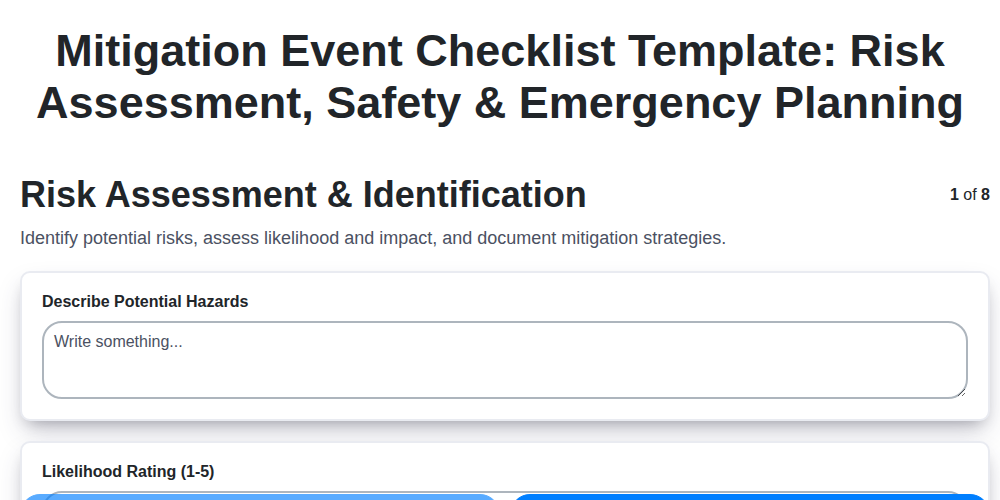
Event Safety Sorted: Your Free Mitigation Checklist Template
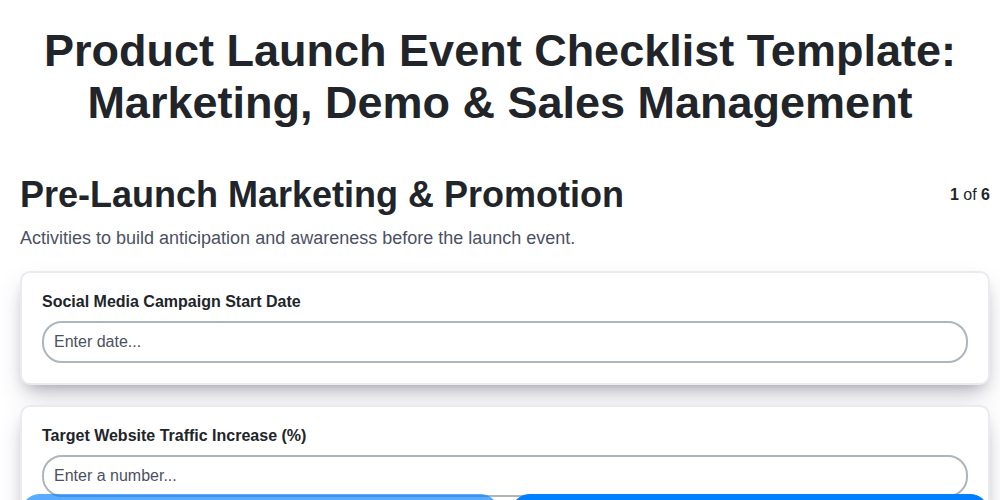
The Ultimate Product Launch Checklist Template: Your Guide to Marketing, Demos & Sales Success

The Ultimate Fundraising Event Checklist: Donations, Promotion & Volunteer Management
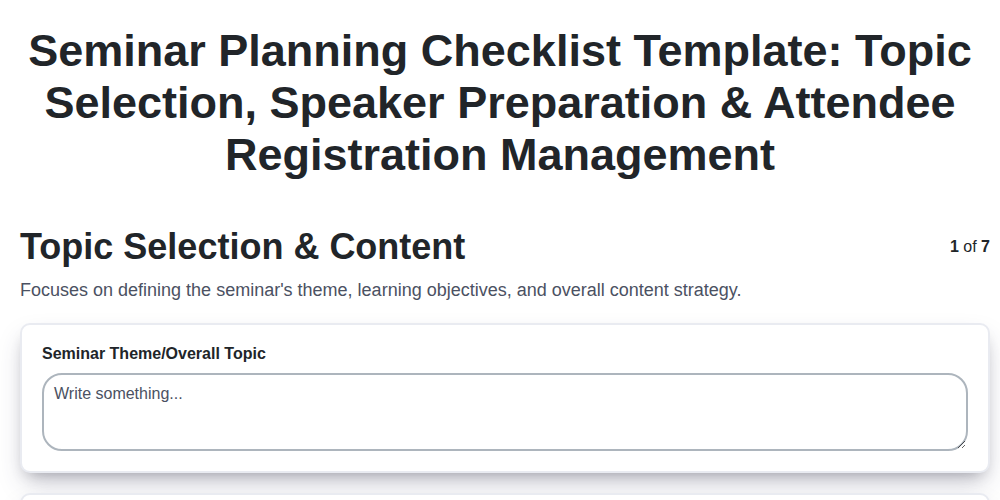
La liste de contrôle ultime pour la planification de séminaires : du sujet aux participants
The Ultimate Promotional Event Checklist Template: Your Guide to Brand Activation & Social Buzz
Liste de contrôle pour la fête d'anniversaire : Organisez votre célébration parfaite
Modèle de liste de contrôle pour l'ouverture : Votre guide pour un lancement réussi
The Ultimate Virtual Event Planning Checklist Template
Besoin d'aide avec les listes de contrôle?
Vous avez une question ? Nous sommes là pour vous aider. Veuillez soumettre votre demande et nous vous répondrons rapidement.