 ChecklistGuro
 Customs Clearance and Documentation Workflow
Streamline your international trade operations with our comprehensive Customs Clearance and Documentation Workflow. Designed for logistics professionals, this automated process ensures seamless compliance, minimizes border delays, and optimizes the management of critical shipping documents and regulatory filings. Master your supply chain efficiency and eliminate manual errors with a structured approach to global customs management.
Ce modèle a été installé 1 fois.
Début
Début du flux de travail/processus.
1. Fetch Shipment Details
Retrieve all active shipment entries from the Shipment Data Model to begin the clearance process.
2. Retrieve Commercial Invoice Data
Fetch all associated invoice entries linked to the specific shipment ID.
3. Calculate Total Customs Value
Sum the line-item values from the fetched invoices and add applicable insurance/freight costs to determine the total CIF value.
4. Sum Total Duties and Taxes
Aggregate the calculated tax amounts across all items in the shipment to determine the total payable amount to customs.
5. Create Customs Declaration Entry
Generate a new entry in the 'Customs Declarations' data model populated with the shipment and calculation data.
6. Assign Document Verification Task
Create a task for the Documentation Specialist to verify that the Bill of Lading and Packing List match the Declaration.
7. Assign Duty Payment Task
Create a task for the Finance Department to process the payment of calculated customs duties.
8. Update Declaration Status
Update the status of the Customs Declaration entry to 'Pending Payment' once documents are verified.
9. Notify Customs Broker
Send an email to the external customs broker with the attached declaration and shipment details.
10. Physical Inspection Task
Create a task for the Warehouse Agent to perform a physical container inspection if flagged by customs.
11. Update Shipment Status to 'Cleared'
Update the primary Shipment entry to 'Customs Cleared' once all tasks are completed.
12. Notify Driver of Release
Send an SMS to the logistics driver to notify them that the cargo is released for pickup.
13. Generate Monthly Compliance Report
Create a summary report of all cleared vs. delayed shipments for the monthly audit.
14. Remove Draft Declarations
Delete any incomplete or erroneous draft entries from the declaration model to keep the database clean.
Fin
Fin du flux de travail/processus.
Début du flux de travail/processus.
Retrieve all active shipment entries from the Shipment Data Model to begin the clearance process.
Fetch all associated invoice entries linked to the specific shipment ID.
Sum the line-item values from the fetched invoices and add applicable insurance/freight costs to determine the total CIF value.
Aggregate the calculated tax amounts across all items in the shipment to determine the total payable amount to customs.
Generate a new entry in the 'Customs Declarations' data model populated with the shipment and calculation data.
Create a task for the Documentation Specialist to verify that the Bill of Lading and Packing List match the Declaration.
Create a task for the Finance Department to process the payment of calculated customs duties.
Update the status of the Customs Declaration entry to 'Pending Payment' once documents are verified.
Send an email to the external customs broker with the attached declaration and shipment details.
Create a task for the Warehouse Agent to perform a physical container inspection if flagged by customs.
Update the primary Shipment entry to 'Customs Cleared' once all tasks are completed.
Send an SMS to the logistics driver to notify them that the cargo is released for pickup.
Create a summary report of all cleared vs. delayed shipments for the monthly audit.
Delete any incomplete or erroneous draft entries from the declaration model to keep the database clean.
Fin du flux de travail/processus.
Commentaires
Aucun commentaire n'a été publié pour le moment. Soyez le premier à en ajouter un !
Démonstration de la solution de gestion de la logistique
Fatigué des retards d'expédition, des colis perdus et des itinéraires inefficaces ? La plateforme Work OS de ChecklistGuro rationalise l'ensemble de vos opérations logistiques, de la gestion des entrepôts et de l'exécution des commandes à l'optimisation des itinéraires et au suivi des livraisons. Obtenez une visibilité en temps réel, réduisez les coûts et améliorez la satisfaction client. Découvrez comment ChecklistGuro peut transformer votre entreprise de logistique !
Modèles de flux de travail associés
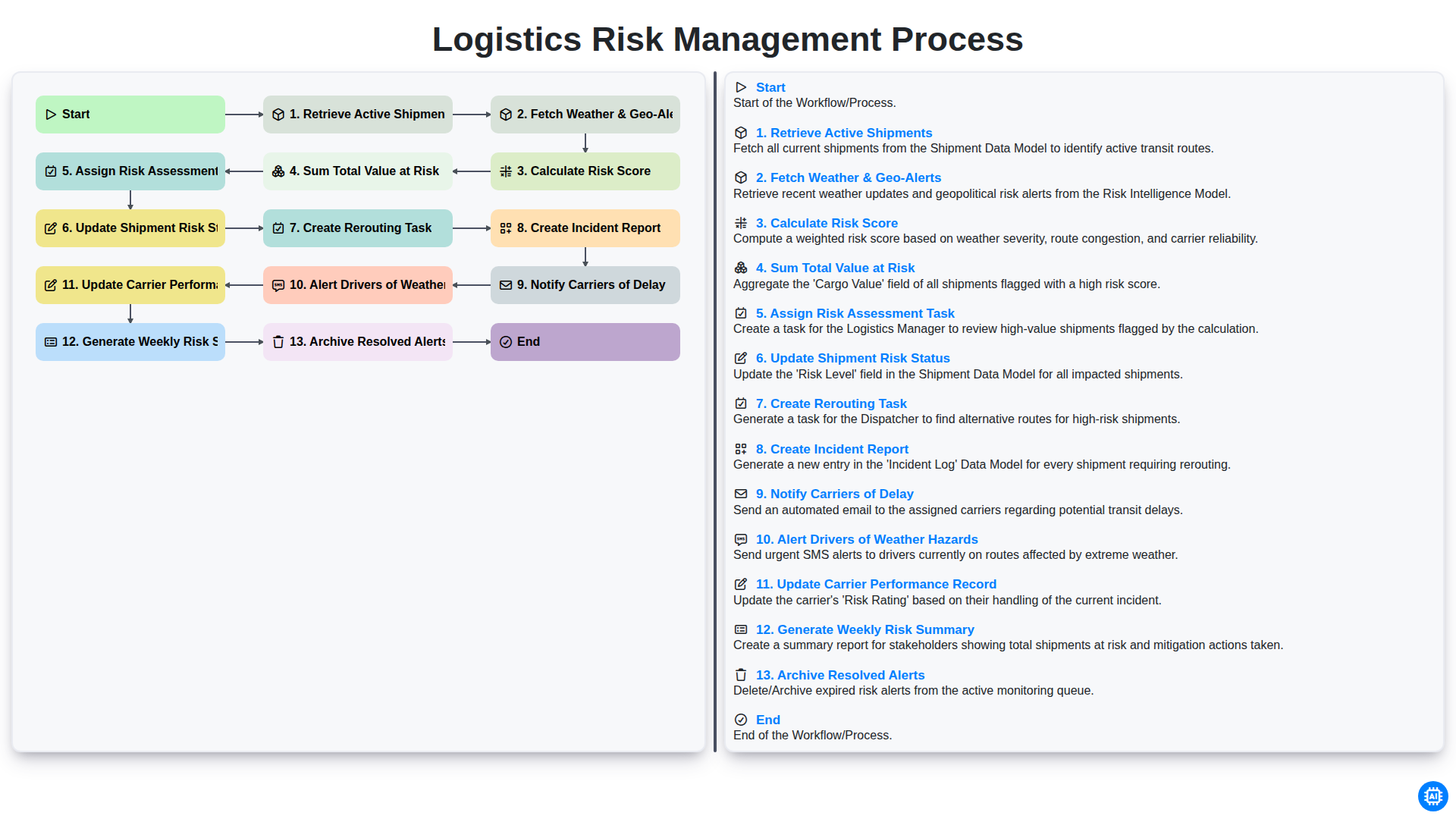
Logistics Risk Management Process
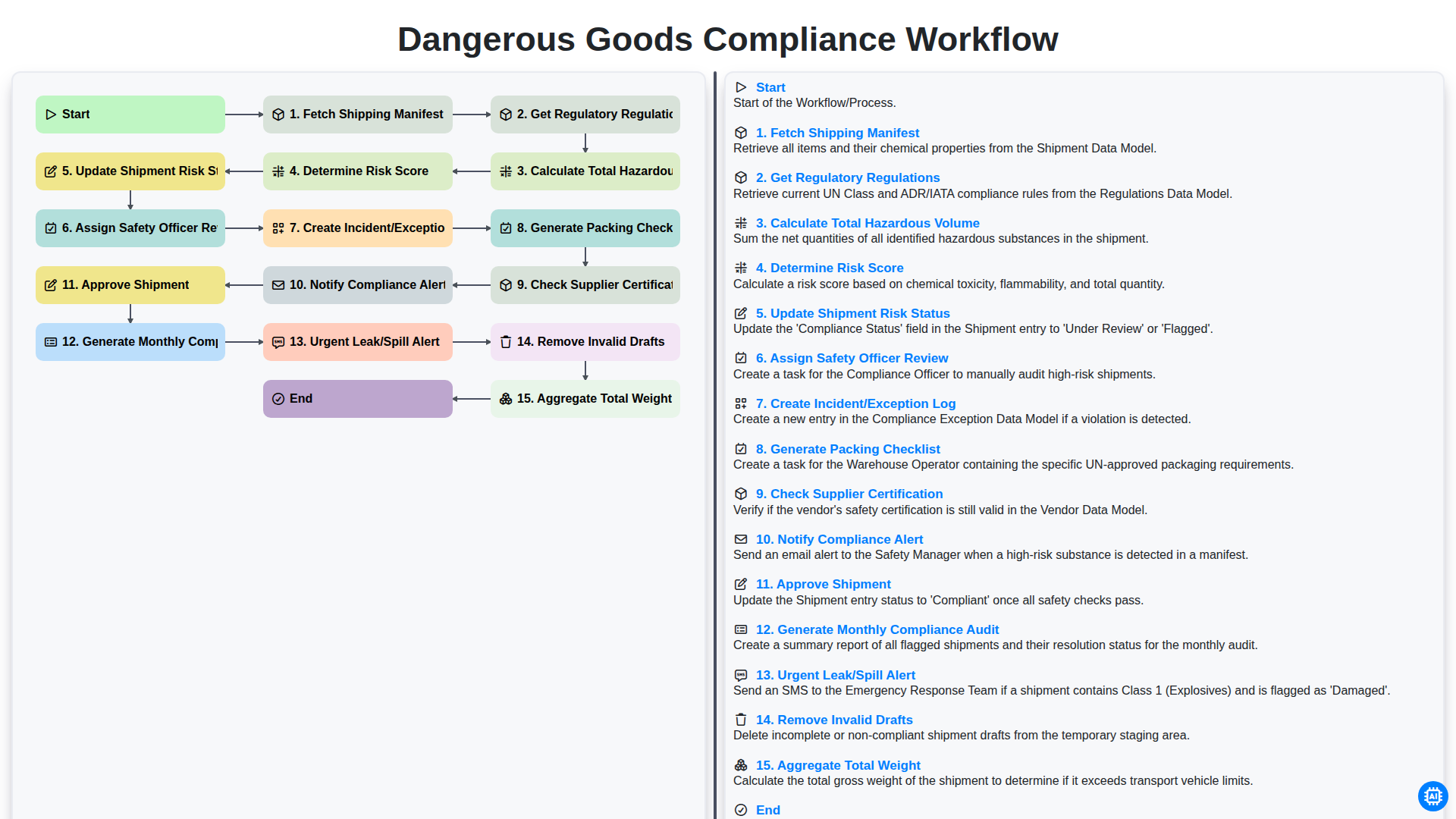
Dangerous Goods Compliance Workflow
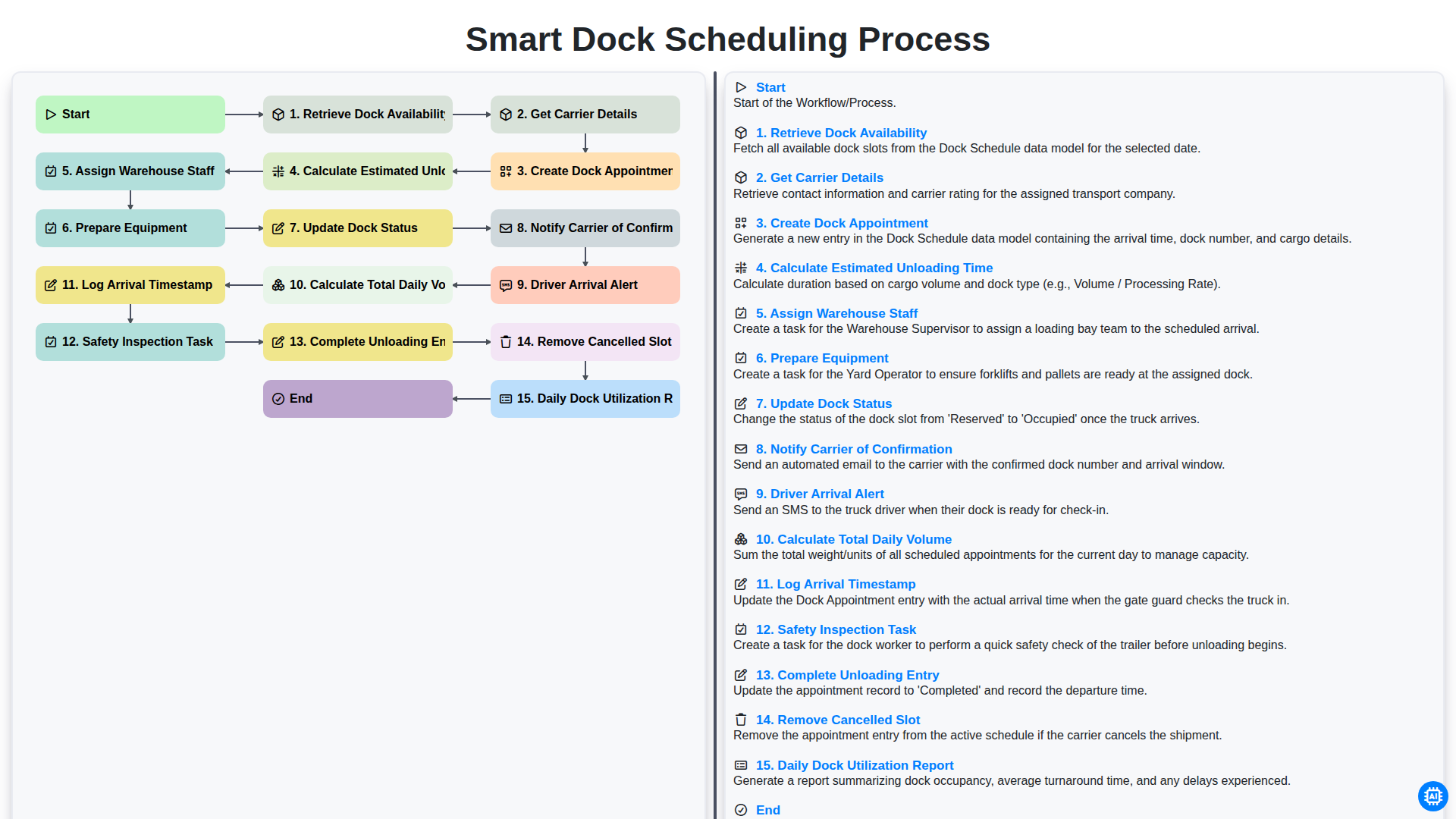
Smart Dock Scheduling Process
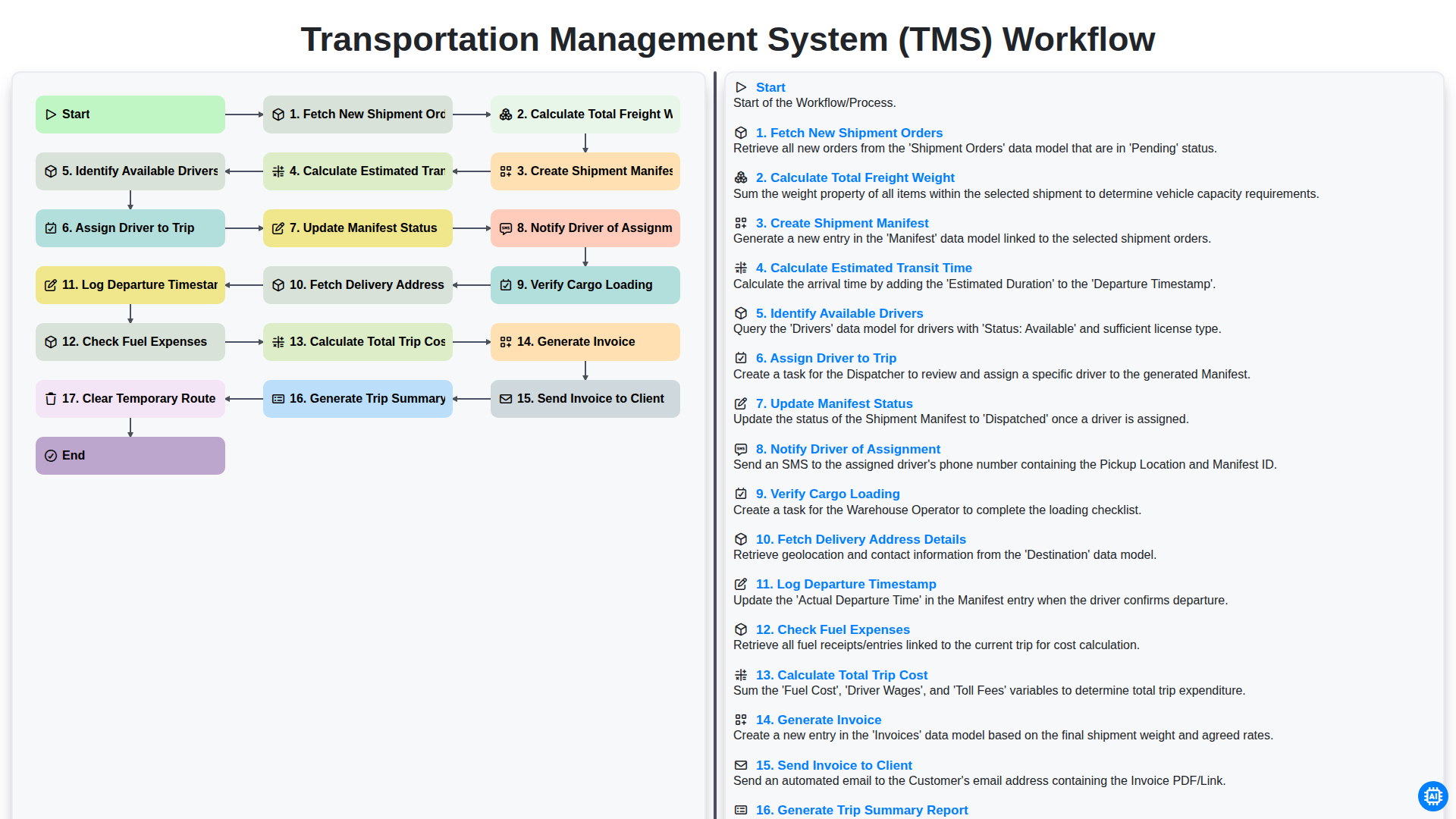
Transportation Management System (TMS) Workflow
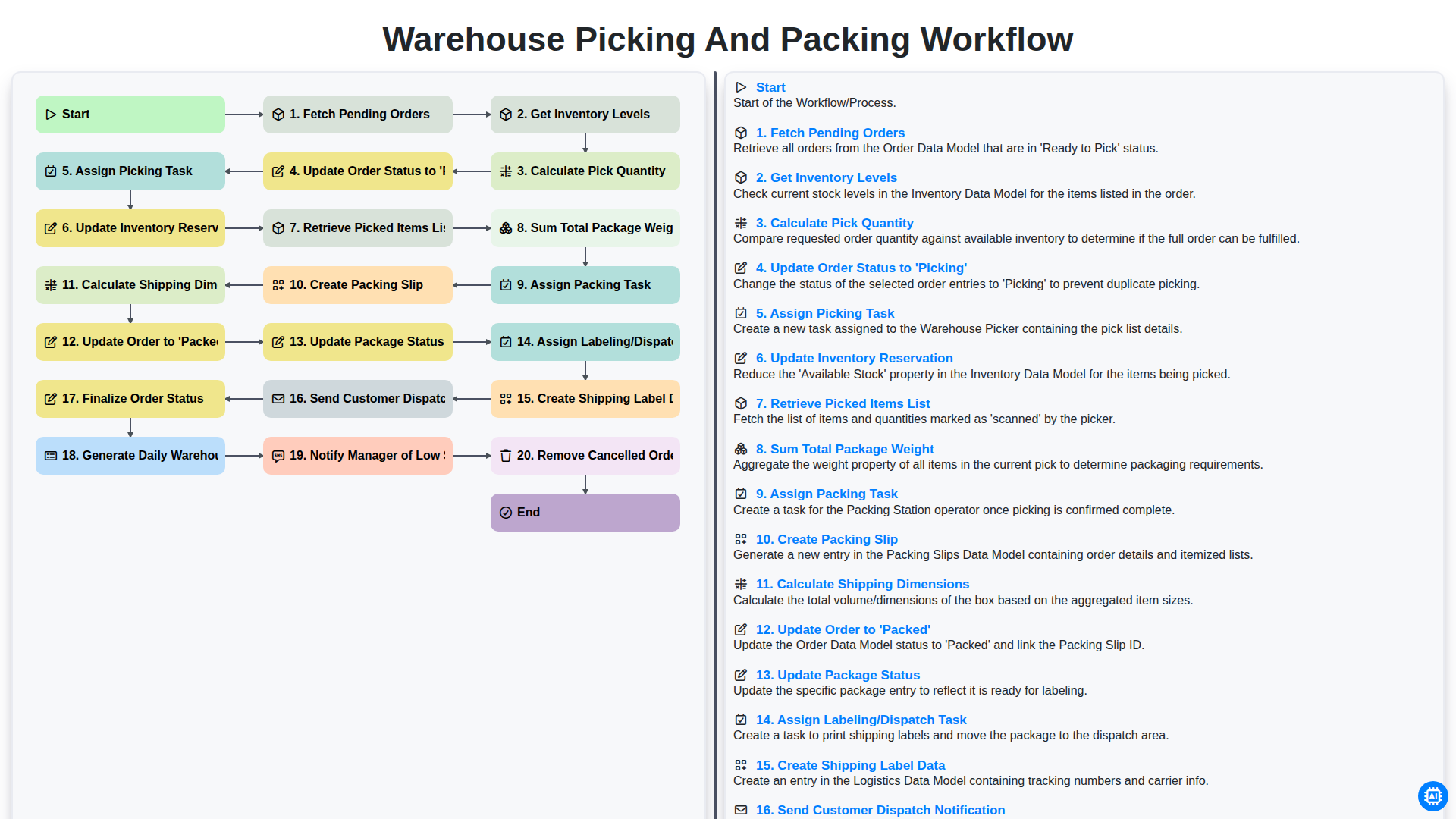
Warehouse Picking and Packing Workflow
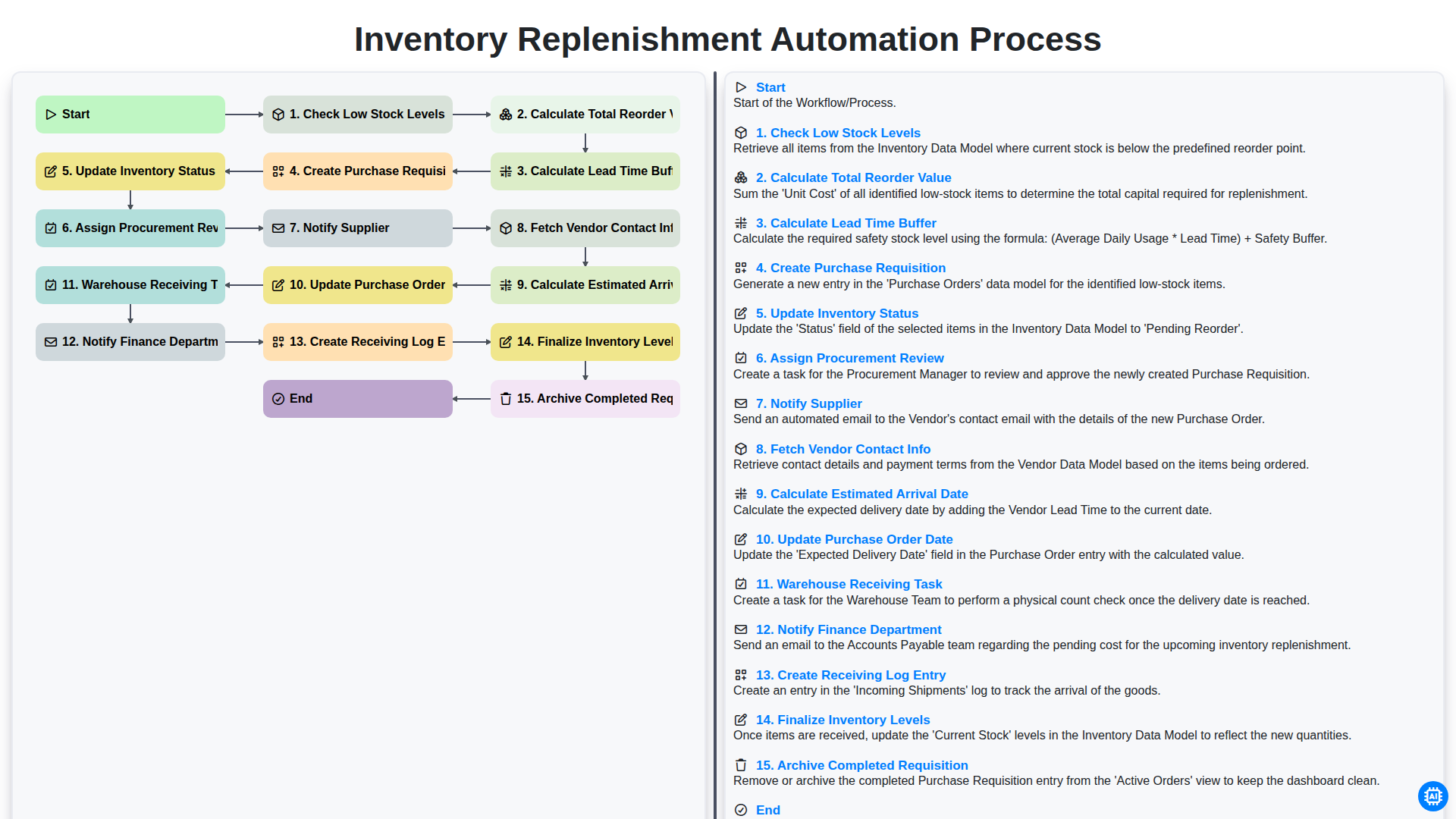
Inventory Replenishment Automation Process
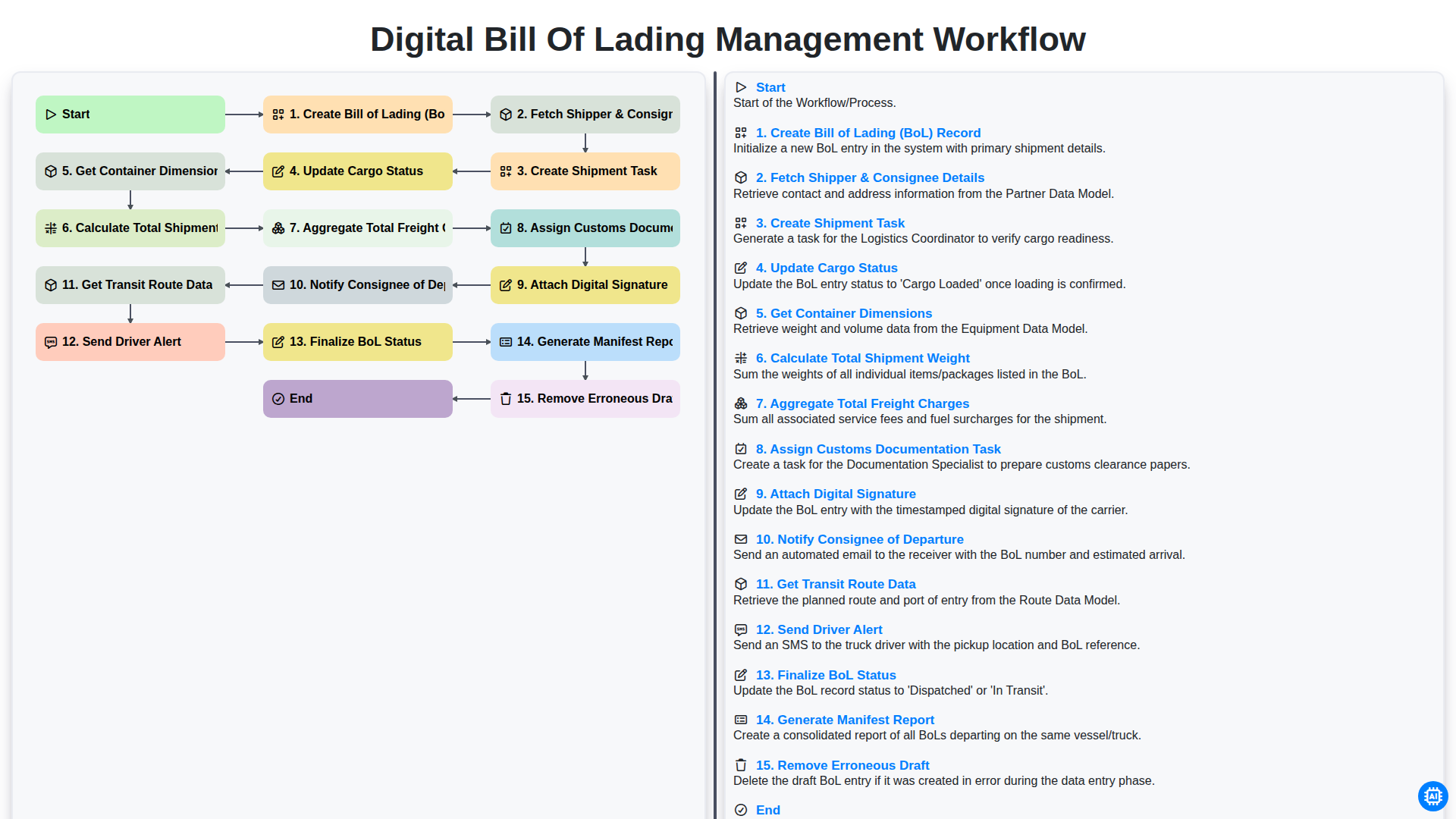
Digital Bill of Lading Management Workflow
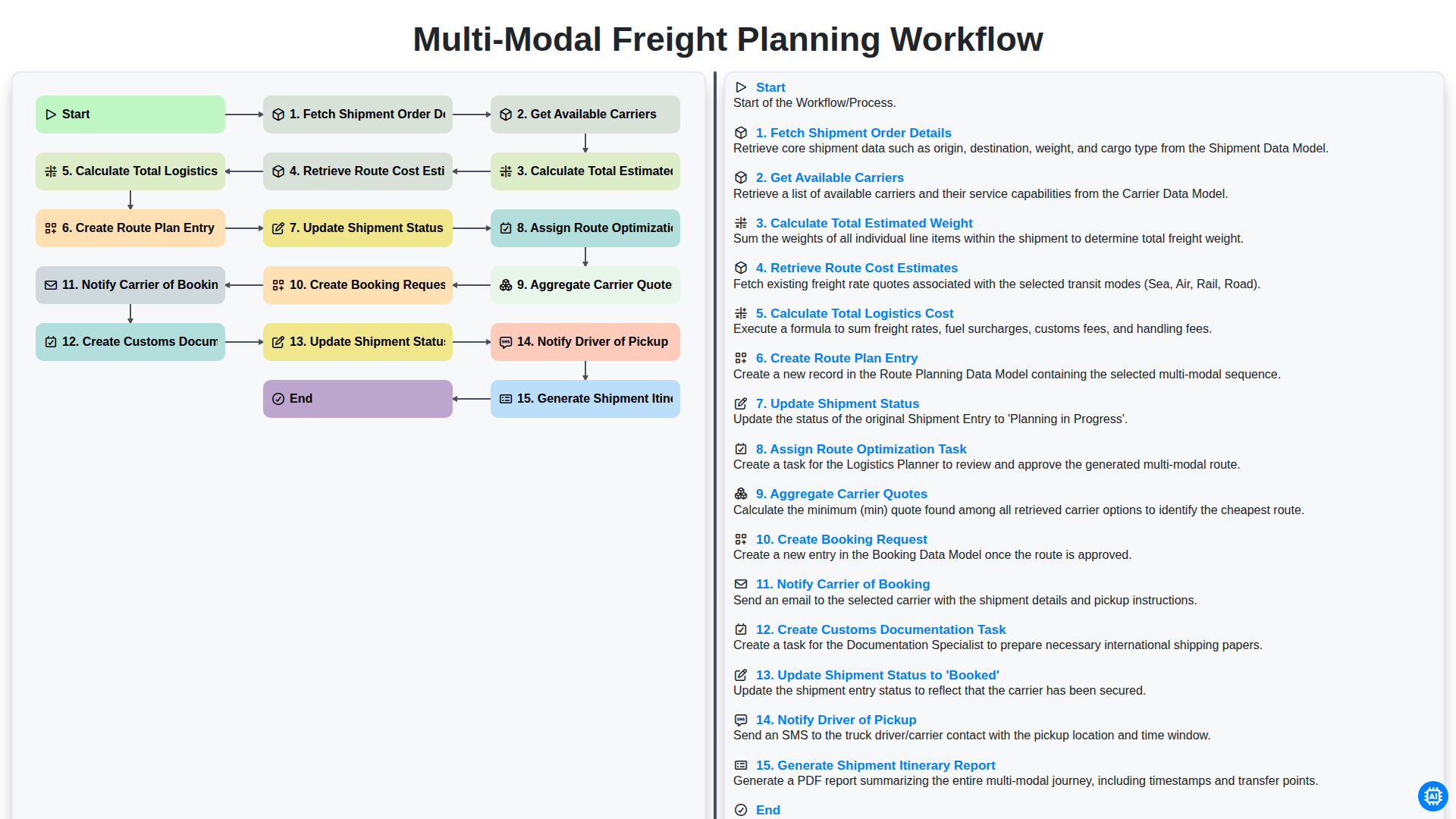
Multi-Modal Freight Planning Workflow
Nous pouvons le faire ensemble
Besoin d'aide avec les listes de contrôle?
Vous avez une question ? Nous sommes là pour vous aider. Veuillez soumettre votre demande et nous vous répondrons rapidement.