 ChecklistGuro
 MRO Inventory Control Workflow
Streamline your maintenance operations and eliminate costly downtime with our MRO Inventory Control Workflow. Master the art of precision part tracking, automated replenishment, and optimized stock levels to ensure critical spares are always available when you need them most. Optimize your maintenance management strategy today.
Ce modèle a été installé 5 fois.
Début
Début du flux de travail/processus.
1. Check Low Stock Levels
Retrieve all inventory entries where current stock is below the defined reorder point.
2. Calculate Total Reorder Value
Sum the estimated cost of all items identified for reordering to determine budget requirements.
3. Create Purchase Requisition
Create a new entry in the Purchase Requisition data model for approved low-stock items.
4. Assign Procurement Officer
Create a task for the Procurement Manager to review and approve the newly created requisition.
5. Update Requisition Status
Update the status of the Purchase Requisition entry to 'Approved' or 'Rejected' based on task outcome.
6. Calculate Lead Time Buffer
Calculate the new safety stock level by adding a buffer percentage to the existing reorder point.
7. Notify Vendor
Send an automated email to the supplier with the details of the approved Purchase Requisition.
8. Create Incoming Shipment Log
Create a placeholder entry in the Shipment Tracking model once the order is placed.
9. Warehouse Receiving Task
Create a task for the Warehouse Clerk to inspect and verify items upon physical arrival.
10. Update Inventory Levels
Increase the 'Quantity on Hand' in the Inventory data model after the shipment is verified.
11. Remove Obsolete Records
Delete or archive inventory entries that have been marked as 'Disposed' or 'Scrapped'.
12. Monthly Inventory Valuation Report
Generate a comprehensive report summarizing total stock value, turnover rate, and discrepancies.
13. Urgent Stock Alert
Send an SMS to the Warehouse Manager if a critical 'Part A' item hits zero stock.
14. Calculate Total Warehouse Value
Aggregate all entries in the Inventory model to calculate the total capital tied up in stock.
15. Identify Expired/Degraded Items
Retrieve items from the data model where the 'Expiry Date' or 'Condition Date' has passed.
Fin
Fin du flux de travail/processus.
Début du flux de travail/processus.
Retrieve all inventory entries where current stock is below the defined reorder point.
Sum the estimated cost of all items identified for reordering to determine budget requirements.
Create a new entry in the Purchase Requisition data model for approved low-stock items.
Create a task for the Procurement Manager to review and approve the newly created requisition.
Update the status of the Purchase Requisition entry to 'Approved' or 'Rejected' based on task outcome.
Calculate the new safety stock level by adding a buffer percentage to the existing reorder point.
Send an automated email to the supplier with the details of the approved Purchase Requisition.
Create a placeholder entry in the Shipment Tracking model once the order is placed.
Create a task for the Warehouse Clerk to inspect and verify items upon physical arrival.
Increase the 'Quantity on Hand' in the Inventory data model after the shipment is verified.
Delete or archive inventory entries that have been marked as 'Disposed' or 'Scrapped'.
Generate a comprehensive report summarizing total stock value, turnover rate, and discrepancies.
Send an SMS to the Warehouse Manager if a critical 'Part A' item hits zero stock.
Aggregate all entries in the Inventory model to calculate the total capital tied up in stock.
Retrieve items from the data model where the 'Expiry Date' or 'Condition Date' has passed.
Fin du flux de travail/processus.
Commentaires
Aucun commentaire n'a été publié pour le moment. Soyez le premier à en ajouter un !
Démonstration de la solution de gestion de la maintenance
Optimisez la disponibilité de vos équipements et réduisez vos coûts ! ChecklistGuro simplifie la planification de la maintenance, la gestion des bons de travail et le suivi des actifs. Prévenez les pannes, optimisez les performances et prolongez la durée de vie de vos équipements. Gérez tout cela avec notre système d'exploitation pour les tâches (Work OS).
Modèles de flux de travail associés
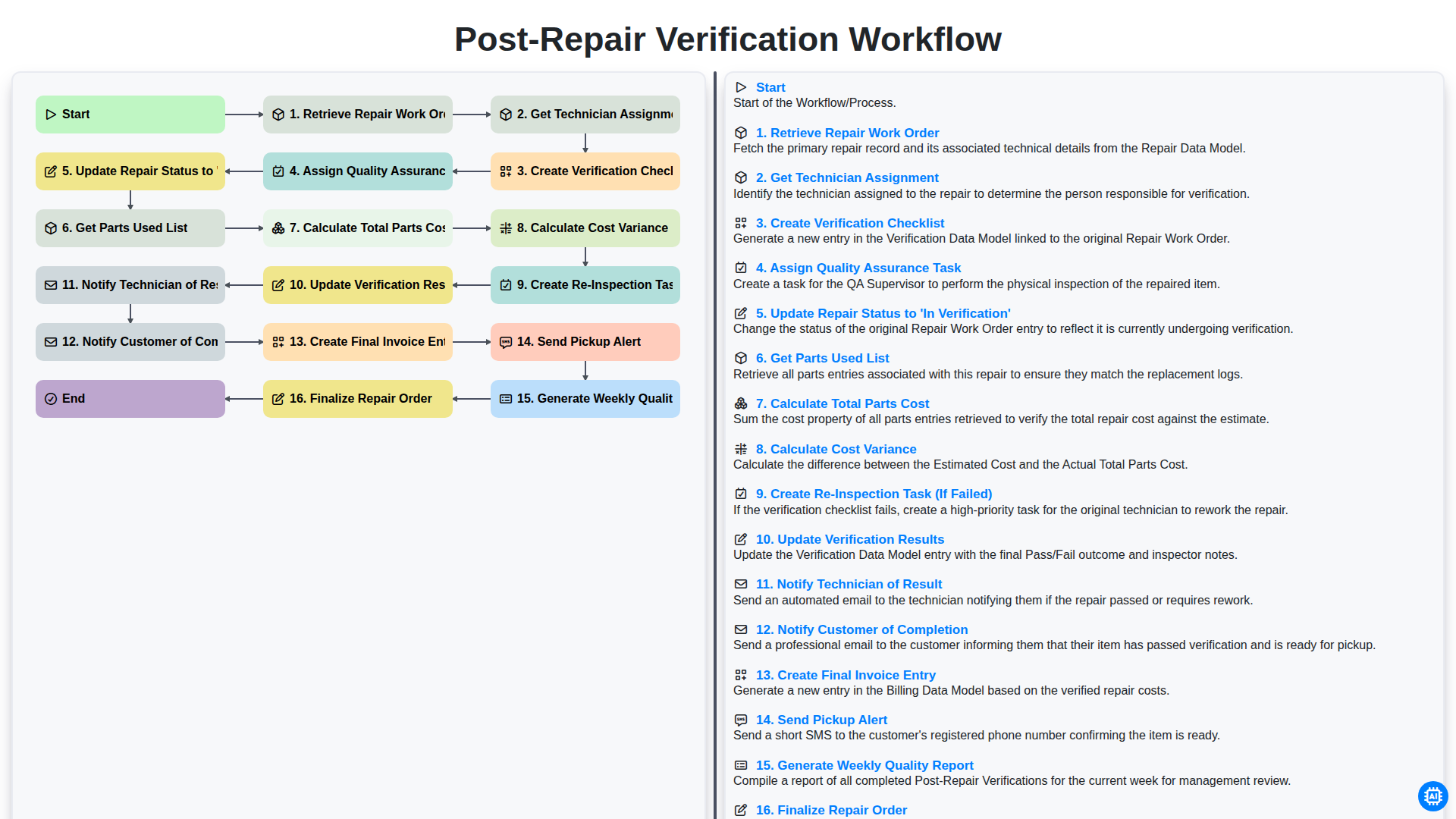
Post-Repair Verification Workflow
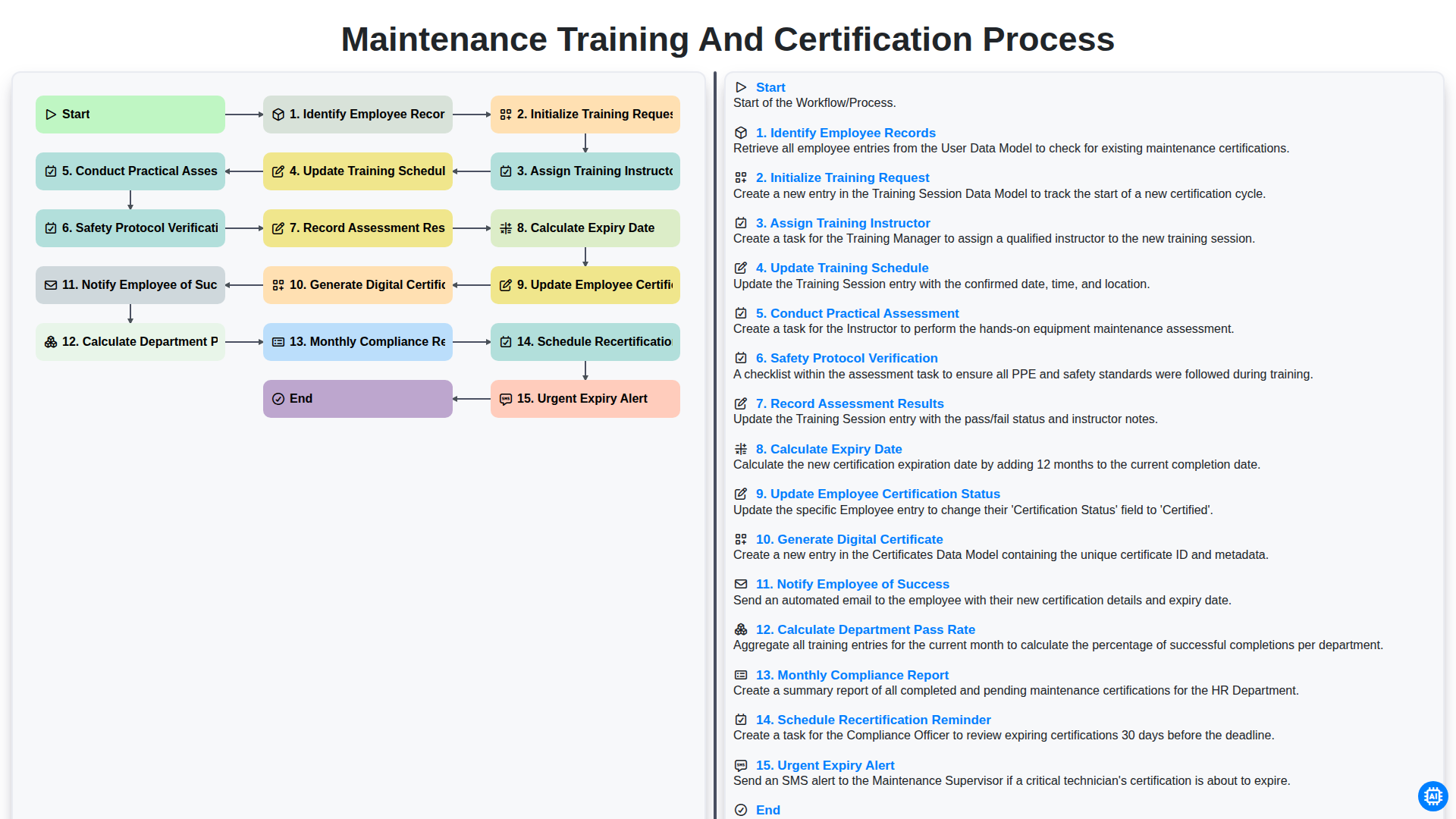
Maintenance Training and Certification Process
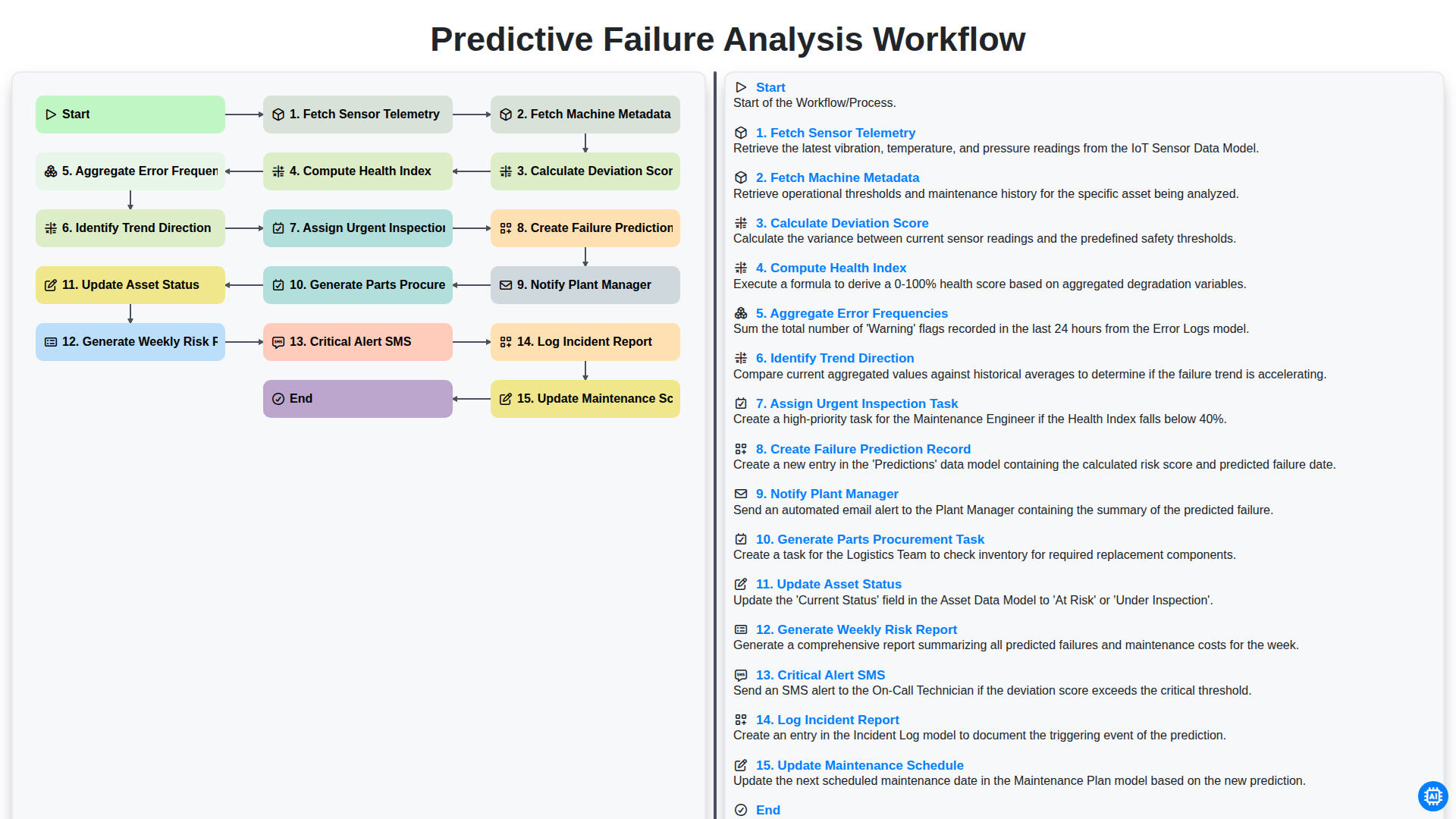
Predictive Failure Analysis Workflow
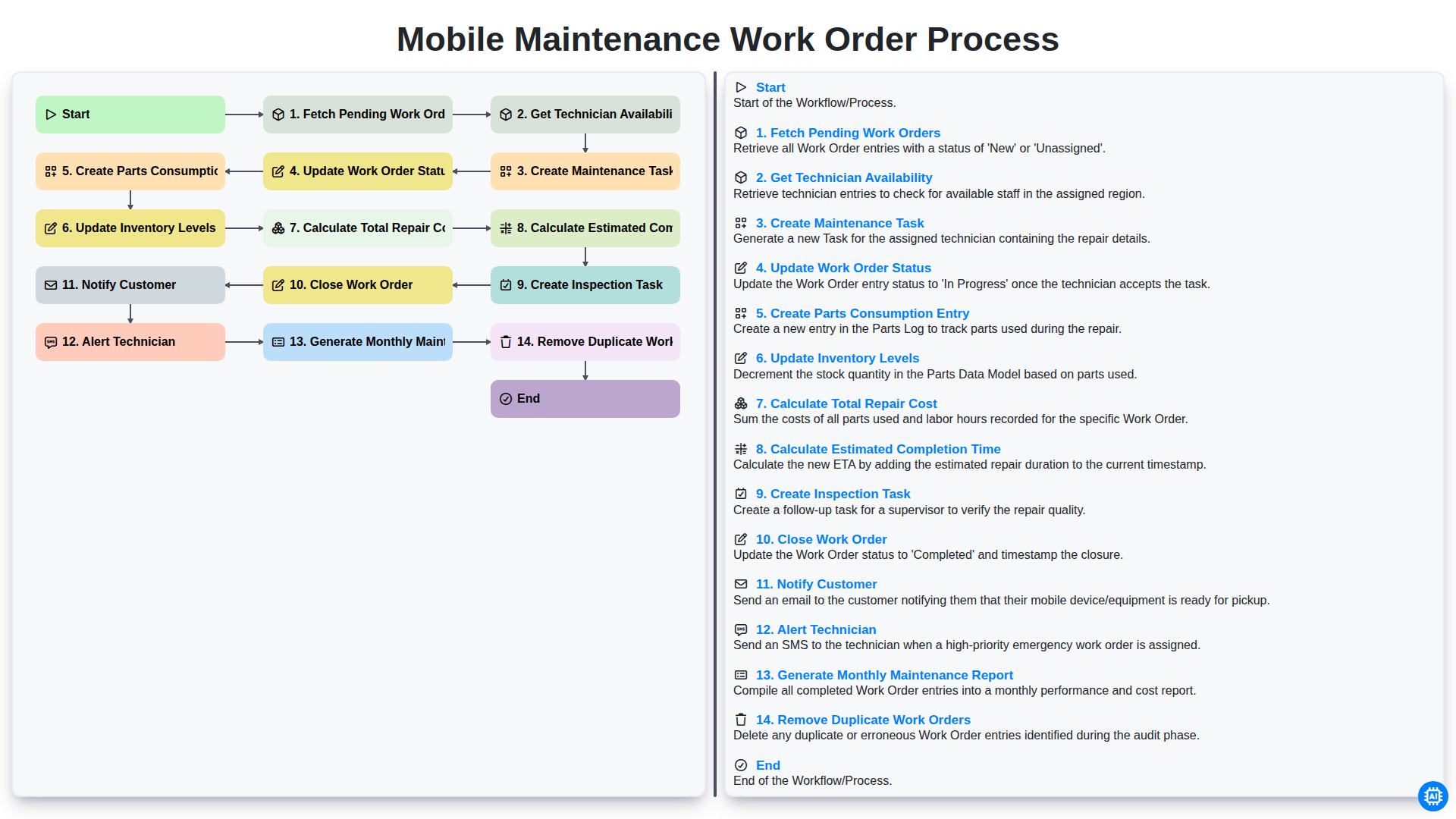
Mobile Maintenance Work Order Process
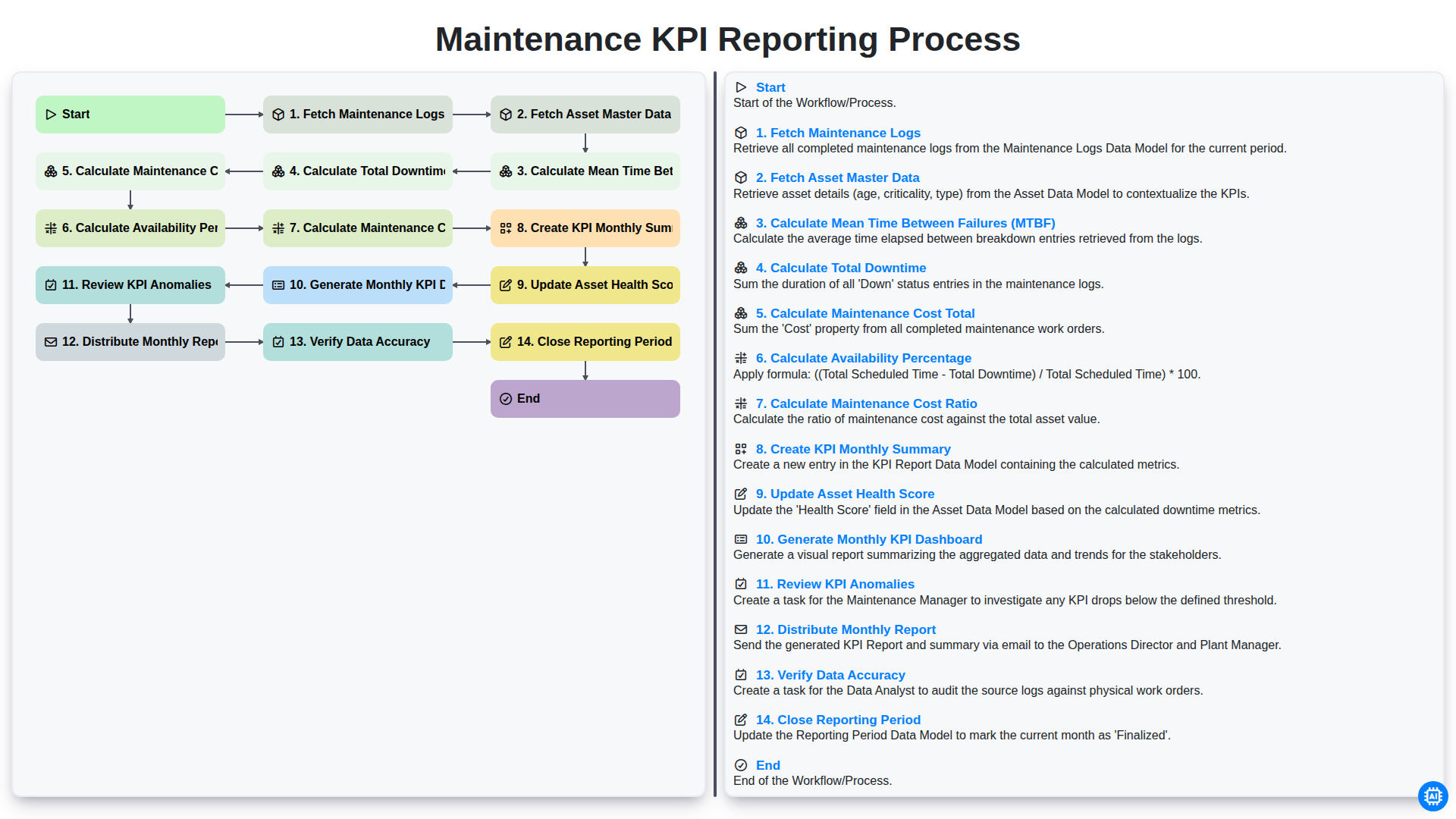
Maintenance KPI Reporting Process
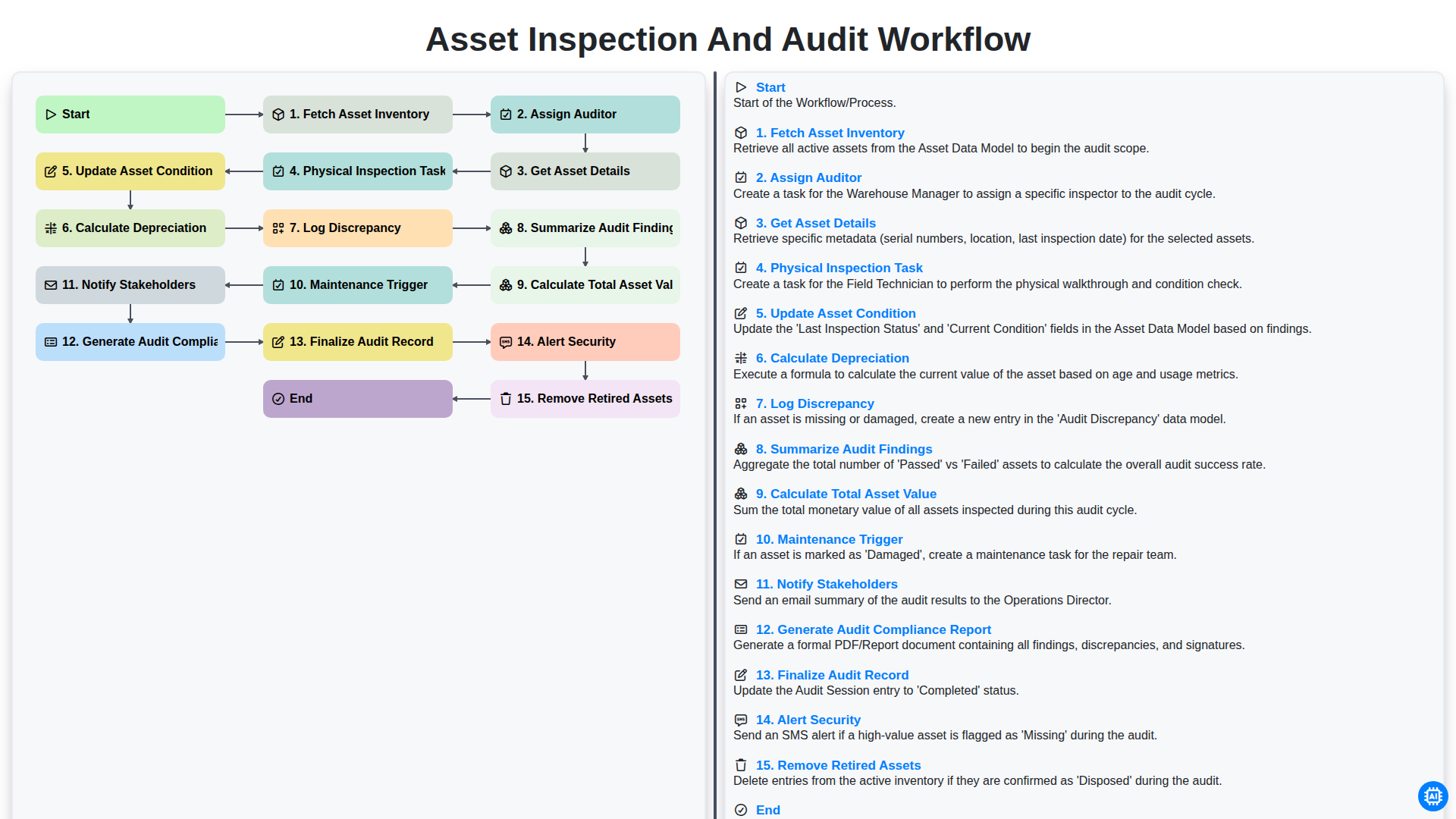
Asset Inspection and Audit Workflow
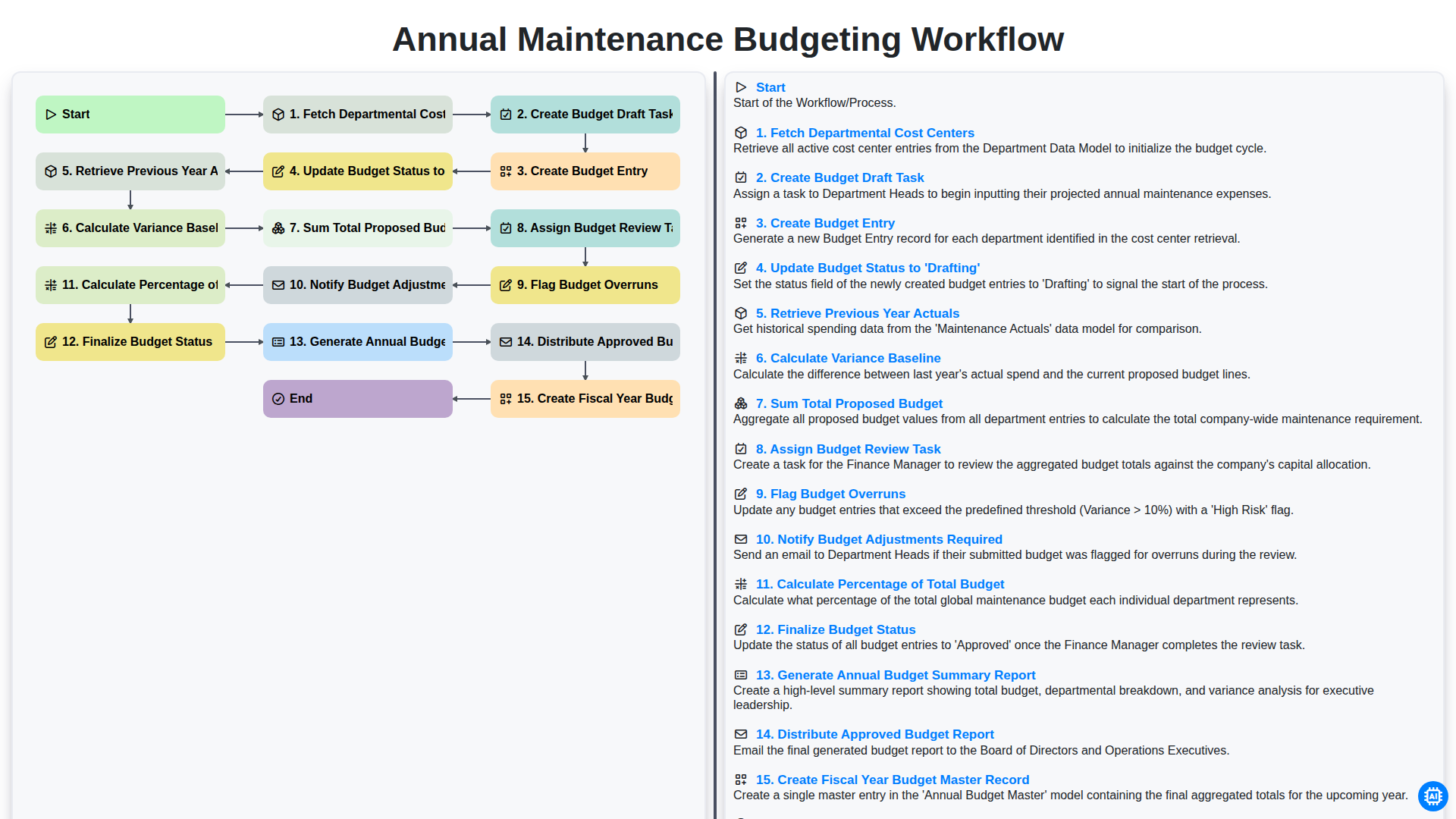
Annual Maintenance Budgeting Workflow
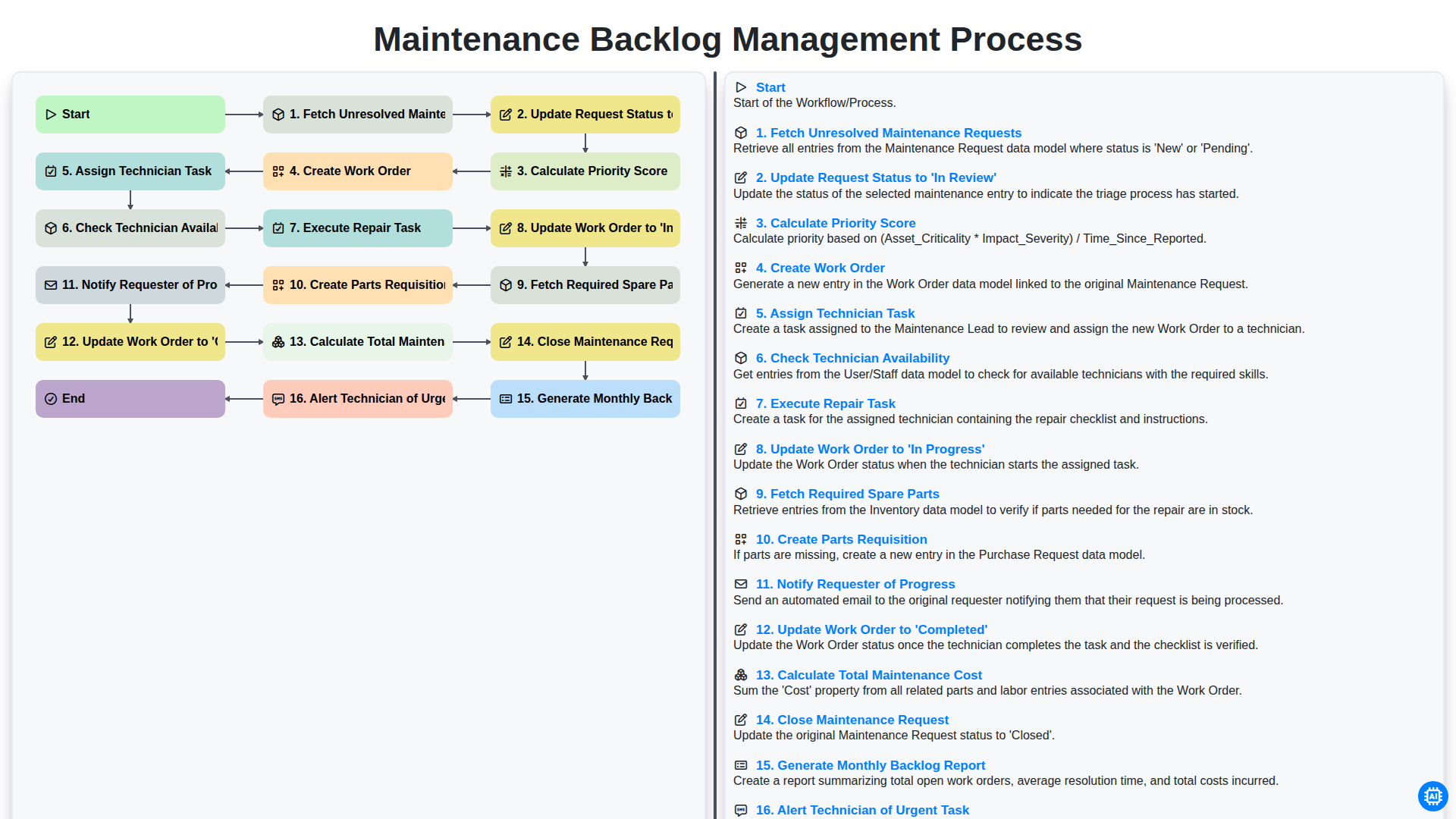
Maintenance Backlog Management Process
Nous pouvons le faire ensemble
Besoin d'aide avec les listes de contrôle?
Vous avez une question ? Nous sommes là pour vous aider. Veuillez soumettre votre demande et nous vous répondrons rapidement.