 ChecklistGuro
 Drug Safety Signal Detection Process
Streamline your pharmacovigilance operations with our comprehensive Drug Safety Signal Detection Process. Master the end-to-end workflow of identifying, validating, and evaluating potential safety signals to ensure regulatory compliance and proactive risk management. Optimize data mining, signal assessment, and clinical evaluation steps to enhance patient safety and accelerate regulatory reporting within the pharmaceutical lifecycle.
Ce modèle a été installé 5 fois.
Début
Début du flux de travail/processus.
1. Fetch Adverse Event Data
Retrieve all recent adverse event entries from the Pharmacovigilance Data Model for screening.
2. Aggregate Event Frequency
Calculate the total count and frequency of specific MedDRA terms across the retrieved dataset.
3. Calculate Disproportionality Index
Execute R-value or PRR (Proportional Reporting Ratio) calculations to identify statistical signals.
4. Create Potential Signal Record
Generate a new entry in the 'Signal Detection Log' for any case that exceeds the statistical threshold.
5. Assign Signal Validation Task
Create a task for a Drug Safety Physician to review the identified signal for clinical relevance.
6. Update Signal Status
Update the 'Signal Detection Log' entry to 'Under Review' once the validation task is assigned.
7. Fetch Safety Physician Assigned
Retrieve contact information and availability for the assigned Safety Physician from the User Data Model.
8. Notify Safety Committee
Send an email notification to the Safety Management Team regarding a newly detected potential signal.
9. Create Literature Review Task
Create a task for the Medical Writing team to perform a targeted literature search on the signal.
10. Retrieve Literature Findings
Pull data entries from the 'Literature Review' data model to assess evidence strength.
11. Determine Signal Strength Score
Calculate a weighted score based on literature evidence, clinical importance, and statistical significance.
12. Update Signal Assessment
Update the 'Signal Detection Log' with the final assessment decision (e.g., Validated, Non-Signal, or Follow-up Required).
13. Generate Signal Assessment Report
Create a formal PDF/Document report summarizing the signal detection process, data, and conclusion.
14. Notify Regulatory Affairs
Send an email to the Regulatory Affairs department if the signal is validated and requires potential labeling changes.
15. Clean up Transient Screening Data
Delete temporary screening calculation entries from the system to maintain data hygiene after process completion.
Fin
Fin du flux de travail/processus.
Début du flux de travail/processus.
Retrieve all recent adverse event entries from the Pharmacovigilance Data Model for screening.
Calculate the total count and frequency of specific MedDRA terms across the retrieved dataset.
Execute R-value or PRR (Proportional Reporting Ratio) calculations to identify statistical signals.
Generate a new entry in the 'Signal Detection Log' for any case that exceeds the statistical threshold.
Create a task for a Drug Safety Physician to review the identified signal for clinical relevance.
Update the 'Signal Detection Log' entry to 'Under Review' once the validation task is assigned.
Retrieve contact information and availability for the assigned Safety Physician from the User Data Model.
Send an email notification to the Safety Management Team regarding a newly detected potential signal.
Create a task for the Medical Writing team to perform a targeted literature search on the signal.
Pull data entries from the 'Literature Review' data model to assess evidence strength.
Calculate a weighted score based on literature evidence, clinical importance, and statistical significance.
Update the 'Signal Detection Log' with the final assessment decision (e.g., Validated, Non-Signal, or Follow-up Required).
Create a formal PDF/Document report summarizing the signal detection process, data, and conclusion.
Send an email to the Regulatory Affairs department if the signal is validated and requires potential labeling changes.
Delete temporary screening calculation entries from the system to maintain data hygiene after process completion.
Fin du flux de travail/processus.
Commentaires
Aucun commentaire n'a été publié pour le moment. Soyez le premier à en ajouter un !
Démonstration de la solution de gestion de l'industrie pharmaceutique
Naviguer dans des réglementations complexes et assurer la qualité dans la fabrication pharmaceutique ? La plateforme Work OS de ChecklistGuro rationalise les processus, de la recherche et du développement à la production, à l'emballage et à la distribution. Maintenez la conformité, améliorez l'efficacité et réduisez les risques. Découvrez comment ChecklistGuro peut transformer vos opérations pharmaceutiques !
Modèles de flux de travail associés
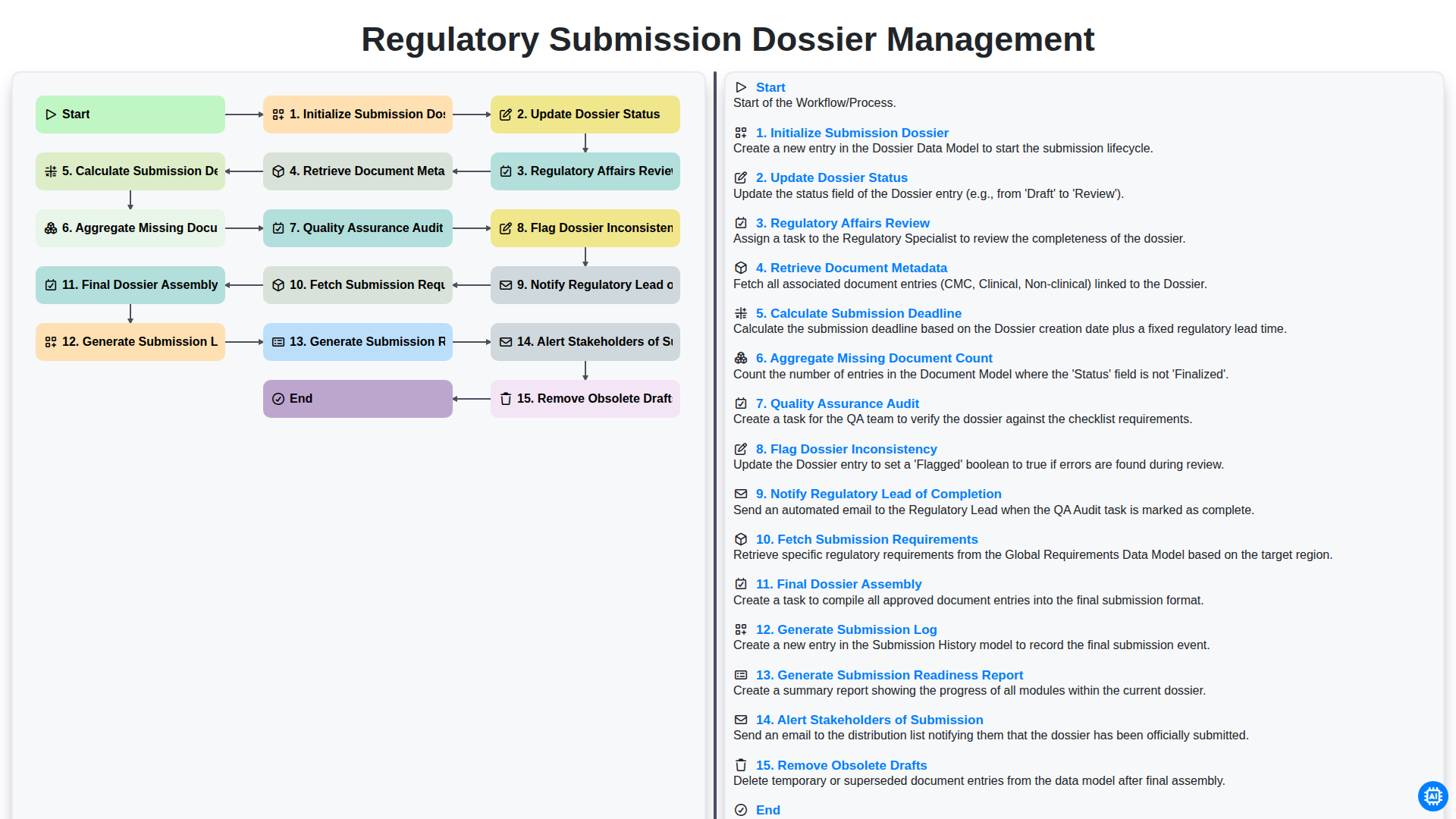
Regulatory Submission Dossier Management
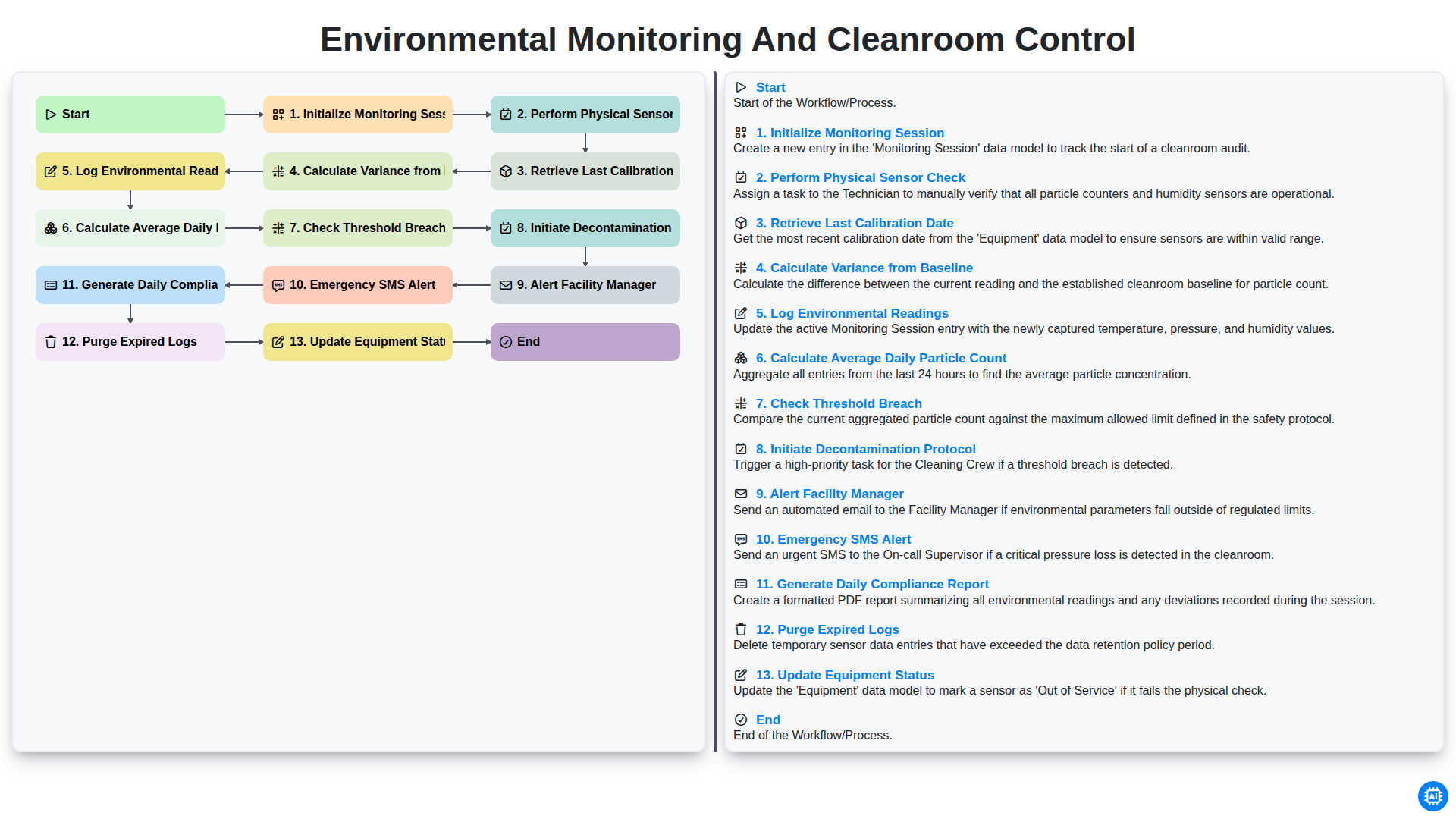
Environmental Monitoring and Cleanroom Control
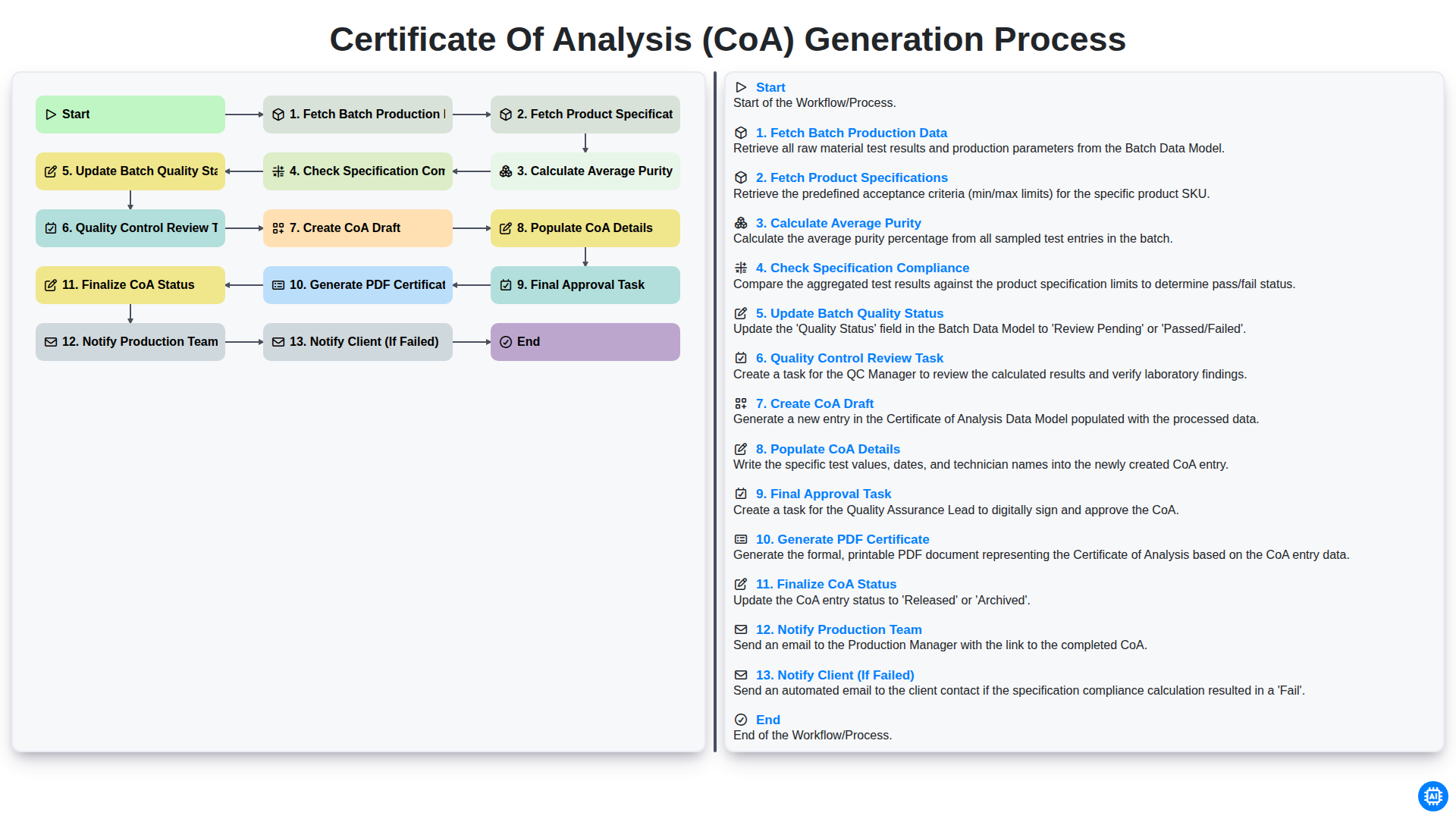
Certificate of Analysis (CoA) Generation Process
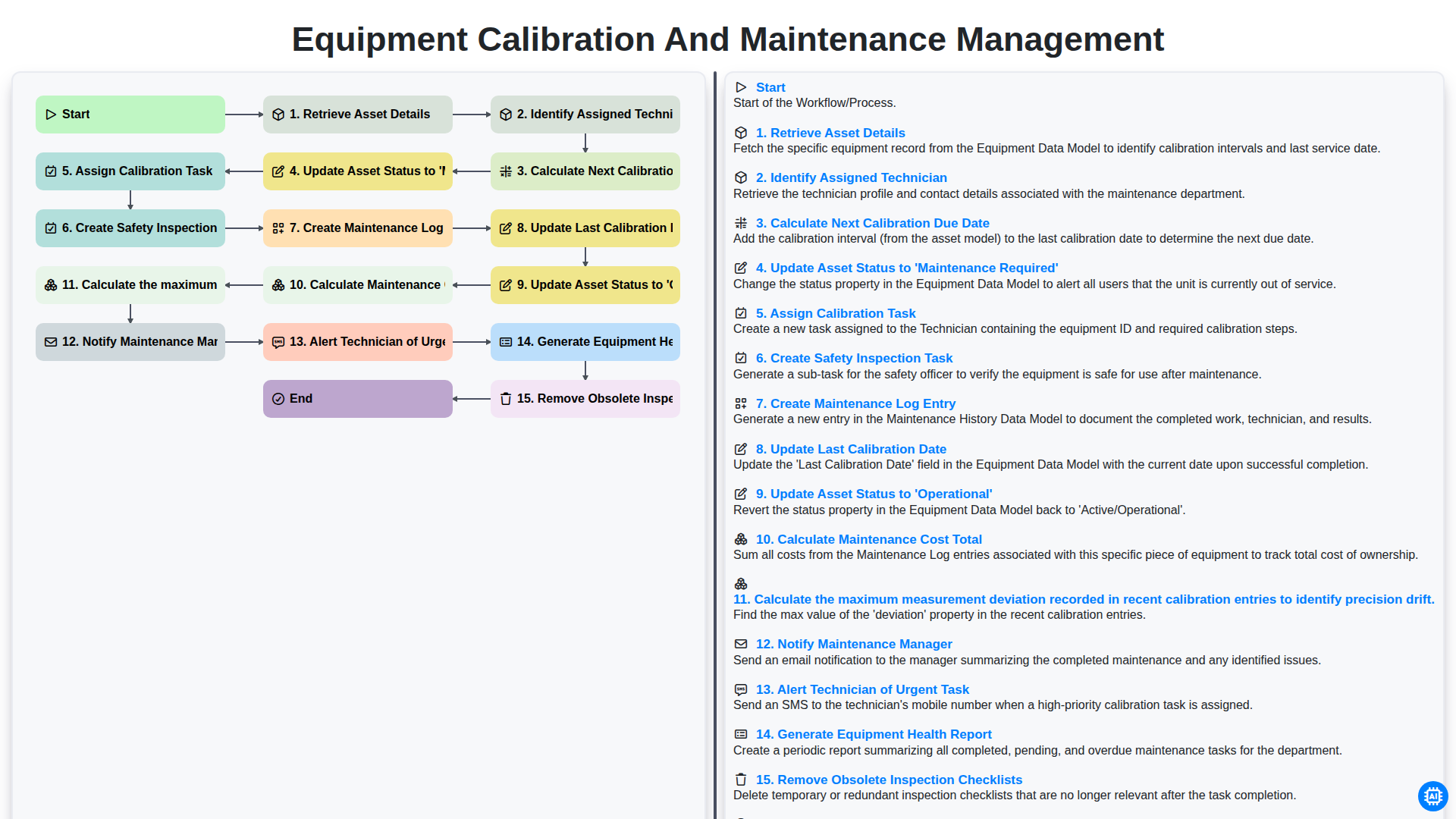
Equipment Calibration and Maintenance Management
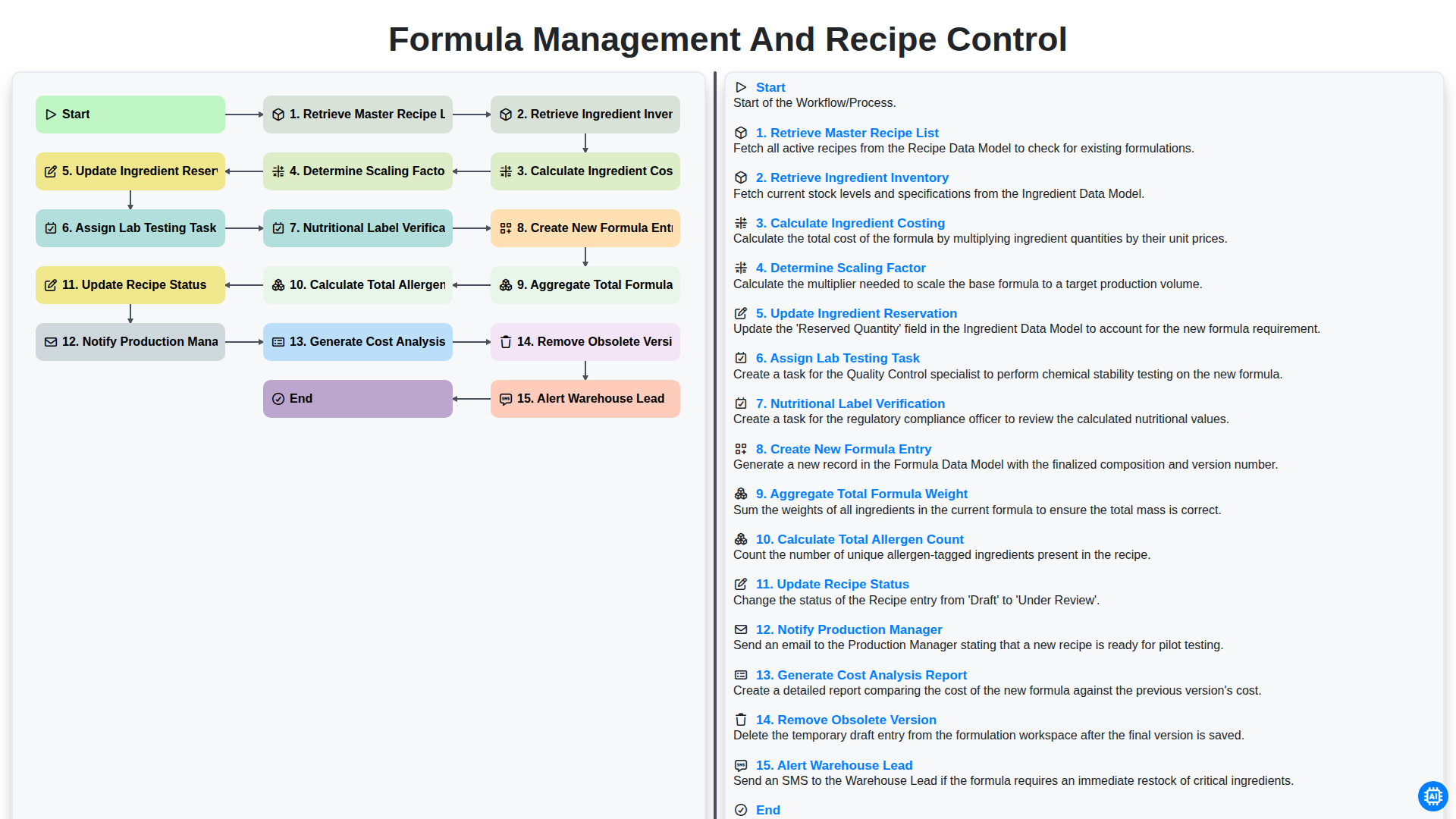
Formula Management and Recipe Control
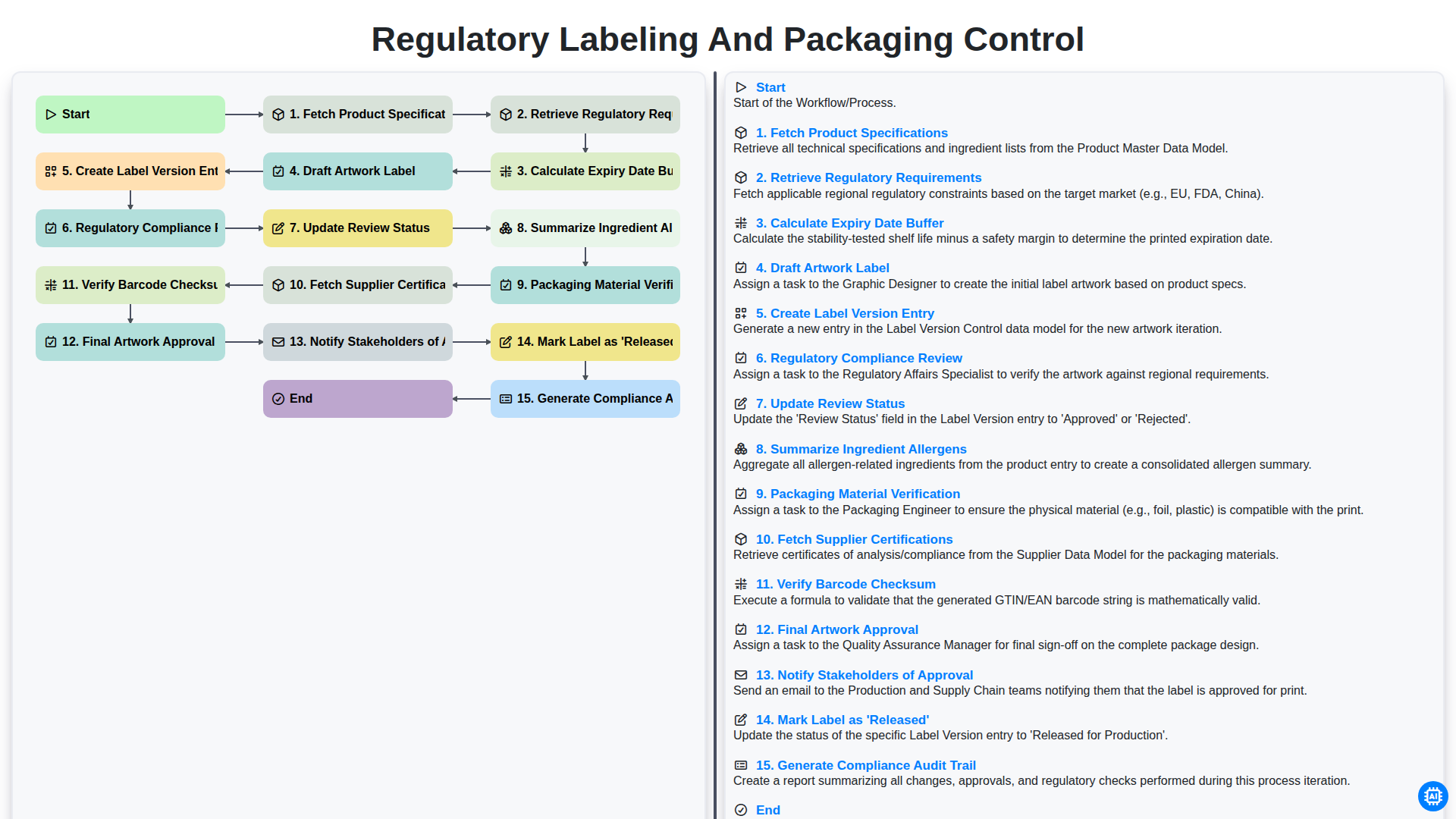
Regulatory Labeling and Packaging Control
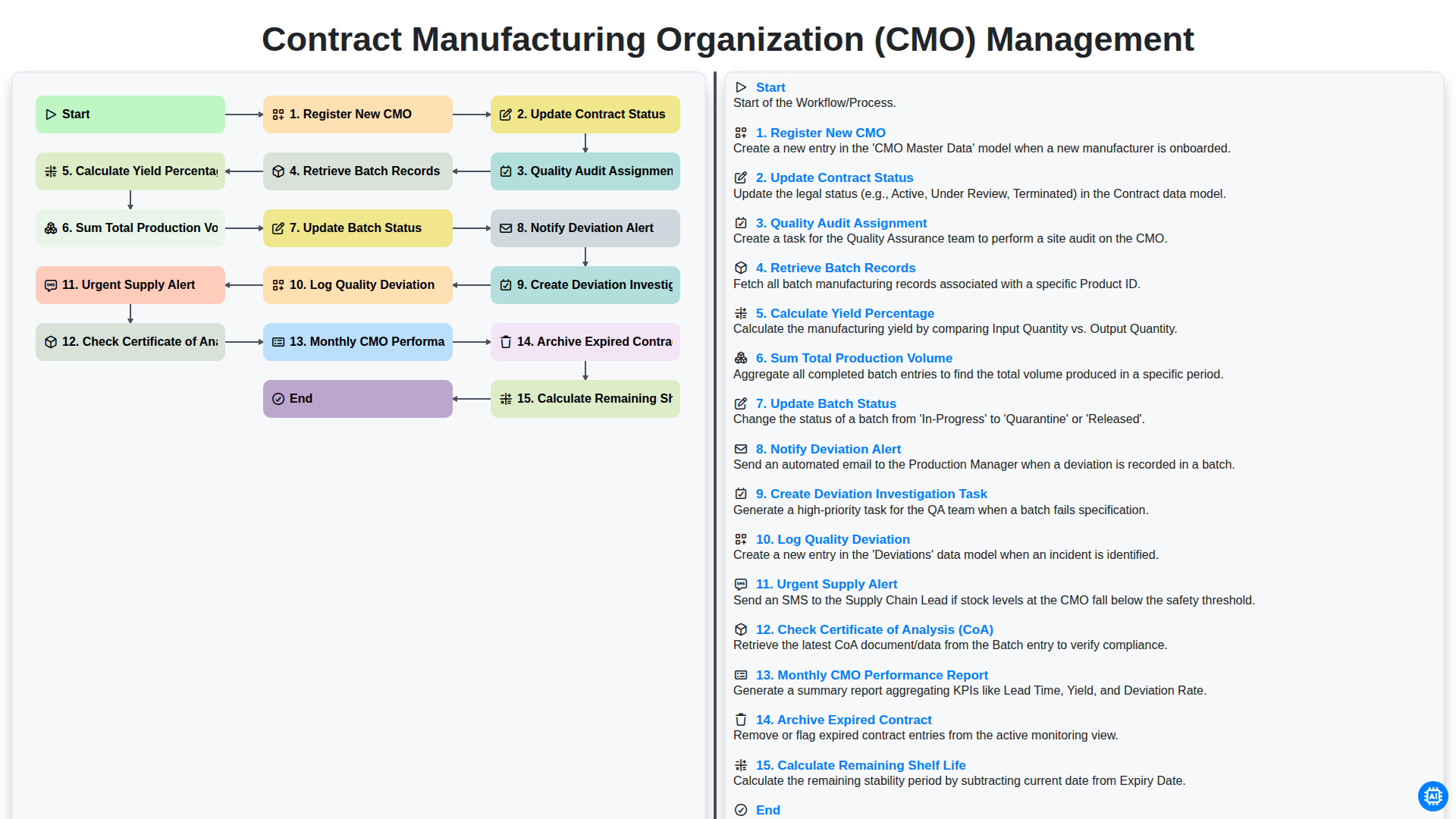
Contract Manufacturing Organization (CMO) Management
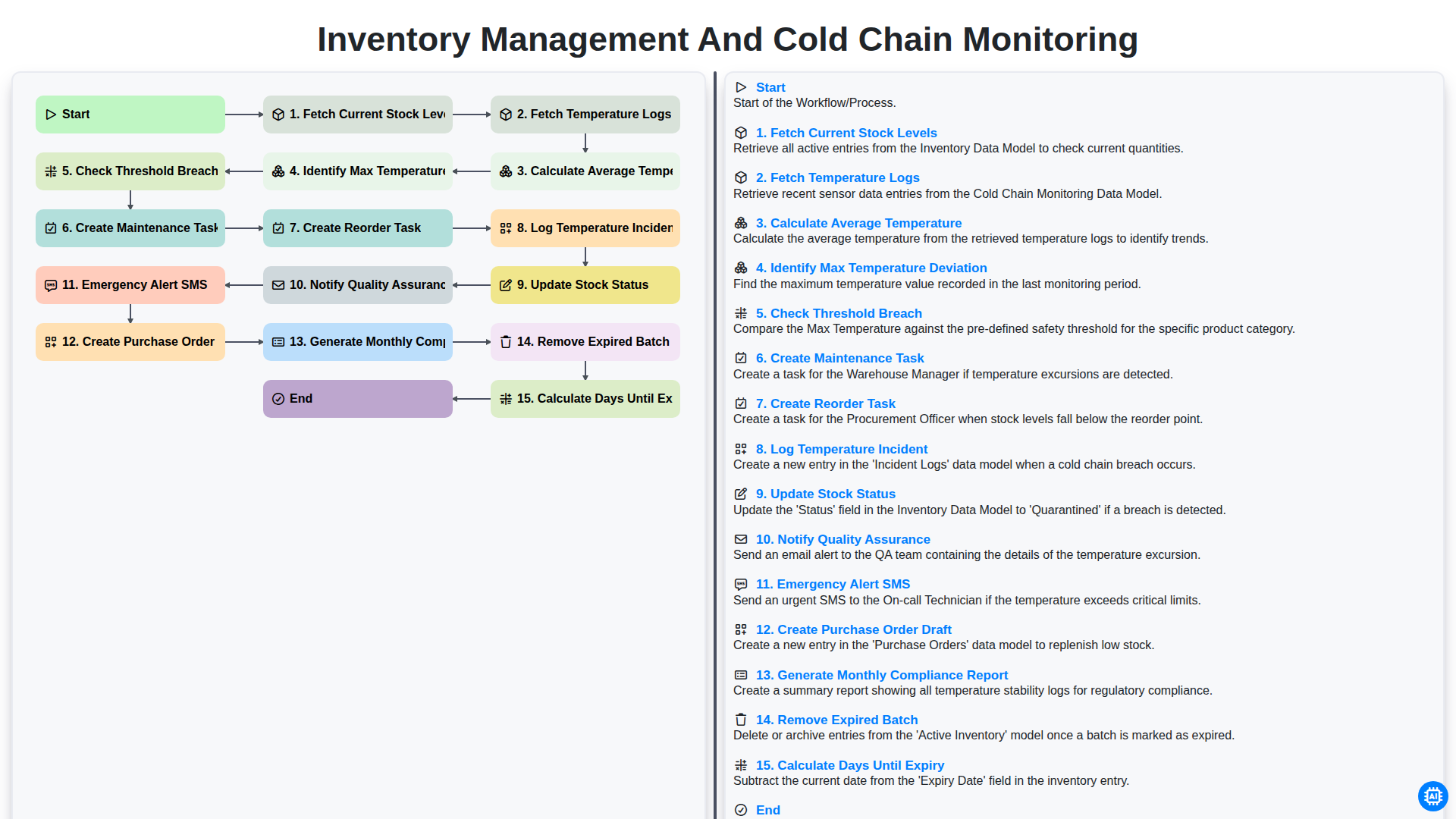
Inventory Management and Cold Chain Monitoring
Nous pouvons le faire ensemble
Besoin d'aide avec les listes de contrôle?
Vous avez une question ? Nous sommes là pour vous aider. Veuillez soumettre votre demande et nous vous répondrons rapidement.