 ChecklistGuro
 Pharmacovigilance and Adverse Event Reporting
Streamline your drug safety monitoring with our specialized Pharmacovigilance and Adverse Event Reporting workflow. Ensure global regulatory compliance, accelerate signal detection, and master end-to-end case management with a standardized, audit-ready process designed to enhance patient safety and mitigate pharmaceutical risk.
Ce modèle a été installé 5 fois.
Début
Début du flux de travail/processus.
1. Initialize Adverse Event Case
Create a new entry in the Adverse Event Data Model to capture initial intake details.
2. Fetch Reporter Information
Retrieve existing contact details from the Reporter Data Model using the provided identifier.
3. Update Case Seriousness
Update the current Case entry with updated seriousness criteria based on medical assessment.
4. Calculate Regulatory Deadline
Calculate the submission deadline by adding 7 or 15 days to the 'Date of Receipt' based on seriousness.
5. Assign Medical Reviewer
Create a task for a Medical Doctor to perform a causality assessment of the event.
6. Mandatory Data Completeness Check
Verify presence of 4 minimum criteria: Patient, Reporter, Event, and Product.
7. Retrieve Product Safety Profile
Get existing safety data from the Product Data Model to check for known signals.
8. Aggregate Weekly AE Volume
Sum the total number of new Adverse Event entries created in the last 7 days for trend analysis.
9. Quality Control Review
Create a task for the QA specialist to verify the accuracy of the coded MedDRA terms.
10. Notify Regulatory Authorities
Send an automated email to the relevant Health Authority (e.g., FDA/EMA) with the case summary.
11. Alert Safety Physician
Send an urgent email alert to the Safety Physician if a 'Serious' event is identified.
12. Generate E2B XML Report
Create a standardized regulatory-compliant report formatted for electronic submission.
13. Close Adverse Event Case
Update the status of the Case entry to 'Closed' and timestamp the closure date.
14. Follow-up Task Generation
Create a follow-up task if the initial case entry is missing critical clinical information.
15. Monthly Signal Detection Report
Create a monthly summary report aggregating all processed cases for the Safety Management Committee.
Fin
Fin du flux de travail/processus.
Début du flux de travail/processus.
Create a new entry in the Adverse Event Data Model to capture initial intake details.
Retrieve existing contact details from the Reporter Data Model using the provided identifier.
Update the current Case entry with updated seriousness criteria based on medical assessment.
Calculate the submission deadline by adding 7 or 15 days to the 'Date of Receipt' based on seriousness.
Create a task for a Medical Doctor to perform a causality assessment of the event.
Verify presence of 4 minimum criteria: Patient, Reporter, Event, and Product.
Get existing safety data from the Product Data Model to check for known signals.
Sum the total number of new Adverse Event entries created in the last 7 days for trend analysis.
Create a task for the QA specialist to verify the accuracy of the coded MedDRA terms.
Send an automated email to the relevant Health Authority (e.g., FDA/EMA) with the case summary.
Send an urgent email alert to the Safety Physician if a 'Serious' event is identified.
Create a standardized regulatory-compliant report formatted for electronic submission.
Update the status of the Case entry to 'Closed' and timestamp the closure date.
Create a follow-up task if the initial case entry is missing critical clinical information.
Create a monthly summary report aggregating all processed cases for the Safety Management Committee.
Fin du flux de travail/processus.
Commentaires
Aucun commentaire n'a été publié pour le moment. Soyez le premier à en ajouter un !
Démonstration de la solution de gestion de l'industrie pharmaceutique
Naviguer dans des réglementations complexes et assurer la qualité dans la fabrication pharmaceutique ? La plateforme Work OS de ChecklistGuro rationalise les processus, de la recherche et du développement à la production, à l'emballage et à la distribution. Maintenez la conformité, améliorez l'efficacité et réduisez les risques. Découvrez comment ChecklistGuro peut transformer vos opérations pharmaceutiques !
Modèles de flux de travail associés
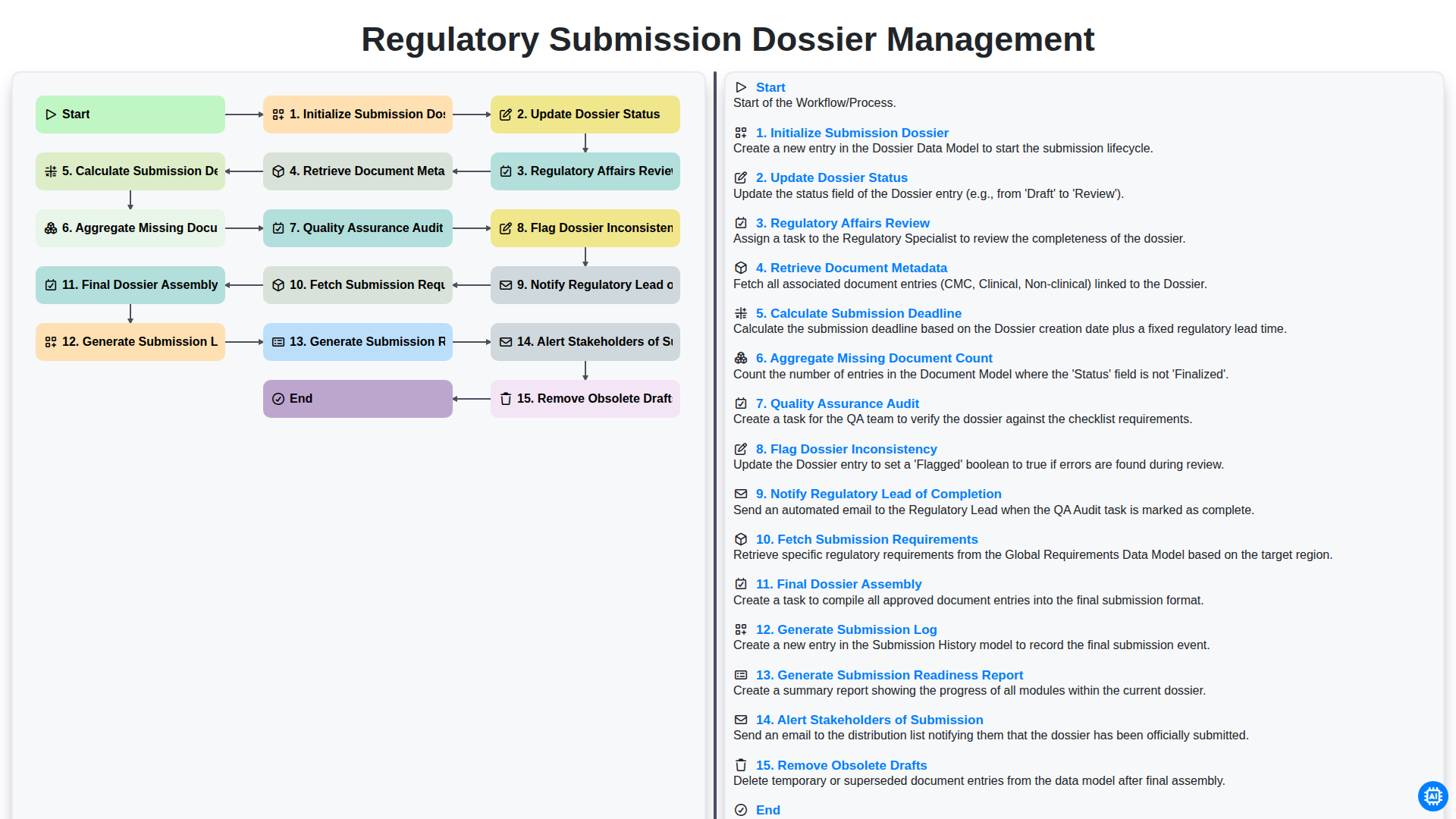
Regulatory Submission Dossier Management
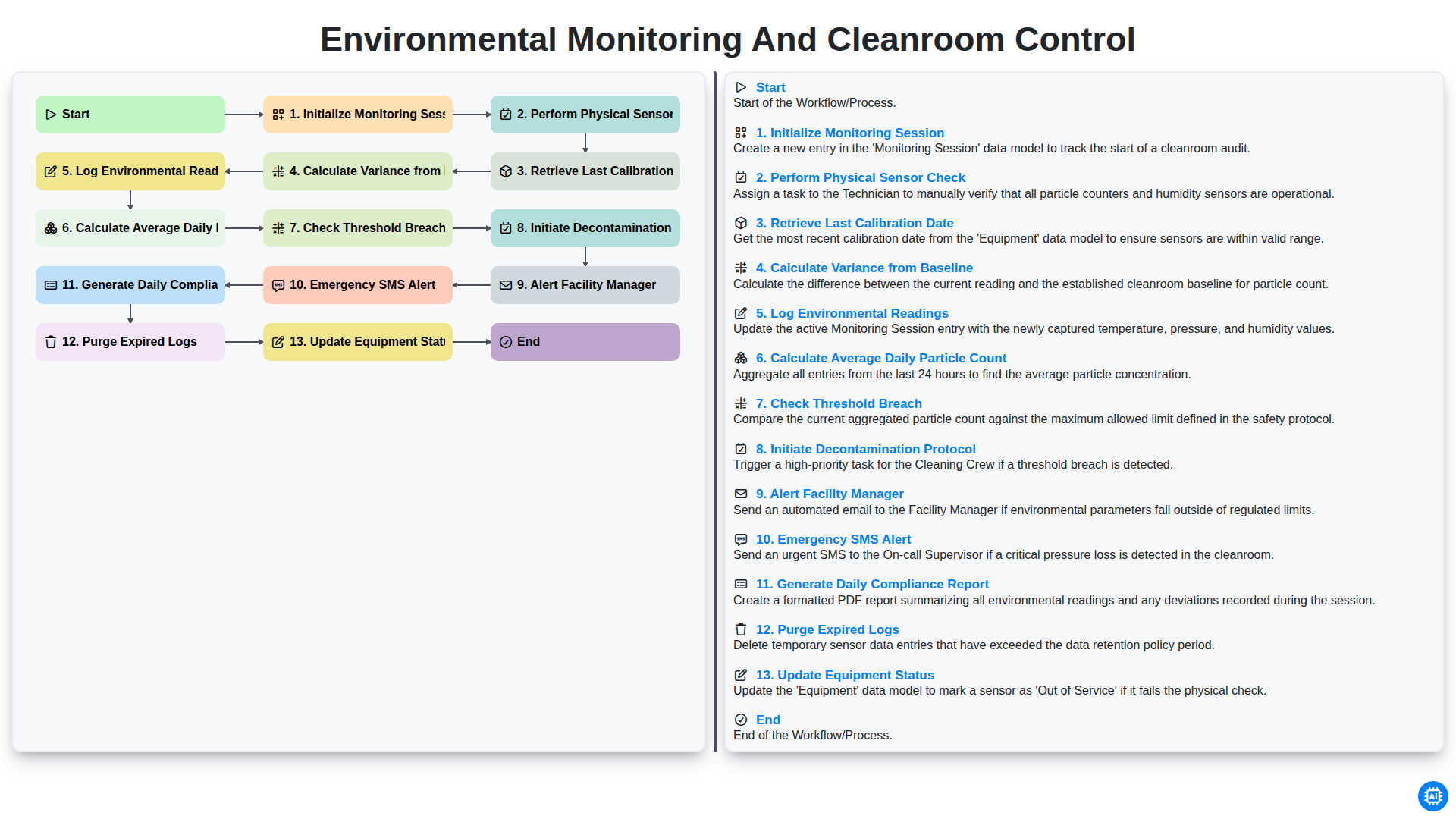
Environmental Monitoring and Cleanroom Control
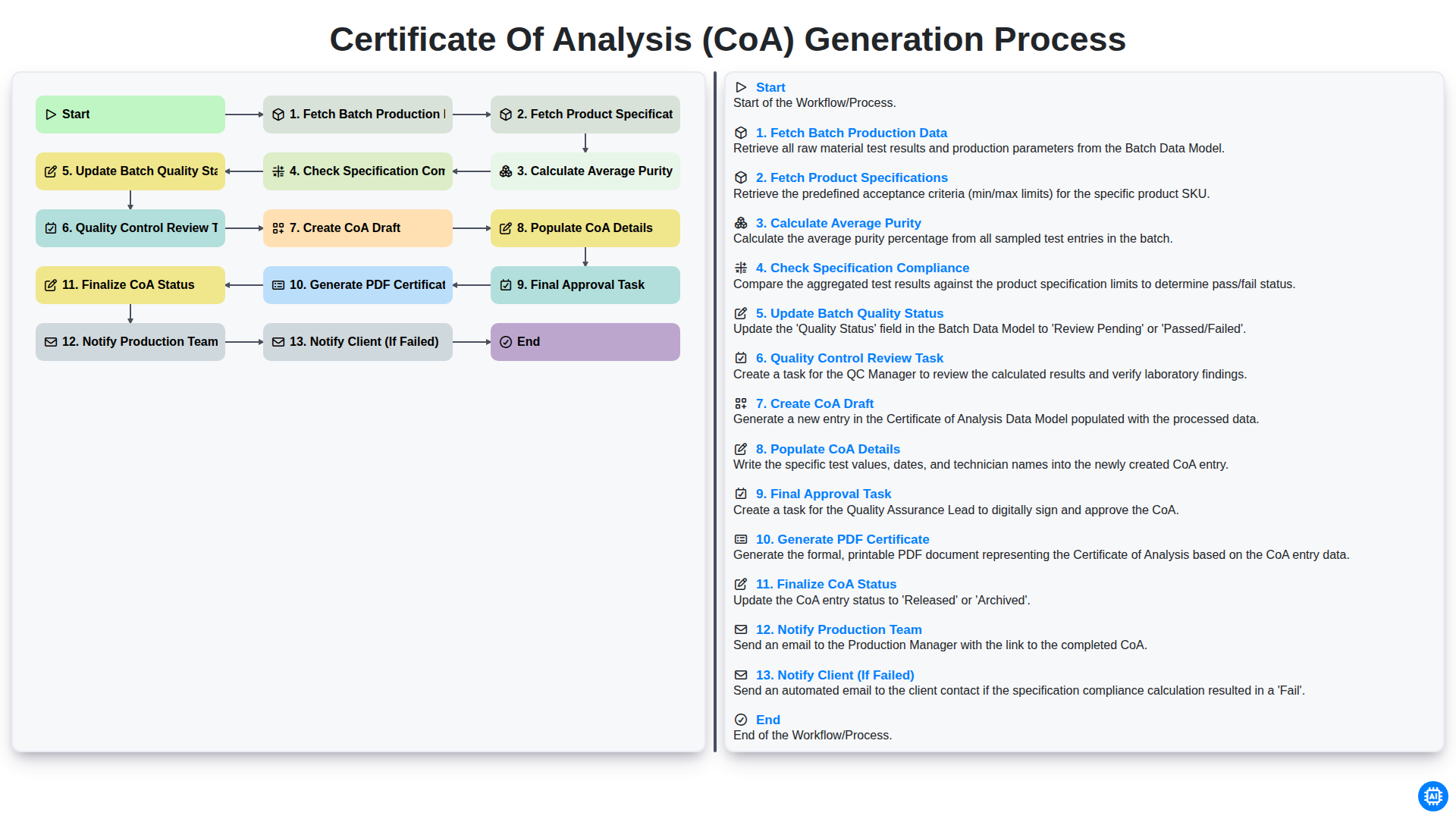
Certificate of Analysis (CoA) Generation Process
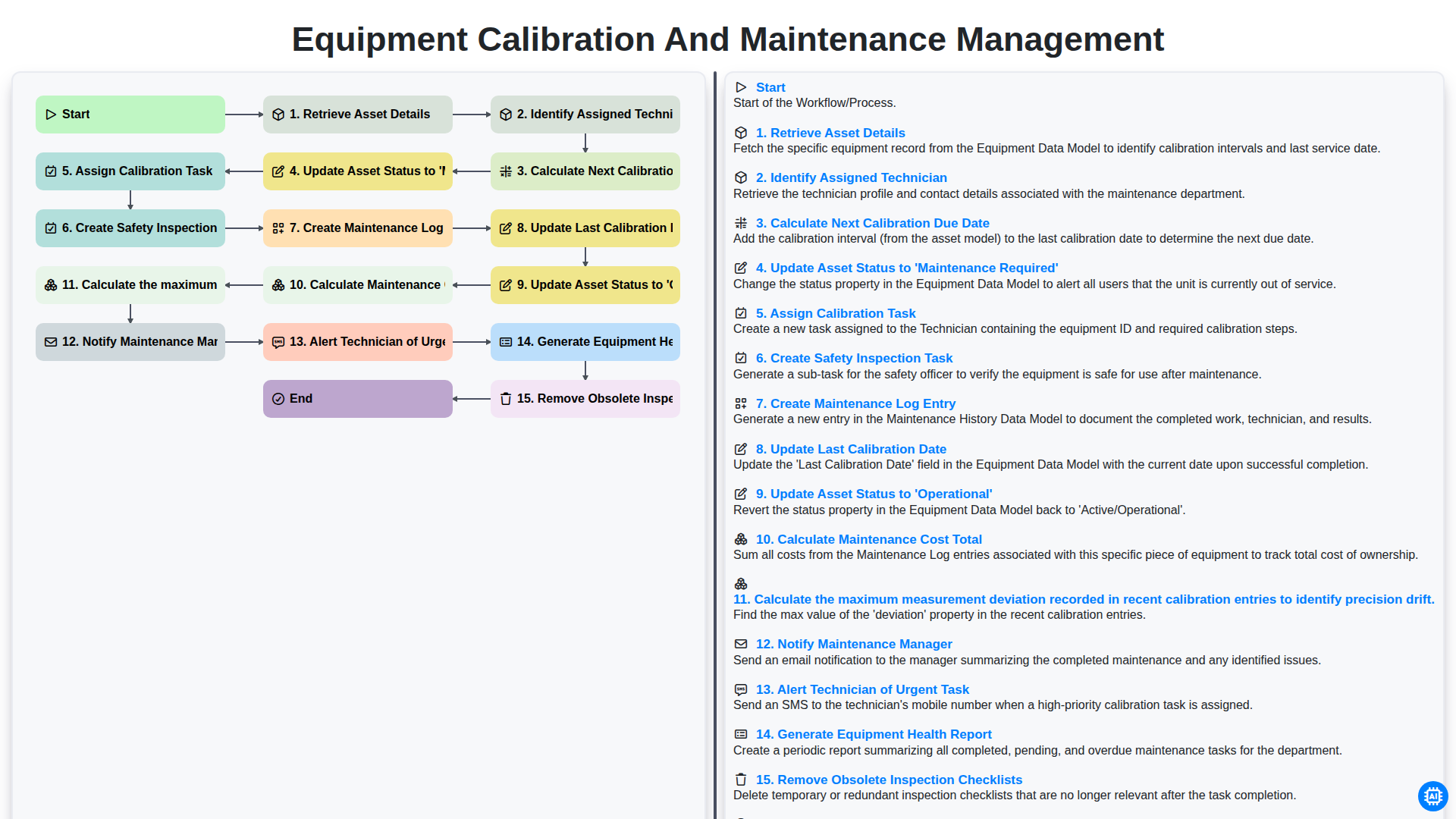
Equipment Calibration and Maintenance Management
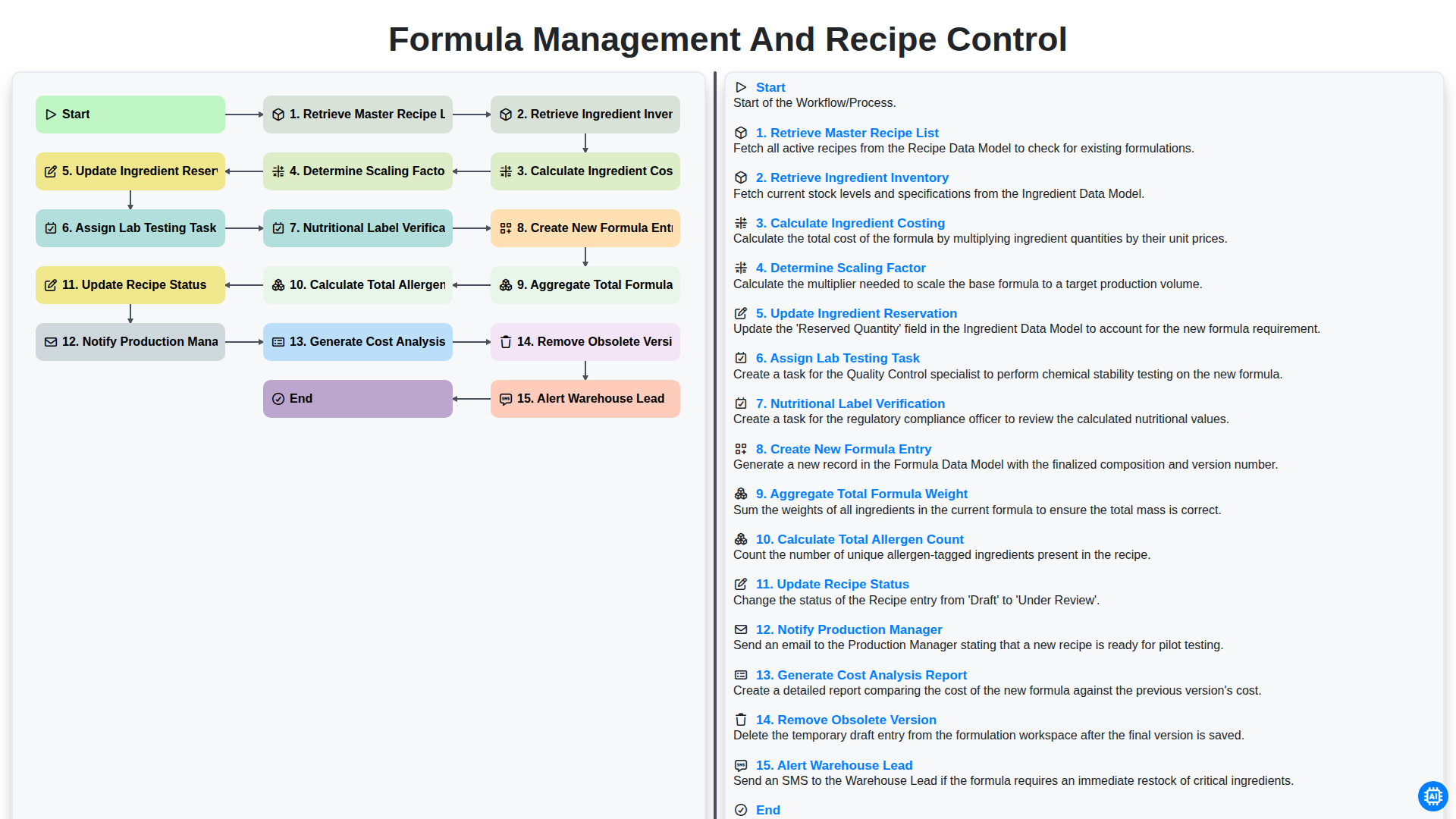
Formula Management and Recipe Control
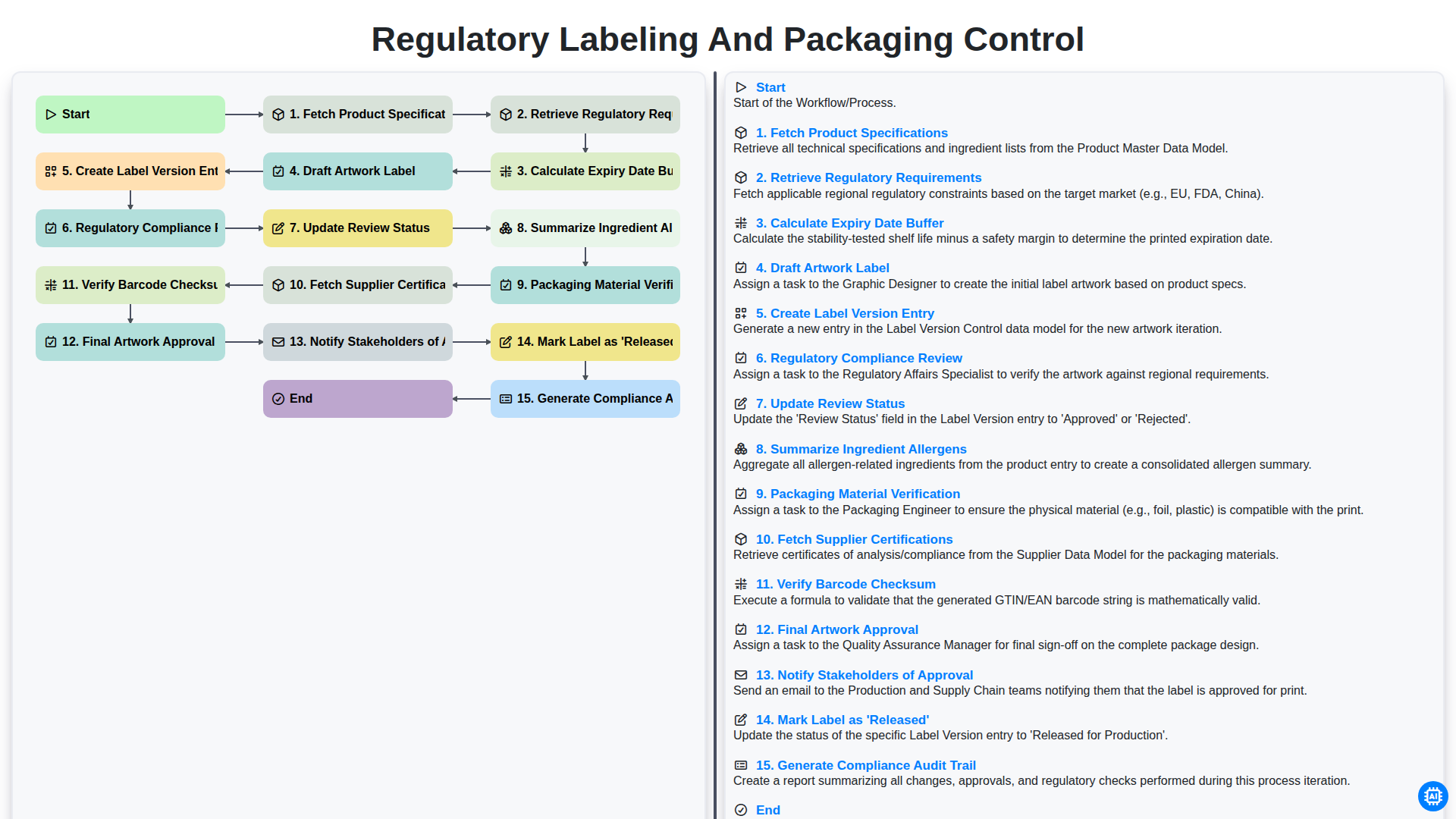
Regulatory Labeling and Packaging Control
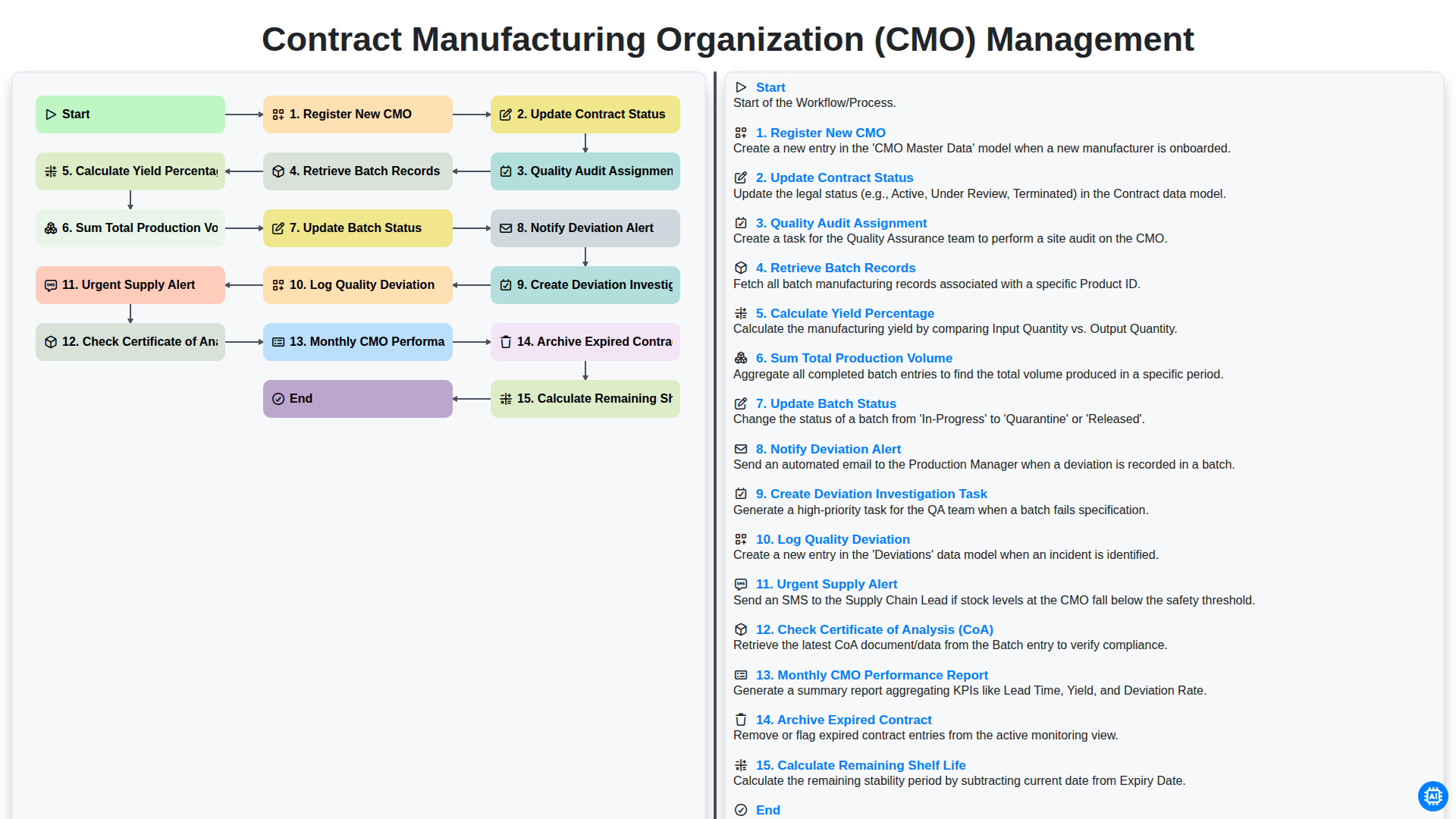
Contract Manufacturing Organization (CMO) Management
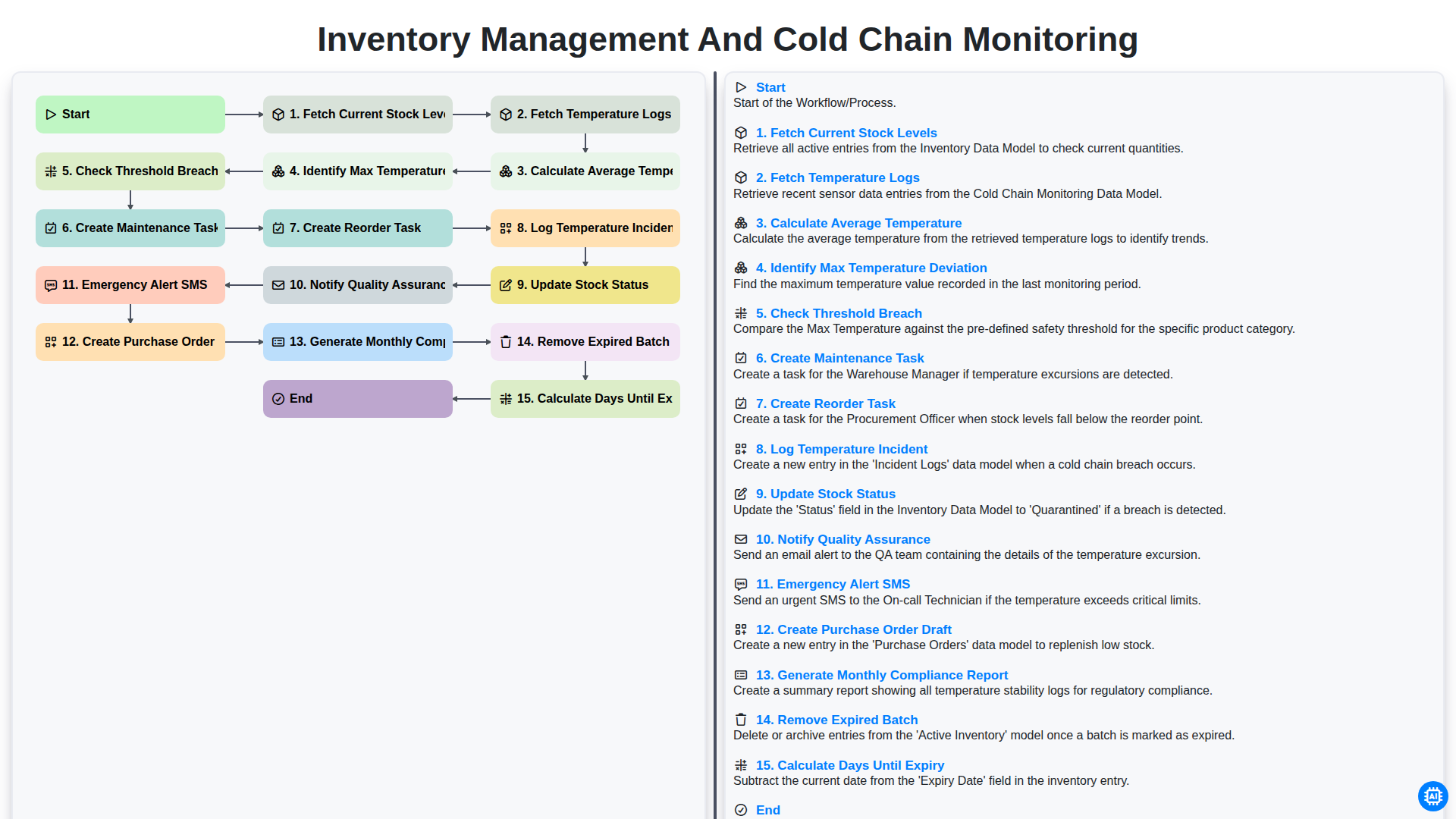
Inventory Management and Cold Chain Monitoring
Nous pouvons le faire ensemble
Besoin d'aide avec les listes de contrôle?
Vous avez une question ? Nous sommes là pour vous aider. Veuillez soumettre votre demande et nous vous répondrons rapidement.