Streamlining Quality Assurance: Mastering Inspection Workflow with Automation
Opublikowano: Zaktualizowano: 04/16/2026
Spis treści
- The Imperative for Modern Quality Assurance Workflows
- Understanding the Manual Bottlenecks in Inspections
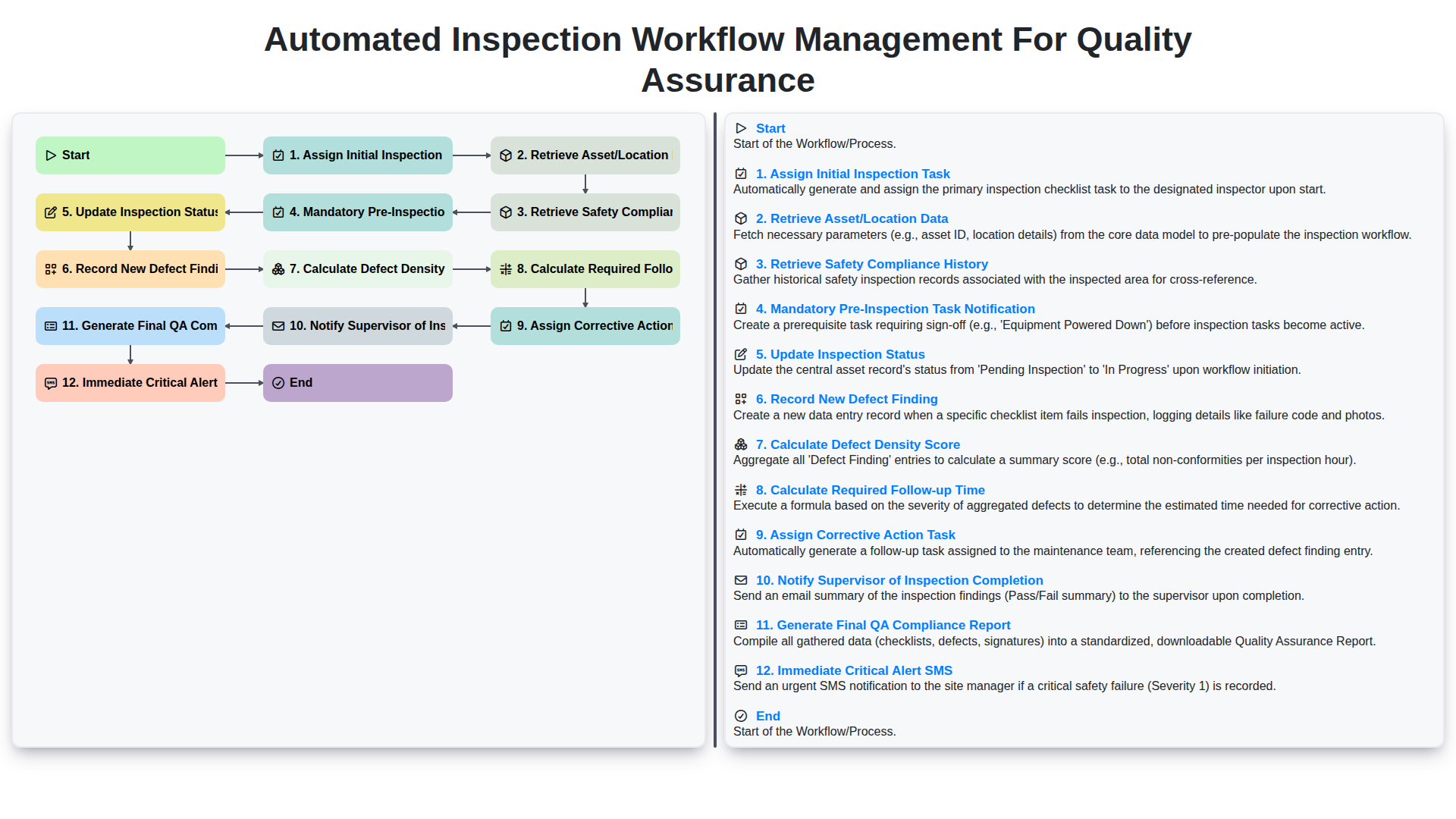
- Step 1: Assigning the Initial Inspection Task Seamlessly
- Step 2: Contextualizing Inspections with Asset and Location Data Retrieval
- Step 3: Proactive Risk Management through Safety Compliance History Review
- Mandatory Checkpoints: Ensuring Pre-Inspection Readiness
- Real-Time Process Control: Updating Inspection Status Dynamically
- Capturing Details: The Art of Recording New Defect Findings
- Quantifying Quality: Calculating Defect Density Scores Automatically
- Predictive Maintenance: Determining Required Follow-up Timelines
- Closing the Loop: Assigning Corrective Action Tasks
- Visibility and Oversight: Notifying Supervisors Upon Completion
- Beyond Compliance: Generating Comprehensive Final QA Reports
- Zero Delay Action: Implementing Immediate Critical Alert SMS
- Resources & Links
TLDR: This guide explains how an automated inspection workflow acts as a centralized digital process, guiding users step-by-step through quality assurance tasks-from initial task assignment and data gathering (like safety checks and asset records) to identifying defects, calculating risk scores, assigning follow-up actions, and generating final compliance reports, ultimately ensuring consistency, speed, and regulatory adherence.
The Imperative for Modern Quality Assurance Workflows
In today's fast-paced and highly regulated industrial landscape, relying on manual or fragmented quality assurance (QA) processes is not just inefficient-it's a significant operational risk. Modern QA demands more than just checklists; it requires dynamic, intelligent workflows that guide personnel step-by-step while ensuring no critical check is overlooked. A modern workflow transforms QA from a reactive review process into a proactive, structured guarantee of quality. By digitizing and automating these multi-faceted inspection cycles, organizations can drastically reduce human error, accelerate time-to-compliance, and build an auditable, resilient quality backbone for their operations.
Understanding the Manual Bottlenecks in Inspections
Manual inspection processes are inherently prone to delays and inconsistencies. When quality assurance relies on paper trails, manual data entry, and sequential checklists, several bottlenecks inevitably emerge. A technician might waste valuable time locating physical asset records or cross-referencing safety compliance documents from disparate filing cabinets. If a pre-inspection safety check isn't manually flagged and completed first, the entire inspection workflow stalls until that prerequisite is addressed. Furthermore, documenting defects often involves writing out observations, calculating defect densities by hand, and then physically filing the report-all steps that introduce human error, delay the crucial follow-up, and significantly slow down the handover to the next responsible party, like the supervisor or maintenance team. This sluggishness doesn't just mean wasted time; it directly translates into extended time-to-remediation, leaving quality issues unaddressed for longer periods.
Step 1: Assigning the Initial Inspection Task Seamlessly
The process kicks off with the crucial step of assigning the initial inspection task. This function acts as the gateway to the entire quality assurance cycle, ensuring that the right inspection is assigned to the right technician at the appropriate time. Instead of manual email chains or spreadsheet tracking, the system automates the assignment logic. Based on predefined parameters-such as the asset type, location zone, or scheduled maintenance window-the platform intelligently allocates the task to the available and qualified personnel. This immediate assignment minimizes downtime and ensures that quality checks begin without delay, providing a clear, digital record of the task's initiation.
Step 2: Contextualizing Inspections with Asset and Location Data Retrieval
This crucial step ensures that every inspection is conducted with the right information at hand. Instead of relying on manual lookups, the system automatically reaches out to the centralized Asset Management System (AMS) and/or the GIS platform. By linking the physical point of inspection (the location coordinates or asset ID), the workflow instantly retrieves comprehensive data. This could include the asset's make, model, installation date, last maintenance record, and its specific operational parameters. Similarly, location data provides context-is this asset in a high-traffic, corrosive, or hazardous zone? This rich, real-time data feeds directly into the inspection checklist, allowing inspectors to see exactly what the asset should be doing, immediately flagging any deviations against established baselines, thus moving inspection from simple observation to genuine forensic analysis.
Step 3: Proactive Risk Management through Safety Compliance History Review
This step moves beyond mere documentation and establishes a foundation of proactive risk management. Before any physical inspection even begins, the workflow automatically retrieves and presents the asset's comprehensive safety compliance history. This isn't just a record; it's an early warning system. By visualizing past incidents, overdue maintenance flags, or recurring minor issues, inspectors are immediately primed to look for patterns that might suggest underlying systemic risks. If the system flags a history of electrical faults at this specific unit, for instance, the inspection protocol can automatically adjust, perhaps adding a mandatory, focused electrical diagnostic check, ensuring that potential hazards flagged historically are the first things inspected for, greatly mitigating the risk of overlooking critical, recurring failure points.
Mandatory Checkpoints: Ensuring Pre-Inspection Readiness
A critical aspect of any thorough inspection process is ensuring that the assigned team has all the necessary information and that all prerequisites have been met before the physical inspection even begins. This is where our workflow incorporates Mandatory Pre-Inspection Task Notification. Before an inspector can even start recording findings, the system actively checks for outstanding preparatory actions. This might include verifying recent training certifications, confirming the availability of necessary tools, or ensuring the correct access permits are active. If any of these mandatory checkpoints are unmet, the workflow will halt, automatically triggering notifications to the responsible parties. This prevents costly delays and, more importantly, ensures compliance from Day One, drastically reducing the risk of overlooking critical pre-inspection setup failures.
Real-Time Process Control: Updating Inspection Status Dynamically
This stage is crucial for maintaining a live, accurate picture of the quality assurance process. Instead of relying on end-of-day reports, the system dynamically updates the inspection status in real-time as tasks are completed. When an inspector finishes their initial checks and moves to the next step-for instance, moving from 'Assigned' to 'In Progress'-the system immediately reflects this change across all relevant dashboards. This instant visibility allows management to monitor throughput bottlenecks immediately. Furthermore, if a process stalls (e.g., an asset inspection is taking significantly longer than projected), the system can flag this deviation, triggering a preemptive alert rather than waiting for a scheduled review time. This continuous status update ensures that the data available for later analysis or reporting is always grounded in the most current operational reality.
Capturing Details: The Art of Recording New Defect Findings
When a discrepancy is found, simply noting it down isn't enough; precision is key. This stage moves beyond mere observation and becomes a structured capture process. Our workflow guides the inspector to meticulously record every new defect finding. This involves more than just a description-it requires pinpointing the exact location (down to coordinates or asset tag), photographing the issue for undeniable evidence, and classifying the defect according to predefined severity levels (e.g., Minor, Major, Critical). By standardizing this capture, we ensure that all defects are uniformly documented, creating a rich, searchable, and actionable data point that feeds directly into later analysis phases.
Quantifying Quality: Calculating Defect Density Scores Automatically
Moving beyond simple pass/fail inspections, modern quality assurance demands quantifiable metrics. This is where automated defect density scoring shines. Instead of relying on manual tallying, our workflow calculates a precise Defect Density Score by aggregating all recorded findings against the asset's total inspection area or component count. This score provides an immediate, standardized benchmark of quality performance. A high score doesn't just flag a problem; it pinpoints how significant the quality deviation is, allowing QA teams to prioritize resources where the risk is highest. This numerical output moves quality assurance from being a descriptive exercise to a predictive, data-driven function.
Predictive Maintenance: Determining Required Follow-up Timelines
This crucial step moves the inspection process from purely reactive to proactively managed. By analyzing the data collected-including the nature of the detected defects and the asset's historical performance-our system calculates a highly accurate 'Required Follow-up Time.' This isn't a generic estimate; it's a data-driven metric. For example, a minor surface scratch on a non-critical component might yield a follow-up window of 30 days, whereas an anomaly related to structural integrity on a primary load-bearing element could immediately trigger a mandated follow-up within 7 days. This automated calculation ensures that maintenance teams are dispatched not just when something breaks, but when the data suggests a failure is likely to occur, optimizing resource allocation and dramatically reducing the risk of unexpected downtime.
Closing the Loop: Assigning Corrective Action Tasks
The workflow doesn't stop at identifying a defect. A crucial element of robust Quality Assurance is the formal assignment and tracking of corrective actions. Once a defect is recorded, the system must proactively calculate the necessary follow-up time and automatically assign a specific Corrective Action Task. This step is vital because it transforms a mere observation into an actionable mandate. By assigning this task directly within the inspection record, accountability is established instantly. The assignee-whether it's maintenance, engineering, or a specific technician-receives immediate visibility into what needs fixing, why it needs fixing (citing the initial inspection findings), and by when it must be resolved. This prevents defects from becoming lost in email chains and ensures that the process moves systematically from detection to resolution.
Visibility and Oversight: Notifying Supervisors Upon Completion
This critical stage ensures that knowledge of the inspection's conclusion, along with its findings, reaches the necessary supervisory level instantly. By automatically notifying the supervisor upon inspection completion, you close the loop on the process efficiently. This notification isn't just a courtesy; it's a vital trigger for the next steps in the quality cycle, allowing supervisors to immediately review the preliminary results, allocate resources for follow-up, and maintain continuous operational oversight without having to wait for manual status updates.
Beyond Compliance: Generating Comprehensive Final QA Reports
The final step in our automated inspection workflow is the generation of the comprehensive Final QA Compliance Report. This report is far more than just a summary of passed or failed checks; it's a holistic, data-rich document that tells the full story of the asset's quality standing. By aggregating data from every preceding step-from initial task assignment and safety history checks to every recorded defect finding and calculated risk score-we create an unassailable audit trail. This report provides stakeholders, from frontline technicians to executive management, with a single source of truth. It clearly maps out compliance adherence against established standards, quantifies any risks based on defect density, and crucially, it includes a roadmap detailing all mandated corrective actions and their required follow-up timelines. This granular reporting capability ensures that quality assurance moves beyond simple pass/fail metrics toward proactive risk management and continuous process improvement.
Zero Delay Action: Implementing Immediate Critical Alert SMS
This step is a critical failsafe in any modern quality assurance workflow. Instead of waiting for manual review or waiting for the final report to be compiled, the immediate critical alert SMS ensures that high-risk findings are flagged instantly. If a defect found during inspection meets predefined severity thresholds (e.g., safety hazard, major functional failure), the system automatically triggers an SMS notification to the designated supervisor, site manager, or maintenance team lead. This bypasses potential communication bottlenecks, drastically cutting down the response time from minutes or hours to seconds. This capability is crucial for maintaining operational safety and preventing minor issues from escalating into costly, major breakdowns.
Resources & Links
- Workflow Automation Platforms : Resources on best-in-class workflow management systems relevant to process automation.
- Quality Assurance Best Practices : Articles detailing modern QA methodologies and process optimization techniques.
- Industrial IoT and Data Integration : Information on connecting physical assets (location/asset data) to digital workflows.
- Industrial Safety & Compliance Standards : Sources detailing best practices for tracking and enforcing safety regulations in inspections.
- Predictive Maintenance and Asset Lifecycle Management : Resources on using data to forecast required maintenance and follow-up actions.
- Automated Compliance Reporting Tools : Examples of software for generating auditable, comprehensive final reports.
- Real-Time Alerting and Communication Systems : Guides on implementing instant, critical communication alerts (like SMS).
Najczęściej zadawane pytania
What is the main goal of automating an inspection workflow in Quality Assurance?
The primary goal is to reduce manual errors, increase inspection speed, and ensure consistent, repeatable processes that improve overall product reliability and operational efficiency.
What are the key benefits of transitioning from manual to automated inspection?
Key benefits include higher precision through machine vision, real-time data collection for immediate decision-making, reduced labor costs, and the ability to identify defect patterns that are often invisible to the human eye.
What technologies are typically involved in an automated inspection workflow?
Common technologies include Computer Vision (CV), Machine Learning (ML) algorithms, IoT-enabled sensors, high-resolution industrial cameras, and integrated Automated Data Capture (ADC) systems.
How does automation help in achieving better traceability in QA?
Automation enables the automatic logging of every inspection result, timestamp, and environmental condition into a digital record, creating an immutable audit trail that simplifies compliance and recall management.
What are the common challenges when implementing automated inspection systems?
Common challenges include high initial capital investment, the need for specialized technical expertise to maintain algorithms, integrating new software with legacy manufacturing equipment, and managing large volumes of generated data.
Does automation replace human inspectors entirely?
Not necessarily. While automation handles repetitive, high-speed, and high-precision tasks, human inspectors remain critical for high-level decision-making, managing complex edge cases, and overseeing the automation systems themselves.
Czy ten artykuł był pomocny?
Demo rozwiązania do zarządzania audytem/inspekcją
Zapewnij zgodność i popraw wydajność! ChecklistGuro usprawnia tworzenie, realizację i raportowanie audytów/inspekcji. Zmniejsz ryzyko, popraw jakość i utrzymuj spójność. Zarządzaj wszystkim za pomocą naszego systemu operacyjnego dla firm.
Powiązane artykuły
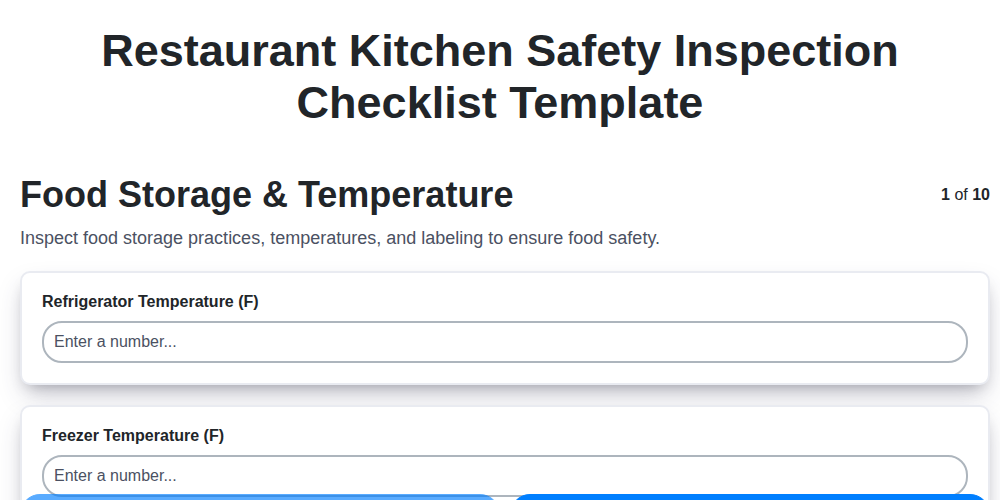
Restaurant Kitchen Safety Inspection Checklist Template
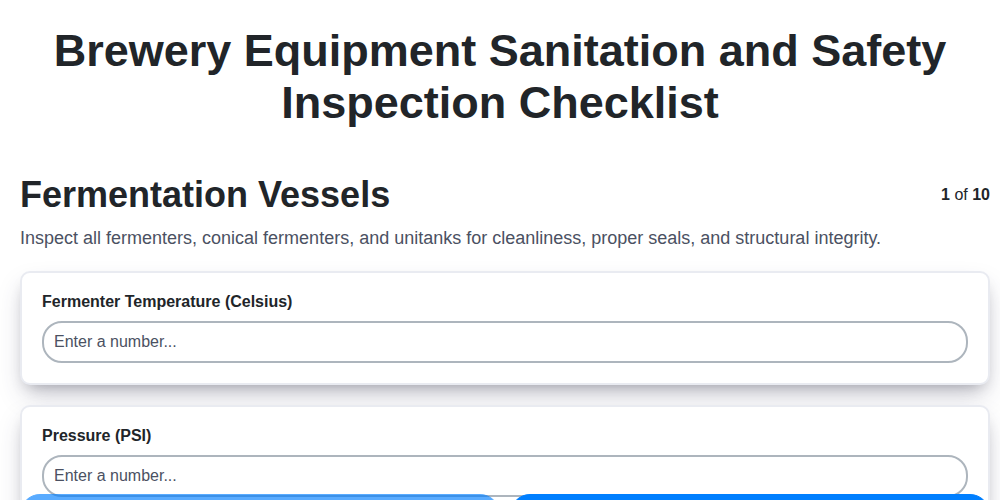
The Ultimate Brewery Equipment Sanitation & Safety Checklist Template
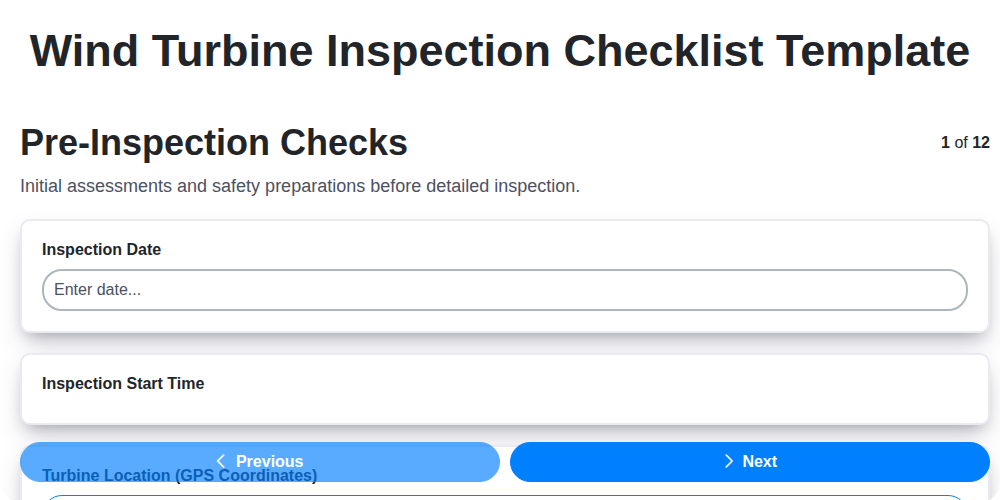
Szablon listy kontrolnej inspekcji turbin wiatrowych: Kompleksowy przewodnik
The Ultimate Apartment Building Maintenance Inspection Checklist Template
Your Essential Guide to a Manufacturing Quality Control Inspection Checklist
Szablon ostatecznej listy kontrolnej przeglądu paneli słonecznych
Your Ultimate HVAC Inspection Checklist Template
Szablon kompleksowej listy kontrolnej do inspekcji centrów danych
Możemy to zrobić razem
Potrzebujesz pomocy z listami kontrolnymi?
Masz pytanie? Jesteśmy tu, aby pomóc. Prześlij zapytanie, a my szybko na nie odpowiemy.