Industrial Equipment Inspection Workflow: Predictive Maintenance & Compliance Management
Opublikowano: Zaktualizowano: 04/16/2026
Spis treści
- Introduction: The Critical Role of Modern Equipment Inspection Workflows
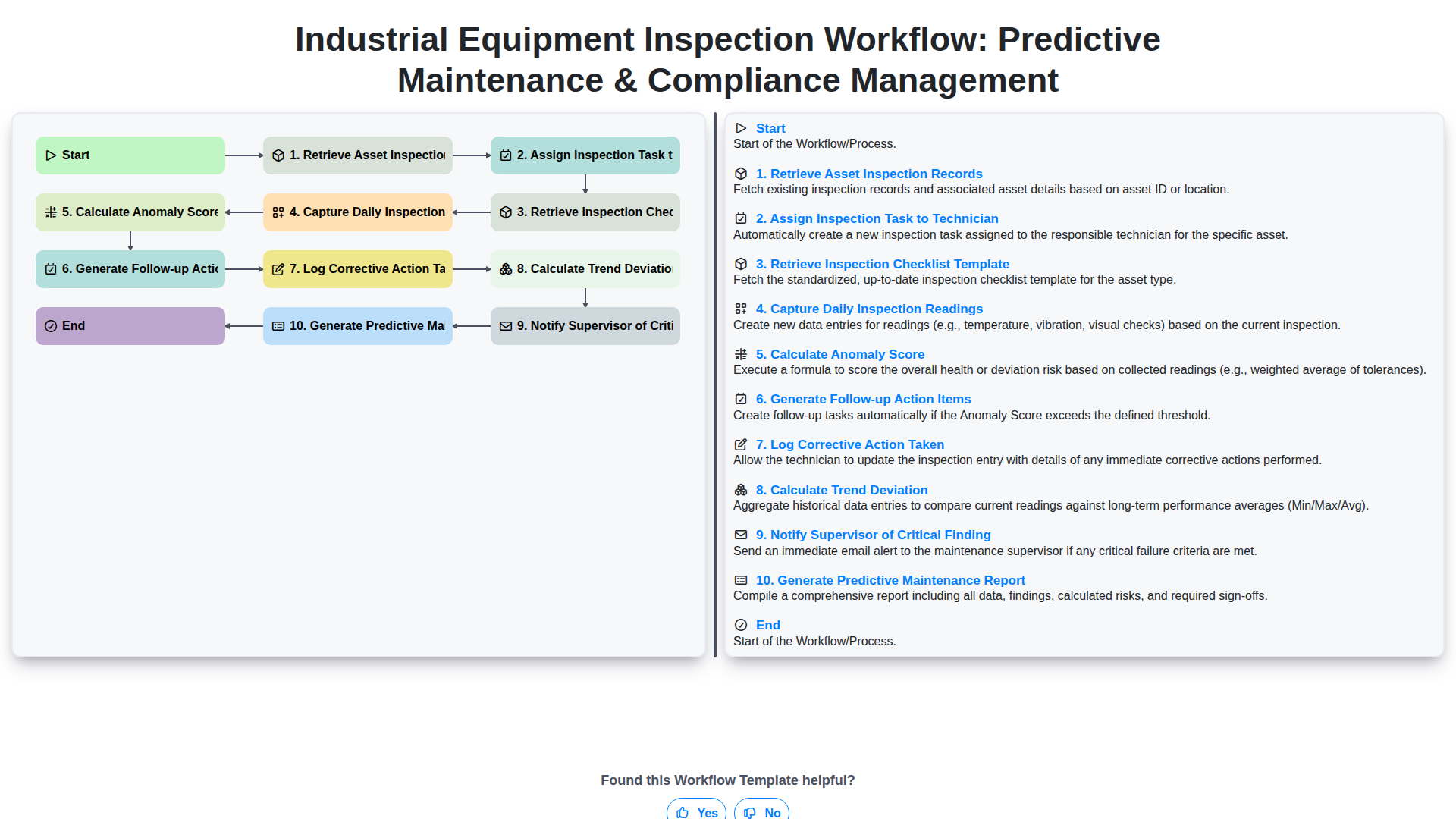
- Step 1: Gathering Historical Insights - Retrieving Asset Inspection Records
- Step 2: Task Assignment and Optimization - Assigning Inspections to Technicians
- Step 3: Ensuring Standardization - Utilizing Inspection Checklist Templates
- Step 4: Real-Time Data Collection - Capturing Daily Inspection Readings
- Step 5: Intelligent Analysis - Calculating the Anomaly Score
- Step 6: Proactive Issue Resolution - Generating Follow-up Action Items
- Step 7: Accountability and Closure - Logging Corrective Action Taken
- Step 8: Performance Tracking - Calculating Trend Deviation
- Step 9: Immediate Escalation - Notifying Supervisors of Critical Findings
- Step 10: Foresight in Operations - Generating Predictive Maintenance Reports
- The Synergy: Integrating Predictive Maintenance and Compliance Management
- Workflow Benefits: Beyond Simple Inspections
- Technology Considerations for Workflow Implementation
- Conclusion: Towards a Zero-Downtime Operational Model
- Resources & Links
TLDR: This workflow automates comprehensive industrial equipment inspections by systematically managing data from asset records and standardized checklists. It goes beyond simple checks by calculating anomaly scores, analyzing trend deviations, and generating actionable alerts for critical findings. The process ensures proactive compliance management and enables true predictive maintenance through automated reporting and tracking of all corrective actions.
Introduction: The Critical Role of Modern Equipment Inspection Workflows
In today's industrial landscape, operational uptime and safety are not just desirable outcomes-they are absolute necessities. The reliability of heavy machinery, manufacturing equipment, and critical infrastructure directly impacts profitability, safety compliance, and environmental responsibility. Manual or fragmented inspection processes are increasingly ill-equipped to handle the complexity, sheer volume of data, and regulatory rigor demanded by modern industry. A streamlined, systematic workflow is no longer a luxury; it is the core operational backbone that enables businesses to move beyond reactive maintenance. By formalizing the inspection process, organizations can transition from simply fixing failures to intelligently preventing them, drastically reducing costly downtime and ensuring continuous, safe operation.
Step 1: Gathering Historical Insights - Retrieving Asset Inspection Records
The process begins with a deep dive into the past. Before any physical inspection can yield valuable data, we must first establish a baseline of performance and condition. This initial step involves the meticulous retrieval of all historical asset inspection records. By aggregating data points from past audits, maintenance reports, and service logs, we build a comprehensive timeline for the equipment. These records are more than just archives; they are our primary sources of actionable intelligence. Analyzing this data allows us to identify recurring failure patterns, understand typical operational variances, and establish the 'normal' operating envelope for each piece of machinery. This historical context is crucial because it dictates what we should expect during the current inspection, helping us move beyond simple pass/fail checks to true predictive analysis.
Step 2: Task Assignment and Optimization - Assigning Inspections to Technicians
The efficiency of the inspection process hinges on ensuring the right technician is assigned the right task at the right time. This step, Assign Inspection Task to Technician, moves the workflow from mere planning to active execution. Instead of manual assignment, modern systems leverage asset criticality, technician specialization, and geographic location to optimize scheduling. The system doesn't just create a task; it intelligently routes it. For instance, if an HVAC unit requires inspection, the system prioritizes technicians certified in HVAC maintenance within the nearest service zone. This structured assignment minimizes response time, maximizes resource utilization, and ensures that only qualified personnel handle sensitive equipment, directly improving safety and inspection accuracy.
Step 3: Ensuring Standardization - Utilizing Inspection Checklist Templates
Instead of relying on ad-hoc note-taking or memory, the workflow integrates the Inspection Checklist Template. This template is the backbone of standardization, ensuring that every inspection-whether it's a quarterly review or a routine check-follows the exact same critical path. It dictates precisely what needs to be checked, the parameters to measure, and the required level of detail for recording. This consistency is vital for defensible data and for the accuracy of the subsequent anomaly calculations. By using a centralized, standardized template, you eliminate the variability that leads to missed checks or incomplete documentation, making your inspection data reliable for predictive modeling and compliance audits alike.
Step 4: Real-Time Data Collection - Capturing Daily Inspection Readings
This phase is where the physical inspection translates into actionable digital data. Technicians use mobile applications or dedicated handheld devices to capture the necessary readings directly at the equipment. This process is more than just data entry; it's a structured collection of vital operational metrics. Readings can range from simple yes/no checks (Pass/Fail) to quantifiable measurements like temperature (°C), vibration levels (Hz), pressure (PSI), fluid levels, and visual condition scoring. The system must ensure that each reading is time-stamped, geo-tagged (if necessary), and directly associated with the specific asset ID being inspected. Accuracy here is paramount, as flawed data at this stage will corrupt every subsequent calculation, undermining the entire predictive model.
Step 5: Intelligent Analysis - Calculating the Anomaly Score
This is where raw data transforms into actionable intelligence. Once the technician has captured the daily inspection readings, the system moves beyond simple data logging to perform a sophisticated analysis: calculating the Anomaly Score. This score is the heart of predictive capability. Instead of just flagging whether a reading is high or low, the Anomaly Score assesses how unusual a reading is relative to the asset's established baseline performance and historical operating parameters. The system analyzes current readings against expected ranges, accounting for operational variables like ambient temperature, load factor, and time since last major service. A high Anomaly Score doesn't necessarily mean catastrophic failure, but it signifies a significant deviation pattern-perhaps a slow, gradual drift in vibration levels, or a subtle, persistent increase in energy consumption. This scoring mechanism empowers maintenance teams to move from reactive fixes (only repairing what has visibly broken) to proactive interventions, addressing subtle warning signs before they escalate into costly downtime events.
Step 6: Proactive Issue Resolution - Generating Follow-up Action Items
Once an anomaly is detected, the workflow doesn't wait for a manual report; it immediately triggers the generation of specific, actionable follow-up items. This moves the process from merely detecting a problem to actively solving it. These generated items are context-aware, linking directly back to the detected deviation and referencing the relevant section of the asset's service manual or safety protocol. This ensures that the technician receives not just a warning, but a clear, prioritized, and technically sound pathway to resolution, significantly reducing time-to-repair and improving operational uptime.
Step 7: Accountability and Closure - Logging Corrective Action Taken
Once an anomaly is detected and a necessary action is identified, the workflow must transition into a clear accountability phase. This is where the Logging Corrective Action Taken step becomes paramount. It serves as the central point for documenting what was done, who did it, and when it was completed. A robust system ensures that every intervention-whether minor adjustments or major repairs-is meticulously recorded against the original inspection task. This log provides an indisputable audit trail, not only satisfying compliance requirements but also providing invaluable data for root cause analysis. By accurately logging the executed corrective measures, the workflow closes the immediate loop, moving the asset from a state of identified risk to a verified state of repair and operational readiness.
Step 8: Performance Tracking - Calculating Trend Deviation
This crucial step moves beyond simply noting a deviation; it quantifies it. Calculating Trend Deviation involves comparing the newly captured readings against established historical averages, baseline performance metrics, and the asset's expected operational norms. This mathematical comparison doesn't just tell you if a reading is high or low; it tells you how unusual the deviation is over time. Are three consecutive readings drifting upwards, even if each reading is still within the acceptable immediate range? Trend deviation identifies this subtle, accumulating drift-the early whisper of failure. By plotting this deviation over time, maintenance teams gain foresight, moving from reactive fix-it-when-it-breaks models to proactive address-it-before-it-breaks strategies.
Step 9: Immediate Escalation - Notifying Supervisors of Critical Findings
This crucial step ensures that when the anomaly score spikes or a deviation is flagged, the right people are immediately aware. Instead of waiting for a scheduled review, the system automatically triggers notifications-via email, SMS, or direct dashboard alerts-to the assigned supervisor, maintenance manager, and, if necessary, safety personnel. This real-time alert system minimizes response time, allowing teams to initiate emergency protocols or triage the issue before minor discrepancies turn into costly failures or safety hazards.
Step 10: Foresight in Operations - Generating Predictive Maintenance Reports
This pivotal step transforms reactive maintenance into proactive asset management. By analyzing the cumulative data points-the trend deviations, the history of anomaly scores, and the records of corrective actions-the system moves beyond simply reporting what has failed. Instead, it generates a Predictive Maintenance Report, which forecasts when failure is likely to occur and why. This report doesn't just flag issues; it assigns a probability score and estimates a remaining useful life (RUL) for critical components. For example, if the bearing temperature readings have shown a consistent, minor upward drift over the last quarter, even if they are still within 'normal' parameters today, this report flags it as a high-risk indicator, recommending inspection or replacement scheduling well before the failure point is reached, thereby maximizing uptime and minimizing costly emergency shutdowns.
The Synergy: Integrating Predictive Maintenance and Compliance Management
This crucial stage represents the heart of modern equipment management. Predictive Maintenance (PdM) and compliance are no longer separate functions; they must work in seamless synergy. By linking routine compliance checks to advanced data analytics, you transform inspection from a reactive necessity into a proactive performance driver. When technicians follow a standardized checklist (ensuring regulatory compliance), the collected data feeds directly into anomaly detection models. This allows the system to not only confirm if the equipment met the compliance standard (e.g., all readings are within acceptable limits) but also to predict when it might fail before it breaches those limits. For instance, a slight, sustained upward trend in vibration readings (a compliance flag) can trigger a predictive alert recommending bearing replacement weeks before standard preventative maintenance cycles would even suggest it. This integrated approach minimizes downtime, optimizes spare parts inventory, and solidifies your audit-proof operational history.
Workflow Benefits: Beyond Simple Inspections
The power of a structured workflow transforms equipment inspections from mere data collection into a proactive management system. Instead of just noting that a piece of machinery looked okay, the integrated workflow provides quantifiable insights. By automatically retrieving past inspection records and comparing current readings against historical benchmarks, we move far beyond reactive troubleshooting. The calculation of an 'Anomaly Score' is a perfect example; it doesn't just flag a reading that is outside a fixed range-it flags a significant deviation from the expected pattern, signaling potential failure points long before they become emergencies. Furthermore, the seamless integration of follow-up action item generation and trend deviation calculation ensures that necessary maintenance isn't just suggested, but is systematically tracked until verification, ensuring true compliance and maximizing operational uptime.
Technology Considerations for Workflow Implementation
Integrating this comprehensive workflow requires leveraging several key technologies. A robust CMMS (Computerized Maintenance Management System) serves as the central backbone, housing asset records, checklists, and historical data. For the Predictive Maintenance aspect, integrating IoT sensors and machine learning platforms is crucial. These platforms ingest real-time data (like vibration, temperature, and operational hours) from the equipment, allowing the system to automatically calculate the Anomaly Score and Trend Deviation against established baselines. Workflow automation is handled by BPM (Business Process Management) software, which orchestrates the sequential steps-from assigning the task to generating the final report-ensuring that no manual handoffs are missed. Finally, for compliance and record-keeping, secure, cloud-based Document Management Systems (DMS) ensure that all Inspection Records and Corrective Action Logs are immutably stored, auditable, and easily retrievable for regulatory review.
Conclusion: Towards a Zero-Downtime Operational Model
By systematically implementing this comprehensive workflow, organizations can move beyond reactive maintenance to a true state of predictive operational excellence. The cycle-from initial data retrieval and standardized inspection through anomaly scoring and trend analysis-ensures that potential failures are identified before they cause downtime. This integrated approach not only elevates safety and compliance adherence but fundamentally transforms asset management from a cost center into a strategic driver of uptime and efficiency. Embracing this robust workflow is the clearest path toward achieving and maintaining a zero-downtime operational model, maximizing asset lifespan, and ensuring uninterrupted productivity.
Resources & Links
- Industrial IoT and Predictive Maintenance Platforms : Resources detailing the integration of IoT sensors and data platforms for advanced asset monitoring.
- OSHA Compliance Guidelines for Industrial Machinery : Official government resources on safety standards and regulatory compliance for industrial equipment.
- Industry Standards for Asset Management and Automation : Technical papers and standards related to automated inspection processes and industrial control systems.
- Analyst Reports on Predictive Maintenance Implementation : Industry analysis reports covering the ROI and best practices for adopting predictive maintenance technologies.
- Workflow Automation Case Studies in Manufacturing : Examples of how other industries have successfully automated complex operational workflows.
- Condition Monitoring Best Practices : Guidelines on various monitoring techniques (vibration, thermal, acoustic) used in equipment health checks.
- Asset Lifecycle Management Frameworks : Frameworks for managing assets from procurement through retirement, incorporating inspection needs.
Najczęściej zadawane pytania
What is the primary goal of an industrial equipment inspection workflow?
The primary goal is to integrate routine inspections with predictive maintenance strategies to ensure operational continuity, minimize unplanned downtime, and maintain strict adherence to regulatory compliance standards.
How does predictive maintenance differ from traditional reactive maintenance in an inspection workflow?
Unlike reactive maintenance, which focuses on repairing equipment after a failure occurs, predictive maintenance uses data-driven insights from inspections to identify potential issues before they lead to breakdown, allowing for planned interventions.
What role does compliance management play in equipment inspection?
Compliance management ensures that all inspection processes, documentation, and maintenance activities meet the specific legal, safety, and industry-standard regulations required to operate industrial machinery legally and safely.
What are the key components of an effective inspection workflow?
A robust workflow includes regular sensor-based monitoring, scheduled physical inspections, automated data logging, real-time anomaly detection, and a streamlined reporting system for audit readiness.
How can integrating inspection workflows reduce operational costs?
By identifying wear and tear early through predictive models, companies can avoid expensive emergency repairs, extend the lifecycle of critical assets, and optimize spare parts inventory management.
Czy ten artykuł był pomocny?
Demo rozwiązania do zarządzania audytem/inspekcją
Zapewnij zgodność i popraw wydajność! ChecklistGuro usprawnia tworzenie, realizację i raportowanie audytów/inspekcji. Zmniejsz ryzyko, popraw jakość i utrzymuj spójność. Zarządzaj wszystkim za pomocą naszego systemu operacyjnego dla firm.
Powiązane artykuły
Restaurant Kitchen Safety Inspection Checklist Template
The Ultimate Brewery Equipment Sanitation & Safety Checklist Template
Szablon listy kontrolnej inspekcji turbin wiatrowych: Kompleksowy przewodnik
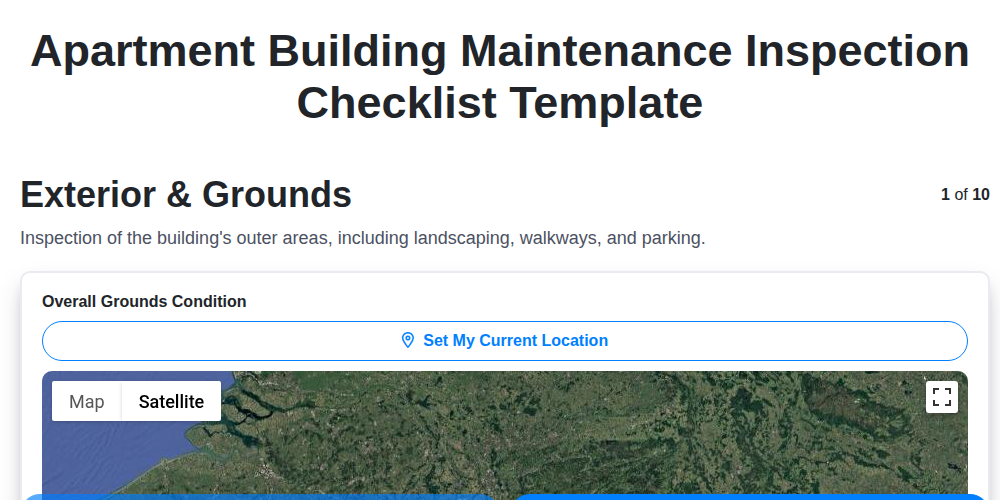
The Ultimate Apartment Building Maintenance Inspection Checklist Template
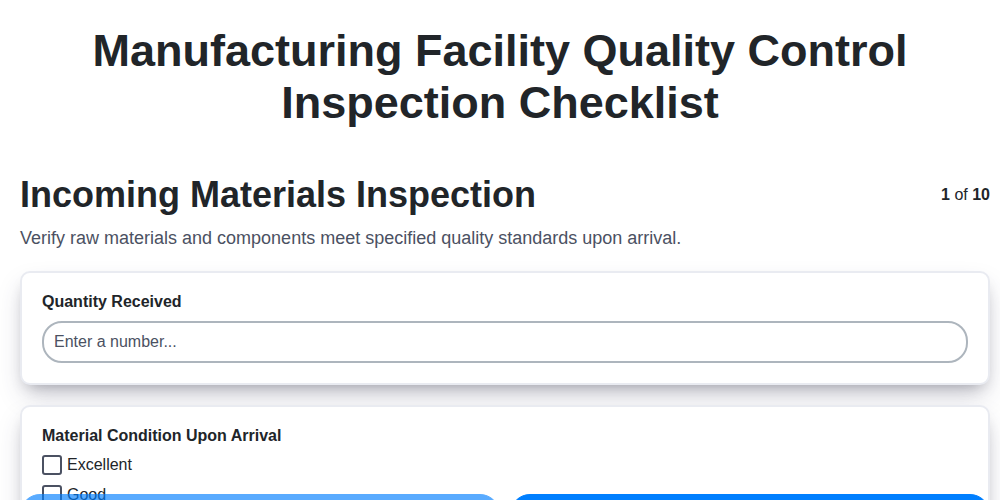
Your Essential Guide to a Manufacturing Quality Control Inspection Checklist
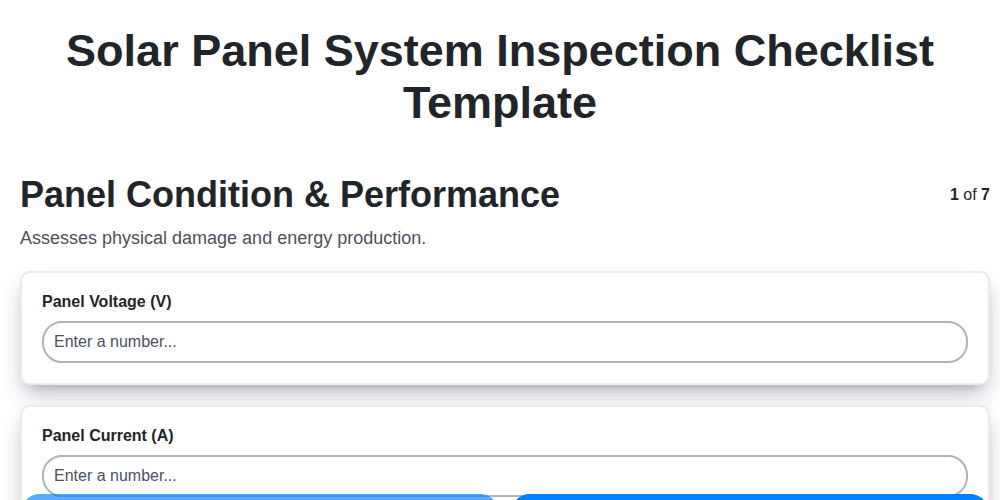
Szablon ostatecznej listy kontrolnej przeglądu paneli słonecznych
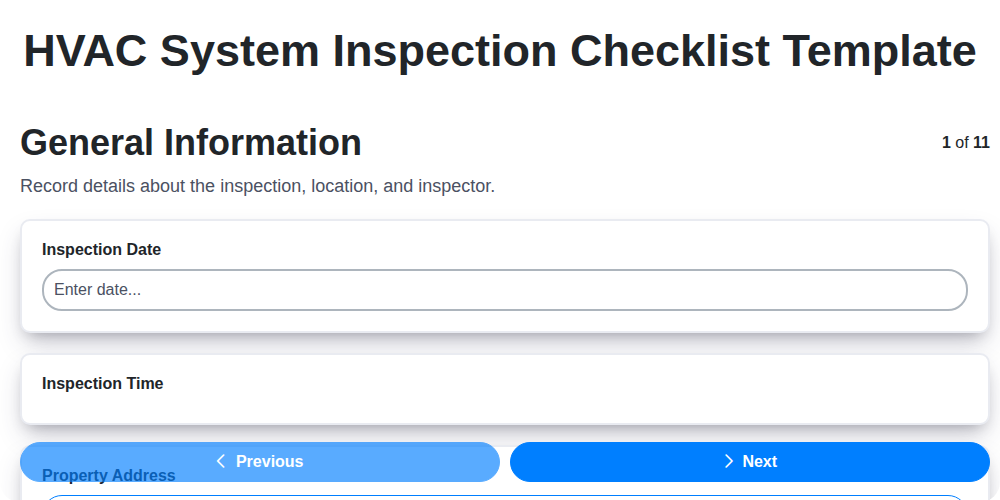
Your Ultimate HVAC Inspection Checklist Template
Szablon kompleksowej listy kontrolnej do inspekcji centrów danych
Możemy to zrobić razem
Potrzebujesz pomocy z listami kontrolnymi?
Masz pytanie? Jesteśmy tu, aby pomóc. Prześlij zapytanie, a my szybko na nie odpowiemy.