Non-Conformance Issue Resolution Workflow: A Step-by-Step Guide
Opublikowano: 30.03.2026 Zaktualizowano: 25.09.2026
Spis treści
- Introduction: Understanding Non-Conformances
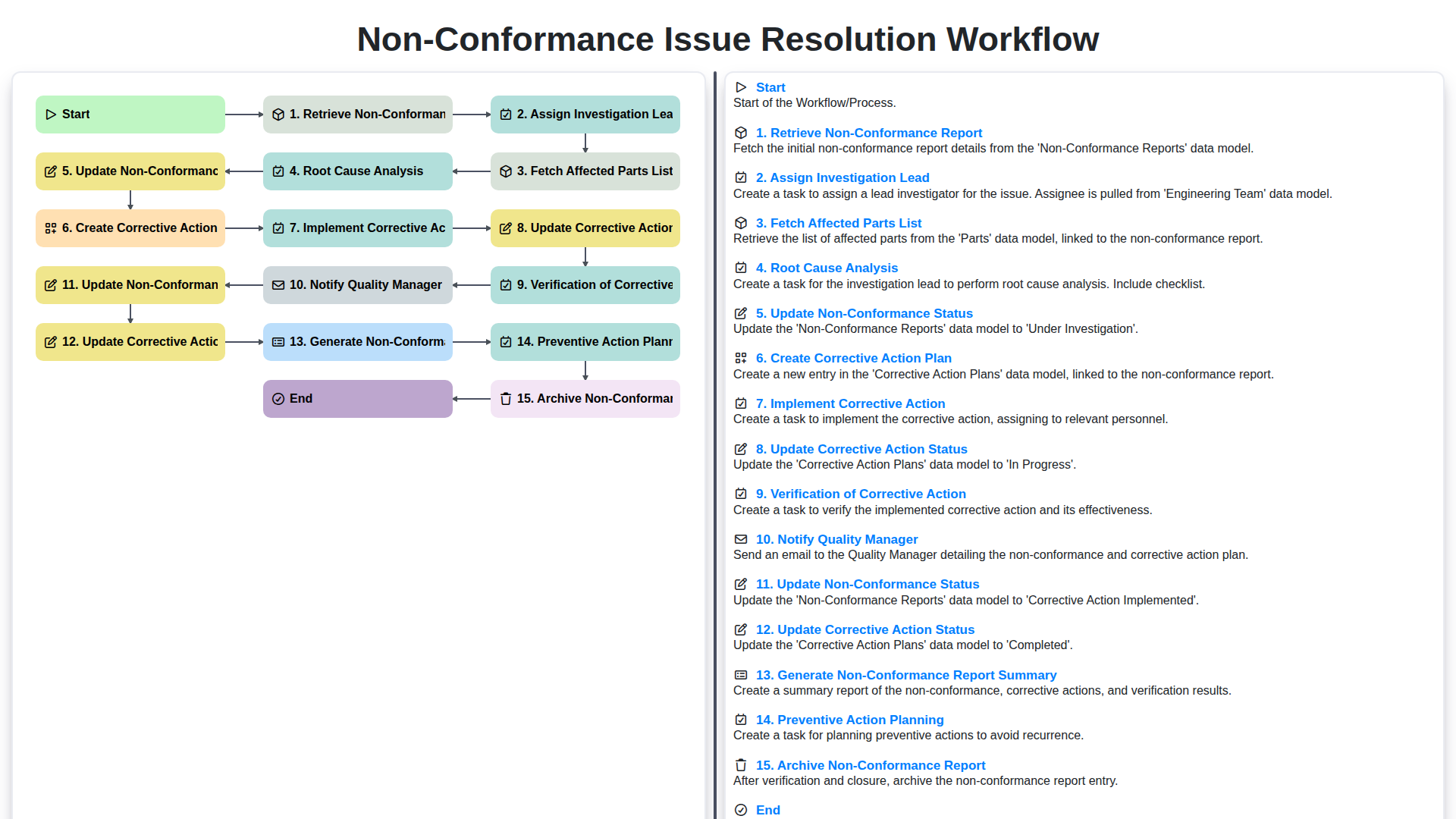
- Step 1: Retrieving the Non-Conformance Report
- Step 2: Assigning an Investigation Lead
- Step 3: Identifying Affected Parts - Fetching the List
- Step 4: Diving Deep - Root Cause Analysis
- Step 5: Initial Status Update - Acknowledging the Issue
- Step 6: Crafting a Corrective Action Plan
- Step 7: Implementing the Corrective Actions
- Step 8: Monitoring Corrective Action Progress
- Step 9: Verification of Corrective Action Effectiveness
- Step 10: Quality Manager Notification & Review
- Step 11: Final Non-Conformance Status Update
- Step 12: Planning for Prevention - Preventive Actions
- Step 13: Archiving for Future Reference
- Resources & Links
TLDR: Got a quality issue? This workflow guides you through every step, from reporting the problem to archiving the solution. It ensures thorough investigation, effective corrective actions, and prevents future occurrences - keeping your quality processes on track and compliant.
Introduction: Understanding Non-Conformances
A non-conformance is, simply put, a deviation from established requirements. These requirements can stem from a multitude of sources: industry standards (like ISO 9001), customer specifications, internal procedures, regulatory guidelines, or even design documents. They represent instances where a product, process, or service hasn't met the defined expectations. Identifying and effectively resolving these non-conformances is crucial for maintaining quality, ensuring customer satisfaction, and driving continuous improvement within an organization. Ignoring them can lead to defective products, process inefficiencies, increased costs, and potentially, damage to reputation. This blog post will detail a robust workflow designed to systematically address non-conformance issues, from initial detection to preventative action.
Step 1: Retrieving the Non-Conformance Report
The journey to resolving a non-conformance begins with receiving the report itself. This initial step is critical - it's the documented evidence of a problem needing attention. The report typically originates from various sources: production line operators, inspectors, customers, or even internal audits. It will contain essential details like the date and time of discovery, a description of the issue, the specific product or process affected, and potentially initial observations. Ensure the report is complete and legible. If information is missing or unclear, immediately request clarification from the reporter to prevent delays later in the process. A well-documented and understood non-conformance report is the foundation for a successful resolution.
Step 2: Assigning an Investigation Lead
Once a Non-Conformance Report (NCR) is retrieved, the next crucial step is assigning an Investigation Lead. This individual will be responsible for driving the investigation process, gathering information, and ensuring the root cause is identified. The selection of the Investigation Lead should consider their expertise, knowledge of the affected process or product, and their ability to lead and collaborate effectively. Clear communication is key at this stage - the NCR should be formally assigned to the Investigation Lead, and they should be provided with all relevant documentation and context. A timeframe for initial investigation should also be established to maintain momentum and ensure timely resolution.
Step 3: Identifying Affected Parts - Fetching the List
Once a Non-Conformance Report (NCR) is retrieved and an investigation lead is assigned, the next crucial step is pinpointing exactly which parts are impacted. This Fetch Affected Parts List step ensures the scope of the investigation is clearly defined and prevents overlooking affected components.
This isn't just about identifying parts mentioned in the NCR; it's about a comprehensive review. The investigation lead needs to:
- Review the NCR details: Carefully examine the description of the non-conformance to identify specific part numbers, assemblies, or materials involved.
- Trace impacted lots: Utilize traceability records (e.g., batch numbers, serial numbers) to determine if the issue extends beyond the initial identified parts. This might involve cross-referencing production records and supplier documentation.
- Consult with relevant departments: Engage with production, engineering, and purchasing teams to confirm the affected parts and understand their usage across different processes or products.
- Document the list: Meticulously record the list of affected parts, including part numbers, descriptions, quantities affected, and any related lot numbers. This documented list becomes a key reference point for subsequent investigation and corrective action planning.
A complete and accurate affected parts list is vital for effective problem-solving.
Step 4: Diving Deep - Root Cause Analysis
Once the investigation lead is assigned and the affected parts list is gathered, the crucial step of Root Cause Analysis (RCA) begins. This isn't simply identifying what went wrong, but why it happened. A superficial explanation won't cut it - we need to dig deeper to prevent recurrence.
Several methodologies can be employed during RCA. The 5 Whys technique, for example, repeatedly asks Why? to peel back layers of symptoms and uncover the underlying cause. Fishbone diagrams (also known as Ishikawa diagrams) are another powerful tool for brainstorming potential causes, categorizing them (e.g., Man, Machine, Method, Material, Measurement, Environment), and visually mapping the contributing factors.
The RCA process should be collaborative, involving those directly involved in the process, including operators, engineers, and supervisors. Documenting all findings, potential causes, and the reasoning behind the chosen root cause is essential. This detailed record becomes invaluable for future reference and process improvement. It's not enough to just say you've identified the root cause - you need to be able to prove it, with supporting evidence and a clear logic chain.
Step 5: Initial Status Update - Acknowledging the Issue
Once an Investigation Lead is assigned, the very next crucial step is to update the Non-Conformance Report's status. This isn't about solving the problem yet; it's about formally acknowledging receipt and initiating the resolution process. The status should be changed to reflect that the report is "Under Investigation" or a similar designation that clearly indicates action is underway. This simple update provides visibility for stakeholders - letting everyone know the issue hasn't been forgotten and is actively being addressed. It also triggers any automated notifications configured within your workflow system, ensuring the relevant personnel are informed. This transparency builds trust and prevents unnecessary follow-ups.
Step 6: Crafting a Corrective Action Plan
Once the root cause of the non-conformance is thoroughly understood, the next critical step is developing a robust corrective action plan. This isn't just about identifying a fix; it's about strategically outlining how that fix will be implemented, who is responsible, and when it will be completed.
A well-defined corrective action plan should include the following elements:
- Specific Actions: Clearly state the actions required to eliminate the root cause and prevent recurrence. Avoid vague statements; be precise and actionable. For example, instead of Improve training, specify Develop a revised training module on [specific process] and deliver it to [affected employees] by [date].
- Responsibility Assignment: Each action should have a designated owner who is accountable for its successful completion. This ensures clear lines of responsibility and eliminates ambiguity.
- Timeline & Due Dates: Establish realistic timelines and due dates for each action. This creates a sense of urgency and helps track progress.
- Resources Required: Identify any resources (personnel, equipment, materials) needed to implement the corrective action.
- Metrics for Success: Define measurable criteria that will demonstrate the effectiveness of the corrective action. How will you know the root cause is truly addressed?
- Training Needs: Outline any necessary training for personnel involved in implementing the corrective action or affected by the process change.
The corrective action plan should be documented, reviewed, and approved by relevant stakeholders to ensure buy-in and commitment. This isn't a solo effort; it requires collaboration and transparency.
Step 7: Implementing the Corrective Actions
This is where the plan meets reality. The Corrective Action Plan, meticulously crafted in the previous step, now needs to be put into action. Implementation isn't simply about ticking boxes; it requires diligent execution and a commitment to ensuring the actions are carried out as defined.
Here's what's involved in successful implementation:
- Resource Allocation: Ensure the team and resources (personnel, equipment, materials) needed to execute the corrective actions are available and properly trained. This might involve scheduling work, procuring necessary parts, or providing training sessions.
- Timeline Adherence: Stick to the timelines established in the Corrective Action Plan. Delays can exacerbate the original problem or introduce new ones. Regularly monitor progress against the schedule.
- Documentation: Meticulous record-keeping is crucial. Document every action taken, including dates, personnel involved, and any deviations from the planned approach. This provides an audit trail and facilitates future analysis.
- Communication: Keep all stakeholders informed of the implementation's progress. Transparency fosters buy-in and allows for early identification of roadblocks.
- Verification during Implementation: While the formal verification occurs later, consider incorporating checkpoints during implementation to ensure actions are being performed correctly and achieving the intended results. This can involve spot checks, process observations, and interim data analysis.
Failure to properly implement the corrective actions can render the entire process futile. This step demands attention to detail and a proactive approach to problem-solving.
Step 8: Monitoring Corrective Action Progress
Implementing a corrective action plan is only half the battle; ensuring its successful execution and adherence to the timeline is equally critical. This is where diligent monitoring of progress comes into play. We recommend establishing regular checkpoints - weekly, or bi-weekly - to review the implementation of the corrective action.
During these reviews, assess:
- Task Completion: Are the assigned tasks being completed as scheduled?
- Resource Availability: Are the individuals or teams responsible for implementation encountering any roadblocks or resource constraints?
- Effectiveness of Actions: Are the implemented actions showing promise in addressing the root cause? Minor adjustments to the plan may be needed at this stage.
- Documentation: Ensure all actions taken, observations, and any deviations from the original plan are meticulously documented. This creates a traceable record for auditing and future reference.
This ongoing monitoring allows for proactive adjustments, prevents delays, and provides an early warning system for potential issues, ultimately increasing the likelihood of a robust and lasting resolution.
Step 9: Verification of Corrective Action Effectiveness
Now that the corrective action has been implemented, it's crucial to confirm it's actually resolving the original non-conformance and preventing recurrence. This verification step isn't just a formality; it's a vital opportunity to validate the entire process and ensure genuine improvement.
Verification typically involves a defined period of observation and data collection. The specific methods used will depend on the nature of the non-conformance. This could include:
- Statistical Process Control (SPC): Monitoring process parameters and key performance indicators (KPIs) to detect any deviations.
- Audits: Conducting internal audits to assess adherence to the corrective action plan.
- Sample Testing: Repeating testing procedures using the affected parts or processes to ensure they now meet requirements.
- Customer Feedback: Gathering feedback from customers (if the non-conformance impacted them).
- Process Monitoring: Observing the process being performed by operators to ensure the implemented changes are being followed correctly.
Data collected during verification must be objectively assessed. If the corrective action is deemed effective, the results are documented, and the process moves forward. If issues persist, a return to the Root Cause Analysis may be necessary, and the corrective action plan should be revised and re-implemented. This iterative approach ensures the continuous improvement of quality processes.
Step 10: Quality Manager Notification & Review
Once the corrective action plan is implemented and its status updated, the next crucial step involves notifying the Quality Manager. This isn't just a formality; it's a key oversight function. The notification includes a summary of the non-conformance, the root cause analysis findings, the corrective action implemented, and the initial status update. The Quality Manager's review is critical to ensure the corrective action aligns with company policies, industry best practices, and regulatory requirements. They may request further clarification, additional data, or suggest modifications to the implemented action. This step provides an additional layer of validation and accountability, ensuring the resolution is robust and sustainable. Their feedback and approval are documented within the non-conformance report.
Step 11: Final Non-Conformance Status Update
Now that the corrective action has been verified and its effectiveness confirmed, it's time for the final status update on the original non-conformance report. This step signifies the formal closure of the issue. The non-conformance status is updated to Closed or a similar designation within your quality management system. This update reflects that all necessary actions have been taken to address the initial problem and prevent recurrence. It's crucial that this update includes a brief summary of the corrective actions implemented and the verification results for audit trail purposes. This provides a clear record of the complete resolution process.
Step 12: Planning for Prevention - Preventive Actions
The resolution of a non-conformance isn't just about fixing the immediate problem; it's a crucial opportunity to prevent it from happening again. This is where preventive action planning takes center stage. After confirming the corrective action's effectiveness, we shift our focus to proactively identifying and eliminating potential causes of similar issues in the future.
This involves a thorough review of the entire process that led to the non-conformance. We examine not just what went wrong, but why it went wrong, and what systemic weaknesses allowed it to occur. This might include evaluating documentation, training, equipment maintenance schedules, supplier quality management, or even design specifications.
The preventive action plan should clearly outline specific actions designed to address these identified vulnerabilities. These actions should be measurable, assignable to responsible individuals, and include target completion dates. For example, if inadequate training was identified as a contributing factor, the plan might include developing a new training module or revising existing one, with designated trainers and a timeline for implementation. Similarly, if a process control was lacking, the plan might detail the implementation of new control measures.
Crucially, the effectiveness of these preventive actions should also be reviewed periodically to ensure they are achieving the desired outcome and remain relevant. This closed-loop system reinforces a culture of continuous improvement, striving to eliminate potential issues before they manifest as non-conformances.
Step 13: Archiving for Future Reference
Once a non-conformance issue has been fully resolved, verified, and all corrective and preventive actions have been implemented and monitored, it's crucial to properly archive the non-conformance report. This isn't just about clearing up digital clutter; it's a vital step in continuous improvement.
Archiving ensures that the complete history of the issue - from initial detection to final resolution - is readily accessible for future reference. This includes the original report, investigation findings, root cause analysis documentation, corrective action plans, verification results, and any associated communication.
Having this information readily available allows for:
- Trend Analysis: Identifying recurring issues or patterns that might indicate systemic problems requiring broader preventative measures.
- Audits: Providing concrete evidence of your non-conformance resolution processes and demonstrating commitment to quality.
- Knowledge Sharing: Allowing new team members or other departments to learn from past experiences and avoid repeating mistakes.
- Process Improvement: Serving as a valuable resource when reviewing and refining quality management systems.
Ensure your archiving system adheres to your organization's document retention policy and is easily searchable. Clearly label archived reports with relevant keywords and dates to facilitate retrieval. While the active resolution is complete, the lessons learned remain valuable assets for continuous quality improvement.
Resources & Links
- ISO (International Organization for Standardization): The leading international standards body. Valuable for understanding quality management system standards like ISO 9001, which heavily influence non-conformance resolution processes. Provides context and definitions.
- NIST (National Institute of Standards and Technology): Provides standards and guidelines related to quality and measurement. Useful for understanding the technical aspects of measurement errors and process deviations that might lead to non-conformances.
- ASQ (American Society for Quality): A global community dedicated to quality improvement. Offers resources, training, and publications related to quality management, including non-conformance processes.
- Quality Progress: Published by ASQ, Quality Progress provides articles, case studies, and insights into quality management best practices, covering topics relevant to non-conformance resolution.
- Lean Enterprise Institute: Focuses on Lean principles, which can be applied to streamline non-conformance resolution workflows, reducing waste and improving efficiency. Helps in identifying areas for process improvement.
- Six Sigma: Provides information and training on Six Sigma methodologies, which are often used for root cause analysis and corrective action implementation. Useful for structured problem-solving.
- AIAG (Automotive Industry Action Group): A key resource for automotive manufacturers and suppliers. Provides guidelines and best practices for quality management systems, including non-conformance management (particularly relevant if your audience is in automotive).
- APQC (American Productivity & Quality Center): Offers benchmarking data and best practices for process management, providing insights into how leading organizations handle non-conformance resolution.
- SAE International: A global association focused on engineering knowledge and standards. Provides technical documents and resources relevant to quality and safety, potentially helpful in understanding specific non-conformance scenarios.
- CSQA (Certified Quality Auditors): Provides information and resources for quality auditors, which is invaluable for understanding the role and responsibilities in non-conformance investigation and reporting.
Najczęściej zadawane pytania
What is a Non-Conformance Issue (NCI)?
A Non-Conformance Issue occurs when a product, process, or service fails to meet specified requirements, standards, or quality benchmarks defined within an organization's quality management system.
What are the primary stages of a Non-Conformance resolution workflow?
The standard workflow typically includes identification/detection, documentation, containment, investigation (root cause analysis), implementation of corrective actions, and verification of effectiveness.
What is the difference between Correction and Corrective Action?
Correction is the immediate action taken to fix the existing non-conformity (e.g., repairing a part), whereas Corrective Action is the long-term action taken to eliminate the root cause to prevent the issue from recurring.
Why is Root Cause Analysis (RCA) critical in this process?
RCA is essential because it moves the focus from merely fixing symptoms to addressing the underlying reason the failure occurred, ensuring the workflow leads to permanent process improvement rather than repetitive errors.
How do you know if a Non-Conformance resolution was successful?
Success is determined through the 'Verification' stage, where the implemented corrective actions are audited or monitored over a period of time to ensure the non-conformance does not reappear under similar conditions.
Who should be involved in the resolution workflow?
While the Quality Assurance (QA) team often leads the process, a cross-functional approach involving production supervisors, engineers, and relevant stakeholders is necessary to ensure accurate investigation and effective implementation.
Komentarze
Na razie nie ma żadnych komentarzy. Dodaj pierwszy!
Demo rozwiązania do zarządzania produkcją
Przestań tracić czas na papierkowanie i zmagania z niepowiązanymi systemami! Nasze rozwiązanie zapewnia jasność i kontrolę nad procesem produkcyjnym. Od standardowych procedur operacyjnych (SOP) i konserwacji sprzętu, po kontrolę jakości i śledzenie zapasów, upraszczamy każdy etap.
Powiązane artykuły
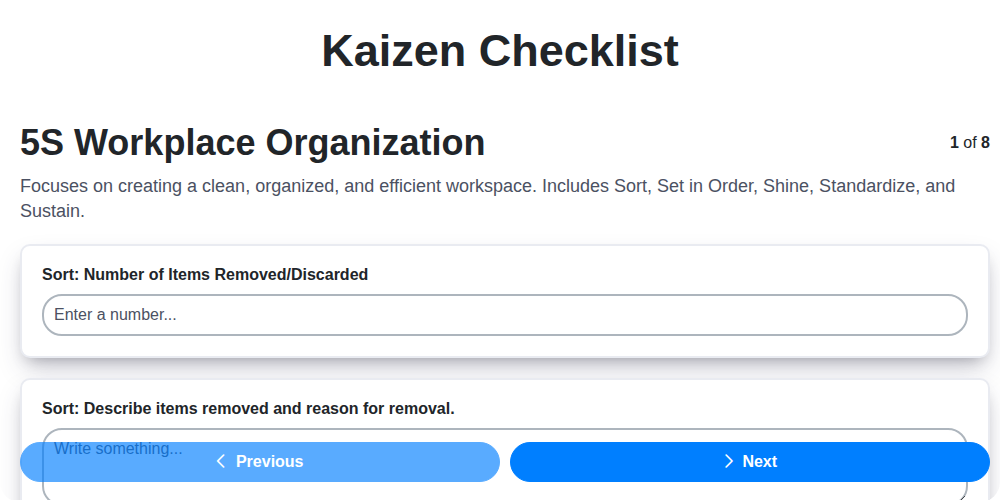
Szablon listy kontrolnej Kaizen: Twoja droga do ciągłego doskonalenia

Machine Safety Audit Checklist: Your Guide to a Safer Manufacturing Workplace
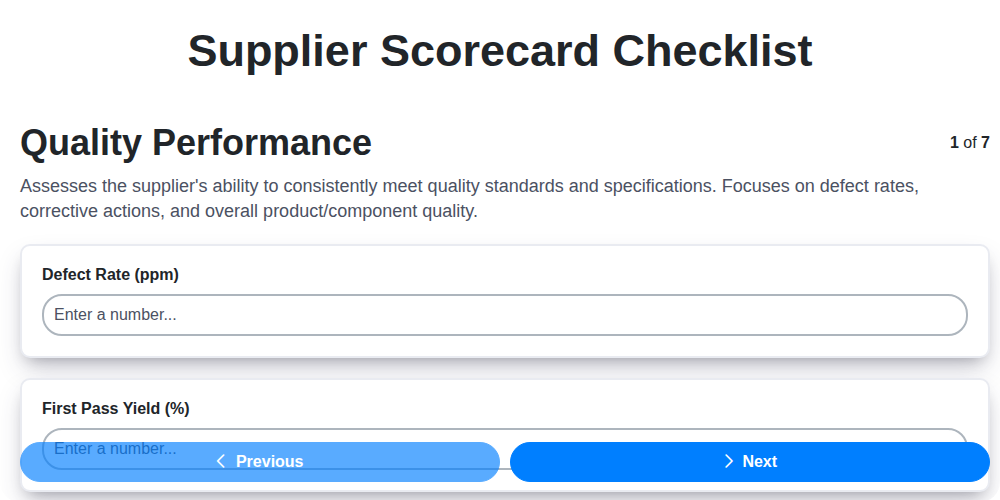
Mastering Supplier Performance: Your Free Supplier Scorecard Checklist Template
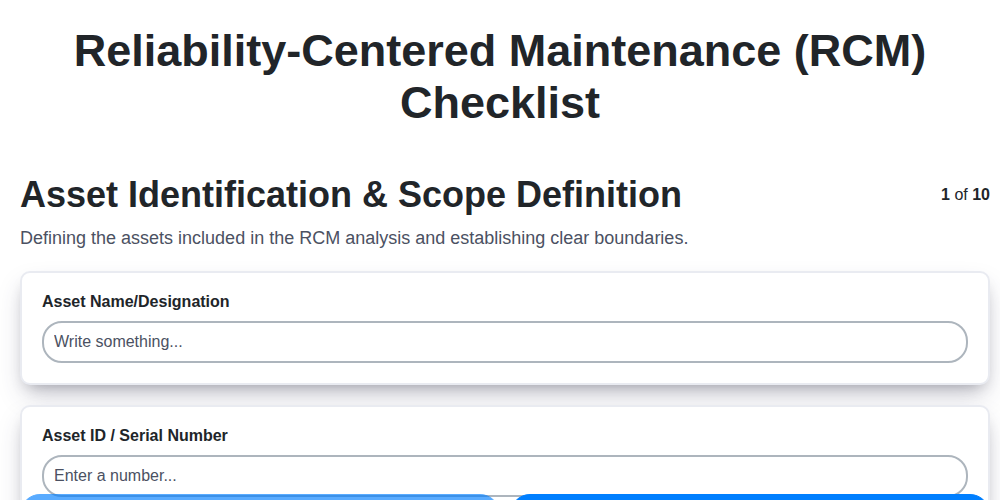
Twój ostateczny szablon listy kontrolnej RCM: Poradnik krok po kroku

Szablon listy kontrolnej LPA: Twój przewodnik po audytach procesów warstwowych

Twój kompleksowy szablon listy kontrolnej blokad i oznaczeń (LOTO).

Your Ultimate FSC 22000 Checklist Template
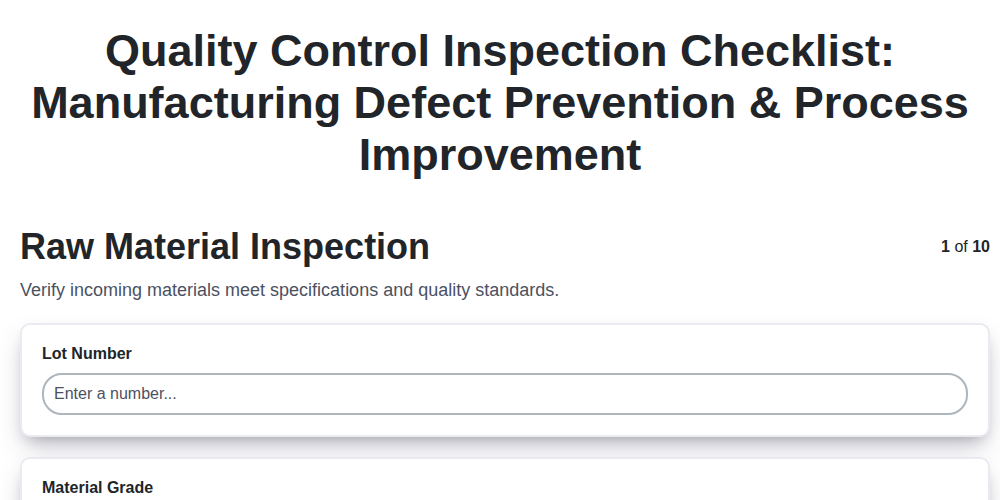
Szablon listy kontrolnej kontroli jakości: zapobiegaj wadom i ulepsz procesy produkcyjne.
Możemy to zrobić razem
Potrzebujesz pomocy z listami kontrolnymi?
Masz pytanie? Jesteśmy tu, aby pomóc. Prześlij zapytanie, a my szybko na nie odpowiemy.