Master Your Inventory: The Ultimate Print Shop Paper & Ink Stock Management Checklist 2026
Opublikowano: 28.10.2026 Zaktualizowano: 29.10.2026
Spis treści
- Introduction: Why Precision Inventory Management is Critical in 2026
- Step 1: Conducting a Comprehensive Paper Stock Audit
- Step 2: Detailed Ink & Toner Inventory Verification
- Step 3: Managing Consumables & Substrates for Seamless Production
- Step 4: Routine Condition & Damage Inspection Protocols
- Step 5: Implementing Reorder Point & Restock Analysis
- Step 6: Strengthening Supplier & Batch Tracking Workflows
- Step 7: Ensuring Storage Environment Compliance
- Step 8: Waste & Scrap Reconciliation for Cost Control
- Conclusion: Building a Future-Proof Supply Chain
- Resources & Links
TLDR: Avoid costly downtime and production delays in 2026 by implementing a rigorous inventory strategy. This guide provides a comprehensive checklist-covering everything from paper audits and ink verification to storage compliance and waste reconciliation-to ensure your print shop maintains optimal stock levels, reduces waste, and optimizes supplier management.
Introduction: Why Precision Inventory Management is Critical in 2026
In the rapidly evolving landscape of 2026, the printing industry is facing a unique set of pressures. As digital integration, sustainable manufacturing, and hyper-customized short-run orders become the industry standard, the margin for error in your supply chain has shrunk to almost zero.
The High Cost of Out of Stock
In an era of instant gratification and automated workflows, a single missing roll of specialized substrate or an empty reservoir of CMYK toner isn't just a minor inconvenience-it is a complete production bottleneck. When a high-priority job hits the press and you realize your premium coated stock is depleted, the ripple effect is devastating: missed deadlines, strained client relationships, and expensive emergency shipping fees that erode your profit margins.
Beyond Simple Counting: The 2026 Standard
Effective inventory management in 2026 has moved beyond simply knowing what is on the shelf. Modern print shops must navigate:
- Fluctuating Raw Material Costs: With global supply chains remaining volatile, precise tracking is essential to manage your COGS (Cost of Goods Sold) and maintain pricing stability.
- Sustainability Mandates: As environmental regulations tighten, managing waste and reconciling scrap is no longer optional-it is a core component of operational compliance.
- Complexity of Substrates: The rise of specialized finishes, eco-friendly inks, and multi-layered substrates means your inventory is more diverse and harder to track than ever before.
Efficiency Through Systematic Auditing
The goal of a robust management checklist is to transition your shop from a reactive state (fixing problems after they occur) to a proactive state (preventing shortages before they happen). By implementing a structured audit process, you ensure that your paper, ink, and consumables are always ready to meet the demands of your most complex print runs.
The following checklist is designed to serve as your operational blueprint, ensuring that your stock levels, storage conditions, and supplier data are optimized for maximum uptime and peak profitability.
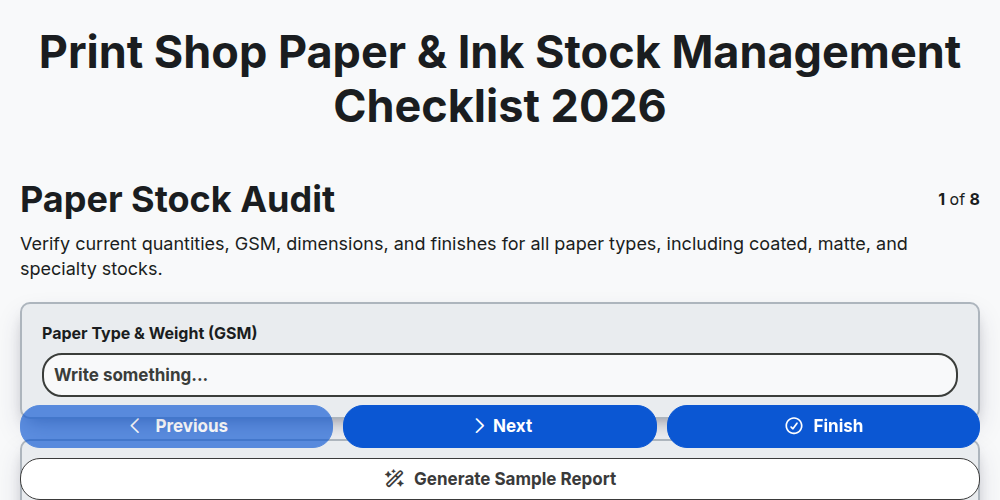
Step 1: Conducting a Comprehensive Paper Stock Audit
The Foundation of Precision: Auditing Your Paper Assets
The cornerstone of any-error-free print production is knowing exactly what is sitting on your shelves. A Paper Stock Audit is not merely a quick glance at your inventory; it is a meticulous, data-driven deep dive into every GSM, weight, and finish currently in your facility.
In 2026, with supply chain fluctuations becoming more unpredictable, a superficial count is no longer enough to protect your margins. To ensure your production schedule remains uninterrupted, your audit must move beyond simple quantity counting.
Key Focus Areas for a Successful Audit
To get the most out of your audit, your team should focus on the following three pillars:
- Granular Quantity Verification: Move beyond estimated pallets. Perform a physical count of individual reams and sheets. Discrepancies between your digital Inventory Management System (IMS) and your physical reality are the primary cause of missed deadlines and emergency, high-cost shipping fees.
- Specification Accuracy: Verify that the stock on the shelf matches the digital record. Are your 100lb gloss covers actually 100lb, or has a mislabeled batch entered the system? Confirming weights, finishes (matte, silk, gloss), and sizes ensures that when a job enters the queue, the material is truly ready for the press.
- The Dead Stock Identification: Use this audit to identify obsolete or slow-moving paper types. Highlighting stock that hasn't moved in over six months allows you to plan promotional sales or liquidations, freeing up valuable warehouse space for high-demand substrates.
Pro-Tip for 2026: The Digital Integration
As you conduct your audit, ensure every physical movement is logged in real-time. The goal of a modern audit is to bridge the gap between the warehouse floor and your procurement software, ensuring your Digital Twin of the inventory is 100% accurate.
Step 2: Detailed Ink & Toner Inventory Verification
Precision in Pigment: How to Verify Your Ink & Toner Levels
In a modern print shop, ink and toner are your lifeblood. Unlike paper, which is relatively easy to measure by the ream or roll, liquid inks and fine-toner powders require a more nuanced approach to verification. An error in this step doesn't just lead to empty containers; it can lead to color shifts, inconsistent print runs, and costly downtime during critical jobs.
To ensure your shop is prepared for the high-demand cycles of 2026, follow this rigorous verification protocol:
1. Volume & Weight Calibration
Don't rely solely on visual estimates. For liquid inks, implement a weight-based verification system.
- Liquid Ink: Use precision scales to weigh unopened and partially used containers. Compare the current weight against the manufacturer's full specification to calculate the exact remaining volume.
- Toner Powder: Check for settled or clumped toner. Ensure that cartridges are weighed to detect any potential leakage or moisture absorption that could affect density.
2. The Color Consistency Audit
Inventory verification isn't just about quantity; it's about quality.
- Batch Matching: Verify that your current stock contains enough of the same color batch (lot number) to complete upcoming large-scale runs. Mixing different ink batches mid-job is a primary cause of color drift.
- Color Profile Check: Ensure that your specialty inks (Pantone, metallic, or neon) are physically present and haven't expired or undergone separation.
3. Container Integrity & Seal Inspection
A leak in an ink reservoir can ruin an entire shipment of expensive paper stock. During your verification, inspect:
- Cap & Seal Integrity: Check for any signs of dried ink around the nozzles or cracked seals on toner cartridges.
- Container Pressure: For vacuum-sealed or pressurized containers, ensure there is no evidence of pressure loss, which could lead to oxidation.
4. Expiration & Shelf-Life Tracking
In 2026, sustainability and efficiency mean reducing chemical waste.
- Date Log Review: Cross-reference the Date of Manufacture (DOM) with your usage rates.
- First-In, First-Out (FIFO): As you verify your stock, physically move older containers to the front of the shelf. This ensures that no ink reaches its expiration date while sitting at the back of the rack.
5. Digital Reconciliation
Finally, bridge the gap between your physical shelf and your digital management system.
- Syncing the ERP: Immediately update your Inventory Management Software (IMS) or ERP with the physical counts obtained.
- Discrepancy Flagging: If the physical weight does not match the digital record, initiate an immediate investigation to identify whether the loss is due to unrecorded usage, evaporation, or theft.
Step 3: Managing Consumables & Substrates for Seamless Production
Beyond the Basics: The Critical Role of Consumables and Substrates
While paper and ink are the lifeblood of your printing operations, a truly efficient print shop relies on the secondary materials that hold a job together. In 2026, as precision and automation become even more integrated into production workflows, overlooking the small stuff can lead to costly downtime and-unforeseen bottlenecks.
To maintain a seamless production flow, your inventory management must extend to every peripheral item that touches your substrate.
The Hidden Inventory Essentials
Managing your consumables is about more than just counting boxes; it is about ensuring that every component required for a finished product is ready for the press. Your checklist should include a rigorous audit of:
- Adhesives and Glues: Checking for-shelf life expiration and viscosity consistency.
- Lamination Films & Coatings: Ensuring UV coatings, gloss, or matte films are in stock and free of air bubbles or defects.
- Cleaning Supplies: Verifying stocks of specialized solvents, lint-free wipes, and pressure rollers used for plate and cylinder maintenance.
- Binding & Finishing Supplies: Auditing staples, coils, combs, and specialized tapes used in post-press operations.
Substrate Versatility and Compatibility
In the modern landscape, paper is a broad term. As client demands shift toward eco-friendly, textured, and synthetic materials, your management strategy must account for the unique requirements of diverse substrates.
Ensuring Production Continuity
A gap in your consumable inventory is just as damaging as running out of ink. If you have the perfect stock of premium cardstock but lack the specific adhesive required for its finish, your entire production line grinds to a halt. Use this stage of the checklist to bridge the gap between raw materials and the final, finished product, ensuring that your shop is equipped to handle complex, multi-layered print jobs from start to finish.
Step 4: Routine Condition & Damage Inspection Protocols
Ensuring Material Integrity: Beyond Simple Counting
A common mistake in print shop management is assuming that if a roll of paper is in the warehouse, it is ready for production. Inventory management in 2026 is no longer just about quantity; it is about quality assurance. Even the most expensive premium stocks lose their value if they have been compromised by environmental factors or improper handling.
What to Look for During Inspection
When performing your routine inspections, your team should move beyond a quick glance and focus on these critical physical indicators:
- Moisture & Humidity Damage: Check for wavy edges on paper sheets or brittleness in certain substrates. Paper is hygroscopic; if your climate control fluctuates, your stock may become unusable for high-precision digital or offset printing.
- Edge Crushing and Creasing: Inspect the sides of paper reams and rolls for any signs of compression. Damaged edges can lead to jams in high-speed printers and misfeeds in finishing equipment.
- Ink Skinning and Sedimentation: For liquid inks, check for the formation of a skin on the surface or heavy sedimentation at the bottom of containers. This can clog nozzles and lead to inconsistent color density.
- Packaging Integrity: Inspect outer wraps, pallets, and shrink-wrap. Any breach in the primary packaging exposes your stock to dust, debris, and atmospheric changes that can ruin sensitive substrates.
Implementing a Red Flag System
To make this step actionable, do not just observe-document. We recommend implementing a standardized Red Flag protocol:
- Identify: Any stock showing signs of degradation is immediately marked.
- Isolate: Move the compromised material to a designated Quarantine Zone to prevent it from accidentally entering the production workflow.
- Evaluate: Determine if the material can be used for low-precision jobs (like internal proofs) or if it must be written off as waste.
- Log: Every instance of damage must be recorded in your digital inventory system to help identify patterns, such as a specific supplier's packaging failing or a specific storage corner experiencing high humidity.
By integrating a rigorous inspection protocol into your workflow, you transition from reactive troubleshooting to proactive quality control, significantly reducing costly mid-print failures.
Step 5: Implementing Reorder Point & Restock Analysis
Precision Planning: Mastering Reorder Points and Restock Analysis
In the fast-paced printing industry of 2026, reactive management is a recipe for downtime. Waiting until a paper roll is empty or an ink cartridge is depleted before placing an order creates a ripple effect of missed deadlines and frustrated clients. To maintain a seamless production flow, you must transition from reactive ordering to predictive replenishment.
The Science of the Reorder Point (ROP)
The Reorder Point is the specific threshold that triggers a new purchase order. To calculate this accurately, you cannot rely on guesswork; you must account for two critical variables:
- Lead Time: The total time elapsed from the moment you place an order until the goods are physically on your shelf (including processing, shipping, and customs).
- Daily Usage Rate: The average amount of specific stock consumed during your standard production cycle.
The Formula for Success:
Reorder Point = (Average Daily Usage × Lead Time in Days) + Safety Stock
Integrating Safety Stock
In 2026, global supply chains remain unpredictable. Safety stock acts as your operational insurance policy. This is the buffer inventory held to protect against unexpected surges in print volume or unexpected supplier delays. A robust restock analysis determines whether you need a 10% buffer or a 25% buffer based on the volatility of your specific substrate's availability.
Data-Driven Restock Analysis
Modern print shops should leverage historical data to refine their restocking strategy. Periodically review your consumption patterns to identify trends:
- Seasonal Surges: Are you seeing a 30% increase in heavy cardstock usage during Q4? Your reorder points should adjust dynamically before the rush begins.
- Economic Order Quantity (EOQ): Analyze whether ordering in larger bulk quantities reduces your per-unit cost enough to outweigh the increased holding costs and storage requirements.
- Trend Forecasting: Use your inventory software to flag items that are moving faster than their predicted velocity, allowing you to adjust thresholds before a stockout occurs.
By implementing a rigorous Reorder Point and Restock Analysis, you transform your inventory from a mounting expense into a strategic asset, ensuring your presses never stop running due to a preventable shortage.
Step 6: Strengthening Supplier & Batch Tracking Workflows
Precision Tracking for Predictable Production
In the fast-paced production environment of 2026, simply knowing how much stock you have is no longer enough. To maintain true operational excellence, you must implement rigorous Supplier & Batch Tracking protocols. This step moves your inventory management from reactive replenishment to proactive quality control.
Why Batch Tracking is Non-Negotiable
In print production, consistency is your most valuable currency. Even a minor variation in a paper coating or an ink pigment density can lead to color shifts that compromise a high-value print run. By documenting batch or lot numbers during your audit, you create a paper trail for your physical stock.
- Quality Control & Error Isolation: If a client reports a color inconsistency on a job completed last week, batch tracking allows you to pinpoint exactly which ink shipment or paper roll was used. This prevents you from having to scrap an entire warehouse of stock if only one specific batch is defective.
- Rapid Recall Management: Should a supplier issue a product recall due to chemical instability or substrate defects, you can instantly identify which finished goods in your warehouse are at risk.
Optimizing Supplier Performance
The second half of this step involves auditing the reliability of your vendors. Use your inventory logs to perform a performance review on your primary suppliers:
- Lead Time Accuracy: Are your paper deliveries arriving within the promised window, or are late arrivals causing production bottlenecks?
- Order Completeness: Track the frequency of short shipments where the quantity delivered does not match the packing slip.
- Consistency Audit: Monitor if specific suppliers are showing a trend of increased damage or degraded quality over time.
Implementing Digital Traceability
To make this step effective in 2026, move away from manual spreadsheets. Use your Inventory Management Software (IMS) to link every incoming shipment to a specific batch ID. When an item is scanned out for a job, the system should automatically log that specific batch number against the work order. This level of granular data turns your inventory from a list of supplies into a strategic asset.
Step 7: Ensuring Storage Environment Compliance
Maintaining the Gold Standard: Environmental Control
In 2026, precision printing demands more than just high-quality materials; it requires a controlled ecosystem. Even the most expensive premium paper or high-pigment ink is worthless if its chemical integrity has been compromised by poor storage conditions. Managing your inventory isn't just about counting units; it is about auditing the environment where those units live.
The Critical Variables
To ensure your stock remains print-ready, your compliance check must focus on three primary environmental threats:
- Humidity Regulation: Paper is hygroscopic, meaning it breathes. Fluctuations in humidity lead to curling, waves, and stretching, which can cause devastating jams in high-speed digital presses or offset machines. Ensure your storage area maintains a consistent relative humidity (RH) level, typically between 40% and 50%.
- Temperature Stability: Extreme heat can accelerate the drying process in open ink containers or alter the viscosity of liquid inks, leading to inconsistent color density. Conversely, cold temperatures can make substrates brittle. Aim for a stable, climate-controlled temperature range to prevent chemical degradation.
- Light & UV Exposure: Prolonged exposure to direct sunlight or intense UV light can lead to sun-bleaching of pigments and the yellowing of bright white paper stocks. Ensure all sensitive stocks are stored in dark, opaque packaging or away from windows.
Compliance Checklist Actions
To turn monitoring into a formal compliance process, implement these routine checks:
- Digital Hygrometer Log: Don't rely on feeling the air. Use digital sensors to log humidity and temperature readings daily. Digital logs provide the paper trail needed for quality audits.
- Seal Integrity Inspection: Verify that all film wraps, pallet covers, and ink containers are hermetically sealed. A breach in packaging is an invitation for environmental contamination.
- Airflow Optimization: Ensure that paper stacks and ink pallets are not pushed directly against exterior walls or stored in stagnant corners. Proper airflow prevents micro-climates of moisture buildup within the warehouse.
- Pest & Contaminant Audit: A compliance check is incomplete without verifying that the storage space is free from dust, debris, and pests that could physically damage substrate surfaces.
Step 8: Waste & Scrap Reconciliation for Cost Control
Minimizing Shrinkage through Precise Reconciliation
In a high-volume print environment, the difference between profitability and loss often hides in the scrap bin. Waste and scrap reconciliation is not just about noting what was thrown away; it is a critical financial audit designed to identify discrepancies between your theoretical inventory and your physical reality.
Identifying the Why Behind the Waste
To truly master your stock management in 2026, you must categorize your waste. Not all scrap is created equal, and distinguishing between them allows for targeted operational improvements:
- Setup Waste: The unavoidable paper and ink used during machine calibration and color matching.
- Production Errors: Spoilage caused by mechanical malfunctions, misfeeds, or human error.
- Substrate Defects: Material that arrived from the supplier with pre-existing flaws (e.g., coating inconsistencies or creases).
- End-of-Run Remnants: Unusable offcuts that are too small for future jobs.
The Reconciliation Process
To implement an effective reconciliation workflow, follow these three core steps:
- Log Every Incident: Implement a digital logging system where operators record the weight or sheet count of every wasted item immediately after it occurs.
- Compare Against Usage: At the end of each week, compare your total Consumed Stock (Total Starting Stock - Remaining Stock) against your Total Produced Stock + Total Recorded Waste.
- Analyze the Variance: If your physical stock is lower than your recorded usage suggests it should be, you have an unaccounted loss. High variance is a red flag for theft, unrecorded errors, or significant machine calibration issues.
Driving Continuous Improvement
The ultimate goal of reconciliation is to turn waste data into actionable intelligence. By tracking waste trends over time, you can identify if a specific paper brand is causing frequent jams or if a particular shift requires more training on ink density settings. In 2026, a successful print shop doesn't just manage what they have-they actively reduce what they lose.
Conclusion: Building a Future-Proof Supply Chain
Moving from Reactive to Proactive Management
As we move into 2026, the printing industry is facing new challenges-from fluctuating raw material costs to increasingly complex global supply chain disruptions. Relying on gut feelings or manual, end-of-month counts is no longer a sustainable strategy for a profitable print shop. By implementing this Paper & Ink Stock Management Checklist, you are shifting your operations from a reactive state of putting out fires to a proactive state of strategic planning.
The Competitive Advantage of Precision
A disciplined approach to inventory doesn't just prevent costly downtime; it directly impacts your bottom line. When you master your paper audits, monitor your substrate conditions, and optimize your reorder points, you unlock several key benefits:
- Reduced Dead Stock: Minimizing excess inventory frees up much-needed working capital.
- Enhanced Quality Control: Regular inspections ensure that your output remains consistent and free from substrate defects.
- Improved Profit Margins: Precise waste reconciliation and waste reduction strategies allow you to capture lost revenue.
- Supplier Leverage: With accurate batch tracking and usage data, you enter negotiations with suppliers from a position of strength and clarity.
Staying Ahead in 2026
The future of print production lies in the integration of physical diligence and digital intelligence. As you execute these checklist steps, consider how automation and real-time tracking tools can augment your manual audits.
The goal is simple: to ensure that when a high-priority job hits your press, your materials are ready, your ink is optimal, and your workflow is uninterrupted. Start implementing these checks today to build a more resilient, efficient, and profitable print shop for tomorrow.
Resources & Links
- Shopify Blog: Comprehensive guides on small business inventory management strategies and retail best practices.
- Printweek: Leading industry news and technical insights for the commercial printing and packaging sector.
- drupa: The world's most significant trade fair for the printing industry, offering insights into future printing technologies.
- Forbes Business: Analysis of supply chain trends and the impact of automation on manufacturing and production.
- Supply Chain Brain: Expert resources on logistics, procurement, and advanced supply chain management techniques.
- ISO (International Organization for Standardization): Standards and frameworks for quality management and storage environment compliance.
- Graphtec: Information on precision cutting and material management for professional print production.
- Printing Industries of America: Resources and advocacy for the printing and imaging industry professionals.
- American Society for Quality (ASQ): Tools and methodologies for quality control, damage inspection, and waste reduction.
- Zebra Technologies: Advanced solutions for asset tracking, barcode scanning, and real-time inventory visibility.
- Oracle NetSuite: Cloud-based ERP solutions specifically for managing complex manufacturing and stock levels.
- ScienceDirect: Academic research on chemical stability of inks and the physics of paper substrate durability.
- McKinsey & Company: Strategic insights into the future of manufacturing and global supply chain resilience.
- Prowess Print Management: Specialized software solutions for print shop workflow and job costing automation.
- CMYK Industry Standards: Educational resources regarding color management, ink density, and substrate compatibility.
- Inventory Operations Hub: Best practices for calculating reorder points, safety stock, and economic order quantity (EOQ).
Komentarze
Na razie nie ma żadnych komentarzy. Dodaj pierwszy!
Demonstracja rozwiązania do zarządzania zapasami
Zoptymalizuj swoje zapasy i zwiększ rentowność! ChecklistGuro upraszcza śledzenie, zamawianie i realizację zamówień. Zmniejsz straty, zminimalizuj braki w zapasach i popraw efektywność. Zarządzaj wszystkim za pomocą naszej platformy Work OS.
Powiązane artykuły
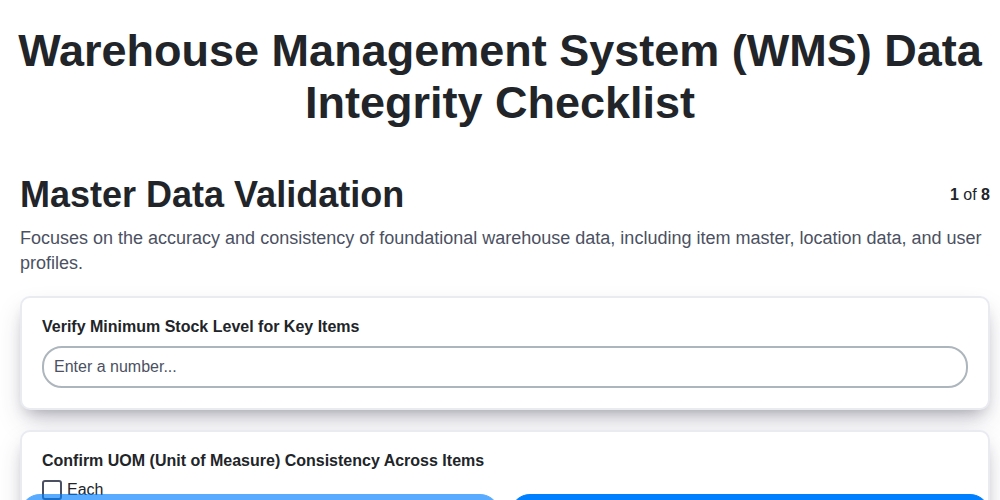
Warehouse Data Integrity: Your WMS Checklist Template

Mastering Inventory Turnover: Your Analysis Checklist Template
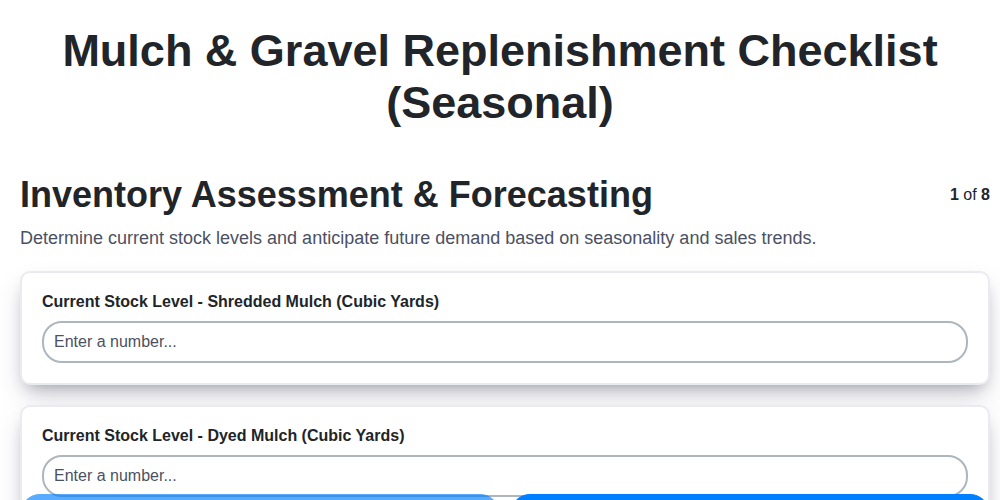
Seasonal Mulch & Gravel Checklist Template: Stay Stocked & Ready
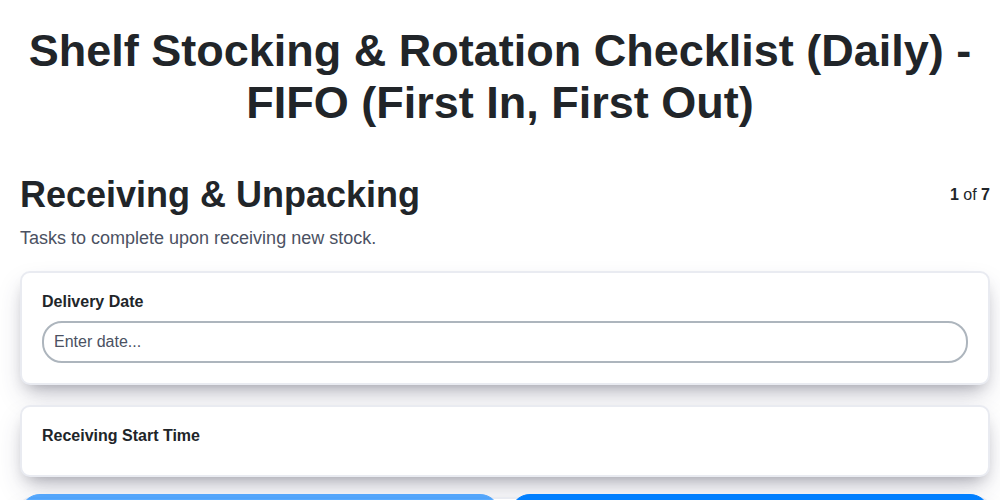
Daily Shelf Stocking & Rotation Checklist: FIFO Made Easy
Order Picking Process Verification: Your Checklist Template
Szablon miesięcznej listy kontrolnej organizacji i bezpieczeństwa magazynu
Vendor Lead Time Validation: A Checklist Template for Supply Chain Success
Szablon listy kontrolnej codziennych inspekcji magazynu
Potrzebujesz pomocy z listami kontrolnymi?
Masz pytanie? Jesteśmy tu, aby pomóc. Prześlij zapytanie, a my szybko na nie odpowiemy.