Work Order Release Workflow for Manufacturers
Opublikowano: 30.03.2026 Zaktualizowano: 31.03.2026
Spis treści
- Introduction: Streamlining Work Order Release
- Understanding the Work Order Release Workflow
- Step 1: Retrieve Work Order Details
- Step 2: Check Material Availability - A Critical First Step
- Step 3: Calculate Required Production Quantity
- Step 4: Update Work Order Status - Moving Forward
- Step 5: Assign Production Team - Right People, Right Task
- Step 6: Schedule Material Pull - Timing is Everything
- Step 7: Notify Production Manager - Keeping Stakeholders Informed
- Step 8: Notify Warehouse Team - Collaboration is Key
- Step 9: Create Material Request - Formalizing the Need
- Step 10: Update Material Reservation - Securing Resources
- Step 11: Verify Material Pull Completion - Ensuring Accuracy
- Step 12: Generate Release Report - Documenting the Process
- Resources & Links
TLDR: Automate your work order release process! This workflow checks material availability, calculates production needs, assigns teams, schedules material pulls, and generates reports, streamlining manufacturing operations and preventing costly delays.
Introduction: Streamlining Work Order Release
In today's competitive manufacturing landscape, efficiency is paramount. Delays in work order release can ripple through the entire production process, leading to missed deadlines, increased costs, and frustrated teams. A well-defined and automated work order release workflow isn't just a nice-to-have; it's a crucial element of operational excellence. This post will delve into a comprehensive workflow designed to streamline the release of work orders, minimizing bottlenecks and maximizing productivity. We'll outline a step-by-step process, highlighting key actions and considerations for manufacturers striving for seamless production flow. By automating and optimizing this critical process, you can free up valuable time, reduce errors, and ultimately, improve your bottom line. Let's explore how a robust work order release workflow can transform your manufacturing operations.
Understanding the Work Order Release Workflow
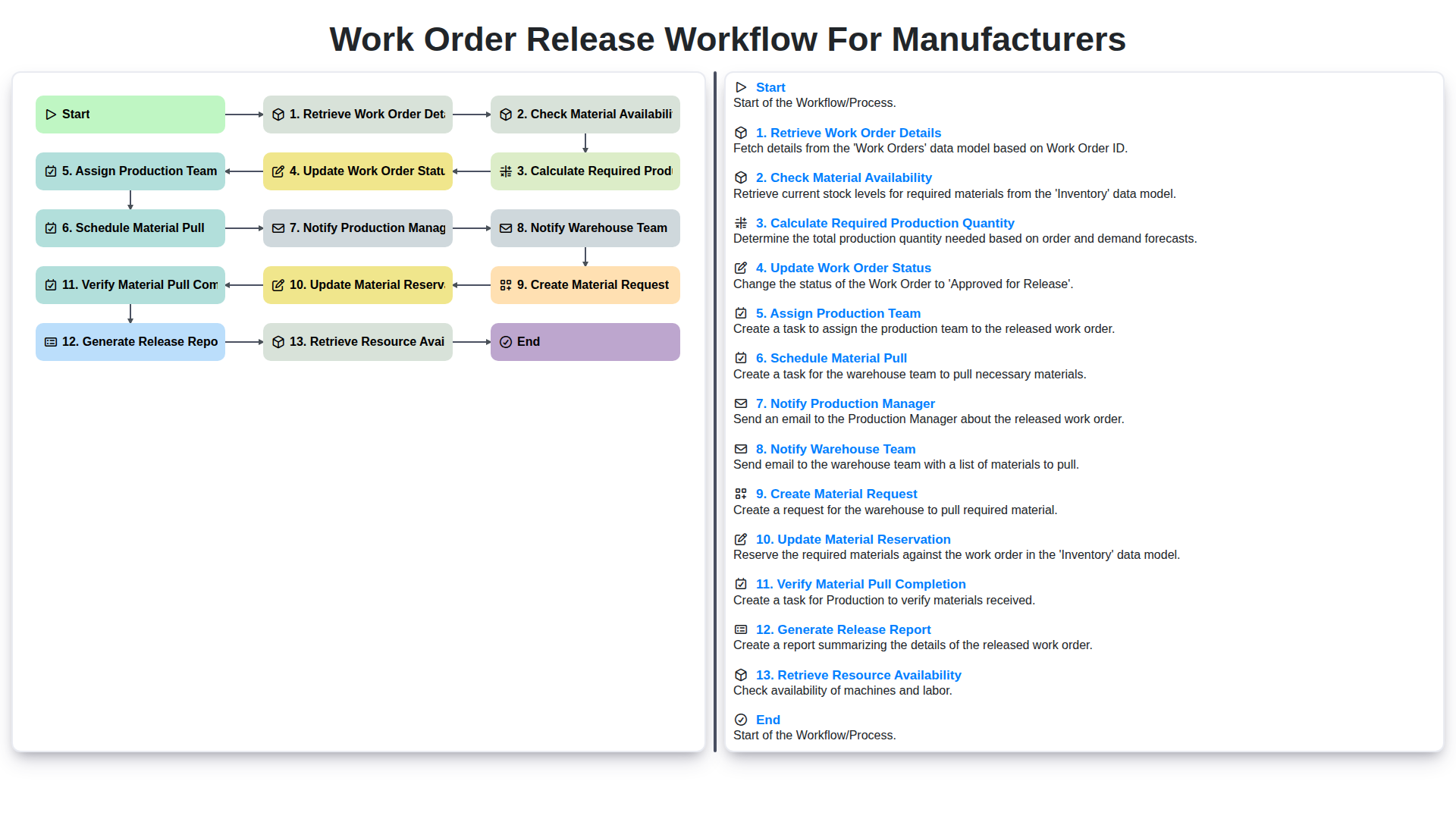
The work order release workflow is a critical process for manufacturers, ensuring a smooth transition from planning to execution. It's more than just a button press; it's a carefully orchestrated sequence of checks, calculations, and notifications designed to minimize delays, prevent errors, and maximize efficiency. Let's break down the core steps involved, outlining how each contributes to a successful production run.
The workflow typically begins with Retrieving Work Order Details, which pulls all relevant information - product specifications, required quantity, due date, and any specific instructions - from the central system. Next, a vital step is Checking Material Availability. This isn't just about knowing if materials exist, but ensuring sufficient quantity is on hand to fulfill the order. Following this, the system Calculates Required Production Quantity, factoring in yield rates, scrap, and potential rework. The Work Order Status is then Updated to reflect its readiness for release, moving it from 'Planned' to 'Released' or a similar designation.
Crucially, the right people need to be involved. An essential step is Assigning a Production Team who will be responsible for executing the work order. Simultaneously, the system Schedules Material Pull, outlining the sequence and timing for retrieving necessary components. The Production Manager and Warehouse Team are then Notified of the release and associated material requirements.
To formally request materials, a Material Request is Created, triggering the material requisition process. The system then Updates Material Reservation, preventing other work orders from consuming the same resources. Once the materials are pulled, Verify Material Pull Completion confirms the availability of all required items. A comprehensive Release Report is Generated, providing a snapshot of the work order details, assigned team, material status, and scheduled activities. Finally, to ensure resources like machinery and personnel are available, the system Retrieves Resource Availability, preventing scheduling conflicts and bottlenecks. This structured approach minimizes the risk of production disruptions and ensures a timely and efficient manufacturing process.
Step 1: Retrieve Work Order Details
The work order release workflow begins with a crucial first step: retrieving comprehensive work order details. This isn't just about pulling up the work order number; it's about gathering all relevant information needed for a successful production run. This includes, but isn't limited to: the product being manufactured, the required quantity, the due date, bill of materials (BOM), routing information (sequence of operations), and any specific instructions or notes. Accessing this data from your ERP or manufacturing execution system (MES) is essential for subsequent steps to be performed accurately. Without complete and accurate details at the outset, the entire workflow is vulnerable to errors and delays. A robust retrieval process should also include version control to ensure the correct and most up-to-date information is used.
Step 2: Check Material Availability - A Critical First Step
Before a work order can move forward, ensuring you have the necessary materials is absolutely critical. This step isn't just about knowing if you have the materials; it's about knowing how much you have and if it's enough to meet the production needs.
This check involves querying your inventory management system. We're looking for more than just a simple inventory count. The system needs to account for:
- Current Stock Levels: What's physically on hand?
- Committed Inventory: What's already allocated to other work orders or projects?
- Incoming Shipments: Are there any pending deliveries that can be factored in?
- Safety Stock: Do you have enough buffer to account for unexpected delays or increased demand?
A successful material availability check flags any potential shortages early - preventing costly production delays, expediting fees for rush orders, and minimizing the risk of halting production altogether. It also allows the system to intelligently suggest alternative materials or trigger the creation of a material request (covered in a later step). Failing this step effectively stalls the work order release and requires immediate attention to resolve the material shortage.
Step 3: Calculate Required Production Quantity
Before a work order can be released, it's crucial to determine the precise quantity that needs to be produced. This isn't always as straightforward as the order quantity. Several factors need to be considered:
- Demand Forecasts: Are there any recent sales or demand shifts that necessitate adjustments to the initial order quantity?
- Existing Inventory: What's already on hand? We need to account for stock levels to avoid overproduction or shortages.
- Safety Stock Levels: Maintaining adequate safety stock is essential for mitigating unforeseen demand spikes. The required production quantity should ensure we maintain these safety margins.
- Scrap Rate & Yield: Manufacturing processes inherently involve some waste. Historical data on scrap rates and yield percentages are used to factor in the additional quantity needed to account for losses during production.
- Lead Times: Consider the time it takes to produce and deliver the finished goods. This will inform the production quantity needed to meet projected delivery dates.
The system should automatically factor in these variables based on historical data and current projections, providing an accurate and adjusted production quantity for the work order. This minimizes errors, optimizes resource allocation, and ultimately contributes to on-time delivery.
Step 4: Update Work Order Status - Moving Forward
Once the initial checks and calculations are complete, the first concrete action is to update the work order status to Pending Release. This signifies that the work order has passed the preliminary assessment and is ready for the next phase. This status change is crucial; it triggers subsequent automated actions within the workflow and alerts relevant teams that the order is progressing. The update should include a timestamp and potentially the user who initiated the change, providing an audit trail for transparency and accountability. This seemingly simple step is a key indicator of progress and allows for real-time monitoring of the work order's journey through the manufacturing process.
Step 5: Assign Production Team - Right People, Right Task
Once the work order has been assessed and approved for release, the critical step of assigning the right production team takes place. This isn't just about picking any available group; it's about matching the team's skillset and experience to the specific requirements of the work order.
Consider factors like:
- Skillset: Does the team have the necessary expertise in the processes and machinery involved in this work order?
- Capacity: Does the team have the available time and bandwidth to complete the work efficiently and within the required timeframe?
- Experience: Have team members previously handled similar work orders? Experience often translates to fewer errors and faster throughput.
The system should ideally integrate with employee skill databases and availability calendars to facilitate informed decision-making. This avoids bottlenecks, ensures quality, and fosters a sense of responsibility within the production team. The assignment should be clearly documented within the work order, including lead personnel and estimated hours.
Step 6: Schedule Material Pull - Timing is Everything
The material pull is the crucial first step in getting production underway. This isn't just about grabbing materials; it's about doing so at the right time. Premature pulls can lead to wasted storage space and potential damage to materials. Late pulls, however, cause delays and bottlenecks on the production line, ultimately impacting delivery schedules.
Our workflow includes a dedicated step to schedule the material pull. This isn't an arbitrary action. It's calculated based on several factors pulled from previous steps, including the calculated production quantity, resource availability (we're looking ahead!), and the confirmed production schedule.
The system considers the lead time required for the warehouse team to gather and stage the necessary materials. It also factors in potential logistical hurdles, such as material location within the warehouse and any necessary staging requirements. This proactive scheduling minimizes the risk of disruptions and ensures the production team has everything they need when they need it. Ultimately, a well-scheduled material pull is the foundation for a smooth and efficient production process.
Step 7: Notify Production Manager - Keeping Stakeholders Informed
The Production Manager plays a crucial role in ensuring smooth operations, and keeping them informed early in the work order release workflow is paramount. This notification isn't just about informing them; it's about enabling them to anticipate potential bottlenecks and proactively address any challenges. The notification should include key details like the work order number, a brief description of the order, the estimated start date, and any potential dependencies or risks identified during the initial assessment. This allows the Production Manager to review the plan, assess resource allocation, and provide early feedback or approvals, minimizing delays and maximizing efficiency. A clear and concise notification, delivered promptly, ensures alignment and fosters a collaborative environment.
Step 8: Notify Warehouse Team - Collaboration is Key
Once the work order is progressing through the release workflow, timely notification of the warehouse team is crucial. This isn't just about informing them; it's about fostering collaboration. The notification should include the work order number, a list of required materials, and the urgency level based on the production schedule. This allows the warehouse team to proactively prepare for the material pull, identifying any potential shortages or delays before they impact the production line. They can also confirm receipt of the work order and acknowledge their commitment to fulfilling the material request, ensuring everyone's on the same page and minimizing bottlenecks. This proactive communication avoids last-minute scrambles and sets the stage for a smooth material pull process.
Step 9: Create Material Request - Formalizing the Need
Once the work order details are confirmed and the required quantity is calculated, the next critical step is formally requesting the necessary materials. This is achieved through the creation of a Material Request. This isn't just about listing items; it's about initiating a traceable record of the need.
The Material Request should include:
- Work Order Number: Directly links the request to the specific production task.
- Material List: A detailed list of all components and raw materials required, including part numbers, descriptions, and quantities.
- Requested By: The individual initiating the request, providing accountability.
- Requested Date: Timestamping the need for materials.
- Priority Level: Indicates the urgency of the request (e.g., critical, high, medium, low). This helps the warehouse team prioritize pulls.
- Location(s) Required: Specifies where the materials should be delivered to facilitate the production process.
This formal request triggers the subsequent steps in the workflow, ensuring a clear chain of responsibility and providing a documented audit trail. Without a properly created Material Request, the entire process risks delays and potential errors.
Step 10: Update Material Reservation - Securing Resources
Once the Material Request is created, the next crucial step is to update material reservations. This involves formally blocking out the required materials from general warehouse availability, ensuring they're specifically earmarked for this work order. This prevents other departments or work orders from accidentally utilizing those materials, which could lead to delays and production bottlenecks.
The system should automatically update the inventory records to reflect the material reservation. This includes reducing the available stock quantity and tagging the materials with the specific work order number. This real-time visibility is vital for accurate material tracking and proactive problem-solving. The reservation status is also clearly displayed, allowing the warehouse team to understand the material's designated use. Proper material reservation is a foundational step; without it, the entire release workflow risks disruption.
Step 11: Verify Material Pull Completion - Ensuring Accuracy
The journey from work order release to production isn't complete until we're absolutely certain the required materials are actually in the production area. This step, "Verify Material Pull Completion," is a critical quality control checkpoint.
After the warehouse team completes the material pull (as notified in the previous step), it's essential to have a designated individual - often a production team member or a quality control specialist - physically confirm that all listed materials are present and in the correct quantities. This verification goes beyond simply checking off a list. It involves:
- Visual Inspection: Ensuring the materials match the work order specifications (part number, revision, etc.).
- Quantity Confirmation: Counting or measuring the pulled materials to confirm they align with the original request. Discrepancies, even minor ones, should be immediately flagged and investigated.
- Documentation: Recording the verification completion, including the name of the verifier, date, and time. Ideally, this verification is digitally recorded within the work order management system.
This step minimizes the risk of production delays due to missing materials and reduces the potential for quality issues caused by incorrect components. It serves as a final safeguard before production officially begins.
Step 12: Generate Release Report - Documenting the Process
The culmination of the work order release workflow isn't just about pushing the work order into production; it's about creating a comprehensive record of the process itself. The Generate Release Report step is critical for traceability, auditing, and continuous improvement.
This report isn't just a confirmation; it's a detailed snapshot capturing key decisions and actions taken. It should include:
- Work Order Details: Work order number, description, due date, and priority.
- Material Requirements: A complete list of materials needed, including quantities and any special notes (e.g., specific lot numbers, supplier preferences).
- Production Quantities: The calculated production quantities based on the work order and any adjustments made.
- Resource Allocation: Details on which production team and equipment are assigned to the work order.
- Approval History: A log of who approved each stage of the release process.
- Any Deviations: If adjustments were made to the original plan (e.g., material substitutions, quantity changes), these should be clearly documented with justification.
This report serves as a single source of truth, accessible to all stakeholders. It facilitates quick troubleshooting if issues arise during production and provides valuable data for analyzing the efficiency of the release workflow. Furthermore, it provides evidence of due diligence and adherence to process guidelines, vital for quality control and regulatory compliance.
Resources & Links
- Aphex Manufacturing Software: Offers Manufacturing Execution Systems (MES) and work order management solutions that can automate and optimize work order release workflows. Examples of functionality that aligns with the blog post steps are Material Resource Planning and real-time visibility.
- Infor ERP Solutions: Provides Enterprise Resource Planning (ERP) systems with comprehensive work order management capabilities, covering material planning, production scheduling, and resource allocation. Relevant for understanding the broader context of work order release.
- Oracle Manufacturing Cloud: Offers cloud-based manufacturing solutions, including work order management and resource scheduling. Helps visualize how digital tools can streamline the entire release process.
- Microsoft Dynamics 365 for Manufacturing: Offers modules to manage production processes, material planning, and work order execution. Provides insights into how to integrate different phases of the work order release.
- MRP Easy Solutions: Provides a simpler, more accessible Manufacturing Resource Planning (MRP) system, crucial for material planning and work order management. Demonstrates how smaller manufacturers can benefit from automation.
- Lean Manufacturing Tools: Offers resources and explanations on Lean Manufacturing principles, which often involve optimizing workflows like work order release to reduce waste and improve efficiency. Important for understanding the 'why' behind workflow design.
- Quality Digest: Provides articles and resources related to quality control and manufacturing processes. Relevant for understanding the importance of accuracy and verification in the work order release workflow.
- National Institute of Standards and Technology (NIST): Provides standards and best practices for manufacturing processes and data security. Useful for understanding industry standards related to data accuracy and process validation within the workflow.
- Society of Manufacturing Engineers (SME): A professional engineering society and a publisher of technical resources. Offers insight into best practices, standards, and advancements in manufacturing, including work order management.
Najczęściej zadawane pytania
What is a work order release workflow in manufacturing?
A work order release workflow is a standardized sequence of steps used to authorize and initiate the production of specific goods. It ensures that all necessary resources, such as raw materials, labor, and machinery, are available and verified before production begins.
Why is a formal release process important for manufacturers?
A formal process prevents production bottlenecks, reduces waste from material shortages, ensures quality control compliance, and provides clear accountability across the shop floor, ultimately leading to more predictable production timelines.
What are the key components of a successful work order release?
Key components include a Bill of Materials (BOM) verification, availability check for raw materials, resource capacity planning, production scheduling, and the official digital or physical authorization from the production manager.
How does a work order release workflow impact inventory management?
The workflow acts as a trigger for inventory consumption. By validating material availability before release, manufacturers can prevent 'stockouts' during production and ensure that the ERP system accurately reflects real-time inventory usage.
What role does automation play in modern work order workflows?
Automation reduces manual errors and accelerates the release cycle. Integrated Manufacturing Execution Systems (MES) can automatically trigger work order releases once predefined criteria—such as material arrival or machine availability—are met.
Komentarze
Na razie nie ma żadnych komentarzy. Dodaj pierwszy!
Demo rozwiązania do zarządzania produkcją
Przestań tracić czas na papierkowanie i zmagania z niepowiązanymi systemami! Nasze rozwiązanie zapewnia jasność i kontrolę nad procesem produkcyjnym. Od standardowych procedur operacyjnych (SOP) i konserwacji sprzętu, po kontrolę jakości i śledzenie zapasów, upraszczamy każdy etap.
Powiązane artykuły
Szablon listy kontrolnej Kaizen: Twoja droga do ciągłego doskonalenia

Machine Safety Audit Checklist: Your Guide to a Safer Manufacturing Workplace
Mastering Supplier Performance: Your Free Supplier Scorecard Checklist Template
Twój ostateczny szablon listy kontrolnej RCM: Poradnik krok po kroku

Szablon listy kontrolnej LPA: Twój przewodnik po audytach procesów warstwowych

Twój kompleksowy szablon listy kontrolnej blokad i oznaczeń (LOTO).

Your Ultimate FSC 22000 Checklist Template
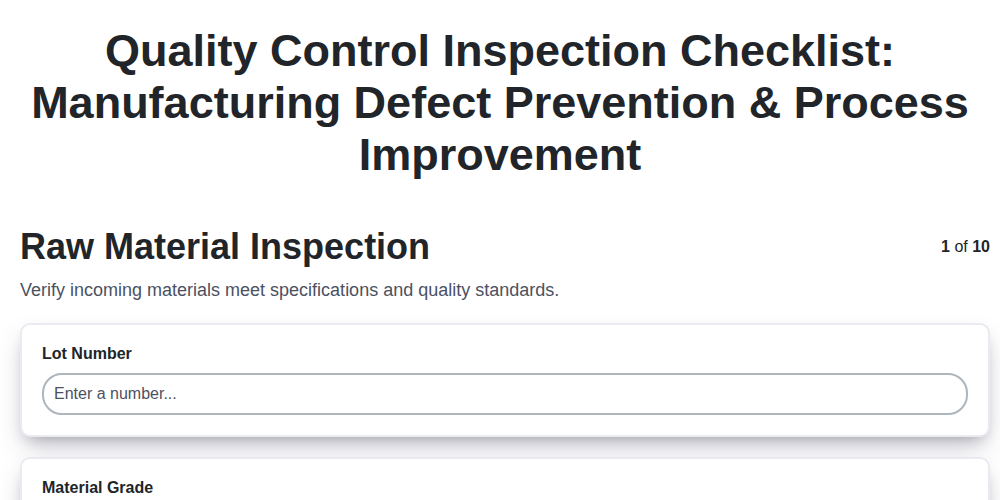
Szablon listy kontrolnej kontroli jakości: zapobiegaj wadom i ulepsz procesy produkcyjne.
Możemy to zrobić razem
Potrzebujesz pomocy z listami kontrolnymi?
Masz pytanie? Jesteśmy tu, aby pomóc. Prześlij zapytanie, a my szybko na nie odpowiemy.