Dental Treatment Planning Workflow: Guide Patients & Optimize Dental Care
Публикувано: Обновено: 04/16/2026
Съдържание
- Understanding the Modern Dental Treatment Planning Workflow
- Step 1: Gathering the Essentials - Patient and Imaging Data
- Step 2: The Initial Consultation and Documentation Phase
- Step 3: Financial Clarity - Estimating Costs and Checking Coverage
- Step 4: Building the Blueprint - Generating and Reviewing the Treatment Plan
- Step 5: Ensuring Readiness - Assessing Risk and Necessity
- Step 6: Engaging the Patient - Discussion, Review, and Sign-Off
- Step 7: Financial Finalization - Co-pays and Documentation
- Step 8: Streamlining Care - Communicating Scope to Support Staff
- Step 9: Transparency Through Reporting - The Comprehensive Proposal
- Step 10: Navigating Insurance Hurdles - Pre-Authorization Checks
- Step 11: Beyond the Appointment - Education and Follow-Up Care
- Step 12: Optimizing Treatment Flow - Sequencing Procedures for Best Results
- Conclusion: Why a Smooth Workflow Matters for Your Dental Health
- Resources & Links
TLDR: This workflow provides a step-by-step roadmap for your dental practice to guide patients through the treatment planning process efficiently. By systematically handling everything from initial data retrieval and diagnostics to final sign-off, insurance checks, and post-care instructions, you ensure a clear, comprehensive, and optimized patient experience while maximizing revenue capture and care quality.
Understanding the Modern Dental Treatment Planning Workflow
The process of developing a comprehensive dental treatment plan has evolved significantly, moving from manual, fragmented steps to sophisticated, integrated workflows. Understanding this modern workflow is key, as it ensures that patient care is not only medically sound but also financially transparent and logistically efficient. At its core, an optimized dental treatment planning workflow is a systematic journey that guides the dental team from the initial patient visit to the final treatment completion.
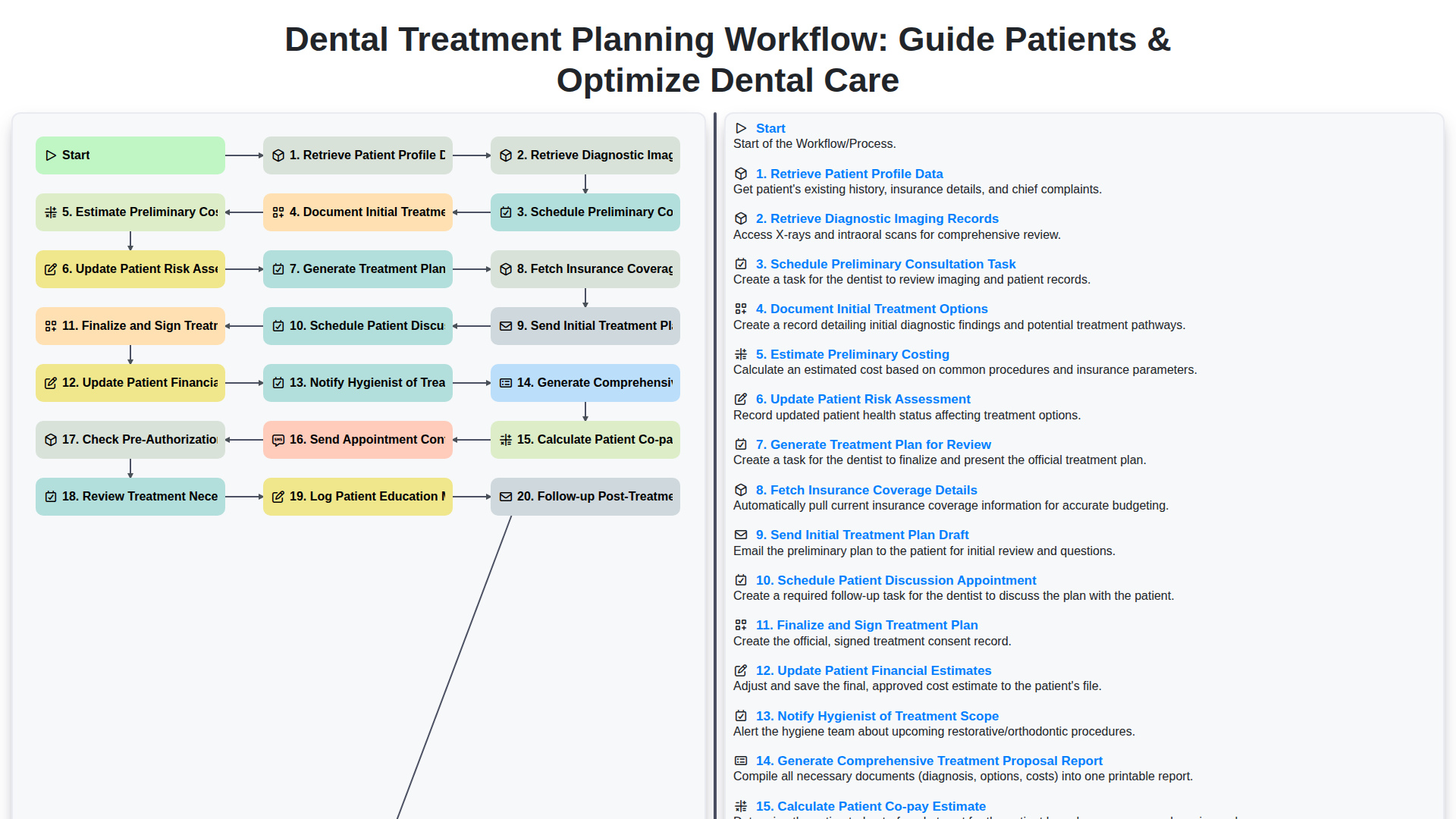
This workflow begins with the foundational data: Retrieving Patient Profile Data and Retrieving Diagnostic Imaging Records. These initial steps ensure the clinician has a complete and up-to-date picture of the patient's history and oral health status. Following this, scheduling the Preliminary Consultation Task sets the stage for communication. Next, the team moves to clinically documenting Initial Treatment Options and performing an Estimate Preliminary Costing. Crucially, the process involves updating the Patient Risk Assessment, which informs the generation of a draft Treatment Plan for Review.
From an administrative standpoint, seamless integration is vital. This includes Fetching Insurance Coverage Details early on and Sending an Initial Treatment Plan Draft to the patient for early review. The workflow mandates scheduling a dedicated Patient Discussion Appointment-a critical touchpoint for consent and clarity. Once the patient agrees, the plan is formalized: the Finalize and Sign Treatment Plan and an immediate Update Patient Financial Estimates.
The workflow's efficiency extends to coordination with other dental staff. The system must Notify the Hygienist of the Treatment Scope, which leads to the generation of a Comprehensive Treatment Proposal Report and a precise Calculate Patient Co-pay Estimate. To manage patient expectations, the system will Send Appointment Confirmation/Reminder. Before proceeding, the workflow mandates checking the Pre-Authorization Status and using a Review Treatment Necessity Checklist to confirm clinical necessity.
Finally, the post-planning stages are meticulous. The workflow dictates Logging Patient Education Material Provided, followed by the critical Follow-up Post-Treatment Care Instructions. Clinically, the process must Determine Priority Procedure Sequence to ensure optimal patient experience and care delivery. Following these structured steps transforms guesswork into a reliable, patient-centered roadmap for optimal dental care.
Step 1: Gathering the Essentials - Patient and Imaging Data
The journey to optimal dental health begins with a thorough understanding of you. This initial phase is all about gathering the foundational pieces of information needed to build a picture of your oral health. First, we Retrieve Patient Profile Data, which gives us a complete snapshot of your personal and medical history. Beyond basic details, we Retrieve Diagnostic Imaging Records, analyzing X-rays, panoramas, and any other scans. This combination of your personal data and detailed imagery allows our team to see exactly what's going on, forming the bedrock for any future treatment recommendations.
Step 2: The Initial Consultation and Documentation Phase
This critical stage kicks off the entire process and is all about comprehensive data gathering. First, we Retrieve Patient Profile Data to establish a baseline understanding of the individual. Simultaneously, we Retrieve Diagnostic Imaging Records, which provide the visual roadmap for care. Following this, the system initiates scheduling by setting the Schedule Preliminary Consultation Task. Within this phase, the clinical team begins to Document Initial Treatment Options based on the collected data, leading directly to an Estimate Preliminary Costing. Crucially, we Update Patient Risk Assessment to ensure patient safety is paramount from the start. The culmination of this initial data collection effort is the ability to Generate Treatment Plan for Review, setting the stage for deeper engagement.
Step 3: Financial Clarity - Estimating Costs and Checking Coverage
This crucial stage focuses on bridging the gap between the proposed clinical treatment and the patient's financial reality. It begins with Estimating Preliminary Costing based on the initial treatment options documented. This is immediately followed by Fetching Insurance Coverage Details, which significantly impacts the final patient billing. By gathering this data, we can Update Patient Financial Estimates so that the patient understands the potential out-of-pocket costs. This preliminary financial clarity is invaluable; it allows us to proactively address cost concerns before the patient is fully committed to the plan, setting a foundation of trust and transparency throughout the entire process.
Step 4: Building the Blueprint - Generating and Reviewing the Treatment Plan
This critical stage marks the transition from initial diagnosis to actionable care. Here, the system aggregates all the gathered information to form a cohesive treatment blueprint. The core task is to Generate Treatment Plan for Review, which doesn't just list procedures; it weaves them into a logical, sequential story for the patient's health journey. This involves determining the necessary steps-whether it's a deep cleaning, restorative work, or advanced procedures-and presenting them in an optimized order. Simultaneously, the workflow prompts for the Review Treatment Necessity Checklist. This step acts as a vital quality control gate, ensuring that every proposed item is medically necessary and justified by the imaging and patient history. The output of this combined review is the comprehensive draft, setting the stage for patient education and crucial discussions.
Step 5: Ensuring Readiness - Assessing Risk and Necessity
This crucial phase moves beyond simply gathering data; it's where thoughtful clinical judgment meets proactive patient safety. Here, we take the initial understanding of the patient's needs and critically evaluate the why and how before committing to a path. Updating the patient's risk assessment is paramount-this isn't just a formality; it's a dynamic calculation considering their current systemic health, treatment history, and the invasiveness of proposed procedures. Simultaneously, running through the treatment necessity checklist acts as a vital quality control layer. Are all diagnostic findings addressed? Have we considered less invasive alternatives first? By meticulously assessing risk and confirming the necessity of each step, we build a foundation of trust and accountability into the entire plan.
Step 6: Engaging the Patient - Discussion, Review, and Sign-Off
This crucial stage moves the plan from paper to commitment. Once the draft treatment plan is compiled, the next step is to schedule a dedicated discussion appointment with the patient. This meeting is far more than a mere review; it's an educational and collaborative session. During this time, the dental team presents the comprehensive treatment plan-detailing why certain procedures are recommended, how they address the identified needs, and what the projected outcomes are. It's vital to walk the patient through the rationale, ensuring they understand the connection between the diagnosis, the proposed treatment, and their overall oral health goals. After thorough discussion, addressing any concerns, and answering all questions, the final step of this phase is for the patient to formally review and sign the treatment plan. This documented sign-off solidifies mutual agreement and moves the workflow toward scheduling the definitive treatment phase.
Step 7: Financial Finalization - Co-pays and Documentation
This stage is crucial for setting clear expectations and ensuring the patient feels informed about the full financial commitment. After generating the comprehensive treatment proposal report, the next step involves meticulously calculating the patient's estimated co-pay. This calculation must draw accurate data from both the finalized treatment plan and the retrieved insurance coverage details. The result is a clear, itemized breakdown that shows exactly what the patient is responsible for. This documentation phase is not just about numbers; it builds trust. Finally, confirming this financial estimate and ensuring all related insurance paperwork is updated ensures that when the patient moves forward, the billing process is as smooth and transparent as possible.
Step 8: Streamlining Care - Communicating Scope to Support Staff
Once the comprehensive treatment proposal is finalized and the patient has signed off, the workflow must immediately transition to notifying the support team. This crucial step ensures a seamless transition from planning to execution. We systematically notify the hygienist, administrative staff, and any specialists involved about the approved scope of treatment. This proactive communication prevents delays, prevents costly miscommunications on the day of the procedure, and ensures that all necessary materials, equipment, and personnel are ready before the patient even arrives for their next appointment. This clear handoff is what transforms a beautiful plan on paper into flawless, efficient patient care.
Step 9: Transparency Through Reporting - The Comprehensive Proposal
This crucial step moves the process from mere documentation to active communication. Generating the comprehensive treatment proposal report is where the entire value proposition for the patient is crystallized. This report isn't just a collection of services; it's a narrative. It must clearly detail the recommended procedures, the 'why' behind each recommendation (linking back to the diagnosis and risk assessment), the phased approach for treatment, and the anticipated timeline. Critically, this report must integrate the preliminary costing and the patient's specific insurance coverage details into one digestible, single-page view. This proactive reporting minimizes sticker shock, builds trust, and empowers the patient to make an informed, confident decision about their oral health journey.
Step 10: Navigating Insurance Hurdles - Pre-Authorization Checks
Before the patient can fully commit to the proposed care, the administrative workflow must navigate the often complex waters of insurance coverage. This critical step involves checking the pre-authorization status. It's not enough to simply have a plan; we must confirm that the insurance provider has approved the services outlined. This process requires accurately submitting the necessary details-including the proposed procedures, associated codes, and supporting clinical documentation-to the respective payer. A proactive check here saves immense time and prevents significant financial surprises for both the patient and the practice. If a pre-authorization is pending or denied, the workflow must trigger a necessary pause, allowing the care coordinator to engage the patient in a discussion about appealing the decision or adjusting the plan to cover approved services.
Step 11: Beyond the Appointment - Education and Follow-Up Care
After the final treatment is completed, the process doesn't end. A critical, often underestimated, phase is ensuring patient education and providing detailed follow-up care. This involves formally logging every piece of educational material provided-whether it's brushing technique guides, flossing tips, or specific aftercare instructions related to the procedure. This documentation is vital for both the patient's adherence to oral hygiene and for the practice's records. Following this, the system prompts for and facilitates the delivery of comprehensive post-treatment care instructions. This includes scheduling necessary recall appointments, detailing any required follow-up cleanings, and providing clear guidelines on potential complications or long-term maintenance needs, ensuring the patient's journey toward optimal oral health remains supported long after they leave our chairs.
Step 12: Optimizing Treatment Flow - Sequencing Procedures for Best Results
Determining the most logical and efficient sequence for procedures is crucial to both patient comfort and clinical outcomes. This step, Determine Priority Procedure Sequence, moves beyond simply listing required treatments; it involves clinically organizing the plan. We assess the entire scope of work-from routine cleanings to major restorative work-and establish a prioritized timeline. This sequence considers factors such as:
- Interdependence: Does Procedure B require the groundwork laid by Procedure A (e.g., root canal therapy before a crown)?
- Patient Comfort & Fatigue: Grouping similar, less invasive procedures together can reduce the overall burden on the patient.
- Efficiency: Structuring appointments to maximize the use of available chair time and specialized equipment minimizes logistical bottlenecks for the dental team.
By carefully mapping out the ideal treatment path, we set realistic expectations for the patient, allow for staged billing, and ensure that the clinical journey toward optimal oral health is as smooth and predictable as possible.
Conclusion: Why a Smooth Workflow Matters for Your Dental Health
Ultimately, the entire sequence-from the initial data retrieval to post-treatment follow-up-forms a seamless narrative for your oral health journey. A well-managed, optimized dental treatment planning workflow means less confusion for you, fewer delays in receiving necessary care, and greater transparency regarding costs and treatment steps. It empowers both you and your dental team to move forward with confidence, ensuring that your path to a healthier, brighter smile is as straightforward and positive as possible.
Resources & Links
- Dental Practice Management Software Providers : Explore resources on modern dental practice management software that can automate and streamline the various steps of the treatment planning workflow.
- American Dental Association (ADA) Resources : Access professional guidelines and best practices for dental care documentation and patient communication.
- Major Dental Insurance Carrier Websites : Keep a general awareness of how insurance companies manage pre-authorization and coverage checks for complex dental procedures.
- Dental Patient Education Resource Hubs : Source ideas or links for creating effective, patient-friendly educational materials (e.g., mouthwash guides, brushing technique videos) to log during the workflow.
- General Workflow Automation Tools (e.g., Zapier, specialized SOP platforms) : For readers interested in the 'how-to' of workflow optimization, providing examples of tools that can connect different stages (like task reminders or automated data retrieval).
- Academic Dental Journals (for evidence-based care) : Resources for readers to understand the 'necessity' of procedures, helping dental professionals maintain the highest standard of care documentation.
- Government Healthcare Payment Guidelines (For Financial Context) : A broad reference point for understanding the varying reimbursement and necessity guidelines that impact financial planning and estimates.
Често Задавани Въпроси
What is a dental treatment planning workflow?
A dental treatment planning workflow is a structured, step-by-step process used by dentists to assess a patient's oral health, diagnose issues, and develop a personalized roadmap of recommended procedures to achieve optimal dental health.
How does a structured treatment plan benefit the patient?
A structured plan helps patients understand their specific dental needs, provides clear expectations regarding timelines and costs, and ensures that all necessary procedures are prioritized logically to prevent further complications.
What are the key stages in a dental treatment planning process?
The process typically includes an initial consultation, comprehensive examination (including X-rays and scans), diagnosis, discussion of treatment options, cost estimation, and the finalization of a prioritized care schedule.
Why is it important for patients to be involved in the treatment planning stage?
Patient involvement ensures that the treatment plan aligns with their personal health goals, budget constraints, and lifestyle preferences, which significantly increases treatment adherence and overall satisfaction.
Can a dental treatment plan change once the process has started?
Yes, a treatment plan may be adjusted if new information comes to light during procedures, such as the discovery of underlying issues during a deep cleaning or the need for an unexpected restorative step.
How can dental practices optimize their treatment planning workflow?
Practices can optimize the workflow by utilizing digital diagnostic tools, implementing standardized communication protocols, and using transparent cost-estimation software to reduce errors and enhance patient trust.
Тази статия беше полезна?
Демонстрация на решение за управление на дентална практика
Опростете работата на вашата дентална практика и подобрете грижите за пациентите! ChecklistGuro рационализира планирането на часовете, воденето на медицински досиета и фактурирането. Подобрете ефективността, намалете грешките и увеличете удовлетвореността на пациентите. Управлявайте всичко това с нашата работна платформа.
Свързани статии
Your Dental Office Safety Net: The Compliance & Patient Safety Checklist Template
Mastering Dental Recalls: Your Ultimate Checklist Template

Mastering Dental Case Presentations: Your Checklist Template for Success

Your Dental Compliance Checklist: A State & Federal Guide
Dental Operations Checklist: Boost Efficiency & Manage Risk

Най-пълният списък за зъботехническа лаборатория: изработка и контрол на качеството

Your Complete Dental Infection Control Checklist: PPE & Surface Disinfection
Овладяване на зъбните прегледи: Ваш изчерпателен шаблон за проверка на записи
Можем да го направим заедно
Нуждаете се от помощ с
Checklists?
Имате въпрос? Тук сме, за да помогнем. Моля, изпратете запитването си и ние ще отговорим своевременно.