
Streamlined Dental Clinic Workflow: Best Practices for Modern Dental Management
Публикувано: Обновено: 04/16/2026
Съдържание
- The Foundation of Efficiency: Understanding Modern Dental Workflow
- Step 1: Seamless Patient Data Retrieval and Management
- Optimizing the Scheduling Experience: From Booking to Confirmation
- Beyond Booking: Updating Patient Charts Accurately
- Automating Communication: Confirmation and Reminder Systems
- The Diagnostic Journey: Generating and Implementing Treatment Plans
- Building the Record: Entering New Treatment Information Securely
- Financial Flow: Streamlining Co-Pay Calculation and Billing
- Task Delegation: Efficient Staff Workflow Assignment
- The Crucial Gatekeeper: Verifying Insurance Eligibility Upfront
- Identifying Workflow Bottlenecks in Your Practice
- Technology Integration: Selecting the Right Dental Practice Software
- Training and Adoption: Ensuring Staff Mastery of New Processes
- Measuring Success: KPIs for a Streamlined Dental Workflow
- Resources & Links
TLDR: Implementing a structured workflow system automates and organizes key dental office tasks-from scheduling and appointment reminders to treatment planning and billing-ensuring efficiency, reducing manual errors, and significantly improving the patient and staff experience.
The Foundation of Efficiency: Understanding Modern Dental Workflow
A well-defined and streamlined workflow is the invisible backbone of a thriving dental practice. It's not just about having procedures; it's about optimizing the flow of patients, data, and communication from the moment a patient becomes aware they need care until their follow-up is scheduled. Modern dental management demands a systematic approach that minimizes friction points, reduces administrative load, and maximizes chair time. Effective workflow integration ensures that every staff member knows precisely what to do, when to do it, and who is responsible for it, leading directly to improved patient experience and enhanced profitability.
Step 1: Seamless Patient Data Retrieval and Management
The entire patient journey starts with accurate and immediate access to their records. Retrieving patient information must be a fluid, instantaneous process, whether you are verifying demographics, checking past procedures, or accessing insurance details. Modern dental management systems centralize this information, acting as a single source of truth. Efficient retrieval minimizes wait times and reduces the risk of using outdated information, ensuring that every interaction-from the first call to the final billing-is built on a rock-solid foundation of data.
Optimizing the Scheduling Experience: From Booking to Confirmation
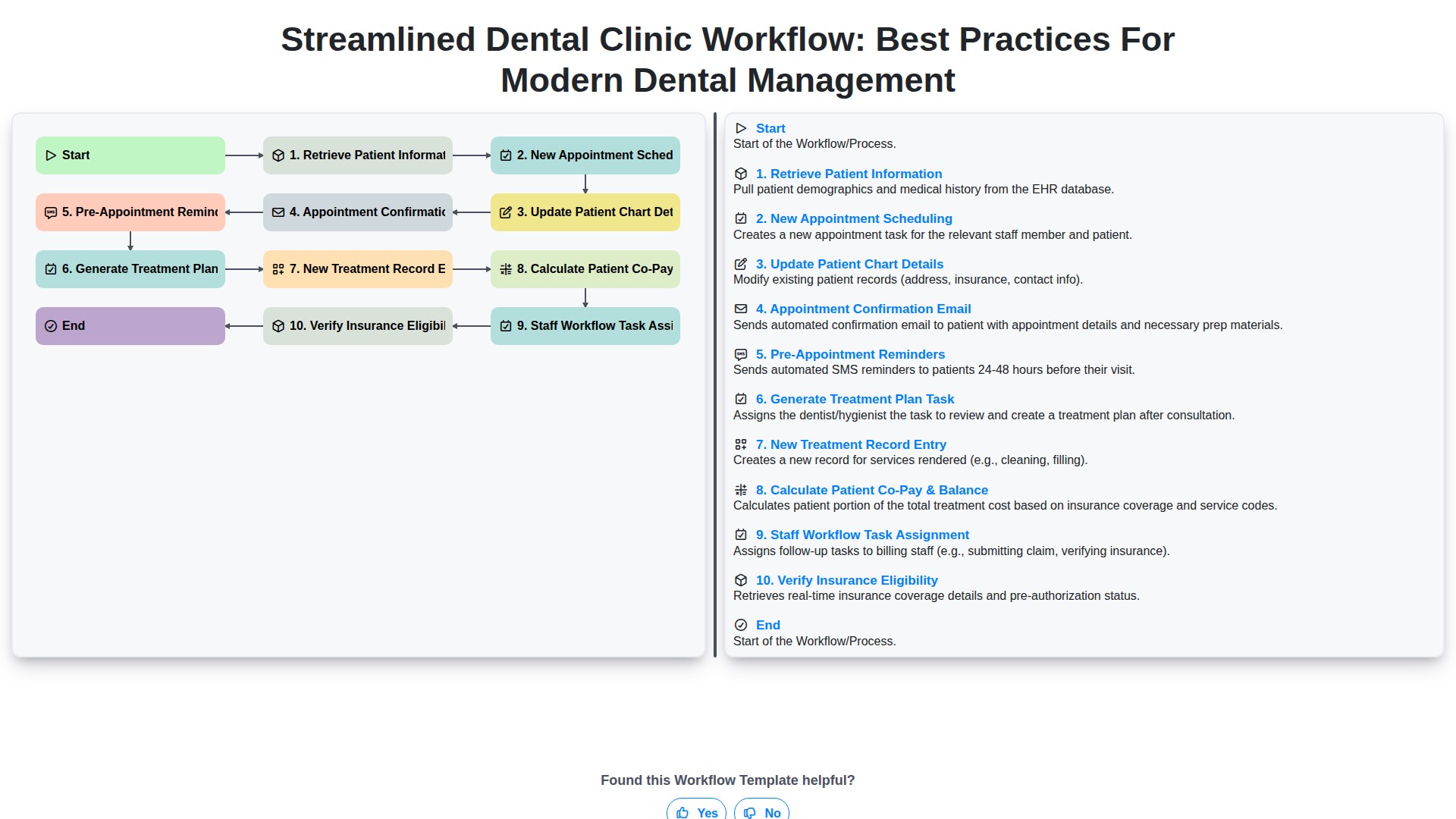
The initial point of contact for any dental clinic is often the scheduling process. A clunky or inefficient booking system can lead to frustration for both patients and administrative staff. True optimization starts with a seamless flow, making the entire journey from initial inquiry to confirmed visit effortless. This requires more than just a calendar; it demands a structured workflow. First, the system must efficiently Retrieve Patient Information, whether the patient is new or an existing client. Following retrieval, the core function-New Appointment Scheduling-must be intuitive, considering provider availability, required appointment length, and specialized room needs. Furthermore, the process shouldn't end with the booking. To minimize no-shows and ensure patients are prepared, robust Appointment Confirmation Emails are crucial. These emails should not just confirm the time; they should serve as a gateway to engagement. Complementing this is the deployment of Pre-Appointment Reminders-a multi-channel touchpoint (email, SMS) that serves as a helpful nudge, keeping the patient engaged with their upcoming care.
Beyond Booking: Updating Patient Charts Accurately
Accurate patient records are the bedrock of efficient dental care. Simply booking an appointment is only the first step; maintaining meticulously updated patient charts is what ensures the entire experience, from check-in to check-out, is seamless and professional. This process involves more than just logging diagnoses-it requires a proactive approach to data management. Regularly updating patient chart details allows your team to maintain a comprehensive, 360-degree view of every individual. This accuracy directly impacts everything from treatment planning to billing. For instance, ensuring allergies, necessary prophylactic notes, and updated insurance information are current prevents costly delays and potential care gaps. Think of it as constantly refining the patient's digital health history, ensuring that every staff member-from the front desk coordinator to the dentist-is working with the single source of truth.
Automating Communication: Confirmation and Reminder Systems
Effective patient communication is crucial for minimizing no-shows and keeping the practice running smoothly. Manually sending reminders and confirmations is time-consuming and prone to human error. Implementing an automated communication system revolutionizes this process. By integrating automated confirmation emails immediately after booking, you ensure the patient has immediate confirmation details. Furthermore, setting up pre-appointment reminder sequences-whether via email, SMS, or both-serves as a gentle, proactive nudge. This automation not only saves your administrative staff countless hours but also drastically improves patient adherence to appointments, leading to higher operational efficiency and a better patient experience overall.
The Diagnostic Journey: Generating and Implementing Treatment Plans
This critical stage marks the transition from diagnosis to active care. Once the clinical team has thoroughly examined the patient and completed necessary diagnostics, the next logical step is to Generate Treatment Plan Task. This task is the central hub where all proposed treatments are compiled. It requires careful input from the dentist or specialist to document all necessary procedures, recommended materials, and the associated clinical rationale. Following this, the care coordinator or administrative staff must manage the New Treatment Record Entry. This ensures that the proposed plan isn't just a suggestion but is formally logged into the patient's comprehensive chart. This systematic recording is vital for billing accuracy, patient record keeping, and ensuring continuity of care across different practitioners.
Building the Record: Entering New Treatment Information Securely
Entering a new treatment record is a critical juncture in the patient journey. Accuracy and security are paramount here. When a dentist or hygienist determines a necessary treatment, the system must provide a streamlined, yet robust, entry point. Ideally, this process flows directly from the consultation notes, allowing the provider to quickly select codes, document findings, and link the proposed care to the patient's established history. The workflow should guide the user through these steps, minimizing manual data entry errors. Furthermore, the system must flag potential conflicts or missing information-for instance, if a recommended procedure requires prerequisites that aren't documented in the chart. Secure protocols, including role-based access controls, must govern this entry point to ensure that only authorized personnel can modify or finalize treatment plans, maintaining the highest level of patient data integrity.
Financial Flow: Streamlining Co-Pay Calculation and Billing
Accurate and efficient financial handling is crucial for any successful dental practice. At the heart of this process is the Calculate Patient Co-Pay & Balance step. Integrating this seamlessly into your workflow minimizes billing errors and improves patient satisfaction. This step should automatically pull necessary data, such as the services rendered from the appointment details, the patient's insurance plan information, and your current fee schedules. The system must then calculate the precise co-pay amount due at the time of service, as well as any remaining balance owed to the clinic. Furthermore, the Verify Insurance Eligibility step feeds directly into this calculation, ensuring that the co-pay amount presented to the patient is both accurate and expected by the insurance provider. This integrated approach transforms billing from a potential point of friction into a smooth, professional transaction.
Task Delegation: Efficient Staff Workflow Assignment
Effective task delegation is the cornerstone of a smooth-running dental clinic. When processes are clear and responsibilities are properly assigned, bottlenecks disappear, and patient care improves dramatically. Rather than having every staff member perform every task, strategically assigning specific workflows maximizes efficiency. For instance, the front desk team might own the initial New Appointment Scheduling and Appointment Confirmation Email, while hygienists take the lead on Pre-Appointment Reminders for hygiene visits. Dental assistants can be responsible for the initial steps in Update Patient Chart Details and gathering preliminary documents for Verify Insurance Eligibility. A well-defined task matrix ensures that when a Generate Treatment Plan Task arises, the assigned coordinator knows exactly who owns the next steps, preventing crucial details from falling through the cracks and ensuring a seamless patient experience from check-in to check-out.
The Crucial Gatekeeper: Verifying Insurance Eligibility Upfront
One of the most common friction points in modern dental practice management is the uncertainty surrounding insurance coverage. Time wasted on day-of coverage disputes not only frustrates patients but also negatively impacts your staff's efficiency and the clinic's revenue cycle. Implementing a robust, upfront insurance eligibility verification workflow is non-negotiable. This step acts as a crucial gatekeeper, preventing unexpected billing issues down the line. Ideally, this process should be automated to the greatest extent possible. Instead of relying on manual phone calls or outdated paperwork, integrating direct electronic verification tools into your practice management software allows you to check patient coverage status, copayments, and deductibles before the patient even steps into the treatment room. By confirming eligibility during the initial scheduling or intake process, you set clear expectations with the patient regarding their out-of-pocket responsibilities. This proactive verification streamlines the entire financial portion of the visit, leading to happier patients, more accurate billing, and a significantly smoother administrative flow.
Identifying Workflow Bottlenecks in Your Practice
Often, the biggest drain on efficiency isn't a lack of staff, but rather poorly mapped processes. Identifying workflow bottlenecks means meticulously tracing every step a patient or staff member takes, from initial inquiry to final checkout. Are staff spending excessive time manually transferring data between systems? Is the insurance verification process causing significant delays before the dentist can even generate a treatment plan? Spotting these choke points-like excessive paper handling or redundant data entry-is the crucial first step toward optimization. If scheduling is cumbersome, or if follow-up tasks get lost between departments, you're not just wasting minutes; you're eroding patient trust and physician revenue potential.
Technology Integration: Selecting the Right Dental Practice Software
Choosing the right dental practice management software is no longer a luxury-it's the backbone of efficient clinic operations. A modern, integrated software solution should act as the central nervous system for your entire workflow. Instead of juggling disparate systems (one for scheduling, another for billing, and a third for charting), the best software consolidates these functions into one intuitive platform. Look for features that support automation across your entire cycle. For example, the system should seamlessly link scheduling to insurance verification, and a finalized treatment plan should automatically trigger necessary steps in the billing workflow. Modern software should also feature robust APIs, allowing it to connect with third-party tools-like specialized imaging software or advanced patient portals-creating a truly unified patient journey from the moment they book an appointment to the final follow-up. Investing in a system with scalability and excellent user interface design will save time, reduce human error, and allow your staff to focus on what they do best: providing excellent patient care.
Training and Adoption: Ensuring Staff Mastery of New Processes
Comprehensive, ongoing training is the cornerstone of successful workflow adoption. Implementing new digital tools or refining existing processes requires more than just distributing manuals; it demands active, hands-on mastery. Develop role-specific training modules, ensuring that administrative assistants receive in-depth training on appointment scheduling nuances, while hygienists are fully comfortable with the digital charting updates. Utilize simulated scenarios-such as handling a complex insurance verification failure or rescheduling a last-minute emergency-to allow staff to practice in a low-stakes environment. Furthermore, establish designated 'workflow champions' within each department. These internal experts can provide immediate, peer-to-peer support, acting as the first line of defense against user confusion and ensuring that best practices are internalized, rather than just memorized. Regular 'refresher' micro-trainings, perhaps a quick 10-minute virtual session every quarter, keep new processes top-of-mind and reinforce correct habits.
Measuring Success: KPIs for a Streamlined Dental Workflow
To truly know if your streamlined workflow is working, you need to measure it. Simply implementing new steps isn't enough; you must track key performance indicators (KPIs) that reflect efficiency, patient experience, and revenue health. Focus on these metrics to continuously refine your processes:
- Patient Intake Time: Measure the average time elapsed from a patient's arrival to the point they are fully checked in and with the hygienist/dentist. A reduction here indicates that Retrieving Patient Information and Updating Patient Chart Details are seamless.
- No-Show/Late Cancellation Rate: This is a direct measure of your communication effectiveness. A falling rate suggests that your Appointment Confirmation Email and Pre-Appointment Reminders are highly effective.
- Insurance Verification Accuracy & Speed: Track the percentage of initial appointments where Verify Insurance Eligibility is completed correctly and quickly. Errors here cause massive downstream delays.
- Treatment Plan Generation Time: Measure the time gap between the initial examination and the Generate Treatment Plan Task being finalized and presented to the patient. Shorter times mean faster revenue realization.
- Billing Cycle Time: How long does it take from the completion of services to the patient paying their balance? Tracking the efficiency of Calculate Patient Co-Pay & Balance and Staff Workflow Task Assignment will highlight bottlenecks in your front-office administration.
- Staff Task Completion Rate: Monitor how quickly staff members can complete assigned tasks (e.g., processing insurance claims, updating charts) after Staff Workflow Task Assignment. This reveals where your task assignment logic needs refinement.
Resources & Links
- Dental Practice Management Resource Hub : A comprehensive resource center covering modern workflow best practices for dental clinics, including operational guides and industry insights.
- Dental Scheduling Automation Guide : Detailed articles and comparisons on best-in-class appointment scheduling software features to reduce no-shows and streamline bookings.
- HIPAA & Patient Data Management Solutions : Resources focused on secure, efficient patient data storage, retrieval, and compliance within modern dental practices.
- Dental Billing & Financial Workflow Tools : Articles on automating co-pay calculations, insurance verification, and streamlining the billing cycle for better cash flow.
- Dental Staff Training & Process Improvement : Tips and guides for implementing new workflows and ensuring all staff members are proficient in the updated processes.
- Dental Practice Software Showcases : Overviews of integrated EMR/PM software systems that connect scheduling, charting, billing, and communication modules.
- Clinic Operations & Efficiency Audits : Templates and advice on how to conduct internal process audits to identify and resolve time-consuming workflow bottlenecks.
- Automated Patient Communication Strategies : Examples and guides on utilizing SMS, email, and automated calling systems for effective appointment confirmation and reminders.
Тази статия беше полезна?
Демонстрация на решение за управление на дентална практика
Опростете работата на вашата дентална практика и подобрете грижите за пациентите! ChecklistGuro рационализира планирането на часовете, воденето на медицински досиета и фактурирането. Подобрете ефективността, намалете грешките и увеличете удовлетвореността на пациентите. Управлявайте всичко това с нашата работна платформа.
Свързани статии
Your Dental Office Safety Net: The Compliance & Patient Safety Checklist Template
Mastering Dental Recalls: Your Ultimate Checklist Template

Mastering Dental Case Presentations: Your Checklist Template for Success

Your Dental Compliance Checklist: A State & Federal Guide
Dental Operations Checklist: Boost Efficiency & Manage Risk

Най-пълният списък за зъботехническа лаборатория: изработка и контрол на качеството

Your Complete Dental Infection Control Checklist: PPE & Surface Disinfection
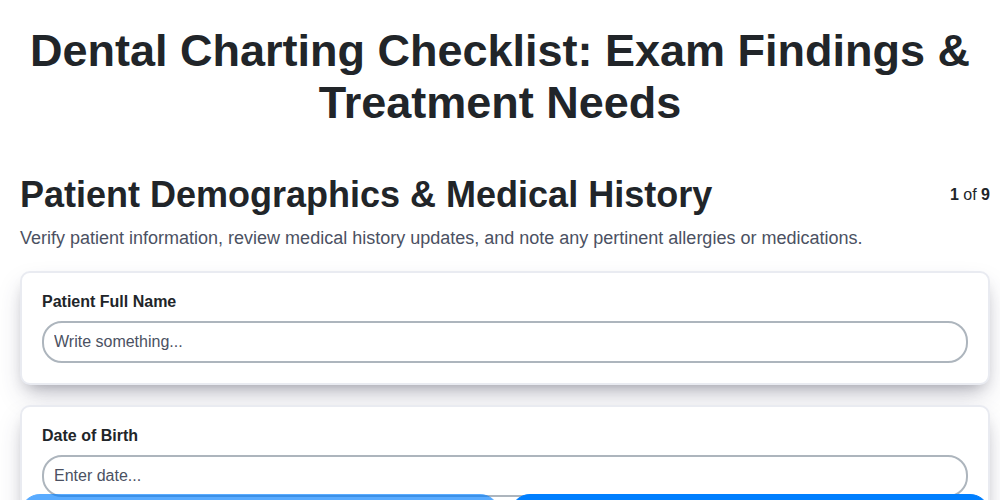
Овладяване на зъбните прегледи: Ваш изчерпателен шаблон за проверка на записи
Можем да го направим заедно
Нуждаете се от помощ с
Checklists?
Имате въпрос? Тук сме, за да помогнем. Моля, изпратете запитването си и ние ще отговорим своевременно.