Streamlining Utility Inspections: A Workflow Approach to Digital Asset Management and Compliance
Публикувано: Обновено: 04/16/2026
Съдържание
- Introduction: The Need for Optimized Utility Inspection Workflows
- Phase 1: Initiating the Inspection Cycle - From Assignment to Planning
- Deep Dive into Asset Knowledge: Leveraging the Digital Asset Data Model
- Optimizing Field Operations: Scheduling and Task Management
- Context is Key: Incorporating Historical Data for Insight
- The Field Execution: Standardized Data Collection and Observation Capture
- Real-Time Impact: Updating Asset Status and Flagging Condition Changes
- Intelligent Analysis: Calculating Anomaly Severity Scores for Prioritization
- From Data to Action: Generating Detailed Deficiency Reports
- The Deliverable: Creating a Comprehensive and Actionable Inspection Report
- Closing the Loop: Stakeholder Notification and Workflow Completion
- Beyond the Inspection: Aggregating Failure Data for System Health Monitoring
- Governance and Efficiency: Archiving Records and Ensuring Compliance Trails
- Conclusion: Achieving Proactive Asset Management Through Streamlined Workflows
- Resources & Links
TLDR: This guide shows you how to use a structured digital workflow to modernize utility inspections. By following automated steps-from initial assignment and data retrieval to field collection, anomaly scoring, reporting, and final archiving-you can ensure inspections are efficient, data is accurately managed within your digital asset records, and compliance requirements are met seamlessly.
Introduction: The Need for Optimized Utility Inspection Workflows
Modern utility infrastructure-the veins that keep our cities running-is complex, vast, and aging. Keeping these critical assets in peak condition is not just a matter of preventative maintenance; it is a fundamental necessity for public safety, economic stability, and reliable daily life. However, the process of inspecting this infrastructure has historically been plagued by inefficiencies. Manual data collection, siloed records, and disjointed workflows lead to delays, inconsistent data, and a fragmented understanding of an asset's true health. These traditional methods struggle to keep pace with the sheer scale and intricacy of today's utility networks, whether they involve underground pipes, overhead power lines, or complex wastewater systems. A disconnected inspection process results in reactive, rather than proactive, maintenance. We often find ourselves addressing failures after they occur, which is costly, disruptive, and environmentally damaging. Optimized workflows, therefore, are no longer a luxury-they are a core operational mandate. They represent the transformation from simply checking assets to intelligently managing their lifecycle, ensuring maximum uptime and compliance with increasingly stringent regulatory standards.
Phase 1: Initiating the Inspection Cycle - From Assignment to Planning
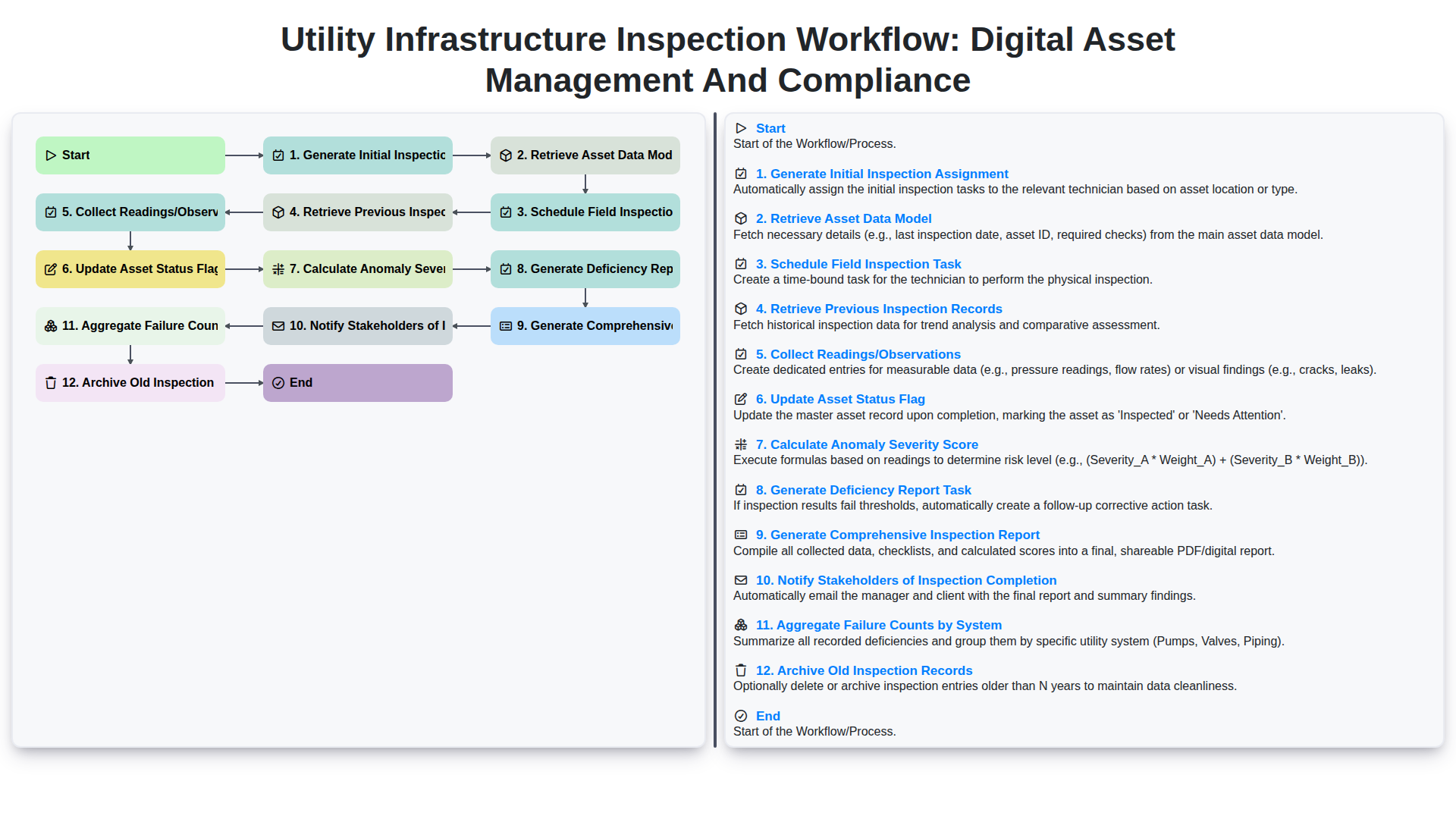
The journey of an infrastructure inspection begins with a clear directive: the Generate Initial Inspection Assignment. This crucial first step formalizes the need for an inspection, specifying the location, the assets to be assessed, and the scope of work. Once the assignment is active, the system automatically triggers the retrieval of the Asset Data Model. This model acts as the single source of truth, housing every known detail-manufacturer, installation date, required maintenance schedules, and technical specifications-for every component under review. This rich dataset ensures that the inspection isn't just a physical walkthrough; it's a data-driven assessment. Following this, the workflow moves to Schedule Field Inspection Task, integrating calendar management with asset reality. The system cross-references available field teams, necessary equipment, and optimal site access to create a realistic, actionable schedule. Furthermore, to prevent repeating work or missing historical context, the platform proactively Retrieve Previous Inspection Records. Having this immediate access to past data is vital for benchmarking, trend analysis, and demonstrating due diligence, setting the stage for a comprehensive and intelligent inspection.
Deep Dive into Asset Knowledge: Leveraging the Digital Asset Data Model
The foundation of an efficient inspection workflow lies in a rich, accurate understanding of the assets being inspected. This is where the Digital Asset Data Model becomes indispensable. Instead of relying on outdated paper records or disparate spreadsheets, this centralized model serves as the single source of truth for every piece of utility infrastructure. It contains not just basic identifiers (like serial numbers or location coordinates), but deep technical specifications, maintenance histories, installation dates, manufacturer guidelines, and expected lifespan parameters. By retrieving this comprehensive data model at the outset of the workflow, inspectors are immediately equipped with the necessary context. This context allows them to move beyond simple pass/fail checklists; they can perform predictive assessments, understand the normal operational range for a given component, and compare current findings against established design specifications, significantly elevating the quality and depth of the inspection findings.
Optimizing Field Operations: Scheduling and Task Management
The initial phase of our workflow centers on meticulous planning and efficient task assignment. The process begins with the Generate Initial Inspection Assignment, which acts as the trigger, defining the scope and necessary assets for inspection. This assignment feeds directly into the Schedule Field Inspection Task, ensuring that the right team, with the appropriate tools, is dispatched to the correct location at the optimal time. Before a technician even arrives, the system leverages the Retrieve Asset Data Model to provide a comprehensive digital blueprint of what needs inspecting. This model guides the technician, ensuring nothing is overlooked. Furthermore, to maintain continuity and track trends, the system automatically performs a Retrieve Previous Inspection Records, allowing field personnel to benchmark current findings against historical data, thereby maximizing the value of every site visit.
Context is Key: Incorporating Historical Data for Insight
Relying solely on the data collected during the current inspection is like looking at only one snapshot of a vast, complex system. To truly understand the health and potential failure points of critical utility infrastructure, you must weave in the wisdom of the past. This is where the integration of historical data becomes not just beneficial, but absolutely essential. By retrieving and analyzing Previous Inspection Records, the workflow moves beyond mere data collection and into genuine predictive analysis. This historical context allows teams to spot emerging patterns-such as a specific component showing degradation faster than anticipated, or a certain type of failure recurring in a particular geographic segment-that wouldn't be visible from a single inspection point. This proactive insight elevates the entire process, shifting the focus from reporting problems found to preventing problems before they happen.
The Field Execution: Standardized Data Collection and Observation Capture
This phase is the heart of the physical inspection process, where our digital workflow guides the field team to perform systematic data collection. It starts with the pre-defined tasks, ensuring every critical point of the utility infrastructure is assessed against industry best practices. Technicians access the digital assignment directly on their mobile devices, eliminating reliance on paper forms and reducing transcription errors. The workflow mandates the retrieval of the specific asset data model for the location, providing context (such as required operating parameters or last maintenance dates) right at the point of inspection.
During the physical execution, the system facilitates the capture of readings and detailed observations. Instead of handwriting notes, technicians use standardized digital forms that guide them through structured questionnaires, allowing for photographic evidence, GPS tagging, and structured input for readings (e.g., pressure gauges, meter readings). This standardization ensures data consistency regardless of which technician is performing the work. Furthermore, the system is designed to prompt the immediate review of previous inspection records associated with that specific asset, allowing the inspector to compare current readings against historical baselines in real-time. This contextual layer is crucial for accurate assessment and anomaly detection.
Real-Time Impact: Updating Asset Status and Flagging Condition Changes
This step is where the digital aspect of the workflow truly shines. Once field personnel have collected their readings and observations, the system doesn't just accept the data; it actively processes it to update the asset's standing within the management system. By updating the Asset Status Flag, the workflow moves beyond mere record-keeping to active risk management. This flag serves as an immediate, system-wide indicator of the asset's current health-is it 'Operational,' 'Needs Monitoring,' or 'Critical Failure'? This real-time flag change is crucial because it instantly informs downstream processes, such as prioritizing maintenance tickets or triggering alerts, ensuring that asset managers are always acting on the most current reality, not historical data.
Intelligent Analysis: Calculating Anomaly Severity Scores for Prioritization
The heart of proactive maintenance lies not just in collecting data, but in understanding its potential impact. This is where the Calculate Anomaly Severity Score step becomes critical. Instead of treating every flagged deviation equally, we implement a weighted scoring model. This score moves us beyond simple pass/fail assessments to true risk prioritization. The model considers multiple variables simultaneously: the type of anomaly (e.g., minor corrosion vs. structural breach), the asset criticality (how vital is this component to overall system function), and the frequency of historical issues related to that asset. By combining these factors into a quantifiable score, teams gain an immediate, actionable understanding of which deficiencies require immediate intervention versus those that can be scheduled for routine maintenance. This quantitative approach drastically optimizes resource allocation, ensuring that limited inspection crew time and budget are first directed to the risks that pose the greatest threat to system uptime and safety.
From Data to Action: Generating Detailed Deficiency Reports
Once the raw data and observations are collected, the workflow moves into the critical phase of analysis, resulting in the generation of detailed deficiency reports. This step is where raw field measurements are transformed into actionable insights. The system takes the collected readings, compares them against established engineering standards and the asset's expected performance parameters (sourced from the Asset Data Model), and flags any discrepancies. The calculated Anomaly Severity Score plays a vital role here; it provides a quantitative measure of risk associated with each identified deficiency. Instead of just listing problems, the Deficiency Report Task generates a structured document detailing: 1) The exact location and asset ID of the issue; 2) The nature of the deviation (e.g., corrosion detected, reading outside tolerance); 3) The associated severity score, which dictates the urgency of the required remediation. This structured output moves the process beyond simple data collection into proactive maintenance planning, clearly defining what is wrong and how bad it is.
The Deliverable: Creating a Comprehensive and Actionable Inspection Report
The culmination of this streamlined workflow is the creation of a comprehensive and actionable inspection report. This final deliverable isn't just a collection of data; it's a decision-making tool. By synthesizing the collected readings, the calculated anomaly severity scores, and the documented deficiencies, the system automatically populates a multi-faceted report. One section provides a clear, chronological narrative of the inspection itself, cross-referencing notes taken in the field against the asset's established data model. Crucially, the Deficiency Report Task generates specific, prioritized findings, each linked directly to the relevant code, standard, or performance threshold that was breached. Furthermore, the system aggregates key failure counts by system-a high-level executive summary that allows stakeholders to instantly grasp systemic risk areas without wading through hundreds of individual entries. This structured output ensures that every stakeholder, from the field technician to senior compliance officers, receives information that is not only exhaustive but immediately guides the next steps for remediation and maintenance planning.
Closing the Loop: Stakeholder Notification and Workflow Completion
The final, crucial stage of the workflow is ensuring that the data collected isn't just stored, but is actively communicated. This involves two key components: notifying all relevant stakeholders that the inspection process is complete, and then systematically archiving the records. Immediate notification is vital for downstream decision-making. By automatically triggering alerts to engineering teams, asset owners, and management upon the generation of the final report, we ensure rapid response times to critical findings. Furthermore, the system automatically executes the aggregation of failure counts by system, providing an immediate, high-level operational dashboard view. Finally, the structured archiving of old inspection records maintains a clean, auditable history while ensuring compliance and data accessibility for future benchmarking.
Beyond the Inspection: Aggregating Failure Data for System Health Monitoring
The inspection process doesn't end when the final report is generated. The true value of modern workflow lies in transforming raw inspection data into actionable intelligence. A critical next step is aggregating failure counts by system. Instead of viewing each deficiency in isolation, this step allows us to roll up data across the entire utility infrastructure. By grouping and counting failures (e.g., High corrosion reports in Sector B's main conduit or Repeated tripping events in Substation C's transformers), we move from reactive maintenance reporting to proactive predictive analytics. This aggregated view paints a much clearer picture of systemic stress points, allowing asset owners to shift their focus from fixing individual failures to optimizing entire system segments for optimal health and reliability.
Governance and Efficiency: Archiving Records and Ensuring Compliance Trails
Proper management of inspection data is not just about storage; it's about maintaining an auditable, compliant, and efficient record. The process of Archiving Old Inspection Records plays a critical, often underestimated, role in our overall workflow integrity. Instead of letting critical, historical data accumulate in live systems, a structured archiving protocol ensures that primary, active asset data remains lightning-fast and optimized for real-time decision-making. This structured offloading maintains peak operational efficiency while adhering to strict data governance requirements.
Furthermore, this archival step directly underpins our compliance posture. By systematically organizing and tagging historical records-including all associated deficiency reports and previous readings-we create an immutable Compliance Trail. This trail proves due diligence over time, which is invaluable during audits, risk assessments, or when investigating long-term equipment failures. By ensuring that every recorded interaction, every flagged anomaly, and every completed inspection task is safely stored and indexed, we transform mountains of data into actionable, verifiable proof of asset stewardship.
Conclusion: Achieving Proactive Asset Management Through Streamlined Workflows
By systematically implementing this digital workflow, organizations move beyond reactive maintenance. The seamless flow-from initial assignment and data retrieval to defect logging, advanced scoring, and final comprehensive reporting-ensures that every inspection is not just a data collection point, but a tangible step towards predictive asset lifecycle management. Ultimately, automating this entire process transforms disparate inspection tasks into actionable intelligence, minimizing downtime, ensuring regulatory compliance, and significantly extending the operational lifespan and reliability of critical utility infrastructure.
Resources & Links
- Industry Standards & Best Practices Organizations : Links to organizations that set standards for utility infrastructure, data management, and inspection protocols (e.g., NERC, relevant governmental/industry bodies).
- BIM/Digital Twin Resource Hub : Resources for learning about creating and utilizing digital representations of physical assets (Digital Asset Management foundation).
- Utility Asset Management Software Vendors : A curated list of leading Computerized Maintenance Management Systems (CMMS) and EAM platforms specialized for utilities.
- Mobile Field Service Technology Providers : Resources showcasing mobile applications and IoT integration for optimizing field scheduling and data collection.
- Data Governance and Compliance Frameworks (Utility Sector) : Guides on data security, regulatory compliance (NERC CIP, etc.), and record-keeping for critical infrastructure.
- Risk Scoring and Predictive Analytics Models : Academic or industry resources explaining quantitative risk assessment methodologies (like calculating anomaly severity scores).
- Automated Technical Reporting Tools : Software platforms demonstrating automated report generation from disparate data sources (e.g., GIS, Inspection Data).
Често Задавани Въпроси
What is the main focus of a workflow approach to utility inspections?
A workflow approach focuses on integrating inspection processes directly into Digital Asset Management (DAM) systems to automate data collection, reduce manual errors, and ensure real-time updates for compliance tracking.
How does digital asset management improve utility inspections?
Digital asset management provides a centralized repository for all inspection data, historical records, and geospatial information, allowing for better decision-making, predictive maintenance, and easier audit trails.
What are the key benefits of streamlining inspection workflows?
Streamlining improves operational efficiency, enhances data accuracy, ensures regulatory compliance, reduces operational costs, and enables faster response times to identified infrastructure issues.
How does this approach assist with regulatory compliance?
By digitizing the inspection process, every action is timestamped and logged, creating an immutable audit trail that simplifies reporting and proves adherence to safety and environmental regulations.
Can this workflow approach be applied to all types of utility assets?
Yes, the workflow-driven approach is scalable and can be applied to various utility infrastructures, including water, gas, electricity, and telecommunications networks.
Тази статия беше полезна?
Демонстрация на решение за управление на одити/инспекции
Осигурете съответствие и подобрете ефективността! ChecklistGuro опростява създаването, изпълнението и отчитането на одити/инспекции. Намалете рисковете, подобрете качеството и поддържайте последователност. Управлявайте всичко това с нашата работна платформа.
Свързани статии
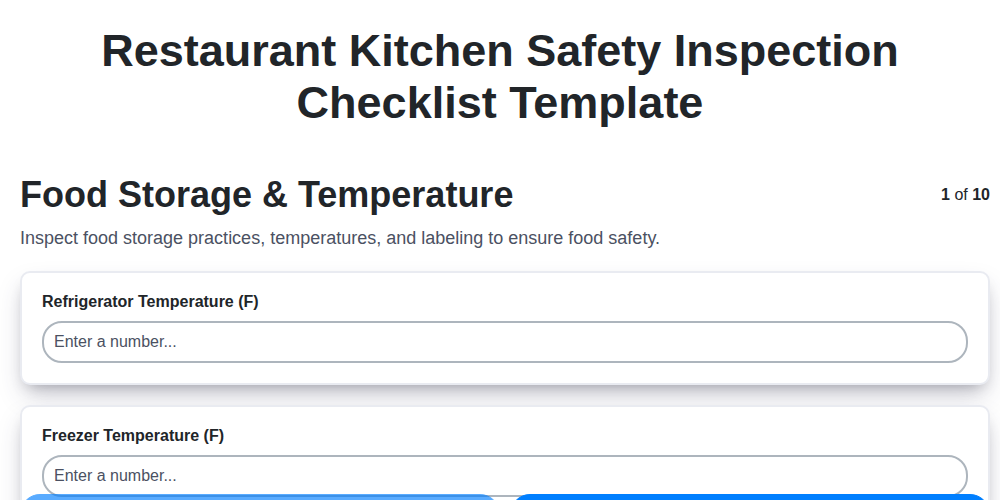
Restaurant Kitchen Safety Inspection Checklist Template
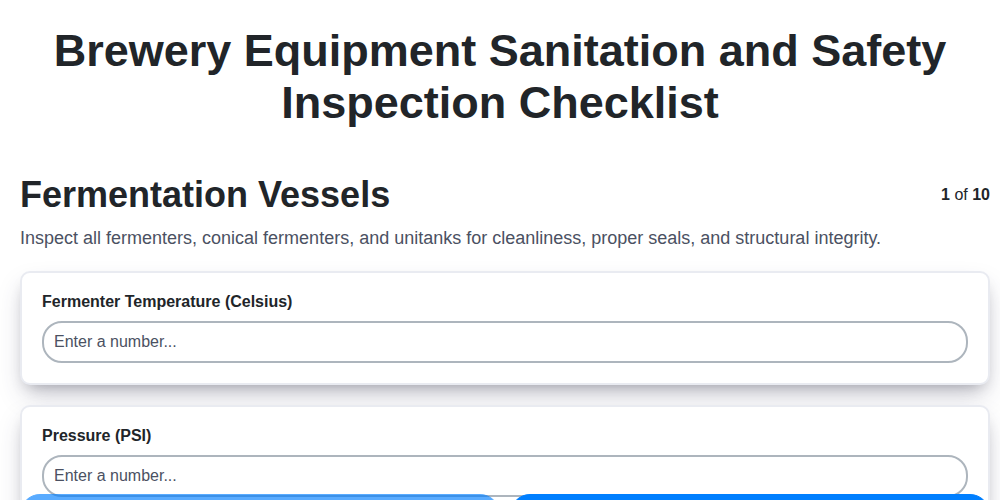
The Ultimate Brewery Equipment Sanitation & Safety Checklist Template
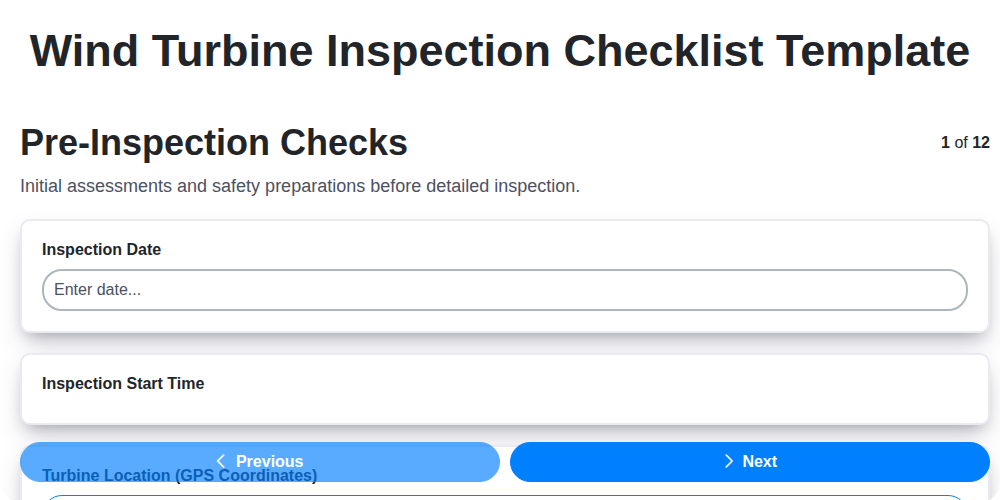
Шаблон за проверка на вятърни турбини: Вашият изчерпателен наръчник
The Ultimate Apartment Building Maintenance Inspection Checklist Template
Your Essential Guide to a Manufacturing Quality Control Inspection Checklist
Най-пълният шаблон за контролен списък при инспекция на соларни панели
Your Ultimate HVAC Inspection Checklist Template
Най-добрият шаблон за проверка на център за данни.
Можем да го направим заедно
Нуждаете се от помощ с
Checklists?
Имате въпрос? Тук сме, за да помогнем. Моля, изпратете запитването си и ние ще отговорим своевременно.