Streamlining Quality: Your Guide to Digital Inspection Workflow Automation
Opublikowano: Zaktualizowano: 04/16/2026
Spis treści
- The Imperative of Digital Inspection Workflows
- Understanding Manual Inspection Bottlenecks
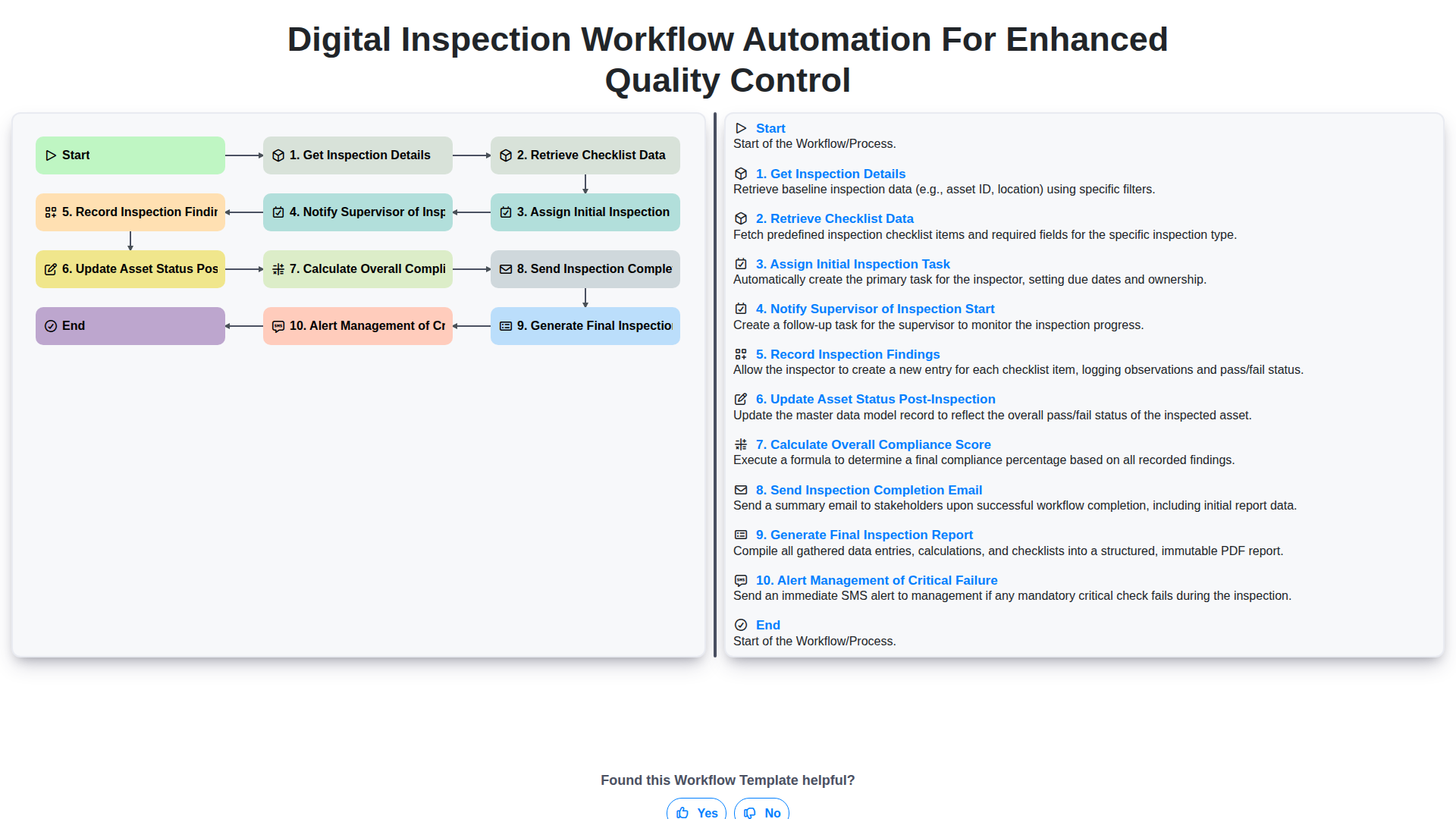
- Step 1: Seamlessly Gathering Inspection Details
- Step 2: Intelligent Checklist Retrieval and Adaptation
- Step 3: Efficient Task Assignment and Delegation
- Step 4: Real-Time Supervisor Notification and Oversight
- Step 5: Capturing Detailed and Structured Inspection Findings
- Step 6: Automated Asset Status Updates Post-Inspection
- Step 7: Calculating Objective Overall Compliance Scores
- Step 8: Instant Communication: Completion Notifications
- Step 9: Generating Comprehensive, Actionable Final Reports
- Step 10: Critical Alerting: Management Visibility on Failures
- The ROI of Automation: From Paper to Precision
- Implementing Your Digital Inspection Workflow Today
- Resources & Links
TLDR: This guide walks you through using a digital workflow template to automate and simplify your inspection processes. Learn how the structured workflow guides you from gathering initial details to generating final reports, ensuring consistency, faster completion, and higher quality control with minimal manual effort.
The Imperative of Digital Inspection Workflows
Manual inspection processes are inherently prone to human error, inconsistency, and significant delays. These traditional methods often rely on paper-based checklists, physical sign-offs, and siloed record-keeping, creating bottlenecks and making real-time decision-making nearly impossible. When quality control hinges on the meticulous completion of checklists and accurate documentation, the risk associated with these outdated workflows becomes unacceptable. A digital workflow system solves this by creating a structured, automated pathway from the moment an inspection is scheduled to the final report generation. It ensures that every required step-from gathering initial details to flagging critical failures-is executed sequentially, documented instantly, and traceable back to the original source. This shift from reactive, paper-based checks to proactive, digital automation is not just an upgrade; it is a necessity for maintaining high standards of quality and regulatory compliance in modern industries.
Understanding Manual Inspection Bottlenecks
Manually managing inspection processes is often plagued by inefficiency. Inspectors spend excessive time gathering necessary details, manually cross-referencing checklists, and physically updating records. This reliance on paper, spreadsheets, and disparate communication channels creates significant bottlenecks. Tasks that should be instantaneous-like assigning the right checklist for a specific asset or immediately flagging a critical failure-can get delayed by paperwork queues or the inability to communicate instantly. Furthermore, consolidating findings and calculating compliance scores requires painstaking manual aggregation, introducing a high risk of human error and significantly slowing down the speed at which management receives actionable insights.
Step 1: Seamlessly Gathering Inspection Details
This initial phase is the foundation of the entire process. Instead of relying on manual data entry from disparate sources-like paper forms or siloed databases-our automated system ingests all necessary inspection prerequisites in one place. We begin by systematically gathering the core inspection details. This includes identifying the specific asset being inspected (with unique IDs, location data, and service history), determining the required inspection type, and pulling up the relevant operational parameters that need verification. By centralizing this intake, we ensure that every subsequent step is based on accurate, up-to-date, and context-rich information, eliminating the risk of human error right from the start.
Step 2: Intelligent Checklist Retrieval and Adaptation
This stage moves beyond simply accessing a standard template. Our system intelligently retrieves the necessary checklist data based on the specific asset being inspected, the location, and the type of inspection scheduled. If the asset has a history of recurring issues-say, a known electrical fault in this specific model of equipment-the workflow automatically prioritizes and surfaces those related inspection points, ensuring nothing critical is missed. Furthermore, the system adapts the checklist structure in real-time. If the initial inspection details suggest a minor service check, it won't bombard the inspector with deep diagnostic questions reserved for major overhauls, creating a relevant, focused, and highly efficient inspection experience every single time.
Step 3: Efficient Task Assignment and Delegation
This crucial stage ensures that the right people are equipped to perform the inspection promptly. By automating task assignment, we eliminate manual delegation errors and delays. The system automatically routes the inspection task to the designated technician based on the asset's location, required expertise, or predefined workflow rules. Furthermore, the initial assignment triggers a notification to the supervisor, providing immediate visibility into who is responsible and when the inspection is expected to commence, thus maintaining a transparent and accountable inspection trail from the outset.
Step 4: Real-Time Supervisor Notification and Oversight
This crucial step ensures that the appropriate supervisor is immediately aware that an inspection has begun. Automation triggers a proactive notification-via email, SMS, or within the platform itself-alerting the supervisor. This real-time visibility provides instant oversight, allowing supervisors to monitor progress, intervene if delays are detected, or guide the inspector if unexpected issues arise during the task execution. It transforms supervision from a reactive process (checking in afterward) to a proactive, continuous function.
Step 5: Capturing Detailed and Structured Inspection Findings
This step is the heart of the quality control process, moving from observation to quantifiable data. Instead of relying on scattered notes or subjective memory, the automation guides the inspector through a structured data capture interface. As the physical inspection progresses, the system prompts the user for specific findings against each checklist item. This structured input ensures that every required piece of data-whether it's a pass/fail binary, a numerical reading (e.g., temperature, voltage), or a descriptive defect photo-is recorded immediately and accurately against the relevant asset and standard. If an anomaly is found, the system doesn't just allow free text; it prompts for categorization, severity level (e.g., Minor, Major, Critical), and often requires the upload of geotagged photographs or diagrams. This granular detail is crucial because it forms the empirical evidence underpinning every subsequent action, ensuring that when the final report is generated, the 'why' behind the score is transparent and traceable.
Step 6: Automated Asset Status Updates Post-Inspection
This critical step ensures that the entire maintenance ecosystem remains synchronized with the latest physical status of the asset. Once all inspection findings are recorded and reviewed, the system doesn't rely on manual data entry to update the central asset register. Instead, the automation triggers a direct update, changing the asset's status in the CMMS (Computerized Maintenance Management System) or ERP (Enterprise Resource Planning) system. Depending on the severity of the findings and the overall compliance score calculated in the previous step, the status can be automatically set to 'Operational,' 'Needs Minor Attention,' 'Quarantined for Repair,' or 'Decommissioned.' This instant update eliminates the risk of outdated records leading to improper operational decisions, ensuring that the right personnel know the exact readiness level of every piece of equipment at any given moment.
Step 7: Calculating Objective Overall Compliance Scores
This is a critical junction in the workflow where raw data transforms into actionable intelligence. The system doesn't just store inspection results; it calculates meaning. By systematically processing the findings recorded in the previous step, the platform calculates an objective overall compliance score. This calculation moves beyond a simple pass/fail binary. Instead, it weights different sections of the checklist-assigning higher importance scores to critical safety checks versus minor cosmetic observations. The resulting score provides stakeholders with an immediate, quantifiable metric of the asset's current condition relative to required standards. A low score instantly flags systemic issues requiring immediate attention, while a high score offers documented proof of due diligence, enhancing the credibility of the entire inspection record.
Step 8: Instant Communication: Completion Notifications
This critical step ensures that stakeholders are immediately informed about the conclusion of the inspection. Upon final submission, the system automatically sends a comprehensive completion email. This notification goes to all relevant parties-including the asset owner, maintenance team, and relevant supervisors-providing a high-level summary of the findings, the overall compliance score achieved, and a direct link to the final, immutable report. This immediate communication closes the loop, eliminates manual follow-up emails, and initiates the next phase of the workflow, whether it's scheduling maintenance or signing off on asset readiness.
Step 9: Generating Comprehensive, Actionable Final Reports
The culmination of the digital inspection workflow is the generation of a final, comprehensive report. This isn't just a digital filing; it's an actionable document designed for immediate review and strategic decision-making. The system aggregates all collected data-from the initial inspection details and the recorded findings to the calculated compliance score-into one cohesive narrative. This final report goes beyond simply listing 'pass' or 'fail'; it visually maps the journey of the inspected asset, highlighting areas of excellence alongside any identified deficiencies. Crucially, the report will embed the evidence trail, linking directly to photographic documentation or supervisor sign-offs associated with every finding. For management, this report serves as the definitive record, offering historical trend analysis capabilities while providing the necessary granular detail to justify maintenance scheduling, resource allocation, or process improvements.
Step 10: Critical Alerting: Management Visibility on Failures
This final, crucial step ensures that potential risks are never overlooked. When the calculated compliance score falls below an acceptable threshold, or when any single finding is flagged as critical, the system automatically triggers a high-priority alert. This goes beyond a simple email notification; it can involve integrating with other management tools, such as triggering a direct SMS to the site manager or creating a high-priority ticket in the CMMS (Computerized Maintenance Management System). This immediate visibility allows senior management and relevant stakeholders to be informed in real-time, enabling swift investigation and corrective action before a minor defect escalates into a major operational failure, thereby drastically reducing downtime and liability.
The ROI of Automation: From Paper to Precision
The shift from manual, paper-based inspection processes to automated digital workflows isn't just a convenience; it's a quantifiable investment with a rapid Return on Investment (ROI). Traditional quality control relies heavily on human effort-filling out physical checklists, manually filing reports, and transmitting documents via email. This process is inherently slow, prone to illegible handwriting, and leaves significant gaps for lost paperwork or delayed data entry.
By automating the workflow, we immediately tackle these pain points. Consider the time savings: instead of technicians spending valuable minutes locating the right form, transferring data to a spreadsheet, and waiting for physical sign-offs, the system guides them through the process digitally. The immediate capture of data upon completion ensures accuracy and near real-time reporting.
Furthermore, automation drastically reduces human error. The workflow enforces mandatory fields, ensures that all required data points (like specific measurements or photographic evidence) are attached before submission, and triggers immediate alerts if critical parameters are missed. This shift from relying on memory and meticulous filing to enforcing compliance provides a layer of structural integrity to your quality process.
The financial benefits compound across multiple areas. Reduced operational overhead (less time spent on administrative tasks), minimization of rework caused by inaccurate data, and faster decision-making (thanks to instant compliance scoring) translate directly to a higher bottom line and a visibly enhanced standard of quality control.
Implementing Your Digital Inspection Workflow Today
Transitioning from paper-based, manual inspection processes to a fully automated digital workflow isn't just an upgrade; it's a fundamental shift in how you ensure quality and manage risk. Implementing this comprehensive digital inspection workflow requires integrating several key stages seamlessly. First, the system must accurately Get Inspection Details using unique identifiers, which then triggers the Retrieval of Checklist Data tailored specifically to the inspected asset or area. Next, the workflow automatically Assigns the Initial Inspection Task to the appropriate technician, simultaneously sending a Notification to the Supervisor of Inspection Start for real-time awareness. During the inspection, findings are captured digitally, which allows for immediate Recording of Inspection Findings. Crucially, upon completion, the workflow doesn't stop; it intelligently Updates the Asset Status Post-Inspection. This collected data powers the calculation of an Overall Compliance Score, providing immediate, quantifiable quality feedback. The process concludes with a professional Inspection Completion Email sent to stakeholders and the automated Generation of a Final Inspection Report. For high-stakes environments, the system adds an essential safety net by immediately Alerting Management of Critical Failure, ensuring prompt corrective action before any major issue escalates. By adopting this automated sequence, you move from reactive paperwork to proactive, data-driven quality assurance.
Resources & Links
- IBM Digital Transformation Solutions : For understanding the broader business impact and technology underpinning workflow automation in industrial settings.
- SAP Quality Management Solutions : Resource for understanding enterprise-level integration of quality control and asset management workflows.
- ServiceNow Workflow Automation Resources : A general resource for understanding the concept and implementation of digital, multi-step workflows in a business context.
- Industrial IoT & Digital Inspection Blogs : Articles focusing on connecting physical inspection processes with digital data capture and analysis.
- Gartner Quality Control Research : Industry research reports and articles detailing best practices and future trends in quality assurance.
- SmartSheet Inspection Templates : Practical examples of structured checklist creation that can be digitized and automated.
- Forrester Quality Assurance Reports : In-depth analysis on the measurable Return on Investment (ROI) derived from process automation.
Najczęściej zadawane pytania
What is digital inspection workflow automation?
Digital inspection workflow automation is the use of software and integrated technologies to replace manual, paper-based inspection processes with automated digital sequences, including real-time data capture, instant reporting, and automated notifications.
What are the main benefits of automating inspection workflows?
Key benefits include increased accuracy by reducing human error, significant time savings through automated reporting, improved compliance via standardized checklists, and enhanced data visibility through real-time analytics and centralized storage.
How can automation help reduce operational costs?
Automation reduces costs by minimizing the labor hours required for manual data entry, reducing the need for paper-based documentation, and preventing expensive errors or compliance fines through proactive monitoring and immediate corrective actions.
What technologies are essential for a digital inspection workflow?
Essential technologies include mobile applications for field data entry, cloud-based platforms for data storage and synchronization, IoT sensors for automated monitoring, and integrated reporting tools for generating actionable insights.
How do I begin transitioning from paper-based to digital inspections?
Start by auditing your current manual processes to identify bottlenecks, then select a scalable digital inspection platform that integrates with your existing systems, and finally, implement a pilot program to train staff and refine your digital checklists.
Czy ten artykuł był pomocny?
Demo rozwiązania do zarządzania audytem/inspekcją
Zapewnij zgodność i popraw wydajność! ChecklistGuro usprawnia tworzenie, realizację i raportowanie audytów/inspekcji. Zmniejsz ryzyko, popraw jakość i utrzymuj spójność. Zarządzaj wszystkim za pomocą naszego systemu operacyjnego dla firm.
Powiązane artykuły
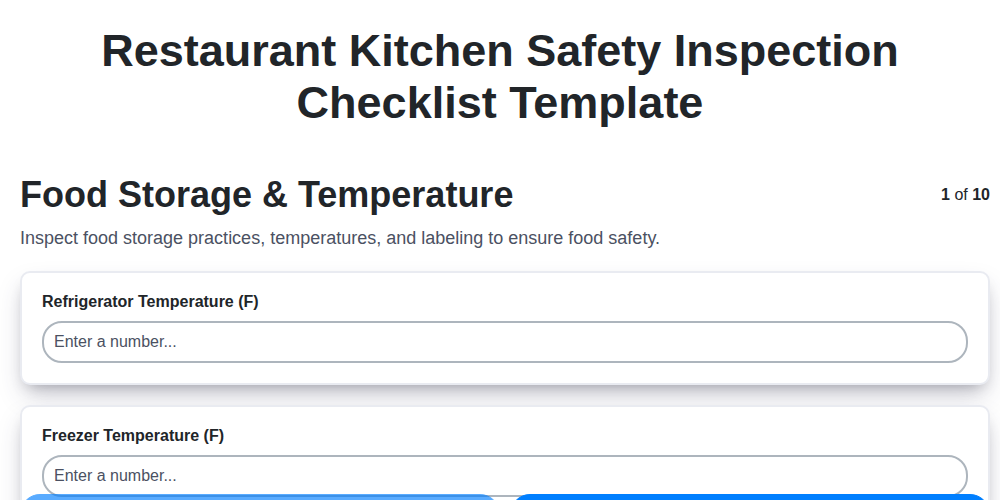
Restaurant Kitchen Safety Inspection Checklist Template
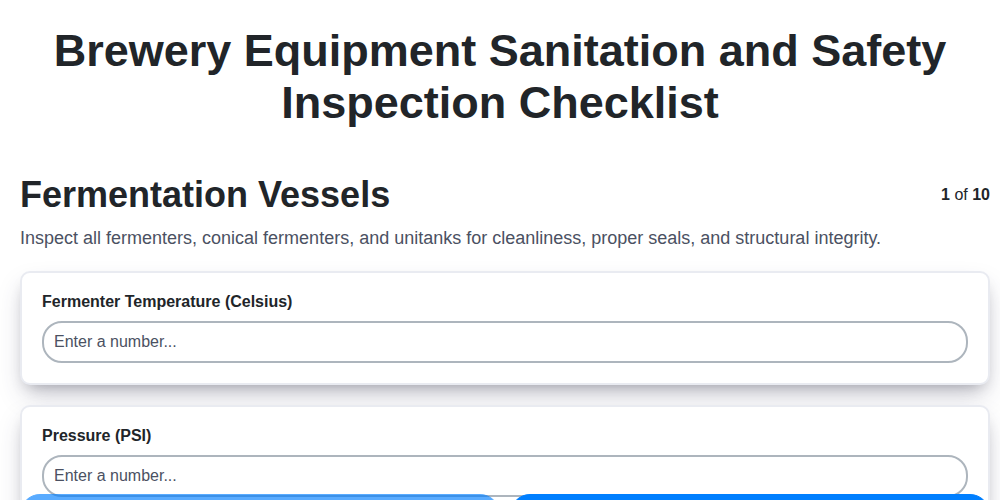
The Ultimate Brewery Equipment Sanitation & Safety Checklist Template
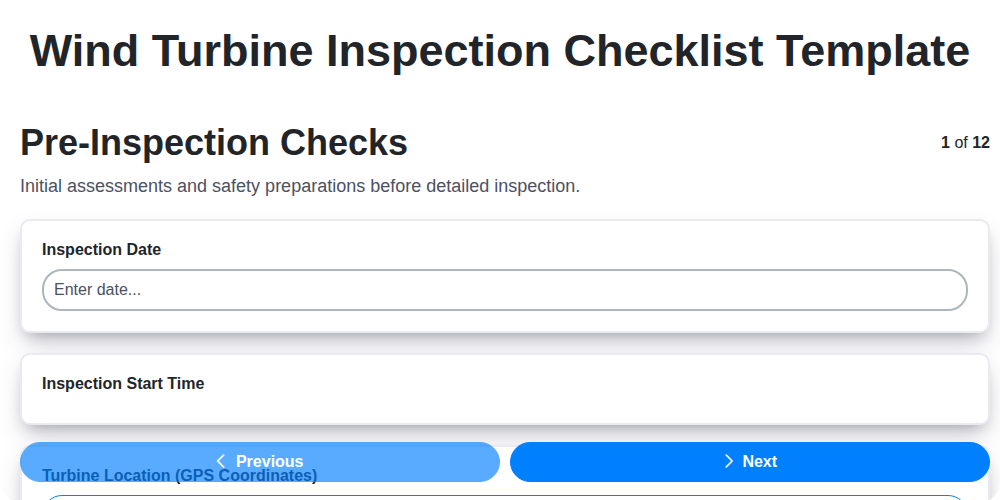
Szablon listy kontrolnej inspekcji turbin wiatrowych: Kompleksowy przewodnik
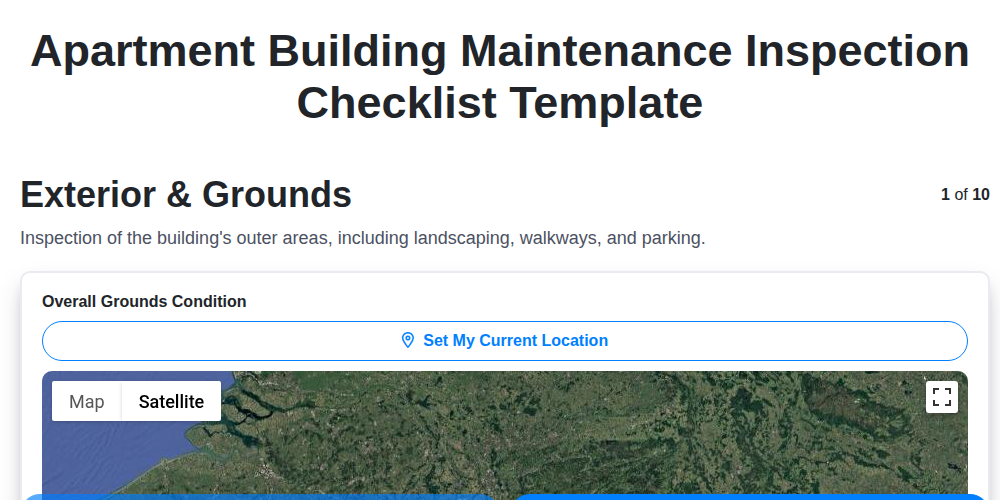
The Ultimate Apartment Building Maintenance Inspection Checklist Template
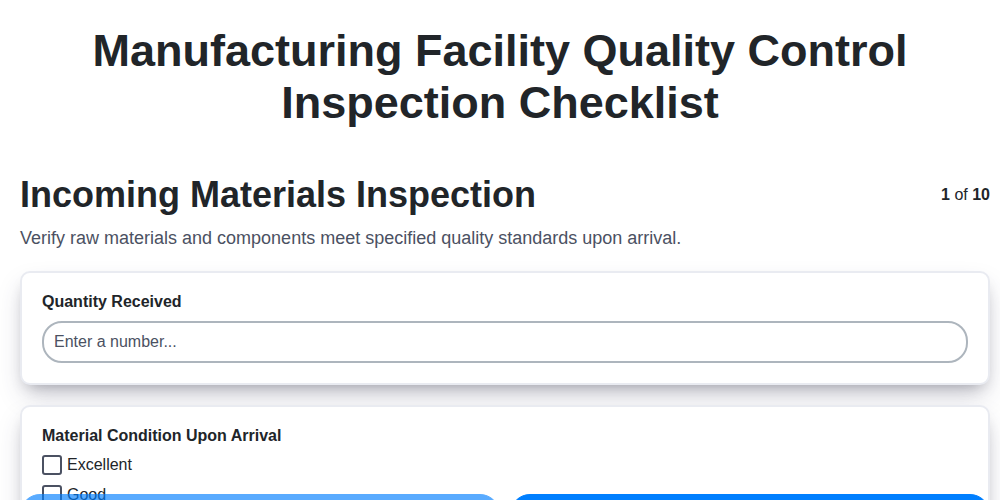
Your Essential Guide to a Manufacturing Quality Control Inspection Checklist
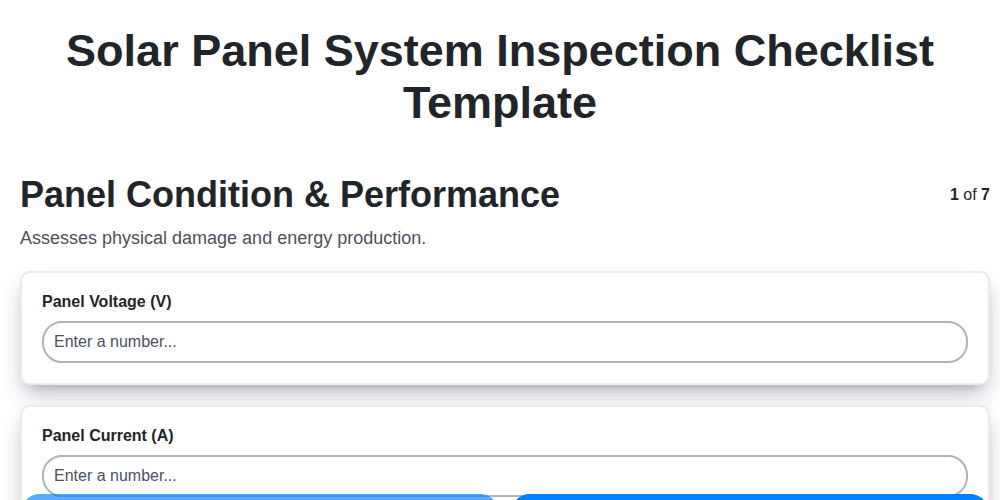
Szablon ostatecznej listy kontrolnej przeglądu paneli słonecznych
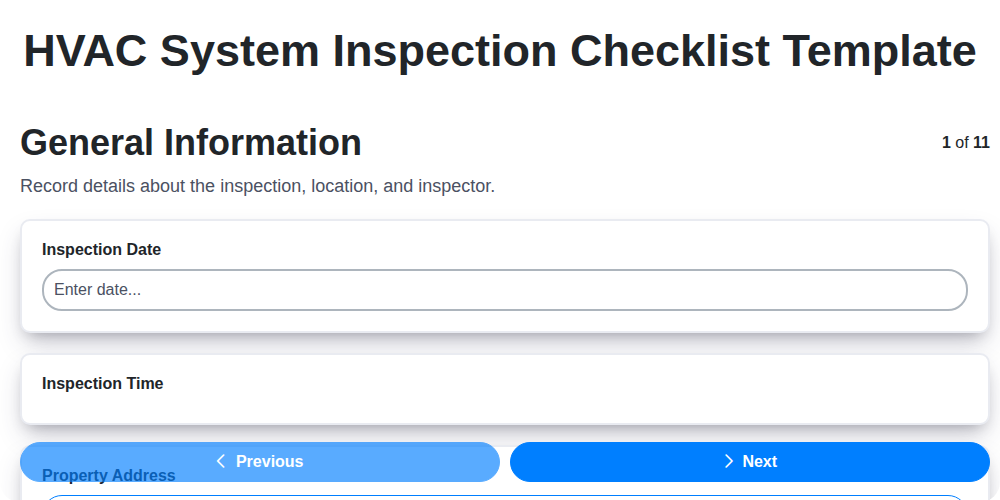
Your Ultimate HVAC Inspection Checklist Template
Szablon kompleksowej listy kontrolnej do inspekcji centrów danych
Możemy to zrobić razem
Potrzebujesz pomocy z listami kontrolnymi?
Masz pytanie? Jesteśmy tu, aby pomóc. Prześlij zapytanie, a my szybko na nie odpowiemy.