 ChecklistGuro
 Fluxo de Trabalho para Sub-rogação de Reivindicações de Seguro
Otimize o seu processo de recuperação com o nosso abrangente fluxo de trabalho para sub-rogação de sinistros de seguros. Projetado para otimizar a identificação, investigação e atribuição de responsabilidades de terceiros, minimizando erros, este processo automatizado reduz perdas, acelera os ciclos de reembolso e garante a máxima recuperação para sinistros de seguros complexos. Otimize hoje mesmo o ciclo de vida da sua sub-rogação.
Este modelo foi instalado 3 vezes.
Começar
Início do fluxo de trabalho/processo.
1. Obtenha os detalhes iniciais do pedido.
Recupere todos os detalhes do registo original da reclamação de seguro para identificar potenciais responsabilidades de terceiros.
2. Identifique os dados da política de terceiros.
Pesquise no modelo de dados da política para encontrar quaisquer registos existentes relacionados com o condutor/parte em questão, cuja conduta tenha sido considerada inadequada.
3. Calcular o valor recuperável através da sub-rogação.
Calcule o valor líquido recuperável subtraindo as franquias e as taxas de processamento do valor total do prejuízo pago.
4. Criar Caso de Sub-rogação
Crie uma nova entrada no modelo de dados do processo de sub-rogação, associando-a à reclamação original.
5. Atribuir Tarefa de Investigação
Crie uma tarefa para que um investigador verifique a causa do problema e recolha provas (relatórios policiais, fotografias).
6. Lista de verificação: Confirmação de provas/documentos
Uma lista de verificação dentro da tarefa de investigação para garantir que todos os documentos necessários estão anexados ao processo.
7. Atualizar o estado de responsabilidade.
Atualize a ficha do caso de sub-rogação com a percentagem de responsabilidade determinada para a terceira parte.
8. Obtenha os dados de contato da seguradora terceira.
Obtenha as informações de contato e os detalhes sobre o processo de sinistros da seguradora identificada como responsável pelo evento adverso.
9. Enviar Carta de Reclamação/Notificação de Dívida
Envie uma solicitação formal de pagamento ao responsável pela análise de sinistros da seguradora terceira.
10. Tarefa: Monitorizar o prazo final para a resposta.
Crie uma tarefa para fazer um acompanhamento caso não se obtenha resposta da seguradora terceirizada no prazo de 30 dias.
11. Atualizar o estado da demanda
Atualize o registo do processo para indicar que foi emitida uma notificação de pagamento.
12. Obter propostas de acordo.
Recupere quaisquer propostas de pagamento ou comunicações recebidas relacionadas com o caso.
13. Calcular a Variância das Perdas
Compare a proposta de acordo com o valor recuperável calculado, para determinar se a proposta é aceitável.
14. Tarefa: Aprovação do Acordo Final
Crie uma tarefa para que o gestor de sinistros analise e aprove o valor do acordo.
15. Atualizar o resultado do caso.
Atualize a entrada do caso de sub-rogação para «Encerrado» e registe o valor final do acordo.
16. Atualizar Reivindicação Original
Atualize a entrada original da reclamação de seguro para refletir os valores recuperados.
17. Calcular o total de valores recuperados mensalmente.
Reúna todas as entradas de sub-rogação concluídas para calcular o valor total de recuperação mensal a ser reportado.
18. Gerar relatório de recuperação de créditos por sub-rogação.
Crie um relatório de desempenho que mostre a relação entre os valores recuperados e o total de indenizações pagas.
19. Notificar o requerente sobre a recuperação.
Envie um e-mail ao titular da apólice informando-o de que o valor da franquia foi reembolsado.
20. Correspondência arquivada e encerrada
Apague ou mova as notas internas temporárias que já não são necessárias após o encerramento do processo.
Fim
Fim do fluxo de trabalho/processo.
Início do fluxo de trabalho/processo.
Recupere todos os detalhes do registo original da reclamação de seguro para identificar potenciais responsabilidades de terceiros.
Pesquise no modelo de dados da política para encontrar quaisquer registos existentes relacionados com o condutor/parte em questão, cuja conduta tenha sido considerada inadequada.
Calcule o valor líquido recuperável subtraindo as franquias e as taxas de processamento do valor total do prejuízo pago.
Crie uma nova entrada no modelo de dados do processo de sub-rogação, associando-a à reclamação original.
Crie uma tarefa para que um investigador verifique a causa do problema e recolha provas (relatórios policiais, fotografias).
Uma lista de verificação dentro da tarefa de investigação para garantir que todos os documentos necessários estão anexados ao processo.
Atualize a ficha do caso de sub-rogação com a percentagem de responsabilidade determinada para a terceira parte.
Obtenha as informações de contato e os detalhes sobre o processo de sinistros da seguradora identificada como responsável pelo evento adverso.
Envie uma solicitação formal de pagamento ao responsável pela análise de sinistros da seguradora terceira.
Crie uma tarefa para fazer um acompanhamento caso não se obtenha resposta da seguradora terceirizada no prazo de 30 dias.
Atualize o registo do processo para indicar que foi emitida uma notificação de pagamento.
Recupere quaisquer propostas de pagamento ou comunicações recebidas relacionadas com o caso.
Compare a proposta de acordo com o valor recuperável calculado, para determinar se a proposta é aceitável.
Crie uma tarefa para que o gestor de sinistros analise e aprove o valor do acordo.
Atualize a entrada do caso de sub-rogação para «Encerrado» e registe o valor final do acordo.
Atualize a entrada original da reclamação de seguro para refletir os valores recuperados.
Reúna todas as entradas de sub-rogação concluídas para calcular o valor total de recuperação mensal a ser reportado.
Crie um relatório de desempenho que mostre a relação entre os valores recuperados e o total de indenizações pagas.
Envie um e-mail ao titular da apólice informando-o de que o valor da franquia foi reembolsado.
Apague ou mova as notas internas temporárias que já não são necessárias após o encerramento do processo.
Fim do fluxo de trabalho/processo.
Comentários
Ainda não existem comentários. Seja o primeiro a adicionar um!
Demonstração da Solução de Gestão de Seguros
Gerir políticas, sinistros e o cumprimento de normas no setor de seguros é uma tarefa complexa. A plataforma Work OS da ChecklistGuro simplifica as suas operações, desde a análise de risco e renovações até à gestão de sinistros e elaboração de relatórios. Melhore a eficiência, reduza erros e aumente a satisfação dos clientes. Descubra como a ChecklistGuro pode transformar o seu negócio de seguros!
Modelos de Fluxo de Trabalho Relacionados
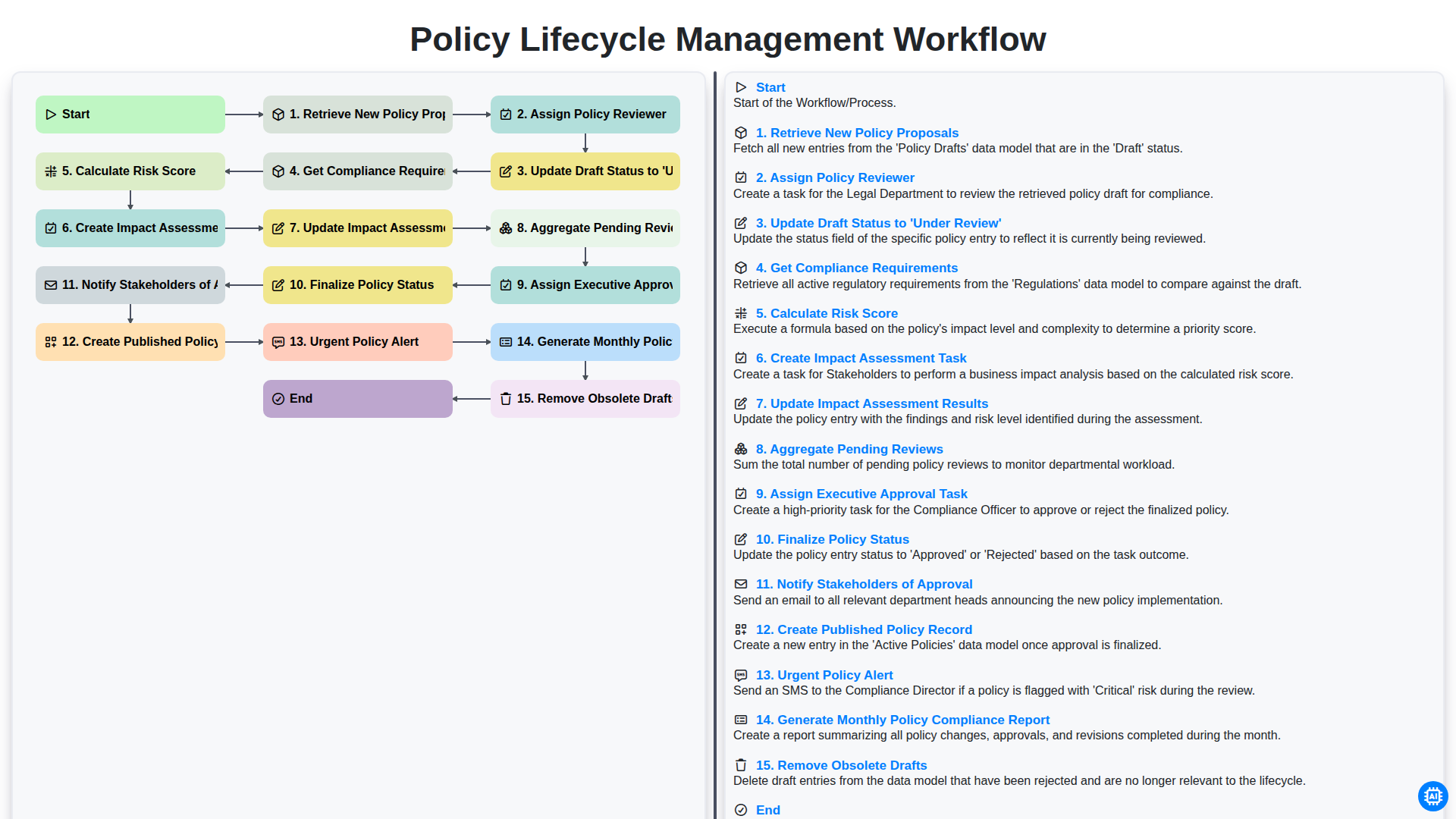
Policy Lifecycle Management Workflow
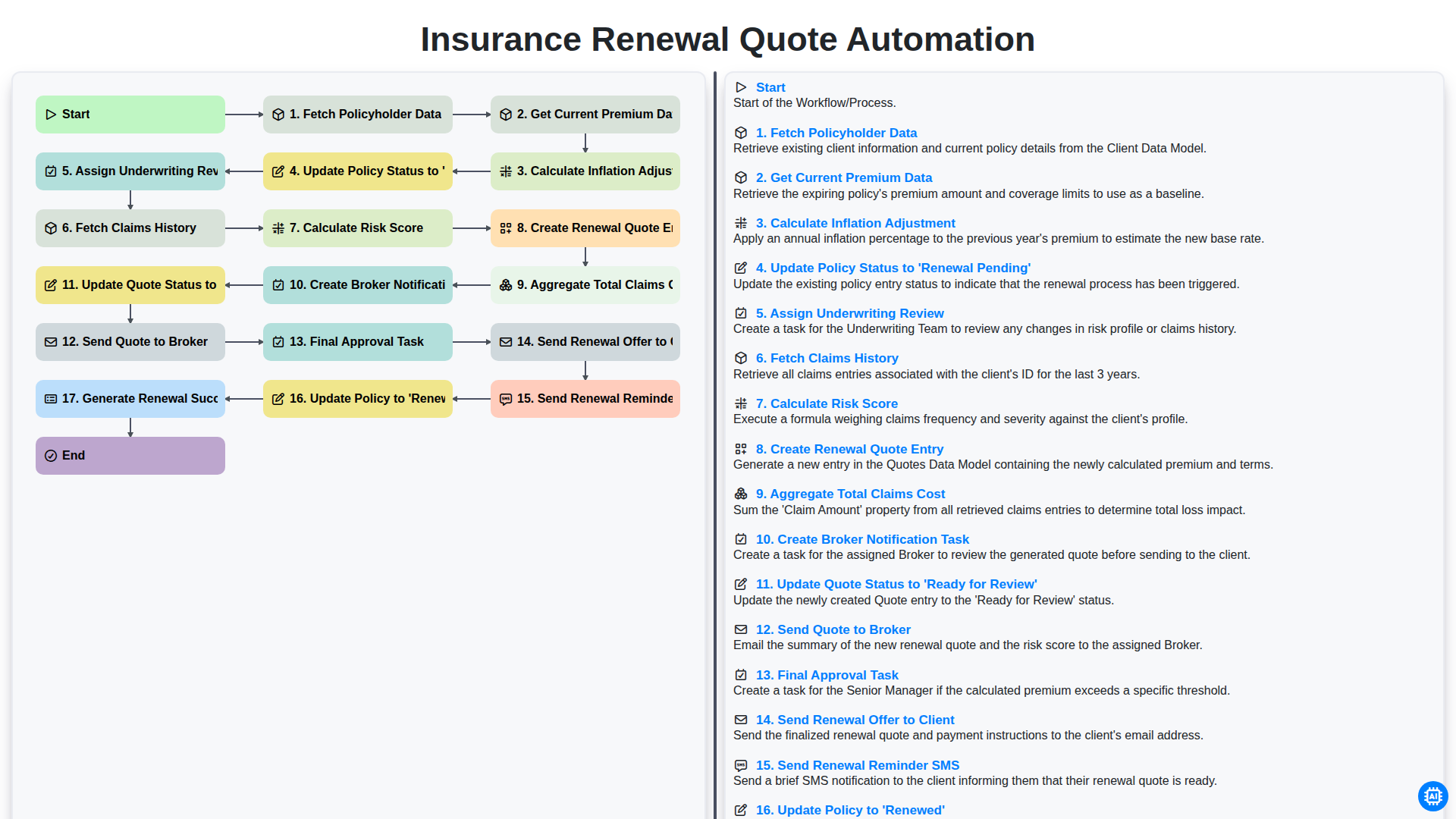
Insurance Renewal Quote Automation
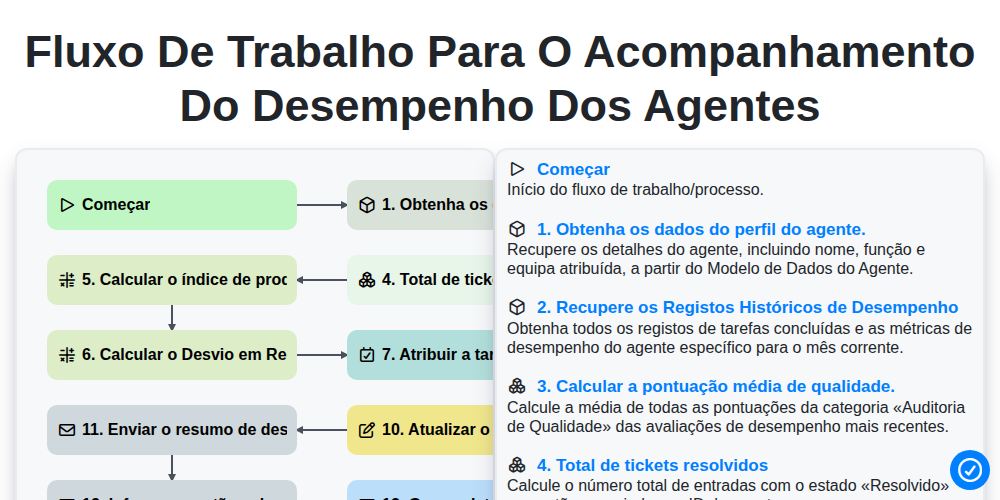
Fluxo de trabalho para o acompanhamento do desempenho dos agentes
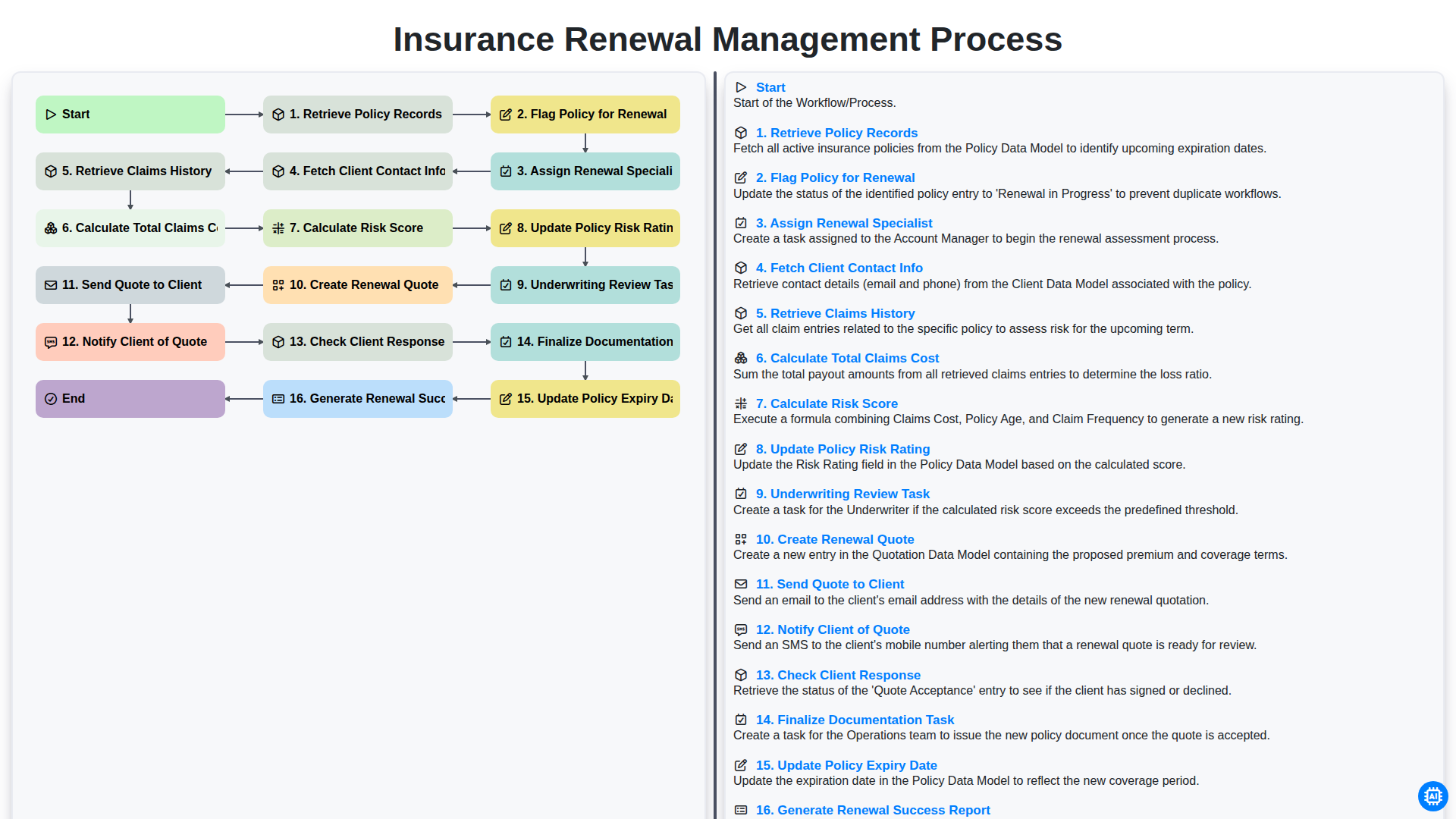
Insurance Renewal Management Process
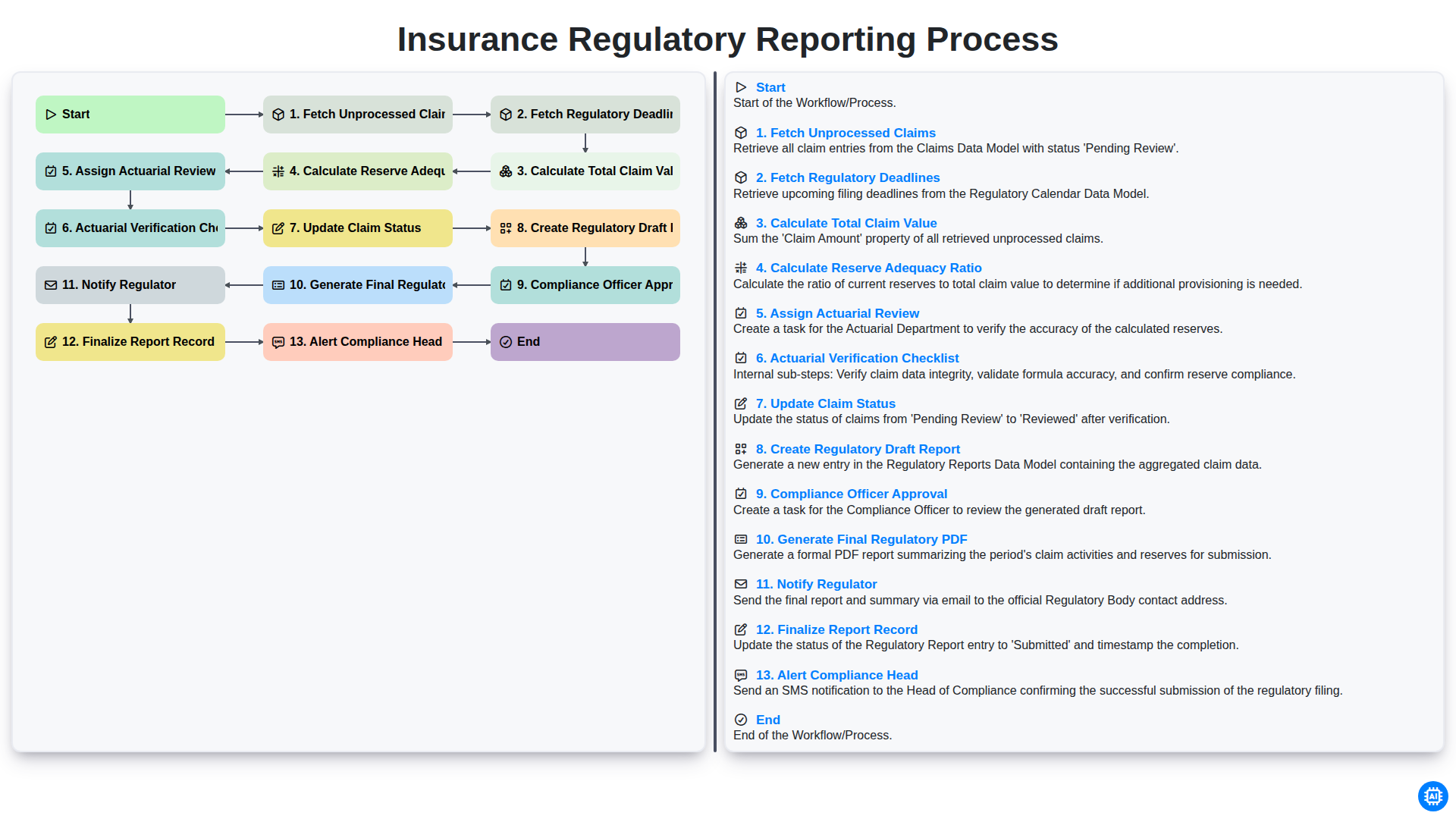
Insurance Regulatory Reporting Process
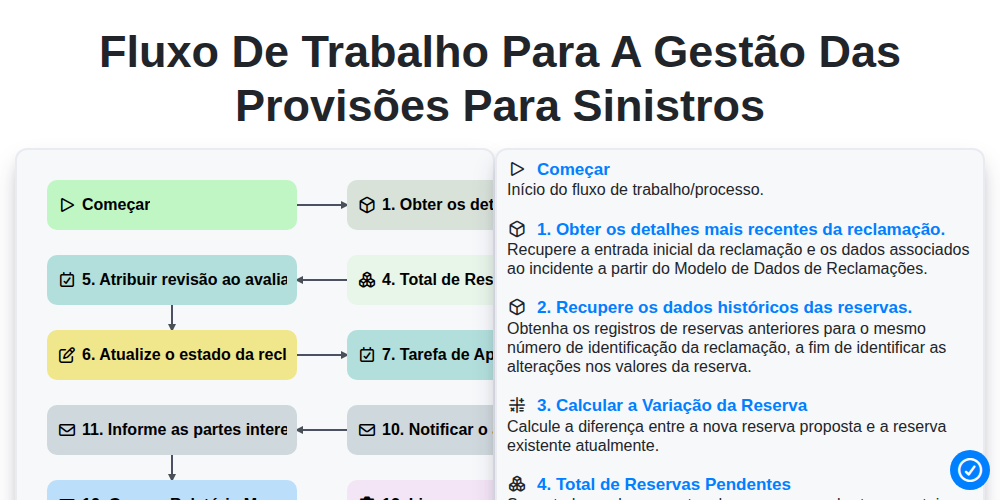
Fluxo de trabalho para a gestão das provisões para sinistros
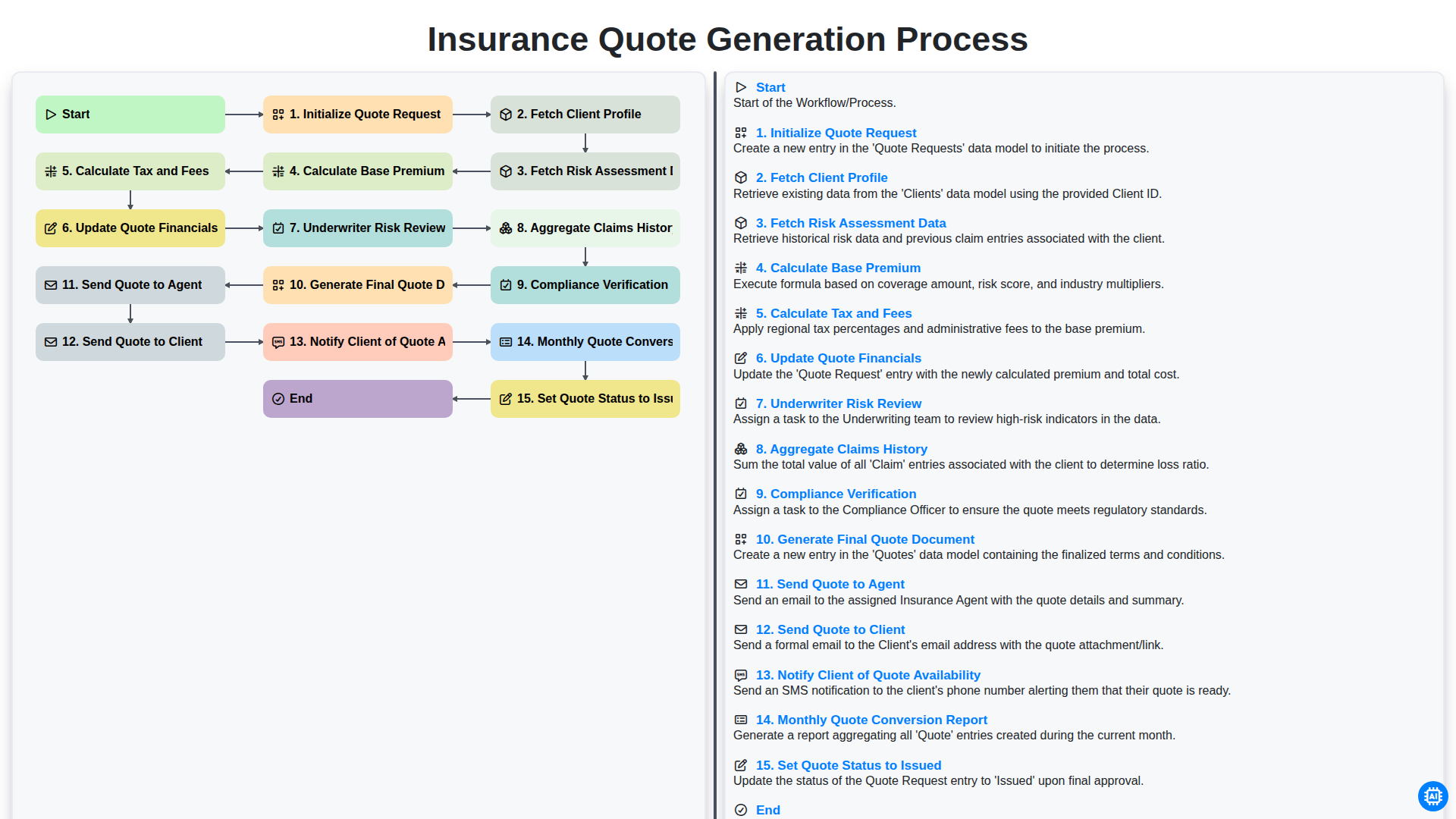
Insurance Quote Generation Process
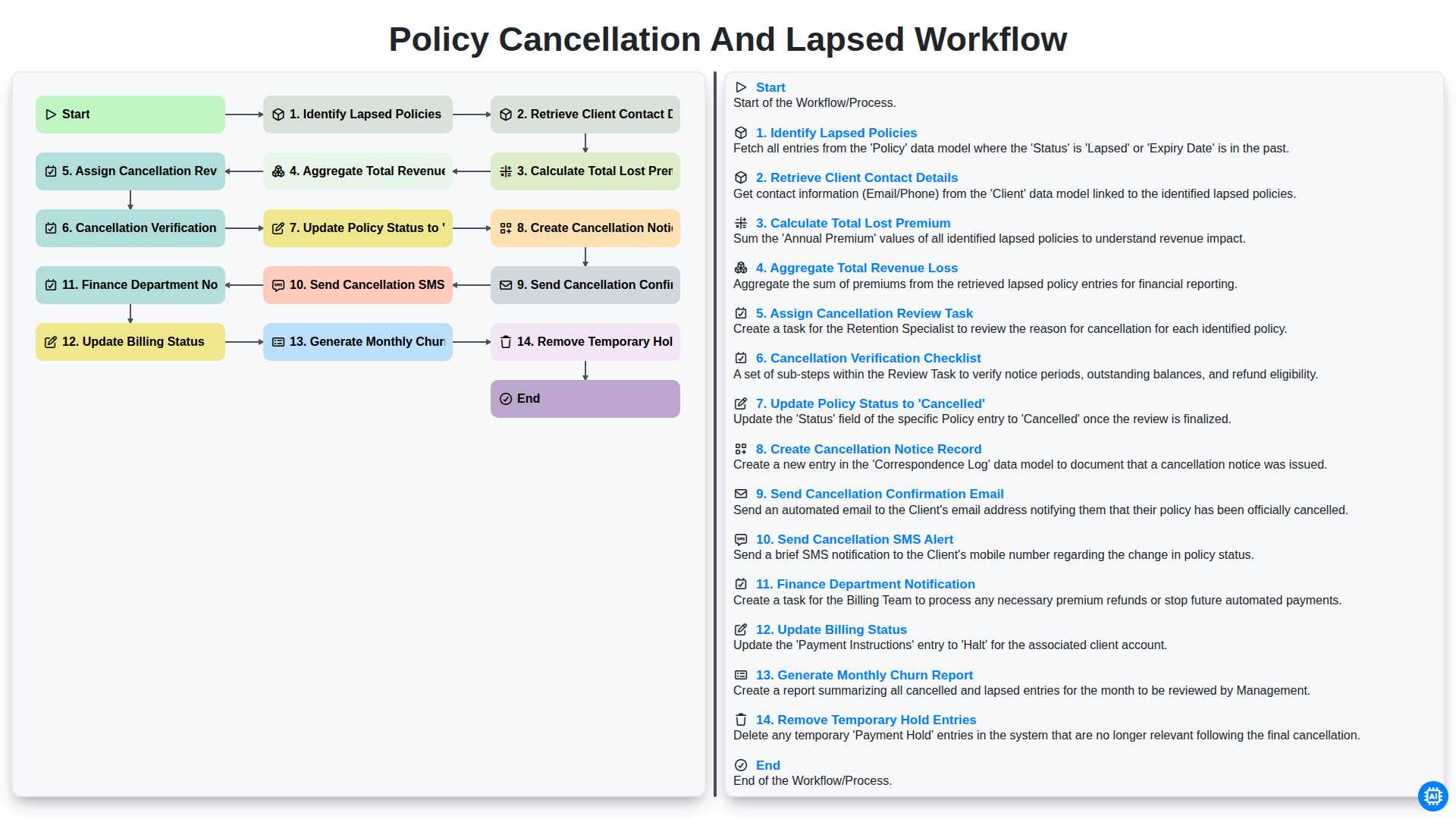
Policy Cancellation and Lapsed Workflow
Podemos fazer isso juntos.
Precisa de ajuda com o(a) Seguro?
Tem alguma dúvida? Estamos aqui para ajudar. Envie a sua questão e responderemos o mais breve possível.