Mastering Your 2026 HR Budget: The Ultimate Planning & Allocation Checklist Template
Published: 25.10.2026 Updated: 26.10.2026
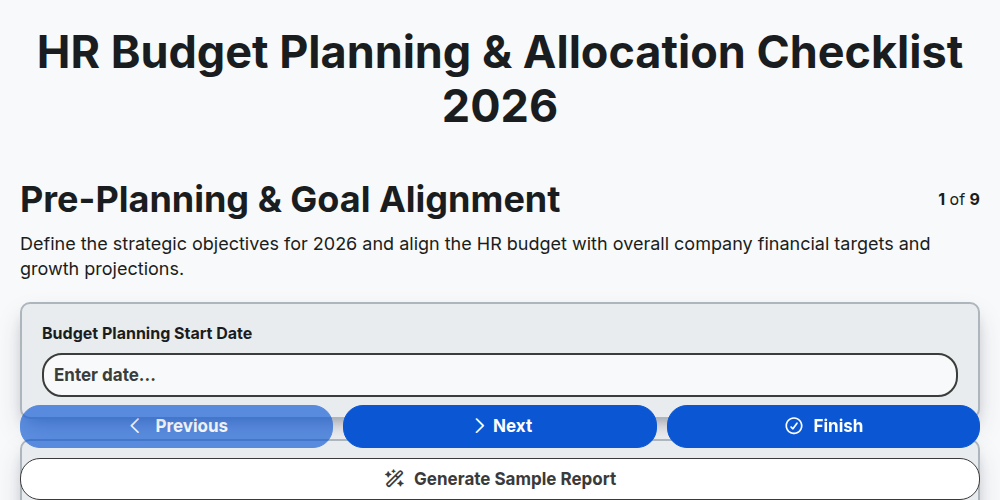
Table of Contents
- Introduction: Why Proactive Budgeting is Key for 2026 Success
- Step 1: Pre-Planning & Goal Alignment
- Step 2: Personnel & Compensation Costs
- Step 3: Recruitment & Talent Acquisition Expenses
- Step 4: Training & Professional Development
- Step 5: HR Technology & Software Subscriptions
- Step 6: Employee Engagement & Culture Programs
- Step 7: Compliance & Administrative Overheads
- Step 8: Contingency & Emergency Fund
- Step 9: Budget Review & Approval Workflow
- Final Thoughts: Ensuring Fiscal Responsibility in HR
- Resources & Links
TLDR: Avoid financial surprises in the coming year with our comprehensive 2026 HR Budget Planning & Allocation Checklist. This guide provides a step-by-step framework to strategically manage everything from personnel costs and recruitment expenses to HR technology and contingency funds, ensuring your human capital investments align perfectly with your organization's long-term strategic goals.
Introduction: Why Proactive Budgeting is Key for 2026 Success
As we approach the 2026 fiscal year, the landscape of work is shifting faster than ever. From the integration of advanced AI in everyday workflows to the evolving expectations of a multi-generational workforce, the role of Human Resources has transitioned from a back-office administrative function to a primary driver of strategic business value.
The High Stakes of Strategic Allocation
Budgeting is no longer just about making the numbers work or ensuring there is enough padding for annual raises. In 2026, an HR budget is your roadmap for navigating talent shortages, technological disruptions, and economic volatility. A poorly planned budget doesn't just lead to missed targets; it leads to talent attrition, compliance risks, and stalled innovation.
Moving Beyond Reactive Spending
Many HR leaders fall into the trap of reactive budgeting-simply looking at last year's spreadsheets and adding a small percentage for inflation. However, to drive real impact, you must move toward proactive allocation. This means:
- Aligning Talent with Revenue Goals: Ensuring your headcount growth mirrors the company's projected expansion.
- Investing in Future-Proofing: Allocating funds for upskilling employees today so they can manage the automation of tomorrow.
- Mitigating Risk: Preparing for the rising costs of compliance and the unpredictable nature of market shifts.
How to Use This Checklist
The following checklist is designed to serve as a comprehensive framework for your 2026 financial planning. Rather than viewing these as isolated line items, view them as interconnected pillars. Each category-from recruitment costs to technology subscriptions-must work in harmony to support your overarching organizational objectives.
By following this structured approach, you will transform your HR budget from a mere cost center into a strategic engine that powers sustainable organizational growth.
Step 1: Pre-Planning & Goal Alignment
Setting the Strategic Foundation
Before you touch a single spreadsheet or crunch any numbers, you must look beyond the bottom line. Effective HR budgeting isn't just about allocating dollars; it is about aligning your financial resources with the overarching mission of your organization. If your budget doesn't reflect your company's 2026 strategic objectives, you are simply funding the status quo rather than driving growth.
Aligning with Corporate Objectives
The first step in your checklist is to sit down with executive leadership to understand the company's roadmap for 2026. Ask the critical questions:
- Is the company in a growth phase or a consolidation phase? A period of rapid expansion requires a heavy tilt toward recruitment and onboarding, whereas a consolidation phase might require more investment in upskilling and retention.
- What are the key KPIs for the upcoming year? Whether it is increasing revenue, entering new markets, or improving operational efficiency, your HR budget must provide the fuel to reach these milestones.
Defining HR's Strategic Mandate
Once you understand the corporate direction, define what HR's specific contribution will be. This involves identifying your Big Three priorities for the year. For example, if the company's goal is digital transformation, your budget focus should lean heavily toward HR Technology and Training & Development.
Data-Driven Forecasting
Don't rely on guesswork. Use historical data from 2024 and 2025 to identify trends in turnover, overtime, and departmental spending. Use this retrospective view to forecast future needs.
Identifying Potential Constraints
Part of pre-planning is identifying budgetary headwinds. Are there anticipated industry shifts, inflation concerns, or changes in labor laws that might impact your spending power? Identifying these risks during the alignment phase allows you to build a more resilient and realistic budget.
Step 2: Personnel & Compensation Costs
Navigating the Largest Slice of Your Budget
Personnel and compensation typically represent the most significant portion of any HR budget. In 2026, with the evolving landscape of remote work, inflation, and shifting labor market demands, precision in this category is critical to maintaining both fiscal responsibility and talent retention.
When allocating funds for your workforce, move beyond simple headcount and account for the total cost of employment.
Key Components to Calculate:
- Base Salaries and Wages: Review your current payroll and project adjustments for new hires. Ensure you are accounting for cost-of-living adjustments (COLA) to remain competitive in a fluctuating economy.
- Overtime and Shift Differentials: Analyze historical data to forecast necessary overtime pay, especially for roles in manufacturing, healthcare, or seasonal industries.
- Bonuses and Incentive Programs: Define the budget for performance-based bonuses, annual merit increases, and any 2026 sales incentive structures.
- Benefits and Insurance Premiums: This is often where budgets fluctuate most. Account for rising premiums in health, dental, and vision insurance, as well as employer contributions to retirement plans (e.g., 401k matching).
- Payroll Taxes and Statutory Contributions: Don't forget the employer-side costs, including Social Security, Medicare, unemployment insurance, and any new state-mandable disability or paid leave contributions.
- Perks and Fringe Benefits: Allocate funds for non-monetary compensations such as wellness stipends, gym memberships, or meal subsidies that contribute to your overall value proposition.
Pro-Tip for 2026 Planning:
Don't just look at what you spent in 2025. Perform a Gap Analysis between your current compensation structure and the market median for your industry. If your budget doesn't account for a projected 3-5% market shift, you may face a talent drain by Q3.
Step 3: Recruitment & Talent Acquisition Expenses
Scaling Your Team: Recruitment & Talent Acquisition Expenses
As your organization prepares for 2026, your recruitment budget is more than just a list of job posting fees; it is a strategic investment in your company's future human capital. A common mistake is focusing solely on active vacancies while ignoring the hidden costs of building a talent pipeline. To ensure you aren't caught off guard by sudden turnover or rapid scaling needs, your budget must account for every stage of the hiring lifecycle.
Core Recruitment Costs
At a minimum, your budget should cover the direct costs associated with attracting candidates:
- Job Board Fees & Premium Listings: Beyond standard LinkedIn or Indeed postings, account for niche industry boards that reach high-quality, specialized talent.
- Internal Recruiter Compensation: If you are scaling, will you need to hire an in-house talent acquisition specialist or increase the workload of your existing HR team?
- External Agency & Headhunter Fees: Allocate funds for executive search firms or specialized agencies for hard-to-fill roles that require intensive sourcing.
Sourcing & Employer Branding
In a competitive 2026 labor market, candidates will research your company as much as you research them. You need a budget to influence that perception:
- Employer Branding Campaigns: Funds for social media advertising, career page redesigns, and professional photography/videography to showcase your company culture.
- Candidate Experience Tools: Investments in automated scheduling, assessment platforms, and communication tools that ensure a seamless, professional journey from application to offer.
The Hidden Cost of Hiring
The budget often breaks when companies forget the expenses incurred after the candidate says yes:
- Background Checks & Pre-employment Screening: Costs for criminal records, drug testing, and credential verification.
- Relocation Packages: If your 2026 strategy involves bringing in talent from different regions, relocation stipends or moving assistance must be clearly earmarked.
- Referral Program Incentives: Budgeting for Employee Referral Bonuses is one of the most cost-effective ways to leverage your current workforce to find high-quality talent.
Step 4: Training & Professional Development
Investing in Your Greatest Asset: Training & Professional Development
In an era of rapid technological shifts and evolving skill requirements, your budget for training and development is not just an expense-it is a strategic investment in your company's future-proofing strategy. For 2026, your allocation should focus on closing the skills gap and fostering a culture of continuous learning.
Key Elements to Include in Your Budget
To ensure your development budget is comprehensive, evaluate the following cost categories:
- Upskilling & Reskilling Programs: Budget for technical workshops, certifications, and bootcamps designed to help employees master emerging tools (such as AI integration) and modern workflows.
- Leadership & Management Training: Allocate funds for high-potential employees and current managers to develop essential soft skills, such as emotional intelligence, strategic decision-making, and hybrid team management.
- Learning Management Systems (LMS) & Content Subscriptions: Beyond software costs, include the recurring fees for specialized learning platforms (e.g., LinkedIn Learning, Coursera, or industry-specific educational databases).
- Conferences, Seminars, and Workshops: Account for registration fees, travel expenses, and lodging for employees attending major industry events that provide networking and industry insights.
- Mentorship & Coaching Programs: Consider the costs associated with implementing internal mentorship frameworks or hiring external executive coaches for specialized departmental needs.
Strategic Allocation Tips for 2026
- Align with Business Goals: If your 2026 roadmap involves expanding into new markets or launching new products, your training budget must prioritize the specific competencies required to support those initiatives.
- Prioritize Learnability: Instead of just budgeting for specific tools, invest in training that enhances learnability-the ability of your workforce to adapt to future technological disruptions.
- Measure ROI via KPIs: When presenting this portion of the budget to stakeholders, move beyond cost per head. Frame the budget in terms of its impact on retention rates, internal promotion rates, and reduced time-to-productivity.
Step 5: HR Technology & Software Subscriptions
Evaluating Your Digital Ecosystem
In 2026, your HR technology stack is no longer just a collection of tools-it is the backbone of your operational efficiency. As AI-driven automation and data analytics become standard, your budget must account for both the maintenance of existing systems and the integration of new, intelligent software.
When allocating funds for technology, move beyond simple seat licenses and consider the total cost of ownership (TCO).
Key Areas for Tech Budget Allocation
- Core HRIS & Payroll Systems: Evaluate if your current Human Resources Information System (HRIS) can handle your 2026 scaling needs. Factor in costs for any necessary module upgrades, such as advanced workforce management or automated payroll compliance.
- AI & Automation Integrations: Budget for the integration of AI tools that assist with resume screening, automated onboarding workflows, or predictive attrition analytics. These tools often require upfront implementation fees and ongoing API maintenance.
- Learning Management Systems (LMS): As training becomes more continuous, ensure your LMS budget covers content licensing, mobile accessibility, and any integrations with your performance management software.
- Employee Experience (EX) Platforms: Include subscriptions for engagement survey tools, recognition platforms, and internal communication apps that foster a seamless digital workspace.
- Data Security & Compliance Software: Never overlook the cost of cybersecurity training tools and software that ensures your HR data remains compliant with evolving global privacy regulations (like GDPR or updated local mandates).
Pro-Tip for 2026 Planning
Audit Before You Renew: Before committing to 2026 renewals, conduct a usage audit. Identify underutilized features or redundant software that can be consolidated. Instead of simply renewing everything, look for opportunities to migrate toward integrated all-in-one platforms that may reduce your total number of individual subscriptions.
Step 6: Employee Engagement & Culture Programs
Investing in Your Most Valuable Asset
Budgeting for culture is often where HR leaders struggle most because, unlike payroll, the ROI on engagement can feel intangible. However, in 2026, a robust engagement budget is a strategic necessity to combat burnout and reduce the massive costs associated with turnover. This section of your budget should focus on creating an environment where employees feel seen, heard, and valued.
Key Budget Line Items for Engagement
When allocating funds for culture, move beyond just office snacks and consider these strategic categories:
- Recognition & Rewards Programs: Allocate funds for both peer-to-peer recognition platforms and formal milestone celebrations (work anniversaries, tenure awards, and performance-based incentives).
- Team Building & Offsites: Budget for both virtual and in-person gathering opportunities. This includes venue rentals, facilitation fees, and travel logistics for distributed teams.
- Wellness & Mental Health Initiatives: Move beyond basic insurance by budgeting for mental health apps, wellness workshops, or gym membership subsidies to support holistic employee well-being.
- Diversity, Equity, and Inclusion (DEI) Programs: Ensure there is a dedicated fund for DEI training, employee resource group (ERG) support, and inclusive event programming.
- Internal Communication Tools: Allocate resources for tools that foster transparency, such as internal newsletters, town hall technology, or engagement survey platforms.
Pro-Tip: Measure the Cost of Inaction
When presenting this portion of the budget to Finance, don't just list costs; frame them as retention investments. Compare your proposed engagement budget against the historical cost of replacing a single employee in your organization. When you demonstrate that a $50,000 culture initiative can prevent $200,000 in turnover costs, your budget approval becomes much easier.
Step 7: Compliance & Administrative Overheads
Navigating the Cost of Compliance and Operations
As you move into the later stages of your 2026 budget construction, it is easy to focus solely on people costs like salaries and training. However, a robust HR budget must account for the hidden costs of maintaining a legal, organized, and operational department. Failure to allocate funds here can lead to unexpected legal fees or operational bottlenecks that disrupt your entire workforce strategy.
Essential Compliance Budget Items
Compliance is non-negotiable. In 2026, regulatory landscapes-especially regarding data privacy and labor laws-will continue to evolve. Ensure your budget accounts for:
- Regulatory Filings & Legal Fees: Funds for mandatory labor law posters, employment law updates, and potential legal consultations to ensure your policies remain compliant with new local and federal mandates.
- Audit & Risk Management: Budgeting for periodic internal or external payroll audits and workplace safety inspections (OSHA compliance) to mitigate long-term liability.
- Data Privacy & GDPR/CCPA Maintenance: Costs associated with ensuring employee data handling meets evolving global privacy standards.
Administrative & Operational Overheads
This category covers the logistical backbone of your HR function. While these costs are often incremental, they aggregate into a significant portion of your total spend.
- HR Documentation & Record Keeping: Costs for physical or digital filing systems, document scanning services, and secure storage solutions for employee records.
- Employment Verification & Background Checks: The per-hire cost of drug testing, criminal background checks, and credential verification.
- Office Supplies & HR Logistics: The small essentials-from onboarding kits and branded stationery to the postage and shipping costs associated with distributed teams.
- Professional Membersary & Certifications: Membership dues for organizations like SHRM or HRCI, which are vital for keeping your HR team's expertise current.
Pro-Tip for 2026: Don't treat compliance as a static line item. Allocate a Regulatory Buffer of 3-5% within this category to absorb the impact of sudden legislative changes or new mandatory reporting requirements that may emerge mid-year.
Step 8: Contingency & Emergency Fund
The Safety Net: Building a Robust Contingency Fund
In the volatile landscape of modern business, a budget that assumes perfect conditions is a budget destined to fail. While your primary focus should be on strategic growth and talent development, you must also prepare for the what-ifs.
A contingency fund is not a slush fund for unnecessary spending; rather, it is a strategic reserve designed to absorb unexpected shocks without derailing your core HR initiatives. In 2026, where economic shifts and sudden market changes can occur overnight, having a dedicated buffer is non-negotiable.
What Should This Fund Cover?
Your contingency budget should be earmarked for unforeseen expenses that fall outside your standard operational costs, such as:
- Sudden Turnover Spikes: Unexpectedly high attrition rates that require emergency recruitment agency fees or accelerated onboarding costs.
- Legal & Regulatory Shifts: Sudden changes in labor laws or compliance requirements that necessitate immediate training or legal counsel.
- Unplanned Salary Adjustments: Emergency cost-of-living adjustments or retention bonuses needed to prevent talent loss during a competitive talent war.
- Crisis Management: Costs associated with unexpected workplace incidents, sudden transitions to remote work, or emergency health and safety implementations.
How Much Should You Allocate?
While there is no one-size-fits-all percentage, a standard industry recommendation is to allocate between 5% and 10% of your total HR budget to a contingency line item.
Pro-Tip for 2026 Planning
Treat your contingency fund as a use it or lose it strategic reserve. If the fund remains untouched by the end of the fiscal year, do not simply absorb it into the next year's baseline. Instead, use the surplus to reinvest in long-term strategic projects or permanent improvements to your HR tech stack. This ensures that your budget remains disciplined while still rewarding the department for prudent financial management.
Step 9: Budget Review & Approval Workflow
Navigating the Final Hurdle: The Path to Final Approval
Creating a comprehensive budget is only half the battle; the final, critical phase is ensuring your strategic vision gains the necessary institutional buy-in. The Budget Review & Approval Workflow is the mechanism that transforms a spreadsheet of numbers into an authorized operational roadmap for 2026.
Without a structured approval process, even the most well-researched budget can face last-minute cuts or unexpected delays that jeopardize your ability to hire or train when the new year begins.
Establishing the Review Cycle
Before presenting your final figures, conduct an internal HR audit. Review your line items against the goals established in the Pre-Planning phase. Ask yourself:
- Does this allocation directly support our 2026 headcount targets?
- Are there any vanity expenses that don't contribute to our core HR objectives?
- Is there a clear way to measure the ROI for the larger investments (like new HRIS or training programs)?
The Approval Hierarchy
A seamless workflow typically involves three distinct stages:
- The HR Leadership Review: Present the draft to your HR Director or CHRO to ensure alignment with departmental strategy and to fine-tune resource allocation.
- The Finance Partnership: Meet with your Finance/FP&A partners early. This is the time to justify high-impact expenditures and ensure your projections align with the company's broader fiscal constraints.
- Pro-tip: Presenting your Contingency Fund during this stage demonstrates fiscal responsibility and preparedness.
- Executive Sign-off: Present the finalized budget to the CEO or Board. At this stage, focus less on granular line items and more on how this budget acts as an engine for organizational growth and talent stability.
Implementing a Feedback Loop
The workflow should not be a one-way street. If the budget is returned for revisions, use it as an opportunity to re-prioritize. If a certain recruitment budget is trimmed, identify which nice-to-have engagement programs may need to be scaled back to maintain the integrity of your must-have compensation and compliance costs.
Final Goal: Your objective is to emerge from this workflow with a fully vetted, transparent, and authorized budget that empowers your HR team to execute their 2026 strategy without the fear of sudden mid-year freezes.
Final Thoughts: Ensuring Fiscal Responsibility in HR
Turning Strategy into Sustainability
Creating an HR budget is far more than an exercise in spreadsheet management; it is a strategic roadmap that dictates your organization's ability to attract, retain, and develop top-tier talent. As we look toward 2026, the landscape of work will continue to shift, demanding a budget that is both robust enough to support growth and flexible enough to pivot when market conditions change.
Beyond the Numbers: The Strategic Impact
When you follow this checklist, you are doing more than just assigning dollar amounts to line items. You are:
- Aligning Human Capital with Business Goals: Ensuring that every dollar spent on recruitment or training directly fuels the company's 2026 objectives.
- Mitigating Risk: By prioritizing compliance and contingency funds, you protect the organization from unforeseen legal and operational disruptions.
- Investing in Longevity: Moving from a reactive spending model to a proactive investment model helps foster a culture of stability and professional growth.
Moving Forward with Confidence
A successful budget requires discipline, but it also requires regular scrutiny. Remember that this document is a living entity. As you move through the 2026 fiscal year, use this same checklist to audit your actual spending against your projections.
Don't view budget constraints as a limitation on HR's impact-view them as a framework for maximizing the value of every resource at your disposal. With a well-structured plan, you aren't just managing costs; you are engineering the future of your workforce.
Resources & Links
- SHRM (Society for Human Resource Management): The gold standard for HR professionals, providing templates, regulatory updates, and strategic management resources.
- Gartner HR Research: Access high-level strategic insights and data-driven trends to align your 2026 budget with global workforce shifts.
- Forbes Business Council: Expert perspectives on leadership and financial management to help frame the ROI of HR initiatives.
- Harvard Business Review: In-depth articles on organizational design and managing human capital effectively during economic shifts.
- Deloitte Insights: Comprehensive reports on the future of work and human capital trends that impact long-term budget forecasting.
- Payscale: Essential for Step 2: Analyzing real-time compensation data and market benchmarks to prevent budget underestimation.
- Glassdoor Economic Research: Useful for understanding recruitment market trends and employer branding costs for your talent acquisition budget.
- LinkedIn Talent Solutions: Insights into workforce mobility and recruiting technology trends to assist in Step 3 and Step 5 planning.
- Zendesk (Customer Service/HR Tech context): Understanding the integration of service-oriented software into the HR tech stack and administrative overhead.
- Workday: A leader in HCM (Human Capital Management) software to help you evaluate HR technology and software subscriptions.
- Coursera for Business: Reference for planning training and professional development budgets and upskilling programs.
- Economic Policy Institute: A resource for understanding labor costs, inflation, and the broader economic landscape affecting wage growth.
- Upwork Enterprise: Great for researching the fluctuating costs of contingent labor and freelance budgeting needs.
- Capterra: A vital tool for Step 5: Comparing HR software features and pricing to optimize your tech stack spend.
- Investopedia: Essential for mastering the financial terminology needed for Step 9: Budget Review and Approval Workflows.
- McKinsey & Company: Strategic consulting insights to help align your HR budget with overall corporate growth objectives.
- Personio: Examples of how streamlined HR operations and automation can reduce administrative overhead costs.
- BambooHR: Resources on managing small to medium enterprise (SME) budgets and employee engagement programs.
Comments
There are no comments yet. Be the first to add one!
HRM - Human Resources Management Solution Demo
Simplify HR processes & empower your team! ChecklistGuro's HRM solution streamlines onboarding, performance management, & compliance. Improve employee engagement, reduce admin burden, & drive organizational growth. Manage it all with our Work OS.
Related Articles
Independent Contractor Compliance Checklist Template for HR

HR's Guide to Workplace Safety: Your Compliance Checklist Template
The Ultimate Employee Exit Interview Checklist (HR Edition)
EEO Compliance Checklist Template for HR
The Ultimate HR Audit Checklist Template: Your Guide to Compliance

Paper vs ChecklistGuro in Human Resources Management

Your Guide to Employee Training Compliance: A Free Checklist for HR
Your Ultimate Employee Onboarding Checklist Template
Need help with
Управление на човешките ресурси (УЧР)?
Have a question? We're here to help. Please submit your inquiry, and we'll respond promptly.