Streamlining Manufacturing: A Comprehensive Deviation Management Workflow
Публикувано: 30.03.2026 Обновено: 31.03.2026
Съдържание
- Introduction: Why Deviation Management Matters
- Understanding Manufacturing Deviations
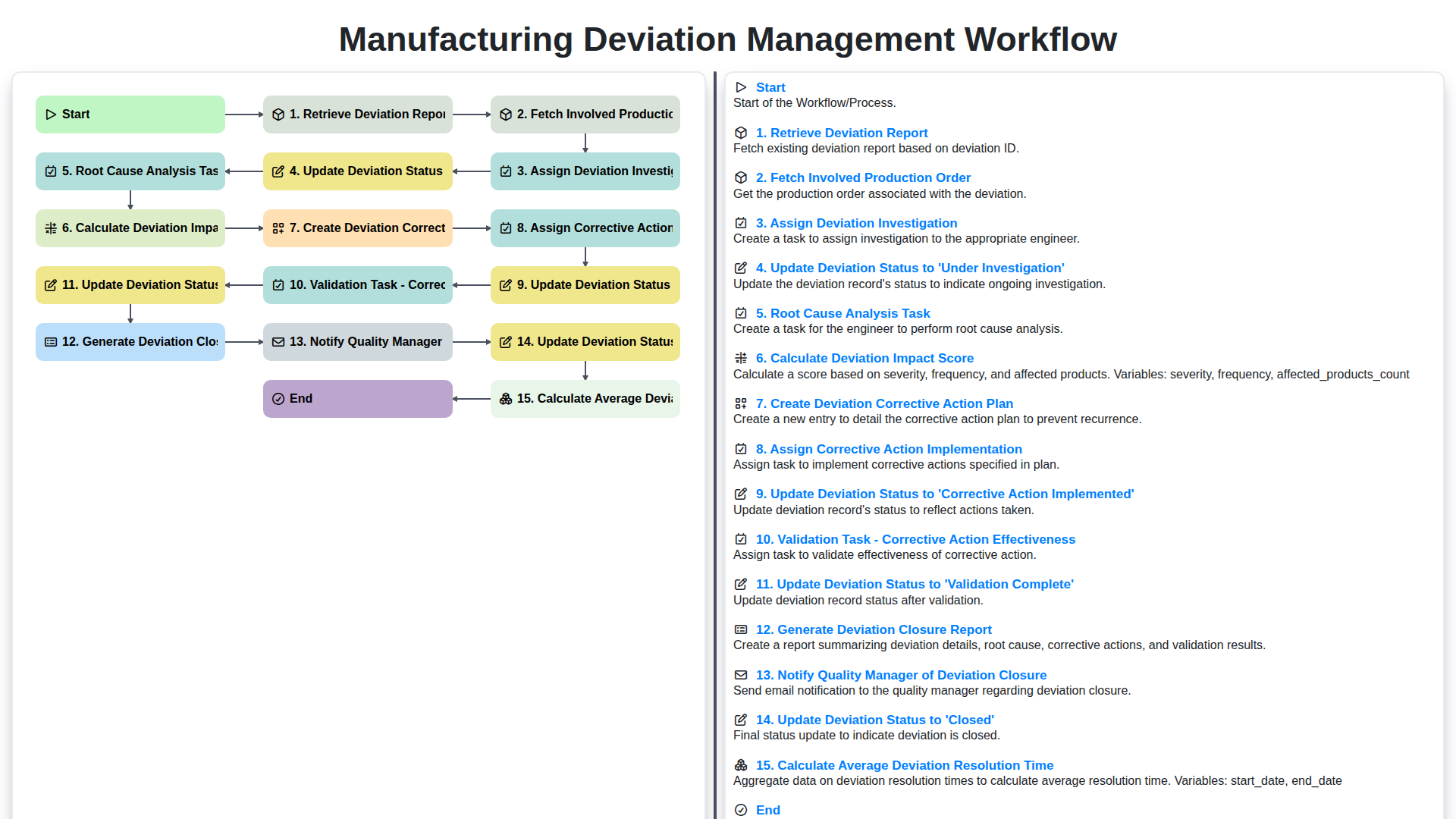
- 1. Retrieving the Deviation Report
- 2. Identifying the Affected Production Order
- 3. Assigning and Initiating Investigation
- 4. Deviation Status: Under Investigation
- 5. Root Cause Analysis - Digging Deeper
- 6. Calculating Deviation Impact Score
- 7. Crafting a Robust Corrective Action Plan
- 8. Implementing the Corrective Action
- 9. Validation: Ensuring Effectiveness
- 10. Generating the Deviation Closure Report
- 11. Deviation Closure Notification and Finalization
- 12. Monitoring Performance: Average Resolution Time
- Resources & Links
TLDR: This workflow helps manufacturers efficiently manage deviations - unexpected issues on the production line. It guides you from reporting the deviation, investigating the root cause, creating and implementing corrective actions, validating their effectiveness, and ultimately closing the deviation, all while tracking resolution time and keeping key stakeholders informed.
Introduction: Why Deviation Management Matters
In manufacturing, perfection is the goal, but deviations-unplanned events or processes that fall outside established standards-are inevitable. These deviations, whether minor inconsistencies or significant errors, can impact product quality, safety, regulatory compliance, and overall operational efficiency. Ignoring or inadequately managing these deviations can lead to recalls, customer dissatisfaction, increased costs, and even legal repercussions.
Effective deviation management isn't just about fixing problems as they arise; it's about proactively identifying weaknesses in processes, preventing future occurrences, and fostering a culture of continuous improvement. A robust deviation management workflow provides a structured and transparent approach to identify, investigate, correct, and ultimately close out these incidents, ensuring that lessons are learned and best practices are implemented across the entire manufacturing operation. This ultimately strengthens your quality system and demonstrates a commitment to excellence.
Understanding Manufacturing Deviations
Manufacturing deviations are unplanned events or occurrences that deviate from established processes, procedures, or specifications within a manufacturing environment. They represent a departure from the norm and can arise from various sources, including equipment malfunctions, material inconsistencies, procedural errors, or even unforeseen environmental factors. While occasional minor deviations might seem insignificant, their cumulative effect can lead to product quality issues, production delays, increased costs, and potential regulatory non-compliance. Effectively managing these deviations is crucial for maintaining product integrity, ensuring operational efficiency, and safeguarding a company's reputation. Recognizing a deviation isn't just about identifying a problem; it's the first step in a structured process to understand its impact and prevent recurrence.
1. Retrieving the Deviation Report
The initial step in our Manufacturing Deviation Management Workflow is retrieving the deviation report itself. This often arises from a variety of sources - operator observations during production, quality control checks identifying issues, or even automated system alerts flagging unexpected events. The report should contain critical information like the date and time of the deviation, a clear description of the issue, the product and process area affected, and the initial assessment of severity. Accessing these reports might involve navigating a Quality Management System (QMS), reviewing logs, or utilizing a dedicated deviation reporting portal. Accurate and detailed deviation reports are the foundation for effective investigation and remediation, so ensuring their clarity and completeness at this stage is crucial.
2. Identifying the Affected Production Order
Once a deviation report is retrieved, the next critical step is identifying the specific production order(s) impacted. This isn't always straightforward, as a single deviation can affect multiple orders, or a single production order might be linked to several deviations.
The system should automatically link the deviation report to the relevant production order(s) based on information captured during the deviation reporting process. This typically involves referencing lot numbers, serial numbers, production dates, or equipment identifiers.
If automatic linking isn't possible or requires confirmation, the assigned investigator must manually identify and link the impacted production orders. A clear audit trail of this manual linking process is essential for traceability and accountability. Accurately identifying the affected production orders is vital for containment strategies, impact assessment, and ensuring all relevant product is properly managed and tracked.
3. Assigning and Initiating Investigation
Once a deviation report is retrieved and the associated production order is identified, the crucial step of assigning the investigation begins. This isn't a simple task; it requires careful consideration. Factors such as the investigator's expertise in the affected process, their current workload, and their understanding of the production order's specifics should all be taken into account.
The assignment itself is typically done within the manufacturing execution system (MES) or a dedicated deviation management platform. This ensures a clear record of who is responsible and avoids confusion. Immediately following assignment, the deviation's status is automatically updated to 'Under Investigation'. This provides immediate visibility to the team and triggers any relevant notifications or escalation paths. The investigator now has the responsibility to thoroughly examine the circumstances surrounding the deviation, gather evidence, and begin the process of identifying the root cause.
4. Deviation Status: Under Investigation
Once a deviation report is retrieved and a production order is linked, the investigation phase officially begins. This critical stage sees the deviation's status updated to 'Under Investigation'. This triggers a specific task assignment to designated personnel - often engineers, technicians, or subject matter experts - responsible for thoroughly examining the circumstances surrounding the deviation. Their focus is on gathering all relevant data: production records, process documentation, equipment logs, and any available visual evidence. Detailed questioning of involved personnel is also a crucial aspect of this investigation. The aim is to build a comprehensive understanding of what happened, where it happened, and when it happened. This stage is about gathering the information needed to proceed to root cause analysis.
5. Root Cause Analysis - Digging Deeper
Once a deviation is assigned for investigation and its status updated to 'Under Investigation,' the real work begins: uncovering the root cause. Simply addressing the immediate symptom isn't enough; we need to understand why the deviation occurred to prevent recurrence.
This stage typically involves a collaborative effort, bringing together individuals with relevant expertise - operators, engineers, quality personnel, and potentially even maintenance staff. Common techniques employed during this analysis include:
- 5 Whys: Repeatedly asking Why? to drill down through layers of explanation until the fundamental cause is revealed.
- Fishbone (Ishikawa) Diagram: A visual tool that helps to brainstorm potential causes, categorized by factors like people, process, equipment, materials, environment, and measurement.
- Fault Tree Analysis: A deductive failure analysis method used to troubleshoot complex systems.
- Process Mapping: Examining the process flow surrounding the deviation to identify bottlenecks, inconsistencies, or areas prone to error.
The objective isn't to assign blame, but to identify systemic issues. A robust Root Cause Analysis ensures that corrective actions target the origin of the problem, not just its manifestation. Thorough documentation of the analysis, including the methodology used, findings, and supporting data, is crucial for traceability and continuous improvement.
6. Calculating Deviation Impact Score
Not all manufacturing deviations are created equal. A minor cosmetic blemish on a non-critical component requires a different level of attention compared to a deviation impacting product safety or production throughput. This is where a robust Deviation Impact Score (DIS) becomes crucial.
The DIS provides a standardized method for prioritizing deviations based on their potential severity. While the specific metrics used will vary depending on your organization and product, common factors considered include:
- Product Safety: Does the deviation pose a risk to consumer safety? (High impact)
- Regulatory Compliance: Does the deviation violate regulatory requirements or internal standards? (High impact)
- Production Downtime: How much did the deviation impact production schedules and output? (Medium to High impact)
- Material Waste: What was the volume of material scrapped or reworked due to the deviation? (Medium impact)
- Customer Impact: Does the deviation affect product performance or customer satisfaction? (Medium impact)
- Cost Impact: What was the financial cost associated with the deviation (rework, scrap, lost production)? (Medium impact)
Each factor is assigned a numerical value (e.g., 1-5, or a weighted scale), and the scores are summed to generate a total DIS. This score then dictates the urgency and resources allocated to the investigation and corrective action process. Deviations with higher DIS values will be prioritized for immediate attention and potentially trigger escalation to management. A well-defined DIS framework ensures deviations are addressed appropriately, minimizing risk and maximizing operational efficiency.
7. Crafting a Robust Corrective Action Plan
A solid corrective action plan is the backbone of effective deviation management. It's not enough to simply identify a root cause; you need a documented, actionable plan to prevent recurrence. Here's how to craft one that truly works:
Specificity is Key: Avoid vague statements like "improve process." Instead, define exactly what will change, who is responsible for making that change, and by when. For example, "Engineering team to update machine parameter setting X by [date] to prevent over-pressure."
Prioritize Actionable Items: Break down the overall corrective action into smaller, manageable tasks. Each task should have a clear owner and a defined deadline. This allows for progress tracking and accountability.
Consider Multiple Layers of Prevention: Don't just address the immediate root cause. Think about systemic issues. Could changes to training, documentation, or equipment maintenance reduce the likelihood of similar deviations arising?
Document Everything: The plan itself, along with supporting data, should be meticulously documented. This provides a clear record for audits and future reference.
Include Verification Steps: How will you know the corrective action worked? Outline specific checks, data collection methods, or observations that will confirm its effectiveness.
Account for Resources: Be realistic about the resources (time, personnel, budget) required to implement the corrective action plan. Don't create plans that are impossible to execute.
A well-crafted corrective action plan isn't just paperwork; it's a living document that demonstrates your commitment to continuous improvement and risk mitigation in your manufacturing process.
8. Implementing the Corrective Action
Once the corrective action plan is created, the next crucial step is its actual implementation. This isn't just about documenting actions; it's about putting them into practice to address the identified root cause and prevent recurrence. This task is assigned to a designated team or individual, often involving production personnel, engineers, and potentially other relevant departments.
Successful implementation requires clear communication, defined responsibilities, and a realistic timeline. The assignee should have the resources and authority necessary to execute the corrective actions effectively. This might involve modifying processes, updating equipment, retraining personnel, or adjusting material specifications.
It's essential to track the progress of implementation, ensuring that each action is completed according to the plan. Regular check-ins and status updates are valuable for identifying roadblocks and making necessary adjustments along the way. Documentation throughout this implementation phase is paramount - record what actions were taken, any challenges encountered, and how they were resolved. This documentation serves as a valuable audit trail and contributes to continuous improvement of the deviation management process itself.
9. Validation: Ensuring Effectiveness
Once corrective actions have been implemented, it's crucial to validate their effectiveness. This Validation Task isn't just a formality; it's a critical step to confirm that the implemented solutions truly address the root cause and prevent recurrence. This typically involves a structured assessment, which could include:
- Data Analysis: Reviewing production data after corrective action implementation to identify any continued deviations or trends.
- Process Observation: Observing the production process to ensure the corrective action is being followed correctly and effectively.
- Sampling & Testing: Performing additional sampling and testing of the product to confirm it meets quality standards.
- Interviews: Speaking with operators and other relevant personnel to gather their perspectives on the corrective action's impact.
The validation process should be documented meticulously, including the methodology used, the data collected, and the conclusions drawn. A clearly defined acceptance criteria is essential for determining whether the validation is successful. Failure to validate effectively can lead to the cycle repeating, wasting valuable time and resources.
10. Generating the Deviation Closure Report
Once all corrective actions have been implemented and validated, the final step in the workflow is generating the Deviation Closure Report. This report serves as a comprehensive record of the entire deviation management process, from initial detection to final resolution. It should include key details such as the original deviation report, the involved production order, the root cause analysis findings, the corrective actions taken, validation results demonstrating effectiveness, the deviation impact score, and the average resolution time. This report isn't just an administrative requirement; it's a valuable tool for continuous improvement. Analyzing trends within these closure reports can highlight recurring issues, identify areas for process optimization, and ultimately, prevent future deviations. The report should be readily accessible for audits and reviews, ensuring full traceability and accountability.
11. Deviation Closure Notification and Finalization
Once all validation steps confirm the corrective action's effectiveness, the deviation is ready for closure. This final stage involves generating a comprehensive Deviation Closure Report. This report summarizes the entire deviation lifecycle - from initial detection to corrective action validation - providing a complete audit trail for future reference and continuous improvement efforts. Crucially, the Quality Manager is automatically notified of the deviation's closure through the workflow system. This ensures they are kept informed of resolution progress and can review the completed documentation. Finally, the deviation's status is formally updated to 'Closed' within the system, marking the successful completion of the management process. The system also automatically calculates and logs the Average Deviation Resolution Time, providing valuable data for identifying bottlenecks and optimizing future deviation handling procedures.
12. Monitoring Performance: Average Resolution Time
Calculating and tracking the Average Deviation Resolution Time is a crucial metric for continuous improvement within your manufacturing deviation management system. It provides a clear indication of how efficiently deviations are being addressed from identification to closure. A high Average Deviation Resolution Time can signal bottlenecks in your workflow, potential training needs, or process inefficiencies that require attention.
To calculate this metric, simply sum the total time taken to resolve all deviations within a defined period (e.g., monthly, quarterly) and divide by the total number of deviations resolved during that same period.
This data should be visualized through charts and dashboards to easily identify trends and outliers. Regularly reviewing this metric allows you to:
- Identify areas for process optimization: Long resolution times might highlight specific tasks or assignments causing delays.
- Measure the impact of implemented corrective actions: See if changes to your workflow or procedures lead to faster resolution times.
- Benchmark performance: Compare your Average Deviation Resolution Time against industry standards or internal targets.
- Drive accountability: Publicly displaying this metric can incentivize teams to prioritize and expedite deviation resolution.
By consistently monitoring and acting on your Average Deviation Resolution Time, you can significantly enhance the effectiveness of your manufacturing deviation management workflow and contribute to improved product quality and operational efficiency.
Resources & Links
- National Institute of Standards and Technology (NIST): NIST provides guidance and resources on quality management systems, metrology, and standards relevant to manufacturing processes and deviation management. Explore their publications and best practices.
- International Organization for Standardization (ISO): ISO develops and publishes international standards, including ISO 9001 (Quality Management Systems) and ISO 13485 (Medical Device Quality Management Systems), which provide frameworks for deviation management.
- American Society for Quality (ASQ): ASQ offers training, certifications, and resources related to quality management, including deviation management, root cause analysis, and corrective action processes.
- U.S. Food and Drug Administration (FDA): For industries like pharmaceuticals and medical devices, the FDA provides regulatory guidance and expectations for deviation management, CAPA (Corrective and Preventive Action), and documentation.
- SAE International: Relevant for automotive and aerospace manufacturing, SAE provides standards and best practices related to quality management and process control, often incorporating deviation handling.
- APICS (The Association for Supply Chain Management): While focused on supply chain, APICS resources touch upon process improvement and quality control, providing context for a holistic deviation management approach.
- Quality Digest: A website dedicated to quality management news, articles, and resources, offering a broad perspective on best practices, including deviation management techniques.
- The Lean Enterprise Institute: Lean principles emphasize continuous improvement and waste reduction. Integrating Lean thinking can optimize deviation management processes by proactively identifying and eliminating potential sources of deviations.
- Reliability Software: A vendor of quality management systems, their website may offer insights into common challenges and solutions in deviation management, including the use of software to streamline the process. (Note: Including vendors to showcase technology solutions available.)
- MasterControl: Another vendor of quality management systems, offering information on best practices and solutions for deviation management and CAPA. (Note: Including vendors to showcase technology solutions available.)
Често Задавани Въпроси
What is a deviation management workflow?
A deviation management workflow is a structured, documented process used in manufacturing to identify, record, investigate, and resolve any unplanned departure from established procedures, specifications, or standards.
Why is streamlining the deviation process important for manufacturers?
Streamlining the process reduces operational downtime, ensures regulatory compliance (such as GMP), minimizes the risk of product recalls, and improves overall production efficiency by accelerating the time from detection to resolution.
What are the key stages of a comprehensive deviation management workflow?
A comprehensive workflow typically includes identification/detection, documentation, risk assessment, investigation (root cause analysis), implementation of Corrective and Preventive Actions (CAPA), and final review/closure.
How does risk assessment play a role in managing deviations?
Risk assessment is crucial for determining the severity of the deviation. It helps manufacturers prioritize which deviations require deep-dive investigations and decide whether the impact is limited to a single batch or affects product safety and quality.
What is the relationship between deviation management and CAPA?
Deviation management and CAPA (Corrective and Preventive Actions) are intrinsically linked. Once a deviation is investigated and a root cause is identified, the CAPA process is triggered to implement actions that correct the immediate issue and prevent its recurrence.
What are common challenges in traditional deviation management?
Common challenges include manual, paper-based tracking, lack of real-time visibility, slow communication between departments, inconsistent documentation, and difficulty in performing effective trend analysis.
Коментари
Все още няма коментари. Бъдете първият, който добави!
Демонстрация на решение за управление на производството
Спрете да се занимавате с документация и да се борите с несвързани системи! Нашето решение осигурява яснота и контрол върху производствения ви процес. От стандартни оперативни процедури (СОП) и поддръжка на оборудване до контрол на качеството и проследяване на инвентара, ние опростяваме всяка стъпка.
Свързани статии
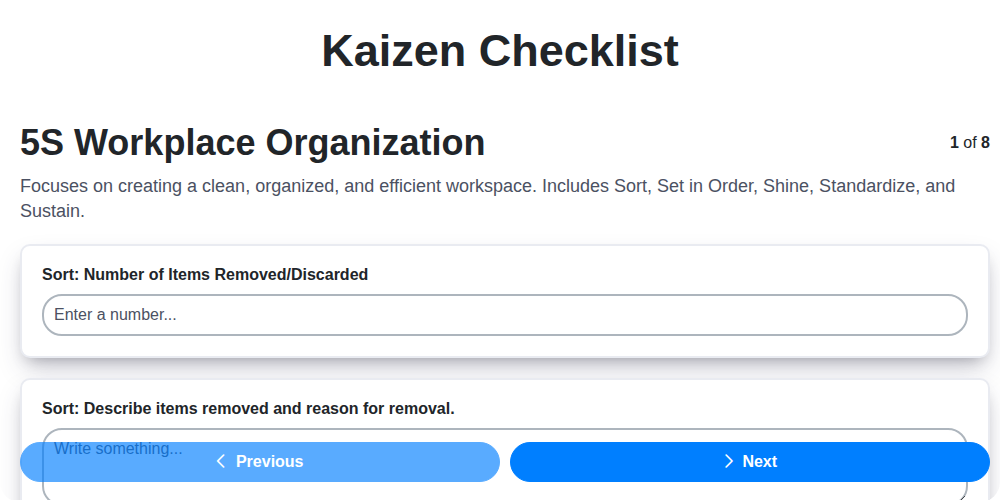
Шаблон за контролна листа Кайдзен: Вашият път към постоянно подобрение

Machine Safety Audit Checklist: Your Guide to a Safer Manufacturing Workplace
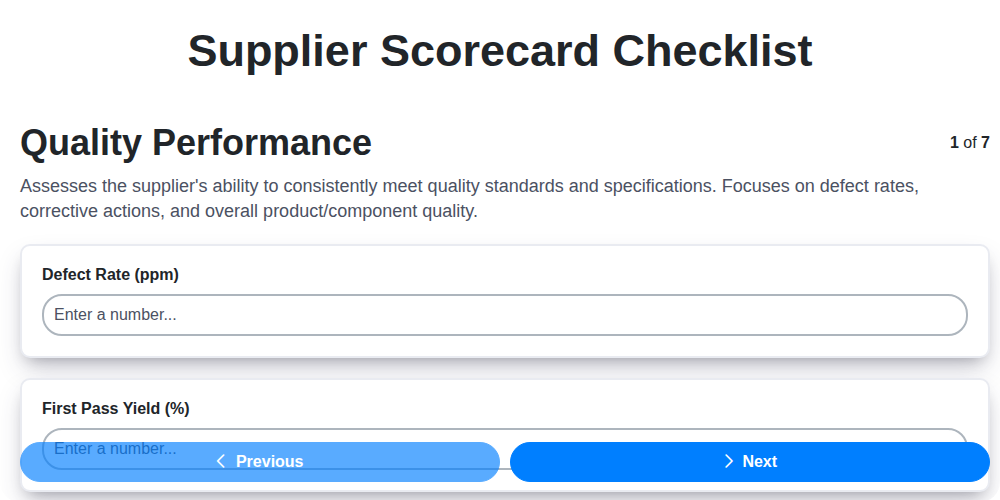
Mastering Supplier Performance: Your Free Supplier Scorecard Checklist Template
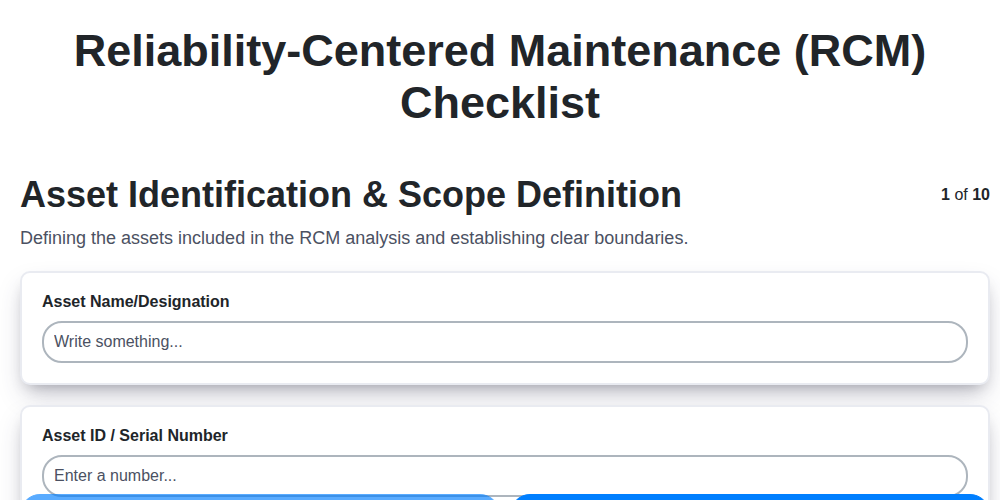
Your Ultimate RCM Checklist Template: A Step-by-Step Guide

Шаблон за контролен списък LPA: Вашето ръководство за слоести одити на процеси

Вашият краен шаблон за контролен списък за заключване/етикетиране (ЛОТО)

Your Ultimate FSC 22000 Checklist Template
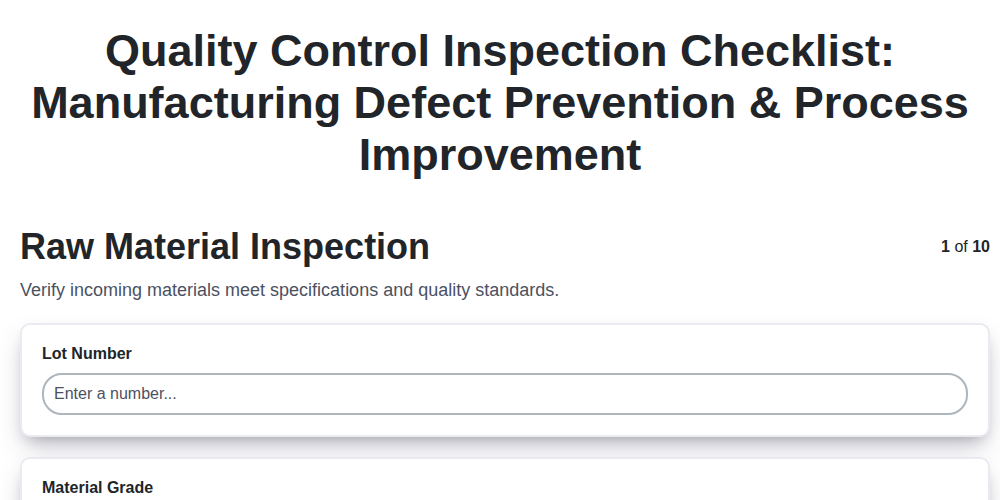
Шаблон за проверка на качеството: Предотвратяване на дефекти и подобряване на производствените процеси
Можем да го направим заедно
Нуждаете се от помощ с
Checklists?
Имате въпрос? Тук сме, за да помогнем. Моля, изпратете запитването си и ние ще отговорим своевременно.