 ChecklistGuro
 Real-Time Traffic Congestion Impact Analysis
Optimize urban mobility with our Real-Time Traffic Congestion Impact Analysis workflow. Gain actionable insights into how traffic surges affect public transit schedules, identify bottleneck patterns, and implement proactive routing adjustments to ensure seamless, reliable passenger transport and reduced operational delays.
Ce modèle a été installé 1 fois.
Début
Début du flux de travail/processus.
1. Fetch Sensor Data
Retrieve real-time vehicle count and speed data from IoT traffic sensors in the target zone.
2. Fetch Historical Baseline
Retrieve historical average traffic patterns for the same day and time from the historical data model.
3. Calculate Congestion Index
Calculate the deviation percentage between real-time speed and historical baseline speed.
4. Aggregate Zone Density
Calculate the average vehicle density across all active sensors within the analyzed area.
5. Calculate Delay Impact
Estimate the total extra travel time (in minutes) caused by the current congestion.
6. Create Analysis Report Entry
Generate a new record in the Analysis Data Model containing the calculated congestion metrics and timestamp.
7. Update Traffic Status
Update the 'Current Status' field in the Road Segment Data Model (e.g., from 'Green' to 'Red').
8. Assign Traffic Engineer Review
Create a task for the Duty Engineer to manually verify high-severity congestion anomalies.
9. Create a task for the field unit if congestion is caused by a detected incident/accident.
Create a task for the field unit if congestion is caused by a detected incident/accident.
10. Alert Transport Authorities
Send an automated email alert to the Department of Transportation regarding critical congestion levels.
11. Notify Emergency Services
Send an SMS alert to emergency responders if the analysis detects a sudden drop in speed indicating a possible crash.
12. Generate Daily Congestion Summary
Create a visual PDF report summarizing the daily congestion trends and impact levels for stakeholders.
13. Cleanup Temporary Sensor Logs
Delete temporary high-frequency raw data entries that are no longer needed after analysis completion.
Fin
Fin du flux de travail/processus.
Début du flux de travail/processus.
Retrieve real-time vehicle count and speed data from IoT traffic sensors in the target zone.
Retrieve historical average traffic patterns for the same day and time from the historical data model.
Calculate the deviation percentage between real-time speed and historical baseline speed.
Calculate the average vehicle density across all active sensors within the analyzed area.
Estimate the total extra travel time (in minutes) caused by the current congestion.
Generate a new record in the Analysis Data Model containing the calculated congestion metrics and timestamp.
Update the 'Current Status' field in the Road Segment Data Model (e.g., from 'Green' to 'Red').
Create a task for the Duty Engineer to manually verify high-severity congestion anomalies.
Create a task for the field unit if congestion is caused by a detected incident/accident.
Send an automated email alert to the Department of Transportation regarding critical congestion levels.
Send an SMS alert to emergency responders if the analysis detects a sudden drop in speed indicating a possible crash.
Create a visual PDF report summarizing the daily congestion trends and impact levels for stakeholders.
Delete temporary high-frequency raw data entries that are no longer needed after analysis completion.
Fin du flux de travail/processus.
Ce modèle de workflow vous a été utile ?
Commentaires
Aucun commentaire n'a été publié pour le moment. Soyez le premier à en ajouter un !
Démonstration de la solution de gestion des transports en commun
Optimisez les opérations des transports en commun et améliorez l'expérience des passagers ! ChecklistGuro rationalise la planification des itinéraires, la maintenance des véhicules et la déclaration des incidents. Améliorez l'efficacité, la sécurité et la fiabilité. Gérez tout cela grâce à notre plateforme Work OS.
Modèles de flux de travail associés
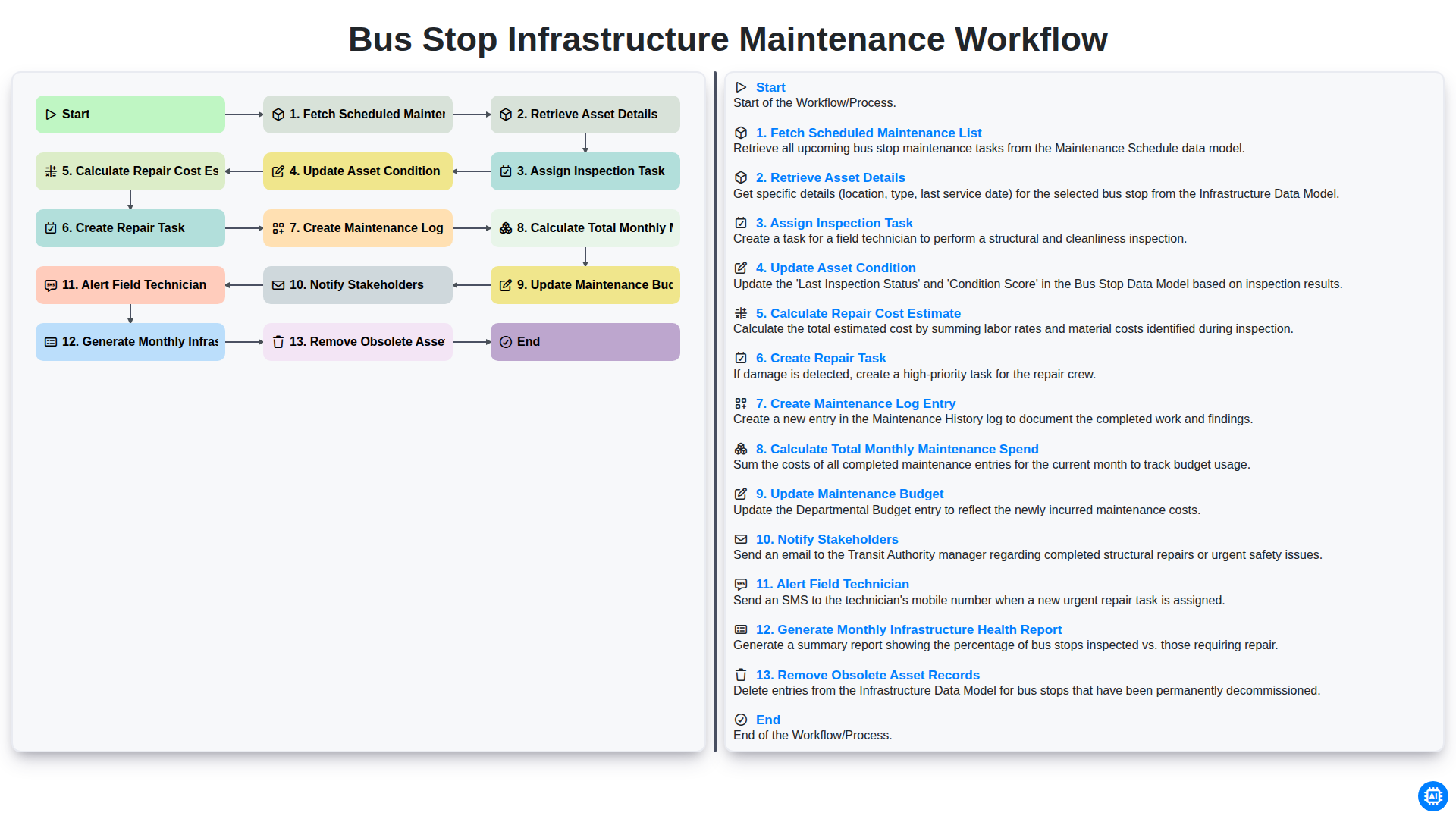
Bus Stop Infrastructure Maintenance Workflow
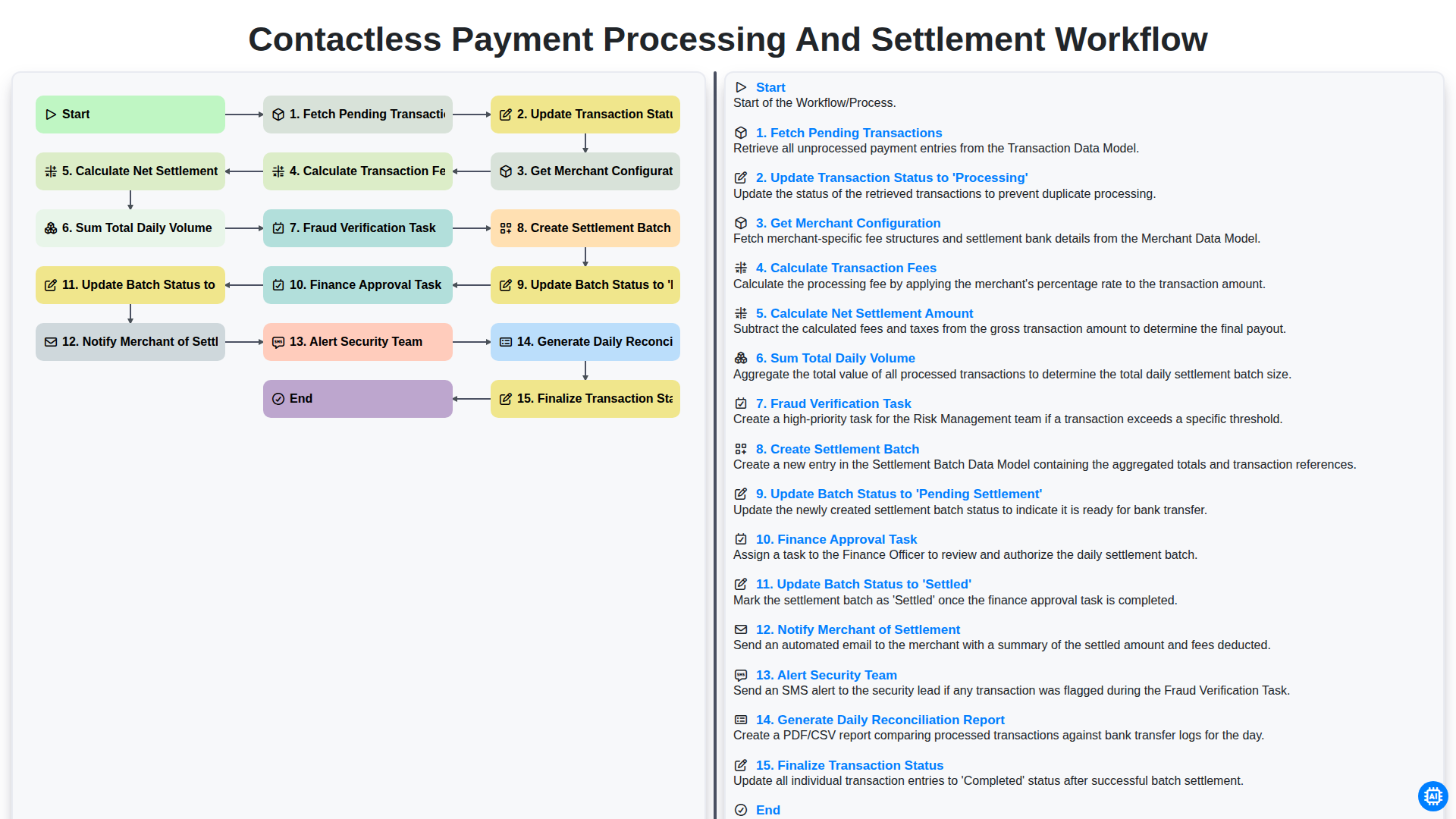
Contactless Payment Processing and Settlement Workflow
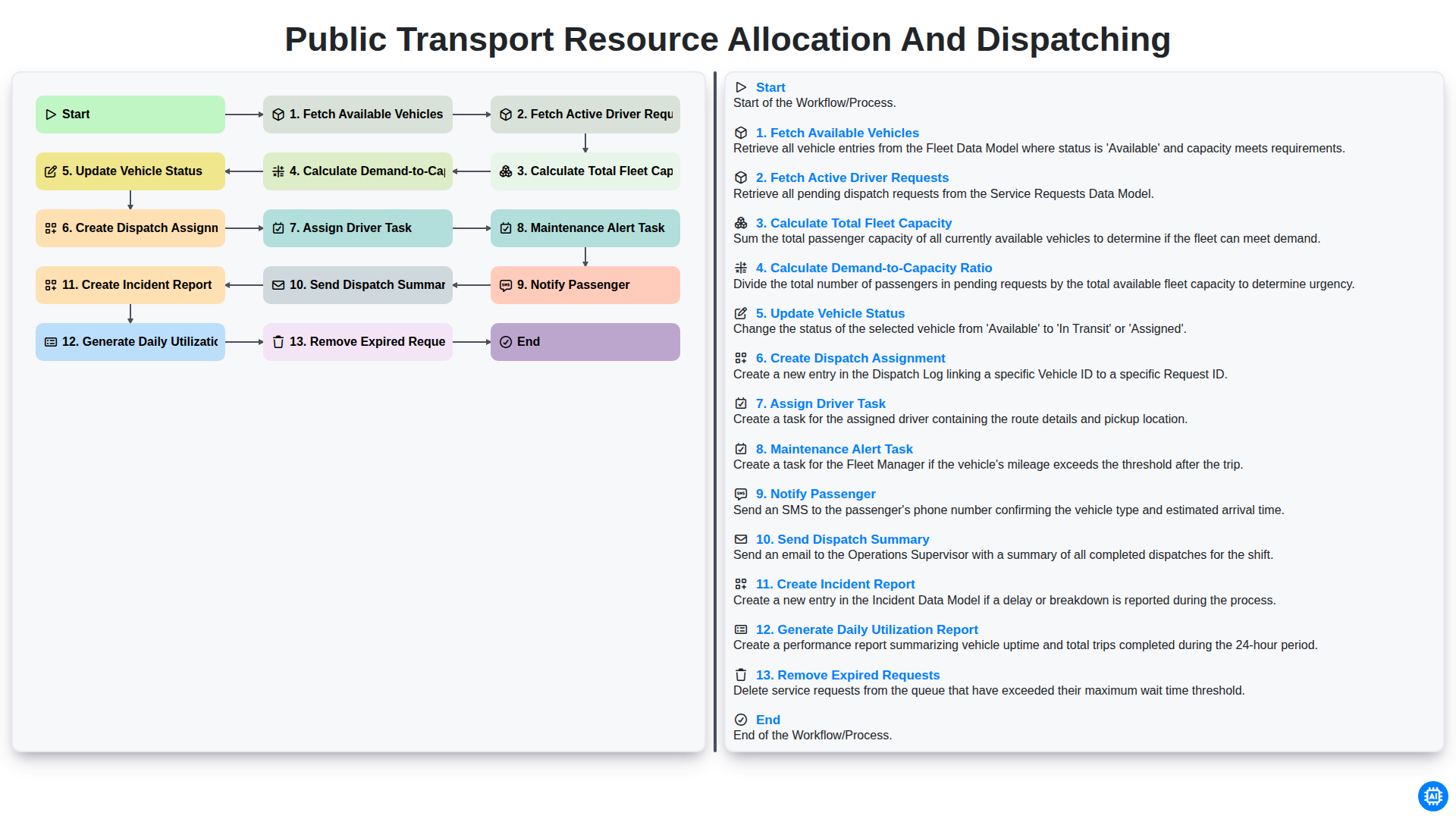
Public Transport Resource Allocation and Dispatching
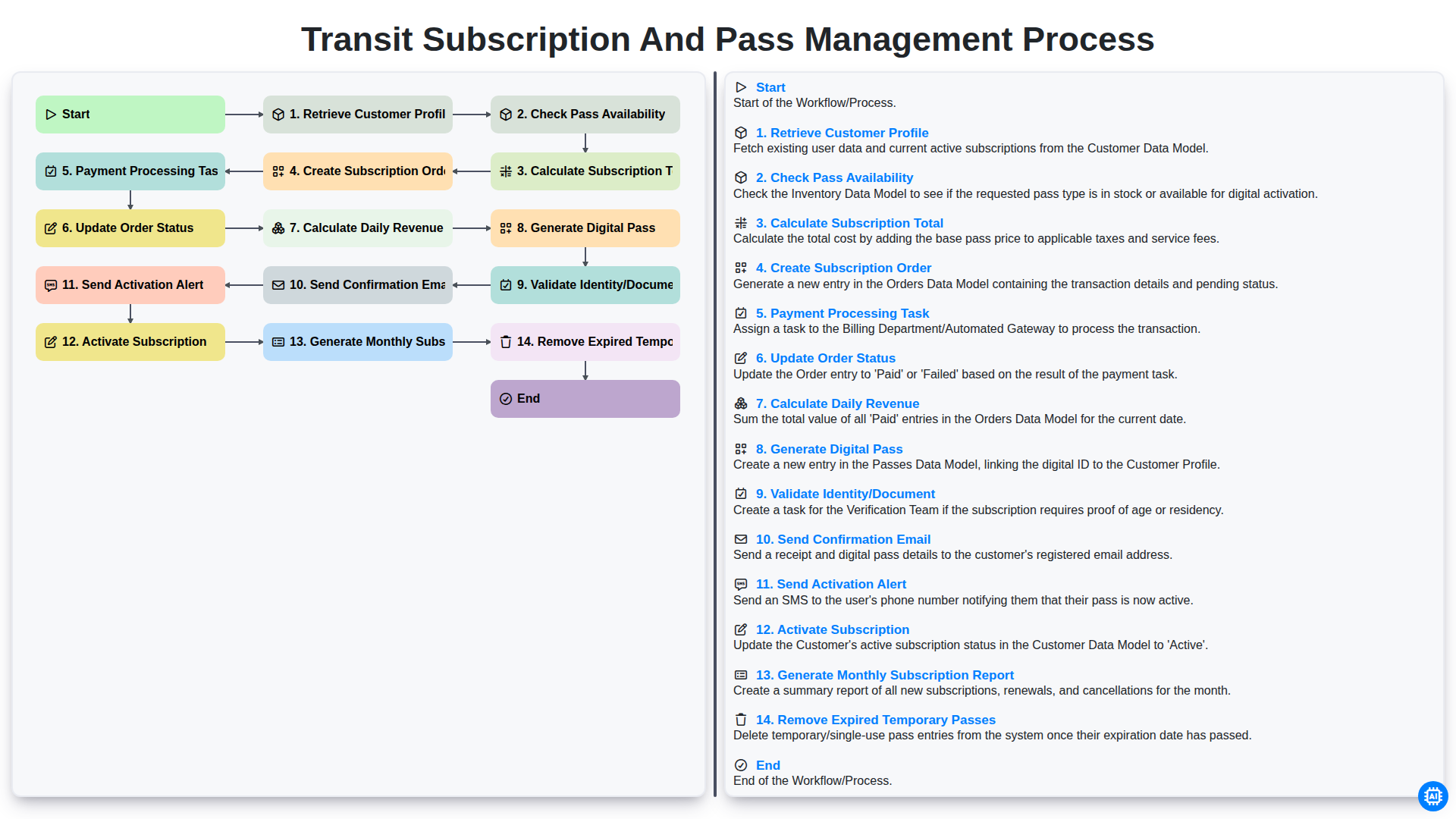
Transit Subscription and Pass Management Process
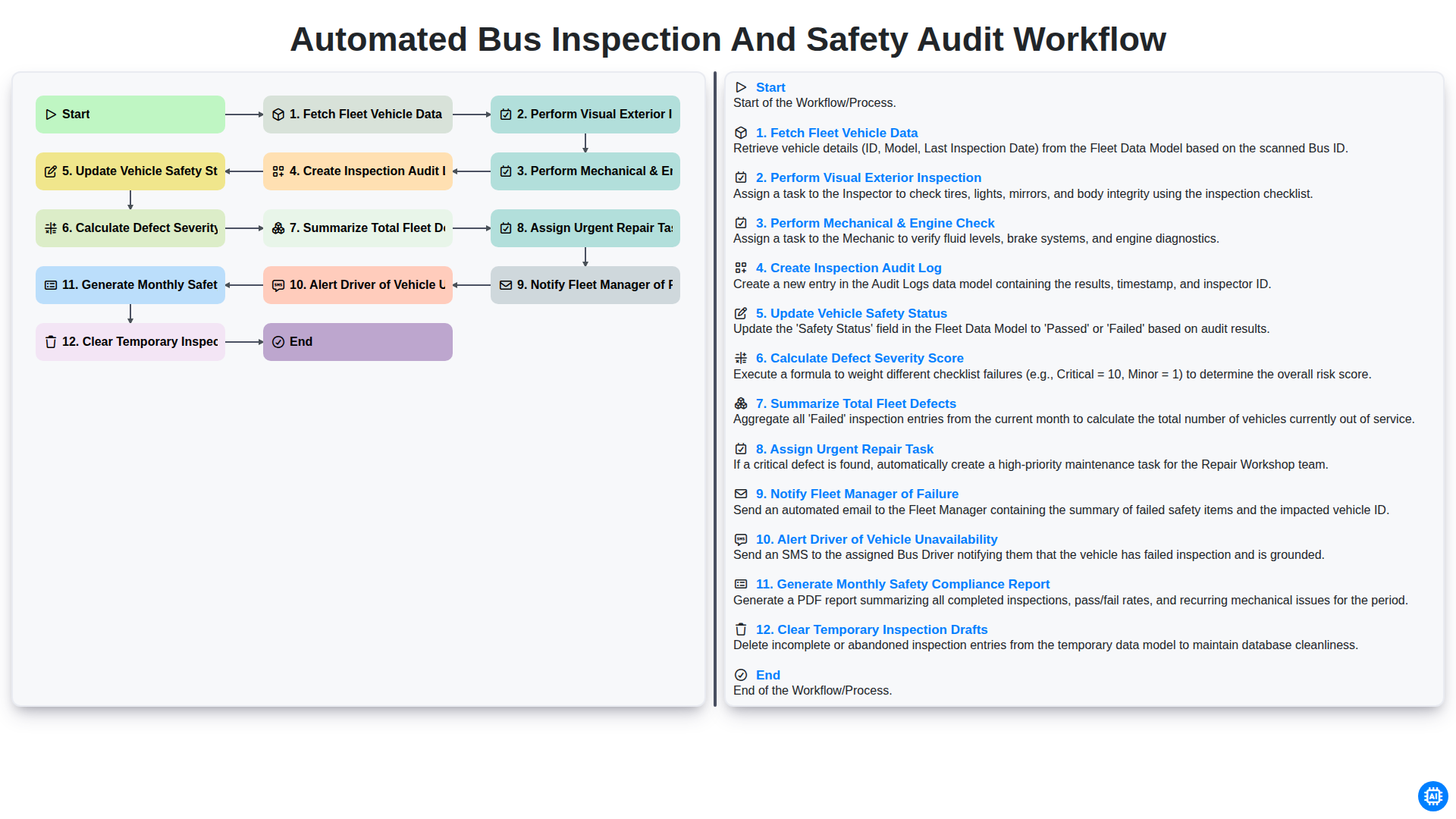
Automated Bus Inspection and Safety Audit Workflow
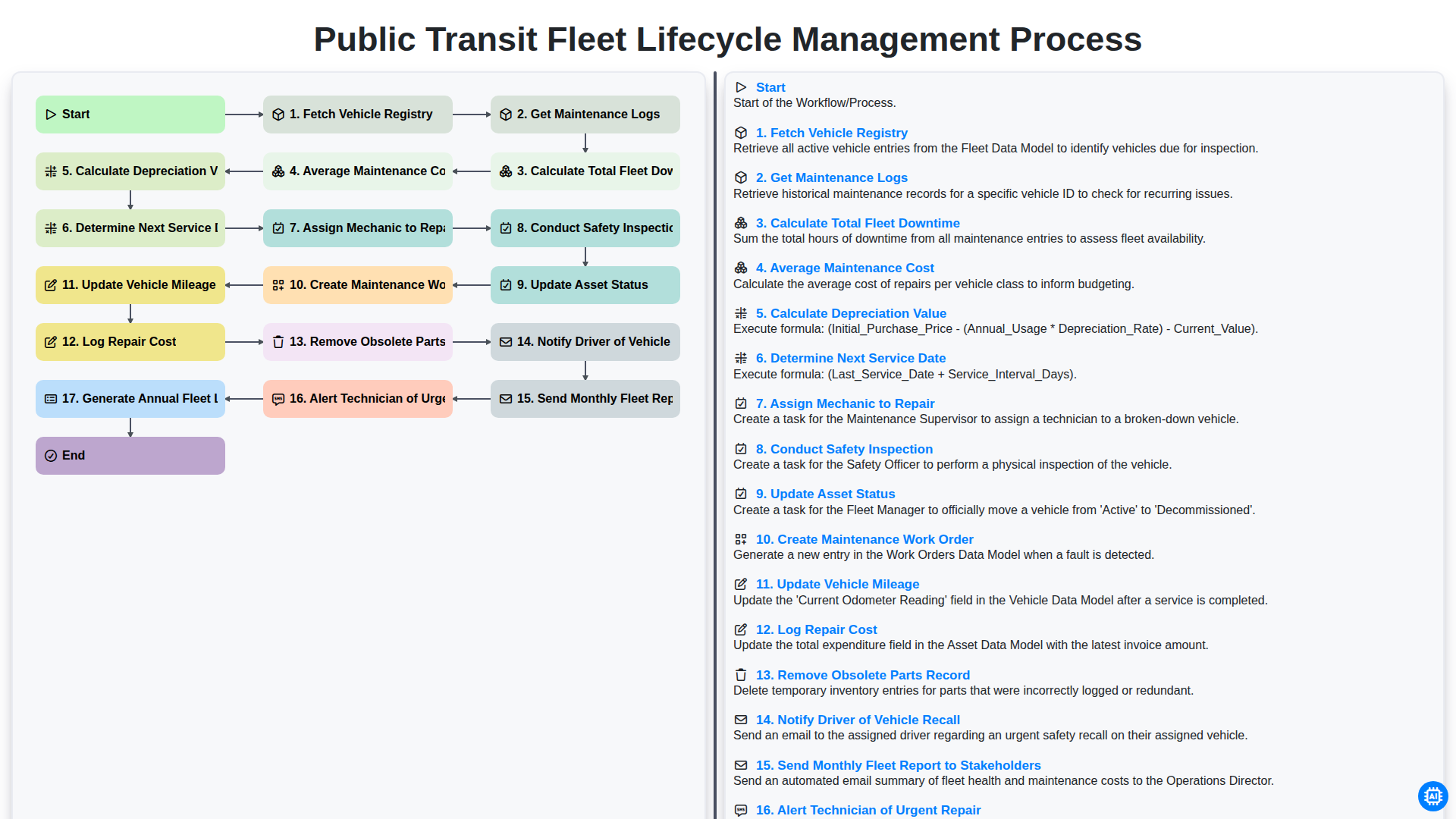
Public Transit Fleet Lifecycle Management Process
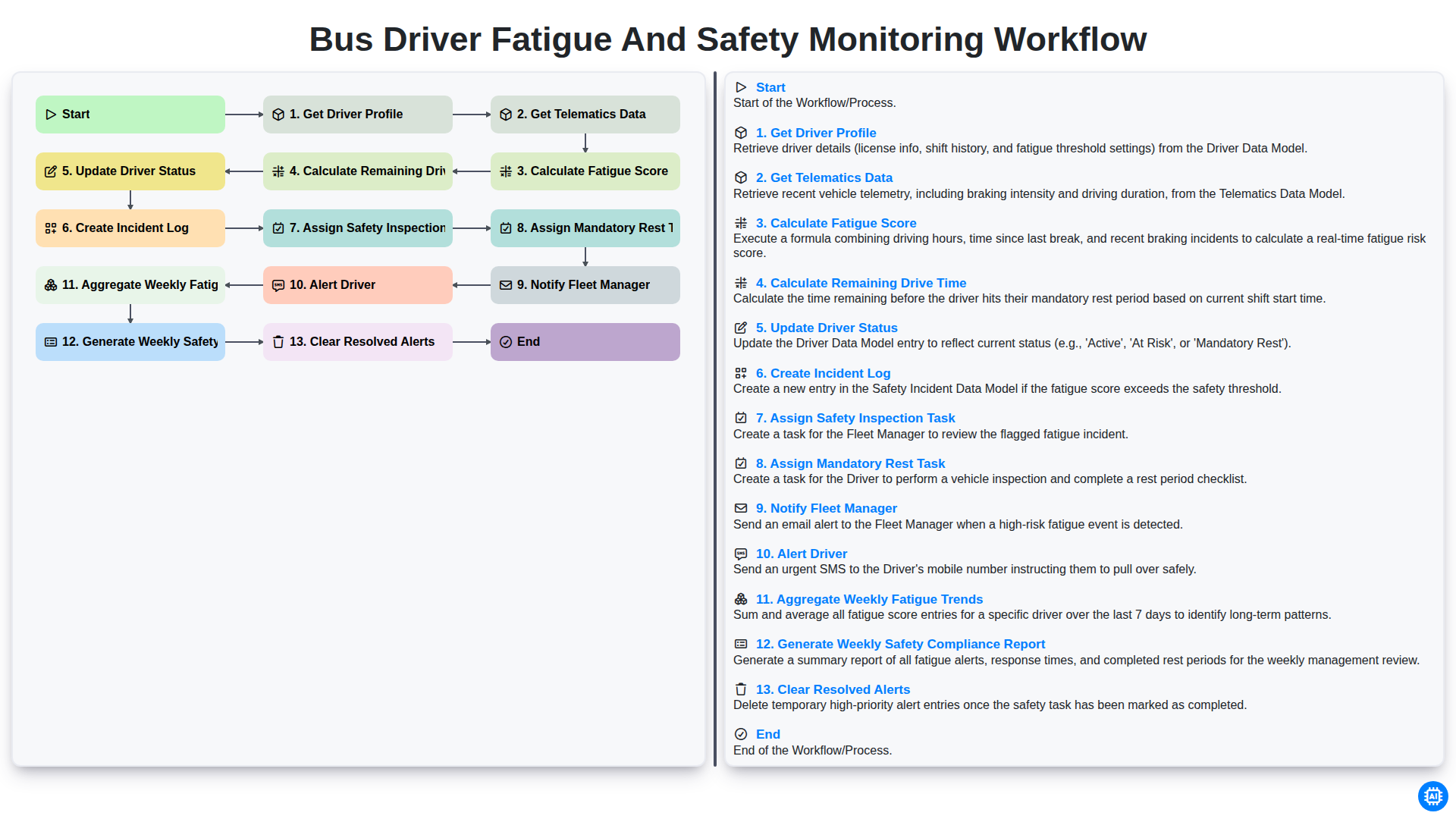
Bus Driver Fatigue and Safety Monitoring Workflow
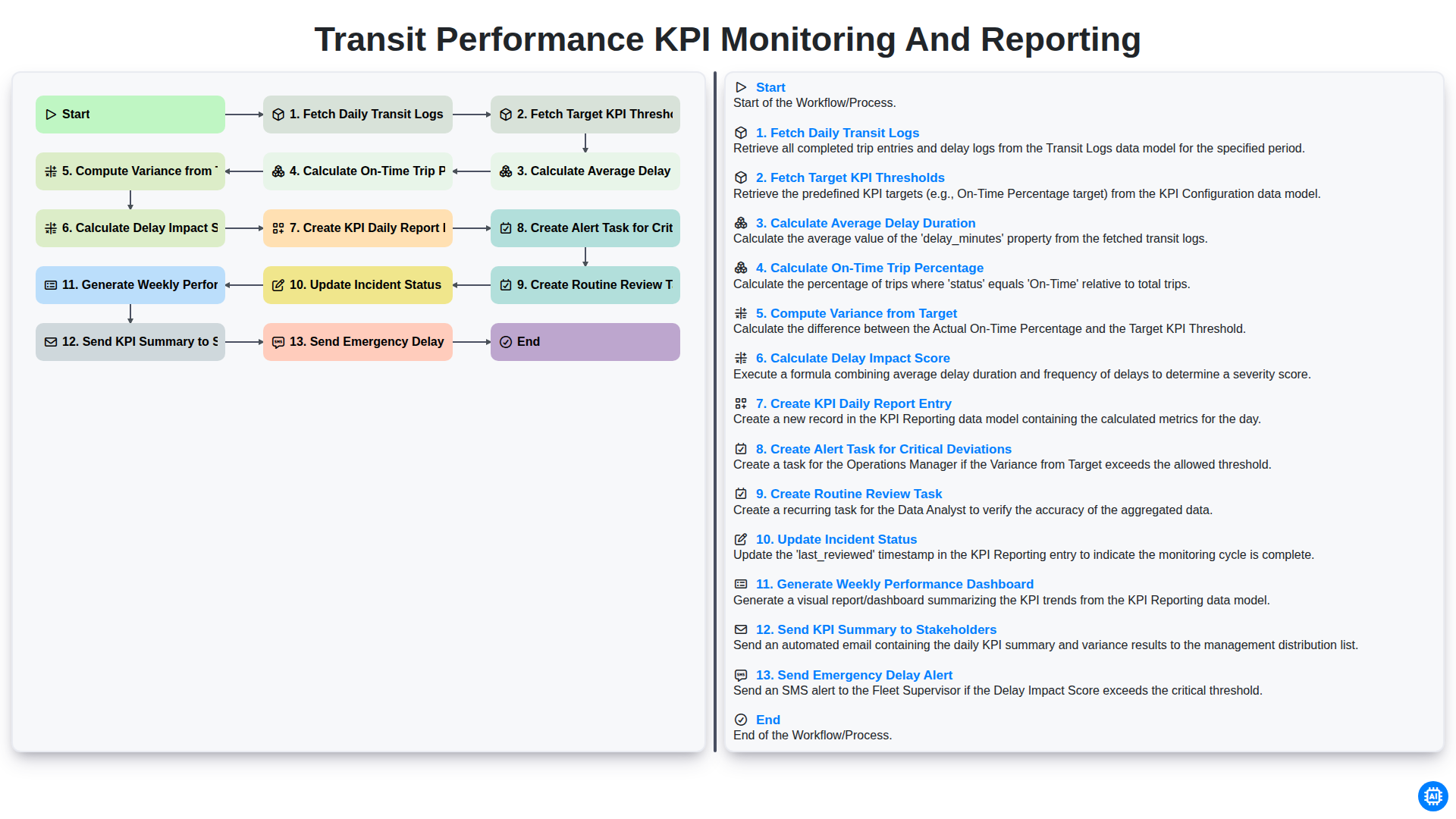
Transit Performance KPI Monitoring and Reporting
Nous pouvons le faire ensemble
Besoin d'aide avec les listes de contrôle?
Vous avez une question ? Nous sommes là pour vous aider. Veuillez soumettre votre demande et nous vous répondrons rapidement.