 ChecklistGuro
 Public Transit Route Optimization Process
Streamline your transit network with our Public Transit Route Optimization Process. Discover how to leverage data-driven workflows to reduce travel times, minimize operational costs, and enhance passenger satisfaction through intelligent route planning and real-time resource allocation.
Este modelo foi instalado 1 vezes.
Começar
Início do fluxo de trabalho/processo.
1. Retrieve Current Transit Routes
Fetch all active route entries from the Transit Routes data model to analyze current coverage.
2. Fetch Passenger Demand Data
Retrieve historical passenger count and heat map data from the Demand Data model.
3. Retrieve Fleet Availability
Get data on available buses, trains, and drivers from the Fleet Resource model.
4. Calculate Route Efficiency Score
Execute a formula comparing Passenger Demand vs. Current Vehicle Frequency to identify gaps.
5. Calculate Cost-Per-Passenger
Calculate the operational cost of existing routes divided by the total passenger volume.
6. Aggregate Total Daily Ridership
Sum the total number of passengers across all selected routes to determine high-impact zones.
7. Calculate Average Delay Time
Calculate the average latency/delay across all routes to identify bottleneck segments.
8. Assign Route Audit Task
Create a task for Urban Planners to physically inspect high-congestion segments identified in analysis.
9. Create Proposed Route Adjustment
Generate a new entry in the 'Proposed Changes' data model containing the optimized route coordinates.
10. Update Route Status
Update the status of existing routes to 'Under Review' in the Transit Routes model.
11. Create Feasibility Study Task
Assign a task to the Engineering team to assess the infrastructure requirements for new stops.
12. Fetch Budget Constraints
Retrieve the remaining quarterly budget from the Financials data model.
13. Budget Impact Projection
Calculate the projected cost of the new proposed routes against the available budget.
14. Generate Optimization Summary Report
Create a comprehensive report summarizing the findings, efficiency gains, and cost implications.
15. Notify Stakeholders of Proposed Changes
Send an email to City Council and Transit Authorities with the generated Optimization Report.
16. Finalize Route Optimization Plan
Update the 'Optimization Plan' entry status to 'Approved' once all task checklists are complete.
17. Schedule Driver Re-training
Create tasks for Operations Managers to update driver schedules based on new route timings.
18. Alert Maintenance Crews
Send SMS alerts to depot managers regarding necessary vehicle re-allocations.
Fim
Fim do fluxo de trabalho/processo.
Início do fluxo de trabalho/processo.
Fetch all active route entries from the Transit Routes data model to analyze current coverage.
Retrieve historical passenger count and heat map data from the Demand Data model.
Get data on available buses, trains, and drivers from the Fleet Resource model.
Execute a formula comparing Passenger Demand vs. Current Vehicle Frequency to identify gaps.
Calculate the operational cost of existing routes divided by the total passenger volume.
Sum the total number of passengers across all selected routes to determine high-impact zones.
Calculate the average latency/delay across all routes to identify bottleneck segments.
Create a task for Urban Planners to physically inspect high-congestion segments identified in analysis.
Generate a new entry in the 'Proposed Changes' data model containing the optimized route coordinates.
Update the status of existing routes to 'Under Review' in the Transit Routes model.
Assign a task to the Engineering team to assess the infrastructure requirements for new stops.
Retrieve the remaining quarterly budget from the Financials data model.
Calculate the projected cost of the new proposed routes against the available budget.
Create a comprehensive report summarizing the findings, efficiency gains, and cost implications.
Send an email to City Council and Transit Authorities with the generated Optimization Report.
Update the 'Optimization Plan' entry status to 'Approved' once all task checklists are complete.
Create tasks for Operations Managers to update driver schedules based on new route timings.
Send SMS alerts to depot managers regarding necessary vehicle re-allocations.
Fim do fluxo de trabalho/processo.
Achou este modelo de fluxo de trabalho útil?
Comentários
Ainda não existem comentários. Seja o primeiro a adicionar um!
Demonstração da Solução de Gestão de Transportes Públicos
Otimize as operações do transporte público e melhore a experiência dos passageiros! O ChecklistGuro simplifica o planeamento de rotas, a manutenção de veículos e o registo de incidentes. Aumente a eficiência, a segurança e a fiabilidade. Gerencie tudo com o nosso sistema operativo de trabalho.
Modelos de Fluxo de Trabalho Relacionados
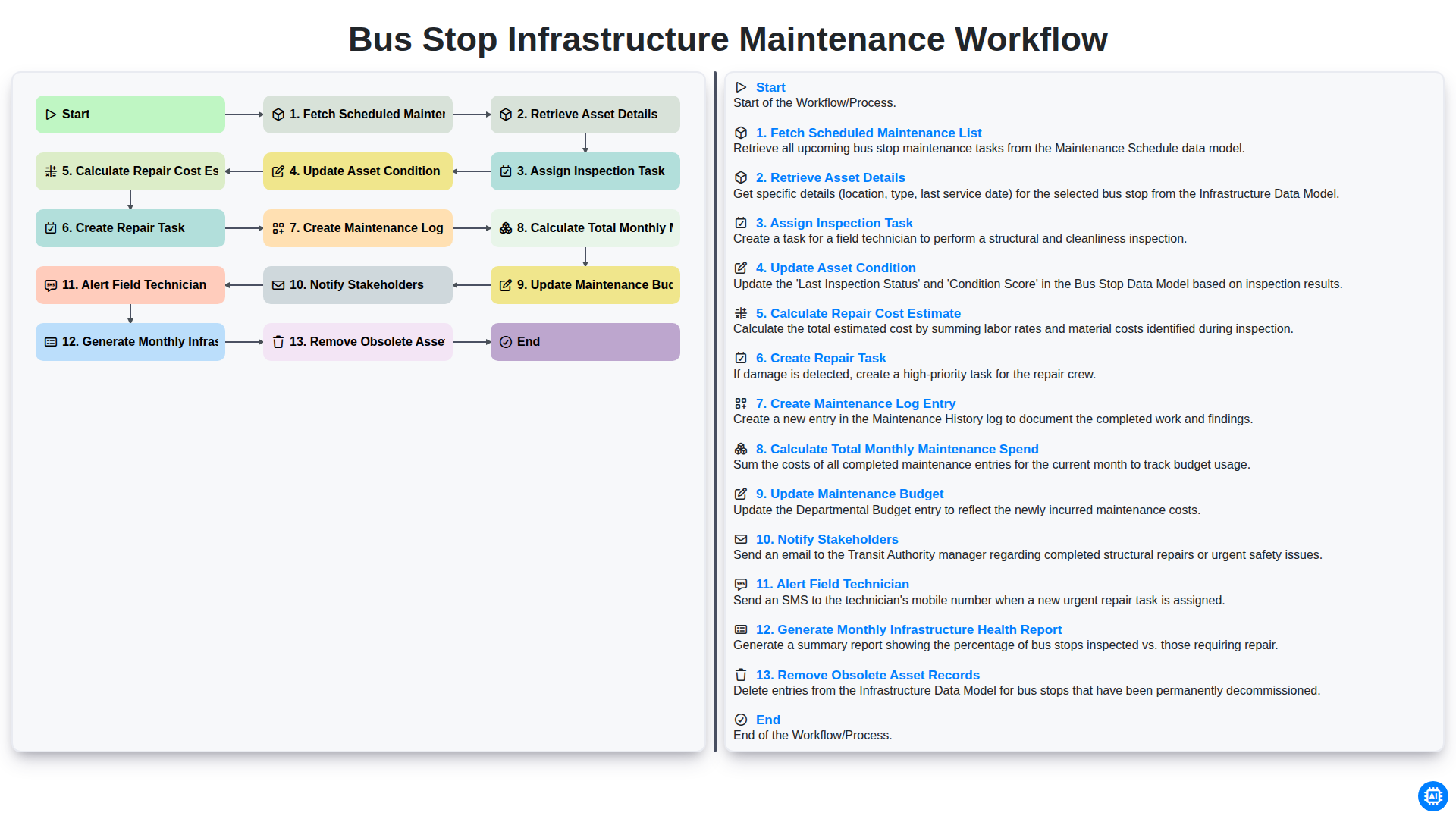
Bus Stop Infrastructure Maintenance Workflow
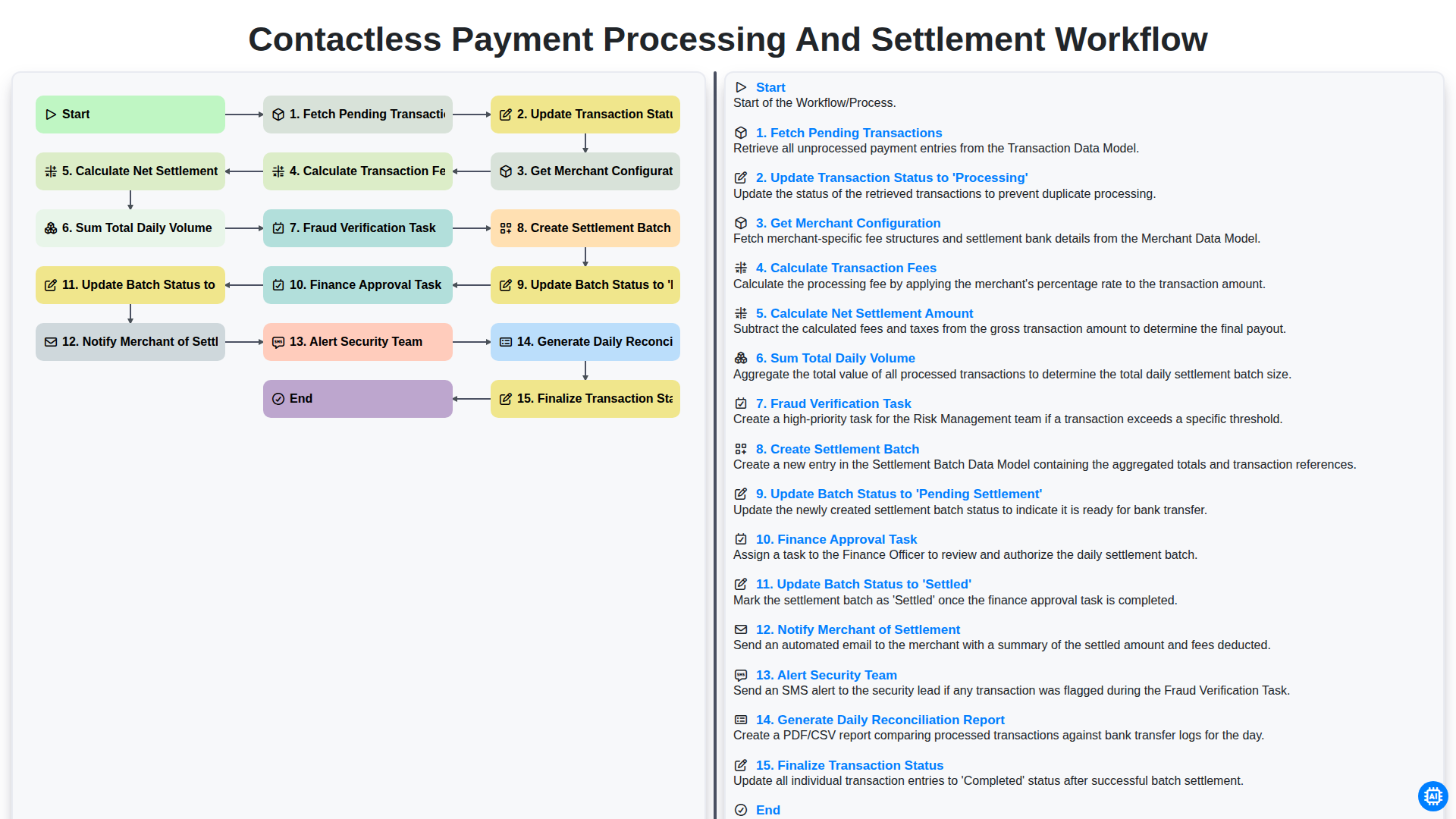
Contactless Payment Processing and Settlement Workflow
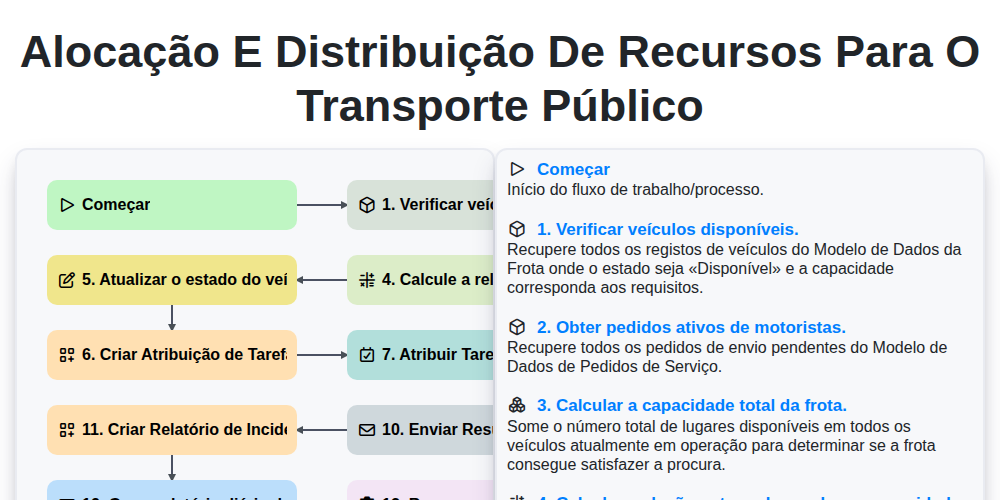
Alocação e distribuição de recursos para o transporte público
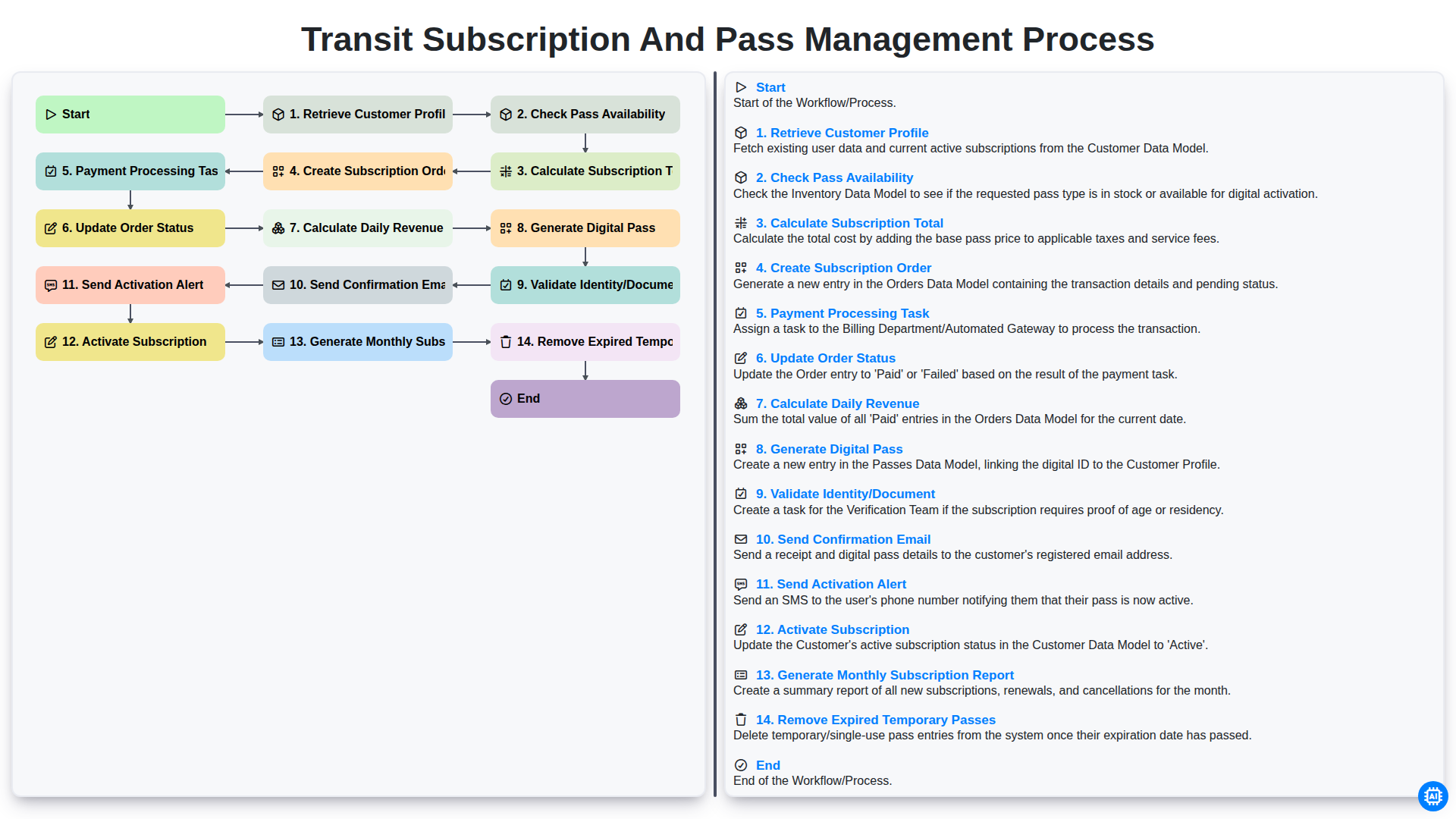
Transit Subscription and Pass Management Process
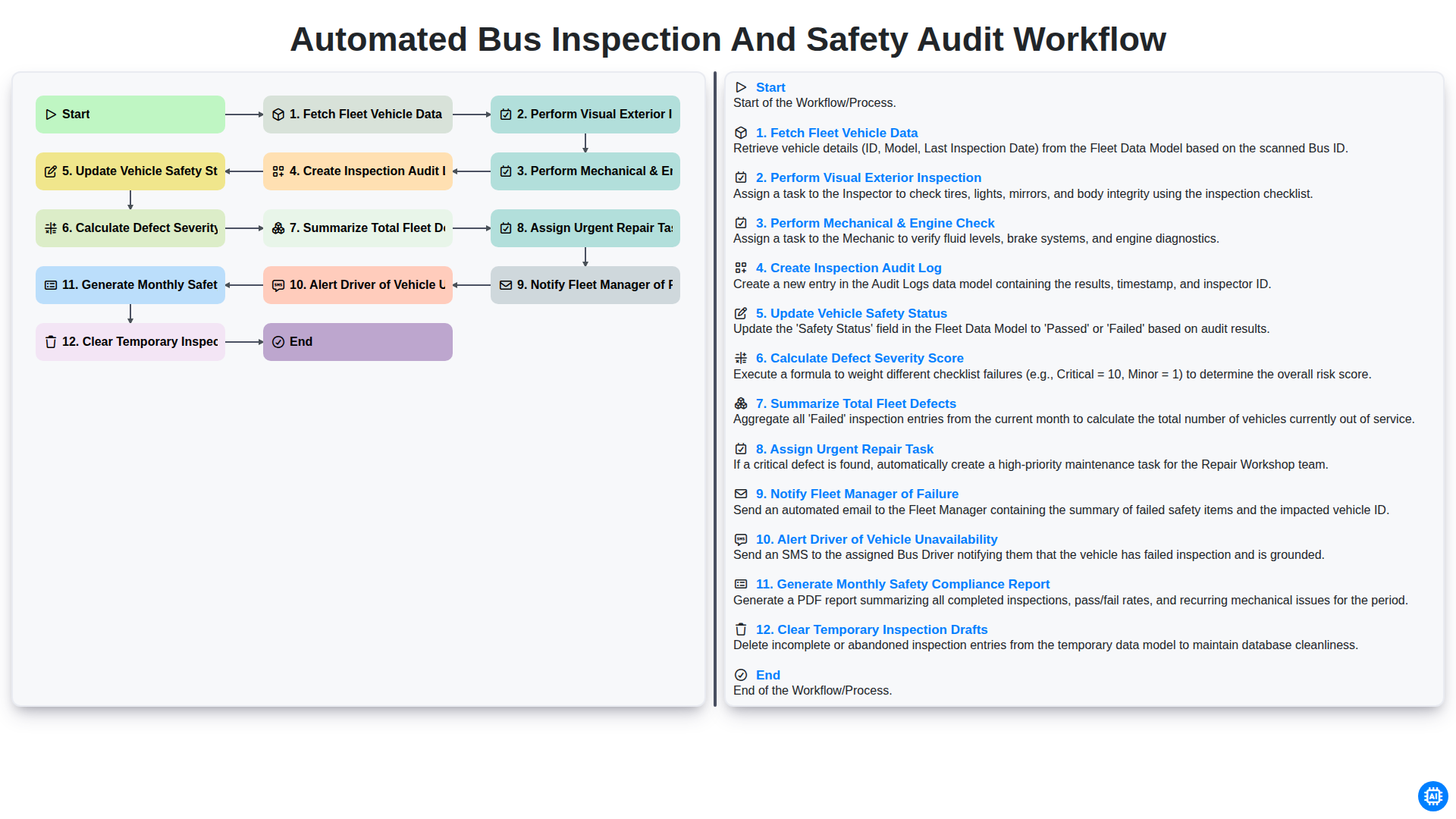
Automated Bus Inspection and Safety Audit Workflow
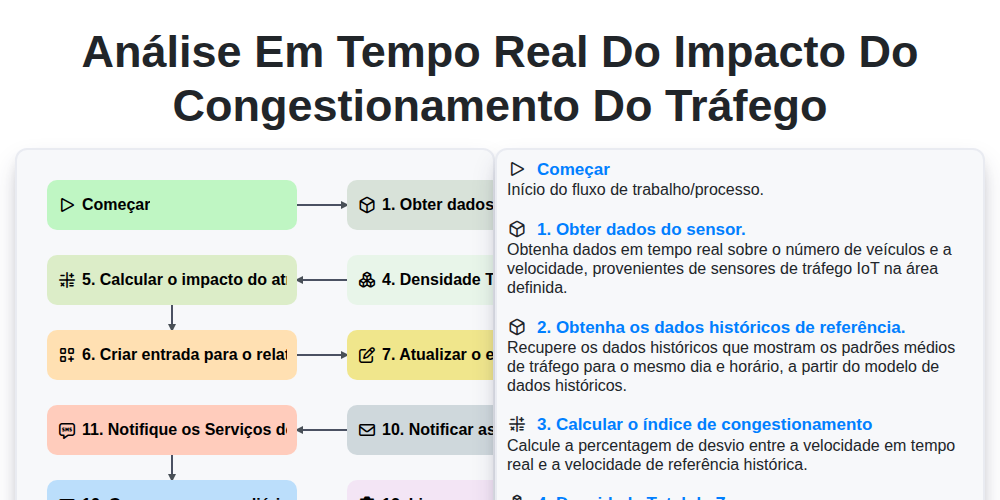
Análise em tempo real do impacto do congestionamento do tráfego
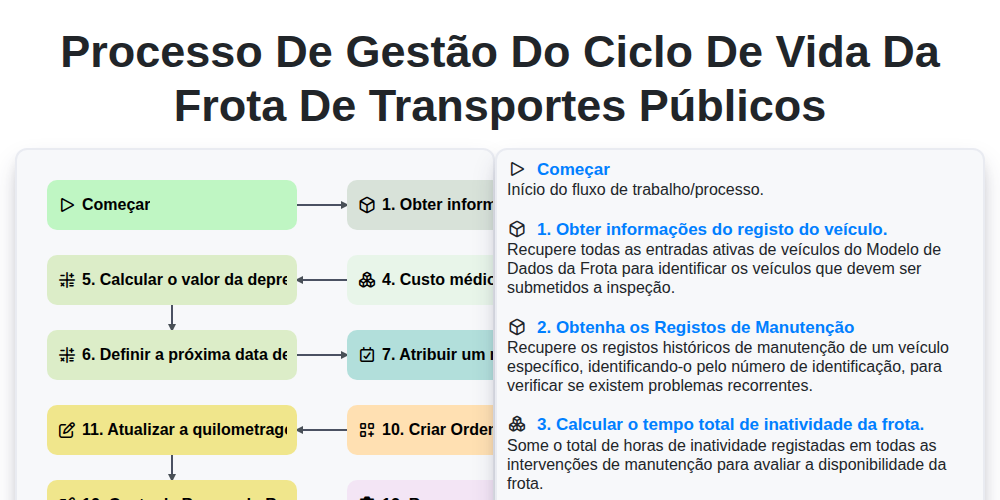
Processo de Gestão do Ciclo de Vida da Frota de Transportes Públicos
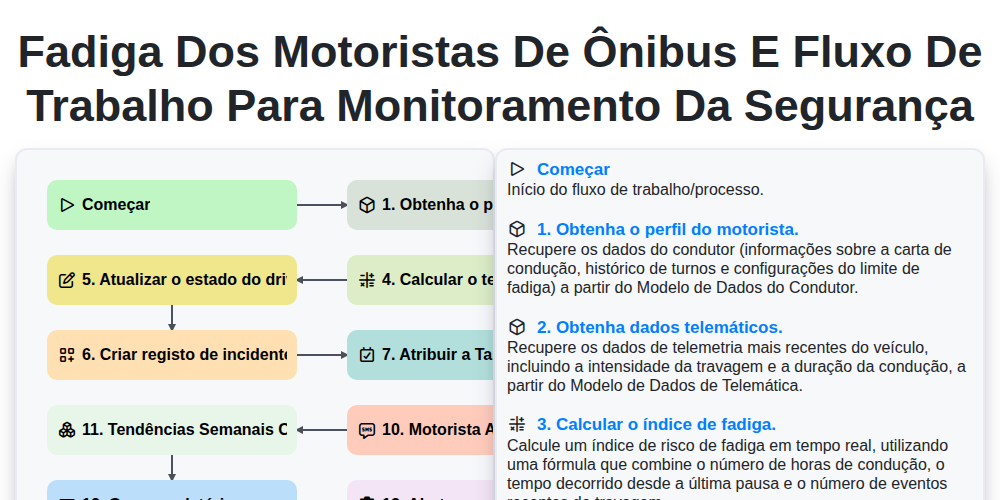
Fadiga dos Motoristas de Ônibus e Fluxo de Trabalho para Monitoramento da Segurança
Podemos fazer isso juntos.
Precisa de ajuda com o(a) Gestão dos Transportes Públicos?
Tem alguma dúvida? Estamos aqui para ajudar. Envie a sua questão e responderemos o mais breve possível.