 ChecklistGuro
 Condition-Based Maintenance Workflow
Optimize your asset reliability and eliminate unplanned downtime with our Condition-Based Maintenance (CBM) Workflow. Master the art of predictive maintenance by integrating real-time sensor data, automated health monitoring, and streamlined inspection triggers to transition from reactive repairs to proactive precision management.
Este modelo foi instalado 5 vezes.
Começar
Início do fluxo de trabalho/processo.
1. Fetch Sensor Telemetry Data
Retrieve recent vibration, temperature, and pressure readings from the Asset IoT data model.
2. Calculate Health Score
Execute a formula weighing temperature, vibration, and hours of operation to determine a degradation percentage.
3. Fetch Equipment Thresholds
Get the predefined maximum allowable limit values for the specific asset being analyzed.
4. Identify Threshold Breach
Compare the calculated Health Score against the Equipment Thresholds to determine if an alert is triggered.
5. Calculate Average Running Hours
Aggregate all historical maintenance logs to find the average time between failures for this machine type.
6. Create Anomaly Incident
Create a new entry in the 'Incidents' data model when a threshold breach is detected.
7. Assign Inspection Task
Create a task for the Maintenance Technician to perform a physical inspection of the asset.
8. Create Work Order
Generate a formal Work Order task in the Maintenance module if the inspection fails.
9. Notify Plant Manager
Send an email alert to the Plant Manager regarding the critical equipment status change.
10. Urgent Technician Alert
Send an SMS to the on-call technician if the anomaly score exceeds the 'Critical' threshold.
11. Update Asset Status
Update the 'Status' field in the Equipment data model from 'Operational' to 'Under Maintenance'.
12. Retrieve Spare Parts Inventory
Check the 'Inventory' data model to see if required replacement parts are available in stock.
13. Estimate Repair Cost
Calculate the estimated cost by summing part prices and estimated labor hours.
14. Create Parts Requisition
If parts are missing, create an entry in the 'Purchase Requests' data model.
15. Generate Monthly Reliability Report
Create a summary report aggregating all maintenance incidents and downtime duration for the month.
16. Clear Temporary Alert Logs
Delete transient/temporary alert entries from the system once the incident has been resolved and closed.
Fim
Fim do fluxo de trabalho/processo.
Início do fluxo de trabalho/processo.
Retrieve recent vibration, temperature, and pressure readings from the Asset IoT data model.
Execute a formula weighing temperature, vibration, and hours of operation to determine a degradation percentage.
Get the predefined maximum allowable limit values for the specific asset being analyzed.
Compare the calculated Health Score against the Equipment Thresholds to determine if an alert is triggered.
Aggregate all historical maintenance logs to find the average time between failures for this machine type.
Create a new entry in the 'Incidents' data model when a threshold breach is detected.
Create a task for the Maintenance Technician to perform a physical inspection of the asset.
Generate a formal Work Order task in the Maintenance module if the inspection fails.
Send an email alert to the Plant Manager regarding the critical equipment status change.
Send an SMS to the on-call technician if the anomaly score exceeds the 'Critical' threshold.
Update the 'Status' field in the Equipment data model from 'Operational' to 'Under Maintenance'.
Check the 'Inventory' data model to see if required replacement parts are available in stock.
Calculate the estimated cost by summing part prices and estimated labor hours.
If parts are missing, create an entry in the 'Purchase Requests' data model.
Create a summary report aggregating all maintenance incidents and downtime duration for the month.
Delete transient/temporary alert entries from the system once the incident has been resolved and closed.
Fim do fluxo de trabalho/processo.
Comentários
Ainda não existem comentários. Seja o primeiro a adicionar um!
Demonstração da Solução de Gestão de Manutenção
Maximize o tempo de funcionamento dos equipamentos e reduza os custos! O ChecklistGuro simplifica o agendamento de manutenção, a gestão de ordens de serviço e o rastreamento de ativos. Evite avarias, otimize o desempenho e prolongue a vida útil dos equipamentos. Gerencie tudo isso com o nosso Sistema Operacional de Trabalho.
Modelos de Fluxo de Trabalho Relacionados
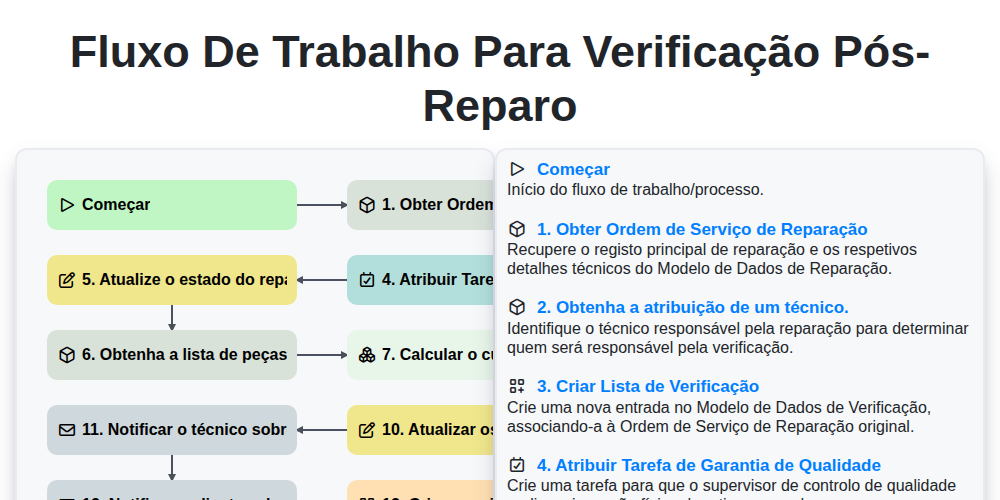
Fluxo de Trabalho para Verificação Pós-Reparo
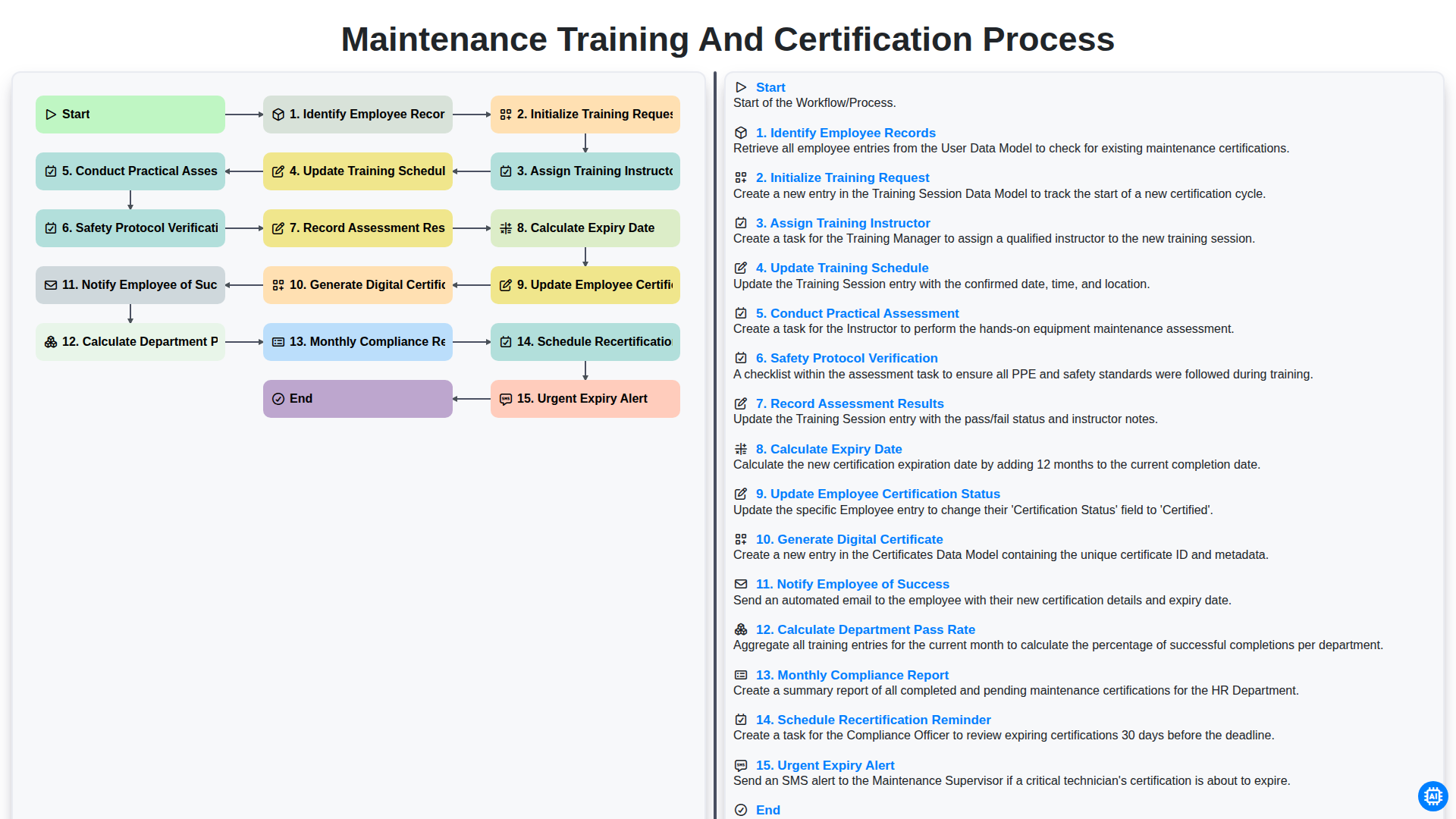
Maintenance Training and Certification Process
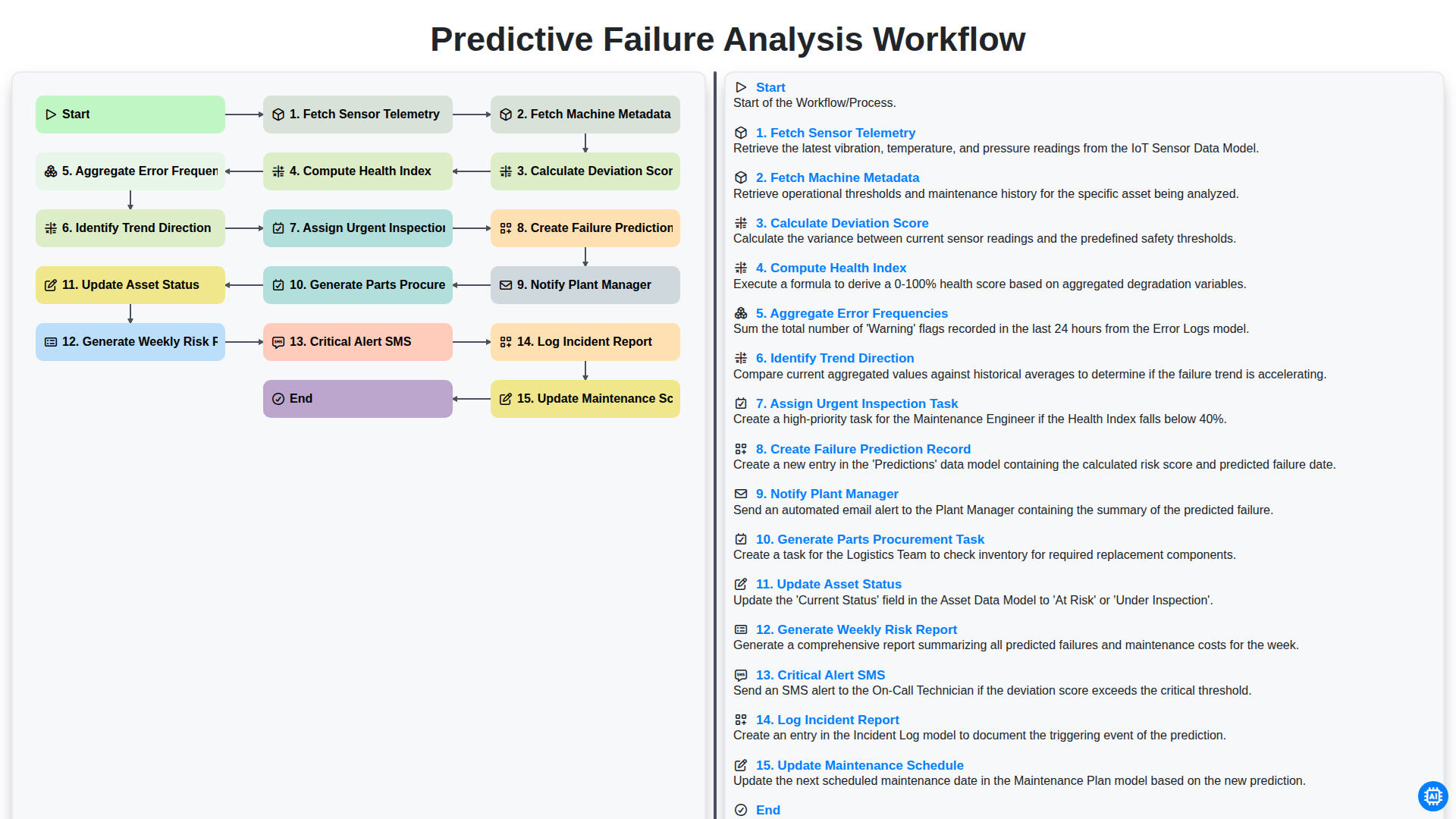
Predictive Failure Analysis Workflow
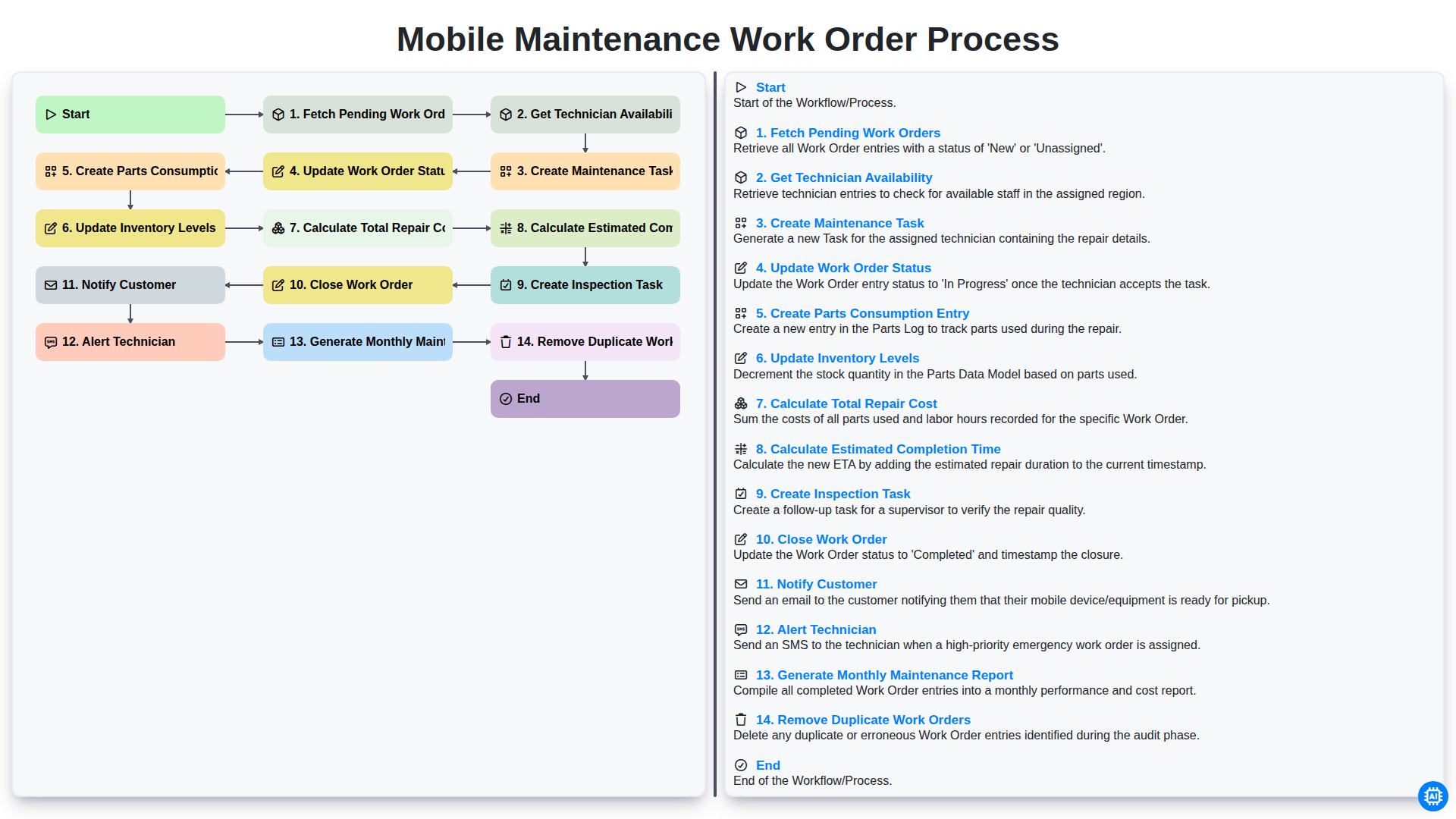
Mobile Maintenance Work Order Process
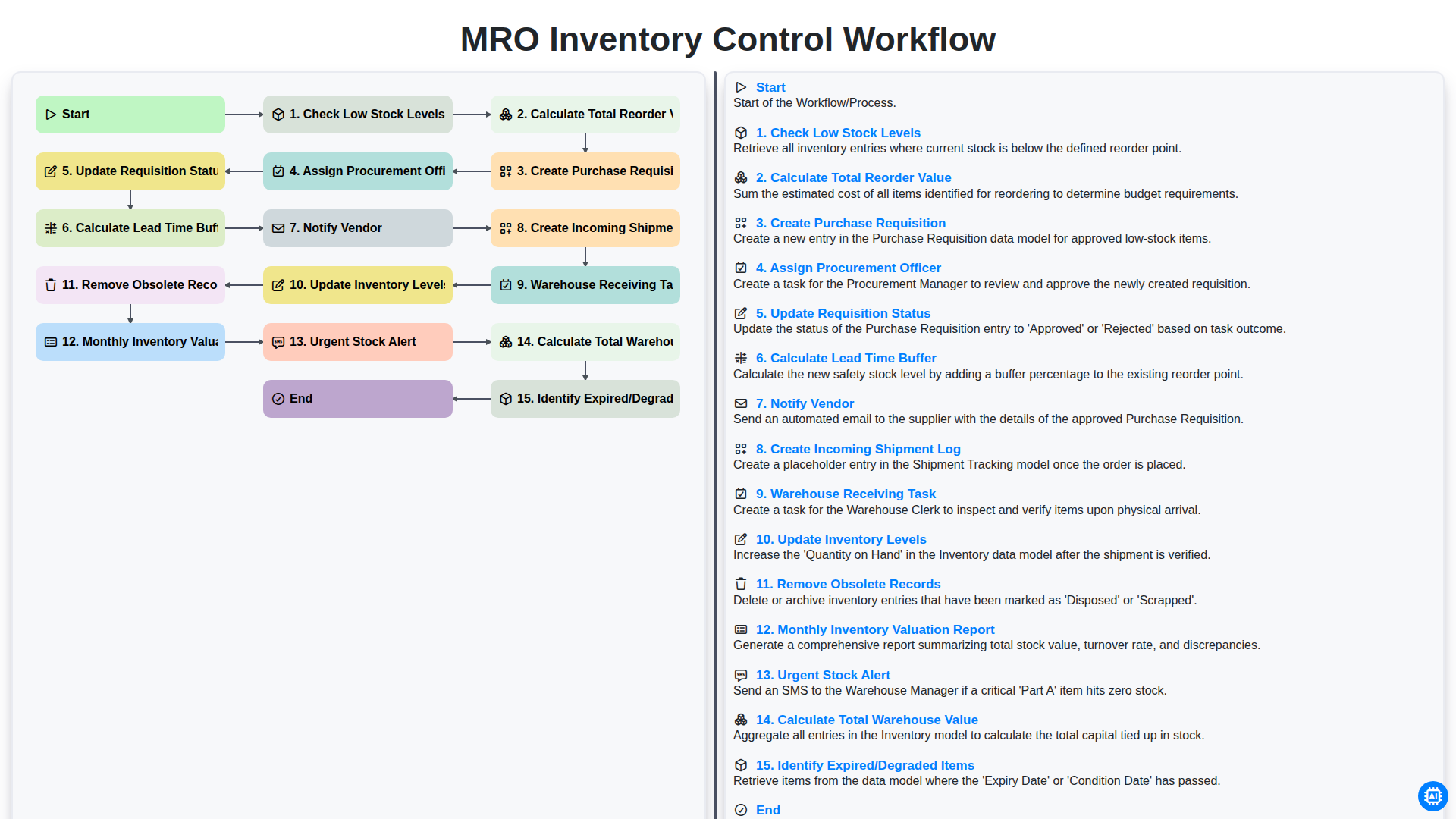
MRO Inventory Control Workflow
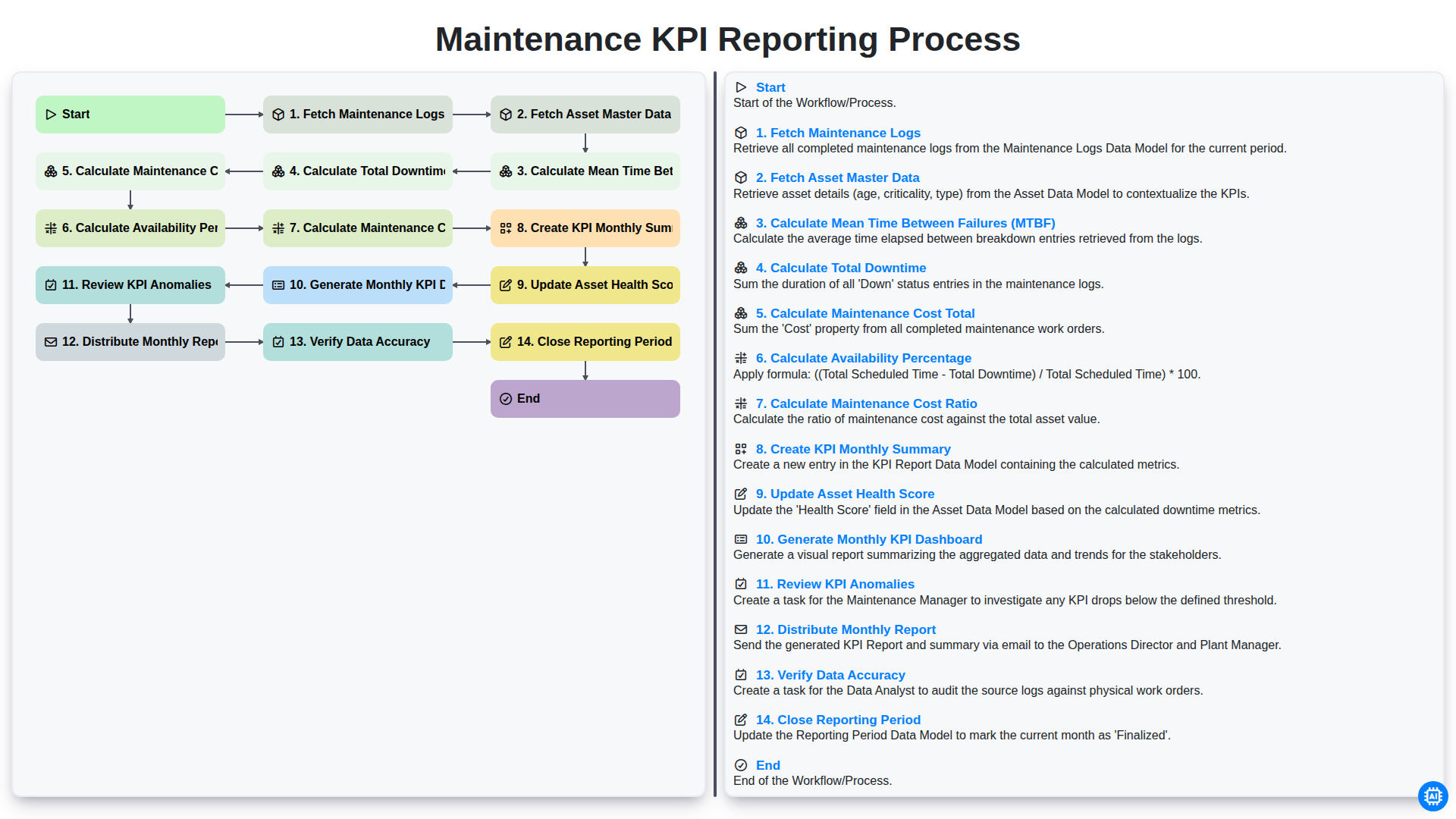
Maintenance KPI Reporting Process
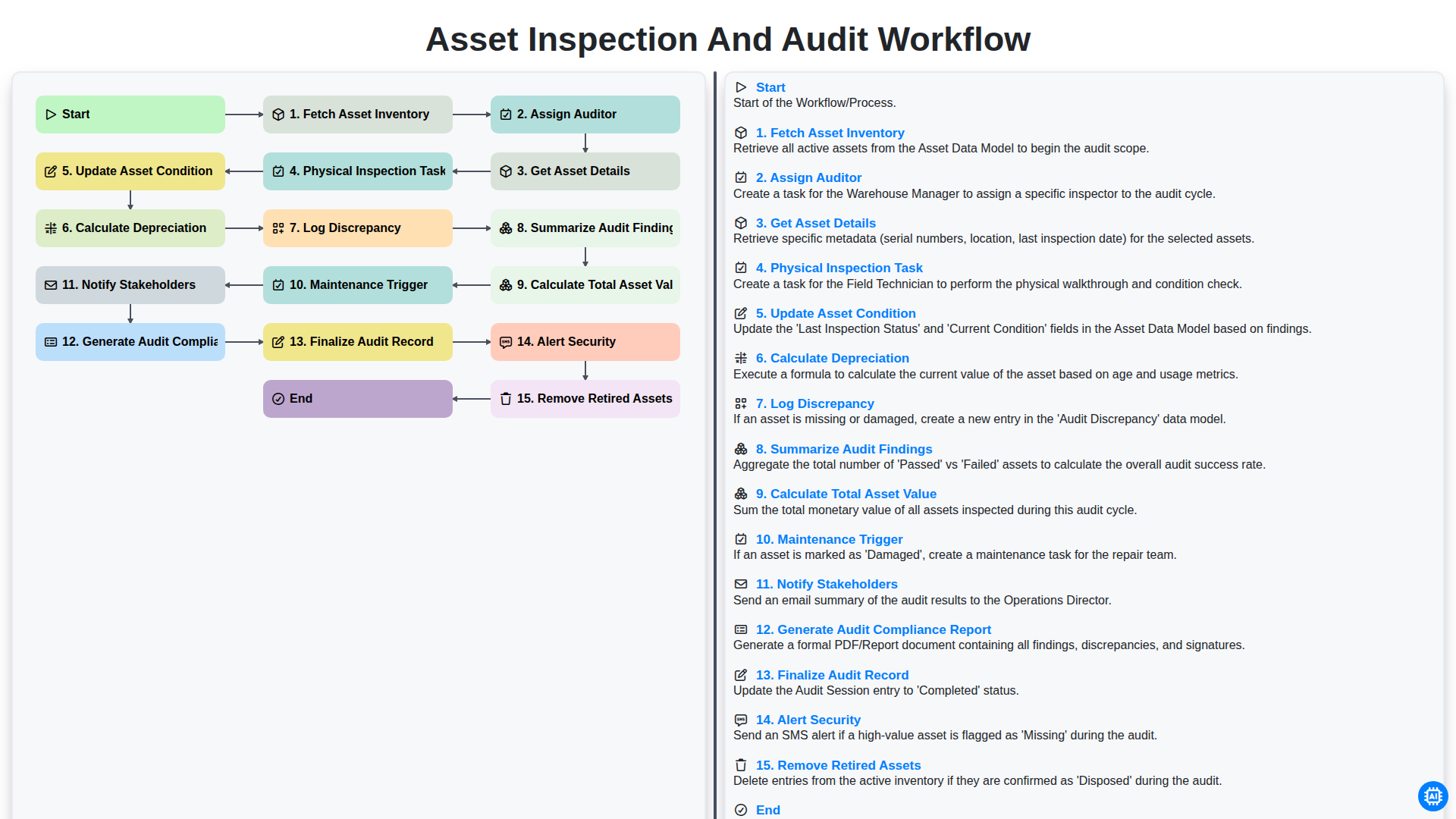
Asset Inspection and Audit Workflow
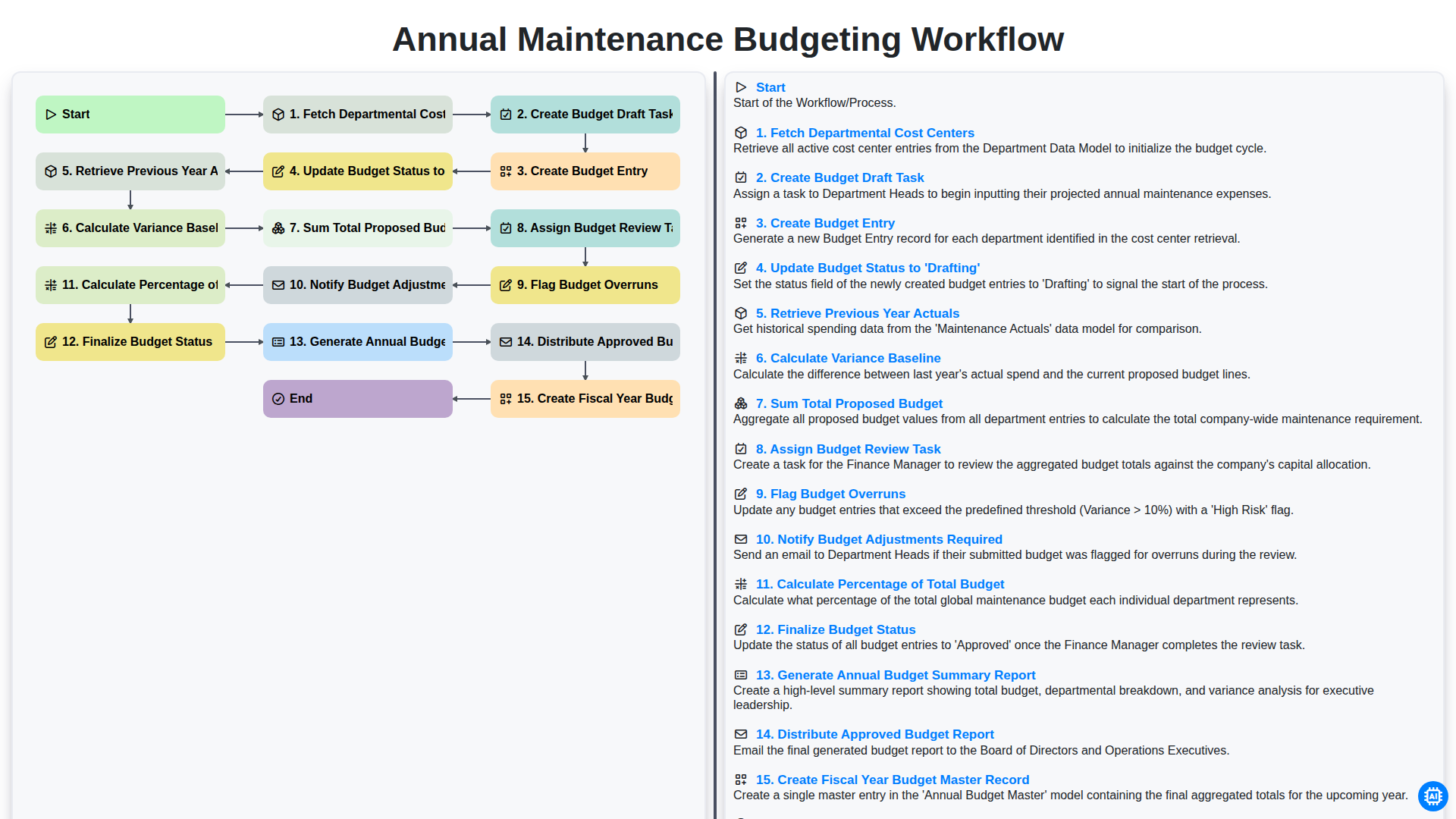
Annual Maintenance Budgeting Workflow
Podemos fazer isso juntos.
Precisa de ajuda com o(a) Gestão da Manutenção?
Tem alguma dúvida? Estamos aqui para ajudar. Envie a sua questão e responderemos o mais breve possível.