Mastering Hospitality Operations: The Ultimate Hotel Linen & Room Amenities Inventory Control Checklist 2026
Published: 10/31/2026 Updated: 11/01/2026
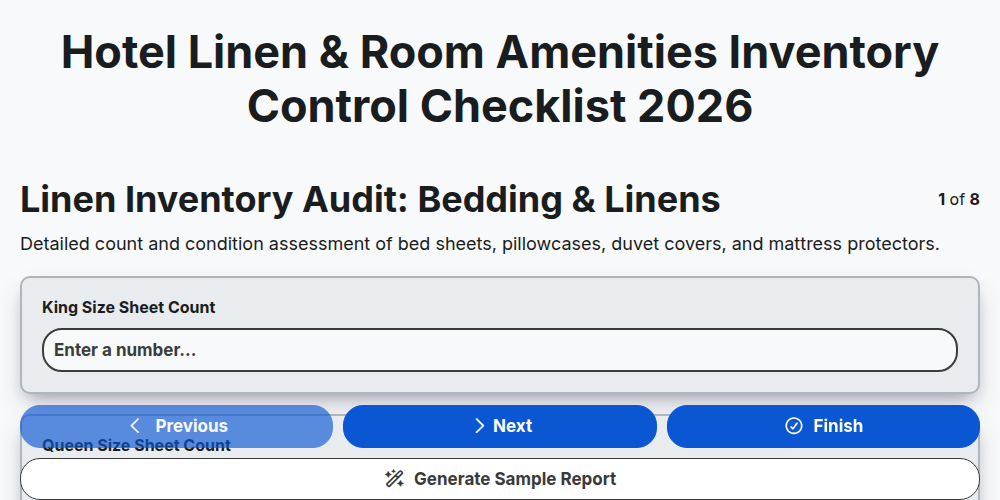
Table of Contents
- Introduction: The Strategic Importance of Inventory Control in 2026
- Setting the Standard: Why Precision Matters for Guest Satisfaction
- Phase 1: Comprehensive Linen Inventory Audit
- Deep Dive: Bedding & Linens Verification
- Phase 2: Towel & Bath Textile Inspection
- Phase 3: Guest Room Amenities & Toiletries Audit
- Phase 4: Monitoring Room Consumables & Paper Products
- Phase 5: Condition & Quality Control Assessment
- Phase 6: Stock Replenishment & Reorder Status Tracking
- Phase 7: Storage & Organization Compliance Standards
- Phase 8: Discrepancy & Loss Reporting Protocols
- Leveraging Technology for Real-Time Inventory Accuracy
- Conclusion: Building a Sustainable Supply Chain Lifecycle
- Resources & Links
TLDR: Streamline your hotel's operational efficiency and reduce overhead costs with our comprehensive 2026 inventory control checklist. Learn how to implement a systematic approach to auditing linens, managing guest amenities, and maintaining quality control to prevent loss, ensure seamless replenishment, and maintain a premium guest experience.
Introduction: The Strategic Importance of Inventory Control in 2026
In the rapidly evolving landscape of global hospitality, the margin for error has never been slimmer. As we move into 2026, the definition of guest satisfaction has shifted from mere service delivery to the seamless orchestration of invisible details. Behind every five-star review lies a rigorous, disciplined approach to the fundamental building blocks of the guest experience: the crispness of a bedsheet, the fluffiness of a towel, and the availability of essential room amenities.
Beyond Simple Counting: A Shift in Hospitality Management
Gone are the days when inventory control was merely a monthly task of counting stacks of towels. In 2026, effective inventory management is a strategic pillar of operational excellence and sustainability. As labor costs rise and supply chain complexities persist, the ability to maintain precise control over your hotel's physical assets is no longer just a back-of-house duty-it is a critical component of financial health and environmental stewardship.
The Cost of Inefficiency
Failing to maintain a rigorous inventory control system leads to a destructive domino effect:
- Budget Leakage: Untracked shrinkage and hidden losses directly erode your bottom line.
- Operational Friction: Emergency reorders and last-minute shortages create unnecessary stress for housekeeping teams and procurement officers.
- Brand Erosion: A single guest encounter with a stained linen or a missing amenity can trigger a wave of negative digital sentiment that is difficult to erase.
Driving Sustainability Through Precision
As the 2026 hospitality industry continues to prioritize ESG (Environmental, Social, and Governance) goals, inventory control plays a starring role. By implementing a structured checklist, hotels can significantly reduce waste, optimize the lifecycle of textiles through better care, and implement smarter replenishment cycles that prevent overstocking.
In this guide, we provide a comprehensive, step-by-step framework designed to move your property from reactive firefighting to proactive management. By mastering these eight critical checkpoints, you ensure that your property remains prepared, profitable, and perpetually guest-ready.
Setting the Standard: Why Precision Matters for Guest Satisfaction
The High Cost of Inventory Blind Spots
In the hyper-competitive landscape of 2026 hospitality, the difference between a five-star review and a scathing critique often lies in the details that guests never see-until they are missing. When a guest enters a room and finds a towel with a slight fray, a depleted soap dispenser, or a thin, worn bedsheet, the illusion of luxury evaporates instantly.
Inventory control is not merely a back-of-house administrative task; it is a direct driver of your brand's reputation. Inconsistent amenity availability or subpar linen quality signals a lack of operational oversight, leading to a decline in guest trust and a measurable drop in RevPAR (Revenue Per Available Room).
Beyond the Bottom Line: The Operational Impact
Precision in inventory management serves three critical pillars of hotel management:
- Cost Containment: Uncontrolled shrinkage-the silent loss of linens and amenities through theft, damage, or mismanagement-can bleed a hotel's budget dry. A rigorous audit identifies patterns of loss before they become significant financial leaks.
- Seamless Housekeeping Workflow: When housekeeping staff enter a room only to find insufficient supplies, it disrupts cleaning schedules, increases labor costs through double trips, and delays room turnover. A controlled inventory ensures that every trolley is prepped for success.
- Brand Consistency: Whether it is your first guest of the day or your last, the standard of luxury must remain identical. Systematic checks ensure that the quality of your textiles and the presence of your amenities remain a constant, reliable part of the guest experience.
By implementing a structured inspection framework, you move from a reactive panic-ordering mode to a proactive quality-assurance culture, ensuring your property remains a sanctuary of excellence.
Phase 1: Comprehensive Linen Inventory Audit
Establishing the Foundation of Fabric Care
The cornerstone of a premium guest experience lies in the tactile quality of your linens. A seamless inventory audit isn't just about counting items; it is about ensuring that every thread meets the brand standards of 2026. This phase focuses on a granular evaluation of your textile assets to prevent shortages and maintain luxury standards.
Bedding & Linens Audit
The primary focus of this sub-step is the systematic counting and evaluation of all sleep-related textiles. This includes:
- Sheet Sets: Counting fitted, flat, and top sheets across all sizes (King, Queen, Twin).
- Protectors & Layers: Inspecting mattress protectors, pillow protectors, and duvet covers.
- Decorative Elements: Auditing bed runners, decorative throws, and accent pillows.
- Discrepancy Check: Comparing physical counts against the property management system (PMS) or laundry par levels.
Towel & Bath Textile Inspection
Bath textiles undergo the highest frequency of laundering and are most prone to degradation. During this part of the audit, your team must move beyond simple quantification:
- The Count: Verifying stock levels for bath towels, hand towels, washcloths, and bath mats.
- The Integrity Check: Identifying retired items-looking specifically for fraying edges, thinning fabric, or permanent staining that can no longer be removed through professional laundering.
- Standardization: Ensuring all bath textiles across different room categories remain consistent in weight and texture.
Deep Dive: Bedding & Linens Verification
Ensuring Seamless Comfort: The Bedding & Linens Audit
The foundation of a guest's sleep experience lies in the quality and cleanliness of the bedding. In 2026, with rising guest expectations for premium comfort, a surface-level check is no longer sufficient. Your linen inventory audit must be a rigorous, data-driven process.
Key Inspection Points
When conducting your audit, focus on more than just quantity. You must evaluate the physical integrity of every item in circulation:
- Thread Count & Fabric Integrity: Inspect sheets, pillowcases, and duvet covers for signs of thinning, pilling, or structural weakness that could compromise the luxury feel.
- Stain & Discoloration Check: Systematically scan for stubborn organic stains, graying, or discoloration that traditional laundering may have missed.
- Seam & Edge Durability: Check for fraying edges or loose stitching on pillowcases and flat sheets, which can lead to rapid degradation and increased replacement costs.
- The Par Level Verification: Reconcile the physical count of fitted sheets, top sheets, and pillowcases against your digital PMS (Property Management System) to identify phantom inventory.
Identifying the Hidden Loss
A critical part of this step is identifying linen shrinkage. By comparing your active circulation count against your total owned stock, you can pinpoint exactly how much linen is being lost to improper laundering, staff negligence, or unauthorized removal. This data is essential for adjusting your 2026 procurement budget and ensuring your housekeeping team always has enough fresh stock to maintain a seamless turnover.
Phase 2: Towel & Bath Textile Inspection
Ensuring Plushness and Hygiene: The Standards of Bath Textile Inspection
The quality of your bath textiles is one of the most tangible touchpoints of luxury for a guest. A threadbare or rough towel can instantly diminish the perceived value of a premium suite. During this phase of the audit, the focus shifts from sheer quantity to the physical integrity and hygienic readiness of every piece of fabric used in the bathroom.
1. Physical Integrity & Wear Analysis
Every towel, bathmat, and hand towel must be inspected for signs of aging. Your 2026 audit should specifically look for:
- Fraying and Loose Threads: Identify edges that are beginning to unravel, which can lead to rapid degradation.
- Thinning Fabric: Check for transparent areas where frequent laundering has worn down the GSM (Grams per Square Meter), signaling the need for decommissioning.
- Stain Permanence: Inspect for stubborn discoloration, such as makeup, rust, or chemical stains, that survived the laundering process.
2. Tactile & Sensory Evaluation
In a high-end hospitality environment, the hand-feel of the linen is non-negotiable.
- Softness Assessment: Check for stiffness or crunchiness caused by over-use of chemical softeners or high-heat drying, which can irritate sensitive guest skin.
- Absorbency Testing: Ensure that bath mats and large bath sheets still retain their functional ability to absorb moisture effectively.
3. Hygiene & Sanitization Verification
Beyond visible cleanliness, this step involves confirming that the laundry cycle meets 2026 hygiene protocols.
- Odor Inspection: Ensure there is no trace of musty or damp scents, which indicate improper drying or storage.
- Chemical Residue Check: Verify that no excessive detergent or bleach residue remains on the fibers, which can cause skin irritation and allergic reactions for guests.
Phase 3: Guest Room Amenities & Toiletries Audit
The Heart of the Guest Experience: Amenities & Toiletries Audit
As we move into 2026, guest expectations for personalized and sustainable luxury have reached an all-time high. The audit of guest room amenities is no longer just about counting bottles; it is about ensuring that every touchpoint-from the scent of the hand soap to the availability of premium stationery-is consistent and high-quality.
During this phase of the inventory control process, focus on the following key areas:
1. Personal Care Essentials
Verify the stock levels and individual packaging integrity of all bathroom essentials. This includes:
- Body Care: Shampoo, conditioner, body wash, and body lotion.
- Skin & Dental Care: Dental kits, shaving kits, vanity kits, and cotton swabs/pads.
- Specialty Items: Moisturizers, shower caps, and any seasonal or VIP-specific amenities.
2. In-Room Stationery & Information
The paperless trend is evolving, but physical touchpoints remain vital for luxury branding. Audit the availability of:
- Branded Stationery: Note pads, pens, and envelopes.
- Room Service Menus & Directories: Ensure they are clean, crisp, and up-to-date.
- In-Room Guides: Check for the presence of localized maps or house notes for guests.
3. Beverage & Refreshment Supplies
The mini-bar and coffee station are high-shrinkage areas that require rigorous inspection.
- Coffee & Tea Station: Inventory of pods/sachets, sweeteners, creamer, and stirrers.
- Glassware & Pottery: Inspecting the cleanliness and quantity of mugs, spoons, and dessert spoons.
- Hydration: Stock levels of bottled water or sparkling water options.
4. Sustainability & Eco-Compliance Check
In 2026, an inventory audit is incomplete without a sustainability review.
- Refillable vs. Single-Use: Assess the transition progress from small plastic bottles to large-format, eco-friendly dispensers.
- Waste Reduction: Identify any plastic-heavy amenities that can be replaced with biodegradable alternatives to align with modern ESG (Environmental, Social, and Governance) standards.
Pro-Tip for 2026: Don't just count the units; check the expiration dates and the aesthetic presentation. An expired lotion or a dented tube is just as much a loss as a missing one.
Phase 4: Monitoring Room Consumables & Paper Products
Maintaining Seamless Guest Comfort through Consumable Management
In the modern hospitality landscape of 2026, guest satisfaction is often determined by the invisible details-the small, frequently replenished items that ensure a seamless stay. While large-scale linen audits focus on durability, managing consumables requires a focus on high-frequency turnover and precision replenishment.
Efficiently monitoring consumables prevents the dreaded out-of-stock scenario, which can immediately trigger negative guest reviews and operational friction.
Essential Audit Focus Areas
To maintain a gold standard of service, your inventory control must extend to the following categories:
Paper Products & Hygiene Essentials: Conduct a systematic count of all paper-based goods, including facial tissues, toilet rolls (ensuring adequate backup stock), and paper napkins for in-room dining setups. In 2026, sustainability is key; monitor the usage rates of eco-friendly, recycled paper options to minimize waste.
In-Room Refreshment Supplies: Track the inventory of coffee pods, tea bags, sugar sachets, and creamers. This sub-step involves verifying that the variety matches the room category standards and that expiration dates are strictly monitored.
Stationery & Guest Communication: Ensure that all branded stationery, notepad sets, and information folders are present and in pristine condition. These items represent your brand identity and must be replenished before they show signs of wear.
Data-Driven Replenishment Strategy
Monitoring these items is not just about counting; it is about predicting. Use your inventory logs to identify consumption trends.
Tracking Usage Patterns
Analyze which items are depleting faster during peak seasons. This proactive approach allows your procurement team to adjust order volumes ahead of time, preventing emergency shipments and reducing logistical costs.
Waste Reduction & Sustainability Tracking
As part of your 2026 sustainability goals, use this phase of the checklist to audit shrinkage or excessive waste. Are certain paper products being overstocked and subsequently damaged by humidity? Are single-use plastics being replaced effectively by bulk dispensers? Identifying these patterns is essential for maintaining both your budget and your environmental commitment.
Phase 5: Condition & Quality Control Assessment
Beyond Quantity: Evaluating the Standard of Excellence
An inventory audit is not merely a game of counting units; it is a rigorous evaluation of the physical integrity of your assets. In the 2026 hospitality landscape, where guest expectations for pristine environments are at an all-time high, a single frayed edge or a faded towel can compromise your brand reputation. This phase of the checklist focuses on the health of your inventory.
Identifying Wear and Tear
During this stage, your team must move beyond counting and begin inspecting. Every item must be scrutinized for signs of degradation that signal the need for decommissioning. Key focus areas include:
- Fabric Integrity: Checking for thinning, holes, or structural weaknesses in bedsheets and duvet covers.
- Stain Permanence: Identifying linens that have passed the laundering threshold and retain stubborn discoloration or organic stains.
- Texture and Softness: Assessing if towels or bath mats have become coarse or scratchy, which directly impacts the perceived luxury of the guest experience.
- Thread Count Consistency: Ensuring that replacement linens match the established quality standards of the existing stock.
The Retire or Repair Decision Matrix
Effective inventory control requires a disciplined approach to quality assessment. Use this step to categorize items into three distinct streams:
- Serviceable: Items that meet 100% of brand standards and are ready for guest use.
- Repairable: Items with minor issues (such as loose threads) that can be salvaged through professional mending, preventing unnecessary replacement costs.
- Condemned: Items that are beyond repair and must be removed from circulation immediately to prevent them from accidentally re-entering the guest rooms.
Maintaining Brand Uniformity
The goal of this assessment is to ensure visual continuity. A guest should not be able to distinguish between a fresh linen set and one that has been in circulation for a month. By implementing a strict quality control assessment, you ensure that every room provides a consistent, high-end sensory experience, effectively protecting your property's star rating and guest satisfaction scores.
Phase 6: Stock Replenishment & Reorder Status Tracking
Ensuring Seamless Continuity in Your Supply Chain
An inventory audit is only as valuable as the action taken following the count. The sixth phase of our 2026 control checklist moves beyond simple observation into active procurement management. The goal here is to bridge the gap between identifying a shortage and ensuring the physical arrival of new stock before a guest ever encounters an empty shelf.
Moving from Low Stock to Ordered
In the fast-paced environment of 2026 hospitality, reactive ordering is a recipe for operational failure. This stage of the checklist focuses on the transition from data collection to procurement execution.
- Threshold Verification: Compare current stock levels against your established Par Levels (the minimum amount of stock needed to support full occupancy during cleaning cycles and delivery lead times).
- Lead Time Accounting: Account for potential global supply chain fluctuations. When reordering, factor in the time it takes from the moment a purchase order is sent to the moment the items are shelf-ready.
- Automating the Reorder Trigger: Utilize your Property Management System (PMS) or inventory software to flag items that have dipped below the safety stock margin.
The Reorder Status Log
To maintain total oversight, every identified shortage must be documented in a live tracking log. This ensures that missing items don't simply vanish into a backlog of pending tasks.
Key Tracking Metrics for This Phase:
- Pending Orders: A real-time list of all items currently in transit.
- Expected Delivery Dates: Vital for the Housekeeping Manager to plan staffing and laundry schedules.
- Unit Cost Tracking: Monitoring if price fluctuations in linens or toiletries are impacting your monthly operational budget.
- Vendor Performance Notes: Use this phase to note if a specific supplier is consistently late, providing the necessary data for future contract renegotiations.
By mastering this phase, you transform your inventory process from a simple counting exercise into a strategic tool for cost control and operational reliability.
Phase 7: Storage & Organization Compliance Standards
Maintaining a High-Standard Inventory Environment
A foolproof inventory checklist is only as good as the environment in which your supplies are kept. As we move into 2026, hospitality standards are shifting toward smart storage-where organization directly impacts both labor efficiency and cost control. Ensuring your storage areas meet compliance standards prevents premature wear on linens and reduces the hidden costs of disorganized stock.
1. Climate & Environmental Control
To protect your investment in high-thread-count linens and premium toiletries, your storage areas must be strictly monitored for:
- Moisture & Humidity Levels: High humidity is the enemy of linens, leading to mildew, musty odors, and fabric degradation. Ensure ventilation systems are functioning and humidity sensors are monitored.
- Temperature Regulation: Store sensitive guest amenities, such as organic lotions and premium soaps, in cool, dry environments to prevent separation of ingredients or loss of scent potency.
- Dust & Contamination Prevention: All open-shelf items and folded linens must be protected from dust accumulation through proper sealing or frequent cleaning rotations.
2. The First-In, First-Out (FIFO) Implementation
Organization is not just about neatness; it is about rotation. Your storage compliance check must verify that:
- Rotation Protocols: New stock is always placed behind older stock to ensure consistent usage and to prevent dead stock (items that expire or become obsolete because they were buried at the back of the shelf).
- Date Labeling: For perishable amenities or paper products that may degrade, clear, visible dating on incoming shipments is mandatory.
3. Spatial Optimization & Accessibility
An unorganized storeroom leads to phantom inventory-items that exist but cannot be found, leading to unnecessary reordering.
- Defined Zoning: Each category (Bedding, Towels, Toiletries, Paper Products) must have a clearly demarcated, labeled zone.
- Ergonomic Accessibility: High-turnover items should be stored at waist height to reduce staff fatigue and minimize the risk of dropping fragile amenities.
- Clear Path Compliance: Ensure that all storage aisles are free of obstructions to comply with safety regulations and to allow for efficient, rapid restocking during peak turnover hours.
4. Hygiene & Sanitation Audits
The storage area is an extension of the guest room. Compliance means ensuring the clean supply remains untainted.
- Shelf Sanitation: Regular cleaning schedules for all shelving units must be logged.
- Separation of Chemicals: Never store cleaning agents or heavy-duty detergents in the same proximity as clean linens or guest-facing consumables to prevent chemical cross-contamination.
Phase 8: Discrepancy & Loss Reporting Protocols
Strengthening Accountability through Systematic Reporting
In the complex ecosystem of hotel housekeeping, the final and most critical step in your inventory cycle is not just identifying what is missing, but understanding why it is missing. Effective discrepancy and loss reporting transforms a simple count into a powerful diagnostic tool for operational excellence.
Identifying the Root Causes of Shrinkage
A discrepancy report should never be a mere list of missing items; it should serve as a roadmap for operational improvements. When performing your 2026 audit, categorize every discrepancy into one of three actionable pillars:
- Operational Loss: Items lost due to damage during the laundry process or improper handling by housekeeping staff.
- Guest-Related Discrepancies: Missing amenities or linens following guest departures (theft or accidental removal).
- Administrative Errors: Inaccuracies stemming from incorrect data entry, missed deliveries from vendors, or failure to log out-of-order room supplies.
Establishing a Standardized Reporting Workflow
To ensure your inventory control is audit-ready, implement a standardized digital reporting format. For every discrepancy found during your audit, the following data points must be captured:
- The Variance Magnitude: The exact numerical difference between Physical Count and System Records.
- The Timeline of Loss: Tracking whether the loss occurred during a specific shift, a specific laundry cycle, or a specific room turnover period.
- The Valuation Impact: Calculating the replacement cost of the lost items to provide the finance department with an accurate impact assessment on the monthly bottom line.
Implementing Corrective Action Plans
The ultimate goal of the Discrepancy & Loss Reporting phase is to trigger a loop-back mechanism. Once a pattern of loss is identified-such as a recurring shortage of hand towels every Tuesday-management can implement targeted interventions, such as retraining staff on linen handling or renegotiating delivery schedules with vendors.
By treating every discrepancy as an opportunity for process refinement, you move beyond reactive management and toward a proactive, high-efficiency hospitality model for 2026 and beyond.
Leveraging Technology for Real-Time Inventory Accuracy
Future-Proofing Your Inventory Management
As we move into 2026, the era of manual clipboards and end-of-month surprise shortages is officially over. To maintain a seamless guest experience, modern hotel operations must transition from reactive counting to proactive, real-time monitoring. The integration of IoT (Internet of Things) and RFID technology is no longer a luxury-it is a necessity for maintaining the integrity of your linen and amenity lifecycles.
The Shift to Automated Tracking
Implementing smart inventory systems allows your housekeeping and housekeeping management teams to bridge the gap between the storage room and the guest room. By utilizing RFID-tagged linens, property managers can instantly track the number of par levels in circulation, identify high-frequency laundering cycles, and pinpoint exactly where losses occur.
Real-Time Data for Smarter Reordering
Leveraging technology enables several key operational advantages:
- Automated Discrepancy Detection: When your digital inventory logs do not match the physical scan, the system flags a Discrepancy & Loss Report instantly, allowing for immediate investigation rather than waiting for a quarterly audit.
- Predictive Replenishment: Modern inventory software can analyze usage patterns to predict when Room Consumables & Paper Products will run low, triggering automated reorder alerts before a stockout affects guest satisfaction.
- Enhanced Quality Oversight: Digital checklists integrated with mobile devices allow staff to upload photos of Condition & Quality Control issues directly into the management system, creating a digital paper trail of textile degradation and maintenance needs.
Integration with Property Management Systems (PMS)
For maximum efficiency, your inventory control checklist should live within an ecosystem that communicates directly with your PMS. When a room is marked as Clean in the system, the inventory levels for Guest Room Amenities & Toiletries should theoretically update in real-time. This connectivity ensures that your stock levels are always an accurate reflection of your operational reality, reducing manual labor and eliminating human error in the auditing process.
Conclusion: Building a Sustainable Supply Chain Lifecycle
Future-Proofing Your Property Through Proactive Management
As we navigate the evolving landscape of hospitality in 2026, the margin for error in operational management has shrunk. The era of reactive ordering-only realizing you are low on linens or toiletries when a guest complains-is officially over. Implementing a rigorous, systematic inventory control checklist is no longer just a housekeeping task; it is a strategic necessity for protecting your bottom line and maintaining brand integrity.
Beyond the Checklist: The Impact of Precision
Adopting this comprehensive audit framework does more than just prevent out-of-stock scenarios. It empowers your management team to:
- Reduce Unnecessary Capital Expenditure: By identifying the exact moment a towel transitions from usable to unserviceable, you eliminate the waste associated with premature replacements.
- Enhance Guest Satisfaction Scores (GSS): Consistency is the bedrock of luxury. Ensuring that every room is stocked with standardized, high-quality amenities guarantees a seamless experience that drives repeat bookings.
- Optimize Labor Efficiency: A well-organized storage system and a clear reorder status reduce the time housekeeping staff spends hunting for supplies, allowing them to focus on room cleanliness and turnover speed.
Sustainability and the Circular Economy
In 2026, true inventory control must align with global sustainability goals. A disciplined inspection process allows you to integrate the Circular Economy into your operations. By monitoring the Condition & Quality Control phase, you can implement a tiered reuse system-repurposing aged linens into cleaning cloths or secondary textiles rather than sending them straight to landfills.
Ultimately, viewing your inventory through the lens of a Supply Chain Lifecycle transforms your housekeeping department from a cost center into a highly efficient, data-driven operational unit. Start implementing these audit steps today to ensure your property remains a leader in quality, efficiency, and guest excellence.
Resources & Links
- Hospitality Net: A leading global resource for hospitality industry news, trends, and operational best practices.
- Hotel Management: In-depth analysis and news regarding hotel operations, technology, and industry standards.
- Revfine: A comprehensive resource for hotel management, covering everything from revenue management to operational efficiency.
- Textile Care Standards: Resources regarding the maintenance and longevity of high-quality textiles and linens.
- HotelSoft: Insights into how property management systems (PMS) and technology integrate with inventory control.
- EcoBot Robotics: Exploring the intersection of automation and room maintenance in modern hotel operations.
- Forbes Travel Guide: Benchmark standards for luxury hospitality and guest satisfaction metrics.
- Supply Chain Brain: Advanced strategies for managing supply chains, applicable to hotel procurement and replenishment.
- Hotelogix: Information on cloud-based solutions for real-time tracking and inventory management.
- Sustainable Hospitality Alliance: Guidance on creating sustainable supply chains and reducing waste in hotel consumables.
- SiteLogic: Resources for facility management and maintaining organized storage and compliance standards.
- Cvent: Insights into the broader ecosystem of hospitality technology and event resource management.
- Skift: Trends in travel and hospitality that impact guest expectations and amenity demands.
- Hospitality Design: Focus on the aesthetic and quality aspects of room amenities and interior textiles.
- SHRM: Best practices for staff training and protocols regarding loss prevention and reporting.
- ArchDaily: Inspiration for storage design and back-of-house organization efficiency.
Comments
There are no comments yet. Be the first to add one!
Inventory Management Solution Demo
Optimize your inventory & boost profitability! ChecklistGuro streamlines tracking, ordering, & fulfillment. Reduce waste, minimize stockouts, & improve efficiency. Manage it all with our Work OS.
Related Articles
Warehouse Data Integrity: Your WMS Checklist Template

Mastering Inventory Turnover: Your Analysis Checklist Template
Seasonal Mulch & Gravel Checklist Template: Stay Stocked & Ready
Daily Shelf Stocking & Rotation Checklist: FIFO Made Easy
Order Picking Process Verification: Your Checklist Template
Monthly Stockroom Organization & Safety Checklist Template
Vendor Lead Time Validation: A Checklist Template for Supply Chain Success
Daily Warehouse Walkthrough Inspection Checklist Template
Need help with
Inventory Management?
Have a question? We're here to help. Please submit your inquiry, and we'll respond promptly.