How to Improve your Inventory Management with AI in 2026?
Published: 05/09/2026 9:00 PM Updated: 05/10/2026 6:16 AM
Table of Contents
- The Evolution of Inventory Management: Why 2026 is a Turning Point
- The Hidden Costs of Traditional Inventory Methods
- How AI is Transforming the Supply Chain Landscape
- Predictive Analytics: Moving from Reactive to Proactive Stocking
- Automating the Mundane: Reducing Human Error with Intelligent Automation
- Real-Time Demand Forecasting: Anticipating Market Shifts Before They Happen
- Smart Auditing: Using AI to Streamline Cycle Counting
- Optimizing Warehouse Space with AI-Driven Slotting Strategies
- Meet Tony: Leveraging the ChecklistGuro AI Assistant for Smarter Decisions
- Integrating AI into Your Existing Workflows with ChecklistGuro
- Step-by-Step Checklist: Implementing AI in Your Inventory Process
- Measuring Success: Key KPIs to Track in an AI-Driven Environment
- Future-Proofing Your Business: Preparing for the Next Decade of Logistics
- Resources & Links
TLDR: Master the future of supply chain efficiency with this comprehensive guide and actionable checklist designed to integrate AI into your operations. Learn how to leverage AI-driven forecasting, automated stock auditing, and the intelligent capabilities of ChecklistGuro's AI Assistant, Tony, to eliminate manual errors, prevent stockouts, and optimize your inventory levels for 2026 and beyond.
The Evolution of Inventory Management: Why 2026 is a Turning Point
The landscape of logistics and supply chain management is undergoing a seismic shift. For years, inventory management relied on reactive strategies-looking at what was already gone to decide what to order next. But as we move into 2026, the era of reactive management is officially ending, replaced by a predictive era powered by Artificial Intelligence.
We have entered a period where data abundance is no longer the challenge; the challenge is data utility. Modern businesses are drowning in information from IoT sensors, point-of-sale systems, and global shipping updates, but most managers lack the tools to make sense of it all in real-time. In 2026, the competitive advantage belongs to those who can move from simply tracking stock to anticipating demand.
The integration of AI into the daily workflow has transformed the role of the inventory manager from a spreadsheet administrator to a strategic decision-maker. It is no longer about manual counting and periodic reconciliations; it is about deploying intelligent systems that can identify patterns, spot anomalies, and execute tasks autonomously. For business owners, this shift represents a move away from putting out fires and toward a streamlined, automated ecosystem where inventory flows seamlessly, capital is never unnecessarily tied up in excess stock, and human error is minimized by intelligent oversight.
The Hidden Costs of Traditional Inventory Methods
In the fast-paced market of 2026, relying on manual spreadsheets or legacy software isn't just an inconvenience-it is a direct drain on your bottom line. Many business owners still cling to traditional inventory methods, unaware of the invisible expenses accumulating in their balance sheets.
The most significant cost is overstocking, where capital becomes trapped in stagnant products that sit on shelves, gathering dust and risking obsolescence. Conversely, understocking leads to missed sales opportunities and eroded customer trust. Both scenarios stem from the same root cause: a lack of predictive foresight.
Beyond the direct loss of revenue, traditional methods suffer from high operational overhead. Manual data entry and physical counting are prone to human error, leading to discrepancies that trigger expensive firefighting sessions-urgent, unplanned shipments, emergency supplier orders, and frantic audits. When your team is constantly reacting to crises rather than executing strategy, you aren't just losing money; you are losing the ability to scale. Identifying these inefficiencies is the first step toward transitioning from a reactive stance to a proactive, AI-driven powerhouse.
How AI is Transforming the Supply Chain Landscape
The landscape of supply chain management is undergoing a seismic shift, moving away from reactive, manual processes toward a paradigm of proactive, autonomous intelligence. In 2026, the traditional spreadsheet and guesswork approach is no longer viable for businesses aiming to remain competitive. The integration of Artificial Intelligence has turned the supply chain from a linear sequence of events into a dynamic, self-learning ecosystem.
We are seeing a transition from simple automation to predictive orchestration. Where previous generations of software could only tell you what was currently in your warehouse, modern AI can predict what will be needed weeks in advance by analyzing complex datasets-including global shipping trends, seasonal fluctuations, and even hyper-local weather patterns. This shift reduces the bullwhip effect, where small changes in consumer demand cause massive, costly oscillations in inventory levels.
As AI algorithms become more sophisticated, the margin for human error is shrinking. Machine learning models are now capable of identifying subtle patterns in supplier lead times and detecting potential disruptions before they even hit the news cycle. For business owners, this means the supply chain is no longer just a cost center to be managed, but a strategic asset that can drive profitability through unprecedented precision and agility.
Predictive Analytics: Moving from Reactive to Proactive Stocking
In the past, inventory management was a game of look backward-you looked at what sold last month to decide what to order for next month. This reactive approach leaves businesses vulnerable to sudden market shifts, unexpected demand spikes, and the dreaded out of stock notification.
By 2026, the industry standard has shifted from reactive tracking to predictive intelligence. Using AI-driven predictive analytics, you no longer have to guess based on historical averages. Instead, you can utilize advanced algorithms to analyze complex datasets-including seasonal trends, global supply chain disruptions, and even even localized weather patterns-to anticipate demand before it happens.
Within the ChecklistGuro ecosystem, this transformation becomes seamless. Our AI Assistant, Tony, doesn't just report that an item is low; Tony analyzes your consumption velocity and alerts you to potential shortages weeks in advance. By implementing these predictive checklists, you move away from the stress of emergency reordering and toward a streamlined, proactive workflow where your stock levels are always perfectly aligned with your actual market demand.
Automating the Mundane: Reducing Human Error with Intelligent Automation
Manual data entry and repetitive counting are the silent killers of inventory accuracy. In a traditional setup, human error-whether through typos, missed entries, or fatigue during long audits-leads to the phantom inventory trap: the nightmare scenario where your system says you have stock that doesn't actually exist on the shelf.
By integrating AI into your workflows through ChecklistGuro, you transition from reactive firefighting to proactive management. Intelligent automation handles the high-volume, low-value tasks that typically bog down your team. Imagine a system that doesn't just store data, but actively audits it. With AI-driven automation, your checklists can trigger real-time alerts the moment a discrepancy is detected, or automatically update stock levels across multiple channels without a single keystroke from your staff.
The true power lies in removing the human element from the calculation phase. While humans are great at decision-making, they are prone to fatigue; AI is not. By automating the mundane, you ensure that your digital records remain a perfect mirror of your physical warehouse, allowing your team to focus on high-level strategy rather than manual counting.
Real-Time Demand Forecasting: Anticipating Market Shifts Before They Happen
In the past, inventory management was a reactive game-you looked at what sold yesterday to decide what to order for tomorrow. In 2026, the industry has shifted to a proactive model. The greatest challenge for business owners is no longer just tracking what is on the shelf, but predicting what will be demanded weeks in advance.
Traditional spreadsheets and manual tracking fail to account for the noise of modern commerce: sudden social media trends, global supply chain fluctuations, and even local weather patterns. This is where AI changes the game. By utilizing advanced machine learning algorithms, you can move beyond simple historical averages. AI analyzes massive datasets to identify hidden patterns and seasonal trends that the human eye might miss.
With the AI capabilities integrated into ChecklistGuro, you no longer have to guess your safety stock levels. Our AI Assistant, Tony, processes real-time sales velocity and external market signals to provide highly accurate demand forecasts. Instead of reacting to a stockout after it happens, your system alerts you to an upcoming surge in demand before it hits your warehouse. This allows you to optimize your capital, ensuring you aren't overstocking slow-moving items or losing revenue due to empty shelves. Implementing AI-driven forecasting means transforming your inventory from a static cost center into a strategic, predictive asset.
Smart Auditing: Using AI to Streamline Cycle Counting
Manual cycle counting has traditionally been one of the most labor-intensive and error-prone tasks in warehouse management. In 2026, the era of blind counting and massive, disruptive annual physical inventories is being replaced by continuous, intelligent auditing.
By integrating AI into your auditing workflow, you move from reactive corrections to proactive management. Instead of human teams manually checking every single SKU, AI-driven systems analyze historical discrepancy patterns to identify high-risk items that require immediate verification. This allows your team to focus their energy where it matters most, significantly reducing the time spent on the warehouse floor.
With ChecklistGuro, this process becomes even more seamless. Our AI Assistant, Tony, can analyze your real-time stock data to flag anomalies and suggest specific audit triggers. By following our AI-enhanced checklist, you aren't just counting boxes; you are utilizing predictive intelligence to ensure your digital records and physical reality are always in perfect alignment, drastically reducing shrinkage and improving much-needed operational accuracy.
Optimizing Warehouse Space with AI-Driven Slotting Strategies
In 2026, warehouse optimization is no longer about simply having more square footage; it is about how intelligently you use the space you already have. Traditional slotting-the process of determining the best location for each item-often relies on static data and manual reassessment, which fails to account for the rapid shifts in consumer demand.
AI-driven slotting transforms this process by analyzing massive datasets in real-time. By integrating AI into your inventory management workflow, the system can analyze historical sales velocity, seasonal trends, and even incoming shipment data to predict which items will be hot in the coming weeks. Instead of your team manually moving heavy pallets based on gut feeling, an AI assistant like Tony can suggest dynamic re-slotting strategies.
By strategically placing high-frequency items closer to packing stations and grouping frequently co-purchased products together, you significantly reduce travel time for your staff and decrease order fulfillment cycles. Using the automated checklists within ChecklistGuro, you can implement these AI-driven insights into a repeatable, error-free routine, ensuring that your warehouse layout evolves as fast as your business does.
Meet Tony: Leveraging the ChecklistGuro AI Assistant for Smarter Decisions
In the era of 2026, manual data entry and reactive decision-making are no longer enough to stay competitive. This is where Tony, the powerhouse AI Assistant built directly into the ChecklistGuro ecosystem, changes the game.
Unlike traditional inventory software that simply stores data, Tony acts as a proactive member of your management team. Instead of you hunting through spreadsheets to find discrepancies, Tony analyzes your real-time checklist data to identify patterns that the human eye might miss.
Imagine asking, Tony, which items are at risk of running out by next week based on current sales velocity? or Tony, highlight any discrepancies between our physical counts and our digital records. With a single prompt, Tony parses through your entire inventory history, cross-references it with your automated checklists, and provides actionable insights in seconds. By integrating Tony into your daily workflow, you transition from simply tracking inventory to predicting it, allowing you to reduce carrying costs and ensure your most important products are always ready for your customers.
Integrating AI into Your Existing Workflows with ChecklistGuro
Transitioning to an AI-driven inventory system doesn't require a complete overhaul of your existing operations. The true power of ChecklistGuro lies in its ability to layer intelligence over your current processes rather than replacing them. Whether you are currently using spreadsheets, legacy software, or manual paper logs, our platform acts as a seamless bridge to the future.
By using ChecklistGuro, you aren't just adopting a new tool; you are augmenting your existing workflows with Tony, our highly capable AI Assistant. Instead of manually cross-referencing spreadsheets to find discrepancies, you can simply interact with Tony to identify patterns, flag potential shortages, and receive real-time updates on stock movements.
Integration happens through standardized, intelligent checklists that guide your team through every step of the inventory lifecycle-from receiving shipments to warehouse audits. As your team completes these digital tasks, Tony analyzes the incoming data in the background, transforming simple task completion into actionable business intelligence. This synergy allows you to maintain the structured discipline of a checklist while gaining the predictive power of 2026-ready artificial intelligence.
Step-by-Step Checklist: Implementing AI in Your Inventory Process
Transitioning to an AI-driven inventory system doesn't have to be overwhelming. By following this structured approach, you can move away from reactive firefighting and toward a proactive, automated workflow.
1. Audit Your Current Data Integrity
Before AI can assist you, your data must be reliable. AI is only as good as the information it processes.
- Cleanse your existing records: Identify and remove duplicate SKUs, obsolete entries, and incorrect unit measurements.
- Standardize naming conventions: Ensure every item follows a consistent format to prevent ghost inventory.
- Verify physical accuracy: Conduct a full wall-to-wall physical count to establish a source of truth for the AI to learn from.
2. Centralize Your Inventory Data
AI requires a single brain to function. Fragmented data across spreadsheets and paper notes will lead to inaccurate predictions.
- Migrate to a Unified Work OS: Move away from isolated spreadsheets and transition your workflows into a centralized platform like ChecklistGuro.
- Integrate Point-of-Sale (POS) and Supplier Data: Ensure your inventory levels update in real-time as sales occur and shipments arrive.
3. Deploy an Intelligent Assistant (Meet Tony)
This is where the magic happens. Instead of manually analyzing spreadsheets, use AI to do the heavy lifting.
- Configure your AI Assistant: Integrate Tony into your daily checklists to act as your primary analytical layer.
- Set up Automated Alert Triggers: Instruct your AI to monitor stock thresholds and notify you immediately when replenishment is needed.
- Train the AI on Seasonality: Provide historical data so Tony can recognize patterns, such as holiday surges or seasonal dips, before they happen.
4. Implement Automated Forecasting & Reordering
Shift from guessing to knowing by automating the decision-making loop.
- Enable Predictive Analytics: Use AI to calculate lead times and safety stock requirements based on real-time demand fluctuations.
- Automate Purchase Order (PO) Drafts: Set up workflows where the system generates a draft PO the moment stock hits a critical level, leaving you only the final click to approve.
5. Monitor, Refine, and Scale
AI implementation is an iterative process. Continuous feedback loops are essential for long-term success.
- Review AI Accuracy Monthly: Compare AI-predicted demand against actual sales to fine-tune your forecasting parameters.
- Expand Use Cases: Once your core inventory is stable, use your AI Assistant to manage warehouse space optimization and supplier performance tracking.
Measuring Success: Key KPIs to Track in an AI-Driven Environment
Transitioning to an AI-powered inventory system is only as effective as your ability to measure its impact. When you integrate an intelligent assistant like Tony into your workflow, the shift moves from reactive troubleshooting to proactive optimization. To understand your ROI and ensure your AI implementation is delivering value, you must track these critical Key Performance Indicators (KPIs):
1. Forecast Accuracy Rate
In a pre-AI era, forecasting was often based on gut feeling or simple historical averages. With AI, your goal is to measure the gap between your predicted demand and actual sales. A rising accuracy rate indicates that Tony is successfully identifying seasonal patterns and market trends that humans might miss, directly reducing the cost of excess stock.
2. Inventory Turnover Ratio
This metric tells you how many times your entire inventory is sold and replaced over a specific period. AI excels at identifying dead stock and slow-moving items. An improved turnover ratio proves that your AI-driven replenishment cycles are perfectly synced with real-time demand, ensuring capital isn't trapped in stagnant warehouse bins.
3. Stockout Frequency and Rate
Nothing kills customer loyalty faster than an Out of Stock notice. By monitoring how often items run out, you can quantify the effectiveness of AI-driven low-stock alerts. A decreasing stockout rate is a direct testament to the predictive power of your automated workflows.
4. Carrying Cost of Inventory
AI helps you maintain the Goldilocks zone-not too much, not too little. By tracking the costs associated with storage, insurance, and depreciation, you can see the direct financial impact of AI's ability to minimize overstocking and optimize warehouse space utilization.
5. Order Fulfillment Cycle Time
With ChecklistGuro, much of the administrative heavy lifting is automated. Measure the time elapsed from the moment an order is placed to the moment it is ready for shipment. A shrinking cycle time indicates that your AI-integrated processes are successfully removing manual bottlenecks and streamlining your picking and packing workflows.
Future-Proofing Your Business: Preparing for the Next Decade of Logistics
As we approach the mid-2020s, the landscape of logistics is shifting from reactive troubleshooting to proactive orchestration. The next decade will not be defined by how quickly you can react to a supply chain disruption, but by how effectively you can predict it. For business owners, future-proofing is no longer a luxury-it is a survival strategy.
The era of manual spreadsheets and gut-feeling ordering is rapidly becoming a liability. As global markets become more volatile and consumer demands for instant gratification intensify, the margin for error in inventory management is shrinking. To remain competitive, businesses must transition toward an ecosystem where data flows seamlessly between procurement, warehousing, and sales.
Preparing for this shift means investing in scalable digital infrastructure today. This involves moving away from siloed information and embracing integrated Work OS environments where every piece of data is actionable. By implementing intelligent automation now, you are building a foundation that can seamlessly integrate the next wave of autonomous technologies, ensuring your business remains resilient, agile, and ready to scale in an increasingly automated world.
Resources & Links
- Gartner Supply Chain Research: Industry-leading research and insights into the evolution of supply chain technology and the impact of AI on logistics trends.
- McKinsey & Company - Operations Practice: Deep dives into the digital transformation of supply chains and the economic impact of predictive analytics in manufacturing.
- Forbes Technology Council: Articles exploring the intersection of business strategy and emerging AI technologies in the modern enterprise.
- Supply Chain Brain: A comprehensive resource for logistics professionals covering real-time demand forecasting and warehouse automation trends.
- IBM Supply Chain Intelligence: Technical documentation and case studies on using machine learning for predictive maintenance and inventory optimization.
- ChecklistGuro: The official platform for the ChecklistGuro AI Assistant, demonstrating how to integrate intelligent automation into your existing workflows.
- ZDNet - AI & Automation News: Latest updates on the deployment of intelligent automation and its role in reducing human error across industrial sectors.
- Supply Chain Management Review: In-depth analysis of warehouse management strategies, including AI-driven slotting and smart auditing techniques.
Frequently Asked Questions
How does AI improve inventory accuracy in 2026?
AI improves accuracy by using computer vision and IoT sensors to perform real-time autonomous stock counts, significantly reducing human error and discrepancies between physical stock and digital records.
Can AI help prevent stockouts and overstocking?
Yes. AI utilizes predictive analytics to analyze historical data, market trends, and external variables like weather or shipping delays to provide highly accurate demand forecasting, ensuring optimal stock levels.
What role does Machine Learning play in supply chain management?
Machine Learning algorithms continuously learn from new data patterns to optimize reorder points, identify potential supplier risks, and automate complex decision-making processes within the supply chain.
Is AI integration expensive for small businesses?
While initial setup can vary, the rise of SaaS-based AI inventory tools in 2026 allows small businesses to access powerful predictive capabilities through scalable, subscription-based models without massive upfront infrastructure costs.
How does AI assist with warehouse automation?
AI integrates with robotics and autonomous mobile robots (AMRs) to optimize picking paths, manage warehouse layouts dynamically, and automate the sorting and movement of goods based on real-time demand.
Found this Article helpful?
Comments
There are no comments yet. Be the first to add one!
Inventory Management Solution Demo
Optimize your inventory & boost profitability! ChecklistGuro streamlines tracking, ordering, & fulfillment. Reduce waste, minimize stockouts, & improve efficiency. Manage it all with our Work OS.
Related Articles
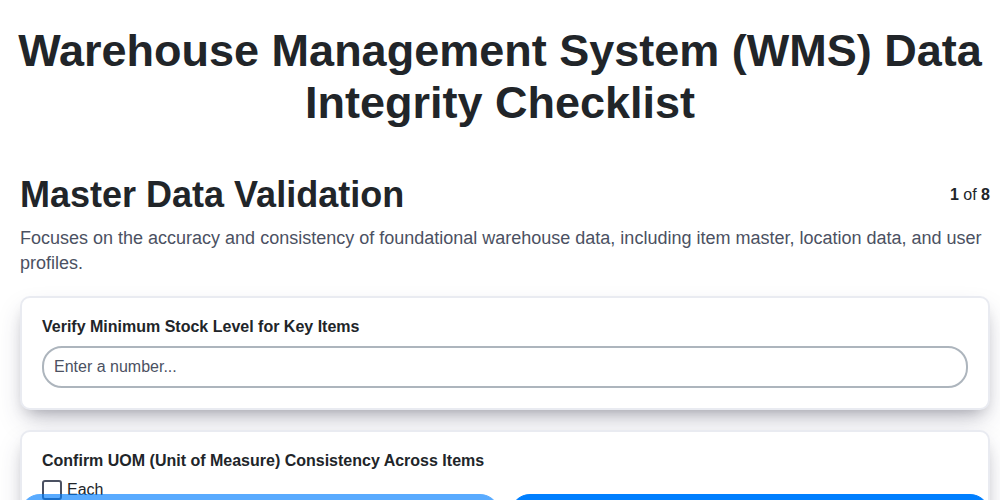
Warehouse Data Integrity: Your WMS Checklist Template

Mastering Inventory Turnover: Your Analysis Checklist Template
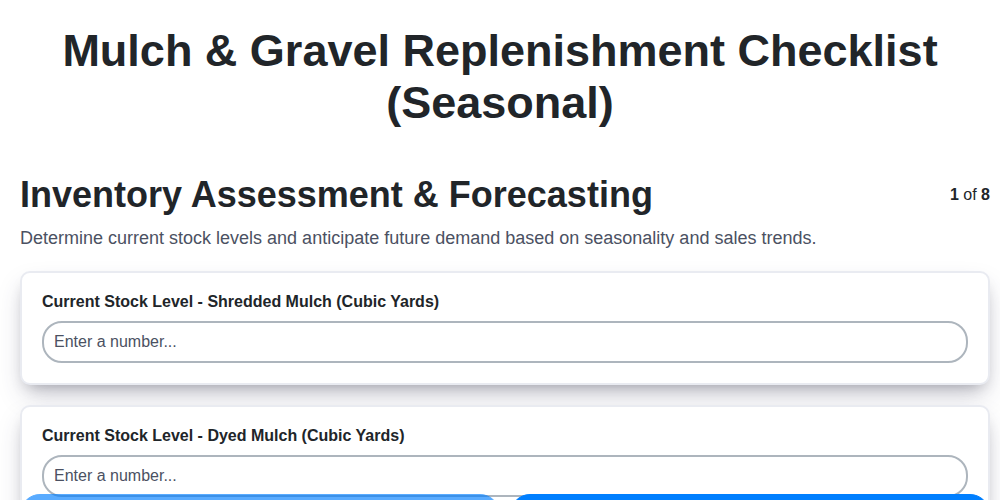
Seasonal Mulch & Gravel Checklist Template: Stay Stocked & Ready
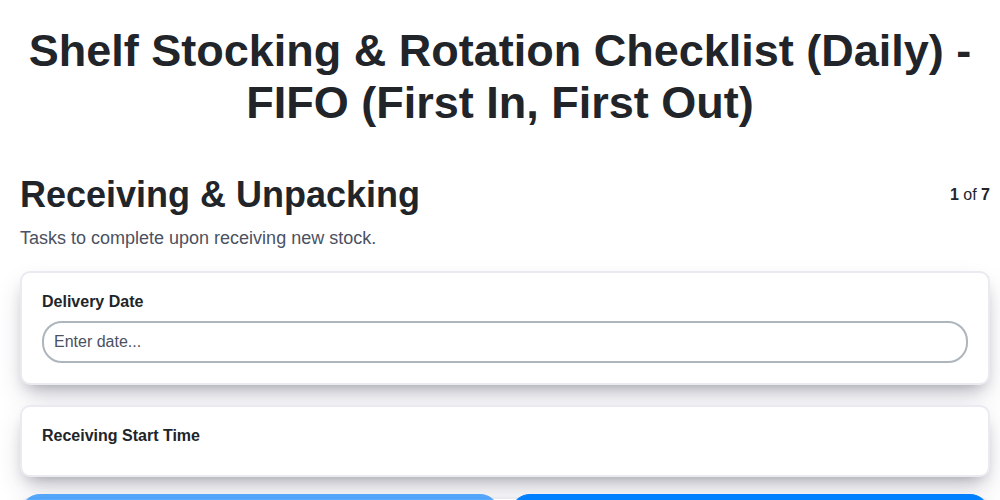
Daily Shelf Stocking & Rotation Checklist: FIFO Made Easy
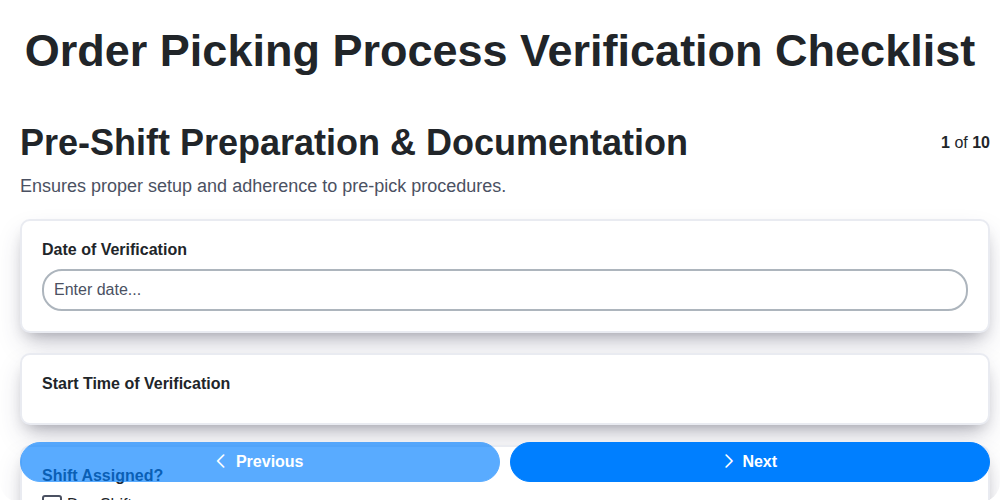
Order Picking Process Verification: Your Checklist Template
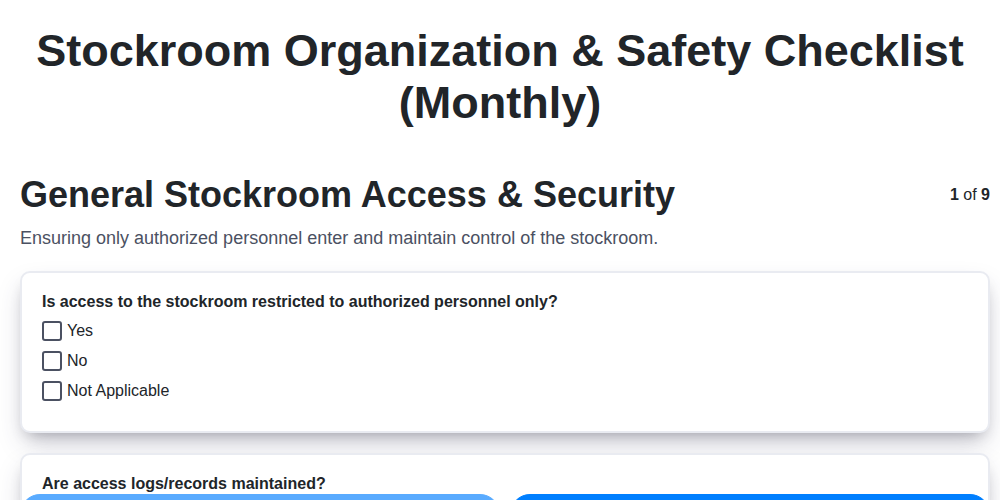
Monthly Stockroom Organization & Safety Checklist Template
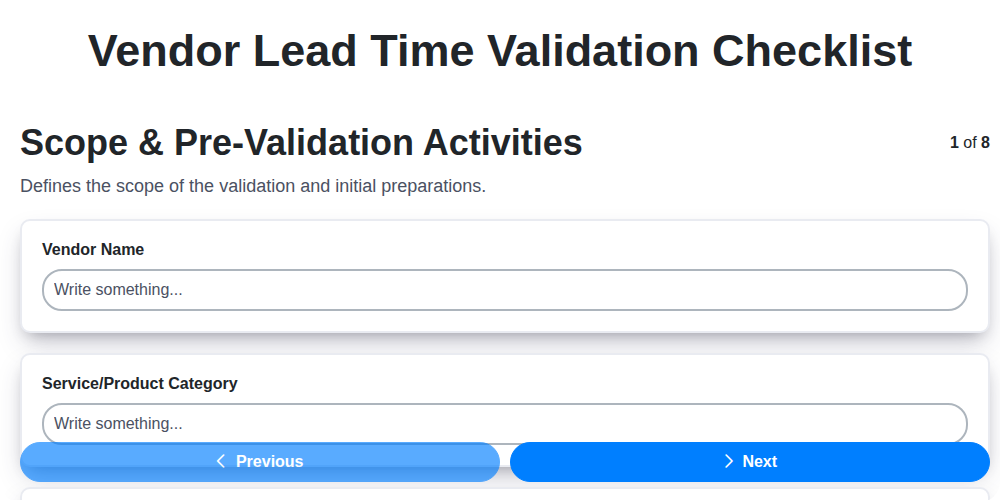
Vendor Lead Time Validation: A Checklist Template for Supply Chain Success
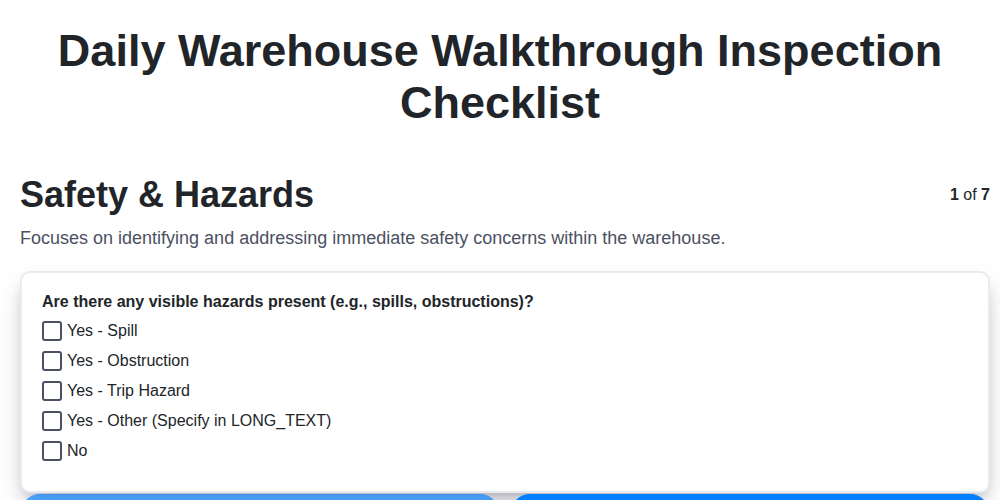
Daily Warehouse Walkthrough Inspection Checklist Template
We can do it Together
Need help with
Checklists?
Have a question? We're here to help. Please submit your inquiry, and we'll respond promptly.