The Ultimate Banquet Staff Training & Service Excellence Protocol 2026: A Comprehensive Checklist for Flawless Event Execution
Published: 10/28/2026 Updated: 10/29/2026
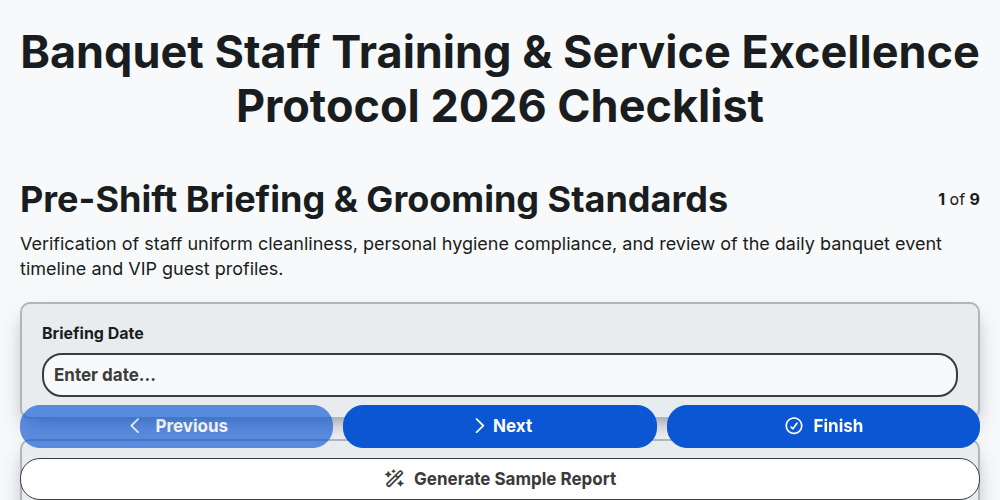
Table of Contents
- Introduction: Defining Service Excellence in 2026
- 1. Pre-Shift Briefing & Grooming Standards: Setting the Professional Tone
- 2. Station Setup & Tabletop Precision: The Art of the Perfect Setting
- 3. Service Sequence & Etiquette Mastery: Delivering Seamless Hospitality
- 4. Menu Knowledge & Dietary Allergen Awareness: Prioritizing Guest Safety
- 5. Beverage Service & Wine Pouring Standards: Elevating the Drinking Experience
- 6. Communication & Inter-Departmental Coordination: Synchronizing the Team
- 7. Equipment Handling & Safety Compliance: Maintaining Operational Integrity
- 8. Post-Event Breakdown & Reset Procedures: Efficient Closing Protocols
- 9. Incident Reporting & Guest Feedback Capture: Continuous Improvement Strategies
- Conclusion: Implementing the 2026 Protocol for Long-Term Success
- Resources & Links
TLDR: Master the art of high-end hospitality with our 2026 definitive guide to banquet excellence. This comprehensive checklist covers everything from pre-shift grooming and precision station setup to advanced service etiquette, allergen safety, and seamless post-event breakdown, ensuring your team delivers a flawless, professional guest experience every time.
Introduction: Defining Service Excellence in 2026
As we approach 2026, the landscape of event hospitality is undergoing a profound transformation. The modern guest no longer settles for mere efficiency; they demand a seamless, intuitive, and hyper-personalized experience. In an era where high-touch service meets high-tech precision, the margin for error in banquet operations has narrowed significantly.
The New Standard of Hospitality
The Standard of Service is no longer a static document kept in a manager's binder; it is a living, breathing ecosystem of precision and anticipation. Achieving excellence in 2026 requires a shift from reactive service to proactive engagement. It is no longer enough to simply deliver a plate to a table; staff must be masters of timing, guardians of safety, and ambassadors of the brand's identity.
Why a Standardized Protocol is Non-Negotiable
In the high-stakes environment of large-scale banquets, inconsistency is the enemy of luxury. Whether it is a corporate gala for five hundred or an intimate wedding for fifty, every guest expects the same level of meticulous attention to detail. A lack of standardized protocol leads to more than just slow service-it leads to compromised food safety, fragmented communication, and a fractured guest experience.
The Pillars of the 2026 Protocol
This comprehensive checklist has been engineered to serve as the definitive blueprint for banquet professionals. It is designed to bridge the gap between manual labor and professional artistry by focusing on three core dimensions:
- Operational Rigor: Ensuring that every station, tool, and procedure meets rigorous safety and aesthetic standards.
- Cognitive Expertise: Equipping staff with the deep menu intelligence and allergen awareness necessary to navigate modern dietary complexities.
- Interpersonal Artistry: Refining the nuances of communication and etiquette that transform a meal into a memorable event.
By implementing this structured approach, venue managers and banquet captains can ensure that every shift begins with alignment and ends with an impeccable reputation for excellence.
1. Pre-Shift Briefing & Grooming Standards: Setting the Professional Tone
The Foundation of First Impressions
In the high-stakes environment of luxury banquet service, excellence is not an accident-it is a deliberate construction that begins long before the first guest enters the ballroom. The pre-shift period is the most critical window for alignment, where the transition from individual staff members to a unified, high-performance team occurs.
The Morning Briefing: Strategic Alignment
The pre-shift briefing is more than a simple meeting; it is a tactical deployment. To achieve the 2026 standard of service excellence, every briefing must cover four essential pillars:
- Event Overview & VIP Profiles: Detailed walkthrough of the event timeline, identifying keynote speakers, VIP guests, and specific hospitality requirements for high-profile attendees.
- Menu & Service Flow Synchronization: A granular review of the service sequence, including exact timing for passed hors d'oeuvres, plated courses, and clearing intervals.
- The Standard of the Day: Reinforcing a specific service focus (e.g., Today, we are prioritizing silent service and heightened awareness of water refills).
- Logistical Troubleshooting: Identifying potential bottlenecks, such as heavy traffic periods or complex dietary distribution requirements.
Grooming Standards: The Visual Signature
In 2026, grooming is viewed as an extension of the brand's identity. A staff member's presentation serves as a silent communicator of the event's quality. The protocol requires a rigorous inspection of the following:
- Uniform Integrity: Linens must be crisp, pressed, and free of any visible imperfections. Uniforms should be consistent in color and fit across the entire team to maintain a seamless visual landscape.
- Personal Hygiene & Presentation: Adherence to strict standards regarding hair grooming, manicured nails, and subtle, professional use of fragrances.
- The Uniformity of Detail: Ensuring all staff members are equipped with the same polished accessories-matching name tags, polished footwear, and standardized cloth napkins/service cloths.
By mastering these preliminary steps, your team enters the floor not just as employees, but as polished ambassadors of excellence, prepared to execute a seamless event from the very first interaction.
2. Station Setup & Tabletop Precision: The Art of the Perfect Setting
The Foundation of First Impressions
In the world of high-end banquet service, the guest's experience begins long before the first course is served. It begins the moment they lay eyes on the room. Tabletop Precision is not merely about placing plates on a surface; it is about creating a visual symphony of symmetry, cleanliness, and readiness. A single misplaced fork or a smudge on a wine glass can shatter the illusion of luxury and signal a lack of attention to detail.
The Anatomy of a Perfect Setting
To achieve service excellence in 2026, your team must adhere to a rigorous standard of precision during the setup phase. This involves more than just following a floor plan-it requires an eye for architectural alignment.
- Symmetry and Alignment: Every piece of cutlery must be equidistant from the edge of the table. Use the thumb rule or standardized measurements to ensure every setting across a 50-person banquet is identical.
- The Geometry of Glassware: Water goblets, red wine glasses, and champagne flutes must be positioned with mathematical accuracy, ensuring they do not obstruct the guest's line of sight or movement.
- Linens and Drapery: Tablecloths must be centered perfectly, with even overhang on all sides, free of wrinkles, creases, or visible stains. Napkin folds should be crisp, uniform, and executed according to the event's specific theme.
- Polishing Protocols: Every piece of silverware and glassware must undergo a final inspection under bright light. We operate under a zero-smudge policy; any water spots or fingerprints are grounds for immediate re-polishing.
Precision in Detail: The Micro-Checklist
To ensure consistency across large teams, every staff member should execute the following micro-checks:
- The Fingerprint Audit: Inspect all polished silver and glassware for oils or residues.
- Alignment Check: Ensure all salt and pepper cellars, butter dishes, and bread plates are aligned on a consistent axis.
- The Sightline Test: Sit in a guest's chair periodically during setup to ensure no centerpiece elements or tall glassware obstruct the view of the head table or stage.
- Station Readiness: Verify that all necessary side stations (extra cutlery, napkins, and condiments) are fully stocked and organized for seamless service flow.
By mastering the art of tabletop precision, your staff transitions from being mere servers to being architects of atmosphere, setting the stage for a seamless and prestigious dining experience.
3. Service Sequence & Etiquette Mastery: Delivering Seamless Hospitality
Mastering the Flow: The Art of Seamless Service
In the high-stakes environment of 2026 event management, good service is no longer enough. Guests expect a choreographed performance where every movement is intentional, unobtrusive, and synchronized. Service Sequence & Etiquette Mastery is the backbone of this performance, transforming a standard meal into a luxury experience.
The Golden Rules of Service Flow
To achieve excellence, every staff member must adhere to a standardized sequence that ensures no guest is left waiting and no detail is overlooked.
- The Order of Service: Always prioritize guests based on established protocol (typically children first, followed by elderly guests, then ladies, and finally gentlemen).
- The Synchronized Delivery: For formal banquets, practice cloche service or synchronized plate placement. When a course is served, the entire table should be presented simultaneously to maintain the visual impact of the event.
- The Silent Service Approach: Mastery lies in the ability to attend to guest needs-refilling water, replacing fallen napkins, or clearing crumbs-without interrupting conversations. The goal is to be omnipresent yet invisible.
Etiquette Standards for the Modern Era
Modern etiquette in 2026 requires a blend of traditional refinement and contemporary sensitivity.
- The Art of Clearing (Crumbing & Clearing): Never clear plates until all guests at the table have finished their course. Use professional crumbing techniques to ensure the tablecloth remains pristine throughout the meal.
- Non-Verbal Communication: Staff should be trained to read body language. A raised eyebrow or a lingering gaze at an empty glass is a cue for action.
- Spatial Awareness: Maintain a respectful distance during conversation while remaining close enough to respond instantly to requests. Avoid hovering, which can disrupt the guest's intimacy.
- Precision in Placement: Every utensil, glass, and plate must be placed with mathematical precision. The handle of the cutlery should always face the guest at a consistent angle, contributing to the overall aesthetic of the table setting.
Proactive Troubleshooting
Mastery also means anticipating the what ifs. A highly trained staff member doesn't just react to a spilled drink; they anticipate the need for a replacement immediately, ensuring the disruption is handled with such grace that the guest barely notices the lapse in perfection.
4. Menu Knowledge & Dietary Allergen Awareness: Prioritizing Guest Safety
Mastering the Art of Dietary Intelligence
In the landscape of 2026 hospitality, a server's ability to recite a menu is no longer sufficient. Modern luxury service demands a deep, proactive understanding of culinary composition. This stage of training moves beyond simple memorization and enters the realm of gastronomic safety and personalized care.
The Zero-Error Approach to Allergens
As-of 2026, dietary restrictions-ranging from anaphylactic allergies to lifestyle-driven dietary choices-are a standard feature of every guest profile, not an exception. Your training must focus on:
- Ingredient Traceability: Understanding the hidden ingredients, such as derivatives in sauces, oils, or garnishes that may contain traces of nuts, soy, or gluten.
- Cross-Contamination Protocol: Mastering the strict separation of service utensils and the importance of communicating allergy alerts to the kitchen via standardized signaling.
- The Chain of Communication: Ensuring that once a guest discloses an allergy, that information is passed through the service sequence without dilution or loss of detail.
Beyond Allergies: Navigating Dietary Trends
Service excellence requires fluency in the evolving language of modern nutrition. Staff must be able to confidently guide guests through:
- Plant-Based & Vegan Sophistication: Distinguishing between dairy-free, vegan, and vegetarian options with precision.
- Lifestyle Diets: Providing informed responses regarding Keto, Paleo, Gluten-Free, and Low-FODMAP requirements.
- Nutritional Transparency: Being prepared to discuss macro-elements or specific ingredients for guests monitoring glucose or sodium intake.
Empowering Guests Through Confidence
The goal of this protocol is to eliminate guest anxiety. When a server can answer a complex dietary question with immediate, confident, and accurate information, it builds an invisible layer of trust. This transition from I'll go check to This dish is prepared with [X] and is safe for your [Y] restriction is what separates standard banquet service from true excellence.
5. Beverage Service & Wine Pouring Standards: Elevating the Drinking Experience
The Art of the Pour: Precision in Beverage Management
In the high-stakes environment of 2026 luxury events, beverage service is no longer just about fulfilling orders; it is about performing a choreographed ritual. To achieve service excellence, your staff must move beyond basic pouring and master the technical nuances that define a premium guest experience.
Mastering the Pouring Technique
Precision is the hallmark of a professional. Every pour must be intentional, controlled, and visually pleasing.
- The Standard Pour: Staff must execute a steady, fluid motion without the glug effect. Whether serving sparkling water, juice, or wine, the flow should be consistent to prevent splashing or aeration issues.
- The Wine Protocol:
- Presentation: Always present the label to the guest before the cork is removed.
- The Tasting Pour: Offer a small sample to the host to ensure the vintage meets their expectations.
- The No Drip Rule: Use a clean linen napkin (service cloth) to wipe the neck of the bottle after every pour to prevent unsightly drips on the tablecloth.
- Glassware Integrity: Ensure every glass is inspected for water spots, fingerprints, or dust under event lighting. A single smudge can break the illusion of luxury.
Temperature Control & Presentation
A beverage served at the wrong temperature is a service failure. Your training protocol must emphasize the critical timing of service.
- Chilled Service: White wines, rosés, and champagnes must be pulled from ice buckets at the precise moment of service to maintain optimal crispness.
- Red Wine Aeration: For heavy reds, staff should be trained in the timing of decanting and the importance of allowing the wine to breathe if the venue standards dictate.
- Ice Management: Ensure ice buckets are replenished regularly and that tongs are always used-never hands-to maintain hygiene and elegance.
Navigating the Beverage Menu
In 2026, guests are more sophisticated than ever regarding pairings and ingredients.
- Pairing Proficiency: Staff should be able to confidently suggest a white wine that complements a seafood course or a bolder red for a meat dish.
- Non-Alcoholic Sophistication: With the rise of mocktail culture, the standard for zero-proof beverages (botanical infusions, premium sodas) must match the elegance of wine service. Presentation, garnish, and glassware for non-alcoholic drinks must be indistinguishable from alcoholic service.
6. Communication & Inter-Departmental Coordination: Synchronizing the Team
The Art of Seamless Synergy
In the high-stakes environment of a luxury banquet, excellence is never the result of isolated efforts; it is the product of a perfectly synchronized ecosystem. As we move into 2026, the margin for error has vanished. Guests no longer just expect great food; they expect a seamless, invisible flow of service where the transition from kitchen to table, and from front-of-house to floor management, feels intuitive.
Effective coordination is the invisible thread that prevents service breakdowns, ensures timing precision, and maintains the atmosphere of effortless elegance.
Strengthening the Service Triangle
To achieve true service excellence, every staff member must master the communication loop between three critical pillars:
- Front-of-House (FOH) & Kitchen (BOH) Alignment: The heartbeat of any banquet is the timing between the plating line and the service team. Training must focus on signal-based service-ensuring servers understand the precise cues for when a course is ready for departure and when a station needs replenishment.
- Service Staff & Banquet Management: Real-time updates regarding guest movements, VIP arrivals, or sudden changes in the program must flow instantly from the floor to the leads.
- Banquet Team & Event Organizers/Clients: The staff acts as the frontline ambassadors for the client. Maintaining a professional, proactive loop with the event host ensures that any shifting requirements are met before they become issues.
Essential Communication Protocols for 2026
1. The Closed-Loop Communication Standard
To eliminate errors, all critical instructions-especially regarding timing and dietary changes-must follow the closed-loop method. When a directive is given, the receiver must verbally acknowledge and repeat the instruction back to the sender. This simple habit eliminates the I thought you meant... moments that derail luxury service.
2. Utilizing Modern Coordination Tools
As we embrace 2026 standards, integration of digital communication (such as discreet earpiece systems or real-time tablet updates) must be paired with traditional verbal cues. Staff should be trained to use these technologies to relay information regarding clearing complete or VIP arrival without disrupting the ambient noise of the event.
3. The Protocol for Crisis Communication
When a service hiccup occurs (e.g., a dropped tray or a late course), the protocol must be: Identify, Inform, and Resolve.
- Identify: Recognize the issue immediately.
- Inform: Alert the Captain or Manager instantly-never attempt to hide a mistake.
- Resolve: Execute the recovery plan as directed, ensuring the guest experience remains uncompromised.
4. Inter-Departmental Handover Precision
Service excellence extends beyond the dining room. Coordination with the Audio-Visual (AV) and Decor teams is vital. A server must be aware of when lights are dimming for a presentation or when a floral centerpiece is being adjusted, ensuring that service movements never clash with the event's programmed choreography.
7. Equipment Handling & Safety Compliance: Maintaining Operational Integrity
The Foundation of Operational Safety and Longevity
In the fast-paced environment of high-end banqueting, the quality of your service is only as reliable as the safety of your operations. Equipment handling and safety compliance are not merely back-of-house concerns; they are critical components of the guest experience. A broken glass, a malfunctioning heating element, or a minor trip hazard can instantly shatter the illusion of seamless luxury.
Standardized Equipment Care & Handling
To maintain the premium standards required for 2026's luxury market, staff must adhere to strict protocols regarding the manipulation of all service assets:
- Glassware & Chinaware Precision: Implementation of the no-stacking rule for delicate crystal and the use of specialized polishing cloths to prevent micro-scratches and structural fatigue.
- Silverware & Cutlery Maintenance: Rigorous checks for tarnishing or physical defects during the pre-shift inspection to ensure every utensil presented to the guest is in pristine condition.
- Chafing Dish & Heating Element Protocol: Strict adherence to stability checks for buffet setups, ensuring fuel levels are monitored and heat sources are placed away from flammable decor or guest pathways.
Safety Compliance & Risk Mitigation
A professional banquet environment is a controlled environment. We prioritize the physical safety of both our team and our guests through proactive compliance:
- Ergonomic Lifting & Transport: Mandatory training on the correct techniques for moving heavy trays, large platters, and banquet furniture to prevent workplace injuries and long-term fatigue.
- Spill Response & Floor Integrity: The Zero-Latency rule-immediate deployment of wet floor signage and rapid cleaning protocols the moment a liquid spill is detected to prevent slip-and-fall incidents.
- Chemical & Sanitation Safety: Strict adherence to food-grade sanitizer usage and the safe handling of cleaning agents, ensuring no cross-contamination occurs near food service areas.
Preventive Maintenance Awareness
Every staff member acts as an extension of our maintenance team. We empower our service professionals to identify and report near-misses or equipment irregularities before they escalate into service disruptions. By fostering a culture of heightened awareness, we ensure that the tools of our trade remain as polished and professional as the service we provide.
8. Post-Event Breakdown & Reset Procedures: Efficient Closing Protocols
Mastering the Final Phase: Efficiency in Deconstruction
The success of an event is measured by the first impression, but the reputation of a professional banquet team is often solidified by the last impression-the efficiency, cleanliness, and organization of the breakdown. The post-event phase is where the invisible work happens, ensuring that the venue is returned to its pristine state and the team is prepared for the next deployment.
The Art of the Systematic Breakdown
A disorganized breakdown leads to wasted labor hours, damaged equipment, and overlooked sanitation issues. To maintain excellence in 2026, the breakdown must be treated as a structured service flow rather than an afterthought.
- Clearing & Sorting: Implement a systematic clear-as-you-go approach for linens, glassware, and cutlery. Never mix soiled linens with clean inventory, and ensure all debris is removed from tables immediately after guest departure to prevent staining or pest issues.
- Equipment Sanitization & Storage: All service equipment, from chafing dishes to beverage dispensers, must be cleaned, dried, and stored according to strict hygiene protocols. This step is vital for preventing cross-contamination and preserving the lifespan of high-value assets.
- Tabletop & Furniture Reset: Resetting the room involves more than just stacking chairs. It requires a meticulous inspection of the floor, baseboards, and surfaces. Every surface should be wiped down, and any damaged furniture must be flagged for immediate maintenance.
Inventory Management & Loss Prevention
The breakdown period is the most critical time for conducting a rapid inventory audit.
- Glassware & Silverware Audit: Conduct a visual count of high-value items to identify breakage or loss early.
- Rental Tracking: Ensure all third-party rental items (linens, specialty decor, extra plating) are accounted for and packed correctly to avoid unnecessary replacement fees.
The Ready-to-Serve Standard
The ultimate goal of the 2026 Protocol is to ensure that the Reset is as seamless as the Setup.
- The Zero-Trace Standard: The venue should be left in a state that is indistinguishable from its pre-event condition.
- Pre-Staging for the Next Shift: If the venue hosts back-to-back events, the breakdown protocol should include the Pre-Set of essential items (such as water carafes or basic cutlery) to give the incoming team a head start.
By adhering to these rigorous post-event procedures, your staff demonstrates that professional excellence does not clock out when the guests leave; it continues until the very last piece of equipment is safely returned to its place.
9. Incident Reporting & Guest Feedback Capture: Continuous Improvement Strategies
Turning Challenges into Opportunities: The Feedback Loop
In the high-stakes environment of luxury banquet service, an incident is rarely just a mistake-it is a critical data point. To maintain the Service Excellence standard for 2026, your training protocol must shift from a reactive mindset to a proactive, analytical one. The goal is not merely to fix what went wrong, but to ensure the same error never recurs.
Standardized Incident Reporting Protocols
When a service gap occurs-whether it be a dropped tray, a temperature discrepancy in a dish, or a missed dietary requirement-the response must be immediate and documented. Your staff training must emphasize a No-Blame, High-Accountability reporting culture.
- Immediate Remediation: The first step is always guest recovery. Staff must be empowered to resolve minor issues instantly (e.g., replacing a drink) while knowing exactly when to escalate to a manager.
- The Incident Log: Every deviation from the standard must be recorded in a digital or physical log. This log should include:
- Time and Location: Exactly when and where the incident occurred.
- The Nature of the Event: A factual, objective description of the occurrence.
- Immediate Action Taken: How the guest was compensated or assisted.
- Root Cause Analysis: A brief assessment of whether the cause was equipment failure, communication breakdown, or human error.
Real-Time Guest Feedback Capture
In 2026, guest feedback can no longer wait for a post-event email survey. Excellence is maintained by capturing the pulse of the room during the event itself.
- The Table Touch Metric: Train your captains and senior servers to perform strategic table touches. These are not mere check-ins; they are targeted inquiries designed to catch dissatisfaction before the guest departs the venue.
- Digital Sentiment Tracking: Implement quick-response QR codes on subtle, elegant table elements or digital tablets for VIPs. This allows for real-time data collection that can be reviewed by management while the event is still in progress.
- Closing the Loop: The protocol is incomplete without the feedback loop. Every piece of negative feedback must be reviewed during the next Pre-Shift Briefing. By analyzing real guest sentiments during training, your team learns to anticipate needs based on documented trends rather than theoretical scenarios.
From Feedback to Training Evolution
The final pillar of this protocol is the integration of data into your training curriculum. Use the trends found in your Incident Reports and Guest Feedback to update your Service Sequence & Etiquette Mastery and Menu Knowledge modules. This transforms your staff from a group of service providers into a highly adaptive, self-correcting unit of hospitality professionals.
Conclusion: Implementing the 2026 Protocol for Long-Term Success
Elevating Standards Beyond the Event Night
Adopting the Banquet Staff Training & Service Excellence Protocol 2026 is more than just a logistical update; it is a commitment to a culture of precision. In an era where guest expectations are higher than ever and dietary complexities are becoming the norm, good enough service is no longer an option. By implementing this structured checklist, you are transitioning your team from a group of individual servers to a synchronized unit capable of delivering high-stakes, seamless hospitality.
Moving from Reactive to Proactive Service
The true value of this protocol lies in its ability to shift your staff's mindset from reactive-fixing mistakes after they happen-to proactive-preventing errors through meticulous preparation. When your team masters everything from the nuances of wine pouring to the rigor of allergen awareness, they gain the confidence to navigate the high-pressure environment of large-scale events with grace.
Building a Legacy of Excellence
As you roll out these standards, remember that consistency is the foundation of a premium brand. Success is found in the repetitive discipline of the pre-shift briefing and the quiet precision of the post-event breakdown.
To ensure a successful implementation, focus on these three pillars:
- Continuous Education: Treat the 2026 Protocol as a living document. Use post-event debriefs to refine your training based on real-world feedback.
- Empowerment Through Knowledge: A staff member who understands the why behind the how (such as the importance of safety compliance or inter-departmental communication) is far more likely to uphold these standards when leadership isn't watching.
- Recognition of Precision: Celebrate the small wins-a perfectly set table, a flawless beverage service, or a zero-incident shift.
By integrating these nine essential steps into your operational DNA, you aren't just managing an event; you are engineering an unforgettable experience that ensures repeat clients and an unparalleled reputation in the luxury hospitality market.
Resources & Links
- Hospitality Net: A leading source for global hospitality news, trends, and professional development resources for hotel and event managers.
- ServSafe: The industry standard for food safety training and allergen awareness protocols essential for banquet staff.
- Cvent: Comprehensive event management software and resources for planning and executing large-scale professional functions.
- Eventbrite: Insights into event logistics, attendee management, and the evolving landscape of event technology.
- WSET: Global standards for wine and spirits knowledge, crucial for perfecting beverage service and wine pouring protocols.
- American Hotel & Lodging Association: Professional standards and advocacy for the hospitality industry, focusing on operational excellence and service.
- National Restaurant Association: Essential resources for food service operations, including safety compliance and workforce training.
- Michelin Guide: The gold standard for fine dining etiquette and the pursuit of culinary and service perfection.
- Forbes Leadership: Strategic insights into team management, communication, and operational leadership for large-scale event teams.
- SHRM: Best practices for employee grooming standards,-training protocols, and HR management in a service environment.
- SafetyCulture: Digital checklists and tools for maintaining equipment safety, incident reporting, and operational compliance.
- OpenTable for Business: Resources on managing guest experiences, feedback loops, and the importance of seamless front-of-house service.
- Food Network: Inspiration for menu trends and understanding ingredients, which aids in staff menu knowledge and allergen training.
- Entrepreneur: Strategic advice on scaling service operations and implementing standardized protocols for long-term success.
- Indeed for Employers: Guidance on designing effective onboarding and continuous training programs for hospitality staff.
- Culinary Institute of America: Foundational knowledge on professional kitchen-to-table service sequences and etiquette mastery.
Comments
There are no comments yet. Be the first to add one!
Hospitality Management Solution Demo
Running a hotel, restaurant, or other hospitality business is demanding. ChecklistGuro's Work OS platform simplifies management, from reservations and guest services to inventory and staff scheduling. Improve efficiency, enhance guest experience, and boost profitability! See how ChecklistGuro can transform your hospitality operations.
Related Articles
Your Ultimate Security Camera Monitoring Log Checklist Template
Payroll Processing Verification Checklist Template: Your Guide to Accuracy
Complaint Handling Checklist Template: Resolve Issues & Retain Customers

Emergency Evacuation Drill Documentation: Your Checklist Template Guide

Mastering Incident Response: Your Free Reporting Protocol Checklist Template
Conquer Your Kitchen: A Monthly Deep Cleaning Checklist Template
Mastering Food Safety: Your Free Temperature Control Checklist Template
Mastering Hand Hygiene: Your Compliance Checklist Template
Need help with
Hospitality?
Have a question? We're here to help. Please submit your inquiry, and we'll respond promptly.