The Ultimate Cybersecurity Protocol for Industrial Control Systems (ICS): A Comprehensive 2026 Readiness Checklist
Published: 10/31/2026 Updated: 11/01/2026
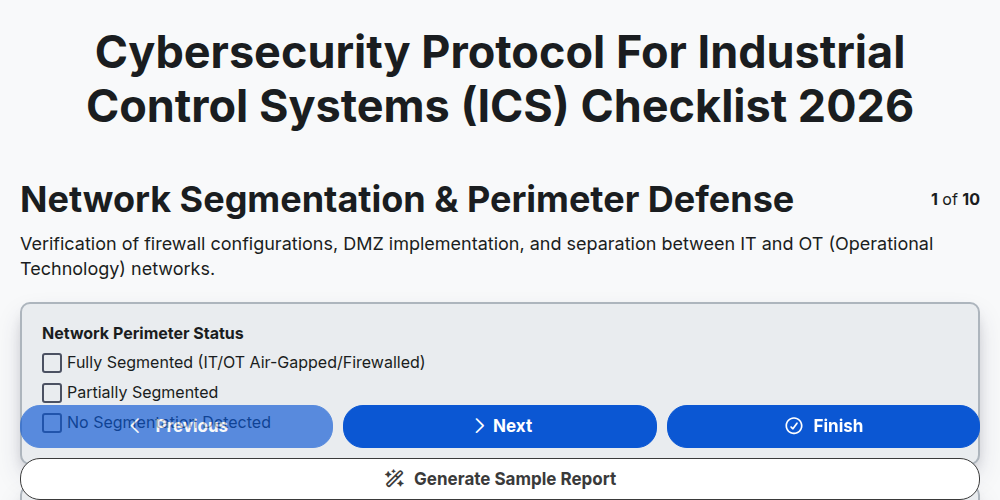
Table of Contents
- Introduction: The Evolving Threat Landscape of ICS in 2026
- 1. Strengthening the Perimeter: Network Segmentation & Defense-in-Depth
- 2. Identity Governance: Advanced Access Control & Identity Management
- 3. Hardening the Edge: Endpoint Protection & Device Security
- 4. Proactive Maintenance: Patch Management & Vulnerability Assessment
- 5. Resilience Planning: Incident Response & Disaster Recovery Strategies
- 6. Securing the Physical Layer: Physical Security & Hardware Integrity
- 7. Real-Time Visibility: Monitoring, Logging & Threat Detection
- 8. Managing Ecosystem Risks: Supply Chain & Third-Party Access Security
- 9. The Human Element: Employee Training & Security Awareness
- 10. Maintaining Compliance: Audit Readiness & Continuous Improvement
- Conclusion: Building a Future-Proof Industrial Security Posture
- Resources & Links
TLDR: As industrial landscapes become increasingly connected, securing ICS environments requires a proactive, multi-layered strategy. This guide provides a definitive 2026 readiness checklist covering ten critical domains-from network segmentation and identity management to supply chain integrity and continuous auditing-to help organizations defend critical infrastructure against evolving cyber threats and ensure operational resilience.
Introduction: The Evolving Threat Landscape of ICS in 2026
The New Era of Industrial Vulnerability
As we navigate through 2026, the boundary between Information Technology (IT) and Operational Technology (OT) has effectively dissolved. The rapid integration of Industrial Internet of Things (IIoT), edge computing, and AI-driven automation has unlocked unprecedented levels of operational efficiency, but it has simultaneously expanded the attack surface of our critical infrastructure to unprecedented proportions.
The industrial landscape is no longer shielded by security through obscurity. Today's threat actors-ranging from sophisticated nation-state entities to decentralized ransomware collectives-are deploying highly automated, AI-enhanced malware specifically engineered to traverse converged networks and manipulate programmable logic controllers (PLCs).
Why 2026 Demands a Paradigm Shift
In previous years, a simple firewall and a periodic backup might have sufficed. However, the current landscape presents three critical challenges that make traditional security models obsolete:
- Hyper-Connectivity: The proliferation of 5G and satellite-linked sensors means that even the most remote assets are now reachable via the global web.
- Automated Adversaries: We are witnessing the rise of self-propagating threats that can identify and exploit vulnerabilities in industrial protocols faster than a human operator can respond.
- Legacy Interoperability: The friction between modern, high-speed data analytics and decades-old legacy hardware creates security gaps that are prime targets for lateral movement.
Beyond Compliance: Toward Cyber Resilience
Securing an Industrial Control System in 2026 is no longer just about preventing unauthorized access; it is about operational resilience. It is about ensuring that even when a breach occurs, the physical processes-be it power distribution, water treatment, or manufacturing-can continue to operate in a degraded but safe mode.
The following checklist is designed not merely as a defensive shield, but as a strategic framework to build a proactive, self-healing security posture. This guide will walk you through the essential layers of defense required to safeguard your physical assets, your data, and, most importantly, public safety.
1. Strengthening the Perimeter: Network Segmentation & Defense-in-Depth
Building a Multi-Layered Fortress
In the 2026 threat landscape, the concept of a hard outer shell is no longer sufficient. As IT and OT (Operational Technology) convergence reaches its peak, the boundary between corporate networks and production environments has become increasingly porous. To defend Industrial Control Systems (ICS), we must move beyond simple firewalls toward a robust Defense-in-Depth architecture.
Implementing Micro-Segmentation
The primary goal of network segmentation is to prevent lateral movement. If a breach occurs in the enterprise IT network, a properly segmented architecture ensures the malware cannot migrate to the critical control layer.
- ISA/IEC 62443 Zone & Conduit Model: Organize your network into distinct security zones based on criticality and function. Use conduits (secure communication channels) to strictly control the data flow between these zones.
- Micro-segmentation at the Cell Level: Move beyond macro-segmentation. Implement granular controls that isolate individual PLC (Programmable Logic Controller) clusters or robotic cells from one another, ensuring that a single compromised device cannot impact the entire production line.
Perimeter Defense & Protocol Filtering
A perimeter is not just a wall; it is an intelligent filter. Modern ICS defense requires deep inspection of industrial protocols.
- Industrial Deep Packet Inspection (DPI): Deploy firewalls capable of looking inside industrial protocols (such as Modbus/TCP, PROFINET, or EtherNet/IP). It is not enough to know that a packet is allowed; the system must verify that the command within the packet is authorized and safe.
- Unidirectional Gateways (Data Diodes): For high-consequence environments, utilize hardware-enforced unidirectional gateways. These allow data to flow out from the OT network to the IT network (for monitoring and analytics) while physically making it impossible for any data or threats to flow back into the ICS environment.
- Demilitarized Zone (DMZ) Reinforcement: Ensure that no direct communication exists between the Corporate LAN and the Industrial LAN. All data exchanges must terminate in a strictly controlled Industrial DMZ (IDMZ), acting as a buffer where-in services like historians and patch servers reside.
2. Identity Governance: Advanced Access Control & Identity Management
Strengthening the Perimeter of Trust
In the 2026 threat landscape, the traditional concept of a trusted user has become obsolete. As Industrial Control Systems (ICS) become increasingly interconnected with cloud environments and IIoT (Industrial Internet of Things) ecosystems, the perimeter is no longer a physical boundary but a digital one defined by identity. Identity Governance is the cornerstone of preventing lateral movement within OT (Operational Technology) networks.
Zero Trust Architecture (ZTA) Integration
The transition from implicit trust to never trust, always verify is no longer optional. Your protocol must move beyond simple password authentication to a framework where every request-whether from a technician on-site or a remote vendor-is continuously validated based on context.
- Context-Aware Authentication: Implement systems that evaluate not just credentials, but also geolocation, device health, time of access, and behavioral patterns before granting entry.
- Micro-segmentation of Identities: Treat every user and service account as its own micro-perimeter to ensure that a compromised credential cannot be used to traverse from a non-critical workstation to a PLC (Programmable Logic Controller).
Multi-Factor Authentication (MFA) in OT Environments
While MFA is a standard in IT, implementing it in ICS requires a specialized approach to account for legacy hardware and air-gapped constraints.
- Phishing-Resistant MFA: Prioritize hardware-based security keys (e.g., FIDO2/WebAuthn) over SMS or push notifications, which are increasingly vulnerable to interception and MFA fatigue attacks.
- Adaptive MFA Challenges: Utilize step-up authentication. For routine monitoring, standard authentication may suffice; however, for high-risk actions-such as modifying logic or changing setpoints-the system should trigger a secondary, more rigorous verification layer.
The Principle of Least Privilege (PoLP) & PAM
Over-privileged accounts are the primary vehicle for ransomware deployment in industrial settings.
- Privileged Access Management (PAM): Implement a centralized PAM solution to manage, monitor, and rotate credentials for all administrative accounts. This includes Just-in-Time (JIT) provisioning, where elevated permissions are granted only for the duration of a specific task and revoked immediately upon completion.
- Service Account Hardening: Scrutinize non-human identities. Automated processes and machine-to-machine (M2M) communications often hold high-level permissions; these must be mapped, audited, and strictly limited to the specific protocols and endpoints required for their function.
Identity Lifecycle Management
A critical failure point in many ICS environments is the orphaned account-credentials belonging to former employees or decommissioned contractors that remain active.
- Automated Provisioning/Deprovisioning: Integrate OT identity systems with central HR and IT directories to ensure that access is automatically revoked the moment a user's status changes.
- Regular Entitlement Reviews: Establish a quarterly cadence for auditing access rights. If an account has not utilized its permissions within a 30-day window, those permissions should be automatically downgraded.
3. Hardening the Edge: Endpoint Protection & Device Security
Securing the Frontlines of OT Operations
In the 2026 threat landscape, the edge is no longer a clearly defined boundary. As Industrial Control Systems (ICS) become increasingly interconnected with cloud analytics and IIoT (Industrial Internet of Things) ecosystems, the surface area for attacks has expanded exponentially. Protecting the perimeter is no longer enough; the focus must shift to hardening the individual endpoints and specialized devices that orchestrate your physical processes.
Hardening Programmable Logic Controllers (PLCs) and RTUs
The heartbeat of your industrial process lies in your controllers. In 2026, endpoint security must move beyond simple password protection.
- Firmware Integrity Verification: Implement automated checks to ensure that firmware updates are cryptographically signed and have not been tampered with during transit or storage.
- Disabling Unused Services: Conduct regular audits to disable unnecessary protocols (such as Telnet, FTP, or HTTP) on PLCs and RTUs that could serve as entry points for lateral movement.
- Logic Integrity Monitoring: Utilize tools capable of detecting unauthorized changes to the control logic itself, ensuring that the running code matches the authorized code.
Securing the IIoT and Edge Gateway Ecosystem
The proliferation of smart sensors and edge gateways introduces a massive influx of transient devices into the OT environment.
- Device Fingerprinting: Deploy automated asset discovery tools that use passive monitoring to create a real-time inventory of every connected device, identifying unauthorized shadow OT hardware the moment it connects to the network.
- Hardware Root of Trust: Prioritize the procurement of edge devices that utilize Trusted Platform Modules (TPM) to provide a hardware-based foundation for encryption and identity.
- Micro-Segmentation at the Device Level: Ensure that even if an edge gateway is compromised, the breach is contained through strict, identity-based micro-segmentation policies.
Robust Endpoint Detection and Response (EDR) for OT
Standard IT-grade antivirus is insufficient for the specialized requirements of industrial workstations and Human-Machine Interfaces (HMIs).
- Behavioral Analysis vs. Signature Matching: Move toward EDR solutions specifically tuned for OT environments-tools that recognize the normal operational behavior of industrial software and trigger alerts on anomalous process execution rather than just known malware signatures.
- USB and Removable Media Lockdown: In an era of high-frequency physical updates, implement strict, automated controls for all removable media. This includes mandatory scanning stations (kiosks) for any device entering the facility and disabling unauthorized USB ports via centralized policy.
- System Hardening via Gold Images: Maintain strictly controlled, hardened master images for all HMIs and Engineering Workstations (EWS), ensuring that every deployment meets a baseline of minimized services and maximized security configurations.
4. Proactive Maintenance: Patch Management & Vulnerability Assessment
The Criticality of the Patch-or-Perish Mindset
In the 2026 threat landscape, the window between the disclosure of a Zero-Day vulnerability and its active exploitation by automated ransomware bots has shrunk to near zero. For Industrial Control Systems (ICS), where legacy hardware often meets modern connectivity, the ability to proactively manage vulnerabilities is no longer just a maintenance task-it is a core defensive pillar.
In an era of hyper-connectivity, simply leaving the system alone to ensure uptime is a recipe for catastrophic failure. A robust protocol requires a shift from reactive patching to a structured, risk-based vulnerability management lifecycle.
Establishing a Risk-Based Patching Cadence
Not all updates are created equal, and in an ICS environment, you cannot simply click Install All during peak production hours. A sophisticated protocol must include:
- Vulnerability Categorization: Utilize the Common Vulnerability Scoring System (CVSS) but augment it with the Industrial Control System Vulnerability Scoring System (ICS-CVSS). This allows your team to prioritize flaws that specifically impact safety functions and operational continuity over less critical software bugs.
- The Sandbox Requirement: Never deploy a patch directly to the production floor. A mandatory step in your 2026 checklist is the maintenance of a Digital Twin or an isolated staging environment. Every patch must be tested here first to ensure it does not trigger unintended logic changes in PLCs (Programmable Logic Controllers) or disrupt timing-sensitive communications.
- Compensating Controls for Legacy Assets: We recognize that some critical legacy controllers cannot be patched without risking total system instability. In these instances, your protocol must document Compensating Controls-such as enhanced firewall rules or strict unidirectional gateways-as a formal substitute for the missing patch.
Continuous Vulnerability Assessment
Patching is only half of the equation; you must also proactively hunt for the gaps you haven't found yet.
- Passive Scanning vs. Active Probing: In the OT (Operational Technology) space, traditional active scanning can inadvertently crash sensitive sensors. Your 2026 strategy must prioritize passive monitoring tools that analyze network traffic to identify outdated firmware and unpatched assets without injecting intrusive packets into the stream.
- Automated Asset Discovery: You cannot protect what you cannot see. A continuous assessment protocol requires an automated, real-time inventory of every networked component, ensuring that shadow OT-unauthorized devices added to the network by contractors-is immediately flagged.
- Regular Penetration Testing (OT-Safe): Schedule periodic, high-fidelity security assessments specifically designed for industrial environments. These tests should focus on lateral movement capabilities and the potential for an attacker to pivot from the enterprise network into the control plane.
5. Resilience Planning: Incident Response & Disaster Recovery Strategies
Strengthening the Safety Net: The Core of ICS Resilience
In the landscape of 2026, where-automated threats and sophisticated ransomware can bypass even the most robust perimeter defenses, your security posture cannot rely solely on prevention. Incident Response (IR) and Disaster Recovery (DR) represent your organization's final line of defense. In an Industrial Control System (ICS) environment, the goal of these protocols is not just to protect data, but to ensure operational continuity and physical safety.
Building an ICS-Specific Incident Response Plan (IRP)
A generic IT incident response plan is insufficient for OT (Operational Technology) environments. Your 2026 checklist must include a specialized framework that accounts for the unique physics of industrial processes.
- Defined Incident Classification: Develop a rubric to differentiate between a standard IT malware infection and a high-criticality OT event (e.g., unauthorized logic changes in a PLC or unexpected valve manipulations).
- The Safety-First Response Protocol: Ensure your IR plan prioritizes human safety and environmental protection over system uptime. Define clear thresholds for when a process must be manually overridden or emergency-stopped.
- Role-Based Escalation Matrices: Clearly define who holds the authority to disconnect a segment of the production line. In an industrial setting, the decision to isolate the network can have massive downstream kinetic consequences.
- Pre-defined Playbooks: Maintain specific, step-by-step playbooks for common ICS scenarios, such as:
- Unauthorized remote access detection.
- Ransomware encryption of HMI (Human Machine Interface) stations.
- Loss of view (sensor data blackout) or loss of control.
Disaster Recovery: Beyond Data Backups
In the world of ICS, disaster recovery is about reconstitution. It is the ability to restore the known good state of both digital configurations and physical processes.
- Golden Image & Logic Backups: Ensure you have offline, immutable backups of PLC (Programmable Logic Controller) ladder logic, firmware versions, and HMI configurations. These must be verified regularly to ensure they are not corrupted or compromised.
- The Cold Start Capability: Develop and test procedures for restarting production from a complete system outage. This includes verifying the integrity of the underlying hardware before re-injecting software configurations.
- Offline Redundancy (Air-Gapped Backups): As 2026-era ransomware increasingly targets cloud-integrated backups, maintain physically isolated, air-gapped copies of critical system configurations.
- Regular Tabletop Simulations: A plan that hasn't been tested is merely a suggestion. Conduct quarterly simulations involving both IT security teams and OT plant operators to ensure seamless communication during a crisis.
Ensuring Continuity of Operations (COOP)
The ultimate metric for your 2026 protocol is MTTR (Mean Time To Recovery). By integrating robust detection with a pre-rehearsed recovery strategy, you transform your facility from a vulnerable target into a resilient industrial powerhouse capable of weathering the most complex cyber-physical attacks.
6. Securing the Physical Layer: Physical Security & Hardware Integrity
Beyond the Digital Perimeter: Protecting the Physical Core
In the landscape of 2026, cybersecurity is no longer just about firewalls and encryption; it is about the physical reality of the hardware that drives our critical infrastructure. As Industrial Control Systems (ICS) become increasingly integrated with edge computing and IoT, the boundary between digital threats and physical vulnerabilities has dissolved. If an adversary gains physical access to a PLC (Programmable Logic Controller), a sensor, or a workstation, even the most sophisticated software defenses can be bypassed.
To ensure true resilience, your protocol must extend to the tangible assets on the factory floor and within the substation.
Hardening the Physical Perimeter
A robust ICS security strategy begins with the fundamental principle of Defense in Depth applied to physical spaces. Your checklist should include:
- Strict Access Control to Critical Zones: Implement multi-factor authentication (MFA) for physical entry, such as biometric scanners or smart cards, for all areas housing sensitive ICS components.
- Surveillance and Sensor Integration: Deploy AI-driven video analytics that can detect unauthorized movement or loitering near critical control cabinets in real-time.
- Environmental Monitoring: Use sensors to detect unauthorized cabinet openings, temperature fluctuations, or vibrations that could indicate tampering or hardware-level attacks.
Securing the Hardware Lifecycle
Hardware integrity is often the blind spot in industrial security. Protecting the supply chain and the devices themselves is paramount.
- Port Security and Disabling Unused Interfaces: Every unused USB, Ethernet, or Serial port on a controller is a potential entry point. Physically block or digitally disable any interface not required for current operations to prevent walk-up attacks.
- Hardware Root of Trust (RoT): As you upgrade equipment in 2026, prioritize devices that utilize hardware-based security modules (like TPMs) to ensure that the boot process and firmware remain untampered.
- Anti-Tamper Mechanisms: Utilize tamper-evident seals and enclosures for distributed assets. Regular physical inspections should be a standard part of your maintenance routine to ensure that no unauthorized hardware-such as dropbox devices or rogue wireless bridges-has been implanted.
The Human-Physical Intersection
Physical security is only as strong as the protocols governing those with keys to the facility.
- Visitor and Vendor Escort Protocols: Implement rigorous logging and mandatory supervision for any third-party technician accessing the ICS environment.
- Asset Tagging and Inventory Audits: Maintain a real-time, digitized inventory of all physical assets. A discrepancy between your digital asset management system and the actual hardware present on the floor is a primary indicator of a potential security breach.
7. Real-Time Visibility: Monitoring, Logging & Threat Detection
The Eyes of the Infrastructure: Beyond Simple Alerts
In the 2026 threat landscape, passive monitoring is no longer sufficient. As industrial environments become increasingly interconnected through IIoT (Industrial Internet of Things) and edge computing, the boundary between IT and OT (Operational Technology) has dissolved. To maintain a secure posture, your monitoring strategy must evolve from simple up/down alerts to deep,-packet-level visibility and behavioral analytics.
Achieving Deep Packet Inspection (DPI)
Standard network monitoring often misses the subtle nuances of industrial protocols (such as Modbus, PROFINET, or EtherNet/IP). Effective ICS security requires tools capable of Deep Packet Inspection (DPI). This allows your security operations center (SOC) to not only see that a communication occurred but to understand the payload of that communication.
Are the commands being sent to a PLC (Programmable Logic Controller) within normal operational parameters, or is there an unauthorized Stop command being issued? Monitoring must focus on detecting protocol anomalies that signify malicious manipulation.
Centralized Logging and SIEM Integration
Data silos are the enemy of incident response. To effectively detect a coordinated attack, logs from every layer of the Purdue Model must be aggregated into a centralized, OT-aware Security Information and Event Management (SIEM) system.
- Network Logs: Tracking lateral movement and unauthorized connection attempts.
- Device Logs: Monitoring changes to logic, firmware updates, and configuration drifts on controllers.
- System Logs: Auditing access attempts on HMIs (Human-Machine Interfaces) and engineering workstations.
Behavioral Analytics and Anomaly Detection
As adversaries increasingly use living-off-the-land techniques-using legitimate tools and commands to cause damage-signature-based detection is failing. Your 2026 protocol must prioritize Behavioral Baseline Monitoring.
By utilizing machine learning to establish a golden baseline of normal network behavior, your system can trigger alerts when deviations occur-such as a sudden surge in outbound traffic at 3:00 AM or a repetitive polling pattern that mimics a reconnaissance scan.
The Goal: Reducing Mean Time to Detect (MTTD)
The ultimate metric for this checklist item is not how many alerts you generate, but how quickly you identify a legitimate threat. Effective monitoring and logging transform your security posture from reactive (responding to a shutdown) to proactive (identifying the reconnaissance phase before the payload is delivered).
8. Managing Ecosystem Risks: Supply Chain & Third-Party Access Security
Securing the Extended Perimeter
In 2026, the boundary of an Industrial Control System (ICS) no longer ends at your factory gate. As operational technology (OT) becomes increasingly integrated with cloud services, remote vendor support, and interconnected IoT ecosystems, your greatest vulnerability often lies in the hands of your partners.
A breach in a vendor's network or a compromised software update can bypass even the most robust perimeter defenses, creating a Trojan Horse effect that allows malware to move laterally into your core production environment.
Critical Control Points for 2026
To maintain a resilient posture, your security protocol must address three specific dimensions of the modern supply chain:
1. Software Integrity & Software Bill of Materials (SBOM)
As cyberattacks increasingly target the software build process, simply trusting a vendor's secure label is no longer sufficient.
- SBOM Mandates: Require a Software Bill of Materials (SBOM) for every piece of software and firmware deployed on the network. This allows you to instantly identify if a newly discovered vulnerability (Zero-Day) exists within a sub-component of your existing tools.
- Verification of Updates: Implement automated integrity checks (such as cryptographic hashing) to ensure that patches and firmware updates downloaded from vendors have not been tampered with during transit.
2. Zero Trust for Third-Party Connectivity
The era of permanent VPNs for maintenance vendors is over. Remote access must be treated as a high-risk event.
- Just-in-Time (JIT) Access: Move away from persistent connections. Implement protocols where remote access is only granted for a specific window of time and a specific task, automatically revoking access once the maintenance window closes.
- Granular Least Privilege: Third-party credentials should never have unfettered access to the entire network. Use micro-segmentation to ensure a vendor servicing a specific PLC (Programmable Logic Controller) cannot see or interact with the rest of the production line.
3. Vendor Risk Management (VRM) Lifecycle
Supply chain security is not a one-time audit; it is a continuous loop of verification.
- Continuous Monitoring of Partner Security Posture: Utilize security rating services to monitor the real-time cyber health of your critical suppliers.
- Contractual Security Obligations: Ensure that all Service Level Agreements (SLAs) include mandatory breach notification timelines and specific cybersecurity standards that vendors must adhere to, aligning with global frameworks like IEC 62443.
4. Hardware Provenance and Lifecycle Security
The risk begins at the point of manufacture.
- Hardware Root of Trust: Prioritize hardware that utilizes secure boot and hardware-based identity to prevent the introduction of counterfeit or malicious components.
- Decommissioning Protocols: Ensure that the end of the supply chain is covered. Establish strict procedures for wiping and sanitizing hardware before it leaves your facility to prevent intellectual property theft or credential leakage.
9. The Human Element: Employee Training & Security Awareness
Strengthening the Human Firewall
In the 2026 threat landscape, even the most sophisticated AI-driven perimeter defenses can be rendered useless by a single misplaced click. As industrial environments become increasingly interconnected through IIoT (Industrial Internet of Things) and converged IT/OT networks, the human element remains both the most significant vulnerability and the most critical line of defense.
Beyond Basic Compliance: Building a Culture of Vigilance
Security awareness in 2026 must move beyond the era of once-a-year check-the-box slideshows. A robust ICS security protocol requires a continuous culture of vigilance where every operator, engineer, and technician understands that cybersecurity is as fundamental to operational safety as wearing personal protective equipment (PPE).
Key Training Objectives for 2026
- Advanced Social Engineering Recognition: Training must evolve to address sophisticated deepfake audio/video attacks and highly personalized spear-phishing attempts targeting plant managers and engineers.
- Operational Technology (OT) Specificity: Training must bridge the gap between IT security and OT reality. Employees need to understand how a compromised workstation can lead to physical consequences, such as pressure surges, chemical imbalances, or mechanical failure.
- Incident Reporting Protocols: A critical component of awareness is the no-blame reporting culture. Personnel must be trained to immediately report suspicious system behavior or potential security lapses without fear of retribution, ensuring that the Incident Response team can act before a breach escalates.
- Removable Media & Device Hygiene: With the rise of mobile maintenance tools, strict protocols regarding the use of USB drives, laptops, and handheld diagnostic tools must be ingrained in the daily workflow of field technicians.
Continuous Learning and Simulation
To ensure readiness, organizations should implement Simulated Adversarial Drills. By conducting controlled, non-disruptive phishing simulations and tabletop exercises that mimic real-world ICS disruption scenarios, teams can build the muscle memory required to react decisively under the pressure of a live cyber-physical event.
10. Maintaining Compliance: Audit Readiness & Continuous Improvement
Beyond the Checklist: The Cycle of Continuous Improvement
In the landscape of 2026, cybersecurity is no longer a set-and-forget configuration. As industrial environments become increasingly interconnected through IIoT (Industrial Internet of Things) and edge computing, a static defense is a failing defense. The final and most critical pillar of your protocol is the transition from reactive troubleshooting to a proactive culture of Audit Readiness and Continuous Improvement.
The Audit as a Tool, Not a Burden
In a modern ICS environment, audits should not be viewed as periodic hurdles designed to catch failures, but as diagnostic instruments used to validate your security posture. Whether you are navigating NIS2 regulations, NERC CIP standards, or industry-specific frameworks, your goal is to maintain a state of permanent audit-readiness.
To achieve this, focus on these three core pillars:
- Automated Compliance Mapping: Move away from manual spreadsheets. Utilize automated tools that map your real-time network configurations and patch statuses directly to regulatory requirements. This reduces human error and provides instant visibility during an inspection.
- Evidence-Based Verification: An audit is only as strong as its paper trail. Ensure that your logging and monitoring systems are not just collecting data, but are capable of producing immutable logs that prove access controls were enforced and patches were applied according to schedule.
- Closing the Loop on Findings: An audit that identifies a gap without a remediation plan is a wasted opportunity. Every non-compliance finding must be integrated into your internal risk management workflow, complete with an assigned owner, a timeline, and a verification step.
Driving the Continuous Improvement Loop
The threat landscape of 2026 evolves daily. To stay ahead, your security protocol must incorporate a feedback loop where every incident, near-miss, and audit finding informs the next iteration of your defense strategy.
Strategies for Long-Term Resilience
- Post-Incident Retrospectives: After any security event or even a minor system anomaly, conduct a blame-free post-mortem. Ask: Which control failed? Was it a technical failure or a procedural gap? How can we update our checklist to prevent recurrence?
- Red Teaming and Simulation: Periodically subject your segmented networks to controlled, simulated attacks. These exercises test the effectiveness of your detection capabilities and your team's response speed in a safe environment.
- Iterative Policy Updates: Treat your ICS Security Protocol as a living document. Schedule quarterly reviews to integrate lessons learned from new vulnerability disclosures, emerging AI-driven threats, and changes in your physical infrastructure.
By treating compliance as a continuous cycle of verification and refinement, you transform your cybersecurity from a perimeter defense into a resilient, self-strengthening ecosystem capable of weathering the complexities of the modern industrial era.
Conclusion: Building a Future-Proof Industrial Security Posture
Moving Beyond Compliance to Resilience
As we approach 2026, the boundary between Information Technology (IT) and Operational Technology (OT) continues to blur. The integration of AI-driven automation, 5G connectivity, and IIoT (Industrial Internet of Things) offers unprecedented efficiency, but it also expands the attack surface for sophisticated cyber adversaries. Navigating this landscape requires more than just reactive patching; it demands a proactive, multi-layered defense strategy.
The checklist outlined in this guide is not a one-time task but a blueprint for continuous operational resilience. Cybersecurity in an ICS environment is no longer just about protecting data-it is about ensuring the safety of personnel, the integrity of physical processes, and the continuity of critical infrastructure.
Key Takeaways for ICS Leaders
To ensure your facility remains resilient in the face of evolving threats, keep these three principles at the forefront of your strategy:
- Zero Trust is the New Standard: Never assume trust based solely on network location. Whether it is a remote vendor or an internal sensor, every entity must be verified through robust identity management and micro-segmentation.
- Visibility is Your Greatest Asset: You cannot protect what you cannot see. Prioritize continuous monitoring and logging to transform blind spots into actionable intelligence.
- Resilience Over Resistance: While prevention is critical, the ability to detect, contain, and recover from an incident determines your ultimate survival. Your Incident Response and Disaster Recovery plans must be tested through regular simulations.
The Path Forward
The transition to a secure 2026 starts with the audit and assessment of your current protocols. Use this checklist as a foundational tool to identify gaps in your perimeter defense, supply chain security, and employee awareness.
By treating cybersecurity as a core component of operational excellence rather than a secondary IT burden, you protect not only your digital assets but the very physical foundations of your industry. Stay vigilant, stay updated, and prioritize the continuous improvement of your security posture to safeguard the future of your operations.
Resources & Links
- CISA (Cybersecurity & Infrastructure Security Agency): The primary US agency for protecting critical infrastructure, offering essential ICS security advisories and alerts.
- NIST (National Institute of Standards and Technology): Home to the NIST Cybersecurity Framework and specialized publications for Industrial Control Systems security.
- ISA (International Society of Automation): Provides industry-leading standards (like ISA/IEC 62443) for the security of Industrial Automation and Control Systems.
- SANS Institute: A leading provider of cybersecurity training and research, featuring deep dives into ICS/OT security disciplines.
- MITRE ATT&CK: Access the ICS-specific matrix to understand the tactics and techniques used by adversaries in industrial environments.
- OWASP Foundation: Essential resources for understanding software vulnerabilities that can impact embedded systems and IoT edge devices.
- Dragos: A specialized cybersecurity company focused entirely on protecting industrial control systems and OT environments.
- Nozomi Networks: Provides advanced visibility and threat detection solutions specifically designed for OT and IoT ecosystems.
- Fortinet: Resources on network segmentation, industrial firewalls, and securing the converged IT/OT perimeter.
- CVE (Common Vulnerabilities and Exposures): The standard list of publicly disclosed cybersecurity vulnerabilities used for proactive patch management.
- ISO (International Organization for Standardization): Reference for global compliance standards and quality management systems for industrial security.
- CrowdStrike: Insights into endpoint protection and the evolving landscape of identity-based attacks in modern infrastructures.
- Splunk: Tools and documentation for real-time monitoring, log management, and security analytics for industrial data.
- Cloudflare: Understanding the impact of edge computing and zero-trust architecture on industrial device security.
- ANSSI (French National Cybersecurity Agency): International best practices for securing industrial systems and managing critical infrastructure risks.
- ISC2: Professional development and certification resources for building a skilled workforce for the human element of security.
- Schneider Electric: Industry perspectives on hardware integrity and the convergence of digital transformation and industrial security.
- Siemens: Technical documentation and security advisories regarding industrial automation and programmable logic controllers (PLCs).
Comments
There are no comments yet. Be the first to add one!
Manufacturing Management Solution Demo
Stop chasing paperwork and wrestling with disconnected systems! Our solution brings clarity and control to your production process. From standard operating procedures (SOPs) and equipment maintenance to quality control and inventory tracking, we simplify every step.
Related Articles
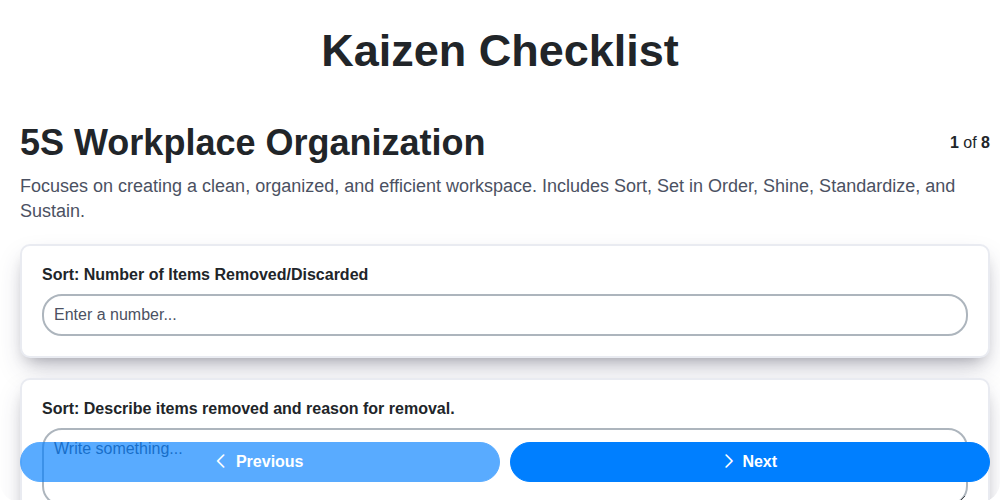
Kaizen Checklist Template: Your Path to Continuous Improvement

Machine Safety Audit Checklist: Your Guide to a Safer Manufacturing Workplace
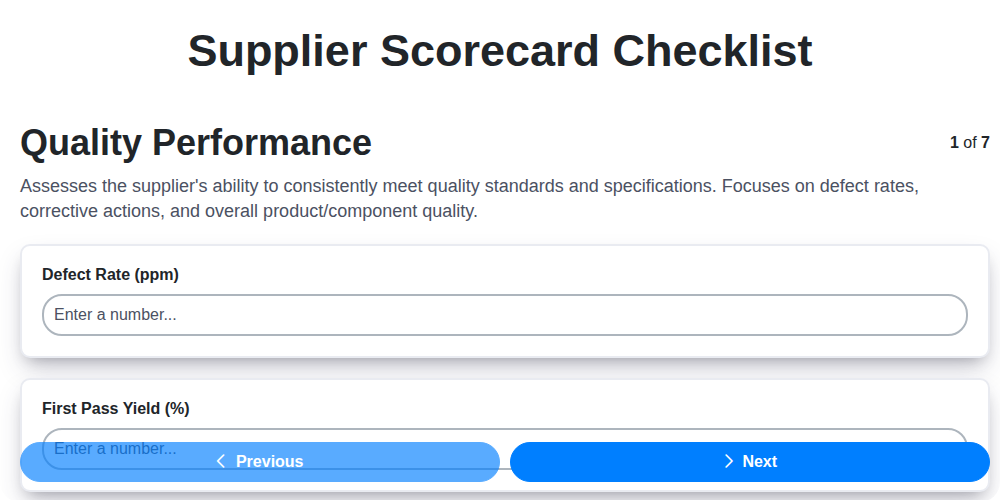
Mastering Supplier Performance: Your Free Supplier Scorecard Checklist Template
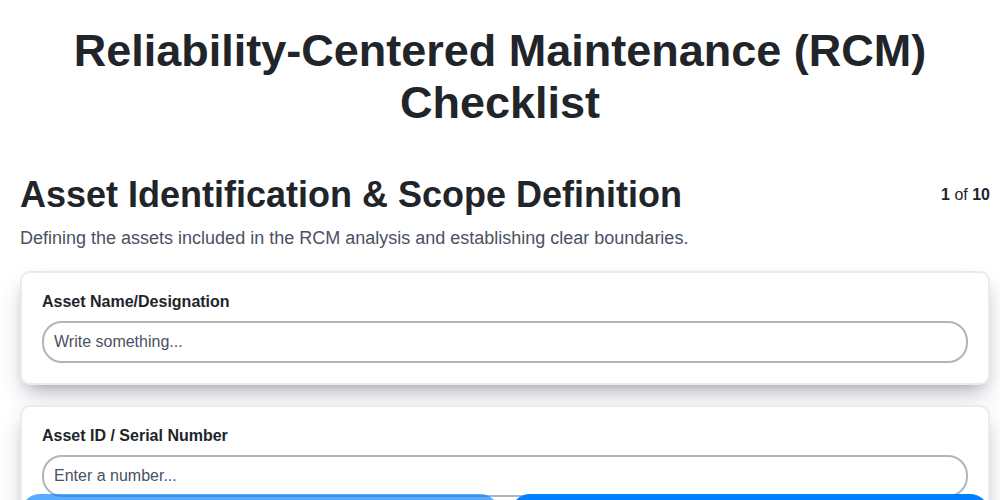
Your Ultimate RCM Checklist Template: A Step-by-Step Guide

LPA Checklist Template: Your Guide to Layered Process Audits

Your Ultimate Lockout/Tagout (LOTO) Checklist Template

Your Ultimate FSC 22000 Checklist Template
Quality Control Inspection Checklist Template: Prevent Defects & Improve Manufacturing Processes
Need help with
Manufacturing?
Have a question? We're here to help. Please submit your inquiry, and we'll respond promptly.