Data Privacy Policy Compliance: Your Essential Checklist Template
Published: 08/23/2025 9:00 PM Updated: 12/13/2025 8:22 AM
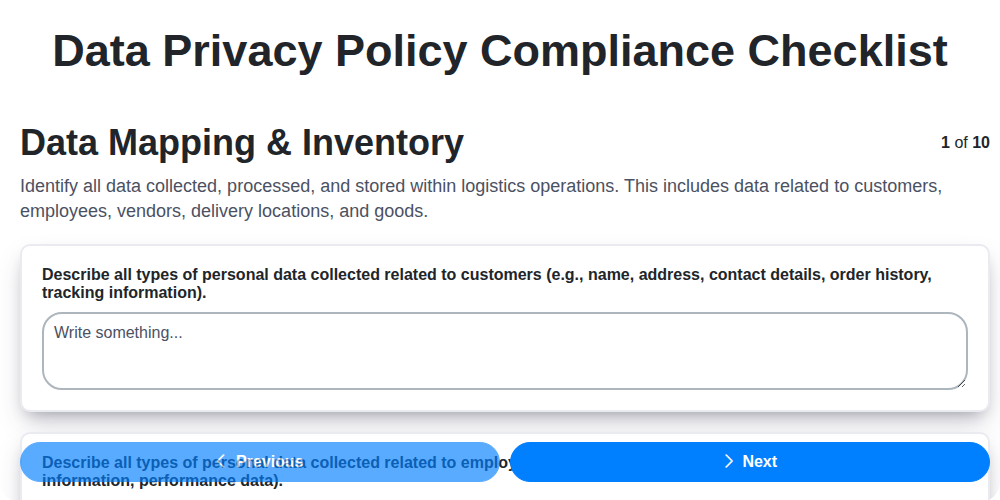
Table of Contents
- Introduction: Why Data Privacy Policy Compliance Matters
- Understanding the Regulatory Landscape
- Step 1: Data Mapping and Inventory - Knowing Your Data
- Step 2: Crafting Clear and Compliant Privacy Notices
- Step 3: Managing Data Subject Rights Effectively
- Step 4: Implementing Robust Data Security Measures
- Step 5: Vendor and Third-Party Risk Management
- Step 6: Navigating Cross-Border Data Transfers
- Step 7: Employee Training and Awareness: A Foundation for Compliance
- Step 8: Building a Data Breach Response Plan
- Step 9: Establishing Comprehensive Record-Keeping Practices
- Step 10: Regular Policy Review and Updates
- Step 11: Leveraging Technology for Compliance Automation
- Step 12: Measuring and Reporting on Compliance Progress
- Resources & Links
TLDR: Feeling overwhelmed by data privacy regulations like GDPR or CCPA? This checklist template breaks down compliance into 10 manageable steps - from mapping your data to training employees - so you can protect your customers, avoid hefty fines, and demonstrate your commitment to ethical data practices. Download it now and simplify your compliance journey!
Introduction: Why Data Privacy Policy Compliance Matters
In today's digital landscape, data is the new currency. Organizations collect, process, and store vast amounts of personal information to operate, personalize experiences, and drive business growth. However, this reliance on data comes with significant responsibility. A robust data privacy policy isn't just about ticking boxes or avoiding fines; it's about building trust with your customers, safeguarding their rights, and upholding ethical data handling practices. Failing to prioritize data privacy compliance can result in severe legal and financial penalties, reputational damage, and a loss of customer confidence. This isn't merely a legal obligation; it's a fundamental component of responsible business conduct in the 21st century.
Understanding the Regulatory Landscape
Navigating the world of data privacy can feel like deciphering a constantly shifting map. Several key regulations form the bedrock of modern compliance, each with its own nuances and enforcement mechanisms. The General Data Protection Regulation (GDPR), originating in the European Union, serves as a global benchmark, influencing privacy laws worldwide. Its principles of transparency, consent, and data subject rights have become increasingly adopted in other jurisdictions. In the United States, the California Consumer Privacy Act (CCPA) and its successor, the California Privacy Rights Act (CPRA), grant California residents significant control over their personal information. Similar legislation is emerging in other states, creating a patchwork of regulations across the nation. Beyond these headline acts, numerous sector-specific laws, such as HIPAA for healthcare and COPPA for children's online privacy, add further complexity. Understanding the interplay of these regulations - which ones apply to your business, and how they interact - is the first crucial step towards achieving data privacy compliance. Staying informed about upcoming changes and interpretations is equally vital, as the regulatory landscape continues to evolve.
Step 1: Data Mapping and Inventory - Knowing Your Data
Before you can even begin crafting a compliant privacy policy, you need a comprehensive understanding of what data you's collecting, processing, and storing. This isn't just about names and addresses - it's about every piece of personal data, including seemingly innocuous information like IP addresses, device identifiers, online browsing behavior, and purchase history. Think of it as a deep dive into your data ecosystem.
A thorough data map identifies the origin of the data (e.g., website forms, mobile app, third-party integrations), the purpose for which it's collected (e.g., marketing, customer service, analytics), where it's stored (servers, cloud platforms, databases), and who has access to it. This process reveals potential risks, overlaps, and areas where data processing activities might not align with legal requirements.
Why is this so important?
- Identifies Scope: It clarifies the scope of your data privacy obligations.
- Risk Mitigation: Highlights vulnerabilities and potential compliance gaps.
- Foundation for Compliance: Provides a solid base for developing appropriate privacy notices and consent mechanisms.
- Efficiency: Enables targeted privacy training and security measures.
Practical Steps:
- Form a Data Mapping Team: Include representatives from IT, legal, marketing, and customer service.
- Create a Data Inventory Spreadsheet: Document data types, sources, purpose, storage locations, and access controls.
- Interview Key Stakeholders: Gather information from different departments.
- Review Existing Systems: Examine all data collection and processing systems.
- Regularly Update the Map: Data flows change; keep your map current.
Don't underestimate this crucial first step - a well-executed data map is the cornerstone of a robust data privacy program.
Step 2: Crafting Clear and Compliant Privacy Notices
Your privacy notice - often called a privacy policy - is the cornerstone of transparency and consent. It's how you inform users about what data you collect, why you collect it, how you use it, and their rights regarding that data. A poorly written or incomplete notice can undermine your entire compliance effort and leave you vulnerable to legal challenges.
Here's what goes into crafting a notice that's both clear and compliant:
- Plain Language is Paramount: Ditch the legal jargon! Write in clear, concise language that the average user can understand. Imagine explaining your practices to a non-technical friend.
- Be Specific: Generic statements like we collect information you provide aren't enough. Detail exactly what data you collect (e.g., name, email address, location data, browsing history). Categorize data types for clarity.
- Purpose of Collection: Clearly state why you're collecting the data. Are you using it for order processing, marketing, analytics, or something else? Be honest and transparent.
- Data Sharing Practices: If you share data with third parties (e.g., vendors, advertising partners), explicitly state who they are and why you share the data.
- User Rights: Outline the rights users have regarding their data - the right to access, rectify, erase, restrict processing, and object. Explain how they can exercise those rights.
- Contact Information: Provide clear contact information for users to reach out with questions or concerns. Include a designated privacy contact.
- Cookie Policy (if applicable): If your website uses cookies, provide a separate cookie policy that explains what cookies are, how they are used, and how users can manage their cookie preferences.
- Regular Updates: Commit to regularly reviewing and updating your privacy notice to reflect changes in your data processing practices or legal requirements. Date the notice and prominently display the last updated date.
Remember, a well-crafted privacy notice isn't just about ticking a compliance box; it's about building trust with your users.
Step 3: Managing Data Subject Rights Effectively
Responding to data subject rights requests - access, rectification, erasure, portability, and objection - isn't just a legal obligation; it's a critical opportunity to build trust and demonstrate a commitment to privacy. A disorganized or inefficient process can lead to frustration, regulatory scrutiny, and reputational damage.
Here's how to build a robust system for effectively managing these requests:
- Centralized Request Portal: Implement a dedicated portal or system for receiving, tracking, and managing data subject requests. This ensures consistency and accountability.
- Defined Timelines: Regulations like GDPR mandate specific response timelines (e.g., one month). Establish internal procedures to meet these deadlines without compromising accuracy.
- Verification & Identification: Implement a rigorous verification process to confirm the identity of the requester. This safeguards data security and prevents unauthorized access.
- Clear Internal Roles: Assign specific roles and responsibilities for handling different aspects of the request lifecycle, from initial receipt to final response.
- Documentation & Audit Trail: Meticulously document all steps taken in response to a request, creating a comprehensive audit trail for regulatory purposes.
- Training & Awareness: Equip your staff with the knowledge and skills to handle data subject requests professionally and efficiently.
- Automated Responses: Consider using automation tools to acknowledge receipt of requests and provide estimated response times.
- Review & Improvement: Regularly review your data subject rights management processes and identify areas for improvement.
Proactive communication and transparency are key. Clearly explain your procedures on your website and provide easy-to-use channels for submitting requests. By prioritizing data subject rights, you strengthen your privacy posture and foster a culture of respect for individual privacy.
Step 4: Implementing Robust Data Security Measures
Data security isn't just about preventing external threats; it's a layered approach that encompasses people, processes, and technology. A robust data security posture extends far beyond simply having a firewall. It's about creating a culture of security and implementing multiple, overlapping defenses to minimize risk.
Here's a deeper dive into the crucial security measures you should be implementing:
- Encryption at Rest and in Transit: Encrypt sensitive data both when it's stored (at rest) and when it's being transmitted (in transit). This makes data unreadable even if it's accessed without authorization.
- Access Controls & Least Privilege: Implement strict access controls, granting users only the minimum level of access necessary to perform their duties. Regularly review and update access permissions. Multi-Factor Authentication (MFA) is a must.
- Vulnerability Management: Conduct regular vulnerability scans and penetration testing to identify and remediate weaknesses in your systems. Patching is critical - stay on top of software updates.
- Data Loss Prevention (DLP): Consider DLP solutions to monitor and control the movement of sensitive data, preventing unauthorized transfers.
- Network Segmentation: Divide your network into segments to isolate critical systems and limit the impact of potential breaches.
- Regular Security Audits: Conduct periodic security audits to assess the effectiveness of your controls and identify areas for improvement.
- Incident Detection & Response: Implement systems and processes for detecting and responding to security incidents promptly. This includes having an Incident Response Plan (IRP) in place and regularly testing it.
- Employee Training: Data security is everyone's responsibility. Provide regular training to employees on data security best practices, phishing awareness, and incident reporting procedures.
Step 5: Vendor and Third-Party Risk Management
Your organization's commitment to data privacy doesn't end at your own internal processes. You're also responsible for the privacy practices of the vendors and third-party service providers who handle your customer data. This is a critical area often overlooked, and a breach stemming from a vendor's inadequate security can have devastating consequences for your reputation and legal standing.
Beyond the Contract: A Holistic Approach
Simply including a standard data processing agreement (DPA) in a contract isn't enough. While a DPA is vital, it's just the foundation. A truly robust vendor risk management program involves ongoing due diligence and monitoring. This includes:
- Risk Assessments: Conduct thorough risk assessments to identify potential vulnerabilities and privacy gaps in vendor practices. Consider factors like data security certifications (e.g., ISO 27001, SOC 2), data residency, and the vendor's overall commitment to privacy.
- Contractual Obligations: Go beyond standard clauses. Specify clear and measurable privacy obligations within contracts, including requirements for data security, breach notification, and audit rights.
- Ongoing Monitoring: Don't set it and forget it. Regularly monitor vendor compliance through audits, questionnaires, and security reviews. This includes staying informed about any data breaches or incidents involving your vendors.
- Right to Audit: Include a clause that grants you the right to audit your vendor's data processing activities to verify compliance.
- Tiered Risk Levels: Categorize your vendors based on the sensitivity of data they handle and the level of access they have. This allows you to focus your risk management efforts on the highest-risk vendors.
Remember, your organization is only as strong as its weakest link. Proactive vendor risk management is essential for safeguarding your customers' data and maintaining a trusted brand reputation.
Step 6: Navigating Cross-Border Data Transfers
Moving personal data across borders is a common reality for businesses operating in a globalized world. However, it's also a significant area of regulatory scrutiny. Different countries have varying levels of data protection, and transferring data from a jurisdiction with strong protections (like the EU under GDPR) to one with weaker protections can raise serious legal concerns.
The core principle here is maintaining a comparable level of protection for personal data, regardless of where it resides. Several mechanisms exist to facilitate these transfers while adhering to regulatory requirements. Let's break down some key approaches:
- Standard Contractual Clauses (SCCs): These are pre-approved contractual clauses issued by data protection authorities (like the European Commission) that impose data protection obligations on both the data exporter and the data importer. SCCs provide a legal basis for data transfers when properly implemented. Note: Recent updates to SCCs have been introduced, and using the latest version is critical.
- Binding Corporate Rules (BCRs): BCRs are a more complex mechanism designed for multinational corporations that regularly transfer personal data within their group. They require approval from a supervisory authority and demonstrate a comprehensive data protection framework.
- Adequacy Decisions: Some countries, like Canada and Japan, have been deemed by the European Commission to have adequate levels of data protection. Transfers to these countries are generally permitted without further safeguards.
- Derogations (Exceptions): In limited circumstances, data transfers may be permissible under specific derogations outlined in regulations, such as when the transfer is necessary for the performance of a contract or for reasons of public interest. These are often narrowly construed and should be used with caution.
Key Considerations:
- Transfer Impact Assessments (TIAs): Following the Schrems II decision, performing a Transfer Impact Assessment is now vital. This assessment examines the laws and practices of the recipient country to ensure that the data is genuinely protected and that individuals' rights are upheld.
- Due Diligence: It's crucial to conduct thorough due diligence on your data importers and understand their data security practices.
- Transparency: Clearly inform individuals about data transfers and the safeguards in place to protect their data.
Staying abreast of the latest guidance from data protection authorities and seeking legal advice is essential to ensure compliance with cross-border data transfer regulations.
Step 7: Employee Training and Awareness: A Foundation for Compliance
Employee training isn't just another box to tick; it's the bedrock of a robust data privacy program. A policy on paper is useless if your team doesn't understand its principles and how to apply them in their daily work. Think of it as building a house - a strong foundation is essential to prevent it from crumbling.
This training needs to go beyond simply reciting the policy; it should cultivate a privacy-conscious culture where data protection is everyone's responsibility. This means:
- Regular, Engaging Training: Move beyond annual, dry presentations. Consider interactive modules, real-life scenarios, and quizzes to keep employees engaged and reinforce key concepts. Microlearning-short, focused training sessions-can be particularly effective.
- Tailored Content: Different departments have different data privacy responsibilities. Marketing teams need to understand consent requirements, while HR needs to be aware of data minimization principles when handling employee information.
- Phishing Simulations: Regularly test employees' ability to identify and report phishing attempts-a major gateway for data breaches.
- Clear Reporting Channels: Provide a clear and accessible channel for employees to report potential privacy violations or concerns. Make sure they feel safe doing so, without fear of reprisal.
- Ongoing Reinforcement: Privacy is not a one and done event. Regularly reinforce key concepts through newsletters, intranet posts, and quick reminders.
- Leadership Buy-in: When leadership actively champions data privacy, it sends a powerful message to the entire organization.
By investing in comprehensive employee training and awareness programs, you're not just complying with regulations-you're building a culture of trust and safeguarding your organization's most valuable asset: data.
Step 8: Building a Data Breach Response Plan
A data breach is a harsh reality for many organizations. Hoping it won't happen isn't a strategy - preparation is. A well-defined Data Breach Response Plan (DBRP) is your roadmap for minimizing damage, containing the breach, and restoring operations swiftly and effectively.
Your DBRP should encompass several key elements:
- Identification and Assessment: Clearly define what constitutes a data breach within your organization. Establish procedures for reporting suspected breaches. Outline steps for assessing the scope and impact of a confirmed breach.
- Containment: Immediate steps to limit further data loss. This could involve isolating affected systems, disabling compromised accounts, and changing passwords.
- Notification Procedures: Outline who needs to be notified (internal teams, legal counsel, regulators, affected individuals). Define notification timelines based on legal requirements and severity of the breach. Create pre-approved communication templates to expedite the notification process.
- Remediation: Steps to address the root cause of the breach, patching vulnerabilities, and enhancing security controls to prevent recurrence.
- Recovery: Restoring affected systems and data, and resuming normal business operations.
- Post-Incident Activity: Conduct a thorough post-incident review to identify lessons learned and improve the DBRP.
Regular testing and simulations of your DBRP are crucial. Tabletop exercises, mock breach scenarios, and full-scale simulations will identify weaknesses and ensure your team knows how to respond effectively under pressure. Don't wait for a breach to happen; proactively build and refine your defense.
Step 9: Establishing Comprehensive Record-Keeping Practices
Record-keeping isn't just about ticking a box; it's about demonstrating accountability and providing a clear audit trail in the event of an inquiry or investigation. A robust record-keeping system allows you to prove you're doing what you say you're doing regarding data privacy.
What should you document? The list is extensive, but here's a breakdown of key areas:
- Data Inventory Records: Maintain detailed logs of the personal data you collect, process, and store, including data types, sources, purpose, and retention periods.
- Consent Records: Preserve evidence of consent obtained from data subjects, including dates, methods of consent (explicit, implied), and versions of privacy notices presented.
- Data Subject Rights Requests: Log all requests received from data subjects (access, rectification, erasure, etc.), along with responses provided, timelines met, and relevant communications.
- Security Incident Reports: Document all data breaches, security incidents, and vulnerability assessments, including details of the incident, remediation efforts, and lessons learned.
- Vendor Assessments & Contracts: Keep records of due diligence assessments conducted on vendors and third-party processors, as well as copies of contracts outlining data privacy obligations.
- Training Records: Maintain records of employee training sessions, including dates, topics covered, and attendee lists.
- Policy Updates: Track all changes made to your data privacy policy, including dates, reasons for changes, and approvals.
- Data Processing Agreements (DPAs): Securely store and track all DPAs with processors.
Best Practices for Record-Keeping:
- Centralized System: Utilize a centralized document management system to ensure records are organized and accessible.
- Retention Schedule: Establish a clear data retention schedule to comply with legal requirements and minimize storage costs.
- Secure Storage: Store records securely to protect them from unauthorized access and data loss.
- Accessibility: Ensure records are easily accessible to authorized personnel for auditing and compliance purposes.
- Version Control: Implement version control to track changes made to records and ensure accuracy.
Step 10: Regular Policy Review and Updates
Data privacy isn't a "set it and forget it" endeavor. Laws evolve, your business changes, and technology advances - all impacting how you handle personal data. A static privacy policy quickly becomes obsolete and exposes you to unnecessary risk.
That's why regular review and updates are crucial. We recommend a minimum of an annual review, but more frequent assessments (quarterly or even monthly) are advisable, especially if your organization undergoes significant changes, like implementing new technologies, expanding into new markets, or experiencing shifts in data processing activities.
During each review, consider:
- Legislative Updates: Are there new or amended data privacy laws you need to address? (e.g., new state laws, international regulations)
- Business Changes: Have your data processing activities changed? (e.g., new products, services, or marketing campaigns)
- Technology Updates: Are you using new technologies that impact data collection, storage, or security? (e.g., AI, cloud services, IoT devices)
- Security Breaches & Incidents: Did any security incidents or breaches occur that require adjustments to your policies or procedures?
- Feedback: Have you received feedback from users, employees, or stakeholders that suggests areas for improvement?
Document all changes made to your privacy policy and retain previous versions for audit purposes. A version history helps demonstrate ongoing compliance and accountability. Assign clear responsibility for ongoing monitoring and policy updates to ensure this critical task doesn't fall by the wayside.
Step 11: Leveraging Technology for Compliance Automation
Manual data privacy compliance is a recipe for errors, inconsistencies, and frustration. Thankfully, technology offers powerful solutions to automate many of the tedious and repetitive tasks involved. Several categories of tools can significantly ease your burden:
- Data Discovery & Mapping Tools: These platforms automatically scan your systems to identify personal data, classify it, and create data flow diagrams. This eliminates the guesswork involved in data mapping and provides a clear picture of your data landscape.
- Consent Management Platforms (CMPs): CMPs simplify the process of obtaining, managing, and documenting user consent for data collection and processing. They often integrate with your website and marketing automation systems.
- Data Subject Access Request (DSAR) Automation: Automated DSAR tools streamline the process of receiving, processing, and responding to user requests for access, rectification, or erasure of their personal data.
- Policy Management Software: Centralize your data privacy policies, procedures, and training materials in a single platform, making it easier to manage updates and ensure consistent application across your organization.
- Security Information and Event Management (SIEM) Systems: Integrate with your security infrastructure to monitor data access and identify potential privacy breaches.
While these tools offer significant benefits, it's crucial to remember they're not a silver bullet. Successful implementation requires careful planning, integration with existing systems, and ongoing oversight to ensure accuracy and compliance. Consider a phased approach, starting with automating high-impact, time-consuming tasks, and gradually expanding your automation efforts.
Step 12: Measuring and Reporting on Compliance Progress
Compliance isn't a one-time event; it's an ongoing process requiring continuous monitoring and improvement. Simply having a data privacy policy in place isn't enough - you need to be able to demonstrate that it's effective. This is where measuring and reporting on your compliance progress becomes crucial.
What to Measure:
- Training Completion Rates: Track the percentage of employees who have completed mandatory privacy training.
- Data Subject Request Response Times: Monitor how quickly you're responding to access, rectification, and erasure requests.
- Incident Detection & Resolution Times: Measure the time it takes to identify, contain, and resolve data breaches.
- Vendor Compliance Scores: Regularly assess the privacy practices of your third-party vendors.
- Policy Adherence: Conduct periodic audits to assess whether employees are following established procedures.
- Data Mapping Accuracy: Verify that your data inventory remains current and accurate.
Reporting Best Practices:
- Regular Cadence: Establish a reporting schedule (e.g., quarterly, annually).
- Key Performance Indicators (KPIs): Focus on a manageable set of KPIs that reflect your most critical compliance areas.
- Clear and Concise Reports: Present findings in an easy-to-understand format for stakeholders.
- Actionable Insights: Identify trends, highlight areas for improvement, and propose corrective actions.
- Executive Summaries: Provide brief overviews of compliance status for senior management.
- Document Everything: Keep detailed records of all measurements, reports, and corrective actions taken.
By actively monitoring and reporting on your compliance progress, you not only strengthen your privacy posture but also build trust with customers and regulators.
Resources & Links
- GDPR Official Website: The official website of the General Data Protection Regulation (GDPR), providing detailed information, guidelines, and resources.
- International Association of Privacy Professionals (IAPP): A leading resource for privacy professionals, offering certifications, training, and industry best practices.
- Federal Trade Commission (FTC): The FTC provides resources and guidance on data privacy and security, especially relevant for US businesses.
- Information Commissioner's Office (ICO): The UK's independent body for data protection, offering guidance and enforcement related to GDPR and UK data protection law.
- Irish Data Protection Commission (DPC): The DPC is Ireland's independent authority for the protection of personal data and advises the Irish Government on data protection and privacy matters.
- PrivacyPolicies.com: Offers a variety of privacy policy templates and resources, useful for creating compliant notices. (Note: Requires careful review and adaptation for specific needs.)
- OnePrivacy: A data privacy management platform offering various tools and services to assist with data mapping, consent management, and compliance reporting.
- TrustArc: Provides privacy compliance software and services, including data inventory, privacy risk assessments, and consent management.
- Cookiebot: Specializes in cookie consent management, helping websites comply with regulations like GDPR and CCPA.
- Termly: Provides privacy policy generators and other privacy compliance tools. (Note: Requires careful review and adaptation for specific needs.)
- National Institute of Standards and Technology (NIST): Provides frameworks and guidelines for cybersecurity and data security, relevant to data privacy compliance.
- Electronic Frontier Foundation (EFF): A non-profit organization focused on digital rights and privacy, offering resources and advocating for privacy-enhancing technologies.
- DLA Piper: A global law firm with expertise in data privacy and security. Their website offers articles and insights on compliance requirements. (Legal Disclaimer - This is not legal advice.)
- Kirkland & Ellis: Another global law firm with expertise in data privacy and security. Provides analysis and updates on regulations. (Legal Disclaimer - This is not legal advice.)
- German Data Protection Conference (GDC): Provides detailed guidance on the implementation of GDPR and other data protection regulations, particularly relevant for businesses operating in or serving individuals in Germany.
Frequently Asked Questions
What is a Data Privacy Policy and why do I need one?
A Data Privacy Policy explains how your organization collects, uses, stores, and protects personal data. It's legally required in many jurisdictions (like GDPR, CCPA, etc.) and builds trust with your users. Failing to comply can result in hefty fines and reputational damage.
Who needs a Data Privacy Policy?
Almost every organization that collects or processes personal data. This includes businesses of all sizes, websites, apps, and online services. Even if you're a small business, you likely need one.
What's included in a good Data Privacy Policy checklist template?
A comprehensive checklist will cover key areas like: defining personal data, outlining data collection methods, detailing data usage purposes, explaining data storage and security measures, describing user rights (access, deletion, etc.), specifying third-party data sharing practices, and detailing contact information for privacy inquiries. It should also address legal jurisdiction considerations.
Where can I find a Data Privacy Policy checklist template?
Our article provides a detailed checklist template that you can download and customize. Several online resources also offer templates, but ensure they are up-to-date and compliant with relevant laws. Always review and tailor any template to your specific business practices.
How do I customize the Data Privacy Policy checklist template?
Carefully review each item in the checklist and assess how it applies to your organization. Modify the language to accurately reflect your data collection and processing activities. Add any additional items specific to your business. Seek legal counsel for clarification if needed.
What's the difference between a Data Privacy Policy and a Terms of Service?
A Data Privacy Policy focuses specifically on how you handle personal data. A Terms of Service outlines the rules and regulations for using your website or service. While they often work together, they address different aspects of user interaction.
How often should I review and update my Data Privacy Policy?
Ideally, review your policy at least annually, or more frequently if there are significant changes to your business practices, relevant laws, or technologies. Changes in user expectations also warrant review.
What are some common legal frameworks that influence Data Privacy Policies?
Key frameworks include GDPR (Europe), CCPA/CPRA (California), PIPEDA (Canada), and various state-level privacy laws. It's crucial to identify which frameworks apply to your organization based on where you operate and where your users are located.
What are user rights regarding their data, and how should I address them in my policy?
User rights commonly include the right to access, correct, delete, restrict processing of, and object to the processing of their personal data. Your policy should clearly explain how users can exercise these rights and the process your organization follows to respond to requests.
Can I use the checklist template as-is, or do I need legal advice?
While the checklist template provides a starting point, it's highly recommended to consult with legal counsel to ensure your Data Privacy Policy is fully compliant with all applicable laws and accurately reflects your organization's practices. It's not a substitute for professional legal advice.
Found this Article helpful?
Comments
There are no comments yet. Be the first to add one!
Logistics Management Solution Demo
Tired of shipping delays, lost packages, and inefficient routes? ChecklistGuro's Work OS platform streamlines your entire logistics operation, from warehouse management and order fulfillment to route optimization and delivery tracking. Gain real-time visibility, reduce costs, and improve customer satisfaction. Learn how ChecklistGuro can transform your logistics business!
Related Articles
Driver Performance Evaluation: A Checklist Template for Success
Delivery Confirmation Audit: Your Checklist Template for Process Excellence
Master Your Returns: The Ultimate Returns Processing Efficiency Audit Checklist
Mastering Your Fleet: A Vehicle Maintenance Log Review Template
Supply Chain Risk Assessment: Your Essential Checklist Template
Your Pallet Inspection & Maintenance Checklist Template
Fuel Efficiency Monitoring: Your Checklist Template for Savings
The Ultimate Refrigerated Cargo Temperature Control Checklist Template
We can do it Together
Need help with
Logistics?
Have a question? We're here to help. Please submit your inquiry, and we'll respond promptly.