Electrical Safety Inspection Checklist Template: Your Guide to a Safer Workplace
Published: 08/23/2025 Updated: 12/13/2025
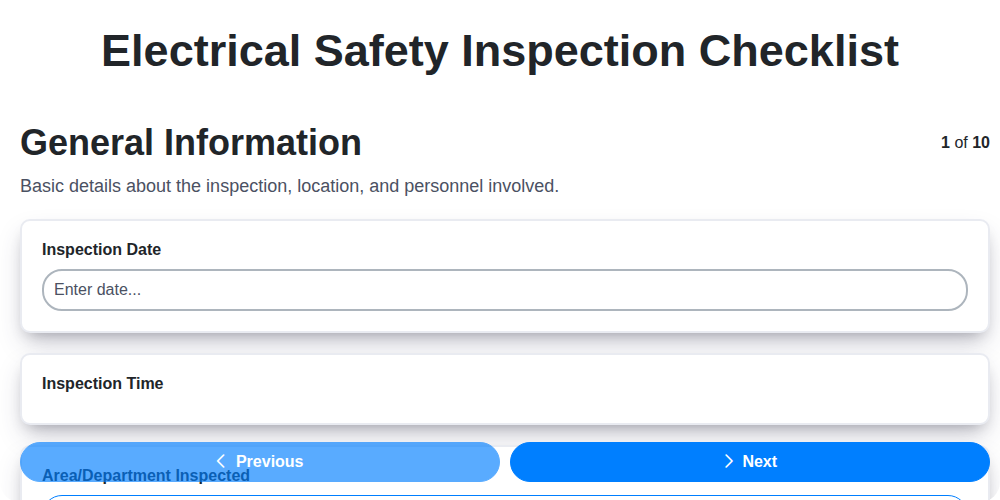
Table of Contents
- Introduction: Why Electrical Safety Matters
- Understanding Your Legal Obligations
- Pre-Inspection Planning and Preparation
- General Information & Documentation
- Visual Inspection of Electrical Equipment
- Grounding and Bonding System Assessment
- Overcurrent Protection (Breakers & Fuses) Review
- Lockout/Tagout (LOTO) Procedure Verification
- Ground Fault Circuit Interrupters (GFCIs) and AFCI Testing
- Work Area Safety and Housekeeping
- Emergency Procedures and Signage
- Employee Training and Competency Records
- Record Keeping and Documentation
- Post-Inspection Follow-Up and Corrective Actions
- Resources & Links
TLDR: Stay safe and compliant! This checklist template helps you systematically inspect your workplace's electrical systems - from wiring to safety devices - to prevent accidents, fires, and costly downtime. It's easy to use and ensures you're covering all critical areas for a safer work environment.
Introduction: Why Electrical Safety Matters
Electricity is undeniably a cornerstone of modern life, powering our homes, businesses, and the very fabric of our society. Yet, its immense power comes with inherent risks. Ignoring those risks - whether through negligence or lack of awareness - can have devastating consequences. Electrical incidents aren't just inconvenient; they can result in serious injuries, property damage, and even fatalities.
Beyond the immediate dangers, electrical hazards can disrupt operations, leading to costly downtime and lost productivity. A single spark can ignite a fire, and the resulting chaos and financial burden can cripple a business.
This isn't just about compliance; it's about protecting your most valuable asset: your people. A robust electrical safety program fosters a culture of safety, reduces risk, and demonstrates a commitment to the well-being of your workforce. This checklist is your first step toward creating a safer, more reliable, and ultimately more successful environment.
Understanding Your Legal Obligations
Electrical safety isn't just about preventing accidents; it's about fulfilling your legal responsibilities. Failure to comply with regulations can result in hefty fines, legal action, and, most importantly, put employees and property at risk. Let's break down some key areas.
OSHA's Role (United States): The Occupational Safety and Health Administration (OSHA) sets and enforces safety standards in the U.S. Their 1910 Subpart S covers electrical safety, covering everything from general requirements to specific hazards. This includes requirements for qualified persons, lockout/tagout procedures (29 CFR 1910.147), and the safe use of electrical equipment. Familiarize yourself with these standards - they've been updated over time, so ensure you're referencing the latest version.
NFPA 70E (Standard for Electrical Safety in the Workplace): While not a law itself, NFPA 70E is a widely adopted standard that provides detailed guidance on electrical safety practices. Many organizations adopt NFPA 70E as a benchmark for their safety programs. Compliance demonstrates a commitment to best practices.
State and Local Regulations: Don't overlook state and local laws. These may impose stricter requirements or address specific hazards relevant to your industry or location. Building codes often include electrical safety requirements.
Liability and Insurance: Your insurance provider may have specific requirements for electrical safety practices. Non-compliance could impact your coverage. Demonstrating proactive measures strengthens your position in the event of an incident.
Documentation is Key: Maintain meticulous records of inspections, training, equipment maintenance, and corrective actions. This documentation serves as evidence of your commitment to safety and helps demonstrate due diligence.
Staying Informed: Electrical codes and standards are constantly evolving. Subscribe to industry publications, attend training sessions, and consult with qualified professionals to stay abreast of the latest changes and ensure ongoing compliance.
Pre-Inspection Planning and Preparation
A thorough electrical safety inspection isn't just about showing up with a flashlight. Effective pre-inspection planning and preparation are critical for ensuring a safe, efficient, and ultimately more valuable assessment. Rushing into an inspection without proper groundwork can miss critical hazards, create unnecessary delays, and even put inspectors at risk.
Here's what you need to do before the inspection day arrives:
- Define Scope & Objectives: Clearly outline the scope of the inspection. What specific equipment, areas, and systems are included? What are the goals? (e.g., compliance audit, hazard identification, preventative maintenance assessment).
- Gather Relevant Documentation: Collect existing electrical drawings, wiring diagrams, equipment manuals, previous inspection reports, and maintenance records. This provides valuable context and helps identify trends.
- Communicate with Stakeholders: Inform relevant personnel (management, operations, maintenance staff) about the upcoming inspection, its purpose, and any potential disruptions. Their cooperation and insights are invaluable.
- Secure Access & Permissions: Obtain necessary permissions to access all areas to be inspected. Coordinate with relevant departments to ensure access isn't restricted.
- Prepare the Area (Lightly): While a deep clean isn't required, ensuring pathways are clear of obstructions and providing adequate lighting will significantly aid the inspection process. Avoid making any changes to the electrical system before the inspection, as this could obscure existing conditions.
- Identify Potential Hazards: Encourage employees to report any known or suspected electrical hazards beforehand. This proactive approach demonstrates a commitment to safety and helps prioritize the inspection focus.
General Information & Documentation
Thorough documentation is the cornerstone of any effective electrical safety program. It's not just about identifying hazards; it's about demonstrating due diligence, tracking progress, and ensuring accountability. This section details the essential information to collect and maintain during and after your electrical safety inspection.
Essential Records to Keep:
- Inspection Date & Time: Recording the precise time of the inspection helps track frequency and identify patterns.
- Inspector Credentials: Clearly identify the inspector's name, qualifications, and certifications. This establishes accountability and demonstrates expertise.
- Location Details: Specify the exact area or equipment inspected. Use a clear and consistent naming convention to avoid confusion. Include room numbers, machine IDs, or zone designations.
- Equipment Inventory: Maintain a detailed list of all electrical equipment included in the inspection. This list should include manufacturer, model number, serial number (if applicable), and date of installation.
- Previous Inspection Review: Before beginning any new inspection, always review the findings and corrective actions from the previous assessment. Verify that all recommendations have been implemented and documented.
- Deviation Reporting: If any part of the inspection process is altered or cannot be performed as planned, document the reason and any potential impact on the assessment.
- Sign-Off Confirmation: Obtain a signature from the person responsible for the area inspected, acknowledging the inspection and understanding any identified issues. This creates a record of awareness and shared responsibility.
- Digital vs. Physical Records: While physical records have their place, consider the efficiency and accessibility of digital record-keeping systems. Cloud-based solutions offer secure storage and easy sharing capabilities, facilitating collaboration and compliance audits.
Properly maintained records aren't just a regulatory requirement; they're a vital tool for continuous improvement in your electrical safety program.
Visual Inspection of Electrical Equipment
A thorough visual inspection is your first line of defense against electrical hazards. Don't rely solely on instruments; your eyes are a powerful tool. Start by systematically scanning all accessible electrical equipment and wiring. Look for any signs of damage, deterioration, or unauthorized modifications.
Here's what to focus on:
- Insulation: Carefully examine insulation on wires, cables, and equipment housings. Cracks, cuts, abrasion, or discoloration are all red flags. Even seemingly minor damage can compromise safety.
- Exposed Conductors: Any exposed wiring presents an immediate shock hazard. These require immediate attention and correction.
- Loose Connections: Check terminals, connectors, and splices for looseness or corrosion. Loose connections generate heat and increase resistance, potentially leading to fires. A gentle tug (with appropriate safety precautions, of course - don't pull on live circuits!) can sometimes reveal loose connections.
- Overheating: Signs of overheating include discoloration (darkening or charring), melting, or a distinctive burning odor. These indicate a problem with current flow and require investigation.
- Physical Damage: Look for any physical damage to equipment - dents, cracks, or broken components. These can compromise the integrity of the equipment and create a potential hazard.
- Improper Labeling: Ensure all equipment is properly labeled with voltage ratings and warning signs. Missing or obscured labels can lead to accidental misuse and dangerous situations.
- Signs of Pests: Rodents and other pests can chew through insulation and damage wiring. Inspect for signs of rodent activity.
Grounding and Bonding System Assessment
A robust grounding and bonding system is the unsung hero of electrical safety, providing a low-resistance path for fault currents to return safely to the source, minimizing the risk of electrical shock and fire. It's more than just a ground rod; it's a network of interconnected components working together.
Our assessment goes beyond a cursory glance. We're looking for:
- Ground Rod Integrity: Checking for corrosion, looseness, and proper depth. Multiple ground rods might be necessary depending on soil conditions and local codes.
- Bonding Jumper Verification: Ensuring that all metal parts of electrical systems and equipment are adequately bonded together using approved bonding jumpers. This includes metallic water pipes, gas lines, and structural steel. We look for proper size and secure connections.
- Continuity Testing: Performing thorough continuity tests to verify the electrical connection along the entire grounding path. This confirms that there are no breaks or high-resistance connections hindering the flow of fault currents.
- Grounding Electrode System Assessment: Analyzing the entire grounding electrode system, considering factors like soil resistivity and the presence of underground metallic structures. We're identifying potential sources of stray currents and ensuring they are properly mitigated.
- Equipment Grounding Conductor (EGC) Inspection: Verifying the condition and proper connection of the EGC, ensuring it's adequately sized to handle fault currents. This includes checking for damage or corrosion.
- Bonding of Exposed Metal Parts: Identifying and verifying the bonding of all exposed metal parts of electrical equipment and systems to minimize touch potential.
Overcurrent Protection (Breakers & Fuses) Review
Overcurrent protection - circuit breakers and fuses - are your last line of defense against electrical fires and equipment damage. Their job is simple: interrupt the flow of electricity when a circuit is overloaded or a short circuit occurs. But are they doing their job effectively?
Why are Breakers and Fuses Important?
Think of them as circuit safety valves. When too much electricity tries to flow through a circuit - due to a faulty appliance, overloaded wiring, or a short circuit - these devices should trip or blow, preventing overheating and potential hazards.
What to Check:
- Correct Sizing: This is critical. A breaker or fuse that's too large won't trip during an overload, potentially allowing excessive heat to build up. Make sure each breaker and fuse is sized appropriately for the circuit it protects, as indicated on the equipment nameplate and circuit diagrams.
- Physical Condition: Visually inspect breakers and fuses. Look for signs of corrosion, discoloration, melting, or damage. A visibly damaged fuse should be replaced immediately.
- Breaker Operation Testing: Breakers should be periodically tested to ensure they trip correctly. Many electricians use a specialized breaker tester, but a simple test involves manually tripping the breaker and verifying it returns to the off position and can be reset. Always follow manufacturer's instructions and safety precautions when testing breakers.
- Fuse Continuity Testing: Fuses have a thin wire that melts and breaks the circuit when overloaded. A multimeter can be used to check for continuity across the fuse - a lack of continuity indicates a blown fuse that needs replacement.
- Labeling: Ensure all breakers and fuses are clearly and accurately labeled to correspond with their associated circuits. This makes troubleshooting much easier and reduces the risk of accidental misidentification.
- Replacement: Always replace blown fuses with the correct amperage rating. Using a higher amperage fuse is a serious safety hazard and can lead to fire. Breakers should also be replaced with the same type and amperage rating.
Lockout/Tagout (LOTO) Procedure Verification
Lockout/Tagout (LOTO) procedures are absolutely critical for preventing accidental energization of equipment during maintenance or servicing. A failed LOTO can result in severe injuries or fatalities. It's not enough to have a LOTO program; you must actively verify its effectiveness. Here's what needs to be examined:
1. Written Procedures - The Foundation:
First, scrutinize your written LOTO procedures. Are they current, comprehensive, and easily accessible to all authorized employees? Do they clearly outline the steps for de-energizing equipment, applying locks and tags, and verifying zero energy state? Procedures should be equipment-specific whenever possible, accounting for variations in machinery.
2. Authorized Personnel & Training Records:
Verify that only authorized employees are permitted to perform LOTO. Maintain meticulous records of training, including dates, content covered, and competency assessments. Refresher training should be conducted periodically to reinforce best practices.
3. Lock and Tag Security:
Examine the security of your locks and tags. Are they serial-numbered and difficult to tamper with? Ensure a system is in place to prevent unauthorized removal of locks. Procedures for tag retrieval upon job completion must be strictly adhered to.
4. Zero Energy Verification:
The most critical step: confirming the equipment is truly de-energized. This isn't just a visual inspection. It involves testing with appropriate tools (voltage meters, etc.) to definitively verify the absence of voltage. Document this verification in the LOTO procedures.
5. Periodic Audits & Program Review:
Regular audits are essential. These should involve observing LOTO procedures in action, reviewing records, and interviewing employees. The entire LOTO program itself should be reviewed periodically (at least annually) to identify areas for improvement and ensure ongoing effectiveness. Investigate any near misses or incidents related to LOTO immediately and implement corrective actions.
Ground Fault Circuit Interrupters (GFCIs) and AFCI Testing
Ground Fault Circuit Interrupters (GFCIs) and Arc Fault Circuit Interrupters (AFCIs) are vital layers of protection against electrical shock and fire. Unlike standard circuit breakers that react to overcurrent, GFCIs monitor the flow of electricity to detect imbalances caused by a ground fault - essentially, electricity taking an unintended path to ground, often through a person. AFCIs, on the other hand, detect dangerous arcing conditions which can be precursors to electrical fires.
Testing Your GFCI:
GFCI outlets and circuit breakers should be tested monthly. The process is simple:
- Press the Test button: This simulates a ground fault and should trip the GFCI, cutting off power.
- Press the Reset button: This restores power to the outlet or circuit.
If the GFCI fails to trip when the "Test" button is pressed, it's faulty and needs to be replaced immediately. Don't rely on an untested GFCI to protect you.
AFCI Testing:
AFCI testing is typically performed during a more comprehensive electrical safety inspection, often annually. Many AFCI circuit breakers have a built-in test function; consult the manufacturer's instructions for specific procedures. If your AFCI doesn't have a built-in test function, a qualified electrician can perform a manual test.
Important Reminders:
- Regular testing is critical for ensuring these devices are functioning correctly.
- If you are uncomfortable performing these tests yourself, always contact a qualified electrician.
- Replace any faulty GFCI or AFCI immediately.
- Keep records of all GFCI and AFCI testing and replacements.
Work Area Safety and Housekeeping
Maintaining a clean, organized, and safe work area is paramount for preventing electrical accidents and ensuring overall productivity. Clutter isn't just unsightly; it can create hazardous conditions that lead to trips, falls, and damage to equipment. Dust, debris, and flammable materials can also pose a serious fire risk near electrical components.
Here's a breakdown of essential work area safety and housekeeping practices:
- Clear Pathways: Keep walkways and access points to electrical panels, equipment, and shut-off switches free from obstructions. A clear path allows for quick and safe access in emergency situations.
- Dust and Debris Control: Regularly clean work areas to remove dust, dirt, and debris. Conductive dust can create a fire hazard, while debris can damage equipment and create tripping hazards. Vacuuming, sweeping, and wiping down surfaces are vital.
- Flammable Material Storage: Properly store flammable liquids and materials away from electrical equipment and in designated, approved containers. Ensure adequate ventilation in storage areas.
- Proper Lighting: Adequate lighting is critical for identifying potential hazards. Ensure work areas are well-lit and that lighting fixtures are in good working order.
- Cord Management: Secure and organize electrical cords to prevent tripping hazards and damage. Use cord covers, cable ties, or raceways to keep cords out of walkways.
- Equipment Placement: Arrange equipment to minimize the risk of accidental contact with electrical components. Provide sufficient space around equipment for maintenance and inspection.
- Regular Inspections: Conduct regular work area inspections to identify and correct any safety hazards. Encourage employee participation in identifying and addressing potential issues.
By prioritizing work area safety and implementing these simple housekeeping practices, you can significantly reduce the risk of electrical accidents and create a safer, more efficient work environment.
Emergency Procedures and Signage
When an electrical emergency strikes, clear and concise communication is paramount. A well-defined emergency plan, coupled with readily visible signage, can dramatically reduce panic and facilitate a swift and safe response.
Emergency Contact Information: A readily accessible list of emergency contacts - including facility management, local emergency services (911), and designated electrical personnel - is non-negotiable. This list should be prominently displayed near electrical panels, in break rooms, and other high-traffic areas. Regularly update the contact information to ensure accuracy.
Evacuation Routes and Assembly Points: Clearly marked evacuation routes, using internationally recognized symbols (like the running figure), are essential for guiding personnel to safety. Assembly points should be designated and clearly identified, allowing for a headcount and ensuring everyone's accounted for. Conduct regular drills to familiarize employees with these routes and procedures.
Emergency Shut-Off Locations: Properly labeled emergency shut-off switches - for main power, specific equipment, or affected areas - must be clearly marked and accessible. Training should cover the location and operation of these switches, but emphasize that only authorized and trained personnel should activate them.
Warning Signage: Utilize appropriate warning signs to communicate potential electrical hazards. These include signs indicating high voltage areas, restricted access zones, and the presence of potentially dangerous equipment. Ensure signs are visible, legible, and comply with relevant safety standards (e.g., ANSI standards). Regularly inspect signage to ensure it remains in good condition and is not obscured.
Specific Emergency Scenarios: Tailor your signage and procedures to address common electrical emergency scenarios within your facility. This might include procedures for arc flash incidents, electrical fires, or equipment malfunction. Consider developing scenario-specific checklists for rapid response.
Regular Review & Drills: Emergency procedures and signage aren't static. Regularly review and update them based on changes to equipment, processes, or regulations. Conduct periodic drills to test the effectiveness of your plan and ensure everyone knows what to do in an emergency.
Employee Training and Competency Records
Robust electrical safety isn't just about equipment; it's about the people operating and maintaining it. Effective employee training and meticulously maintained competency records are cornerstones of a safe working environment. Simply providing training isn't enough; you need a system to verify understanding and ensure that skills remain sharp.
What Should Be Included in Training Records?
Your training records should go beyond a simple attendance list. Document the following for each employee:
- Training Date & Duration: When the training took place and how long it lasted.
- Training Content: A clear outline of the topics covered (e.g., Lockout/Tagout procedures, GFCI testing, hazard recognition).
- Assessment Results: Records of any tests, quizzes, or practical demonstrations completed to assess comprehension. This could be a passing score on a written exam or successful completion of a simulated LOTO procedure.
- Trainer Qualifications: Details of the trainer's credentials and experience.
- Refresher Training Dates: Track when refresher training is scheduled and completed. Electrical safety practices and regulations change, making periodic updates essential.
- Task-Specific Training: Document training specific to the electrical tasks an employee is authorized to perform. This is particularly critical for roles involving higher risk.
Beyond the Basics: Maintaining Competency
Regularly evaluate employee competency, not just through formal training. Consider:
- Observation: Supervisors should observe employees performing electrical tasks and provide feedback.
- Performance Reviews: Incorporate electrical safety performance into regular performance reviews.
- Incident Investigations: Analyze any incidents or near misses to identify training gaps and areas for improvement.
Retention and Accessibility
Keep training records organized, easily accessible, and retained for the required duration as mandated by regulations. Electronic record-keeping is highly recommended for ease of search and access. A well-maintained training program demonstrates a commitment to safety and provides valuable documentation in the event of an audit or incident investigation.
Record Keeping and Documentation
Maintaining meticulous records is the cornerstone of a robust electrical safety program. It's not enough to simply perform inspections; you need to demonstrate that you're doing so, and that you're addressing any identified hazards. Comprehensive documentation provides a clear audit trail, facilitates continuous improvement, and can be invaluable in the event of an incident investigation.
Here's what you should be documenting:
- Inspection Reports: These are your primary record. Include the date, time, inspector's name and credentials, location inspected, equipment checked, findings (both positive and negative), and any recommendations. Use a standardized form for consistency.
- Corrective Action Logs: When deficiencies are identified, document the corrective actions taken, who performed the work, the date of completion, and any associated costs. Follow up to ensure actions are completed within a reasonable timeframe.
- Training Records: Maintain detailed records of all employee electrical safety training, including dates, topics covered, and assessments. Certificates and attendance sheets should be securely stored.
- Equipment Maintenance Records: Document all maintenance performed on electrical equipment, including preventative maintenance, repairs, and modifications. Keep records of parts replaced and associated costs.
- Incident Reports: Thoroughly document any electrical incidents, near misses, or accidents. Include witness statements, photographs, and a detailed analysis of the cause.
- Change Management Records: Any modifications to electrical systems or equipment should be meticulously documented, including approvals, schematics, and testing results.
Securely store all records, both physical and electronic, and establish a clear retention policy to ensure they are accessible when needed. Regularly review your records to identify trends, areas for improvement, and potential gaps in your safety program.
Post-Inspection Follow-Up and Corrective Actions
The electrical safety inspection isn't a one-and-done event. It's a process, and the real value lies in the actions taken after the assessment. A thorough post-inspection follow-up and a clear path for corrective actions are essential to maintaining a safe electrical environment and preventing future incidents.
Prioritizing Findings: Not all issues carry the same level of risk. Categorize your findings based on severity - Critical (immediate action required), High (urgent attention needed), Medium (scheduled action), and Low (monitor). This prioritization guides your resource allocation and ensures the most pressing dangers are addressed first.
Creating a Corrective Action Plan: For each identified issue, develop a detailed corrective action plan that includes:
- Specific Action Required: Clearly define what needs to be done to resolve the problem. Avoid vague language.
- Assigned Responsibility: Assign a specific person or team responsible for completing the corrective action.
- Target Completion Date: Set a realistic deadline for completion. Critical issues should have the most immediate deadlines.
- Estimated Cost: Include a rough estimate of the cost associated with the corrective action.
Documentation is Key: Meticulously document every step of the corrective action process. This documentation should include:
- Original Finding: Reference the original inspection report and the specific finding that requires action.
- Corrective Action Taken: Detail the steps taken to resolve the issue.
- Date of Completion: Record the date the corrective action was completed.
- Responsible Person: Document who completed the work.
- Verification: A designated individual should verify that the corrective action was effectively implemented and the issue has been resolved.
Follow-Up Inspections: After corrective actions are implemented, conduct follow-up inspections to verify their effectiveness. These inspections should focus on the areas where issues were previously identified.
Continuous Improvement: Regularly review your electrical safety program, including the inspection process and corrective action plan. Identify opportunities for improvement and make adjustments as needed. This ongoing cycle ensures your electrical safety program remains effective and adapts to changing conditions and regulations.
Resources & Links
- Occupational Safety and Health Administration (OSHA): The primary federal agency responsible for workplace safety, including electrical safety standards. Provides regulations, guidelines, and resources.
- National Fire Protection Association (NFPA): Develops codes and standards for fire and electrical safety, including NFPA 70 (National Electrical Code - NEC). Essential for understanding industry best practices and regulatory compliance.
- Electrical Contractor Magazine (ECMag): Provides articles, training resources, and technical information for electrical professionals, including coverage of safety inspections and best practices.
- Electrical World: A website providing news, articles, and resources for the electrical industry, including electrical safety insights.
- American National Standards Institute (ANSI): ANSI develops standards that are often incorporated into electrical safety protocols. Useful for understanding the technical basis of safety requirements.
- National Institute for Occupational Safety and Health (NIOSH): A research agency focused on worker safety and health. NIOSH provides research and guidance documents on electrical hazards and prevention.
- International Society of Automation (ISA): Provides training, certifications, and standards relating to industrial automation, including electrical safety in industrial environments.
- EHS Insight: Offers a wide range of resources for Environmental, Health, and Safety professionals, including templates, checklists and articles related to electrical safety.
- Safety Color Code: Provides information on the standard color coding for electrical equipment and hazards. This is crucial for visual inspections and hazard identification.
- Tetronics: Offers electrical safety training and consulting, with helpful resources and information on best practices.
- Reliable Electrical Services: Provides electrical services and information, including guides and resources for electrical safety assessments. Although it's a service provider, their informational content is useful.
- Hilborn Company: Hilborn is an electrical distributor and educator, they often produce helpful guides for electrical safety and code compliance.
- Squared Training: Offers a wide range of online electrical safety training courses and resources. Useful for supplementing the checklist and ensuring employee competency.
Frequently Asked Questions
What is an electrical safety inspection and why is it important?
An electrical safety inspection is a systematic review of electrical equipment, wiring, and installations to identify potential hazards and ensure compliance with safety standards. It's crucial for preventing electrical fires, shocks, and injuries, protecting employees, and minimizing potential legal liabilities.
Who needs to use an electrical safety inspection checklist?
Any workplace with electrical equipment or installations should use an inspection checklist. This includes offices, factories, construction sites, hospitals, schools, and more. Specific industries may have more stringent regulatory requirements.
What are the common hazards that an electrical safety inspection checklist helps identify?
Common hazards include damaged wiring, overloaded circuits, improper grounding, missing or damaged safety devices (like GFCI outlets), exposed conductors, and incorrect labeling. The checklist helps systematically assess for these and other potential risks.
What is a GFCI and why is it important?
GFCI stands for Ground Fault Circuit Interrupter. It's a safety device that quickly cuts off power when it detects an imbalance in the electrical circuit, preventing electrocution. They are especially important in wet or damp locations like bathrooms and kitchens.
How often should I perform electrical safety inspections?
The frequency depends on several factors, including industry regulations, the complexity of the electrical system, and the environment. Generally, inspections should be conducted at least annually, or more frequently in high-risk environments. Specialized equipment may require inspections on a more frequent basis as outlined by manufacturer recommendations or regulatory requirements.
Can I perform the electrical safety inspection myself?
While the checklist can be used for self-inspections, certain tasks require a qualified and licensed electrician. Complex inspections, repairs, and installations should always be handled by a professional to ensure safety and compliance.
What should I do if I find a hazard during an inspection?
Immediately report the hazard to the appropriate personnel (supervisor, safety manager, etc.). The hazard should be corrected as quickly as possible, and documented in the inspection record. Do not attempt to fix the issue yourself unless you are a qualified electrician.
What documentation should I keep related to electrical safety inspections?
Keep records of all inspections, including the date, findings, corrective actions taken, and the person who performed the inspection. These records are important for demonstrating compliance and tracking the effectiveness of safety measures.
Where can I find the 'Electrical Safety Inspection Checklist Template' mentioned in the article?
The template is available for download [insert link to template here - replace with actual link]. It is designed to be a starting point and can be customized to fit your specific workplace needs.
How can I customize the checklist template to fit my workplace?
The checklist is designed to be adaptable. You can add or remove items based on your specific electrical equipment, potential hazards, and industry regulations. Be sure to consult with a qualified electrician if you are unsure about any changes.
Comments
There are no comments yet. Be the first to add one!
Manufacturing Management Solution Demo
Stop chasing paperwork and wrestling with disconnected systems! Our solution brings clarity and control to your production process. From standard operating procedures (SOPs) and equipment maintenance to quality control and inventory tracking, we simplify every step.
Related Articles
Kaizen Checklist Template: Your Path to Continuous Improvement

Machine Safety Audit Checklist: Your Guide to a Safer Manufacturing Workplace
Mastering Supplier Performance: Your Free Supplier Scorecard Checklist Template
Your Ultimate RCM Checklist Template: A Step-by-Step Guide

LPA Checklist Template: Your Guide to Layered Process Audits

Your Ultimate Lockout/Tagout (LOTO) Checklist Template

Your Ultimate FSC 22000 Checklist Template
Quality Control Inspection Checklist Template: Prevent Defects & Improve Manufacturing Processes
We can do it Together
Need help with
Manufacturing?
Have a question? We're here to help. Please submit your inquiry, and we'll respond promptly.