Mastering the Flow: The Ultimate Event and Banquet Management Workflow for Hotels
Published: 06/04/2026 Updated: 10/05/2026
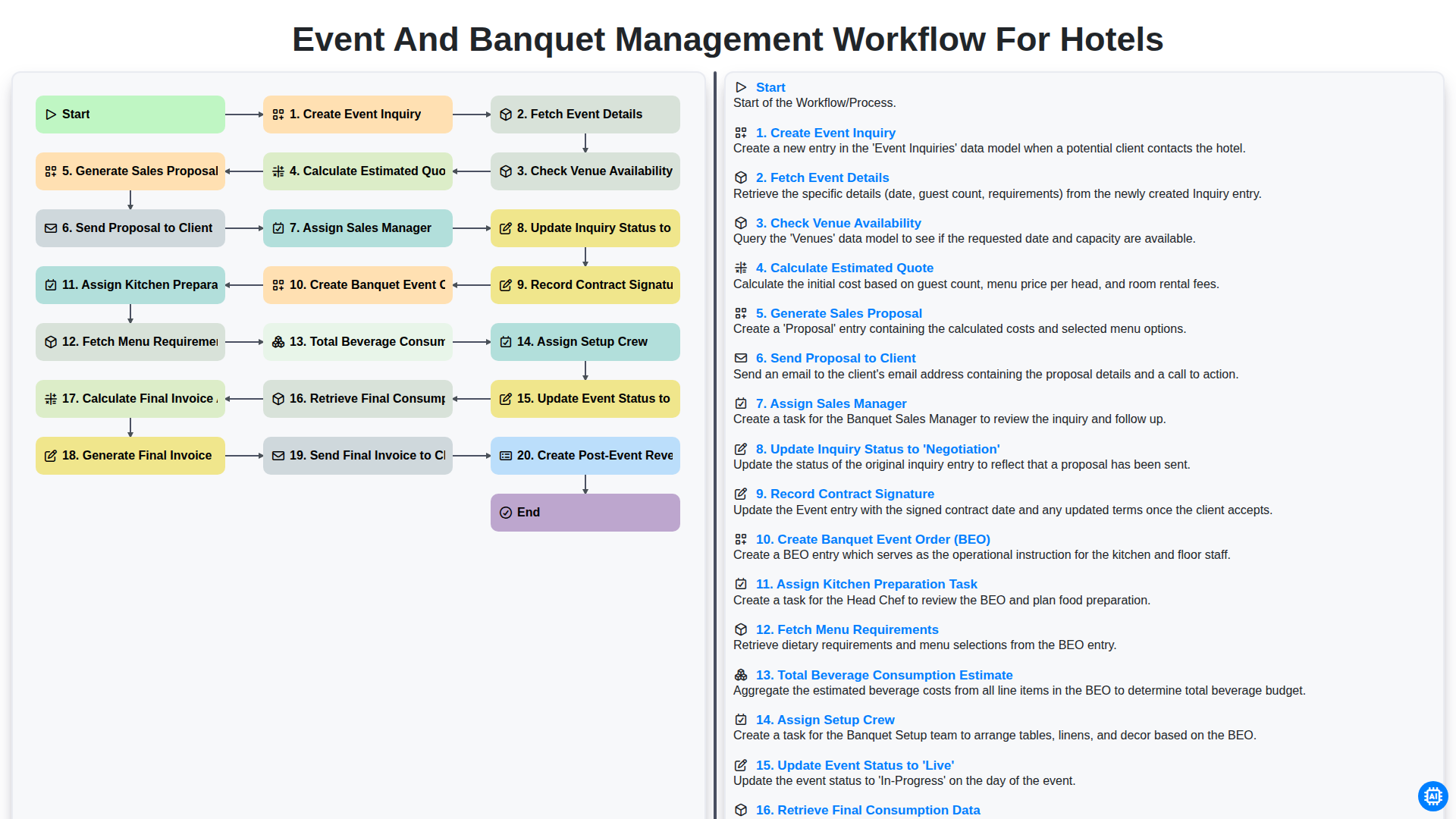
Table of Contents
- Introduction: The Importance of a Structured Banquet Workflow
- Phase 1: The Inquiry and Initial Assessment
- Phase 2: From Inquiry to Personalized Sales Proposal
- Phase 3: Closing the Deal and Formalizing the Agreement
- Phase 4: The Blueprint of Success: Creating the Banquet Event Order (BEO)
- Phase 5: Operational Execution and Resource Allocation
- Phase 6: Managing Real-Time Event Logistics
- Phase 7: Post-Event Reconciliation and Billing
- Phase 8: Financial Analysis and Post-Event Reporting
- Conclusion: Driving Efficiency Through Systematic Management
- Resources & Links
TLDR: Streamline your hotel's operations with this comprehensive guide to the end-to-end event and banquet management workflow. Learn how to automate everything from the initial inquiry and automated quoting to BEO creation, kitchen coordination, and final billing, ensuring seamless service delivery and maximized revenue accuracy.
Introduction: The Importance of a Structured Banquet Workflow
In the fast-paced world of hospitality, the difference between a seamless luxury experience and a logistical nightmare lies in the precision of your operations. Managing events and banquets is far more complex than standard restaurant service; it involves a high-stakes orchestration of sales, culinary planning, staffing, and financial reconciliation. When a hotel handles multiple high-profile weddings, corporate seminars, and gala dinners simultaneously, even a single breakdown in communication can lead to missed dietary requirements, incorrect billing, or venue double-bookings.
A structured banquet workflow acts as the operational backbone of your hotel, ensuring that every department-from the sales team to the kitchen and the service crew-is aligned with the client's vision. By implementing a standardized, step-by-step process, hotels can eliminate manual errors, reduce the time spent on repetitive administrative tasks, and significantly enhance the guest experience. A well-defined workflow doesn't just organize tasks; it creates a repeatable blueprint for excellence, allowing your team to focus on hospitality rather than firefighting logistical crises.
Phase 1: The Inquiry and Initial Assessment
The lifecycle of a successful banquet event begins long before the first guest arrives. It starts the moment a potential client reaches out with a vision. The first phase of the workflow, Inquiry and Initial Assessment, is critical for setting the foundation of the entire event. This stage is all about precision, responsiveness, and establishing professional trust.
The process initiates with the Create Event Inquiry step, where all incoming requests-whether via email, phone, or web form-are logged into the system. Once the request is captured, the team must immediately Fetch Event Details, identifying key variables such as the nature of the event, guest count, and preferred date.
With the details in hand, the next vital step is to Check Venue Availability. There is no point in proceeding with a complex proposal if the requested ballroom or terrace is already booked. If the space is free, the workflow moves into the financial planning stage: Calculate Estimated Quote. This requires a meticulous look at per-head costs, rental fees, and service charges to ensure the hotel's margins are protected.
Once the numbers are verified, the team will Generate Sales Proposal, a polished document that reflects the client's needs. This proposal is then Send[ed] to the Client for review. At this juncture, the workflow transitions from lead generation to active sales management; the system will Assign a Sales Manager to act as the primary point of contact, ensuring personalized service. As the client reviews the terms, the internal system will Update Inquiry Status to 'Negotiation', allowing the sales team to adjust details and refine the scope until a consensus is reached. This phase concludes only when the team can Record Contract Signature, officially transforming a lead into a confirmed booking.
Phase 2: From Inquiry to Personalized Sales Proposal
Once an initial inquiry enters your system, the transition from a lead to a formal offer is the most critical stage for conversion. This phase is all about precision and responsiveness. The process begins by creating an event inquiry and immediately fetching all essential event details-such as guest count, preferred dates, and specific requirements-to ensure no detail is overlooked.
The next vital step is to check venue availability against your hotel's existing bookings to prevent double-booking and manage expectations. Once the date is confirmed, the workflow moves into the financial planning stage: your team will calculate an estimated quote based on the requested services and generate a professional sales proposal.
Speed is of the essence in hospitality; therefore, the system must facilitate sending the proposal to the client promptly. To ensure accountability and personalized service, the workflow then moves to assign a dedicated Sales Manager to lead the account and update the inquiry status to 'Negotiation'. This ensures the sales team can track the progress of the deal in real-time. The phase concludes only when the system successfully records the contract signature, officially transitioning the lead from a potential opportunity to a confirmed booking.
Phase 3: Closing the Deal and Formalizing the Agreement
Once the initial proposal has been delivered, the workflow shifts from persuasion to formalization. This phase is critical, as it bridges the gap between a conceptual idea and a confirmed booking. The process begins with the Assignment of a Sales Manager, ensuring a dedicated point of contact is responsible for guiding the client through the finer details. As discussions progress, the Inquiry Status is updated to 'Negotiation', allowing the hotel to track active leads and manage follow-ups effectively.
The turning point in this phase occurs when the client accepts the terms and the team Records the Contract Signature. This legal milestone transforms a prospect into a confirmed event. With the agreement solidified, the workflow moves into the operational setup, starting with the creation of the Banquet Event Order (BEO). The BEO serves as the single source of truth, documenting every specific requirement of the event to ensure seamless communication between the sales and operations teams.
Phase 4: The Blueprint of Success: Creating the Banquet Event Order (BEO)
Once the contract is signed, the excitement of a potential booking transforms into the precision of operational execution. This is where the Banquet Event Order (BEO) serves as the definitive blueprint for your entire team. The BEO acts as the single source of truth, consolidating every critical detail-from the exact number of guests and room layout to specific dietary requirements and timing-into one actionable document.
The transition from sales to operations begins here. With a finalized BEO, the workflow triggers the critical task of Assigning Kitchen Preparation Tasks. By instantly sharing menu requirements and expected guest counts with the culinary team, you eliminate the risk of last-minute shortages or preparation errors. Furthermore, the BEO allows for the integration of logistics through Assigning the Setup Crew, ensuring that the physical space is configured perfectly before the first guest arrives. This phase is the bridge between a promise made during the sales process and the flawless experience delivered on the floor.
Phase 5: Operational Execution and Resource Allocation
Once the contract is signed and the event moves from the sales phase to the operational phase, the focus shifts from negotiation to precise execution. This stage is centered around the creation of the Banquet Event Order (BEO), which serves as the single source of truth for all departments involved. The BEO acts as the blueprint for the event, detailing every logistical nuance required to meet the client's expectations.
To ensure seamless delivery, the workflow triggers critical internal task assignments. First, the Kitchen Preparation Task is assigned, allowing the culinary team to begin sourcing ingredients and planning production based on the fetched menu requirements. Simultaneously, management must perform a total beverage consumption estimate to ensure adequate stock levels and prevent shortages during service.
Logistics extend beyond the kitchen; the Setup Crew must also be assigned to manage the physical environment, ensuring that furniture, linens, and decor align perfectly with the BEO specifications. As the scheduled time arrives, the event status is updated to 'Live', signaling that all departments are in active execution mode. This phase is the most critical juncture where meticulous planning meets real-time service, ensuring that every element of the client's vision is brought to life.
Phase 6: Managing Real-Time Event Logistics
Once the event transitions from the planning phase to the execution phase, the focus shifts from paperwork to real-time coordination. During this stage, the status is updated to 'Live', signaling to all departments that the event is currently in progress. The priority now lies in monitoring the live dynamics of the function, specifically focusing on the Retrieval of Final Consumption Data.
To ensure billing accuracy and seamless service, the management team must track real-time usage, such as the Total Beverage Consumption Estimate as it evolves throughout the event. This real-time oversight prevents discrepancies between what was originally quoted and what was actually consumed, ensuring that the operational flow remains fluid and that no service detail-from extra refills to last-minute add-ons-goes unrecorded. Success in this phase is defined by the ability to manage the live environment while maintaining the data integrity needed for the final settlement.
Phase 7: Post-Event Reconciliation and Billing
The final stage of the workflow is where the operational execution meets financial accountability. Once the event concludes, the focus shifts from service delivery to retrieving final consumption data, specifically tracking actual beverage usage and any last-minute add-ons that occurred during the function. This data is essential to ensure that the billing reflects the true reality of the event rather than just the initial estimates.
With this data in hand, the system moves to calculate the final invoice amount, merging the original contract values with the actual consumption totals. The next critical steps involve generating the final invoice and sending the final invoice to the client in a timely manner to ensure prompt payment. To close the loop, the process culminates in the creation of a Post-Event Revenue Report. This report is a vital tool for management, providing a comprehensive overview of the event's profitability, helping the hotel analyze margins, and informing future pricing strategies for upcoming bookings.
Phase 8: Financial Analysis and Post-Event Reporting
Once the event concludes and the guests have departed, the workflow shifts from operational execution to financial reconciliation and strategic evaluation. This final phase is critical for ensuring profitability and refining future service standards.
The process begins with the retrieval of final consumption data, which involves auditing the actual food and beverage consumption against the initial estimates. By comparing the total beverage consumption and actual food usage against the initial projections, management can identify discrepancies and prevent revenue leakage.
Using this data, the system then moves to calculate the final invoice amount, incorporating all incidental charges, extra hours, or additional orders placed during the event. Once the calculation is verified, the system will generate the final invoice and send the final invoice to the client for settlement.
The workflow concludes with the creation of a Post-Event Revenue Report. This comprehensive document serves as a vital tool for stakeholders, providing a clear picture of the event's true profitability and offering the insights necessary to optimize pricing strategies and resource allocation for future banquets.
Conclusion: Driving Efficiency Through Systematic Management
Mastering the transition from an initial inquiry to a final revenue report requires more than just great hospitality; it requires a disciplined, repeatable framework. By implementing a structured workflow-moving seamlessly from the early stages of venue availability and quotation to the critical execution of the Banquet Event Order (BEO) and final billing-hotels can eliminate the manual errors that often plague large-scale event planning.
A systematic approach does more than just organize tasks; it creates a single source of truth for every department. When sales managers, kitchen staff, and setup crews all operate from the same real-time data, the risk of miscommunication vanishes. Ultimately, moving away from fragmented processes and toward a unified event management workflow allows your team to focus on what truly matters: delivering unforgettable guest experiences while maximizing the profitability of every function.
Resources & Links
- Hospitality Net: A leading source for global hospitality industry news, trends, and management best practices for hotel professionals.
- Revenue Management Insights: In-depth resources on calculating quotes, managing beverage consumption estimates, and optimizing banquet profitability.
- Hotel Management Network: Expert advice on operational workflows, staff management, and streamlining BEO processes in large-scale hotels.
- Event Manager Blog: Comprehensive guides on event planning, client proposal creation, and managing complex event logistics.
- PCMA (Professional Convention Management Association): Professional resources and industry standards for managing large-scale meetings, conventions, and banquet operations.
- Oracle Hospitality (Opera): Information on industry-standard property management systems (PMS) used to track event inquiries, BEOs, and final invoicing.
Frequently Asked Questions
What is the primary goal of a structured event management workflow in hotels?
The primary goal is to ensure seamless coordination between sales, culinary, and operations departments to deliver a consistent, high-quality experience for guests while maximizing operational efficiency and profitability.
What are the key stages of the banquet management lifecycle?
The lifecycle typically includes initial inquiry and booking, event planning and coordination, pre-event preparation (BEO distribution), event execution, and post-event evaluation and billing.
Why is the Banquet Event Order (BEO) considered the most critical document in this workflow?
The BEO serves as the single source of truth that communicates all essential details-such as timing, menu, setup requirements, and special requests-to every department involved in the event.
How can hotels prevent communication breakdowns during large-scale events?
Communication breakdowns can be prevented by implementing standardized digital tools, conducting mandatory pre-shift briefings, and ensuring timely distribution of updated BEOs to all relevant stakeholders.
What role does post-event analysis play in mastering event management?
Post-event analysis allows management to review guest feedback, assess operational successes or failures, reconcile final billing, and identify areas for process improvement in future events.
Comments
There are no comments yet. Be the first to add one!
Hospitality Management Solution Demo
Running a hotel, restaurant, or other hospitality business is demanding. ChecklistGuro's Work OS platform simplifies management, from reservations and guest services to inventory and staff scheduling. Improve efficiency, enhance guest experience, and boost profitability! See how ChecklistGuro can transform your hospitality operations.
Related Articles
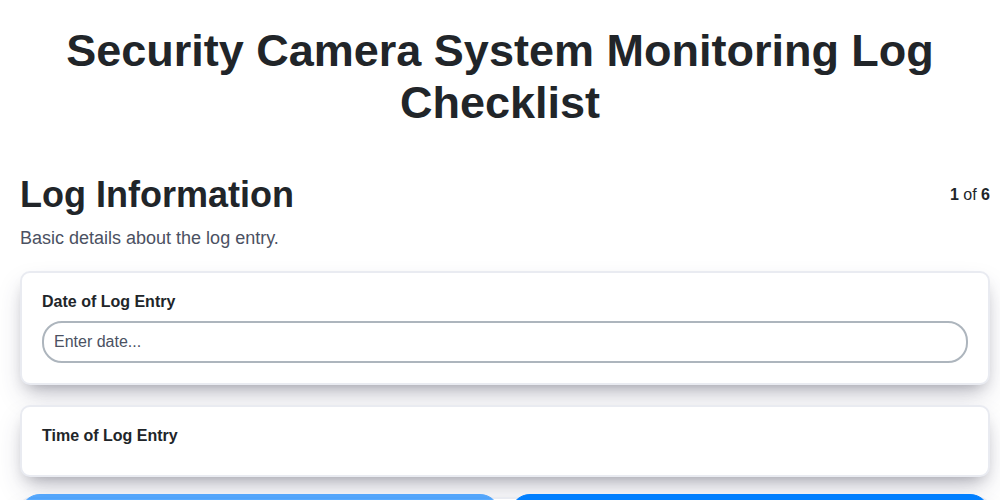
Your Ultimate Security Camera Monitoring Log Checklist Template
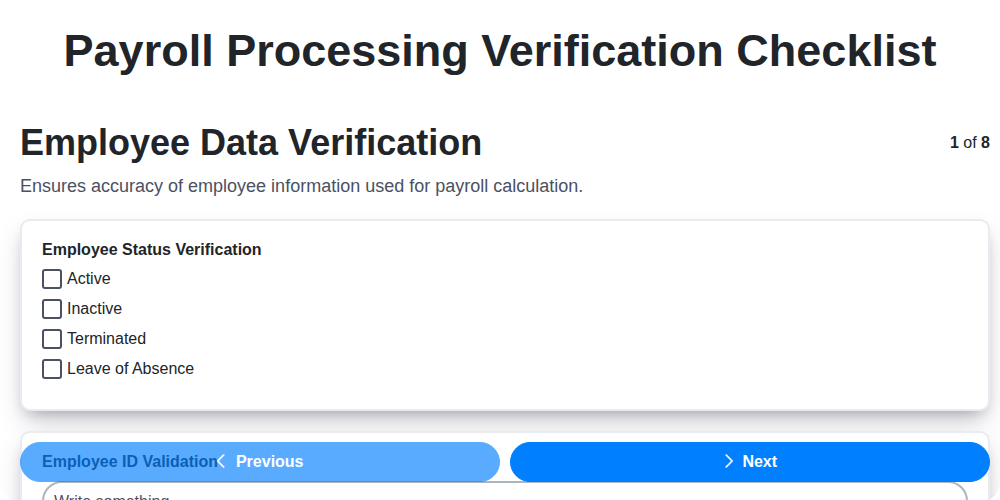
Payroll Processing Verification Checklist Template: Your Guide to Accuracy
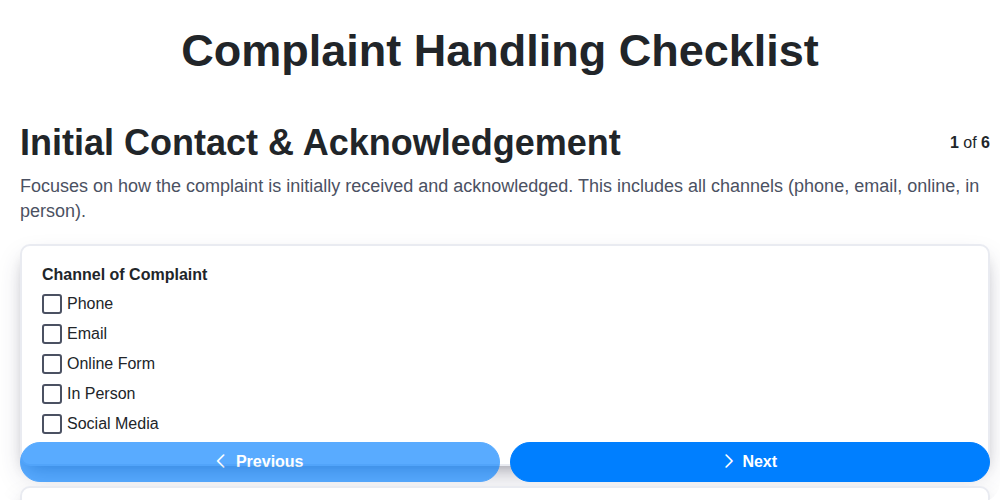
Complaint Handling Checklist Template: Resolve Issues & Retain Customers

Emergency Evacuation Drill Documentation: Your Checklist Template Guide

Mastering Incident Response: Your Free Reporting Protocol Checklist Template
Conquer Your Kitchen: A Monthly Deep Cleaning Checklist Template
Mastering Food Safety: Your Free Temperature Control Checklist Template
Mastering Hand Hygiene: Your Compliance Checklist Template
Need help with
Checklists?
Have a question? We're here to help. Please submit your inquiry, and we'll respond promptly.