The Ultimate GMP Compliance Guide: A Comprehensive Facility & Hygiene Standard Checklist Template
Published: 11/22/2026 Updated: 11/23/2026
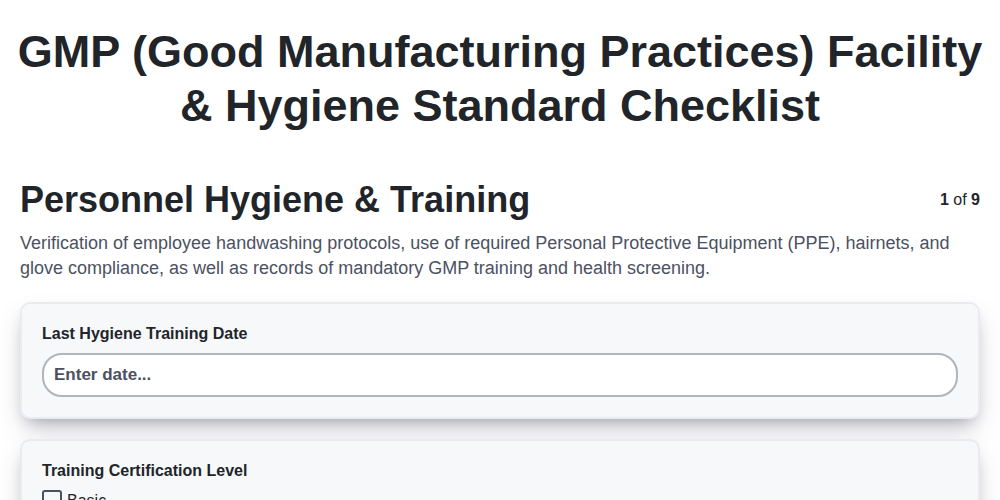
Table of Contents
- Introduction to GMP: Why Compliance Matters for Product Safety
- Defining the Scope of GMP Facility & Hygiene Standards
- 1. Personnel Hygiene & Training: Building a Culture of Safety
- 2. Facility Design & Infrastructure: Preventing Cross-Contamination
- 3. Cleaning & Sanitation Protocols: Establishing Rigorous Routines
- 4. Equipment & Tool Maintenance: Ensuring Operational Integrity
- 5. Environmental & Air Quality Control: Managing the Manufacturing Atmosphere
- 6. Pest Control Management: Implementing Preventive Barriers
- 7. Raw Material & Inventory Handling: Ensuring Traceability and Quality
- 8. Waste Management & Disposal: Safe and Compliant Removal Processes
- 9. Documentation & Record Keeping: The Backbone of Audit Readiness
- How to Use This Checklist for Regular Internal Audits
- Conclusion: Sustaining Long-Term GMP Excellence
- Resources & Links
TLDR: Ensure your facility meets strict regulatory standards with our definitive GMP compliance checklist. This guide provides a detailed breakdown of essential protocols, covering everything from personnel hygiene and facility design to equipment maintenance, pest control, and rigorous documentation practices to help you maintain safety and operational excellence.
Introduction to GMP: Why Compliance Matters for Product Safety
Ensuring Quality from the Ground Up
In the world of manufacturing-whether you are producing pharmaceuticals, food and beverages, or medical devices-quality is not just a goal; it is a legal and ethical mandate. At the heart of this commitment lies Good Manufacturing Practices (GMP).
GMP refers to a system of rigorous procedures designed to ensure that products are consistently produced and controlled according to quality standards. It is specifically engineered to minimize the risks involved in any manufacturing process that cannot be eliminated through testing the final product alone. These risks include cross-contamination, errors in labeling, and incorrect chemical compositions.
The High Stakes of Compliance
Compliance is not merely about checking boxes to satisfy regulatory inspectors; it is about safeguarding your brand and, more importantly, your consumers. When GMP standards are neglected, the consequences can be devastating:
- Consumer Safety: The most critical risk is the physical harm caused by contaminated or substandard products.
- Regulatory Sanctions: Failure to adhere to GMP guidelines can lead to heavy fines, mandatory product recalls, and the revocation of manufacturing licenses.
- Operational Inefficiency: A lack of standardized hygiene and maintenance protocols often leads to unexpected downtime, high waste levels, and increased operational costs.
- Brand Reputation: In a global marketplace, trust is your most valuable asset. A single safety breach can cause irreparable damage to your company's reputation.
Beyond the Product: The Facility as a Controlled Environment
While much of the focus in manufacturing is often placed on the ingredients and the final formula, true GMP compliance begins with the environment in which the product is made. A clean product cannot be produced in an unclean facility.
Compliance requires a holistic approach that covers everything from the air your workers breathe to the way waste is disposed of. This involves a meticulous attention to detail regarding personnel behavior, equipment sterilization, and the structural integrity of the building itself.
The following checklist serves as a strategic blueprint to help you audit your current operations, identify critical gaps, and implement a culture of continuous improvement and uncompromising safety.
Defining the Scope of GMP Facility & Hygiene Standards
When managing a manufacturing environment-whether in pharmaceuticals, food, cosmetics, or medical devices-compliance with Good Manufacturing Practices (GMP) is not just a regulatory obligation; it is the foundation of product safety and brand integrity.
The scope of a GMP audit extends far beyond simply checking if machines are running. It requires a holistic evaluation of every variable that could potentially compromise product purity, potency, or safety. A single lapse in hygiene or a minor flaw in facility design can lead to cross-contamination, batch recalls, and devastating regulatory penalties.
The Core Pillars of a GMP-Compliant Environment
To achieve true compliance, your operational focus must be divided into several critical domains. This checklist is designed to cover the entire ecosystem of your production site, ensuring that every touchpoint-from the moment raw materials enter the building to the moment the finished product is dispatched-is under strict control.
The scope of this checklist encompasses the following nine essential pillars:
1. Human Elements: Personnel Hygiene & Training
Compliance begins with the people. This section focuses on the biological and behavioral factors, ensuring that staff are trained in aseptic techniques, follow rigorous hand hygiene protocols, and utilize appropriate Personal Protective Equipment (PPE) to prevent human-derived contamination.
2. The Physical Environment: Facility Design & Infrastructure
A GMP-compliant facility must be designed to prevent errors and contamination. We examine the flow of personnel and materials, the integrity of surfaces, and the prevention of dead zones where contaminants could accumulate.
3. Sanitation Science: Cleaning & Sanitation Protocols
A clean facility is not enough; it must be a sanitized facility. This scope covers the validation of cleaning procedures, the concentration of sanitizing agents, and the frequency of deep-cleaning cycles.
4. Asset Integrity: Equipment & Tool Maintenance
Every piece of machinery must be fit for its intended purpose. This involves assessing calibration schedules, preventing tool cross-contamination, and ensuring that maintenance activities do not introduce foreign objects into the production stream.
5. Atmospheric Control: Environmental & Air Quality Control
The invisible environment is just as critical as the visible one. This includes monitoring temperature, humidity, and air filtration (such as HEPA systems) to ensure the production atmosphere remains stable and sterile.
6. Biological Defense: Pest Control Management
An effective GMP strategy must include a proactive, non-intrusive defense against pests. This covers the monitoring of entry points, the placement of traps, and the management of chemical controls to prevent infestation.
7. Supply Chain Integrity: Raw Material & Inventory Handling
Contamination can enter the facility through the back door. This section evaluates how materials are received, inspected, stored, and segregated to prevent the use of sub-standard or expired ingredients.
8. Containment & Removal: Waste Management & Disposal
Properly managing byproducts is vital to prevent the buildup of hazardous or organic matter. We focus on the segregation of waste streams and the secure, sanitary removal of refuse from production zones.
9. The Audit Trail: Documentation & Record Keeping
In the eyes of a regulatory inspector, If it isn't documented, it didn't happen. This final pillar ensures that every action taken within the previous eight pillars is recorded, traceable, and verifiable through robust data integrity practices.
1. Personnel Hygiene & Training: Building a Culture of Safety
The Foundation of Compliance: People Over Processes
In the world of Good Manufacturing Practices (GMP), even the most advanced automated machinery can be rendered useless by a single lapse in human behavior. Personnel are often the most significant source of potential contamination in a production environment. Therefore, achieving compliance is not just about following rules; it is about fostering a deep-seated culture of safety and awareness.
Ensuring Individual Hygiene Standards
Every person entering the production zone must adhere to strict personal hygiene protocols to prevent the introduction of biological, chemical, or physical hazards. A robust checklist for personnel must include:
- Hand Hygiene Protocols: Mandatory, documented procedures for handwashing techniques, frequency, and timing (e.g., after breaks, after touching non-sanitized surfaces, or after handling waste).
- Personal Protective Equipment (PPE) Compliance: Strict enforcement of the correct use of hairnets, beard covers, gloves, lab coats, and dedicated footwear.
- Health Reporting Requirements: A formal process for employees to report illnesses, skin infections, or open wounds that could compromise product integrity.
- Personal Item Restrictions: Prohibiting the use of jewelry, perfumes, nail polish, or any personal items that could fall into the production stream or act as vectors for bacteria.
Training: Beyond the Orientation Manual
Training is not a one-time event; it is a continuous cycle of education and verification. To maintain GMP standards, your training program must cover more than just how to do the job.
Key Training Pillars:
- GMP Fundamentals: Comprehensive onboarding that explains the why behind the rules, ensuring staff understand the direct impact of their actions on consumer safety.
- Standard Operating Procedure (SOP) Mastery: Regular, hands-on training for every specific task, ensuring that techniques for cleaning, operating, and monitoring remain consistent.
- Contamination Control Awareness: Educating staff on cross-contamination risks, allergen management, and the importance of maintaining a clean zone mindset.
- Competency Assessment: Implementing periodic testing, observations, and audits to verify that training has been effectively internalized and is being practiced on the shop floor.
By prioritizing both rigorous hygiene standards and continuous education, you transform your workforce from a potential risk into your strongest line of defense against contamination.
2. Facility Design & Infrastructure: Preventing Cross-Contamination
A well-designed facility is the first line of defense in maintaining Good Manufacturing Practices (GMP). Infrastructure flaws-such as cracks in the floor, poorly placed drains, or inadequate ventilation-can create dead zones where bacteria and contaminants thrive, making even the most rigorous cleaning protocols ineffective.
To ensure your facility meets compliance standards, your infrastructure must be designed to facilitate easy cleaning and prevent the movement of contaminants between different production zones.
Core Structural Requirements
Physical Segregation and Zoning
The layout of your facility should follow a logical flow of production. High-risk areas (where products are exposed) must be physically separated from low-risk areas (such as receiving or raw material storage). This prevents cross-contamination by design, ensuring that microorganisms from unprocessed materials cannot migrate into finished goods.
Surface Integrity and Material Selection
Every surface that comes into contact with products or exists within the production environment must be non-porous, non-toxic, and resistant to corrosion.
- Floors: Must be seamless, impervious to water, and sloped toward drains to prevent pooling.
- Walls & Ceilings: Should be smooth and easy to sanitize, with no cracks, crevices, or peeling paint that could harbor dust or mold.
- Windows & Doors: Must be designed to minimize the entry of external contaminants and should be easy to clean.
Critical Utility & Flow Control
Drainage and Plumbing Systems
Improper drainage is a common cause of GMP failures. Drains should be strategically placed to ensure liquids flow away from production zones and toward waste outlets. Crucially, all drains must be equipped with traps and covers to prevent the backflow of odors or pests.
Airflow and Pressure Management
In many GMP environments, controlling the direction of air is vital.
- Positive Pressure: High-hygiene zones should maintain higher air pressure than surrounding corridors. This ensures that when a door opens, air flows out of the clean zone, preventing unfiltered air from rushing in.
- Filtration: Air handling units must be fitted with appropriate filters (such as HEPA filters where necessary) to remove airborne particulates and microbes.
Lighting and Ventilation
Adequate lighting is not just a safety requirement; it is a compliance necessity. Staff must be able to clearly inspect surfaces, equipment, and products for debris or contamination. Similarly, ventilation must prevent condensation buildup on ceilings and walls, as moisture is a primary driver for microbial growth.
3. Cleaning & Sanitation Protocols: Establishing Rigorous Routines
Maintaining a Sterile Environment: The Core of Sanitation
In a GMP-regulated environment, cleanliness is not a subjective measure; it is a documented, verifiable state of control. Cleaning and sanitation protocols are the frontline defense against cross-contamination and microbial proliferation. To ensure your facility meets global regulatory standards, your protocols must move beyond looking clean and focus on being sanitized.
Developing Standard Operating Procedures (SOPs)
Every surface, tool, and zone within your facility must be governed by a specific, written SOP. These documents should clearly define the what, how, when, and who of your sanitation process.
- The What: Identify every contact surface (direct contact) and non-contact surface (indirect contact) that requires cleaning.
- The How: Detail the specific cleaning agents, detergents, and sanitizers to be used. Crucially, include the required contact time (the duration the chemical must remain wet on a surface to be effective).
- The When: Define frequencies-whether it is per-shift, daily, weekly, or following a specific product changeover.
- The Who: Designate trained personnel responsible for the execution and the verification of the cleaning process.
The Cleaning vs. Sanitizing Distinction
A common pitfall in GMP compliance is failing to distinguish between cleaning and sanitizing.
- Cleaning focuses on the removal of visible soil, debris, and organic matter using detergents.
- Sanitizing/Disinfecting focuses on the reduction of microorganisms to a safe level. An effective protocol follows a strict sequence: Pre-rinse $\rightarrow$ Clean/Detergent $\rightarrow$ Rinse $\rightarrow$ Sanitize $\rightarrow$ Dry. Skipping the cleaning step before sanitizing can render your disinfectants ineffective, as organic matter can shield bacteria from the chemical agent.
Validation and Verification of Cleaning Efficacy
It is not enough to simply perform the cleaning; you must prove that it was successful. A robust GMP checklist must include mechanisms for:
- Visual Inspection: The first line of defense-ensuring no visible residue or film remains.
- Microbiological Testing: Utilizing ATP bioluminescence swabs or environmental agar plates to detect trace amounts of organic matter or microbial presence.
- Cleaning Validation: For high-risk areas, periodic validation studies must be conducted to prove that your established cleaning methods are consistently capable of achieving the required cleanliness levels.
Master Sanitation Schedule (MSS)
To prevent oversight, all cleaning tasks should be consolidated into a Master Sanitation Schedule. This high-level calendar ensures that deep-cleaning tasks (such as HVAC duct cleaning, floor scrubbing, or overhead structure disinfection) are integrated into the daily operational workflow, ensuring no corner of the facility is neglected.
4. Equipment & Tool Maintenance: Ensuring Operational Integrity
Maintaining the Backbone of Production
In a GMP-regulated environment, equipment and tools are more than just hardware; they are critical components of your quality assurance strategy. If a machine is poorly maintained, it becomes a primary source of physical, chemical, or biological contamination, potentially compromising entire production batches.
To ensure operational integrity, your maintenance protocols must shift from a reactive mindset (fixing things when they break) to a preventative mindset (preventing failure before it occurs).
Key Maintenance Checklist Items
To maintain compliance, your maintenance program should include the following specific checkpoints:
- Preventative Maintenance (PM) Schedules: Establish and strictly adhere to a calendar-based schedule for all production machinery. This includes lubrication, part replacements, and sensor calibrations.
- Calibration Integrity: Ensure that all measuring and monitoring instruments (such as scales, thermometers, and pressure gauges) are calibrated against traceable standards. Out-of-calibration equipment is one of the most frequent findings in regulatory audits.
- Tool Sanitization and Storage: All tools used in production-from wrenches to scrapers-must be cleaned, sanitized, and stored in designated, clean areas to prevent cross-contamination.
- Lubricant Compliance: Verify that all lubricants used on food-grade or pharmaceutical-grade machinery are H1 or food-safe certified to prevent chemical contamination in the event of incidental contact.
- Post-Maintenance Cleaning Verification: Implement a strict protocol to ensure that all tools and debris introduced during a repair process are completely removed and the area is re-sanitized before production resumes.
The Role of Fit-for-Use Verification
Maintenance does not end when the repair is finished. A critical part of this checklist step is the post-maintenance validation. Before a machine is cleared for production, a designated supervisor should verify that the equipment is in a fit-for-use state, ensuring no leftover components, oils, or cleaning agents remain that could impact product safety.
5. Environmental & Air Quality Control: Managing the Manufacturing Atmosphere
In a Good Manufacturing Practice (GMP) environment, what you cannot see is often just as important as what you can see. Maintaining the integrity of your product requires more than just cleaning surfaces; it requires strict control over the very air your team breathes and the atmosphere in which your products are processed.
Failure to control the manufacturing atmosphere can lead to airborne contamination, humidity-driven microbial growth, and cross-contamination between different production zones.
Key Focus Areas for Environmental Control
To ensure your facility meets global regulatory standards, your checklist should include the following critical components:
Air Filtration and HVAC Monitoring
The Heating, Ventilation, and Air Conditioning (HVAC) system is the lungs of your facility. It is responsible for maintaining pressure differentials that prevent contaminants from migrating from dirty zones (like raw material receiving) to clean zones (like high-care processing).
- HEPA Filtration: Regular inspection and testing of High-Efficiency Particulate Air (HEPA) filters to ensure they are free of leaks and performing at peak efficiency.
- Pressure Differentials: Routine monitoring of air pressure gauges to ensure positive pressure is maintained in critical cleanrooms.
- Air Exchange Rates: Verification that the volume of fresh air exchanged per hour meets the required standards to dilute potential airborne contaminants.
Humidity and Temperature Regulation
Uncontrolled humidity is a primary driver for mold growth, bacterial proliferation, and even the physical degradation of certain raw materials (such as powders or hygroscopic ingredients).
- Temperature Stability: Implementing automated logging to ensure temperatures remain within the validated range for both product stability and personnel comfort.
- Moisture Control: Monitoring Relative Humidity (RH) levels to prevent condensation on ceilings or pipes, which can lead to dripping contamination.
- Dew Point Monitoring: Essential for high-precision environments to prevent micro-condensation within sensitive equipment.
Particulate Matter Control
Even in a clean environment, microscopic dust and skin cells are constantly generated.
- Particulate Counting: Periodic air sampling to quantify the concentration of airborne particles.
- Airflow Visualization: Conducting smoke studies to ensure that airflow patterns are moving away from critical product zones and not creating turbulent pockets where contaminants can settle.
Continuous Monitoring and Validation
A checklist is only effective if it is backed by data. Environmental control is not a set it and forget it task; it requires a rigorous schedule of calibration and validation. Ensure your facility utilizes calibrated sensors and that all environmental deviations are captured, investigated, and corrected through a formal CAPA (Corrective and Preventive Action) process.
6. Pest Control Management: Implementing Preventive Barriers
Maintaining a Pest-Free Environment
In a GMP-regulated facility, pest control is not merely about reacting to an infestation; it is about establishing a rigorous, proactive defense system. The presence of even a single pest can lead to catastrophic contamination, product recalls, and significant regulatory non-compliance. Effective pest control management focuses on two primary pillars: Exclusion and Monitoring.
The Strategy of Exclusion and Prevention
The first line of defense is preventing pests from ever entering the facility. This requires a structural approach to facility maintenance:
- Physical Barriers: Ensuring all entry points, such as doors, windows, and vents, are fitted with intact screens and-self-closing mechanisms.
- Sealing Vulnerabilities: Regularly inspecting and repairing cracks in walls, gaps under doors, and utility penetrations that could serve as pest highways.
- Perimeter Management: Maintaining the exterior of the building to eliminate food sources and nesting sites, such as dense vegetation or accumulated debris near loading docks.
Integrated Pest Management (IPM) Protocols
A modern GMP-compliant facility utilizes Integrated Pest Management (IPM), a science-based approach that minimizes the use of chemical pesticides in favor of biological and mechanical controls.
Monitoring and Surveillance
A robust program relies on a network of strategically placed monitoring stations (such as pheromone traps or non-toxic sticky boards) positioned around the facility perimeter and high-risk zones. These stations must be mapped and inspected on a scheduled basis to detect early signs of activity.
Inspection and Documentation
Under GMP standards, if it wasn't documented, it didn't happen. Every aspect of your pest control program must be recorded, including:
- Service Logs: Detailed reports from licensed pest control operators (PCOs).
- Incident Reports: Immediate documentation of any pest sightings, including the location, time, and suspected cause.
- Chemical Inventories: A complete list of any substances used, including Material Safety Data Sheets (MSDS), to ensure no cross-contamination risks exist near production lines.
The Human Element: Hygiene and Housekeeping
Pest control is not solely the responsibility of a third-party contractor; it is deeply integrated with your cleaning and sanitation protocols. Managing food waste, ensuring frequent disposal of organic matter, and maintaining strict clean-as-you-go policies are the most effective tools in reducing the attractants that draw pests to your facility.
7. Raw Material & Inventory Handling: Ensuring Traceability and Quality
Maintaining Integrity from Intake to Output
In the realm of Good Manufacturing Practices (GMP), the quality of your final product is inextricably linked to the quality of your inputs. Raw material and inventory management is not just about storage; it is about creating a foolproof system of traceability and protection that prevents cross-contamination and degradation.
To maintain compliance, your checklist must cover the entire lifecycle of a material-from the moment it arrives at your loading dock to the moment it is integrated into your production line.
1. Receiving and Inspection Protocols
The first line of defense is the receiving process. Every incoming shipment must be scrutinized before it enters your controlled environment.
- Verification of COAs: Ensure every batch is accompanied by a Certificate of Analysis (COA) that meets your internal specifications.
- Physical Inspection: Check for damaged packaging, broken seals, or signs of tampering or pest activity.
- Temperature Logging: For temperature-sensitive materials, verify that the cold chain remained intact during transit via data logger reviews.
2. Quarantine and Release Procedures
Never assume a material is ready to use upon arrival. A strict segregation process is vital to prevent the accidental use of unverified components.
- Quarantine Status: All new materials must be clearly labeled as Quarantine and physically or electronically segregated from approved stock.
- Sampling and Testing: Define clear procedures for taking representative samples for laboratory testing.
- Status Labeling: Use a highly visible labeling system (e.g., Green for Released, Red for Rejected, and Yellow for Quarantine) to prevent human error.
3. Controlled Storage Conditions
Once approved, materials must be stored in an environment that preserves their chemical and biological stability.
- Environmental Monitoring: Maintain strictly monitored temperature and humidity levels as specified by the material's safety data sheet (SDS).
- Segregation of Incompatibles: Ensure that reactive, allergenic, or highly potent materials are stored in separate areas to prevent cross-contamination.
- First-In, First-Out (FIFO) or FEFO: Implement a strict inventory rotation strategy (First-Expired, First-Out) to ensure no expired or near-expiry materials remain in circulation.
4. Traceability and Inventory Integrity
In the event of a product recall, your ability to trace a single ingredient back to its original supplier is the difference between a minor correction and a catastrophic failure.
- Batch/Lot Tracking: Maintain a digital or manual ledger that links every batch number of raw materials to the specific finished goods batches they were used in.
- Inventory Reconciliation: Conduct regular physical audits to ensure that the quantities recorded in your system match the actual physical stock on the shelves.
- Labeling Accuracy: Ensure all secondary containers and decanted materials are re-labeled with the original lot number, name, and expiration date.
8. Waste Management & Disposal: Safe and Compliant Removal Processes
Maintaining a Clean Environment through Rigorous Waste Protocols
Effective waste management is more than just a cleaning task; it is a critical component of Good Manufacturing Practices (GMP). Improperly handled waste can become a breeding ground for pathogens, a source of cross-contamination, and an attractive site for pests. To maintain compliance, your facility must have a systematic approach to identifying, segregating, and removing all waste streams.
Establishing Clear Segregation Standards
The foundation of a compliant waste program is the immediate segregation of waste at the point of origin. To prevent contamination of production areas, implement the following:
- Categorization: Clearly distinguish between organic waste, recyclable materials, hazardous waste, and general refuse.
- Color-Coding Systems: Use standardized, color-coded bins and liners to ensure staff can instantly identify where specific materials belong.
- Hazardous Waste Isolation: Ensure that any chemical or biohazardous waste is kept in specialized, leak-proof containers that are separate from standard production refuse.
Standard Operating Procedures for Removal and Disposal
A set it and forget it approach to waste is a major compliance risk. Your facility requires a strictly documented removal schedule that includes:
- Frequent Collection Intervals: Define specific timeframes for waste removal to prevent bin overflow, which can lead to odors and pest attraction.
- Containment Integrity: Ensure all waste containers are fitted with tight-sealing lids and are easy to sanitize.
- External Storage Management: Designate a specific, enclosed area for waste storage that is physically separated from production and raw material receiving zones to prevent cross-contamination.
Preventing Cross-Contamination and Pest Attraction
The primary goal of waste management in a GMP environment is to eliminate the attractant factor.
- Pathogen Control: Regularly sanitize waste receptacles and the surrounding floor area to remove organic residue.
- Pest Mitigation: Ensure that all waste disposal routes are designed to minimize the time waste stays in high-traffic production zones, thereby reducing the risk of attracting rodents or insects.
- Flow Management: Design waste exit routes that never intersect with the flow of incoming raw materials or finished goods.
Verification and Compliance Auditing
To ensure your waste management system is functioning as intended, implement regular checks:
- Logbook Maintenance: Keep records of waste pickup dates, volumes, and the methods of disposal used by third-party contractors.
- Visual Inspections: Conduct daily walk-throughs to ensure bins are properly closed and that no waste is accumulating in unauthorized areas.
- Contractor Verification: If using external services, ensure they hold the necessary permits and follow hygiene standards compatible with your facility's GMP requirements.
9. Documentation & Record Keeping: The Backbone of Audit Readiness
The Gold Standard of GMP: If It Isn't Documented, It Didn't Happen
In the world of Good Manufacturing Practices, there is a fundamental rule that every auditor, quality assurance officer, and plant manager lives by: If it isn't documented, it didn't happen.
Even if your facility is spotless, your staff is perfectly trained, and your equipment is running at peak performance, you will fail a GMP audit if you cannot provide verifiable, contemporaneous, and accurate records to prove it. Documentation is not just a bureaucratic necessity; it is the paper trail of safety and quality.
The Pillars of a Robust Documentation System
To ensure your facility is always audit-ready, your record-keeping strategy should focus on these four critical pillars:
1. Traceability and Accuracy
Every piece of data-from the temperature of a storage room to the batch number of a raw ingredient-must be traceable. Your records must allow an auditor to trace a finished product back through its entire lifecycle, including every hand that touched it and every machine that processed it.
2. Contemporaneous Recording
Logs should be completed at the time the task is performed. Retrospective documentation (filling out logs at the end of a shift or the end of a week) is a major red flag for regulatory bodies. It suggests a lack of oversight and raises doubts about the integrity of the data.
3. Data Integrity and ALCOA+ Principles
A high-standard GMP environment follows the ALCOA+ principles. Your documentation must be:
- Attributable (Who performed the action?)
- Legible (Can it be read clearly?)
- Contemporaneous (Was it recorded in real-time?)
- Original (Is it the primary source of data?)
- Accurate (Is the data true and error-free?)
- (Plus: Complete, Consistent, Enduring, and Available)
4. Standard Operating Procedures (SOPs) and Logbooks
Your documentation ecosystem consists of two main parts:
- SOPs: The How-To manuals that define how every process in your facility must be executed.
- Logbooks/Records: The Proof that the SOPs were followed (e.g., cleaning logs, temperature logs, training certificates, and maintenance reports).
Audit Readiness Checklist for Documentation
To ensure your record-keeping is a strength rather than a liability, regularly audit your files for:
- No Unauthorized Alterations: Ensure no white-out or scribbles are used. Errors should be corrected with a single line-through, initialed, and dated.
- Completeness: Ensure there are no blank spaces in logs. If a task wasn't performed, it should be marked N/A rather than left empty.
- Version Control: Ensure only the most current, approved version of an SOP is available on the production floor.
- Accessibility: Can your quality team retrieve a specific cleaning log from three months ago within minutes? Speed of retrieval is a key metric for auditor confidence.
By treating documentation as a core component of your hygiene and manufacturing process-rather than an afterthought-you transform your facility from a state of hoping for compliance to proving compliance.
How to Use This Checklist for Regular Internal Audits
Mastering Your Audit Strategy
A checklist is only as powerful as the process behind it. To ensure your GMP (Good Manufacturing Practices) compliance moves from a once-a-year struggle to a built-in culture, you must treat this document as a living tool rather than a static piece of paper.
To derive maximum value from this checklist, follow these strategic implementation steps:
1. Define the Audit Frequency
Not all items on this list require the same level of scrutiny. To prevent audit fatigue, categorize your inspections into different cycles:
- Daily Checks: Focus on high-risk areas like Personnel Hygiene and Cleaning & Sanitation.
- Weekly/Monthly Checks: Focus on Equipment Maintenance and Pest Control Management.
- Quarterly/Annual Reviews: Focus on Facility Design, Infrastructure, and Training Documentation updates.
2. Assign Clear Accountability
A checklist without an owner is merely a list of observations. For every section-from Raw Material Handling to Waste Management-assign a specific department or individual responsible for the inspection. This ensures that ownership of hygiene standards is distributed across the entire production floor, rather than resting solely on the Quality Assurance (QA) team.
3. Implement a Corrective Action Loop
Finding a non-compliance is not a failure; it is an opportunity to prevent a product recall. When a check fails, do not simply check a box. Use a CAPA (Corrective and Preventive Action) approach:
- Identify: Document the exact nature of the deviation.
- Remediate: Fix the immediate issue (e.g., clean the spill).
- Investigate: Determine the root cause (e.g., why did the spill happen?).
- Prevent: Update your protocols to ensure it does not recur.
4. Use Real-Time Documentation
Whenever possible, move away from paper-based logs that are prone to damage or loss. Transitioning to digital logs allows for real-time data entry, timestamped entries (to prevent back-dating), and instant alerts for management when a critical threshold-such as an environmental air quality deviation-is breached.
5. Train, Don't Just Inspect
Use the findings from your audits as the foundation for your training programs. If the Personnel Hygiene section consistently shows errors in hand-washing protocols, use that data to redesign your training modules. This turns your audit findings into a continuous loop of operational improvement.
Conclusion: Sustaining Long-Term GMP Excellence
Moving Beyond the Checklist: A Culture of Continuous Improvement
Achieving GMP compliance is not a one-time destination or a box to be checked during an audit; it is an ongoing commitment to operational excellence. While the checklist provided above serves as a vital roadmap for maintaining standards, the true strength of a GMP-compliant facility lies in its culture of compliance.
Transitioning from Compliance to Culture
A checklist can identify a gap in sanitation or a lapse in documentation, but it cannot replace the vigilance of a well-trained team. To sustain long-term excellence, organizations must move beyond mere policing and move toward fostering a mindset where every employee-from the production floor to the executive suite-understands the why behind the protocols. When personnel understand how their specific actions impact product safety and consumer health, compliance becomes instinctive rather than enforced.
The Role of Regular Audits and Self-Inspections
To ensure your facility does not drift away from these established standards, implement a rigorous schedule of:
- Internal Self-Inspections: Regularly use this checklist to perform unannounced internal audits to catch deviations before they become non-conformances.
- Root Cause Analysis (RCA): When a deviation is found, don't just fix the immediate symptom. Investigate the root cause to prevent recurrence.
- CAPA Integration: Integrate your findings into a robust Corrective and Preventive Action (CAPA) system to drive continuous improvement.
The Bottom Line
Adhering to these hygiene and facility standards protects your most valuable assets: your brand reputation and your customers' trust. By treating this checklist as a living document that evolves with new technologies, regulations, and lessons learned, you ensure that your facility remains a benchmark of quality, safety, and manufacturing integrity.
Resources & Links
- U.S. Food and Drug Administration (FDA): The primary regulatory authority providing official guidelines on Current Good Manufacturing Practices (cGMP) for food, drugs, and cosmetics.
- European Medicines Agency (EMA): The regulatory body for the EU, offering critical standards on Good Manufacturing Practice (GMP) for medicinal products.
- International Organization for Standardization (ISO): Provides international standards for quality management (ISO 9001) and food safety (ISO 22000) that complement GMP.
- World Health Organization (WHO): Offers global benchmarks and technical reports on manufacturing standards and hygiene for pharmaceutical products.
- International Council for Harmonisation (ICH): A platform for global regulatory authorities to harmonize technical requirements for pharmaceutical registration.
- Center for Food Safety and Applied Nutrition (CFSAN): Focuses specifically on the safety of the food supply chain and hygienic manufacturing protocols.
- American Society for Quality (ASQ): A leading resource for quality professionals, providing tools, training, and best practices for maintaining operational integrity.
- Regulations.gov: A central location to search for and access all federal regulatory information related to manufacturing compliance.
- CIPAC: Essential for those involved in the manufacturing of pesticides and agrochemicals, focusing on standardized testing and hygiene.
- Audit Management Software Resources: General guidance on digital tools for documentation, record-keeping, and automating internal audit checklists.
- European Compliance & Quality Control: Resources regarding the implementation of sanitation protocols and environmental monitoring in manufacturing.
- Template & Documentation Hubs: Useful for finding pre-made SOP (Standard Operating Procedure) templates for personnel hygiene and cleaning logs.
- FoodSafety.gov: Detailed information on preventing cross-contamination and managing raw material safety.
- Occupational Safety and Health Administration (OSHA): Provides critical safety standards for personnel training, chemical handling, and facility maintenance.
- SGS Group: A global leader in inspection, verification, testing, and certification services for manufacturing facilities.
- Intertek: Specializes in quality assurance and testing services to ensure compliance with international hygiene and safety standards.
- International Code Council (ICC): Useful for understanding building codes and facility design infrastructure requirements.
- Environmental Protection Agency (EPA): Essential for guidelines on waste management, disposal processes, and pest control chemical usage.
Comments
There are no comments yet. Be the first to add one!
Manufacturing Management Solution Demo
Stop chasing paperwork and wrestling with disconnected systems! Our solution brings clarity and control to your production process. From standard operating procedures (SOPs) and equipment maintenance to quality control and inventory tracking, we simplify every step.
Related Articles
Kaizen Checklist Template: Your Path to Continuous Improvement

Machine Safety Audit Checklist: Your Guide to a Safer Manufacturing Workplace
Mastering Supplier Performance: Your Free Supplier Scorecard Checklist Template
Your Ultimate RCM Checklist Template: A Step-by-Step Guide

LPA Checklist Template: Your Guide to Layered Process Audits

Your Ultimate Lockout/Tagout (LOTO) Checklist Template

Your Ultimate FSC 22000 Checklist Template
Quality Control Inspection Checklist Template: Prevent Defects & Improve Manufacturing Processes
Need help with
Manufacturing?
Have a question? We're here to help. Please submit your inquiry, and we'll respond promptly.