The Ultimate 2026 Hotel Facilities Management & Preventative Maintenance Checklist Template
Published: 10/30/2026 Updated: 10/31/2026
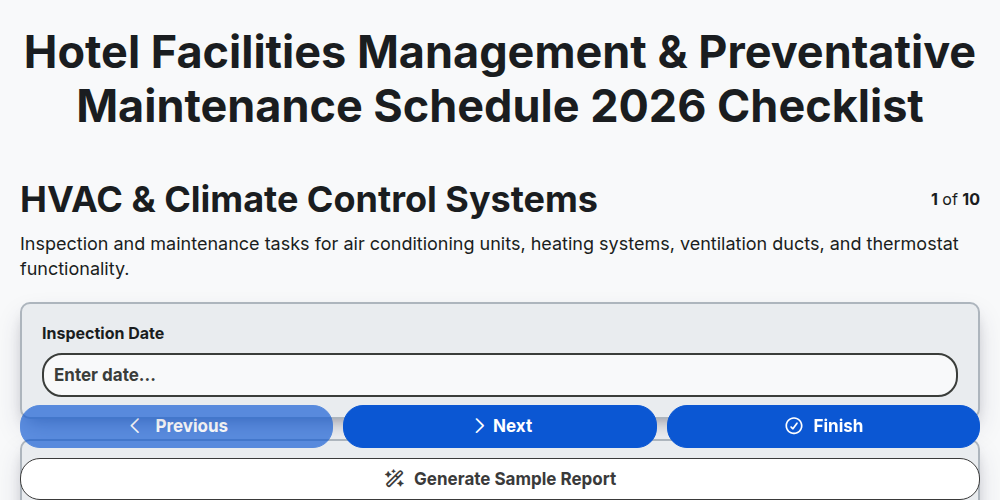
Table of Contents
- Introduction: Why Proactive Maintenance is Critical for 2026 Hospitality Success
- Setting the Standard: The Importance of a Preventative Maintenance Schedule
- 1. HVAC & Climate Control Systems: Ensuring Guest Comfort Year-Round
- 2. Electrical & Lighting Systems: Optimizing Energy Efficiency and Ambiance
- 3. Plumbing & Water Management: Preventing Leaks and Ensuring Water Quality
- 4. Fire Safety & Life Safety Equipment: Prioritizing Guest Security and Compliance
- 5. Building Envelope & Structural Integrity: Protecting the Hotel's Physical Asset
- 6. Kitchen & Laundry Equipment Maintenance: Maintaining Operational Flow
- 7. Elevator & Vertical Transportation: Ensuring Seamless Guest Mobility
- 8. Pest Control & Sanitation Infrastructure: Upholding Hygiene Standards
- 9. Lobby & Public Area Furniture Maintenance: Preserving the First Impression
- 10. Security & Surveillance System Audit: Strengthening Property Safety Protocols
- Implementing the Checklist: Digital Tools and Tracking for 2026
- Conclusion: Building a Culture of Maintenance Excellence
- Resources & Links
TLDR: Stay ahead of operational downtime and guest complaints in 2026 with this comprehensive preventative maintenance roadmap. This guide provides a structured checklist covering everything from HVAC and fire safety to elevator inspections and security audits, ensuring your hotel remains safe, efficient, and premium-ready all year round.
Introduction: Why Proactive Maintenance is Critical for 2026 Hospitality Success
Setting the Standard for Operational Excellence
As we approach 2026, the hospitality landscape is evolving at an unprecedented pace. Guest expectations have shifted from mere satisfaction to a demand for seamless, frictionless experiences. In this high-stakes environment, a single mechanical failure-be it a malfunctioning AC unit in a luxury suite or a flickering light in the lobby-is no longer just an inconvenience; it is a direct threat to your brand reputation and your bottom line.
Moving from Reactive to Predictive Maintenance
For years, many hotel operators relied on run-to-fail models, addressing issues only after a guest complaint was filed. However, in 2026, the cost of reactive repairs is higher than ever due to rising labor costs and supply chain fluctuations.
A robust Preventative Maintenance (PM) Schedule allows your engineering team to transition from a reactive state to a predictive one. By implementing a structured checklist, you are not just fixing broken items; you are managing the lifecycle of your assets, ensuring energy efficiency, and optimizing the long-term value of your property.
The Triple Bottom Line of Maintenance
A disciplined approach to facility management provides three core benefits:
- Enhanced Guest Experience: Consistent climate control, working elevators, and pristine public areas ensure that the wow factor of your property remains intact throughout every stay.
- Cost Mitigation: Regular inspections of HVAC, plumbing, and electrical systems prevent catastrophic failures that lead to expensive emergency repairs and potential room outages.
- Operational Safety & Compliance: Maintaining rigorous standards for fire safety, security systems, and sanitation infrastructure protects your guests, your staff, and your legal standing.
The following checklist serves as your strategic roadmap for 2026, ensuring that every component of your hotel-from the structural envelope to the smallest kitchen appliance-is primed for peak performance.
Setting the Standard: The Importance of a Preventative Maintenance Schedule
Why Proactive Management is the Key to Hospitality Success in 2026
In the hyper-competitive landscape of 2026, guest expectations have reached an all-time high. Today's travelers don't just demand luxury; they demand seamless, uninterrupted comfort. A single malfunctioning air conditioner, a flickering light in the lobby, or a slow-draining shower can trigger a cascade of negative reviews that damage your brand reputation long before your maintenance team even arrives on the scene.
Beyond Fix-It-When-It-Breaks
The era of reactive maintenance-responding only when an asset fails-is officially over. Moving from a reactive to a preventative mindset is the difference between managing a crisis and managing an asset. A structured preventative maintenance (PM) schedule allows your engineering team to identify wear and tear before it evolves into a costly emergency.
The Economic Impact of Preventative Care
Investing in a rigorous maintenance schedule offers three critical advantages:
- Extended Asset Lifecycle: High-value infrastructure, such as HVAC units and elevators, requires regular calibration to prevent premature degradation. Proper care ensures you maximize your Return on Investment (ROI) and defer expensive capital expenditures.
- Operational Cost Control: Emergency repairs are significantly more expensive than scheduled servicing. By planning for repairs during low-occupancy periods, you avoid the emergency premium for parts and urgent labor.
- Guest Satisfaction and Safety: Consistent maintenance ensures that the invisible elements of a hotel-water temperature, air quality, and fire safety-function perfectly, allowing the guest experience to remain uninterrupted.
Future-Proofing Your Property
As we move into 2026, technology is increasingly integrated into hotel infrastructure. A robust checklist is no longer just about checking valves and belts; it is about ensuring that your building's nervous system-from smart lighting to advanced security surveillance-is operating at peak efficiency. By following a standardized template, you ensure that no component, no matter how small, is overlooked in the pursuit of excellence.
1. HVAC & Climate Control Systems: Ensuring Guest Comfort Year-Round
Maintaining Optimal Indoor Air Quality and Temperature Regulation
The HVAC system is the heartbeat of your hotel's guest experience. In 2026, with increasing focus on energy efficiency and indoor air quality (IAQ), a reactive approach to climate control is no longer viable. A proactive maintenance schedule ensures that your property remains a comfortable sanctuary regardless of the season, while simultaneously reducing high-cost emergency repairs and energy spikes.
Core Maintenance Objectives
To maintain peak performance, your 2026 checklist should prioritize the following critical areas:
- Air Filtration & Air Quality: Regular replacement of HEPA and MERV-rated filters to prevent allergens and dust buildup, ensuring a healthy breathing environment for guests.
- Thermostat Calibration & Smart Integration: Auditing smart thermostat sensors and automated building management systems (BMS) to ensure seamless temperature adjustments in unoccupied rooms.
- Condensate Line & Drain Inspection: Routine clearing of condensate drain lines to prevent leaks, mold growth, and potential water damage to guest room ceilings.
- Coil Cleaning & Heat Exchanger Inspection: Deep cleaning of evaporator and condenser coils to maintain heat transfer efficiency and reduce the strain on compressors.
- Ductwork Integrity Checks: Inspecting for leaks, blockages, or breaches in the ductwork that could lead to significant energy loss and uneven cooling/heating distribution.
The 2026 Efficiency Focus: Energy & Sustainability
As sustainability regulations tighten, use your HVAC inspections to identify energy leaks. Modernize your maintenance logs to track energy consumption trends, allowing you to pinpoint underperforming units before they become costly liabilities. By keeping your climate control systems optimized, you aren't just maintaining comfort-you are actively reducing your property's carbon footprint.
2. Electrical & Lighting Systems: Optimizing Energy Efficiency and Ambiance
In 2026, electrical reliability and smart lighting are no longer just about functionality-they are about sustainability and guest experience. As energy costs fluctuate and smart hotel expectations rise, a proactive approach to your electrical infrastructure is essential to prevent costly downtime and reduce your carbon footprint.
Core Maintenance Focus Areas
Lighting Control & Smart Automation
With the integration of IoT (Internet of Things) in modern hospitality, your lighting systems are likely more complex than ever.
- Sensor Calibration: Regularly test motion sensors in hallways and public restrooms to ensure they trigger correctly, preventing wasted energy in unoccupied areas.
- Dimming System Audits: Check the responsiveness of dimming protocols in restaurants and lobbies to ensure seamless transitions between day and night modes.
- Emergency Lighting Pathways: Perform monthly functional tests on all exit signs and emergency egress lighting to ensure 100% visibility during power failures.
Electrical Distribution & Power Quality
Maintaining the heartbeat of your hotel requires rigorous monitoring of the power supply.
- Switchgear & Panel Inspections: Schedule quarterly thermal imaging (thermography) of electrical panels to identify overheating components or loose connections before they lead to a circuit failure.
- Circuit Load Testing: Evaluate the load distribution across phases to prevent localized overloads, especially as more guests utilize high-draw devices like electric vehicles (EV) or high-powered laptops.
- Uninterruptible Power Supply (UPS) Maintenance: Test battery health for critical systems, including servers and security hubs, to ensure seamless transitions during grid instability.
Efficiency & Sustainability Goals for 2026
LED Transition & Retrofitting
If you haven't fully transitioned to high-efficiency LED technology, 2026 is the year to finalize the shift.
- Luminaire Cleaning: Dust and debris accumulation can reduce light output by up to 30%. Implement a cleaning schedule for all high-ceiling fixtures in lobbies and ballrooms.
- Color Temperature Consistency: Audit all replaced bulbs to ensure color temperature (Kelvin) remains consistent across the property, maintaining your brand's aesthetic integrity.
Predictive Maintenance Strategy
Move beyond fix it when it breaks by implementing predictive monitoring. Use energy monitoring software to track real-time consumption patterns. Detecting a sudden spike in energy usage in a specific wing can alert your team to a malfunctioning component or an electrical leak long before a technician is even called.
3. Plumbing & Water Management: Preventing Leaks and Ensuring Water Quality
Ensuring Seamless Water Infrastructure and Guest Comfort
In the hospitality industry, water is one of the most critical yet high-maintenance utility components. A single undetected leak or a lapse in water quality testing can lead to catastrophic property damage, expensive emergency repairs, and, most importantly, devastating guest reviews.
As we look toward 2026, upgrading your plumbing oversight from reactive to predictive is essential for maintaining building longevity and operational efficiency.
Core Maintenance Focus Areas
Water Heating & Temperature Regulation
Consistent water temperature is a non-negotiable standard for guest satisfaction. Your 2026 schedule must include:
- Boiler & Water Heater Inspections: Monthly checks for signs of corrosion, scale buildup, and pressure relief valve functionality.
- Thermostatic Mixing Valve (TMV) Testing: Regular calibration to prevent scalding risks and ensure precise temperature control.
- Sediment Flushing: Periodic draining of tanks to remove mineral deposits that reduce heating efficiency.
Leak Detection & Pipe Integrity
Water damage is often silent until it becomes structural. Implement a rigorous inspection cadence for:
- Pressure Testing: Monitoring for fluctuations in water pressure that could indicate underlying pipe fatigue or blockages.
- Joint & Fitting Audits: Quarterly visual inspections of all accessible piping, particularly in high-moisture areas like basements, pump rooms, and laundry facilities.
- Sensor Integration: Integrating smart leak-detection sensors in high-risk zones (e.g., under sinks and near floor drains) to provide real-time mobile alerts to your engineering team.
Water Quality & Sanitation Compliance
With increasing scrutiny on health standards, maintaining potable water quality is a matter of legal and brand compliance.
- Legionella Mitigation: Strictly adhering to disinfection protocols and temperature monitoring to prevent biofilm buildup in cooling towers and hot water systems.
- Filter & Aerator Maintenance: Scheduled replacement of faucet aerators and showerhead filters to prevent debris buildup and maintain high-pressure flow.
- Water Treatment System Audit: Regular testing of pH levels, chlorine residuals, and hardness to ensure the effectiveness of your softening and filtration units.
Drainage & Waste Management
A clogged drain is a midnight emergency for any front desk. Preventative measures should include:
- Drain Cleaning Cycles: Scheduled mechanical cleaning of floor drains, grease traps (for F&B outlets), and main sewer lines.
- Backflow Preventer Testing: Annual certification of all backflow prevention devices to protect the hotel's main water supply from contamination.
4. Fire Safety & Life Safety Equipment: Prioritizing Guest Security and Compliance
Ensuring Compliance and Peace of Mind
In the hospitality industry, there is no margin for error when it comes to life safety. As we move into 2026, with increasingly stringent building codes and heightened guest expectations regarding safety, your fire and life safety systems must be more than just functional-they must be impeccable. A failure in these systems is not just a maintenance oversight; it is a critical liability and a threat to your brand reputation.
Critical Inspection Points for 2026
To ensure your property remains fully compliant with international safety standards and local regulations, your maintenance schedule should focus on the following core components:
Fire Detection and Suppression Systems
- Smoke and Heat Detectors: Conduct monthly testing of sensors in all guest rooms, hallways, and common areas to ensure zero latency in signal transmission to the main panel.
- Fire Sprinkler Systems: Perform quarterly inspections of control valves, gauges, and water flow switches. Ensure all sprinkler heads are free of obstructions, dust, or paint residue.
- Fire Alarm Control Panels (FACP): Regularly test the central monitoring system and battery backups to ensure functionality during power outages.
Manual Extinguishing Equipment
- Portable Fire Extinguishers: Implement a rigorous monthly visual inspection to check for pressure gauge stability, nozzle clarity, and physical damage. Ensure all units are properly tagged and serviced annually by certified professionals.
- Fire Blankets: Verify that all kitchen-based fire blankets are accessible, intact, and stored in their designated deployment stations.
Egress and Emergency Communication
- Emergency Lighting & Exit Signage: Test all battery-operated emergency lights and illuminated exit signs. A common failure point in 202 internal audits is the degradation of backup batteries; ensure all units remain illuminated for the required duration during simulated power loss.
- Path of Egress Maintenance: Ensure all emergency exit doors are unobstructed, easy to operate, and that panic hardware is functioning smoothly.
- Public Address (PA) Systems: Test the clarity of emergency announcements to ensure instructions can be heard clearly in high-noise areas like lobbies, kitchens, and poolside.
Smoke Management and Containment
- Fire Doors: Inspect the self-closing mechanisms and seals on all fire-rated doors. Even a small gap can compromise the integrity of a fire compartment during an event.
- Smoke Dampers: Schedule periodic testing of HVAC smoke dampers to ensure they automatically seal off ventilation shafts in the event of smoke detection.
5. Building Envelope & Structural Integrity: Protecting the Hotel's Physical Asset
Safeguarding Your Property's Long-Term Value
The building envelope is the first line of defense between your guests and the elements. In 2026, with increasingly unpredictable weather patterns and rising energy costs, maintaining the structural integrity of your hotel is no longer just about fixing leaks-it is about proactive energy efficiency and asset preservation.
A failure in the building envelope doesn't just lead to costly repairs; it leads to compromised guest comfort, potential water damage to interiors, and decreased property valuation.
Key Inspection Points for 2026
To ensure your hotel remains a durable and high-performing asset, your maintenance team should follow this specialized inspection routine:
Roofing & Drainage Systems:
Annual Inspection: Check for membrane punctures, cracked tiles, or signs of UV degradation.
Gutter & Downspout Clearance: Ensure all drainage paths are free of debris to prevent water backup and foundation erosion.
Sealant Integrity: Inspect flashing and waterproof membranes around vents and skylights.
Facade & Exterior Walls:
Masonry & Brickwork: Look for cracks, spalling, or mortar deterioration that could lead to moisture infiltration.
Window & Door Seals: Inspect weatherstripping and caulking around all exterior entry points to prevent drafts and thermal loss.
Foundation & Groundwork:
Crack Monitoring: Regularly audit the foundation for any new settling cracks.
Grading & Drainage: Ensure the ground slopes away from the building to prevent pooling near the foundation.
The 2026 Focus: Sustainability & Efficiency
As we move further into 2026, the focus of envelope management has shifted toward thermal performance. Every gap in your building's skin represents lost revenue through wasted HVAC energy. Use this checklist period to identify thermal bridges where heat is escaping, as addressing these small leaks is one of the fastest ways to lower your hotel's carbon footprint and operational overhead.
6. Kitchen & Laundry Equipment Maintenance: Maintaining Operational Flow
Ensuring Seamless Operations Behind the Scenes
In the hospitality industry, the guest experience isn't just defined by the luxury of the lobby or the comfort of the bed; it is sustained by the invisible, heavy-duty machinery working tirelessly in the heart of the hotel. For 2026, as energy costs and sustainability standards rise, your kitchen and laundry maintenance schedule must move beyond simple repairs to a proactive, efficiency-first approach.
The Heart of the House: Kitchen Equipment Care
The kitchen is the high-intensity engine of your hotel. When a single piece of equipment fails, it creates a domino effect that impacts everything from breakfast service to late-night room service.
- Refrigeration & Cold Chain Integrity:
- Monthly: Inspect door gaskets for cracks or leaks to prevent energy loss.
- Quarterly: Clean condenser coils and check compressor performance to ensure food safety temperatures are strictly maintained.
- Cooking Suite Maintenance:
- Bi-Weekly: Deep clean oven interiors and degrease stovetops to prevent fire hazards.
- Quarterly: Inspect gas lines for leaks and calibrate thermostats to ensure consistent cooking temperatures and fuel efficiency.
- Dishwashing & Sanitation Stations:
- Daily/Weekly: Descale dishwashers to prevent mineral buildup that can damage heating elements.
- Monthly: Inspect chemical dispensing systems to ensure sanitization levels meet health code regulations.
The Backbone of Housekeeping: Laundry Equipment Maintenance
Your laundry department is responsible for the crispness of your brand. Maintaining the lifespan of your industrial washers and dryers is critical to avoiding the massive capital expenditure of premature replacements.
- Industrial Washers & Extractors:
- Monthly: Inspect drum seals and bearings for signs of wear or unusual vibration.
- Quarterly: Clean lint filters and check water inlet valves for clogs or leaks.
- Industrial Dryers:
- Every Shift: Clean lint traps-this is a non-negotiable fire prevention step.
- Monthly: Inspect exhaust ductwork for buildup to ensure proper airflow and prevent overheating.
- Fabric Care & Ironing Systems:
- Quarterly: Inspect steam boiler pressure and check for leaks in iron presses or folding machinery.
2026 Pro-Tip: The Shift to Predictive Maintenance
As we move into 2026, don't just rely on a calendar. Where possible, integrate sensor technology into your most critical kitchen and laundry assets. Monitoring energy spikes or unexpected temperature fluctuations can allow your team to intervene before a breakdown occurs, saving both budget and reputation.
7. Elevator & Vertical Transportation: Ensuring Seamless Guest Mobility
Prioritizing Smooth Transitions and Safety
In a high-traffic hotel environment, elevators and escalators are more than just convenience-they are the arteries of your building. A single stalled elevator or a malfunctioning escalator doesn't just cause a delay; it creates immediate guest frustration, potential safety hazards, and a logistical nightmare for housekeeping and room service teams.
As we move into 2026, with the increasing integration of IoT-enabled smart sensors, your maintenance approach should shift from reactive repairs to predictive monitoring.
Essential Maintenance Checklist for 2026
Monthly Inspection Tasks
- Door Operator Functionality: Check for smooth opening/closing cycles and ensure sensors are detecting obstructions accurately to prevent pinching incidents.
- Leveling Accuracy: Verify that the elevator car stops precisely flush with each floor to prevent tripping hazards for guests and heavy luggage carts.
- Cabin Interior Audit: Inspect lighting, handrails, and emergency communication buttons for cleanliness and functionality.
- Emergency Communication Check: Test the intercom system and emergency lighting within the car to ensure clear communication with the lobby or security.
Quarterly Deep-Dive Requirements
- Guide Rail & Lubrication: Inspect and lubricate guide rails to reduce vibration and noise, ensuring a smooth ride experience.
- Door Track Cleaning: Remove debris from door tracks and sills to prevent mechanical jams.
- Control System Diagnostics: Review error logs from the elevator controller to identify recurring software glitches or electrical surges before they lead to downtime.
Annual Structural & Safety Certification
- Cable & Hoist Inspection: Conduct a professional assessment of hoist ropes/cables for signs of wear, fraying, or corrosion.
- Pit Inspection: Clean the elevator pit of any accumulated water, debris, or oil leaks that could compromise the mechanical foundation.
- Weight & Load Testing: Perform periodic testing of the braking systems and safety gears to ensure compliance with updated 2026 safety regulations and local building codes.
Pro-Tip for 2026: The Silent Service Metric
Modern luxury guests expect an invisible maintenance experience. Use your 2026 maintenance schedule to implement vibration monitoring. By detecting subtle changes in the rhythm of the elevator motor, your team can schedule repairs during low-occupancy hours, avoiding the dreaded Out of Order sign during peak check-in times.
8. Pest Control & Sanitation Infrastructure: Upholding Hygiene Standards
Maintaining a Sterile and Pest-Free Environment
In the hospitality industry, cleanliness is the foundation of guest trust. As we move into 2026, the integration of smart sanitation technology and heightened hygiene expectations means that pest control and sanitation management can no longer be reactive. A truly effective maintenance schedule focuses on preventing infestations and ensuring that sanitation infrastructure is functioning at peak performance before a single guest checks in.
Integrated Pest Management (IPM) Strategy
Rather than relying solely on chemical interventions, your 2026 checklist should prioritize an Integrated Pest Management (IPM) approach. This involves proactive monitoring and the elimination of entry points.
- Monthly Perimeter Audits: Inspect all entry points, including loading docks, kitchen deliveries, and waste disposal areas, for cracks, gaps, or damaged seals.
- Trap & Monitor Inspection: Regular checking of pheromone traps, rodent stations, and insect monitors to identify patterns of activity early.
- Waste Management Review: Schedule deep cleans for all external bin areas and ensure waste compactors are functioning correctly to prevent organic buildup that attracts pests.
Sanitation Infrastructure & Hygiene Maintenance
Beyond pest prevention, the bones of your hotel's sanitation system require rigorous upkeep to prevent bio-contamination and ensure long-term operational efficiency.
- Drainage & Floor Drain Sanitization: Implement a strict schedule for cleaning and treating floor drains in kitchens, laundry rooms, and housekeeping hubs to prevent biofilm buildup and drain fly breeding.
- Disinfection Station Integrity: Conduct bi-weekly checks on all automated hand sanitizer dispensers, touchless soap dispensers, and surface sanitization units in high-traffic areas to ensure they are functional and refilled.
- Air Purification System Maintenance: Inspect and replace filters in high-efficiency particulate air (HEPA) systems and UV-C air purification units to ensure optimal indoor air quality (IAQ).
- Sanitization Equipment Calibration: Regularly service and calibrate industrial dishwashers, laundry sanitizing cycles, and steam cleaners to ensure they meet the required thermal disinfection standards.
9. Lobby & Public Area Furniture Maintenance: Preserving the First Impression
The Gateway to Guest Satisfaction
The lobby is more than just a transit point; it is the moment of truth where your hotel's brand promise is first physically realized. In 2026, with guest expectations for aesthetic perfection and hygiene at an all-time high, your maintenance schedule must move beyond simple cleaning to a rigorous, proactive inspection of all movable assets and fixed furniture.
Furniture & Seating Audits
As high-traffic zones, lobby chairs, sofas, and ottomans bear the brunt of constant use. Your preventative maintenance should focus on:
- Upholstery Integrity: Regular inspection for fabric fraying, pilling, or fading due to UV exposure.
- Structural Stability: Checking for wobbling legs, loose joints, or unstable frames on lounge seating.
- Deep Cleaning Cycles: Implementing a rotating schedule for steam cleaning and stain removal to prevent permanent fiber degradation.
Surface & Table Care
The surfaces your guests interact with-reception desks, coffee tables, and sideboards-are prime locations for visible wear.
- Polishing & Refinishing: Scheduled polishing of wood, marble, or metallic surfaces to prevent scratches and dullness.
- Surface Sanitization: Ensuring high-touch surfaces are treated with non-corrosive, high-grade disinfectants that preserve the material's finish.
- Sealant Checks: Regular inspection of stone seals to prevent moisture penetration and staining.
Decorative Elements & Accents
The finishing touches define the luxury or comfort of your space.
- Rug & Carpet Maintenance: Beyond daily vacuuming, include quarterly deep-cleaning and edge-binding inspections to prevent tripping hazards.
- Planter & Indoor Greenery Care: Ensuring irrigation systems for indoor plants are functional and foliage is free of dust and pests.
- Art & Accent Lighting: Periodic checking of the mounting stability for wall art and the cleanliness of decorative light fixtures.
Proactive Replacement Strategy
A key part of the 2026 strategy is Lifecycle Management. Use your maintenance logs to track the wear-and-tear age of every major piece of lobby furniture. This allows your management team to budget for replacements before an item becomes an eyesore or a safety risk, ensuring the lobby remains a pristine, welcoming environment 365 days a year.
10. Security & Surveillance System Audit: Strengthening Property Safety Protocols
Ensuring Peace of Mind Through Proactive Surveillance Maintenance
In the modern hospitality landscape, guest safety and security are non-negotiable. As we move into 2026, security technology is becoming increasingly integrated with AI and IoT, making a routine audit of your surveillance infrastructure more critical than ever. A failure in your security system isn't just a technical glitch; it is a potential liability and a breach of guest trust.
Critical Audit Focus Areas for 2026
To maintain a foolproof security perimeter, your 2026 maintenance schedule should prioritize the following technical checkpoints:
- Camera Lens & Hardware Integrity: Inspect all IP cameras for lens clarity, checking for dust accumulation, spider webs, or environmental degradation that could obstruct the field of view.
- Storage & Digital Continuity: Verify the health of Network Video Recorders (NVRs) and cloud storage redundancy. Ensure that data retention periods meet local legal requirements and that footage remains high-definition and accessible.
- Sensor & Motion Detection Calibration: Test all door/window sensors, motion detectors, and glass-break sensors to ensure they are communicating correctly with the central monitoring station.
- Firmware & Cyber-Security Patching: In an era of heightened cyber threats, ensure all networked security hardware is running the latest, most secure firmware to prevent unauthorized access to your property's digital ecosystem.
- Access Control Systems: Conduct a thorough audit of electronic keycard readers and biometric systems. Test the functionality of emergency fail-secure and fail-safe modes to ensure guest rooms remain secure while exit paths remain unobstructed during emergencies.
The Goal: Seamless, Unobtrusive Protection
The objective of this audit is to ensure that your security infrastructure operates as a silent, reliable guardian. By integrating these checks into your quarterly preventative maintenance routine, you minimize the risk of hardware failure and ensure that your hotel remains a sanctuary of safety for every guest.
Implementing the Checklist: Digital Tools and Tracking for 2026
As we approach 2026, the era of manual clipboards and reactive fix-it-when-it-breaks mentalities is officially over. To truly leverage the comprehensive checklist outlined above, hotel managers must transition from simple task-tracking to integrated facility intelligence.
Transitioning from Reactive to Predictive Maintenance
The core objective of this 2026 checklist is to move your operations up the maturity curve. While a checklist tells you what to check, a digital framework tells you when it is likely to fail.
To maximize the ROI of your maintenance schedule, consider the following implementation pillars:
1. Integrating CMMS (Computerized Maintenance Management Systems)
Don't let this checklist live in a static spreadsheet. To ensure accountability, migrate these tasks into a dedicated CMMS. This allows you to:
- Automate Work Orders: Automatically trigger tasks for HVAC filter changes or elevator inspections based on pre-set dates.
- Asset Lifecycle Tracking: Attach maintenance logs directly to specific equipment (e.g., a specific boiler or laundry unit) to track repair costs over time.
- Real-time Reporting: Generate instant reports for stakeholders regarding compliance with fire safety and structural integrity audits.
2. Leveraging IoT and Sensor Integration
In 2026, the most efficient hotels will use Smart Maintenance. By integrating IoT (Internet of Things) sensors with your checklist, you can supplement scheduled inspections with real-time data:
- Predictive HVAC Monitoring: Use sensors to detect unusual vibration or temperature fluctuations in climate control systems before a guest complains.
- Leak Detection: Implement smart water meters that alert your plumbing team to anomalies in water usage, preventing costly structural damage.
- Smart Lighting: Use occupancy sensors to automatically adjust the maintenance frequency of lighting systems in high-traffic areas.
3. Data-Driven Resource Allocation
The ultimate goal of tracking these checks is to use the resulting data to optimize your budget. By analyzing the frequency of repairs within your checklist, you can make informed decisions on:
- CapEx Planning: Using Building Envelope and Elevator logs to justify large-scale capital expenditures to owners.
- Labor Optimization: Identifying if your plumbing or electrical workloads require more specialized in-house staff or more frequent third-party contractor visits.
Summary of the 2026 Maintenance Workflow
| Step | Action | Goal |
|---|---|---|
| Audit | Execute the 10-point checklist | Identify current facility gaps |
| Log | Input findings into CMMS | Create a digital paper trail for compliance |
| Analyze | Review monthly maintenance trends | Move from reactive to predictive mode |
| Optimize | Adjust schedules based on wear-and-tear | Reduce long-term operational costs |
Conclusion: Building a Culture of Maintenance Excellence
The Strategic Advantage of Proactive Care
As we look toward 2026, the landscape of hospitality is shifting. Guest expectations are higher than ever, and the margin for error regarding property condition has vanished. A single HVAC failure during a heatwave or a malfunctioning elevator during peak check-in hours can lead to devastating online reviews and long-term revenue loss.
Implementing this comprehensive checklist is not merely about checking boxes; it is about transitioning your operations from reactive firefighting to strategic asset management.
Beyond the Checklist: Moving Toward Predictive Maintenance
While the 2026 checklist provides a robust framework for preventative care, the next frontier for industry leaders is the integration of Predictive Maintenance (PdM). As Internet of Things (IoT) sensors become more accessible, consider the following steps to evolve your strategy:
- Data-Driven Decisions: Use smart sensors in your HVAC and plumbing systems to detect anomalies (like pressure drops or temperature spikes) before they become visible leaks or breakdowns.
- Digital Logbooks: Move away from paper-based tracking. Digital maintenance management systems (CMMS) allow for real-time updates, automated scheduling, and historical data analysis.
- Training & Ownership: A checklist is only as effective as the team executing it. Foster a culture where every technician and housekeeper feels empowered to report near-miss maintenance issues.
Final Thoughts
The cost of preventative maintenance is an investment in your hotel's reputation. By diligently following this roadmap-from the structural integrity of your building envelope to the subtle details of lobby furniture-you ensure that your property remains a safe, luxurious, and seamless environment for every guest.
Start preparing your 2026 budget and schedules today. Consistency is the key to longevity.
Resources & Links
- Hotel Management Network: Industry news and trends focusing on hospitality operations and technology integration.
- ASHRAE: Essential standards and guidelines for HVAC, ventilation, and indoor air quality management.
- NFPA: The definitive source for fire safety codes, life safety regulations, and compliance standards.
- EnergyStar: Tools and resources for optimizing energy efficiency and reducing utility costs in commercial buildings.
- IBM Watson IoT: Information on using smart sensors and predictive analytics for proactive facility maintenance.
- ECNH Hospitality: Insights into modern hospitality management and operational excellence.
- ISS World: Global expertise in facility management, cleaning, and integrated services for large-scale properties.
- Hospitality Industry Safety Council: Resources dedicated to maintaining safety protocols and risk management in hotel environments.
- UpKeep: A leading platform for CMMS (Computerized Maintenance Management System) and digital task tracking.
- FoodSafety.gov: Critical guidelines for kitchen sanitation and food handling safety standards.
- CaterChef Equipment Care: Best practices for the maintenance and longevity of commercial kitchen appliances.
- Schneider Electric: Advanced solutions for electrical infrastructure, smart lighting, and energy management.
- OpenText: Information on managing large-scale enterprise documentation and compliance audits.
- Pest Control Professional Resources: Technical insights into integrated pest management (IPM) for commercial hospitality settings.
- Otis Elevator Company: Expertise in vertical transportation maintenance and elevator safety technology.
- Sustainability Matters: Strategies for aligning facility maintenance with global ESG (Environmental, Social, and Governance) goals.
- ArchDaily: Understanding building envelope integrity and modern architectural maintenance needs.
- FacilityNet: A comprehensive resource for facility managers regarding building operations and maintenance.
Comments
There are no comments yet. Be the first to add one!
Hospitality Management Solution Demo
Running a hotel, restaurant, or other hospitality business is demanding. ChecklistGuro's Work OS platform simplifies management, from reservations and guest services to inventory and staff scheduling. Improve efficiency, enhance guest experience, and boost profitability! See how ChecklistGuro can transform your hospitality operations.
Related Articles
Your Ultimate Security Camera Monitoring Log Checklist Template
Payroll Processing Verification Checklist Template: Your Guide to Accuracy
Complaint Handling Checklist Template: Resolve Issues & Retain Customers

Emergency Evacuation Drill Documentation: Your Checklist Template Guide

Mastering Incident Response: Your Free Reporting Protocol Checklist Template
Conquer Your Kitchen: A Monthly Deep Cleaning Checklist Template
Mastering Food Safety: Your Free Temperature Control Checklist Template
Mastering Hand Hygiene: Your Compliance Checklist Template
Need help with
Hospitality?
Have a question? We're here to help. Please submit your inquiry, and we'll respond promptly.