Mastering the Process: A Complete Hotel Group Booking and Room Block Management Workflow Template
Published: 06/04/2026 Updated: 10/05/2026
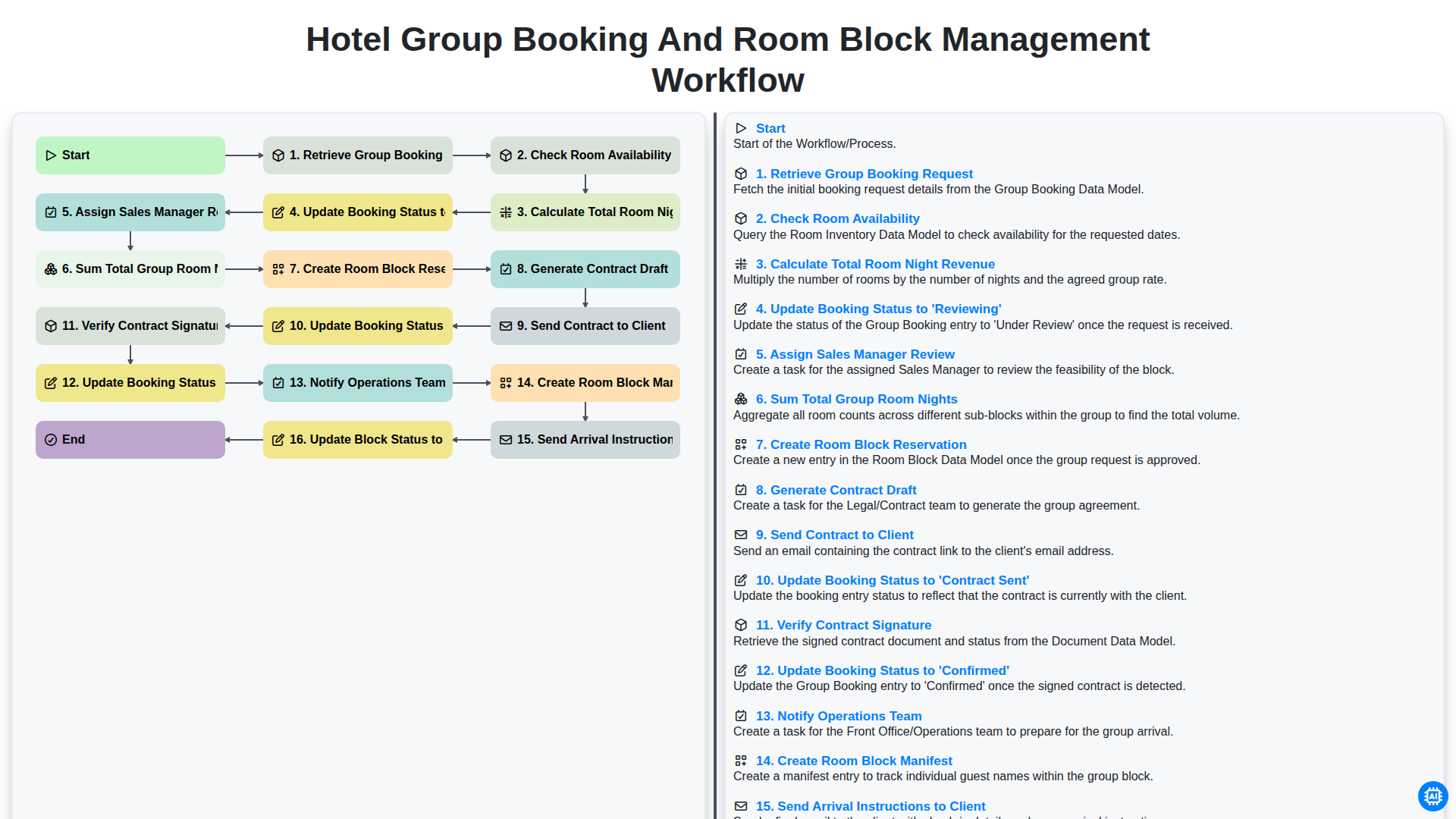
Table of Contents
- Introduction: The Importance of a Structured Group Booking Workflow
- Phase 1: Initial Inquiry and Availability Assessment
- Evaluating Requests and Real-Time Inventory Checks
- Phase 2: Revenue Analysis and Preliminary Approval
- Calculating Room Night Revenue and Strategic Review
- Assigning Sales Expertise to the Lead
- Phase 3: Reservation Setup and Contract Generation
- Quantifying Group Volume and Creating the Room Block
- Drafting and Dispatching Professional Contracts
- Phase 4: Finalizing the Agreement and Confirmation
- Monitoring Contract Status and Signature Verification
- Transitioning from Sales to Operations
- Phase 5: Operational Execution and Group Preparation
- Managing the Room Block Manifest and Client Arrival Instructions
- Closing the Loop: Post-Booking Management and Block Finalization
- Resources & Links
TLDR: Streamline your group sales operations with this comprehensive guide to the Hotel Group Booking and Room Block Management workflow. Learn how to automate the journey from initial request to final confirmation, ensuring seamless coordination between sales and operations while maximizing revenue and client satisfaction.
Introduction: The Importance of a Structured Group Booking Workflow
In the fast-paced hospitality industry, managing group reservations is significantly more complex than handling individual stays. Unlike a single room booking, a group booking involves multiple stakeholders, fluctuating availability, and a high volume of interconnected details ranging from room blocks to contract negotiations. Without a standardized process, hotels risk falling into a cycle of manual errors, missed deadlines, and fragmented communication between sales and operations.
A structured group booking and room block management workflow acts as the backbone of your hotel's revenue and operational efficiency. It ensures that every request is handled with precision-from the moment a lead arrives to the moment the final room block is closed. By implementing a predefined sequence of steps, hotels can eliminate the chaos of lost requests, ensure accurate revenue forecasting, and provide a seamless, professional experience for clients. A well-defined workflow doesn't just save time; it protects your bottom line by ensuring that every potential group booking is scrutinized, documented, and executed with total accuracy.
Phase 1: Initial Inquiry and Availability Assessment
The lifecycle of a successful group reservation begins the moment an inquiry hits your inbox. The process initiates with the Retrieve Group Booking Request step, where all essential details-such as requested dates, guest count, and specific amenities-are captured. Once the request is logged, the next critical move is to Check Room Availability within your Property Management System (PMS) to ensure the requested dates can accommodate the group size without compromising existing individual bookings.
After confirming availability, the focus shifts to the financial viability of the request. The system must Calculate Total Room Night Revenue to ensure the group's potential yield aligns with your hotel's RevPAR goals. Once the preliminary math is finalized, the workflow moves into a structured evaluation period: the system will Update Booking Status to 'Reviewing' and automatically Assign Sales Manager Review. This ensures that a dedicated professional evaluates the nuances of the deal, such as food and beverage needs or special VIP requirements, before any commitments are made.
Evaluating Requests and Real-Time Inventory Checks
The foundation of a successful group booking process lies in the precision of the initial evaluation. The workflow begins the moment a Retrieve Group Booking Request action occurs. At this stage, the sales team must move quickly to capture all essential details, including requested dates, room type preferences, and specific guest requirements.
Immediately following the retrieval, the next critical step is to Check Room Availability. This real-time inventory audit ensures that the hotel can honor the request without overcommitting resources. Once availability is confirmed, the focus shifts to the financial viability of the deal by performing a task to Calculate Total Room Night Revenue. By analyzing the potential yield of the group, the hotel can determine if the booking aligns with revenue management goals.
To maintain organized communication and prevent manual errors, the system must then Update Booking Status to 'Reviewing'. This ensures that all stakeholders are aware that a live negotiation is in progress. Finally, to ensure professional oversight, the process concludes this phase by performing an Assign Sales Manager Review, ensuring that a dedicated expert is assigned to vet the specifics of the request before moving toward the contracting stage.
Phase 2: Revenue Analysis and Preliminary Approval
Once the initial group booking request is retrieved and the preliminary availability check is complete, the focus shifts from simple inquiry to a detailed financial evaluation. This phase is critical to ensure that the potential booking aligns with the hotel's revenue goals and inventory strategy.
The first step in this stage involves calculating the Total Room Night Revenue to understand the overall value of the group. To get a comprehensive view of the group's impact on inventory, the system must also Sum Total Group Room Nights, allowing the management team to see exactly how many unit-nights will be committed to this single contract.
With the financial data prepared, the workflow moves into an internal evaluation period. The Booking Status is updated to 'Reviewing', signaling to the sales team that the request is under active scrutiny. During this time, the system triggers the Assign Sales Manager Review step, ensuring that a designated expert evaluates the pricing, terms, and potential displacement of other high-value bookings. This rigorous analysis ensures that every group block accepted contributes positively to the hotel's bottom line before any formal commitments are made to the client.
Calculating Room Night Revenue and Strategic Review
Once the initial availability check is complete, the next critical step in the workflow is to Calculate Total Room Night Revenue. This involves multiplying the number of rooms requested by the number of nights in the stay, multiplied by the agreed-upon group rate. This calculation is vital because it determines the-potental value of the booking and helps the hotel prioritize high-value leads.
After the revenue calculation, the system automatically Updates the Booking Status to 'Reviewing'. At this stage, the workflow triggers an Assign Sales Manager Review action. This ensures that a dedicated professional evaluates the group's specific requirements, such as special dietary needs, meeting space needs, or VIP amenities, alongside the financial feasibility of the deal. During this review, the manager will also Sum Total Group Room Nights, providing a clear metric of the group's scale, which is essential for long-term forecasting and inventory planning.
Assigning Sales Expertise to the Lead
Once a group booking request has been reviewed and the potential revenue has been assessed, the workflow moves into a critical phase of human oversight. Transitioning the booking status to 'Reviewing' is not merely a clerical update; it is the trigger for professional intervention. At this stage, the system or coordinator assigns the lead to a specific Sales Manager. This step ensures that every high-value opportunity is paired with a dedicated expert who can evaluate the specific nuances of the request, negotiate terms, and provide the personalized touch necessary to convert a prospect into a confirmed guest. By assigning a dedicated manager, the hotel ensures accountability and a seamless transition from initial inquiry to personalized service.
Phase 3: Reservation Setup and Contract Generation
Once the initial feasibility check is complete and the sales manager has approved the proposal, the workflow transitions from evaluation to formal documentation. This phase is critical as it transforms a verbal or email-based inquiry into a legally binding agreement.
The process begins with the creation of the room block reservation within the property management system to ensure the requested inventory is internally reserved and protected from overbooking. Following this, the system moves to generate a contract draft, which outlines the specific terms, conditions, and concessions agreed upon during the negotiation phase.
Once the draft is prepared, the next step is to send the contract to the client for formal review. During this period, the workflow triggers an automated update of the booking status to 'Contract Sent', allowing the sales team to track the progress of the lead. The final milestone in this phase is the verification of the contract signature; once the signed document is received and validated, the booking status is updated to 'Confirmed', officially moving the group from a pending inquiry to a secured piece of business.
Quantifying Group Volume and Creating the Room Block
Once the initial request is reviewed and availability is confirmed, the process shifts from inquiry to precise quantification. This stage is critical for ensuring both profitability and operational feasibility. The first step involves calculating the Total Room Night Revenue, a vital metric that determines the potential value of the booking and dictates the level of priority the group receives. Alongside this, the workflow requires a meticulous calculation to Sum Total Group Room Nights, which provides the true scale of the commitment and allows the revenue management team to assess the impact on the hotel's overall inventory.
With these figures established, the transition from a potential lead to a structured reservation begins. The next step is to Create the Room Block Reservation within the Property Management System (PMS), effectively carving out the necessary inventory to prevent overbooking. This formalizes the group's footprint within the hotel's calendar, setting the foundation for the administrative and legal steps that follow.
Drafting and Dispatching Professional Contracts
Once the initial availability and revenue calculations are finalized, the workflow moves into the critical phase of formalizing the agreement. This stage begins with the Generation of a Contract Draft, a step where all negotiated terms-including room rates, group dates, and specific concessions-are meticulously documented. An accurate draft is essential to prevent disputes and ensure that the group's expectations align perfectly with the hotel's capabilities.
After the draft is prepared, the next step is to Send the Contract to the Client. This is a pivotal moment in the sales cycle; the speed and professionalism of this delivery can significantly influence the client's perception of your service. To maintain clear communication and internal transparency, the system must immediately Update the Booking Status to 'Contract Sent'. This ensures that the sales team and management are aware that the ball is now in the client's court, allowing for organized follow-ups and preventing any overlap in communication.
Phase 4: Finalizing the Agreement and Confirmation
Once the initial negotiations are complete, the workflow transitions from the sales phase into the critical stage of formalizing the commitment. This phase is where the verbal agreement transforms into a binding legal and operational reality.
The process begins with the generation of a contract draft, which meticulously outlines the agreed-upon rates, room types, and terms. To ensure transparency and maintain momentum, this contract is promptly sent to the client for their review. During this period, the system automatically updates the booking status to 'Contract Sent', allowing the sales team to track the progress of the negotiation in real-time.
The turning point of this phase occurs when the hotel verifies the contract signature. Upon receiving the signed document, the workflow triggers an essential status change, updating the booking status to 'Confirmed'. This milestone signifies that the revenue is no longer a projection but a secured part of the hotel's upcoming inventory.
With the agreement secured, the focus shifts toward operational readiness. The system automatically triggers a notification to the operations team, ensuring that front office, housekeeping, and food and beverage departments are aware of the upcoming group. To facilitate a seamless check-in experience, the workflow continues by creating a room block manifest, providing the staff with a detailed breakdown of the guest list. Finally, to ensure guest satisfaction begins even before they arrive, the arrival instructions are sent to the client, providing them with all the necessary logistics for their stay.
Monitoring Contract Status and Signature Verification
Once the contract draft has been dispatched to the client, the workflow transitions into a critical period of follow-up and administrative oversight. Monitoring the contract status is essential to ensure that the group booking does not stall in the Contract Sent stage. During this phase, the sales team must track the document's progress, addressing any client inquiries or requested amendments promptly to maintain momentum.
The process reaches a pivotal milestone when the Verify Contract Signature step is completed. This stage serves as the official validation point, confirming that all terms, conditions, and pricing have been formally accepted by the client. Once the signature is verified, the system triggers an automated update to change the booking status to 'Confirmed'. This transition is crucial, as it signifies the shift from a pending negotiation to a secured reservation, officially moving the group from the sales pipeline into the hotel's active operational records.
Transitioning from Sales to Operations
The true complexity of group management lies in the handoff between the initial sales negotiation and the eventual on-site execution. While the sales phase focuses on securing the commitment and finalizing the contract, the transition to operations is where the promise made to the client must be translated into actionable data.
This critical phase begins once the booking status moves to Confirmed. At this juncture, the responsibility shifts from the Sales Manager to the Operations Team. It is no longer just about revenue and signatures; it is about logistics, inventory, and guest experience. To ensure a seamless transition, the workflow must move systematically from high-level contract details to granular operational data, specifically through the creation of a Room Block Manifest.
A successful transition ensures that the staff on the floor-from Front Office to Housekeeping-are not working from a static contract, but from a live, accurate representation of the group's needs. By automating the flow of information from the sales contract to the operational manifest, hotels can eliminate manual entry errors, prevent overbooking, and ensure that the arrival instructions sent to the client perfectly align with the hotel's actual capacity and service capabilities. Moving from Contract Sent to Closed requires a unified data loop that keeps all departments synchronized.
Phase 5: Operational Execution and Group Preparation
Once the contract is fully executed and the booking status is officially updated to 'Confirmed', the focus shifts from sales to seamless operational delivery. This phase is critical for ensuring that the promises made during the negotiation stage are translated into a flawless guest experience.
The process begins with the internal transition of information: the Sales Manager must Notify the Operations Team, ensuring that the Front Office, Housekeeping, and Food & Beverage departments are all aligned with the group's specific requirements. To bridge the gap between sales and operations, the next vital step is to Create a Room Block Manifest. This detailed document serves as the single source of truth, detailing exactly which guests are in which rooms, their arrival/departure dates, and any special VIP requests or billing instructions.
As the arrival date approaches, communication with the client remains a priority to prevent last-minute friction. We Send Arrival Instructions to the Client, providing them with all the logistical details necessary for a smooth check-in process, such as shuttle information, check-in times, and meeting room access. Finally, once the group's needs have been fully met and the stay is complete, the workflow concludes by performing the final administrative cleanup: Update Block Status to 'Closed'. This ensures that the inventory is accurately reflected in your system and that all financial reconciliations can proceed without pending reservations cluttering your active books.
Managing the Room Block Manifest and Client Arrival Instructions
Once the contract is officially verified and the booking status is updated to Confirmed, the focus shifts from sales to execution. This stage is critical for ensuring a seamless transition from the sales office to the front-of-house operations. The workflow moves into two vital sub-processes: creating the room block manifest and sending arrival instructions to the client.
The creation of the room block manifest is the backbone of successful group operations. This document serves as the single source of truth for the entire hotel team, detailing every guest within the group, their specific room types, arrival and departure dates, and any special requests or billing instructions. By generating an accurate manifest, you ensure that the Front Office, Housekeeping, and Food & Beverage teams are perfectly aligned, preventing the common pitfalls of overbooking or missed VIP amenities.
Parallel to this, communication with the client must be proactive rather than reactive. As part of the standard workflow, the final step in the pre-arrival phase is sending comprehensive arrival instructions to the client. This communication should outline everything the group needs to know: check-in procedures, shuttle information, designated meeting spaces, and contact details for the on-site coordinator.
By meticulously managing the manifest and maintaining clear communication, you bridge the gap between a signed contract and an exceptional guest experience, setting the stage for a flawless arrival.
Closing the Loop: Post-Booking Management and Block Finalization
Once the contract is signed and the booking is officially confirmed, the workflow shifts from negotiation to execution. The transition from a signed agreement to an active reservation requires precision to ensure that the promises made during the sales process are fulfilled by the operations team.
The process begins with a seamless handoff through a formal notification to the Operations Team. This ensures that front office, housekeeping, and food and beverage departments are all aligned with the incoming group's requirements. To facilitate this, a Room Block Manifest is created-a detailed document that serves as the single source of truth for the group's room assignments, guest names, and specific preferences.
As the arrival date approaches, the communication loop is closed by sending arrival instructions to the client. This final touchpoint provides the group organizer with essential details regarding check-in procedures, shuttle services, or any special amenities, ensuring they feel supported even before they step foot on the property.
Finally, once the group's arrival window has passed and all individual room reservations within the block have been processed or released, the workflow concludes by updating the Block Status to 'Closed'. This step is critical for inventory management, as it officially releases any unallocated rooms back into the general hotel inventory, preventing overbooking and ensuring maximum occupancy efficiency for future sales opportunities.
Resources & Links
- Hospitality Net: Industry-leading news and resources for hotel professionals covering operations, technology, and management trends.
- Hotel Management Network: Deep dives into hotel revenue management, group sales strategies, and operational efficiency workflows.
- Revfine: A comprehensive resource for hotel revenue management, marketing, and group booking optimization techniques.
- STR (Smith Travel Research): Essential data and benchmarks for analyzing hotel performance, occupancy, and group booking trends.
- HSMAI (Hospitality Sales and Marketing Association International): Professional development and best practices for hotel sales managers regarding contract negotiation and group sales.
Frequently Asked Questions
What is a hotel room block?
A room block is a set of hotel rooms set aside for a specific group of guests, typically held at a negotiated group rate for a defined period of time.
What is the difference between a 'courtesy block' and a 'guaranteed block'?
A courtesy block does not require a financial deposit and the hotel can release unbooked rooms without penalty, whereas a guaranteed block involves a contract where the organizer may be liable for unbooked rooms (attrition).
What are the key stages in a hotel group booking workflow?
The workflow typically includes initial inquiry and RFP (Request for Proposal) submission, negotiation of terms, contract signing, room block setup, managing the reservation period, and post-event reconciliation.
What is 'attrition' in group hotel bookings?
Attrition refers to the difference between the number of rooms blocked and the number of rooms actually picked up by the group. Most contracts include an attrition clause that specifies the minimum percentage of rooms that must be filled to avoid penalties.
How does this template help with room block management?
The template provides a structured, step-by-step framework to ensure no critical tasks-such as deadline tracking, guest list updates, or billing accuracy-are overlooked during the booking lifecycle.
When should the 'cut-off date' be managed?
The cut-off date is the deadline by which all guests must book their rooms at the group rate. After this date, unbooked rooms in the block are released back to the general hotel inventory, so management must monitor pickup closely leading up to this date.
Comments
There are no comments yet. Be the first to add one!
Hospitality Management Solution Demo
Running a hotel, restaurant, or other hospitality business is demanding. ChecklistGuro's Work OS platform simplifies management, from reservations and guest services to inventory and staff scheduling. Improve efficiency, enhance guest experience, and boost profitability! See how ChecklistGuro can transform your hospitality operations.
Related Articles
Your Ultimate Security Camera Monitoring Log Checklist Template
Payroll Processing Verification Checklist Template: Your Guide to Accuracy
Complaint Handling Checklist Template: Resolve Issues & Retain Customers

Emergency Evacuation Drill Documentation: Your Checklist Template Guide

Mastering Incident Response: Your Free Reporting Protocol Checklist Template
Conquer Your Kitchen: A Monthly Deep Cleaning Checklist Template
Mastering Food Safety: Your Free Temperature Control Checklist Template
Mastering Hand Hygiene: Your Compliance Checklist Template
Need help with
Checklists?
Have a question? We're here to help. Please submit your inquiry, and we'll respond promptly.