The Ultimate Hotel Laundry Operations & Linen Quality Control Checklist 2026: Your Guide to Flawless Fabric Management
Published: 11/22/2026 Updated: 11/23/2026
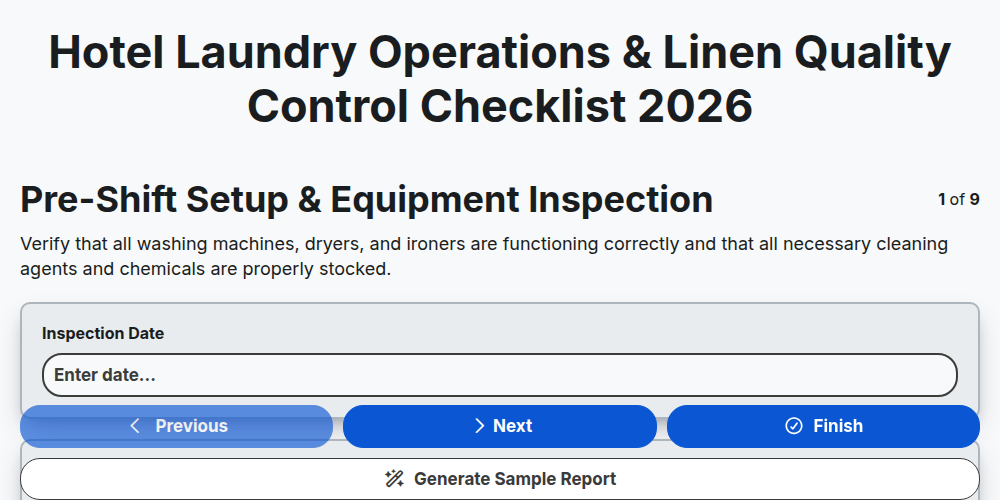
Table of Contents
- Introduction: The Critical Role of Laundry Excellence in Modern Hospitality
- Pre-Shift Setup & Equipment Inspection: Ensuring Machine Readiness
- Incoming Linen Sorting & Sorting Protocol: The Foundation of Fabric Longevity
- Washing & Sanitization Standards: Achieving 2026 Hygiene Benchmarks
- Drying & Ironing Quality Control: Achieving the Perfect Finish
- Linen Damage & Discard Log: Implementing Effective Loss Prevention
- Folding & Uniformity Standards: Maintaining the Premium Guest Experience
- Inventory Management & Stock Rotation: Optimizing Par Levels
- Post-Process Sanitation & Workspace Hygiene: Maintaining a Sterile Environment
- Staff Safety & PPE Compliance: Prioritizing Operational Security
- Conclusion: Driving Operational Efficiency Through Systematic Auditing
- Resources & Links
TLDR: Master your hotel's laundry workflow with our 2026 comprehensive checklist. Learn how to ensure premium linen quality and operational efficiency through nine critical stages, including rigorous inspection protocols, advanced sanitization standards, systematic damage tracking, and strict staff safety compliance to guarantee a flawless guest experience.
Introduction: The Critical Role of Laundry Excellence in Modern Hospitality
In the high-stakes world of premium hospitality, the guest experience is defined by the details. While a grand lobby or a gourmet breakfast might create a first impression, it is the tactile sensation of crisp, clean, and perfectly smooth linens that defines the long-term perception of luxury and hygiene. As we move into 2026, where guest expectations for sanitation and sustainability are at an all-time high, the laundry department has transitioned from a back-of-house necessity to a front-line quality driver.
The High Stakes of Linen Management
Linen is one of a hotel's most significant capital investments. Poor management doesn't just lead to uncomfortable guest stays; it leads to rapid asset depreciation. A single oversight in chemical dosing, an improperly timed drying cycle, or a failure to spot a single fraying thread can lead to premature replacement costs and, more importantly, negative online reviews regarding room cleanliness.
Beyond Cleaning: The Shift Toward Operational Precision
Modern laundry operations in 2026 are no longer just about removing stains; they are about precision engineering. Today's professionals must balance three complex pillars:
- Hyper-Sanitization: With heightened global awareness of hygiene standards, clean now means biologically safe and chemically balanced.
- Textile Longevity: Managing the lifecycle of cotton, poly-cotton blends, and delicate microfibers requires technical expertise to prevent fiber breakdown.
- Operational Efficiency: In an era of rising utility costs, optimizing water, energy, and chemical usage is vital for both the bottom line and ESG (Environmental, Social, and Governance) goals.
Implementing a standardized, rigorous checklist is the only way to ensure that every sheet, towel, and uniform meets the same gold standard, every single day. This guide provides the definitive framework to audit your processes, protect your assets, and ensure your laundry operations are a benchmark of excellence.
Pre-Shift Setup & Equipment Inspection: Ensuring Machine Readiness
Setting the Foundation for Operational Excellence
Before the first load of linen enters a machine, the success of your entire laundry cycle depends on the state of your facility. A breakdown in equipment during a peak turnover period doesn't just delay laundry; it disrupts the entire housekeeping workflow and impacts guest satisfaction.
To maintain 2026 standards of efficiency and preventative maintenance, every shift must begin with a rigorous inspection of your mechanical and structural assets.
Critical Inspection Points
Machine & Mechanical Integrity
- Washer & Dryer Health Check: Inspect drum stability and ensure there are no unusual vibrations or grinding noises during the initial empty cycle.
- Seal & Gasket Inspection: Check door seals for cracks, debris, or buildup that could lead to leaks or cross-contamination.
- Filter & Lint Trap Clearance: Verify that all lint filters are clean and that drainage filters are free from obstructions to prevent overheating and fire hazards.
- Utility Supply Check: Ensure water pressure is consistent and that temperature controls are responsive to programmed settings.
Utility & Environment Audit
- Chemical Dispensing Systems: Confirm that automated dosing pumps are functional and that detergent, bleach, and softener reservoirs are adequately replenished.
- Steam & Ironing Station Check: For facilities using steam presses, inspect hoses for leaks and ensure steam pressure is within the optimal operating range.
- Ventilation & Airflow: Ensure extraction fans are operational to prevent excessive humidity buildup, which can lead to mildew in the laundry environment.
Operational Readiness
- Energy & Water Metering: Briefly review recent utility usage patterns to identify any sudden spikes that might indicate hidden leaks or inefficient cycles.
- Workspace Perimeter: Clear all debris from the floor around machines to prevent tripping hazards and ensure unobstructed access to emergency shut-off valves.
Incoming Linen Sorting & Sorting Protocol: The Foundation of Fabric Longevity
The efficiency of your entire laundry cycle is determined before a single machine is even turned on. The moment soiled linens arrive at the processing area, the Sorting Protocol begins. Improper sorting is the leading cause of fabric degradation, premature wear, and costly mechanical issues in industrial washers.
To maintain 2026 hospitality standards, your team must move beyond simple separation and implement a systematic approach to fabric triage.
The Gold Standard of Sorting Protocols
Effective sorting is not just about separating whites from colors; it is about managing the chemical and mechanical stress applied to each item. A rigorous protocol should include:
1. Categorization by Fabric Type and Weight
Mixing heavy-duty bath mats with delicate pillowcases leads to mechanical abrasion, where heavier fabrics physically damage finer fibers during the wash cycle.
- Heavyweight: Bath mats, towels, and heavy robes.
- Mediumweight: Bed sheets, duvet covers, and pillowcases.
- Lightweight/Delicate: Napkins, table runners, and specialized staff uniforms.
2. Soil Level Segregation
Not all dirty is created equal. To optimize water and detergent usage, linens should be categorized by their level of contamination:
- Lightly Soiled: Standard guest use with minimal staining.
- Heavily Soiled: High organic matter, oils, or visible staining that requires pre-treatment or intensive chemical dosing.
- Chemically Contaminated: Items requiring specialized neutralization (e.g., linens exposed to specific cleaning agents or spills).
3. Temperature-Specific Grouping
In 2026, sustainability is non-negotiable. Sorting linens by their required wash temperature prevents thermal shock to fibers and allows your facility to run energy-efficient, low-temperature cycles whenever possible.
The Pre-Wash Inspection Step
Before any item enters a machine, the sorting protocol must include a visual inspection for:
- Foreign Objects: Checking pockets or folds for debris, hairpins, or trash that can clog filters or damage drums.
- Stain Identification: Flagging high-priority stains for targeted spot-treatment during the pre-wash phase.
- Hardware Check: Ensuring zippers, buttons, or Velcro are secured to prevent snagging other linens in the load.
Why This Matters for Your Bottom Line
A disciplined sorting protocol reduces the Linen Replacement Rate (LRR). By treating each piece of fabric according to its specific needs, you extend the lifecycle of your inventory, ensure consistent brightness in whites, and prevent the graying effect that ruins the premium feel of luxury hotel linens.
Washing & Sanitization Standards: Achieving 2026 Hygiene Benchmarks
Maintaining the Gold Standard of Cleanliness
In 2026, clean is no longer enough. With the evolution of guest expectations and heightened global health awareness, hotel laundry operations must transition from simple cleaning to advanced sanitization. To maintain premium linen quality and ensure guest safety, your washing protocols must be rigorous, measurable, and standardized.
1. Temperature & Chemical Precision
The foundation of effective sanitization lies in the synergy between thermal energy and chemical efficacy.
- Thermal Sanitization Verification: Ensure wash cycles meet the specific temperature thresholds required to eliminate pathogens (typically 60°C/140°F or higher for high-risk linens) without compromising fabric integrity.
- Chemical Dosage Accuracy: Implement automated dosing systems to ensure detergents, bleaches, and neutralizing agents are dispensed with precision. Over-dosing leads to fabric degradation; under-dosing leads to biological risks.
- pH Level Testing: Periodically test the rinse water to ensure a neutral pH. Residual alkalinity can cause skin irritation for guests and premature thinning of cotton fibers.
2. Pathogen Eradication & Disinfection Protocols
Modern laundry management requires a proactive approach to microbial control.
- Disinfection Cycle Validation: Use specialized indicators or periodic ATP (Adenosine Triphosphate) testing to verify that linens are biologically safe following the wash cycle.
- Segregation of Contaminants: Strictly follow protocols for handling soiled versus sanitized items to prevent cross-contamination within the facility.
- Enzymatic Cleaning Integration: Utilize advanced enzymatic detergents specifically designed to break down organic matter (proteins, lipids, and starches) at lower temperatures to support sustainability goals without sacrificing hygiene.
3. Fabric Integrity & Lonration Control
Sanitization should never come at the cost of textile longevity.
- Load Weight Optimization: Monitor machine capacity to prevent overloading, which prevents mechanical action and leaves center-mass items unwashed.
- Chemical Neutralization: Ensure all bleaching agents are neutralized in the final rinse phase to prevent yellowing and the breakdown of cellulose fibers, which leads to premature tearing.
- Water Hardness Monitoring: Regularly test water hardness levels; hard water buildup requires increased chemical use and accelerates the aging of high-thread-count sheets.
Drying & Ironing Quality Control: Achieving the Perfect Finish
Ensuring Crisp, Wrinkle-Free Excellence
In the luxury hospitality sector, the tactile experience of a guest is defined by the quality of the linens they touch. Once the washing cycle is complete, the transition from damp fabric to a perfectly pressed finish is where the most critical quality control occurs. The drying and ironing phase is not merely a functional step; it is the final opportunity to catch imperfections before they reach the guest room.
Monitoring the Drying Cycle
The integrity of your linen begins with temperature and moisture control. Improper drying is the leading cause of premature fiber degradation and yellowing of whites.
- Moisture Level Verification: Implement a mandatory tactile check or moisture sensor audit. Over-drying leads to brittle fibers and increased breakage, while under-drying fosters microbial growth and musty odors.
- Temperature Calibration: Ensure drying temperatures are strictly aligned with fabric compositions (e.g., cotton vs. poly-blends) to prevent shrinkage and heat damage.
- Lint Management: Schedule rigorous lint trap cleaning intervals to ensure airflow efficiency and prevent fire hazards.
Precision Ironing & Pressing Standards
The crispness of a high-thread-count sheet is a hallmark of a premium hotel. Achieving this requires a meticulous eye for detail during the pressing process.
Wrinkle & Crease Audit: Inspect every item exiting the flatwork ironer or mangle. Any visible crease or uneven texture should be flagged for re-processing immediately.
Edge & Seam Integrity: Pay close attention to the hems and edges of pillowcases and sheets. These areas are most prone to visible fraying or uneven pressing.
Starch & Chemical Consistency: If using sizing or starch, ensure even application. Over-application leads to stiffness and starchy odors, while under-application results in a limp, unprofessional appearance.
The Final Inspection Loop
Quality control in this stage must be proactive, not reactive.
4. The Zero-Defect Mindset
Every piece of linen passing through the ironer should undergo a visual scan for heat-set stains-marks that become permanent due to high temperatures. If a stain is identified during the ironing stage, it must be immediately diverted back to the pre-wash sorting phase rather than being processed further.
Linen Damage & Discard Log: Implementing Effective Loss Prevention
The Critical Role of the Discard Log in Revenue Management
In the high-stakes environment of hotel operations, linen is more than just fabric; it is a significant capital investment. Every stained, torn, or threadbare sheet that escapes detection and reaches a guest room represents not only a failure in quality control but a direct hit to your bottom line.
A robust Linen Damage & Discard Log serves as your primary defense against invisible inventory shrinkage. To maintain a premium guest experience in 2026, your laundry team must transition from simply throwing away old rags to a systematic process of data-driven loss prevention.
Standardizing the Identification Process
To ensure consistency, the team must be trained to categorize linen for disposal into specific, actionable groups. A professional log should track more than just the quantity; it must document the reason for removal:
- Permanent Staining: Chemical burns, ink, or organic stains that survived the specialized treatment cycle.
- Structural Integrity Failure: Holes, fraying edges, or thinning fabric that compromises the crisp feel guests expect.
- Unserviceable Damage: Tears caused by machinery or improper handling during the sorting phase.
- End-of-Life (Natural Wear): Linen that has reached its maximum number of wash cycles and has lost its absorbent or aesthetic properties.
Data-Driven Decision Making
A well-maintained log does more than track loss; it provides the intelligence needed to optimize your entire laundry workflow. By reviewing your weekly or monthly discard data, management can identify patterns that point to operational inefficiencies:
- Are stains increasing? This may indicate a need to recalibrate your chemical dosing or inspect your water filtration system.
- Is tearing on the rise? This is a red flag for equipment maintenance, suggesting that rollers or drums may be causing mechanical damage.
- Is there a spike in unexplained losses? This could signal a need for tighter security protocols during the sorting and distribution phases.
Best Practices for 2026 Implementation
To maximize the utility of your discard log, move away from paper-only methods. We recommend implementing Digital Tracking Integration. Utilizing a tablet-based logging system allows for real-time updates to your inventory management software. This ensures that when a piece of linen is marked as discarded, your procurement team is instantly notified, preventing the dangerous phantom inventory trap where your records show more stock than is physically present in the facility.
By treating the Discard Log as a diagnostic tool rather than a simple trash tally, you transform your laundry department from a cost center into a precision-driven pillar of your hotel's luxury standard.
Folding & Uniformity Standards: Maintaining the Premium Guest Experience
The Art of the Perfect Fold: Beyond Simple Neatness
In the luxury hospitality sector, the guest experience begins long before a staff member greets them at the front desk; it begins the moment they touch the linens. When a guest rests their head on a pillow or settles into a freshly made bed, the tactile sensation of the fabric communicates your hotel's standard of cleanliness and care.
Folding and uniformity are not merely housekeeping tasks-they are the final layer of quality control that ensures brand consistency across every room in your property.
The Gold Standard of Uniformity
Consistency is the hallmark of a professional laundry operation. A disorganized linen closet, filled with sheets folded in varying sizes or stacked unevenly, signals a lack of attention to detail. To achieve a 2026 standard of excellence, your team must adhere to the following:
- Standardized Dimensions: Every sheet, towel, and duvet cover must be folded to exact, pre-determined dimensions. This ensures that when housekeeping staff enter a room, the linen stacks are uniform, making it easier to perform rapid, high-quality bed making.
- Edge Alignment: The seam-to-edge rule is critical. All folded edges must align perfectly, with no raw edges or loose corners visible to the eye.
- The Flatness Test: Inspect every piece of linen for trapped air or wrinkles. A puffy fold can lead to unevenness in the final bed presentation, disrupting the sleek, modern aesthetic required in contemporary hotel design.
Precision Folding Techniques by Category
To maintain efficiency and quality, implement specific protocols for different linen types:
Terry Cloth & Towels
- The Triple-Fold Method: For bath towels, ensure the edges are tucked inward to hide any frayed or rough textures.
- Consistent Stack Height: Standardize the number of towels per stack (e.g., stacks of 5 or 10) to allow for quick visual inventory counts.
Bed Linens (Sheets & Pillowcases)
- Seamless Layering: When folding flat sheets, ensure the weight is distributed evenly to prevent lumps in the fold.
- Pillowcase Precision: Pillowcases should be folded so that the opening is tucked neatly inside, preventing the unraveling look during guest use.
Visual Inspection: The Final Gatekeeper
The folding station serves as your final checkpoint. Before any linen is moved to the storage or distribution area, it must pass a final visual audit. If a piece of linen does not meet the uniformity criteria, it should be rerouted back to the ironing or smoothing stage rather than being allowed to enter the clean linen inventory. This prevents quality drift, where small errors slowly accumulate and eventually degrade your brand's reputation.
Inventory Management & Stock Rotation: Optimizing Par Levels
Maintaining the Balance: The Core of Laundry Efficiency
Effective laundry management isn't just about cleaning linens; it is about ensuring that your hotel never faces a linen shortage crisis during peak occupancy. In 2026, the most successful hotels are moving away from reactive ordering and toward predictive, data-driven inventory management.
To maintain seamless operations, your team must focus on two critical pillars: Par Level Optimization and Strategic Stock Rotation.
Mastering Your Par Levels
A Par Level represents the minimum amount of linen required to support your hotel's daily operations, including enough for the rooms in use, the rooms being cleaned, and a buffer for emergencies. For a high-standard operation, a standard 3-to-5 par system is recommended.
To optimize your levels, your checklist must include:
- Occupancy-Based Audits: Regularly recalculating par levels based on seasonal occupancy forecasts.
- Buffer Management: Accounting for in-process linen (items currently being washed, dried, or folded) to ensure it is never counted as available stock.
- Discrepancy Tracking: Identifying the gap between your physical count and your digital inventory records to spot shrinkage or loss early.
The FIFO Method: Implementing Systematic Stock Rotation
One of the most overlooked aspects of linen longevity is how you store and retrieve your stock. If new, crisp linens are always placed on top of the stack, the linens at the bottom will sit idle for months, leading to fabric degradation, dust accumulation, and stale odors.
Implement a FIFO (First-In, First-Out) protocol to ensure consistent quality:
- The Rotation Rule: Always place newly laundered, warm linen at the bottom of the stack or at the back of the shelf, pushing older, clean stock to the front for immediate use.
- Uniformity of Age: Rotating stock ensures that all linens undergo the same wear-and-tear cycle, preventing a mismatched look where some towels appear brand new while others look aged.
- Seasonal Rotation: For hotels with seasonal fluctuations, ensure that seasonal linens (such as heavy duvets or summer-weight sheets) are rotated out of active use and stored in climate-controlled environments to prevent moisture buildup.
Digital Integration for 2026
As we move into 2026, manual clipboards are becoming obsolete. To truly optimize management, integrate your checklist with RFID (Radio Frequency Identification) technology. By tagging your linens, you can automate the tracking of every single item through the washing, drying, and distribution phases, making your inventory audits a matter of minutes rather than hours.
Post-Process Sanitation & Workspace Hygiene: Maintaining a Sterile Environment
Maintaining a Sterile Environment Beyond the Wash Cycle
In 2026, the standards for hospitality hygiene have evolved. It is no longer enough to ensure that the linen itself is clean; the environment in which that linen is handled must also be demonstrably sanitary. A single instance of cross-contamination in the folding area can undo hours of intensive washing and sanitization.
To ensure your laundry operations meet modern health and safety benchmarks, your post-process protocol must focus on preventing the re-contamination of clean fabrics.
Sanitizing High-Touch Surfaces
The period immediately following the drying and ironing process is a critical window for microbial control. During this phase, focus your cleaning efforts on:
- Folding Stations and Tables: These surfaces must be disinfected between every shift and after any period of downtime to prevent dust and airborne pathogens from settling on fresh linens.
- Conveyor Belts and Transport Carts: Any equipment used to move clean linen from the dryer to the storage area must be wiped down regularly.
- Ironing and Pressing Equipment: Ensure that plates and rollers are free of residue that could harbor bacteria or transfer oils to clean fabrics.
Managing Air Quality and Dust Control
Clean linen is highly susceptible to airborne particulates. A high-functioning laundry facility must implement:
- Regular Air Filtration Checks: Ensure that HVAC systems and lint extraction units are functioning optimally to reduce the presence of airborne fibers and dust.
- Dust Mitigation Protocols: Implement a schedule for cleaning the surrounding floor area and shelving units to prevent settled dust from compromising the integrity of your clean stock.
The Clean Zone Boundary
Effective hygiene management requires a strict physical separation between the Soiled and Clean zones.
- Cross-Contamination Prevention: Ensure that cleaning tools (mops, cloths, and sprays) used in the washing area are never used in the folding or storage area.
- Sanitary Transitions: Implement a strict cleaning schedule for the transition points where staff move from the heavy-duty washing zone to the delicate folding zone.
Hand Hygiene and Surface Sanitation Schedule
A checklist is only as effective as its execution. Ensure your staff follows a documented sanitation rhythm:
- Pre-Handling Sanitization: Mandatory hand sanitization before touching any processed, dry linen.
- Scheduled Deep Cleans: Weekly deep-cleans of the entire workspace, including walls, ceilings, and storage racks.
- Post-Shift Wipe-Down: A mandatory end-of-shift ritual where all work surfaces are neutralized and prepared for the next cycle.
Staff Safety & PPE Compliance: Prioritizing Operational Security
Ensuring a Safe Environment for Your Team
In the modern hospitality landscape of 2026, operational excellence is inseparable from employee well-being. A high-functioning laundry department relies on a healthy, injury-free workforce. Neglecting safety protocols doesn't just risk staff well-being; it introduces unpredictable downtime that can cripple your hotel's room turnaround efficiency.
Adherence to PPE Protocols
Personal Protective Equipment (PPE) is the first line of defense against the chemical and biological hazards inherent in large-scale laundering. A rigorous inspection must ensure that all team members are correctly utilizing:
- Chemical-Resistant Gloves: Mandatory when handling concentrated detergents, bleaches, and sanitizing agents to prevent chemical burns and dermatitis.
- Respiratory Protection: Essential during the handling of dry chemical powders and in environments where lint accumulation might affect air quality.
- Eye Protection: Required during the decanting of chemicals and high-pressure cleaning tasks to prevent accidental splashes.
- Heat-Resistant Gear: Specialized gloves and aprators for staff operating near industrial dryers and steam ironers to mitigate thermal injury risks.
Hazard Mitigation and Ergonomic Awareness
Beyond physical gear, safety compliance extends to the way tasks are performed. As we move into 2026, training must focus on the invisible risks of laundry operations:
Chemical Safety & SDS Management
Every staff member must have immediate, unobstructed access to Safety Data Sheets (SDS). Regular audits should ensure that all chemical containers are correctly labeled and that secondary containment systems are intact, preventing accidental exposure or environmental leaks.
Ergonomic Best Practices
The repetitive nature of folding, sorting, and lifting heavy, damp linens poses a significant risk for musculoskeletal disorders (MSDs). Compliance checklists should include:
- Lifting Training: Periodic reinforcement of proper biomechanics to prevent back injuries.
- Station Height Audits: Ensuring that sorting and folding tables are ergonomically positioned to minimize excessive bending or reaching.
- Mechanical Aid Utilization: Ensuring that laundry carts and trolleys are in top working condition to reduce manual pushing/pulling strain.
Machinery & Electrical Safety
Safety compliance is not complete without a rigorous check of the mechanical environment. This includes verifying that all emergency stop buttons are functional, lint filters are cleaned according to schedule to prevent fire hazards, and electrical cords are inspected for any signs of wear or fraying. By integrating these safety checks into your daily routine, you transform your laundry room from a high-risk zone into a controlled, professional, and highly efficient production center.
Conclusion: Driving Operational Efficiency Through Systematic Auditing
Maximizing ROI Through Precision Laundry Management
Implementing a standardized checklist is not merely about maintaining cleanliness; it is a strategic move toward long-term cost containment and guest satisfaction. In the competitive landscape of 2026, where sustainability and hyper-efficiency are the benchmarks of luxury, the difference between a profitable laundry operation and a mounting loss lies in the details of your quality control.
Beyond the Checklist: A Culture of Excellence
A checklist should never be a static document gathering dust on a clipboard. To truly drive operational efficiency, it must serve as the foundation for a culture of accountability. When your team moves from doing the laundry to managing textile assets, the benefits manifest in three critical areas:
- Asset Longevity: By strictly adhering to the Washing & Sanitization Standards and Drying & Ironing Quality Control, you significantly reduce the degradation of fibers, extending the lifecycle of your linens and delaying expensive replacement cycles.
- Operational Transparency: A robust Linen Damage & Discard Log paired with Inventory Management provides management with the data needed to identify patterns in loss or damage, allowing for targeted training or equipment maintenance.
- Risk Mitigation: Prioritizing Staff Safety & PPE Compliance and Post-Process Sanitation protects your most valuable resource-your people-while ensuring your facility meets the highest global hygiene standards.
Moving Toward a Predictive Future
As we look toward the remainder of 2026, the integration of digital auditing-where these checklist steps are recorded via real-time mobile platforms-will become the industry standard. Moving away from manual paper logs toward digital oversight allows for instant visibility into Incoming Linen Sorting discrepancies and Stock Rotation delays.
By treating every step-from Pre-Shift Setup to Post-Process Sanitation-as a measurable KPI, you transform your laundry department from a back-of-house necessity into a high-performing engine of hospitality excellence. Start implementing these checkpoints today to ensure your linen quality remains as impeccable as your hotel's reputation.
Resources & Links
- Hotel Management Network: Industry news and operational insights for hospitality professionals focusing on efficiency and guest satisfaction.
- Hospitality Net: Global hospitality intelligence providing trends in hygiene standards and modern hotel management.
- CDC - Guidelines for Environmental Infection Control: Essential benchmarks for sanitation and disinfection protocols in high-traffic environments.
- Milnor: Leading manufacturer of commercial laundry equipment and advanced washing technologies for hospitality.
- Alliance Laundry Systems: Global leader in commercial washer-extractor and dryer technology for large-scale operations.
- Textile World: Technical resources regarding fabric durability, fiber types, and textile manufacturing standards.
- LinenPro Systems: Specialized solutions for automated folding and finishing equipment to ensure linen uniformity.
- Hotel Resources: Tools and strategies for managing hotel assets, inventory, and operational overhead.
- Infor Hospitality: Advanced ERP and inventory management software solutions for large-scale hotel operations.
- OSHA - Occupational Safety and Health Administration: Regulatory guidelines for workplace safety, chemical handling, and PPE compliance in industrial settings.
- National Safety Council: Resources for implementing safety programs and reducing workplace injuries in operational environments.
- Revfine: Comprehensive guides on hotel operational management and optimizing service quality.
- ScienceDirect: Academic research on laundry chemistry, disinfection efficacy, and material science.
- ISS World: Best practices for facility management and integrated cleaning/laundry service standards.
- HACCP International: Principles of systematic auditing and hygiene control applicable to sanitary operations.
- SME (Society of Manufacturing Engineers): Advanced methodologies for process optimization and operational efficiency auditing.
Comments
There are no comments yet. Be the first to add one!
Hospitality Management Solution Demo
Running a hotel, restaurant, or other hospitality business is demanding. ChecklistGuro's Work OS platform simplifies management, from reservations and guest services to inventory and staff scheduling. Improve efficiency, enhance guest experience, and boost profitability! See how ChecklistGuro can transform your hospitality operations.
Related Articles
Your Ultimate Security Camera Monitoring Log Checklist Template
Payroll Processing Verification Checklist Template: Your Guide to Accuracy
Complaint Handling Checklist Template: Resolve Issues & Retain Customers

Emergency Evacuation Drill Documentation: Your Checklist Template Guide

Mastering Incident Response: Your Free Reporting Protocol Checklist Template
Conquer Your Kitchen: A Monthly Deep Cleaning Checklist Template
Mastering Food Safety: Your Free Temperature Control Checklist Template
Mastering Hand Hygiene: Your Compliance Checklist Template
Need help with
Hospitality?
Have a question? We're here to help. Please submit your inquiry, and we'll respond promptly.