How to improve your Supply Chain Management (SCM)
Published: 12/20/2025 Updated: 12/21/2025
Table of Contents
- What is Supply Chain Management (SCM)? A Quick Overview
- Why is SCM Improvement Crucial for Your Business?
- Common SCM Challenges Businesses Face
- The Power of Checklists in SCM
- Key SCM Checklists to Implement
- Supplier Management Checklist: Building Strong Relationships
- Inventory Control Checklist: Optimizing Stock Levels
- Warehouse Management Checklist: Efficiency in Storage
- Logistics and Transportation Checklist: Streamlining Delivery
- Risk Management Checklist: Preparing for Disruptions
- How to Use SCM Checklists Effectively
- Integrating Checklists with Your SCM Software
- Measuring the Impact of SCM Checklist Implementation
- Beyond Checklists: Further SCM Optimization Strategies
- Resources & Links
TLDR: Streamline your supply chain with easy-to-use checklists! This post introduces practical checklist templates covering key SCM areas like supplier management, inventory control, and logistics. Download them now to improve visibility, reduce risk, and boost efficiency - perfect for businesses seeking SCM software solutions.
What is Supply Chain Management (SCM)? A Quick Overview
Supply Chain Management (SCM) isn't just about logistics; it's the orchestration of everything involved in getting a product or service from raw materials to the end consumer. Think of it as the entire journey - from sourcing materials, manufacturing, warehousing, transportation, distribution, and finally, to the customer's doorstep (or inbox!).
Effective SCM encompasses a network of interconnected processes and organizations. It's about building relationships with suppliers, optimizing inventory levels, managing transportation costs, and ensuring product quality. Poor SCM can lead to delays, increased costs, and dissatisfied customers, while a well-managed supply chain can be a significant competitive advantage, leading to increased profitability, improved responsiveness to market changes, and enhanced customer loyalty. It's a complex system, but understanding its core components is the first step toward improvement.
Why is SCM Improvement Crucial for Your Business?
In today's dynamic business landscape, a robust and efficient Supply Chain Management (SCM) system isn't just a "nice-to-have" - it's a critical engine for survival and growth. Poor SCM can lead to a cascade of negative consequences, impacting everything from customer satisfaction to your bottom line.
Think about it: delayed shipments can frustrate customers and damage your brand reputation. Inaccurate inventory management leads to stockouts or, conversely, costly overstocking. Weak supplier relationships can expose you to price volatility and unreliable deliveries.
Beyond these immediate concerns, inadequate SCM can hamper your ability to adapt to market changes, seize new opportunities, and remain competitive. A well-managed supply chain, on the other hand, provides a foundation for:
- Reduced Costs: Optimizing processes, negotiating better supplier rates, and minimizing waste directly impact profitability.
- Increased Efficiency: Faster delivery times, streamlined workflows, and reduced errors translate to a more productive and agile business.
- Enhanced Customer Satisfaction: Reliable product availability and on-time delivery build trust and loyalty.
- Improved Risk Management: Proactive identification and mitigation of supply chain disruptions minimizes potential losses.
- Greater Agility: A flexible supply chain allows you to respond quickly to changes in demand, market trends, or unforeseen events.
Investing in SCM improvement is an investment in the long-term health and resilience of your business. Let's explore some practical steps you can take to achieve this.
Common SCM Challenges Businesses Face
Many businesses, especially those experiencing growth or operating in complex markets, grapple with a variety of Supply Chain Management (SCM) challenges. These aren't always easily overcome and often require a combination of process improvements, technology adoption, and strategic planning. Here are some of the most common hurdles we see:
- Lack of Visibility: A significant problem is often the inability to track goods and information across the entire supply chain. This opacity can lead to delays, lost inventory, and difficulty responding to disruptions.
- Poor Supplier Management: Relying on unreliable suppliers, inadequate contract negotiations, and a lack of performance monitoring can negatively impact quality, cost, and delivery times.
- Inefficient Inventory Management: Holding too much inventory ties up capital and increases storage costs, while too little can lead to stockouts and lost sales. Balancing these is crucial.
- Transportation and Logistics Issues: Rising fuel costs, driver shortages, and complex shipping regulations can create significant logistical headaches and impact delivery schedules.
- Demand Forecasting Inaccuracies: Inaccurate forecasts lead to either overstocking or understocking, disrupting the entire supply chain.
- Risk Management Deficiencies: Failing to identify and mitigate potential risks (natural disasters, political instability, cyberattacks) can have devastating consequences.
- Lack of Collaboration: Siloed departments and limited communication between suppliers, manufacturers, and retailers can lead to inefficiencies and miscommunication.
- Technology Adoption Barriers: Resistance to adopting new SCM technologies, or choosing the wrong solutions, can hinder process optimization and data integration.
- Sustainability Concerns: Growing pressure to reduce environmental impact and ensure ethical sourcing adds complexity to SCM processes.
The Power of Checklists in SCM
Checklists aren't just for pilots or surgeons anymore; they're a vital tool for modern Supply Chain Management. In a world of increasingly complex global networks, fluctuating demands, and potential disruptions, relying solely on memory or ad-hoc processes simply isn't sustainable. A well-designed SCM checklist brings structure and consistency to critical operations, significantly reducing the risk of errors and omissions.
Think of it this way: your supply chain involves numerous steps, from sourcing raw materials to delivering finished goods to the customer. Each step has inherent risks - supplier delays, quality control issues, transportation bottlenecks, and more. A checklist acts as a proactive safeguard, ensuring each step is completed correctly and according to established procedures. It provides a clear roadmap, minimizing the potential for costly mistakes and improving overall performance. Beyond error prevention, checklists promote standardization, making training easier for new team members and facilitating audits for compliance. Ultimately, they are a foundational element of a robust and resilient SCM strategy.
Key SCM Checklists to Implement
Here's a breakdown of essential checklists you should consider implementing to bolster your Supply Chain Management:
1. Supplier Evaluation & Onboarding Checklist: This checklist ensures you thoroughly vet potential suppliers, assess their capabilities, compliance, and financial stability before bringing them into your supply chain. It covers everything from initial inquiries to contract negotiation and performance monitoring. A strong supplier base is the foundation of a resilient supply chain.
2. Inventory Management Checklist: Keeping track of your stock is vital. This checklist helps you establish optimal inventory levels, minimize stockouts and overstocking, and accurately forecast demand. It includes checks for cycle counting, ABC analysis, and implementing a system for tracking expiration dates (especially crucial for perishable goods).
3. Procurement Process Checklist: This detailed checklist outlines each step in your procurement process, from requisitioning to purchase order creation and invoice reconciliation. It helps ensure compliance with company policies, optimizes spending, and prevents errors.
4. Logistics & Transportation Checklist: Managing the movement of goods can be complex. This checklist covers everything from route optimization and carrier selection to documentation verification and delivery confirmation. It helps reduce transportation costs and minimize delays.
5. Warehouse Operations Checklist: A well-managed warehouse is essential. This checklist focuses on areas like receiving, storage, picking, packing, and shipping. It helps optimize warehouse layout, improve efficiency, and reduce errors.
6. Risk Management Checklist: Identify and mitigate potential disruptions. This checklist helps you assess vulnerabilities in your supply chain, develop contingency plans, and ensure business continuity in the face of unforeseen events (natural disasters, supplier failures, geopolitical instability).
7. Quality Control Checklist: Maintaining product or service quality throughout the supply chain is paramount. This checklist outlines steps for quality inspections, defect tracking, and corrective action implementation.
8. Sustainability Checklist: Increasingly, businesses are focusing on ethical and sustainable sourcing. This checklist helps assess suppliers' environmental and social responsibility practices, ensuring alignment with your company's values.
9. Order Fulfillment Checklist: From order receipt to final delivery, this checklist helps ensure a seamless customer experience and minimizes fulfillment errors. This can include checking for accurate picking, packing, and shipping details.
Using ChecklistGuro's Customizable Templates: Remember, these checklists are a starting point. With ChecklistGuro, you can easily customize them to fit your specific business processes and industry requirements. We offer flexibility to add, remove, or modify checklist items, ensuring they remain relevant and effective over time.
Supplier Management Checklist: Building Strong Relationships
Your suppliers are the backbone of your supply chain. A strong, reliable supplier network directly impacts your ability to deliver quality products or services on time and within budget. But managing suppliers effectively can be a complex and time-consuming task. This checklist is designed to help you nurture strong supplier relationships, minimize risks, and ensure consistent performance.
Here's what you'll find covered:
- Supplier Onboarding: Standardize your onboarding process to ensure all new suppliers understand your expectations and requirements.
- Performance Evaluation: Regularly assess supplier performance based on key metrics like quality, delivery time, and responsiveness.
- Contract Management: Keep track of contract terms, renewal dates, and any ongoing negotiations.
- Risk Assessment: Identify and mitigate potential risks associated with each supplier, considering financial stability, ethical practices, and geographic location.
- Communication & Collaboration: Foster open communication channels and collaborative problem-solving to build trust and address issues proactively.
- Sustainability & Ethical Sourcing: Ensure your suppliers adhere to your company's sustainability and ethical sourcing policies.
- Emergency Preparedness: Outline procedures for handling disruptions or emergencies impacting supplier operations.
By consistently utilizing this checklist, you can cultivate a supplier network that's not just reliable, but also contributes to your overall business success. Remember, a proactive approach to supplier management is an investment in a resilient and competitive supply chain.
Inventory Control Checklist: Optimizing Stock Levels
Maintaining optimal inventory levels is a constant balancing act. Too much stock ties up capital and increases storage costs; too little can lead to lost sales and frustrated customers. This checklist focuses on strategies to ensure you have the right amount of the right products at the right time.
Here's what you'll find covered in our Inventory Control Checklist:
- Demand Forecasting: Regularly review historical sales data and market trends to predict future demand. Are you using a reliable forecasting method?
- Safety Stock Calculation: Determine the appropriate safety stock levels to buffer against unexpected demand surges or supply disruptions.
- ABC Analysis: Categorize your inventory based on value and usage frequency to prioritize management efforts. (A items need the most attention, C items the least.)
- Cycle Counting: Implement a cycle counting program to verify inventory accuracy and identify discrepancies.
- Warehouse Organization: Ensure your warehouse layout promotes efficient picking and put-away processes. Is it easy to locate items?
- Inventory Turnover Rate: Track your inventory turnover rate to assess how efficiently you're managing stock.
- Obsolete Inventory Management: Have a process for identifying and dealing with slow-moving or obsolete items. Don't let them sit and drain resources!
- Reorder Point Calculation: Establish reorder points to ensure timely replenishment.
- Supplier Lead Time Verification: Confirm the accuracy of your supplier lead times.
- Record Keeping: Maintain detailed records of all inventory movements and adjustments.
Warehouse Management Checklist: Efficiency in Storage
A well-managed warehouse is the backbone of a robust supply chain. This checklist focuses on ensuring efficient storage, minimizing errors, and maximizing space utilization. It covers key areas like receiving, put-away, picking, packing, and shipping.
Here's what you'll find in this checklist:
- Receiving: Verify incoming goods against purchase orders, inspect for damage, and accurately record receipts. Ensure proper documentation and approvals are in place.
- Put-Away: Optimize storage locations based on product velocity and accessibility. Confirm correct placement using scanning or manual verification. Implement a first-in, first-out (FIFO) rotation system.
- Inventory Accuracy: Conduct regular cycle counts and full inventory audits to maintain accurate records. Investigate and resolve discrepancies promptly. Leverage barcode scanning for enhanced precision.
- Picking & Packing: Optimize picking routes to reduce travel time. Implement proper packing techniques to prevent damage during transit. Double-check orders against packing slips.
- Shipping: Ensure timely and accurate shipments. Validate shipping addresses and carrier information. Securely package fragile items. Track shipments and provide updates to customers.
- Safety & Security: Implement safety protocols to prevent accidents and injuries. Secure the warehouse against theft and unauthorized access. Conduct regular safety inspections.
By diligently following this warehouse management checklist, you'll significantly improve your storage operations, reduce errors, and create a more efficient and responsive supply chain. This translates to lower costs, faster delivery times, and happier customers-all crucial factors for businesses exploring SCM software solutions.
Logistics and Transportation Checklist: Streamlining Delivery
Effective logistics and transportation are the arteries of your supply chain. Delays, errors, or inefficiencies here can ripple outwards, impacting everything from customer satisfaction to overall profitability. This checklist focuses on ensuring smooth and reliable movement of goods from origin to destination.
Key Areas Covered:
- Route Optimization: Evaluate routes regularly for efficiency, considering factors like traffic, weather, and fuel consumption. Use technology to automate route planning and adjust in real-time.
- Carrier Management: Assess carrier performance based on on-time delivery rates, damage claims, and cost-effectiveness. Maintain clear contracts and service level agreements.
- Vehicle Maintenance: Implement a rigorous preventative maintenance schedule to minimize breakdowns and ensure driver safety. Track maintenance records meticulously.
- Loading & Unloading Procedures: Standardize procedures to reduce the risk of damage or loss during handling. Ensure proper securing of cargo.
- Documentation & Compliance: Verify accurate and complete documentation (bills of lading, customs forms, etc.) and ensure compliance with all relevant regulations.
- Real-time Tracking & Visibility: Implement a system for real-time tracking of shipments, providing visibility for both your team and your customers.
- Delivery Confirmation: Establish a process for verifying successful delivery and obtaining confirmation from the recipient.
- Contingency Planning: Develop backup plans for potential disruptions (weather events, traffic delays, etc.).
By consistently utilizing this checklist, you can minimize transit times, reduce costs, and improve the reliability of your logistics operations.
Risk Management Checklist: Preparing for Disruptions
Supply chain disruptions are a reality. From natural disasters and geopolitical instability to supplier failures and sudden demand shifts, unexpected events can cripple operations and impact your bottom line. A robust risk management checklist is your first line of defense. This checklist isn't just about identifying potential threats; it's about proactively developing mitigation strategies and contingency plans.
Here's what this checklist will help you assess:
- Supplier Risk Assessment: Evaluate supplier financial stability, geographic location (exposure to natural disasters), and reliance on single sources.
- Geopolitical Risk Monitoring: Stay informed about political instability and trade regulations that could impact your sourcing and distribution.
- Demand Volatility Planning: Anticipate fluctuations in demand and develop flexible inventory and production strategies.
- Transportation Route Analysis: Identify alternative transportation routes and carriers to avoid bottlenecks and delays.
- Business Continuity Planning: Establish clear procedures for maintaining essential operations during a crisis, including communication protocols and backup systems.
- Cybersecurity Vulnerability Assessment: Protect your supply chain data and systems from cyberattacks.
- Force Majeure Clause Review: Understand the implications of force majeure clauses in your contracts.
By regularly reviewing and updating this checklist, you'll be better prepared to navigate unforeseen challenges and keep your supply chain resilient. Remember, proactive risk management is an ongoing process, not a one-time event.
How to Use SCM Checklists Effectively
To truly benefit from SCM checklists, it's not enough to just download them - you need a strategic approach to implementation. Here's how to use them effectively:
- Tailor to Your Business: These checklists are a starting point. Review each item and modify it to accurately reflect your unique processes, terminology, and specific needs. Remove irrelevant items and add new ones where necessary.
- Assign Responsibility: Clearly assign ownership for each checklist item. Who is responsible for completing the task, documenting the results, and escalating any issues? This ensures accountability and prevents tasks from falling through the cracks.
- Schedule Regular Reviews: Don't just complete checklists once and forget about them. Schedule regular reviews (weekly, monthly, or quarterly) to assess performance, identify areas for improvement, and update the checklists as needed.
- Integrate with Your Systems: Ideally, your checklists should be integrated with other systems, like your ERP or CRM. This automation reduces manual data entry and provides a more holistic view of your supply chain performance. While manual use is perfectly acceptable to start, consider how digital checklist solutions can streamline this further.
- Training and Communication: Ensure all relevant team members are trained on the checklist process and understand its importance. Open communication about checklist findings and suggested improvements is crucial.
- Use Data for Insights: Track completion rates, identify recurring issues, and analyze trends to uncover opportunities for process optimization and cost reduction. The data from your checklists can be powerful!
Integrating Checklists with Your SCM Software
Many modern SCM software solutions offer built-in workflow capabilities, and integrating your checklists directly into these systems can unlock even greater efficiency. Instead of managing checklists in separate spreadsheets or documents, consider these approaches:
- API Integration: Some SCM software platforms provide APIs (Application Programming Interfaces) that allow you to connect external tools, including checklist management systems. This allows for automated triggering of checklists based on events within your SCM system (e.g., a new order triggers a supplier quality check list).
- Workflow Automation: Many SCM platforms include workflow automation features. You can often design custom workflows that incorporate checklist completion as a mandatory step. This ensures that critical tasks are never overlooked and that data from the checklist is automatically captured within the SCM system.
- Embedded Checklists: Some advanced SCM systems allow you to embed checklists directly within the platform's interface. This provides a seamless user experience, consolidating all necessary information and actions in one place. Look for SCM software that allows for customizable checklist creation and integration.
- Real-time Updates: Integrated checklists provide real-time visibility into the status of various SCM processes. This allows you to proactively identify and address potential bottlenecks or issues, ensuring smooth operations.
- Data Synchronization: Integrating checklists ensures that data captured through the checklists is automatically synced with your SCM software, eliminating manual data entry and minimizing errors.
Measuring the Impact of SCM Checklist Implementation
Measuring the impact of implementing SCM checklists isn't just about ticking boxes; it's about proving the value of your efforts and justifying further investment. Here's how to track your progress and demonstrate a return on investment:
- Key Performance Indicators (KPIs): Define clear KPIs before implementation. Common SCM KPIs include:
- Order Fulfillment Rate: Percentage of orders shipped completely and on time.
- Inventory Turnover Ratio: How quickly inventory is sold and replaced. A higher ratio generally indicates efficient inventory management.
- Supplier Lead Time: Time taken for suppliers to deliver goods.
- Cost of Goods Sold (COGS): Track changes in COGS as a direct result of optimized processes.
- On-Time Delivery Rate: Percentage of deliveries made on schedule.
- Defect Rate: Number of defective products received or produced.
- Baseline Measurement: Establish a baseline for each KPI before implementing the checklists. This provides a benchmark to compare against.
- Regular Monitoring: Track KPIs regularly (weekly, monthly, quarterly) after checklist implementation. Consistent monitoring allows you to identify trends and adjust strategies.
- Qualitative Feedback: Don't neglect qualitative data. Gather feedback from your team involved in the supply chain. Their insights can reveal unexpected benefits or areas for improvement that quantitative data might miss. Surveys, interviews, and team meetings can all contribute.
- Cost Savings Analysis: Specifically track any cost savings resulting from improved efficiency, reduced errors, and better supplier relationships. Quantify these savings whenever possible.
- Reporting & Visualization: Present your findings in clear, concise reports with visualizations (charts, graphs) to easily demonstrate the impact to stakeholders.
- Iterative Improvement: Use the data collected to continuously refine your checklists and SCM processes. This shows a commitment to ongoing optimization and maximizes the return on your investment.
Beyond Checklists: Further SCM Optimization Strategies
While checklists are a fantastic starting point for SCM improvement, they're just one piece of the puzzle. True optimization requires a broader, more strategic approach. Here are some additional strategies to consider, often facilitated by dedicated SCM software:
- Demand Forecasting & Planning: Accurate forecasts minimize overstocking and stockouts, leading to cost savings and improved customer satisfaction. Leverage historical data, market trends, and predictive analytics.
- Supplier Relationship Management (SRM): Cultivate strong relationships with your suppliers. Negotiate favorable terms, collaborate on improvements, and diversify your sourcing to mitigate risk.
- Inventory Optimization: Employ techniques like Just-in-Time (JIT) inventory and Economic Order Quantity (EOQ) to balance carrying costs and avoid shortages. Real-time inventory tracking is crucial here.
- Logistics & Transportation Management: Optimize routes, consolidate shipments, and negotiate favorable rates with carriers. Consider using track-and-trace technology for enhanced visibility.
- Risk Management & Resilience: Identify potential disruptions (natural disasters, supplier failures, geopolitical instability) and develop contingency plans. Diversification and strong supplier relationships are key to resilience.
- Data Analytics & Visibility: Leverage data to identify bottlenecks, inefficiencies, and areas for improvement across your supply chain. Real-time dashboards and reporting tools provide invaluable insights.
- Embrace Technology: Consider integrating SCM software that automates processes, enhances collaboration, and provides a single source of truth for all supply chain data.
Resources & Links
- APICS (The Association for Supply Chain Management): A professional organization offering certifications, resources, and training for supply chain professionals. Provides in-depth knowledge and best practices.
- Project Management Institute (PMI): While focused on project management, PMI's principles are often applicable to SCM projects and process improvements. Relevant for managing complex supply chain initiatives.
- Supply Chain Dive: A leading industry publication providing news, insights, and analysis on supply chain trends and technologies. Stay up-to-date with the latest developments.
- Forbes - Supply Chain: Forbes offers articles and perspectives on supply chain management, covering topics from innovation to risk mitigation. Offers business-focused insights.
- McKinsey & Company - Supply Chain & Operations: McKinsey provides consulting and research on supply chain strategy, digital transformation, and resilience. Valuable for strategic planning.
- Gartner - Supply Chain: Gartner provides research and advisory services covering various aspects of SCM, including technology, trends, and best practices. Useful for technology selection and strategic direction.
- International Supply Chain Education Research Academy (IScERA): Focuses on Supply Chain Research, and resources including academic research.
- ChecklistGuro: Your source for customizable checklist templates and a platform to improve your business processes - including SCM! (Shameless plug)
Frequently Asked Questions
What is Supply Chain Management (SCM)?
Supply Chain Management (SCM) encompasses all activities involved in sourcing and procurement, production, logistics, and the final delivery of products or services to the end consumer. It's the management of the flow of goods and information, encompassing everything from raw materials to the customer's doorstep.
Why is it important to improve my SCM?
Improving your SCM can lead to reduced costs, increased efficiency, better customer satisfaction, improved agility and responsiveness to market changes, and a stronger competitive advantage. Inefficiencies in your supply chain can directly impact your bottom line.
What are some common challenges in SCM?
Common challenges include disruptions (natural disasters, geopolitical events), lack of visibility across the supply chain, inaccurate demand forecasting, rising transportation costs, inventory management issues, and lack of collaboration between stakeholders.
What are some initial steps I can take to improve my SCM?
Start with assessing your current supply chain. Map out your processes, identify bottlenecks, and gather data. Then, focus on a few key areas for improvement, such as forecasting accuracy or inventory optimization, rather than trying to tackle everything at once.
How can technology help improve SCM?
Technology plays a crucial role. Consider implementing solutions like Supply Chain Visibility platforms, Warehouse Management Systems (WMS), Transportation Management Systems (TMS), Enterprise Resource Planning (ERP) systems, and advanced analytics tools for demand forecasting and optimization.
What is Supply Chain Visibility and why is it important?
Supply Chain Visibility (SCV) provides a real-time view of your supply chain, from raw materials to the end consumer. It allows you to track goods, anticipate potential disruptions, and make informed decisions based on accurate data, reducing risk and improving responsiveness.
How can I improve demand forecasting?
Utilize historical data, market trends, and statistical models to predict future demand. Integrate external data sources (weather, economic indicators) and consider using advanced analytics and machine learning for more accurate forecasts. Regularly review and adjust your forecasting methods.
What's the best way to manage inventory effectively?
Implement an inventory management system, consider using techniques like Just-in-Time (JIT) inventory, ABC analysis (categorizing inventory based on value), and regularly review safety stock levels to minimize carrying costs while avoiding stockouts.
How important is collaboration with suppliers and partners?
Collaboration is critical. Establish clear communication channels, share information openly, and build strong relationships with your suppliers and partners. Joint planning and forecasting can lead to significant improvements in efficiency and responsiveness.
How do I measure the success of my SCM improvements?
Key performance indicators (KPIs) are essential. Track metrics such as order fulfillment rate, inventory turnover, transportation costs, lead times, and customer satisfaction. Regularly analyze these metrics to assess progress and identify areas for further improvement.
What is Risk Management in SCM?
Risk Management in SCM involves identifying potential disruptions (natural disasters, supplier bankruptcy, political instability) and developing strategies to mitigate their impact. This includes diversifying suppliers, creating contingency plans, and building resilience into your supply chain.
What is the role of sustainability in modern SCM?
Sustainability is increasingly important. Focus on reducing environmental impact, ethical sourcing, and responsible labor practices throughout your supply chain. Consumers are demanding more sustainable products and practices.
Comments
There are no comments yet. Be the first to add one!
SCM - Supply Chain Management Solution Demo
Struggling with supply chain disruptions & lack of visibility? ChecklistGuro delivers a centralized SCM solution, connecting your suppliers, manufacturers, & distributors for improved collaboration and control. Simplify operations & boost efficiency.
Related Articles
How to increase your efficiency with Logistics Management Software
How to Save Money on Logistics Management Software
The Ultimate Raw Material Sourcing Checklist for Manufacturing
Restaurant Inventory Checklist Template: Your Guide to Food & Supply Control
How to Find and Choose the Best Logistics Management Software
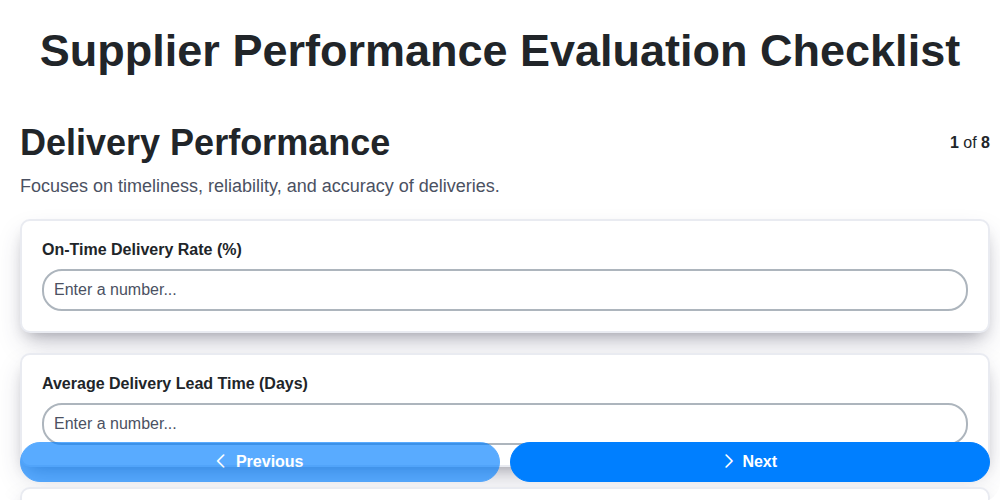
The Ultimate Supplier Performance Evaluation Checklist Template
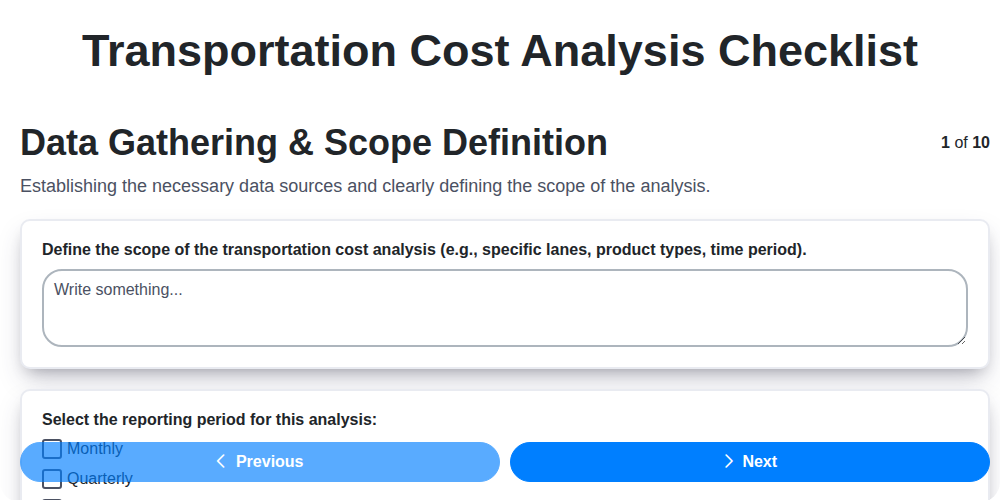
Transportation Cost Analysis Checklist Template: Your Guide to Savings
How to improve your Logistics Management
We can do it Together
Need help with
Checklists?
Have a question? We're here to help. Please submit your inquiry, and we'll respond promptly.