How to increase your efficiency with Supply Chain Management Software
Published: 12/09/2025 Updated: 12/14/2025
Table of Contents
- Understanding Supply Chain Management (SCM) and Its Challenges
- What is Supply Chain Management Software?
- The Benefits of Implementing SCM Software
- Key Features to Look for in SCM Software
- How Checklists Fit into Your SCM Strategy
- Common Supply Chain Processes That Benefit from Checklists
- Vendor Onboarding Checklist: Ensuring Smooth Partnerships
- Inventory Management Checklist: Accuracy and Optimization
- Order Fulfillment Checklist: Speed and Reliability
- Transportation & Logistics Checklist: Minimizing Delays
- Quality Control Checklist: Maintaining Standards
- Creating Effective Supply Chain Checklists - Best Practices
- Integrating Checklists with Your SCM Software
- Measuring the Impact of Checklists on Your SCM Efficiency
- Resources & Links
TLDR: Overwhelmed by supply chain chaos? This post walks you through using checklists within your SCM software - from vendor onboarding to inventory audits - to streamline processes, reduce errors, and free up your time. We'll show you how to create, customize, and use these checklists to boost your efficiency and gain better control of your entire supply chain.
Understanding Supply Chain Management (SCM) and Its Challenges
Supply Chain Management (SCM) encompasses everything from sourcing raw materials to delivering the final product to the customer. It's a complex web of interconnected processes, involving suppliers, manufacturers, distributors, retailers, and, of course, the end consumer. While seemingly straightforward in theory, real-world SCM is fraught with challenges.
Historically, many businesses managed their supply chains using spreadsheets, email chains, and manual processes. This often leads to a lack of visibility, poor communication, increased errors, and significant delays. Globalization has further complicated matters, with longer lead times, fluctuating currencies, and increased geopolitical risks.
Common challenges include:
- Lack of Visibility: Knowing where your goods are and their status at any given time is critical. Without real-time data, it's difficult to react to disruptions.
- Inventory Management: Balancing inventory levels to avoid stockouts (lost sales) and overstocking (tied-up capital) is a constant tightrope walk.
- Supplier Relationships: Managing multiple suppliers, negotiating contracts, and ensuring consistent quality are ongoing responsibilities.
- Demand Fluctuations: Accurately forecasting demand and adjusting production and inventory accordingly is essential for profitability.
- Risk Management: Supply chain disruptions (natural disasters, political instability, supplier failures) can have significant financial consequences.
- Sustainability Concerns: Increasingly, consumers and businesses demand sustainable and ethical supply chain practices.
What is Supply Chain Management Software?
Supply Chain Management (SCM) software is more than just inventory tracking. It's a comprehensive suite of tools designed to manage the entire flow of goods, data, and finances related to your products or services - from raw materials to the end consumer. Think of it as the central nervous system for your business, connecting all the crucial moving parts.
These platforms typically include modules for:
- Planning: Forecasting demand, managing production schedules, and optimizing resource allocation.
- Sourcing: Identifying and vetting suppliers, negotiating contracts, and managing supplier relationships.
- Procurement: Streamlining the purchasing process and managing orders.
- Inventory Management: Tracking stock levels, minimizing waste, and optimizing storage.
- Transportation & Logistics: Managing shipments, tracking deliveries, and optimizing routes.
- Warehouse Management: Overseeing warehouse operations, including receiving, storage, and shipping.
- Returns Management: Handling product returns and exchanges efficiently.
Modern SCM software often leverages technologies like cloud computing, artificial intelligence (AI), and blockchain to provide real-time visibility, improve decision-making, and enhance collaboration across your supply chain network. Ultimately, it's about creating a resilient, responsive, and cost-effective supply chain that can meet the ever-changing demands of the market.
The Benefits of Implementing SCM Software
Implementing Supply Chain Management (SCM) software offers a wealth of benefits that extend far beyond simply digitizing spreadsheets. It's about transforming your entire operation, increasing visibility, and building resilience. Here's a breakdown of what you can expect:
- Improved Visibility: SCM software provides a centralized view of your entire supply chain, from raw materials to final delivery. This allows you to identify bottlenecks, track inventory in real-time, and anticipate potential disruptions.
- Reduced Costs: By streamlining processes, automating tasks, and optimizing inventory levels, SCM software can significantly reduce operational costs. This includes savings on warehousing, transportation, and labor.
- Enhanced Collaboration: SCM platforms facilitate seamless communication and collaboration between all stakeholders in your supply chain - suppliers, manufacturers, distributors, and retailers.
- Increased Efficiency: Automation of repetitive tasks, improved workflow management, and faster decision-making all contribute to increased overall efficiency.
- Better Inventory Management: Minimize stockouts and overstocking through accurate demand forecasting and real-time inventory tracking.
- Risk Mitigation: Proactively identify and mitigate supply chain risks, such as supplier disruptions and natural disasters.
- Improved Customer Service: Faster order fulfillment, more accurate deliveries, and proactive communication lead to higher customer satisfaction.
- Data-Driven Decision Making: Gain valuable insights into your supply chain performance through robust reporting and analytics, empowering data-driven decisions.
Key Features to Look for in SCM Software
When evaluating Supply Chain Management (SCM) software, it's crucial to move beyond the buzzwords and focus on features that genuinely address your business needs. Here are some key functionalities to prioritize:
- Inventory Management: Robust inventory tracking is fundamental. Look for real-time visibility, automated reordering points, cycle counting capabilities, and support for various inventory valuation methods.
- Order Management: Streamline the entire order lifecycle, from placement to fulfillment. Features like automated order routing, order tracking, and integration with e-commerce platforms are essential.
- Warehouse Management: If you manage a warehouse, look for functionalities like putaway optimization, picking strategies (wave, zone, batch), and barcode scanning integration.
- Transportation Management: Efficiently manage shipping and logistics. Features like carrier selection, route optimization, and freight auditing can significantly reduce transportation costs.
- Supplier Relationship Management (SRM): Centralize supplier information, manage contracts, and track performance. Look for features that facilitate communication and collaboration with your suppliers.
- Demand Forecasting: Accurate demand forecasting is vital for avoiding stockouts and minimizing excess inventory. Consider software with built-in forecasting algorithms and the ability to incorporate external data.
- Reporting & Analytics: Data is your friend. Ensure the software provides comprehensive reporting and analytics dashboards to monitor key performance indicators (KPIs) and identify areas for improvement.
- Integration Capabilities: SCM software rarely exists in a silo. It needs to integrate seamlessly with your existing accounting, ERP, and other business systems. Look for open APIs or pre-built integrations.
- Checklist Management: Increasingly important, this allows you to embed and manage checklists directly within the SCM workflow, ensuring consistent processes and reducing the risk of human error - something ChecklistGuro excels at providing.
- Scalability: Your business will grow. Choose software that can scale with your needs and handle increasing data volumes and user demands.
How Checklists Fit into Your SCM Strategy
Checklists aren't just about ticking boxes; they're a foundational element of a robust Supply Chain Management (SCM) strategy. Think of them as the operational backbone supporting your broader software implementation. They bridge the gap between the software's data and the actual, real-world tasks being performed.
Here's how checklists seamlessly integrate:
- Standardization: SCM software provides the data, but checklists enforce how that data is used. They create standardized procedures, ensuring consistency across teams and locations. Imagine onboarding a new vendor - a checklist guarantees every new supplier undergoes the same due diligence, regardless of who's handling it.
- Process Adherence: Software can highlight potential bottlenecks or risks, but it's the checklist that guides your team to proactively address them. For example, a checklist could prompt verification of shipment documentation before it's sent, preventing costly delays and errors.
- Training & Onboarding: New hires or temporary staff can quickly grasp complex processes using clearly defined checklist instructions. This reduces training time and minimizes errors caused by a lack of understanding.
- Compliance & Audit Trails: Detailed checklists provide a clear audit trail, demonstrating adherence to regulations and internal policies. This is crucial for industries with strict compliance requirements (e.g., food & beverage, pharmaceuticals).
- Continuous Improvement: Regularly reviewing and updating checklists based on performance data helps identify areas for improvement in your supply chain processes.
Ultimately, checklists transform your SCM software from a data repository into an actionable, performance-driving system.
Common Supply Chain Processes That Benefit from Checklists
Many aspects of supply chain management are ripe for checklist implementation. Here are a few common areas where checklists can deliver significant efficiency gains:
- Vendor Onboarding: A detailed checklist ensures all necessary documentation is collected, compliance checks are performed, and agreements are finalized consistently for every new vendor. This minimizes risk and sets the foundation for a strong supplier relationship.
- Order Fulfillment: From order receipt to shipping, a fulfillment checklist can track each step, reducing errors like incorrect items or addresses, and ensuring timely delivery.
- Inventory Management: Regular inventory audits are crucial. A checklist ensures all items are accounted for, discrepancies are identified and addressed promptly, and stock levels are accurately maintained. This minimizes losses from spoilage, theft, or obsolescence.
- Warehouse Operations: Checklists can standardize receiving, put-away, picking, and packing processes, improving accuracy and throughput in the warehouse.
- Transportation & Logistics: From route planning and documentation verification to vehicle inspections and delivery confirmation, checklists can reduce delays, ensure compliance, and improve safety.
- Quality Control: Implement checklists at various points in the process (receiving raw materials, inspecting finished goods) to maintain quality standards and identify potential issues early on.
- Returns Management: A clear checklist for handling returns helps ensure items are properly assessed, processed, and restocked (or disposed of), reducing losses and improving customer satisfaction.
Vendor Onboarding Checklist: Ensuring Smooth Partnerships
Vendor onboarding can be a major bottleneck if not handled correctly. A rushed or incomplete onboarding process can lead to delayed shipments, quality issues, and strained relationships. A well-designed checklist within your SCM software can eliminate those risks and set the stage for successful, long-term partnerships.
Here's what a robust Vendor Onboarding Checklist should cover:
- Initial Information Gathering: Capture essential vendor details like legal name, contact information, business licenses, insurance certificates, and payment terms. Integrate this directly into your vendor database.
- Due Diligence Checks: Include sections for verifying vendor credentials, checking references, and conducting background checks (where applicable and compliant with regulations).
- Compliance Verification: Ensure the vendor adheres to relevant industry standards, certifications (e.g., ISO), and ethical sourcing policies.
- Contract Negotiation & Approval: Outline the contractual agreements, including pricing, delivery schedules, quality standards, and dispute resolution processes. Track approvals within the checklist to maintain audit trails.
- System Integration: If applicable, guide the vendor through the necessary system integrations for order processing, invoicing, and data exchange.
- Training & Support: Provide training resources and ongoing support to the vendor to ensure they understand your expectations and processes.
- Performance Metrics: Define key performance indicators (KPIs) to track vendor performance and identify areas for improvement.
By standardizing this process with a checklist, you're not just ensuring compliance; you're building trust and fostering a collaborative partnership with your vendors.
Inventory Management Checklist: Accuracy and Optimization
Maintaining accurate inventory levels is the bedrock of a successful supply chain. Errors here can lead to stockouts, excess inventory, and ultimately, lost revenue. A well-designed inventory management checklist, integrated within your SCM software, is vital for ongoing accuracy and optimization.
Here's what your inventory checklist should cover:
- Regular Stock Counts (Cycle Counts): Don't wait for annual physical inventories. Schedule frequent cycle counts of specific product categories or locations. The checklist should detail the counting process, record discrepancies, and outline corrective actions. Include fields for: item name/SKU, location, counted quantity, system quantity, variance, and notes.
- Receiving and Inspection: When new stock arrives, the checklist should ensure proper receiving procedures are followed. This includes verifying quantities against purchase orders, inspecting for damage, and recording discrepancies immediately. Fields for carrier name, packing slip number, received quantity, damage assessment, and receiving personnel are crucial.
- Storage and Organization: Ensure items are stored correctly to prevent damage and facilitate easy retrieval. The checklist should cover proper labeling, stock rotation (FIFO - First In, First Out), and storage condition monitoring (temperature, humidity).
- Dead Stock Identification & Disposal: Regularly review inventory for slow-moving or obsolete items. The checklist should detail the process for identifying dead stock, obtaining approvals for disposal, and documenting the disposal method.
- Inventory Reconciliations: Compare physical inventory counts with system records. The checklist should include steps to investigate and resolve any discrepancies, ensuring data integrity.
- Audit Trail: Keep a detailed audit trail of all inventory transactions. This helps track changes, identify potential issues, and improve accountability.
By consistently using an inventory management checklist within your SCM software, you're creating a proactive system that minimizes errors, maximizes efficiency, and contributes significantly to overall supply chain health.
Order Fulfillment Checklist: Speed and Reliability
Order fulfillment is often the critical last mile of the supply chain, and a single misstep can lead to customer dissatisfaction, returns, and lost revenue. A robust order fulfillment checklist, integrated within your SCM software, ensures consistency and accuracy every time. Here's what it should include:
- Order Verification: Double-check order details against the customer's request - item, quantity, shipping address, special instructions. Automated data capture through your SCM platform minimizes manual entry errors.
- Inventory Picking & Packing: Utilize barcode scanning or other automated methods to accurately pick items. The checklist should detail proper packaging techniques to prevent damage during transit. Track which employee picked and packed the order for accountability.
- Shipping Label Accuracy: Verify shipping addresses and carrier information are 100% correct before printing labels. Integrated shipping software within your SCM system will automatically populate this information from the order details.
- Quality Control: A quick visual inspection of packed items to ensure they match the order and are free from damage.
- Shipping Confirmation & Tracking: Automatically generate shipping confirmations and provide tracking numbers to customers. Your SCM software should integrate with your carrier's tracking API for real-time updates.
- Documentation: Include necessary documents like invoices, packing slips, and return authorizations. A digital checklist ensures everything is included.
- Record Keeping: Log fulfillment dates, employee IDs, and any discrepancies encountered. This data is invaluable for identifying bottlenecks and improving the process.
Transportation & Logistics Checklist: Minimizing Delays
Moving goods efficiently is the lifeblood of any supply chain. Delays in transportation can ripple through your entire operation, impacting customer satisfaction, increasing costs, and damaging your reputation. A robust transportation & logistics checklist within your SCM software is your first line of defense against these disruptions.
Here's a breakdown of what your checklist should include, broken down into pre-shipment, during transit, and post-delivery phases:
Pre-Shipment:
- Order Verification: Double-check order details (quantities, addresses, special instructions) against the initial request. A single typo can cause significant delays.
- Packaging Integrity: Verify proper packaging materials are used for the goods being shipped, considering fragility and environmental conditions (temperature, humidity). Include checklists for specific product types.
- Documentation Accuracy: Ensure all shipping documents (bills of lading, packing slips, commercial invoices) are complete and accurate. This is crucial for customs clearance if international shipping is involved.
- Route Planning & Carrier Selection: Use SCM software to optimize routes and select carriers based on reliability, cost, and delivery time. Factor in potential traffic delays and weather conditions. Automate this whenever possible.
- Dangerous Goods Compliance: If shipping hazardous materials, confirm all regulations (labeling, documentation, training) are followed meticulously.
During Transit:
- Real-Time Tracking Updates: Integrate your SCM software with carrier tracking systems for continuous visibility. Set up automated alerts for significant deviations from the planned route or unexpected delays.
- Temperature & Condition Monitoring: For temperature-sensitive goods (food, pharmaceuticals), implement monitoring devices and integrate data back into your SCM system. Automated alerts can trigger immediate corrective action.
- Exception Handling Protocols: Define clear procedures for addressing common issues like missed delivery windows, damaged goods, or unexpected weather events. Ensure all relevant personnel are trained.
Post-Delivery:
- Delivery Confirmation & Signatures: Require proof of delivery (signature, timestamp) to verify successful delivery and resolve any discrepancies.
- Damage Inspection & Reporting: Implement a process for inspecting goods upon arrival and reporting any damage immediately.
- Feedback Collection: Solicit feedback from recipients regarding the delivery experience to identify areas for improvement in your transportation processes.
- Invoice Reconciliation: Match delivery confirmations with carrier invoices to ensure accuracy and identify any discrepancies early.
By leveraging checklists within your SCM software, you transform transportation from a potential headache into a predictable and efficient process. This proactive approach minimizes delays, reduces costs, and strengthens your supply chain resilience.
Quality Control Checklist: Maintaining Standards
Quality isn't just a buzzword; it's the bedrock of customer satisfaction and brand reputation. Within your supply chain, consistently high quality requires meticulous oversight, and that's where a robust Quality Control Checklist becomes invaluable. This checklist shouldn't just be a formality; it should be a dynamic, actionable document that guides your team through every step of the quality assurance process.
Here's what a comprehensive Quality Control Checklist should cover:
- Incoming Materials Inspection: Verify supplier compliance with specifications, checking for defects, proper labeling, and correct quantities. Include details like sample size, acceptance criteria, and documentation requirements.
- In-Process Quality Checks: Implement checkpoints throughout the manufacturing or processing stages. These checks can include dimensional accuracy, performance testing, and visual inspections at critical phases.
- Finished Goods Inspection: A final assessment of finished products before they leave your facility. This involves verifying that the products meet all quality standards and are ready for distribution.
- Packaging and Labeling Verification: Ensure proper packaging protects the product during transit and labeling contains accurate information.
- Documentation & Traceability: Maintain detailed records of inspection results, corrective actions taken, and personnel involved. This creates a clear audit trail for future reference and allows for rapid identification of quality issues.
- Non-Conformance Reporting: A clear procedure for documenting and addressing deviations from established standards. Include steps for investigation, root cause analysis, and corrective action implementation.
Remember to regularly review and update your Quality Control Checklist based on feedback, changing industry regulations, and lessons learned from past incidents. Integrating this checklist directly into your SCM software ensures that it's readily accessible to relevant personnel and any findings are immediately recorded and actionable.
Creating Effective Supply Chain Checklists - Best Practices
Okay, let's dive into how to really make your supply chain checklists work wonders. It's not enough to just have a list; it needs to be thoughtfully designed. Here's a breakdown of best practices:
- Start with the Biggest Pain Points: Don't try to tackle everything at once. Identify the areas in your supply chain causing the most issues - late deliveries, quality control failures, communication breakdowns - and create checklists to address those first.
- Break Down Complex Tasks: Large, overwhelming tasks lead to skipped steps and errors. Deconstruct each process into smaller, manageable checklist items. For example, instead of Manage Vendor Relationship, have items like Review Vendor Performance Metrics, Schedule Regular Communication Meetings, and Confirm Contract Renewals.
- Be Specific & Actionable: Avoid vague language. Use clear, concise wording that leaves no room for interpretation. Instead of Ensure Quality, use Inspect Shipment for Damage - Document Findings. Use strong verbs that clearly define the action required.
- Assign Responsibility: Each checklist item should have a clearly assigned owner. This ensures accountability and prevents tasks from falling through the cracks. Utilize the SCM software's user assignment features to simplify this.
- Include Required Documentation: Specify what supporting documents are needed for each step - invoices, shipping manifests, inspection reports. Link directly to these documents within the checklist (if your SCM software allows) to eliminate searching.
- Define Pass/Fail Criteria: Make it crystal clear what constitutes a pass or fail for each item. This ensures consistency and objectivity in evaluations.
- Use Visual Cues: Leverage color-coding, icons, or progress bars to highlight key steps and track completion status. Visual cues can make checklists more engaging and easier to follow.
- Regularly Review and Update: Supply chains are dynamic. Your checklists need to evolve with them. Schedule regular reviews (e.g., quarterly) to ensure they remain relevant and effective. Get feedback from the team actually using the checklists.
Integrating Checklists with Your SCM Software
Most modern Supply Chain Management (SCM) software platforms offer robust integration capabilities. This means you shouldn't be viewing checklists as a separate entity; they should be woven directly into your workflows. Here's how to maximize that integration:
- API Integration: Many SCM systems provide APIs (Application Programming Interfaces). This allows you to build custom integrations, automating checklist triggers based on events within your SCM software. For example, a new purchase order might automatically generate a checklist for vendor verification.
- Native Checklist Features: Increasingly, SCM software includes native checklist functionality. Explore your platform's capabilities - you might already have the tools you need without extra plugins or coding.
- Workflow Automation: Look for opportunities to automate checklist completion. Can data be pulled directly from your SCM system into checklist fields? Can checklist status updates automatically update records within your SCM platform?
- Real-Time Updates: Integration ensures that checklist completion updates are reflected immediately within your SCM system. This provides a single source of truth and avoids discrepancies.
- Reporting & Analytics: Integrated checklists provide valuable data for reporting and analysis. Track checklist completion rates, identify bottlenecks, and measure the overall effectiveness of your supply chain processes.
- Consider Pre-Built Integrations: Many SCM software vendors partner with checklist platform providers to offer pre-built integrations, simplifying the setup process.
Measuring the Impact of Checklists on Your SCM Efficiency
Tracking your progress isn't just about using checklists; it's about proving their value. Here's how to measure the positive impact of incorporating checklists into your Supply Chain Management (SCM) software:
1. Quantifiable Metrics:
- Error Reduction: Before and after implementing checklists, meticulously track error rates (e.g., incorrect orders, shipping delays, inventory discrepancies). A clear reduction demonstrates the effectiveness of checklists in preventing mistakes.
- Cycle Time Improvement: Measure the time it takes to complete key supply chain tasks (e.g., order fulfillment, supplier approval, quality inspections). Checklists standardize steps, often shortening these cycles significantly.
- Cost Savings: Calculate the monetary savings resulting from reduced errors, faster cycle times, and increased efficiency. This can be a powerful argument for wider adoption.
- Time Savings: Track the total hours saved by your team by automating and standardizing tasks with checklists. This frees up valuable time for strategic initiatives.
- First-Pass Yield: This metric measures the percentage of products or tasks completed correctly the first time. Higher first-pass yield translates to less rework and wasted resources.
2. Qualitative Feedback:
- Team Surveys: Conduct regular surveys to gather feedback from your team. Ask about perceived improvements in clarity, reduced stress, and increased confidence in performing tasks.
- Process Audits: Periodically audit your supply chain processes with checklists. This ensures adherence to standards and identifies areas for further optimization.
- Stakeholder Interviews: Talk to your suppliers, customers, and other key stakeholders to gather their perspectives on the impact of your improved supply chain efficiency.
3. Utilizing SCM Software Reporting:
Most SCM software platforms offer reporting capabilities. Leverage these to track checklist completion rates, identify bottlenecks, and monitor key performance indicators (KPIs) related to your supply chain processes. Look for features allowing you to filter data by checklist type and user to gain deeper insights.
By combining quantitative data with qualitative feedback, you can build a strong case for the ongoing importance of checklists and demonstrate a clear return on investment for your SCM software implementation.
Resources & Links
- APICS (The Association for Supply Chain Management): APICS is a leading professional organization for supply chain management. Their website offers resources, certifications (like CSCP and CPIM), articles, and educational materials to deepen your understanding of SCM principles and best practices. Good for foundational knowledge and industry insights.
- ISC (International Supply Chain Professionals): ISC offers a range of supply chain certifications (CSCP, CLTD) and resources. Like APICS, they provide a breadth of information on SCM concepts and practices, covering the entire supply chain lifecycle.
- Gartner: Gartner provides in-depth research and analysis on technology, including supply chain management software. While much of their content is behind a paywall, their blog and some press releases offer valuable insights into market trends, vendor evaluations (Magic Quadrants), and emerging technologies in SCM.
- Forbes - Supply Chain: Forbes regularly publishes articles and opinion pieces related to supply chain management, covering industry news, trends, and analysis. Search for 'supply chain' on their site for relevant content. Useful for staying up-to-date on current events and thought leadership.
- Supply Chain Brain: Supply Chain Brain is a website dedicated to supply chain news, trends, and analysis. They offer articles, podcasts, and webinars covering a wide range of topics related to SCM. Excellent for a broad overview of industry developments.
- Pymetrics - Supply Chain Talent: While not directly about SCM software, this resource addresses the critical importance of skilled personnel. SCM software's effectiveness depends on user adoption and proficiency. Understanding talent acquisition and training is vital for successful implementation.
- Simplanova: Simplanova offers checklist templates and resources for various industries including supply chain. Their blog contains numerous examples and advice on creating and utilizing effective checklists, which directly supports the 'How Checklists Fit into Your SCM Strategy' section.
- ProcessXpert: A site focused on process management and documentation, which is directly relevant to creating effective checklists. They provide templates, articles and how-to guides on process mapping and optimization, valuable for streamlining supply chain operations.
- Nintex: Nintex is a workflow automation platform. While focused on broader automation, they have examples and articles related to workflow and checklist integrations. Relevant for demonstrating how checklists can be integrated with SCM software (covered in the article).
- SafeLogic: Focuses on quality control and compliance. Helpful for understanding the importance of quality and how to incorporate it into your SCM strategy, specifically relevant for the 'Quality Control Checklist' section.
- Everest Group: Everest Group is a research firm specializing in technology and services. They provide insights into vendor landscapes and selection criteria for SCM software, helpful for evaluating vendors (mentioned in 'Key Features to Look for').
Frequently Asked Questions
What is Supply Chain Management (SCM) software?
SCM software is a suite of tools that helps businesses manage and optimize all aspects of their supply chain, from planning and sourcing to manufacturing, delivery, and returns. It helps streamline processes, improve visibility, and enhance collaboration across the entire chain.
Why should I consider using SCM software?
SCM software can significantly improve your efficiency by automating tasks, reducing errors, providing real-time data visibility, and enabling better decision-making. This leads to reduced costs, improved customer satisfaction, and a more resilient supply chain.
What are the main benefits of using SCM software?
Key benefits include improved forecasting, reduced inventory costs, enhanced supplier collaboration, streamlined logistics, increased transparency, better risk management, and increased overall operational efficiency.
What features should I look for in SCM software?
Essential features include demand forecasting, inventory management, order management, warehouse management, transportation management, supplier relationship management, and analytics/reporting capabilities. Consider cloud-based options for accessibility and scalability.
How can SCM software help me improve forecasting?
SCM software utilizes historical data, market trends, and other relevant information to generate more accurate demand forecasts. This reduces the risk of overstocking or stockouts and optimizes inventory levels.
What's the difference between a basic inventory management system and full-fledged SCM software?
Basic inventory management focuses solely on tracking and managing stock levels. SCM software goes much further, integrating inventory with other supply chain processes like procurement, logistics, and supplier relationships for a holistic view.
How does SCM software help with supplier collaboration?
SCM software often includes portals and communication tools that allow for seamless collaboration with suppliers. This improves transparency, facilitates order updates, and streamlines the onboarding process.
How can SCM software improve logistics?
SCM software optimizes transportation routes, manages carrier performance, and tracks shipments in real-time, resulting in faster delivery times and reduced transportation costs.
What is the typical implementation time for SCM software?
Implementation time varies depending on the complexity of your supply chain and the chosen software. It can range from a few weeks for basic implementations to several months for more comprehensive deployments. Planning and data migration are crucial elements.
How much does SCM software typically cost?
SCM software costs vary widely based on factors like the size of your business, features required, and deployment model. Pricing can range from subscription-based monthly fees to one-time license purchases, potentially spanning from a few hundred to tens of thousands of dollars annually.
What are some common challenges when implementing SCM software?
Common challenges include data migration complexities, user training requirements, integration with existing systems, resistance to change, and defining clear business processes to align with the new software.
How can I measure the success of my SCM software implementation?
Key metrics to track include inventory turnover rate, order fulfillment accuracy, on-time delivery percentage, supplier lead times, and overall cost savings.
Is cloud-based SCM software a better option than on-premise solutions?
Cloud-based solutions offer advantages like lower upfront costs, easier scalability, and automatic updates. On-premise solutions provide greater control over data and infrastructure. The best choice depends on your specific business requirements and IT capabilities.
Comments
There are no comments yet. Be the first to add one!
SCM - Supply Chain Management Solution Demo
Struggling with supply chain disruptions & lack of visibility? ChecklistGuro delivers a centralized SCM solution, connecting your suppliers, manufacturers, & distributors for improved collaboration and control. Simplify operations & boost efficiency.
Related Articles
How to increase your efficiency with Logistics Management Software
How to Save Money on Logistics Management Software
The Ultimate Raw Material Sourcing Checklist for Manufacturing
Restaurant Inventory Checklist Template: Your Guide to Food & Supply Control
How to Find and Choose the Best Logistics Management Software
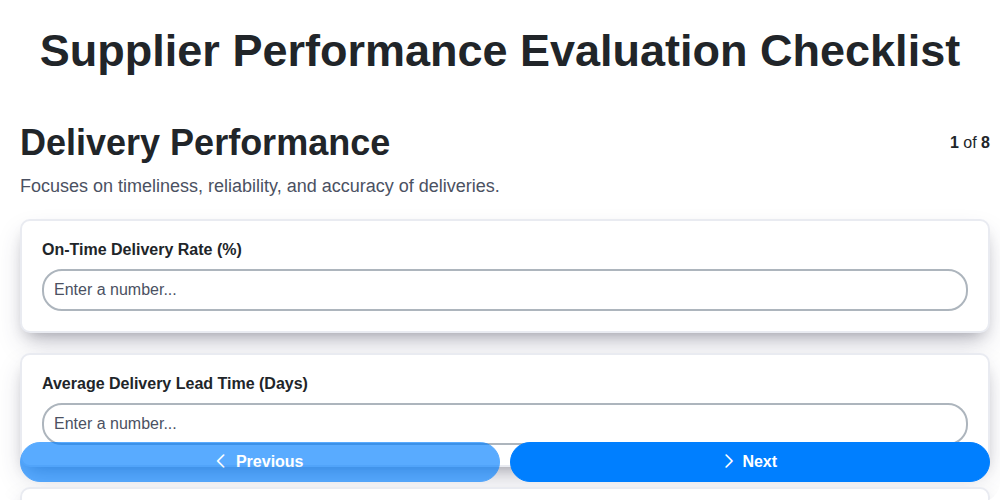
The Ultimate Supplier Performance Evaluation Checklist Template
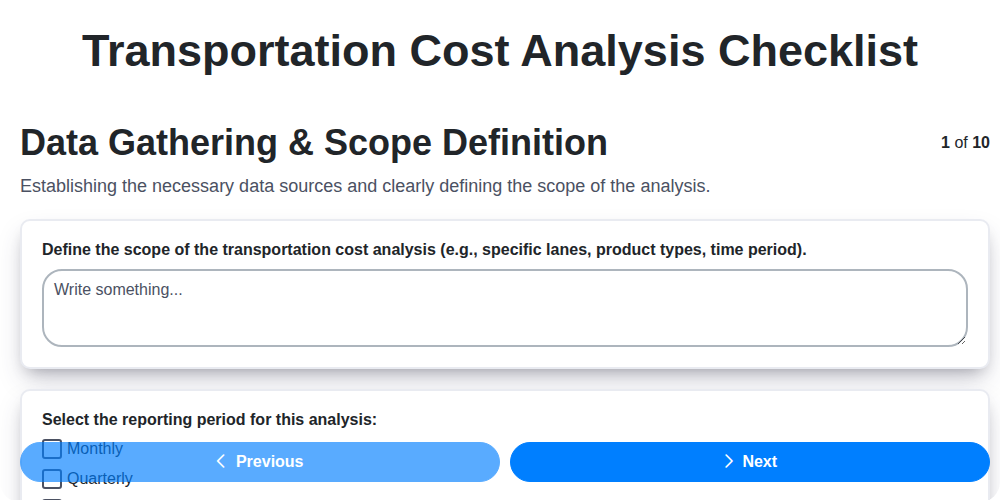
Transportation Cost Analysis Checklist Template: Your Guide to Savings
How to improve your Logistics Management
We can do it Together
Need help with
Checklists?
Have a question? We're here to help. Please submit your inquiry, and we'll respond promptly.