Insurance Premium Audit Accuracy Checklist 2026: The Ultimate Template for Error-Free Compliance
Published: 10/31/2026 Updated: 11/01/2026
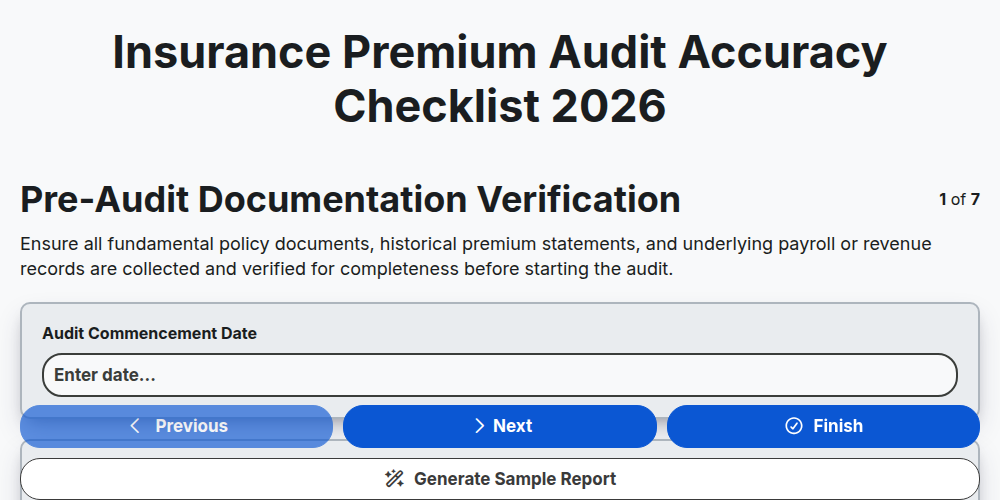
Table of Contents
- Introduction: Why Audit Accuracy Matters in 2026
- Step 1: Pre-Audit Documentation Verification
- Step 2: Payroll and Wage Classification Audit
- Step 3: Gross Revenue and Remuneration Reconciliation
- Step 4: Policy Endorsement and Mid-Term Adjustment Review
- Step 5: Tax and Surcharge Calculation Audit
- Step 6: Discount and Credit Application Verification
- Step 7: Discrepancy Resolution and Final Reconciliation
- Pro-Tips for Staying Audit-Ready All Year Round
- Conclusion: Ensuring Long-Term Compliance and Cost Savings
- Resources & Links
TLDR: Avoid costly financial discrepancies and compliance penalties in 2026 by using this comprehensive audit checklist. Learn how to systematically verify documentation, validate payroll classifications, reconcile gross revenues, and audit policy endorsements to ensure your insurance premiums are 100% accurate and your business remains protected.
Introduction: Why Audit Accuracy Matters in 2026
As we approach 2026, the landscape of commercial insurance is undergoing a profound transformation. With the integration of advanced AI-driven underwriting and increasingly sophisticated real-time data tracking, the margin for error in premium auditing has shrunk to near zero. For businesses and insurance professionals alike, a premium audit is no longer just a routine end-of-term procedure; it is a high-stakes financial reconciliation that can significantly impact your bottom line.
The High Stakes of Audit Discrepancies
An inaccurate audit is more than just a clerical error-it is a direct threat to your operational budget. For policyholders, an overlooked misclassification or an unapplied discount can lead to massive, unexpected audit premiums that disrupt cash flow. For insurers and auditors, inaccuracy can lead to regulatory friction, lost revenue, and strained client relationships.
In the 2026 regulatory environment, where automated data scraping and cross-referencing between tax authorities and insurance carriers are becoming the industry standard, manual oversight is no longer sufficient. Discrepancies that might have gone unnoticed in previous years are now being flagged instantly by automated compliance engines.
Moving Toward Proactive Compliance
The goal of this checklist is to shift your strategy from reactive correction to proactive prevention. By implementing a rigorous verification process before the auditor even arrives, you can ensure that:
- Financial Predictability: Avoid the sticker shock of sudden mid-year premium increases.
- Operational Efficiency: Reduce the time spent in lengthy, adversarial dispute processes with underwriters.
- Data Integrity: Ensure that your payroll, revenue, and classification data align perfectly with your policy endorsements.
Whether you are managing a single policy or a complex portfolio of multi-state coverage, using this systematic approach will allow you to navigate the 2026 audit season with confidence, ensuring that every dollar accounted for is a dollar correctly applied.
Step 1: Pre-Audit Documentation Verification
Establishing the Foundation for Audit Success
Before diving into the granular details of payroll or revenue, the integrity of your audit depends entirely on the quality of your baseline data. The pre-audit phase is your opportunity to identify data leaks before an auditor does. If your foundational documents are disorganized or inconsistent, the entire audit process will likely trigger unnecessary red flags and potential premium increases.
Essential Document Inventory
The goal of this step is to ensure that every piece of information provided to the carrier matches your internal financial records. You should begin by compiling and cross-referencing the following:
- Current Policy Declarations: Ensure you have the most recent version of your policy, including all effective dates and coverage limits.
- Financial Statements: Gather year-end profit and loss (P&L) statements and balance sheets that correspond exactly to the audit period.
- The Audit Trail Log: Maintain a record of all changes made to your business structure (new locations, new subsidiaries, or changes in ownership) during the policy term.
Key Verification Tasks
To ensure accuracy, perform these three critical checks:
- Date Alignment Check: Verify that the period covered by your financial records perfectly aligns with the policy's effective and expiration dates. Even a one-day discrepancy can lead to prorated premium disputes.
- Entity Consistency: Confirm that the legal entity names on your payroll records and tax filings match the Named Insured on your insurance policy. Discrepancies here are a primary cause of audit delays.
- Completeness Assessment: Scan for missing records, such as unfiled quarterly tax reports or missing subcontractor certificates of insurance (COIs). If a subcontractor lacks a valid COI, their payments may be incorrectly reclassified as your payroll.
Pro-Tip for 2026 Compliance
As digital auditing becomes the industry standard, ensure that your digital filing system is organized by Audit Year. Having a Ready-to-Audit folder containing pre-verified PDFs can reduce the time spent in an active audit by up to 40%.
Step 2: Payroll and Wage Classification Audit
Precision in Payroll: Ensuring Class Code Alignment
The second pillar of a successful premium audit is the scrutiny of your payroll and wage data. In 2026, with the increasing complexity of remote work arrangements and diverse labor types, a simple total payroll check is no longer sufficient. An error here can lead to massive premium overpayments or unexpected retroactive assessments.
Verifying Class Code Accuracy
The most common source of audit discrepancies is misclassification. Workers' compensation and general liability premiums are heavily dependent on the specific tasks performed by employees.
- Job Duty vs. Job Title: Ensure that employees are coded based on their actual daily activities rather than their administrative titles. If a Manager spends 40% of their time performing manual labor, they must be audited under the manual labor class code.
- Subcontractor Scrutiny: Review all 1099 payments. An auditor will look for Certificates of Insurance (COI) for every subcontractor. If you cannot provide proof of their coverage, their payments may be reclassified as your own payroll, triggering a significant premium spike.
Auditing Wage Components
It isn't just about base salaries. To ensure accuracy, you must reconcile all forms of remuneration that are subject to premium calculation.
- Overtime and Bonuses: Verify that all overtime pay, commissions, and performance bonuses are included in the audited totals, as these are typically considered part of the gross wages subject to premium.
- Fringe Benefits and Perks: Check for any taxable fringe benefits or non-cash compensation that might be subject to premium assessment under your specific policy terms.
- The Excluded List: Cross-reference your payroll report against your policy's specific exclusions. Ensure that any exempt officers or specific types of compensation that are legally excludable from the audit are clearly documented and separated from the taxable total.
Proactive Audit Tip for 2026
Implement a quarterly Pre-Audit Reconcile. Do not wait for the annual audit to discover that a technician was accidentally logged under an office clerk class code. Regular reviews of your payroll software's class code mapping will save your finance team hours of dispute resolution during the formal audit process.
Step 3: Gross Revenue and Remuneration Reconciliation
Navigating the Nuances of Revenue and Pay Totals
The third pillar of a successful audit is the Gross Revenue and Remuneration Reconciliation. This stage is often where the most significant discrepancies arise, as it requires aligning your internal financial records with the specific definitions of exposure outlined in your policy. For 2026, with increasing automation in payroll and accounting, manual errors in data entry are replaced by systemic misclassifications that can lead to massive premium spikes if left unchecked.
Auditing Gross Revenue Integrity
Revenue-based premiums are sensitive to how gross is defined. To ensure accuracy, you must verify that your reported revenue aligns strictly with the policy's definition of premium-earning activity.
- Revenue Scope Verification: Review your General Ledger to ensure you are only including revenue subject to the audit. Exclude items such as inter-company transfers, interest income, or non-taxable reimbursements that do not constitute gross sales.
- The Accrual vs. Cash Check: Confirm that your revenue reporting method (Accrual or Cash basis) matches the methodology stated in your policy endorsements. A mismatch here is a primary driver of overpayment.
- Subcontractor Revenue Alignment: If your policy includes sub-contractor oversight, ensure that the gross payments made to subs are clearly separated from your primary revenue to prevent double-counting exposure.
The Remuneration Deep Dive
While payroll covers wages, remuneration is a broader term that includes more than just a standard paycheck. An error in this step can lead to an unintentional audit of non-taxable benefits.
- Total Compensation Audit: Beyond base hourly wages and salaries, review bonuses, commissions, and overtime pay. Ensure these are calculated according to the specific percentage of coverage required by your carrier.
- Benefits and Perquisites Review: Scrutinize the inclusion of taxable fringe benefits, such as company-paid car allowances or housing stipends. While these are part of remuneration, they must be reconciled against the specific limits defined in your 2026 policy terms.
- Cross-Referencing Payroll vs. Tax Filings: The gold standard for accuracy is the Triple Match. Your audited remuneration figures should match your Payroll Register, your Quarterly Tax Filings (e.g., Form 941), and your General Ledger totals.
Pro-Tip for 2026: As companies adopt more complex automated payroll systems, use exception reporting to flag any payment type that does not fall into a standard wage category. This prevents hidden remuneration from inflating your premium during the final audit review.
Step 4: Policy Endorsement and Mid-Term Adjustment Review
Navigating Mid-Term Changes in Your Audit
An audit isn't just a look back at your year-end totals; it is a deep dive into the entire lifecycle of your policy. One of the most common areas where premium discrepancies occur is during the in-between periods. If your business underwent significant changes mid-year, your audit must reflect those shifts accurately.
Auditing the Paper Trail of Policy Changes
Policy endorsements and mid-term adjustments (MTAs) are the primary culprits behind unexpected premium spikes or unexpected credits. To ensure your audit is accurate, you must verify that every change made to your policy during the coverage period matches your internal records.
Key areas to focus on during this step:
- Verification of Coverage Expansion/Reduction: If you added a new subsidiary, opened a new location, or increased your fleet size halfway through the year, ensure the effective dates on the endorsement match your internal launch dates.
- Class Code Alignment: Did a mid-year change in your business operations trigger a change in your risk classification? Check that any premium adjustments due to a shift in operational scope were applied correctly by the carrier.
- Limitation and Liability Updates: If you increased your umbrella limits or modified your deductible mid-term, cross-reference these endorsements against your certificates of insurance to ensure no gap or overlap in billing occurred.
- Consistency Check: Ensure that the premium increase (or decrease) reflected on the endorsement matches the pro-rated calculation applied to your final audit estimate.
Why This Step Matters for 2026
In an increasingly automated insurance landscape, system errors during mid-term updates are becoming more frequent. By manually reconciling your endorsements against your actual operational shifts, you prevent phantom premiums-charges for coverage levels or locations that may no longer exist or were never officially implemented.
Step 5: Tax and Surcharge Calculation Audit
Ensuring Precision in Regulatory Levies
Once you have reconciled your core payroll and revenue figures, the next critical layer of the audit involves scrutinizing the secondary costs. The Tax and Surcharge Calculation Audit is where many companies fall victim to hidden overpayments or unexpected compliance penalties. In 2026, as regulatory frameworks become increasingly digital and automated, manual errors in calculating surcharges can lead to significant budgetary leaks.
Auditing State and Local Mandates
Insurance premiums are rarely just the base rate; they are subject to various state-specific taxes, assessments, and regulatory fees. During this step, your checklist should include:
- Verification of Surcharge Rates: Cross-reference the surcharges applied by your carrier against the most recent 2026 regulatory rate filings for your specific jurisdictions.
- Assessment of Assessment Fees: Ensure that industry-wide assessments (such as those for guaranty funds) are applied only to the applicable portion of the premium and not incorrectly applied to non-subjectable revenue.
Evaluating Administrative Fees and Rider Costs
Beyond government-mandated taxes, carriers often apply administrative surcharges or specialized fees for certain types of coverage.
- Fee Transparency Check: Verify that every line-item fee corresponds directly to an active policy endorsement or a service agreement.
- Audit for Duplication: Ensure that a surcharge for a specific coverage type hasn't been inadvertently applied twice due to mid-term adjustments or overlapping policy layers.
The Impact of Compliance Accuracy
Neglecting this step can result in a compounding error effect. Because taxes and surcharges are calculated as a percentage of the premium, an error in your base payroll or gross revenue figures will disproportionately inflate your tax obligations. An accurate audit of these secondary costs ensures that your final premium outlay matches your actual operational exposure, preventing the need for costly retroactive adjustments during the next fiscal cycle.
Step 6: Discount and Credit Application Verification
Ensuring Every Cent Counts: Validating Credits and Discounts
Once you have reconciled your revenue and payroll, the next critical step is to verify that all applicable discounts and credits have been applied correctly to your premium calculation. It is easy to focus solely on the top-line numbers, but the bottom-line accuracy of an audit often hinges on the subtle application of contractual credits.
Auditing Contractual Discounts
In 2026, with more complex, multi-layered insurance structures, ensuring that your negotiated discounts are actually reflected in the final audit premium is vital. You must verify:
- Multi-Policy Discounts: Confirm that the combined premium of your various lines of coverage has triggered the agreed-upon percentage reduction.
- Safety and Loss-Control Credits: If your organization has implemented new safety protocols or met specific loss-reduction milestones, ensure these credits are documented and applied.
- Volume-Based Credits: For organizations with high-frequency transactions, verify that the premium scales correctly according to the volume-based discount tiers outlined in your policy.
Verifying Credits and Pre-payments
The audit is not just about what you owe, but ensuring you aren't overcharged for what you have already settled.
- Earned vs. Unearned Premium Check: Ensure that any credits related to mid-term cancellations or policy adjustments are accurately reflected in the final audit period.
- Pre-payment Reconciliations: Cross-reference your accounting records to ensure any advance payments or deposits have been credited against the final audited premium.
The Risk of Overlooked Omissions
Failing to verify these elements can lead to silent overpayments. If a discount is documented in your master policy agreement but missed during the audit process, your organization is essentially paying a hidden tax on your premiums. A thorough verification step ensures that your final premium reflects the true negotiated value of your insurance program.
Step 7: Discrepancy Resolution and Final Reconciliation
Closing the Loop: Finalizing Your Audit Results
Once you have methodically worked through the previous six steps, you will inevitably encounter the gap-the variance between your internal records and the auditor's findings. The final stage of the 2026 audit process is not merely about accepting these numbers, but about rigorous validation and formal closure.
Identifying and Addressing Variances
The goal of this phase is to ensure that no discrepancy remains unexamined. Before signing off on any audit results, perform a final deep dive into any mismatches found during the reconciliation phase.
- Root Cause Analysis: For every discrepancy identified, determine if the error was due to a clerical mistake, a misclassification of a subcontractor, or a simple timing difference in payroll reporting.
- The Audit Trail Test: Ensure that every adjustment made to resolve a discrepancy is backed by a clear, documented trail (e.g., a corrected 941 form or an updated revenue ledger).
The Final Reconciliation Protocol
Before the audit can be considered closed, a final cross-reference must be performed to ensure the audit adjustments align with your premium budget and tax obligations.
- Verify Adjusted Premium Totals: Confirm that the recalculated premium (after all corrections and credits) matches the mathematical sum of your audited exposures.
- Confirm Audit Endorsement: Ensure that any changes to the policy terms or rates are officially reflected in an updated policy endorsement from your carrier.
- Document the Resolution: Create a summary memo outlining the final agreed-upon figures. This serves as your insurance against future disputes or overlapping audits.
Final Sign-Off and Record Retention
The audit is only complete when the resolution is formalized.
Checklist for Completion:
- All disputed payroll/revenue entries have been either corrected or formally conceded.
- A final statement of premium increase or credit has been received.
- All supporting documentation used for the resolution is filed alongside the original audit report.
- The updated premium figure has been communicated to the finance/accounting department for 2026 budget alignment.
Pro-Tip for 2026: Treat the final reconciliation as a learning opportunity. If discrepancies were high, use this stage to trigger a review of your internal data collection processes to prevent a repeat of the same errors in the next audit cycle.
Pro-Tips for Staying Audit-Ready All Year Round
Master the Art of Proactive Compliance
An insurance premium audit shouldn't be a frantic scramble toward the end of your policy term. The most successful businesses treat audits not as a one-time event, but as a continuous process of data integrity. By implementing a continuous audit mindset, you can eliminate the stress of year-end reconciliations and avoid the dreaded unexpected premium spikes.
Implement Real-Time Payroll Tracking
Don't wait for the end of the quarter to review your classifications. Ensure your payroll system is configured to automatically flag any changes in job roles or duties. If an employee moves from a clerical role to a field-based position, that classification change needs to be reflected in your records immediately to prevent massive retroactive adjustments during the audit.
Standardize Your Documentation Workflow
The primary cause of audit discrepancies is fragmented data. Establish a centralized, single source of truth for all financial and personnel records. Whether you use a cloud-based ERP or a dedicated HRIS, ensure that every gross revenue report and wage summary is easily accessible and consistently formatted.
Perform Quarterly Self-Audits
Instead of waiting for your carrier to find mistakes, find them yourself. Every three months, run a mini-audit using the steps outlined in this checklist. Reconcile your gross sales against your tax filings and verify that all mid-term endorsements have been correctly applied to your premium calculations.
Maintain a Paper Trail of Truth
In the eyes of an auditor, if it isn't documented, it didn't happen.
- Keep a log of all policy endorsements.
- Save all certificates of insurance for subcontractors.
- Retain clear records of any credits or discounts applied.
By maintaining a high standard of internal scrutiny, you transform the audit from a high-stakes investigation into a routine verification of your existing excellence.
Conclusion: Ensuring Long-Term Compliance and Cost Savings
Mastering the 2026 Audit Cycle
Navigating the complexities of a premium audit doesn't have to be a reactive scramble. By implementing this Insurance Premium Audit Accuracy Checklist 2026, you shift your strategy from damage control to proactive management. The goal is not merely to pass the audit, but to ensure that every dollar allocated to your premiums is mathematically precise and legally compliant.
The Value of Proactive Auditing
The implications of an inaccurate audit extend far beyond a simple paperwork error. An overlooked discrepancy in payroll classification or an unapplied discount can lead to:
- Unnecessary Premium Surcharges: Paying for coverage levels or risks you haven't actually incurred.
- Compliance Risk: Potential legal friction with regulatory bodies due to incorrect tax and surcharge reporting.
- Budgetary Instability: Unforeseen mid-year adjustments that disrupt annual financial forecasting.
Moving Forward with Confidence
As we approach 2026, the landscape of workforce remuneration and revenue reporting continues to evolve. Utilizing this checklist as a recurring internal control allows your finance and HR teams to identify red flag areas-such as mid-term adjustments or complex wage classifications-before the auditor ever steps through the door.
By maintaining rigorous documentation and performing regular reconciliations, you transform the audit process from a high-stress event into a routine verification of your organization's fiscal integrity. Start implementing these steps today to secure your bottom line for the year ahead.
Resources & Links
- NCCI (National Council on Compensation Insurance): The primary source for workers' compensation classification codes, rules, and industry-standard audit guidelines.
- Internal Revenue Service (IRS): Essential for verifying payroll data, W-2 forms, and tax withholdings used during the wage reconciliation step.
- U.S. Bureau of Labor Statistics: Useful for cross-referencing industry wage trends and occupational classifications during payroll audits.
- SHRM (Society for Human Resource Management): Provides best practices for maintaining accurate employee records and payroll documentation to ensure audit readiness.
- CUSIP Global Services: Reference for identifying corporate entities and ensuring correct business identification during policy reviews.
- Accounting Today: Insights into financial reconciliation processes and managing the complexities of gross revenue reporting.
- AICPA (American Institute of Certified Public Accountants): Professional standards for financial auditing and verification of revenue and remuneration data.
- Caseware: Software solutions for automating financial data verification and streamlining the audit documentation process.
- Intuit QuickBooks: Resources for managing payroll, tracking employee classifications, and maintaining organized financial ledgers.
- Sage Accounting: Tools for managing business expenses and revenue reconciliation to prevent discrepancies during premium audits.
- Forbes Business: Strategic advice on managing corporate risk and the financial impact of insurance compliance errors.
- Investopedia: Educational resources on insurance terminology, premiums, and the mechanics of insurance adjustments.
- Compliance Week: Industry news and updates regarding regulatory changes and compliance standards for 2026 and beyond.
- Workday: Enterprise-level resources for managing human capital and unifying payroll data with business functions.
- ARM (Audit and Risk Management): Best practices for implementing risk management frameworks and preparing for internal and external audits.
Comments
There are no comments yet. Be the first to add one!
Insurance Management Solution Demo
Managing policies, claims, and compliance in the insurance industry is complex. ChecklistGuro's Work OS platform streamlines your operations, from underwriting and renewals to claims processing and reporting. Improve efficiency, reduce errors, and enhance customer satisfaction. Discover how ChecklistGuro can transform your insurance business!
Related Articles
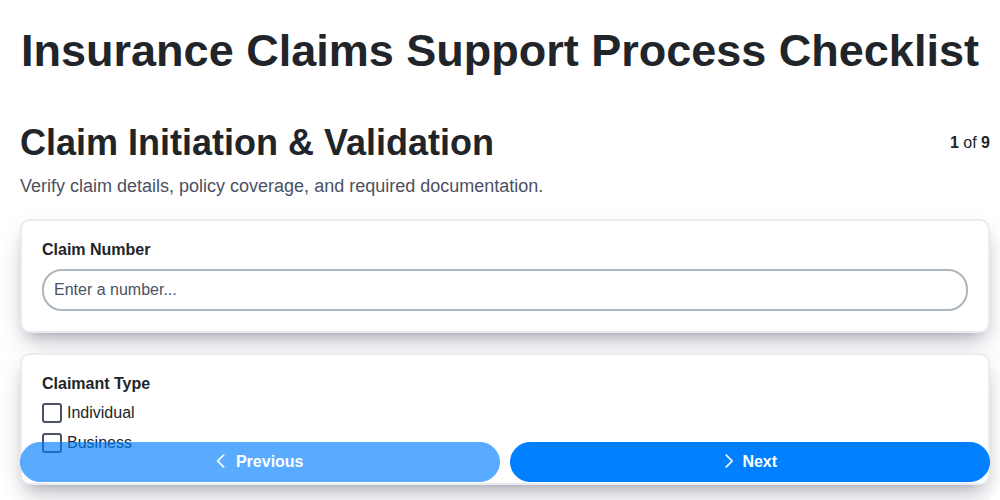
Streamline Claims: Your Insurance Claims Support Process Checklist Template
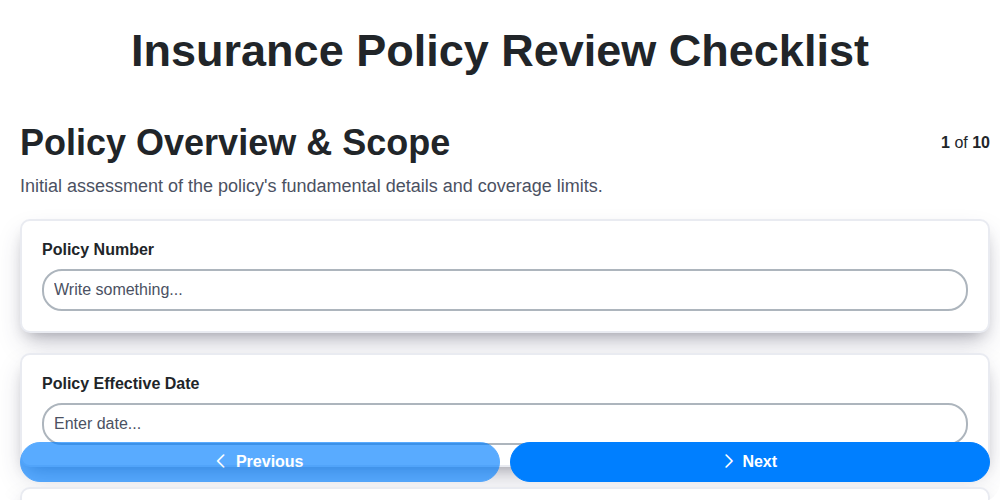
Your Insurance Policy Review Checklist: A Step-by-Step Guide
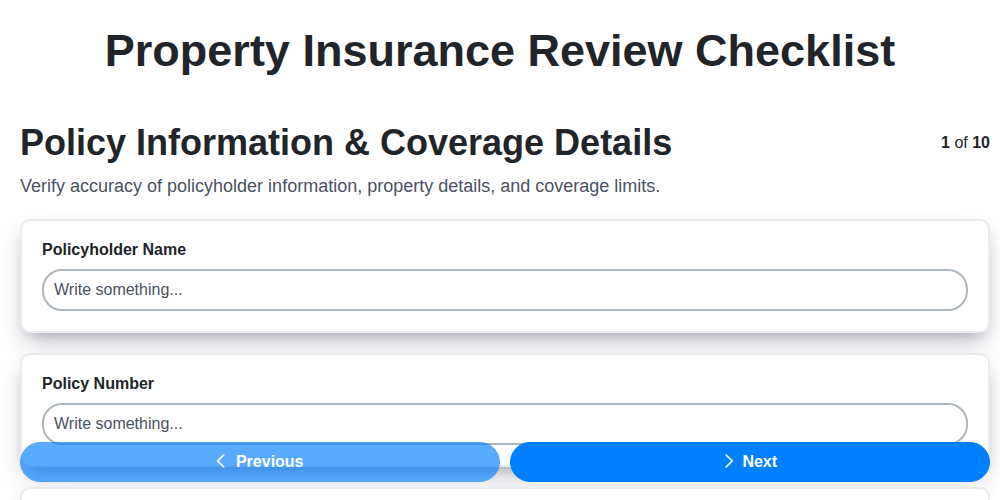
Your Property Insurance Review Checklist: A Step-by-Step Guide
Your Title Search & Insurance Checklist Template
Simplify Insurance Verification: Your Free Dental Checklist Template
Crop Insurance Policy Review Checklist: A Farmer's Guide

The Ultimate Vehicle Registration & Insurance Validation Checklist
Mastering the Policyholder Journey: Your Insurance Experience Survey Checklist
Need help with
Insurance?
Have a question? We're here to help. Please submit your inquiry, and we'll respond promptly.